The Maginot Line was a World War II era line of defenses in France, intended to protect the country from a potential German attack. The line was named after André Maginot, the French Minister of War and consisted of weapons and fortificationsStructures built to defend against enemy attack, like bunkers, walls, and gun posts. along France’s eastern border. Constructed by France after World War I to prevent another German invasion, the Maginot Line was a vast network of fortifications, bunkers, and underground tunnels designed to protect France’s eastern border. The Maginot Line is significant, especially in relation to World War II, because it ultimately failed to stop the Nazi German invasion in 1940.
 FactsthatCrunch
What were the main features of the Maginot Line that France relied on to defend its eastern border?
Maginot Line – Background
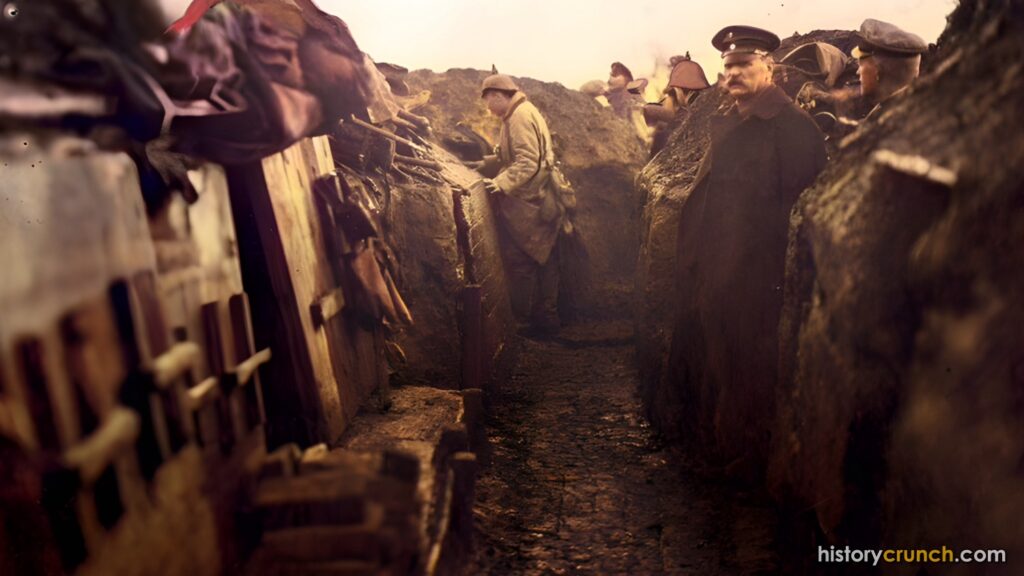
World War I took place from 1914 to 1918 and was known for the famous trench warfare conditions, especially on the Western Front. It was along the Western Front of World War I that trenches snaked along the French countryside. In fact, much of eastern regions of France were devastated by the events of World War I. For instance, conflicts such as the Battle of Verdun, showcase the destruction caused to French farms, villages and homes. As such, following the end of World War I, France sought to protect its eastern border, which it shared with Germany. The plan put forward for this was the Maginot Line.
The Maginot Line was the fortified line of French defences along the border between France and Germany. It was constructed in the years after World War I as a deterrentSomething meant to discourage an enemy from attacking by making the cost too high. to any future conflicts with Germany. The Allied nations believed that a Nazi German offensive into France would resemble the stalemateA situation in a battle or war where neither side can gain an advantage or move forward. conditions of trench warfare, such as in World War I. As such, they focused their efforts on a defensive line to stop any German aggression. This, unfortunately, proved foolish and the Nazi German forces were easily able to maneuver around the Maginot Line.
Maginot Line – Summary
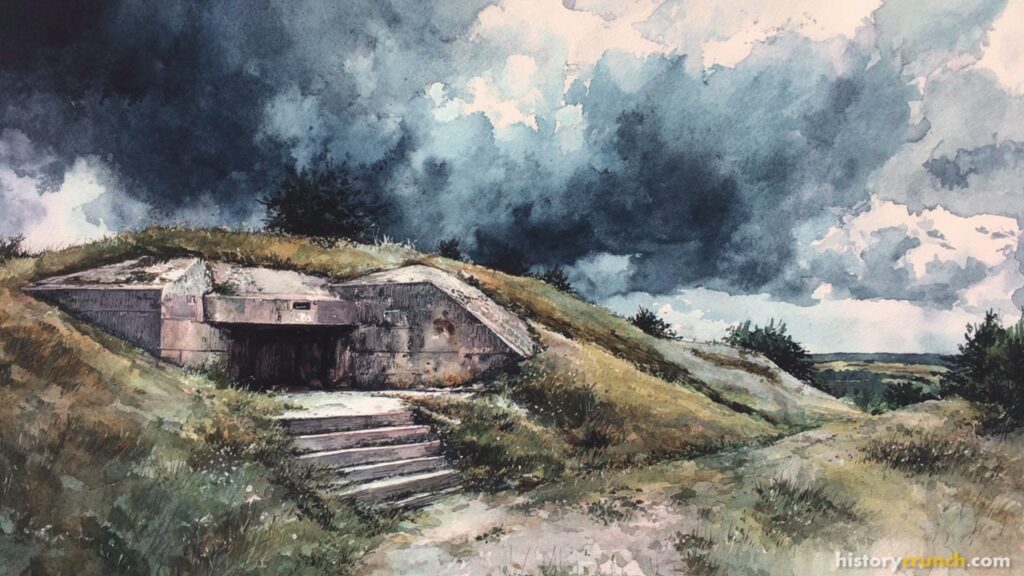
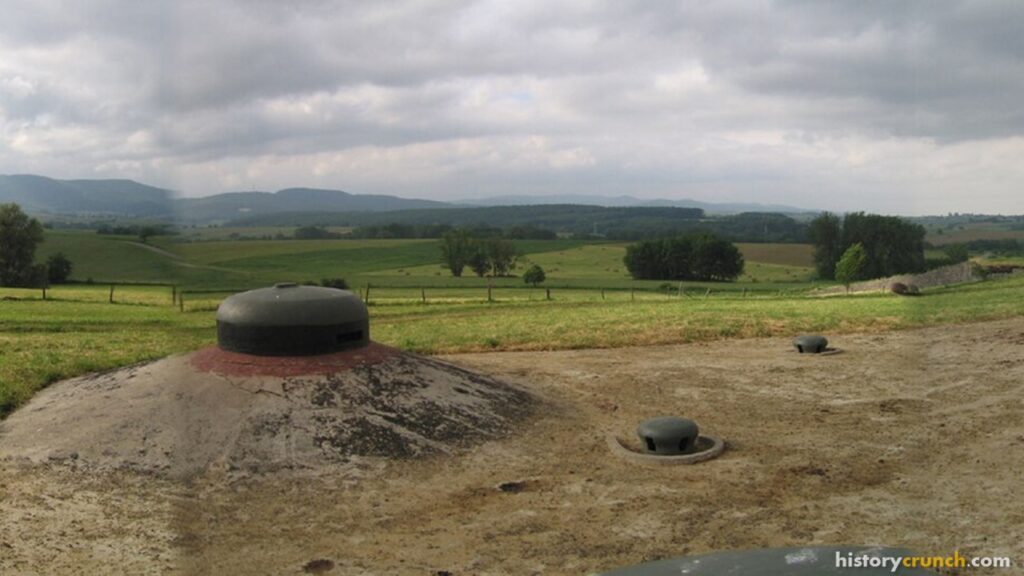
The Maginot Line was constructed in the years before World War II, from the late 1920s and through the 1930s. It was mostly built in response to France’s history of warfare with Germany. For example, Europe had just emerged from the devastation of World War I, which saw much of the trench warfare occur on French soil. France hoped to avoid further destruction and to prevent another German attack by constructing a large set of defenses along its shared border. In fact, the Maginot Line included fortifications, such as: reinforced concrete bunkers, anti-tank obstacles, underground railways and living quarters, and artillery turrets and machine-gun posts.
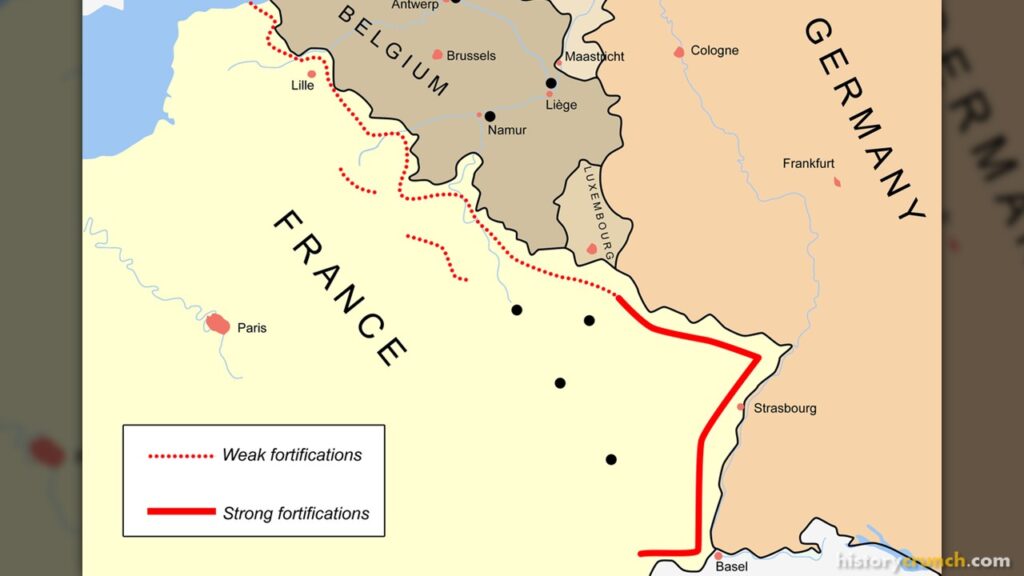
The line extended from the Alps in the south to where France bordered Belgium in the north. France did not extend the Maginot Line all the way to the English Channel in the north due to the belief that a German attack through the Ardennes Forest in Belgium was impossible.
The main strategy of the French military after World War I was ‘defense over offense’. As such, the main goals for the French, with the construction of the Maginot Line was to delay or stop any German advance. The thinking was that this would allow more time for France to mobilizeTo prepare and organize a country’s military forces quickly for war. its forces. As well, it was believed that the line would force Germany to attack through Belgium, where Allied forces could meet them.
The Maginot Line was ultimately designed to reassure the French public regarding any possible attack from Germany. It became a symbol of national security. However, this ultimately created a false sense of security, since the Maginot Line ultimately failed to meet the goals of its construction.
 FactsthatCrunch
Why Did the Maginot Line Fail to Stop Germany in World War II?
The Maginot Line failed for four main reasons: it did not extend all the way to the English Channel, French leaders wrongly believed the Ardennes Forest was impassable, Germany drove around the line through Belgium in 1940, and France's focus on defense left it caught off guard by the fast German blitzkrieg attack. Because the line covered only the border with Germany and left a gap in the north, German forces bypassed the defenses entirely during the Battle of France. The line also gave France a false sense of security, meaning the country was not prepared to respond quickly when the attack came from an unexpected direction.
Maginot Line – Significance
In general, the Maginot Line was an excellent defensive set of structures. The line included concrete bunkers with mounted artillery guns, railroad connections for supplies and the ability to garrisonTo station and house military troops in a defensive position or fortified place. many French troops. However, the Maginot Line ultimately proved ineffective in the Battle of France at the outset of World War II. German forces bypassed the Maginot Line and instead invaded Belgium through the Ardennes Forest, which the French leaders had considered impassableImpossible for an army to travel through because of difficult terrain or obstacles.. However, the Nazi German forces proved this incorrect when they attacked through the Ardennes in 1940.
France, overall, was caught off guard by the German attack and quickly fell to the impressive Nazi blitzkrieg attack. In fact, the German attack was so successful that British troops were forced off of mainland Europe at Dunkirk, and left France to defend itself. In the end, the Maginot Line did nothing to help prevent a Nazi German attack and likely led to France having a false sense of security at the outset of World War II. As such, the significance of the Maginot Line is best seen in its failure to prevent a German attack.
Also, the Phoney War displayed the failure of the Allied nations to properly prepare and defend. As stated previously, Britain and France put much of their efforts into building and strengthening the Maginot Line. However, this proved to be a misguided use of resources because the Nazis avoided the main defenses of the Maginot Line when they pushed through the Ardennes Forest during the Battle of France.
Explore World War II · 1939 – 1945
Keep exploring World War II with these History Crunch resources.
Key Vocabulary
Fortifications
Deterrent
Stalemate
Mobilize
Impassable
Blitzkrieg
Garrison
Frequently Asked Questions
What was the Maginot Line?
The Maginot Line was a long line of French defenses built along the border with Germany. It included concrete bunkers, anti-tank obstacles, underground tunnels, and gun turrets. France built it after World War I to block another German invasion. It stretched from the Alps in the south to the Belgian border in the north.
Who was the Maginot Line named after?
The Maginot Line was named after André Maginot, the French Minister of War. He pushed for the plan to protect France’s eastern border. The line was built in the late 1920s and through the 1930s. Its goal was to prevent the kind of destruction France suffered during World War I.
Why did the Maginot Line fail?
The Maginot Line failed because German forces simply went around it in 1940. They attacked through the Ardennes Forest in Belgium, which French leaders thought was impassable. The line did not reach all the way to the English Channel, leaving a gap in the north. As a result, France was caught off guard and quickly fell.
What was the Ardennes Forest and why did it matter?
The Ardennes Forest was a wooded, hilly region in Belgium that French leaders believed armies could not cross. Because of this belief, France did not extend the Maginot Line to cover it. In 1940, German forces pushed through the Ardennes and bypassed the main defenses. This move was a key reason for France’s fast defeat in the Battle of France.
Why did France build the Maginot Line after World War I?
France built the Maginot Line because World War I had devastated much of its eastern land. Battles like Verdun destroyed French farms, villages, and homes. French leaders favored a strategy of defense over offense to avoid more destruction. They hoped a strong defensive line would delay any German attack and give France time to mobilize.
Cite This Article
To cite this article as a source, use one of the formats below.
MLA: Beck, Elias. “Maginot Line: A Detailed Summary.” HistoryCrunch, 1 October 2026, https://historycrunch.com/maginot-line/.
APA: Beck, E. (2026). Maginot Line: A Detailed Summary. HistoryCrunch. https://historycrunch.com/maginot-line/
Chicago: Beck, Elias. “Maginot Line: A Detailed Summary.” HistoryCrunch. October 1, 2026. https://historycrunch.com/maginot-line/
Sources
- Imperial War Museum
- The National WWII Museum