Perestroika and Glasnost: A Detailed Summary

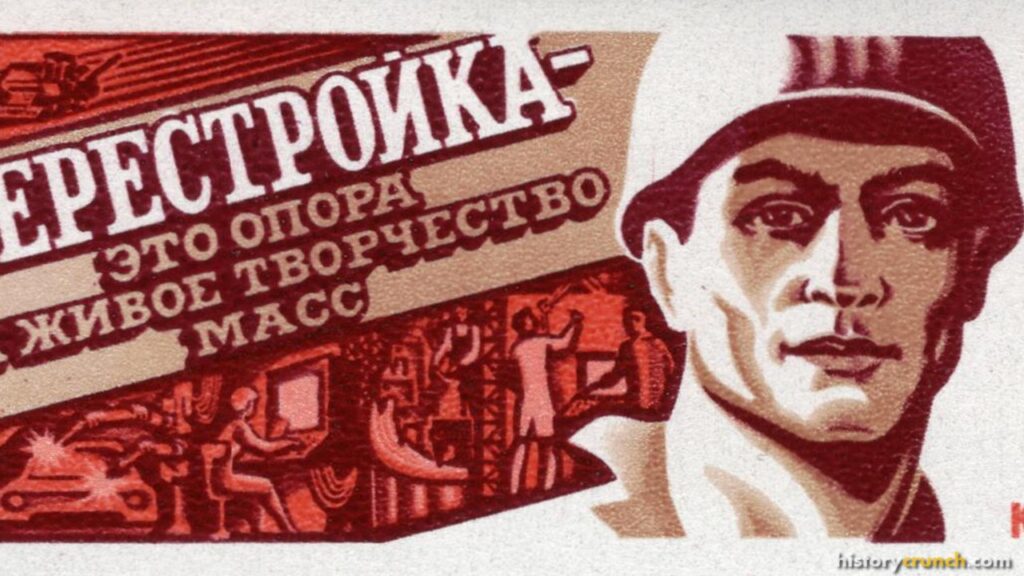
A 1988 Soviet postage stamp promoting Perestroika, the sweeping program of political and economic reform introduced by Mikhail Gorbachev that, along with Glasnost, helped bring about the end of the Cold War.

Table of Contents

Perestroika and Glasnost were reform policies introduced by Soviet leader Mikhail Gorbachev in the 1980s to revitalize the Soviet Union. This article details the history and significance of Perestroika and Glasnost, especially in relation to the Cold War.

The reforms of PerestroikaA Soviet policy meaning restructuring, aimed at rebuilding the Communist Party’s political and economic systems. and GlasnostA Soviet policy meaning openness, allowing more honest public debate and news reporting about the country’s problems. are some of the most significant events of the history of the Cold War.  The Cold War was a major world event that took place from approximately 1945 until 1991.  In general, the Cold War was a period of increased tensions and hostility between the superpowers of the United States and the Soviet Union (USSR).  Perestroika and Glasnost were reforms first introduced by Soviet leader Mikhail Gorbachev in the 1980s.  Together, these policies were intended to strengthen socialism but instead exposed deep flaws in the Soviet system. They led to greater political debate, criticism of the Communist Party, and a rise in nationalist movementsGroups of people who push for their own ethnic or cultural community to have its own independent country., ultimately contributing to the collapse of the Soviet Union in 1991.

Cold WarIcebergInteractive
Facts that CrunchFactsthatCrunch

What hidden pressures actually forced Gorbachev to launch reform in the Cold War Soviet Union?

Gorbachev Took Power in 1985 Knowing the Soviet System Was in Serious Trouble. The military budget burden: the Soviet Union was spending approximately half of its entire yearly national budget on its military, leaving almost nothing for consumer goods or basic services.
The Afghan War Drain Soviet forces had been fighting a losing war in Afghanistan since 1979. The war cost thousands of lives and drained resources the economy could not replace, making military spending even harder to sustain.
Censorship Hiding Reality The Communist government had relied on tight censorship for decades, blocking citizens from knowing the truth about food shortages, pollution, and poor housing conditions. Gorbachev knew reform was impossible without confronting those hidden facts openly.
Party Legitimacy at Risk By the mid-1980s the Communist Party's right to govern depended on delivering a decent standard of living, something the stalled economy was failing to provide. Gorbachev believed controlled openness was the only way to restore public trust before it collapsed entirely.
Cold War Arms Race Costs Competing with United States military spending put enormous pressure on Soviet planners throughout the late Cold War. The economy could not grow fast enough to fund both a modern military and basic needs for ordinary citizens.
Tap a layer to read its detail.
Gorbachev Took Power in 1985 Knowing the Soviet System Was in Serious Trouble.The military budget burden: the Soviet Union was spending approximately half of its entire yearly national budget on its military, leaving almost nothing for consumer goods or basic services.
The Afghan War DrainSoviet forces had been fighting a losing war in Afghanistan since 1979. The war cost thousands of lives and drained resources the economy could not replace, making military spending even harder to sustain.
Censorship Hiding RealityThe Communist government had relied on tight censorship for decades, blocking citizens from knowing the truth about food shortages, pollution, and poor housing conditions. Gorbachev knew reform was impossible without confronting those hidden facts openly.
Party Legitimacy at RiskBy the mid-1980s the Communist Party's right to govern depended on delivering a decent standard of living, something the stalled economy was failing to provide. Gorbachev believed controlled openness was the only way to restore public trust before it collapsed entirely.
Cold War Arms Race CostsCompeting with United States military spending put enormous pressure on Soviet planners throughout the late Cold War. The economy could not grow fast enough to fund both a modern military and basic needs for ordinary citizens.
Source: US National Archives© factsthatcrunch.comMore Cold War Facts →

Glasnost

Mikhail Gorbachev became the leader of the Soviet Communist Party in the Soviet Union (USSR) in 1985.   He believed in communism but also knew his government system could only survive by ending the Cold War.  At the time the Soviet Union had been involved in a losing war in Afghanistan and in the Cold War rivalry with the United States.  The Soviet Union was spending half of its yearly country’s budget on its own military and could not afford the cost.  The government system had survived on secrecy and censorshipGovernment control that blocks people from seeing or hearing information the authorities want kept secret. of information.  The people did not know the truth about what their government was doing.  Gorbachev knew that change was needed but it was also impossible without more open debate and discussion about its own problems.  While Gorbachev wasn’t trying to introduce free speech completely, he did order his government to allow more openness, or what he called “glasnost”.

As glasnost, or openness, developed in the Soviet Union, the controlling government body, the Communist party, lost some control over the news media.  This led to more news being made available to the people’s attention, some of which was not reported before under the more restricted news reporting.  This included more information being reported on topics such as poor housing, food shortages, pollution, alcoholism and little rights for women.  Glasnost allowed the people to learn about the past and learn that their country was not as great as they were led to believe.   This resulted in people feeling betrayed for many years. 

Mikhail Gorbachev’s policy interpretation of “glasnost” is best summarized in English with one word: “openness.” While “glasnost” is associated with freedom of speech the main goal of this policy was to make the country’s management more transparentOpen and easy for the public to see and understand, with nothing hidden from view. and open to the general population.

Cold WarTrue or FalseInteractive
Facts that CrunchFactsthatCrunch

Glasnost gave Soviet citizens complete freedom of speech overnight.

ExplanationGlasnost, meaning openness, loosened the Communist Party’s control over the news, so reports on poor housing, food shortages, pollution, and alcoholism reached the public. Gorbachev was not trying to introduce complete free speech. His main goal was to make the way the country was run more open to ordinary people.
Pick an image or paste a URL
Source: Wilson Center Digital Archive© factsthatcrunch.comMore Cold War Facts →

Perestroika

Perestroika means restructuring or rebuilding of Soviet Union’s political and economic systems.  Perestroika was viewed as a political movement for the purpose of rebuilding the ruling Communist Party of the Soviet Union in the 1980s.  It followed Gorbachev’s glasnost policies.  As more openness happened, everyone realized that the Communist government required change or rebuilding. 

Perestroika is also believed to be the cause of the breakup of the Soviet Union in 1991 and the beginning of revolutions in many other countries in Eastern Europe including East Germany, Romania and Czechoslovakia.  In December of 1989 the people of Romania revolted against the Romanian Communist President and the President was executed.  As more people in Eastern Europe realized real change was needed to their basic government structures violence did happen to the point of uprisingsSituations where large numbers of ordinary people violently rebel against their own government. against governments.

The goal of perestroika was initially to make socialism work better for the people but it worsened the political, social and economic tensions already present within the Soviet Union.  Some historians now believe that this led to the end of the country known as the Soviet Union.

Cold WarTurning Point
Facts that CrunchFactsthatCrunch
Perestroika's Economic Restructuring, 1987 to 1991
What Happened

In 1987, Gorbachev pushed through the Law on State Enterprises, which reduced central planning controls and allowed Soviet factories to decide more of their own output. The change removed the coordination that the command economy depended on. Factories shifted production toward goods that earned them more revenue, basic consumer goods grew scarcer, and shortages that already troubled Soviet citizens became sharply worse.

Before

Soviet economy tightly controlled by central planners; shortages were hidden or managed by rationing

After

Reduced central controls caused production imbalances; store shelves emptied further; public anger over shortages fueled instability

Source: Wilson Center Digital Archive© factsthatcrunch.comMore Cold War Facts →

Perestroika and Glasnost – Outcomes

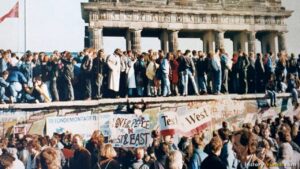
After Gorbachev began the process of glasnost and perestroika events got out of his control.  Governments of Romania, Hungary, Czechoslovakia, Bulgaria and East Germany fell due to the people of those countries rising against their own governments after they had become more aware of what had happened in the past.  These population uprisings also happened in the Soviet Union itself resulting in its own breakup.  The new countries of Estonia, Latvia, Lithuania, Belarus, Ukraine, Moldova, Georgia, Armenia, Azerbaijan, Kazakhstan, Turkmenistan, Uzbekistan, Tajikistan, and Kyrgyzstan were all formed.  What remained was a new country of Russia.  This is now known as the breakup of the USSR.  The communist governments of the east European countries disappeared and areas inside the USSR split from the USSR forming their own countries.   Many different ethnic groups (based on culture, history and language) inside the USSR formed their own countries.   As well, East Germans stormed the Berlin Wall after realizing that the Soviet Union would no longer protect the wall.  Eventually the wall was destroyed and the Cold War was over.

Boris Yeltsin then became the first president of the new Russia after the collapse of the Soviet Union.  In summary, glasnost and perestroika are often referred to as the cause of the break-up of the Soviet Union, the revolutions of 1989 in Eastern Europe resulting in the end of the Soviet BlocThe group of communist-governed countries in Eastern Europe that were allied with and influenced by the Soviet Union. of nations and the end of the Cold War.

Cold WarFunnelInteractive
Facts that CrunchFactsthatCrunch

How did Gorbachev's reforms unravel the Soviet Union from the inside out?

The Soviet Union formally dissolved on December 26th, 1991, splitting into 15 independent countries and ending the Cold War.
Soviet Military Overspending By the mid-1980s the USSR was spending approximately half of its yearly government budget on the military, leaving too little money to improve living standards for ordinary citizens.
Gorbachev Takes Power Mikhail Gorbachev became leader of the Soviet Communist Party in 1985. He believed the system could only survive by cutting military costs and allowing controlled reform.
Glasnost Loosens Censorship Gorbachev's glasnost policy ordered state media to allow more open reporting. News about food shortages, poor housing, pollution, and limited rights for women reached the public for the first time.
Public Trust Collapses Citizens learned their government had hidden serious problems for decades. The sense of betrayal fueled anger toward the Communist Party and made calls for deeper change much louder.
Perestroika Sparks Instability Perestroika aimed to rebuild Communist Party structures and the failing economy. Instead it deepened political and social tensions, giving organized opposition groups room to grow across Soviet republics.
Nationalist Movements Rise Ethnic and cultural groups inside the USSR, including those in Estonia, Latvia, Lithuania, Georgia, and Azerbaijan, pushed to form their own independent countries as central authority weakened.
Tap a stage to read its detail.
Soviet Military OverspendingBy the mid-1980s the USSR was spending approximately half of its yearly government budget on the military, leaving too little money to improve living standards for ordinary citizens.
Gorbachev Takes PowerMikhail Gorbachev became leader of the Soviet Communist Party in 1985. He believed the system could only survive by cutting military costs and allowing controlled reform.
Glasnost Loosens CensorshipGorbachev's glasnost policy ordered state media to allow more open reporting. News about food shortages, poor housing, pollution, and limited rights for women reached the public for the first time.
Public Trust CollapsesCitizens learned their government had hidden serious problems for decades. The sense of betrayal fueled anger toward the Communist Party and made calls for deeper change much louder.
Perestroika Sparks InstabilityPerestroika aimed to rebuild Communist Party structures and the failing economy. Instead it deepened political and social tensions, giving organized opposition groups room to grow across Soviet republics.
Nationalist Movements RiseEthnic and cultural groups inside the USSR, including those in Estonia, Latvia, Lithuania, Georgia, and Azerbaijan, pushed to form their own independent countries as central authority weakened.
Source: US National Archives© factsthatcrunch.comMore Cold War Facts →

Key Vocabulary

Censorship
Government control that blocks people from seeing or hearing information the authorities want kept secret.
Glasnost
A Soviet policy meaning openness, allowing more honest public debate and news reporting about the country’s problems.
Transparent
Open and easy for the public to see and understand, with nothing hidden from view.
Perestroika
A Soviet policy meaning restructuring, aimed at rebuilding the Communist Party’s political and economic systems.
Nationalist movements
Groups of people who push for their own ethnic or cultural community to have its own independent country.
Soviet Bloc
The group of communist-governed countries in Eastern Europe that were allied with and influenced by the Soviet Union.
Uprisings
Situations where large numbers of ordinary people violently rebel against their own government.

Frequently Asked Questions

What is the difference between perestroika and glasnost?

Glasnost meant openness, while perestroika meant restructuring the Soviet political and economic systems. Glasnost allowed more free speech and honest reporting about the country’s problems. Perestroika came next and tried to rebuild the Communist Party and the failing economy. Together they were meant to strengthen socialism in the Soviet Union.

Who introduced perestroika and glasnost?

Mikhail Gorbachev introduced both reforms after becoming leader of the Soviet Communist Party in 1985. He believed in communism but knew the system could only survive with change. The Soviet Union was spending about half its yearly budget on the military. Gorbachev saw that ending the Cold War and allowing more openness was needed.

Why did glasnost and perestroika lead to the collapse of the Soviet Union?

These reforms exposed deep flaws in the Soviet system instead of fixing them. Openness let people learn about hidden problems like food shortages, pollution, and poor housing. Many felt betrayed after years of secrecy and censorship. This growing anger fueled nationalist movements that broke the Soviet Union apart in 1991.

What problems were revealed under glasnost?

Glasnost revealed problems that the government had long hidden from the public. Reporters began covering topics such as poor housing, food shortages, pollution, alcoholism, and few rights for women. People learned the truth about their past and present. This openness showed that the country was not as great as citizens had been told.

How did these reforms affect Eastern Europe?

The reforms helped spark the revolutions of 1989 across Eastern Europe. Communist governments fell in Romania, Hungary, Czechoslovakia, Bulgaria, and East Germany as people rose up. In Romania, the Communist president was overthrown and killed in December 1989. East Germans soon tore down the Berlin Wall, and the Cold War ended.

Cite This Article

To cite this article as a source, use one of the formats below.

MLA: Beck, Elias. “Perestroika and Glasnost: A Detailed Summary.” HistoryCrunch, 13 October 2026, https://historycrunch.com/perestroika-and-glasnost/.

APA: Beck, E. (2026). Perestroika and Glasnost: A Detailed Summary. HistoryCrunch. https://historycrunch.com/perestroika-and-glasnost/

Chicago: Beck, Elias. “Perestroika and Glasnost: A Detailed Summary.” HistoryCrunch. October 13, 2026. https://historycrunch.com/perestroika-and-glasnost/

Sources

  • John Lewis Gaddis, The Cold War: A New History.
  • Wilson Center Digital Archive
  • Odd Arne Westad, The Global Cold War.
  • Vladislav Zubok, A Failed Empire.
Facebook
X
Reddit
Pinterest
LinkedIn

We strive to produce educational content that is accurate, engaging and appropriate for all learners. If you notice any issues with our content, please contact us and let us know!

AUTHOR INFORMATION
Picture of Elias Beck

Elias Beck

I'm a passionate history and geography teacher with over 15 years of experience working with students in the middle and high school years. I have an Education Degree with a focus in World History. I have been writing articles for History Crunch since 2015 and love the challenge of creating historical content for young learners!
Soviet propaganda poster depicting Joseph Stalin steering the USSR, reflecting the absolute government control over economic planning and production that defined the command economy of the Soviet Union.
Economics

Command Economy: A Detailed Summary

A command economy is considered to be on the left side of the economic spectrum and is based on the principles of collectivism, such as: economic equality, collective interest and public property. This article details the history, examples, and main principles of a command economy.

German Reunification.
Cold War

German Reunification: A Detailed Summary

German Reunification joined East Germany and West Germany into a single nation on October 3rd, 1990, ending decades of Cold War division. The peaceful merger followed the fall of the Berlin Wall and helped mark the end of the Cold War in Europe.

Watergate Scandal
Cold War

Watergate Scandal: A Detailed Summary

The Watergate Scandal was a major political crisis in the United States that began with a break-in at the Democratic National Committee headquarters in 1972 and ended with the resignation of President Richard Nixon in 1974. This article details the history and significance of the Watergate Scandal.

Impacts of the Cold War
Cold War

Impacts of the Cold War: A Detailed Summary

The impacts of the Cold War included the nuclear arms race, the space race, decolonization, proxy wars, and the eventual collapse of the Soviet Union. This article details the main impacts of the Cold War.

A Titan II intercontinental ballistic missile sits ready in its underground silo, representing the doctrine of Mutual Assured Destruction that kept the United States and Soviet Union from launching a nuclear war throughout the Cold War.
Cold War

Mutual Assured Destruction: A Detailed Summary

Mutual Assured Destruction was a strategy during the Cold War, based on the idea that if either the United States or the Soviet Union launched a nuclear attack, the other would retaliate with equal or greater force, resulting in total destruction for both.

Neil Armstrong
Cold War

Neil Armstrong: A Detailed Biography

Neil Armstrong is remembered today as the first man to walk on the surface of the moon, which was a significant event in both the Cold War and the Space Race. This article details the life and significance of Neil Armstrong.