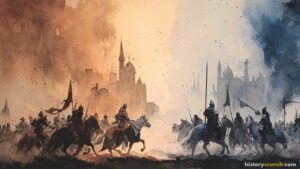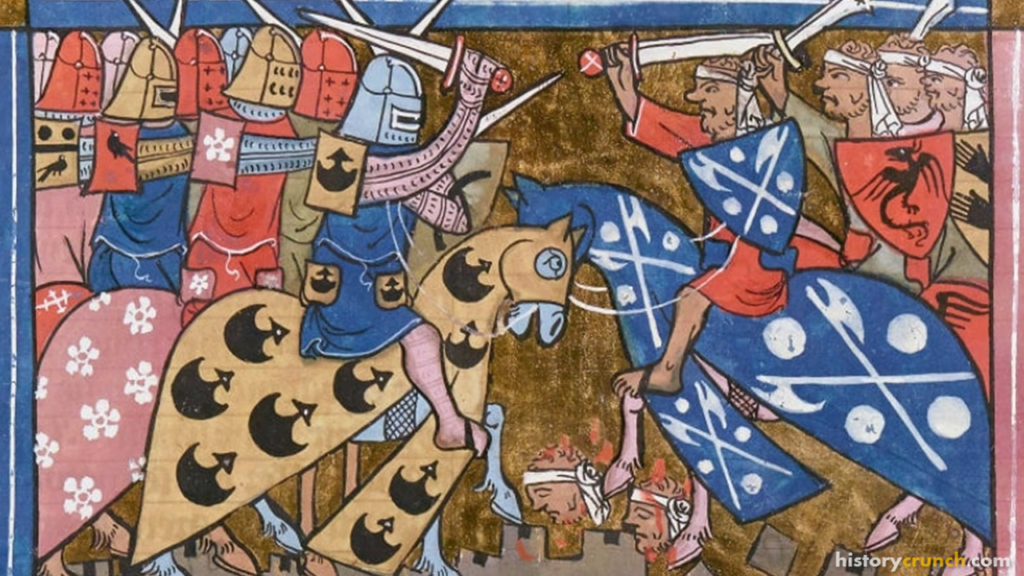
The crusades are one of the most significant events in the history of Europe and the Middle East. They were a series of religious wars carried out by Christian crusaders from Europe during the timeframe of the Middle Ages. Beginning in 1095 CE, the crusadesA religious war carried out by Christian fighters from Europe who wore crosses on their clothing and armor as they marched to the Holy Land. saw European knights and noblemen travel to the Middle East in an attempt to capture the Holy Land away from Muslim people that had controlled the region for the previous centuries. The term crusade means ‘cross’. Therefore, the Europeans that became crusaders viewed themselves as ‘taking up the cross’. In fact, many of the crusaders wore crosses on their clothing and armor as they made their pilgrimageA journey made to a place of special religious importance. to the Holy Land.
 FactsthatCrunchFactsthatCrunch
At the Council of Clermont in 1095 CE, what did Pope Urban II call on European Christians to do?
The First Crusade
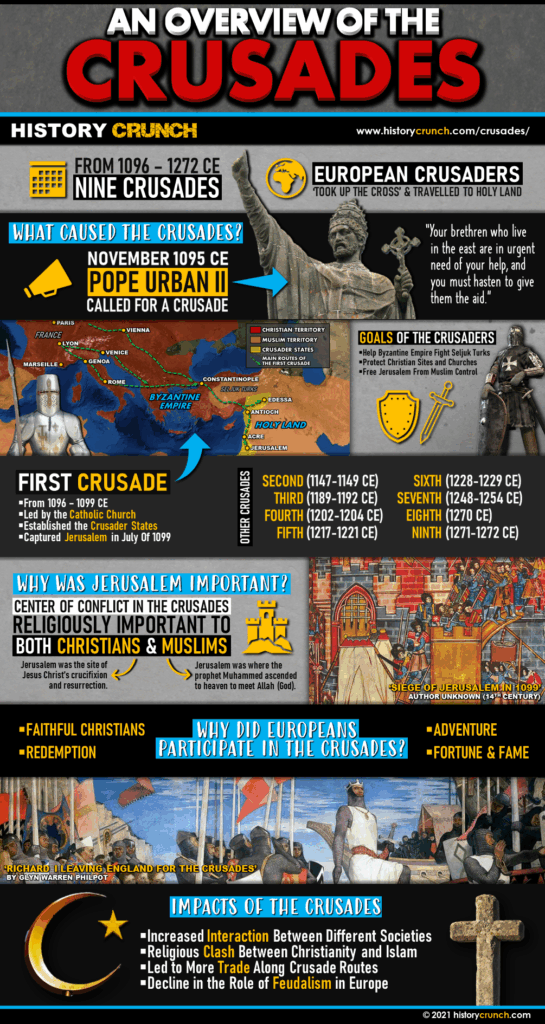
In reality, there were many different crusades. Historians disagree on the exact number but in general, there were nine main crusades and many other smaller ones which occurred over a period of two centuries. The first crusade began in 1096 CE following the Council of Clermont speech by Pope Urban II in 1095 CE, which was discussed previously. During the First Crusade, which took place from 1096 CE to 1099 CE, thousands of Europeans migrated from Europe to the kingdoms of the Middle East.
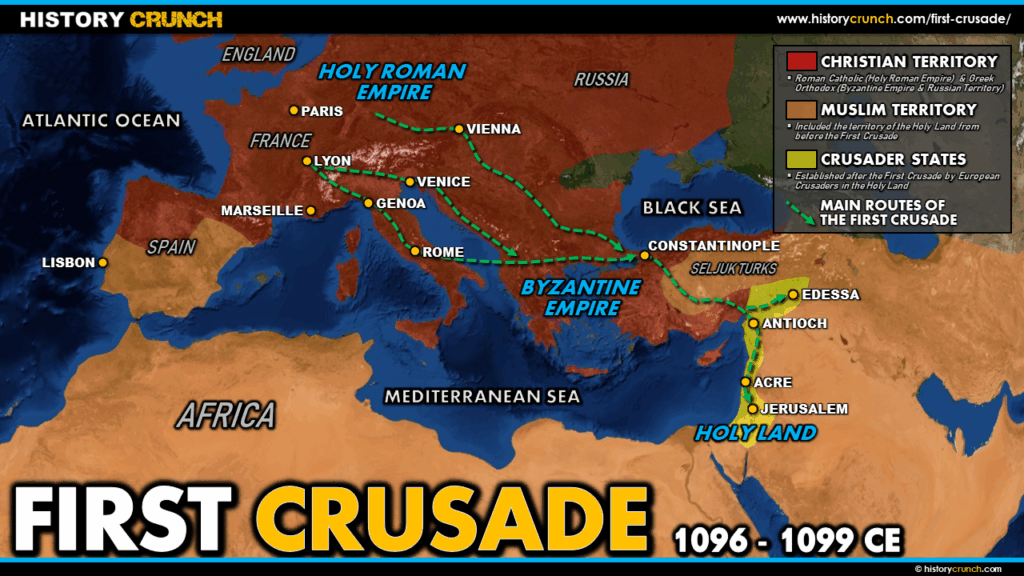
The first example of this is referred to as the People’s Crusade and took place from April to October of 1096. During this event, European peasants attacked and killed populations of Jewish people in Europe before finally travelling to Anatolia (modern-day Turkey) where they faced off against Muslim Turks. They were eventually defeated by the Turks, but set the stage for the crusades that followed. For example, the first official crusade (meaning it was supported and led by the Catholic Church) began soon after in 1096.
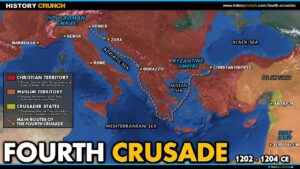
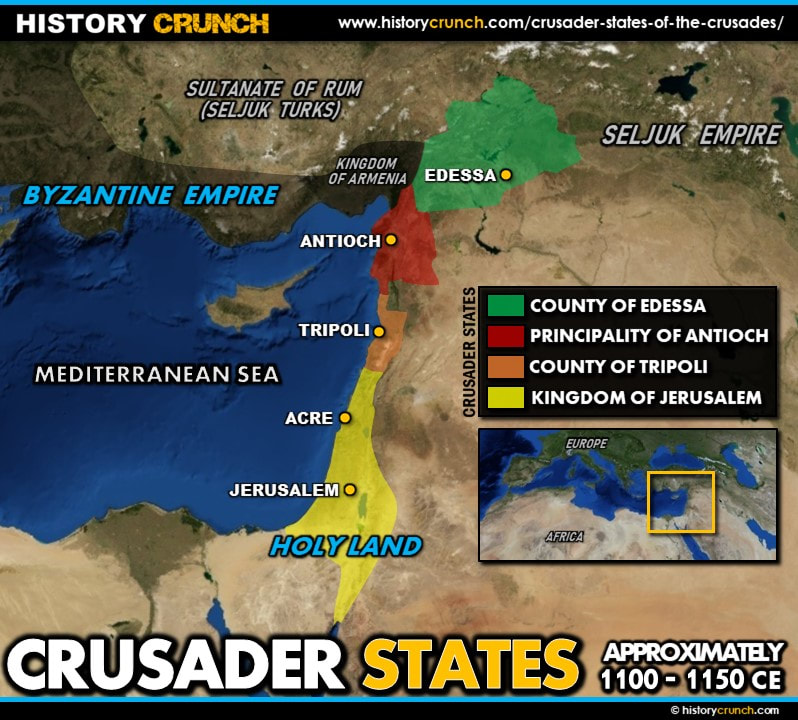
This first official crusade saw European nobles, knights, and peasants travel by land and sea to the Middle East in an attempt to free the Holy Land from Muslim control. During their travels, the crusaders followed a path that thousands of others would follow in the decades and centuries that followed. For instance, they first made their way to the city of Constantinople (modern-day Istanbul), which was the capital of the Byzantine Empire, before finally attacking into the societies of the Middle East and the Holy Land. On route to Jerusalem from Constantinople, the crusaders captured several key territories which they later turned into ‘crusader states’. These states were controlled by the crusaders for their benefit and used as a way of carrying out further attacks in the Middle East. The main crusader statesTerritories captured and controlled by European crusaders in the Eastern Mediterranean, used as bases for further attacks toward Jerusalem. established at the time were: the County of Edessa, the Principality of Antioch, the Kingdom of Jerusalem and the County of Tripoli. All of these states are in the area of the Eastern Mediterranean and were vital routes towards the Holy Land for European crusaders.
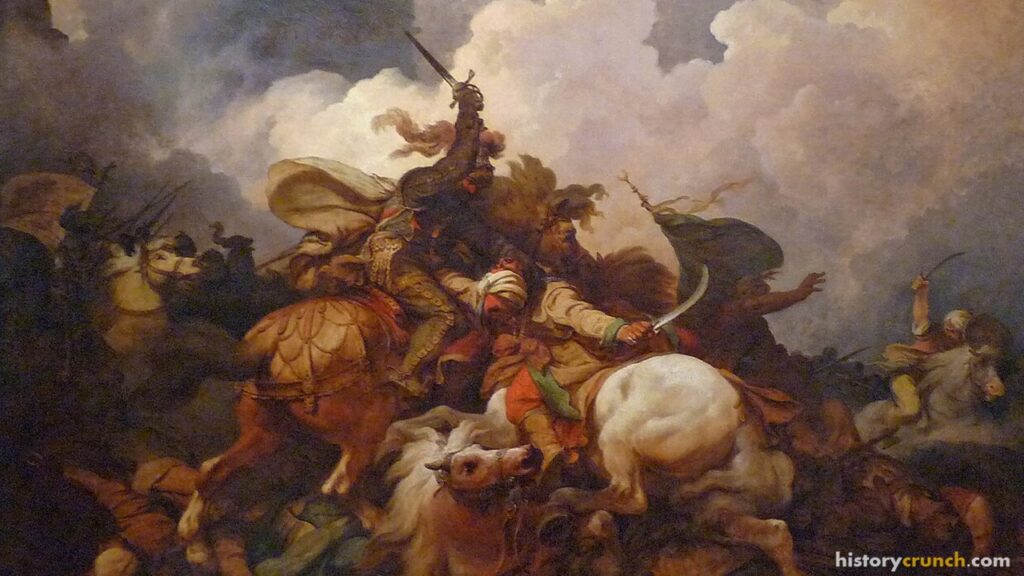
The fighting of the first crusade continued until 1099 and saw the European crusaders face off against the Muslim fighters in a series of brutal battles. Eventually, the crusaders captured Jerusalem in July of 1099 and immediately slaughtered many of the Muslims and Jewish people living in the city. This victory served as inspiration for the crusades that followed, but in reality, Jerusalem and the Holy Land changed sides many times throughout the two centuries in which the crusades took place. As stated previously, several other main crusades took place in the decades and centuries after the first crusade and continued until 1272 when the crusades finally concluded.
 FactsthatCrunch
In what order did crusaders travel the route from Europe to the Holy Land during the First Crusade?
Other Crusades (Second Crusade to Ninth Crusade)
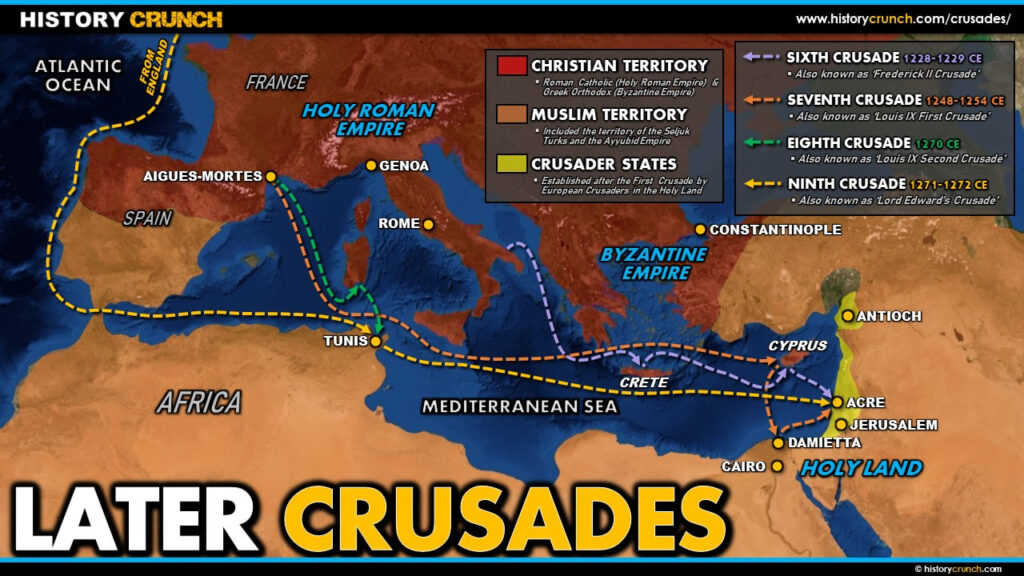
Historians agree that there were approximately nine main crusades that occurred from 1095 until 1272 CE, with each crusade consisting of different motives and goals. Furthermore, the first four crusade were the most involved and the ones which are most often referenced or discussed when learning about the Crusades. Click on the links below to read more detailed information about each of the other Crusades.
- Second Crusade (1147 – 1149 CE)
- Third Crusade (1189 – 1192 CE)
- Fourth Crusade (1202 – 1204 CE)
- Fifth Crusade (1217 – 1221 CE)
- Sixth Crusade (1228 – 1229 CE)
- Seventh Crusade (1248 – 1254 CE)
- Eighth Crusade (1270 CE)
- Ninth Crusade (1271 – 1272 CE)
 FactsthatCrunch
What were the nine main Crusades, and when did each one take place?
Tap a point to read its detail.
The Battle over Jerusalem
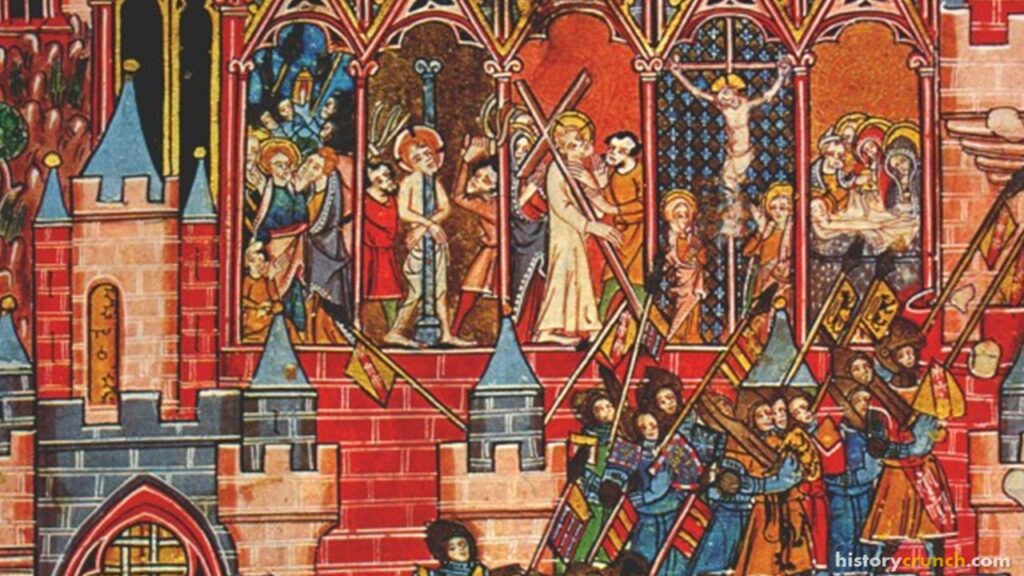
The city of Jerusalem was the heart of the fighting of the crusades. The city was centrally located in the Holy Land between the Mediterranean Sea and the Dead Sea. While the history of the city itself goes back much further, it was a significant site in the crusades because of the importance it holds in the three main religions of the region: Christianity, Islam and Judaism. For Christians, Jerusalem was the site of Jesus Christ’s crucifixion and resurrection. As such, the city was vitally important to their understanding of the teachings and history of Jesus. For Muslims, the city was the land guaranteed by Abraham and the place where the prophet Muhammed ascended into heaven to meet Allah (God). For Jewish people Jerusalem was important because it was the land guaranteed to them by Abraham. All three religions had (and still have) important religious sites in the city including temples, churches, mosques and synagogues. As a result, all three religions wanted access to the city which led to clashes and disagreements over time.
 FactsthatCrunch
Why was Jerusalem important to Jewish people during the Crusades?
Why Did Europeans Fight in the Crusades?
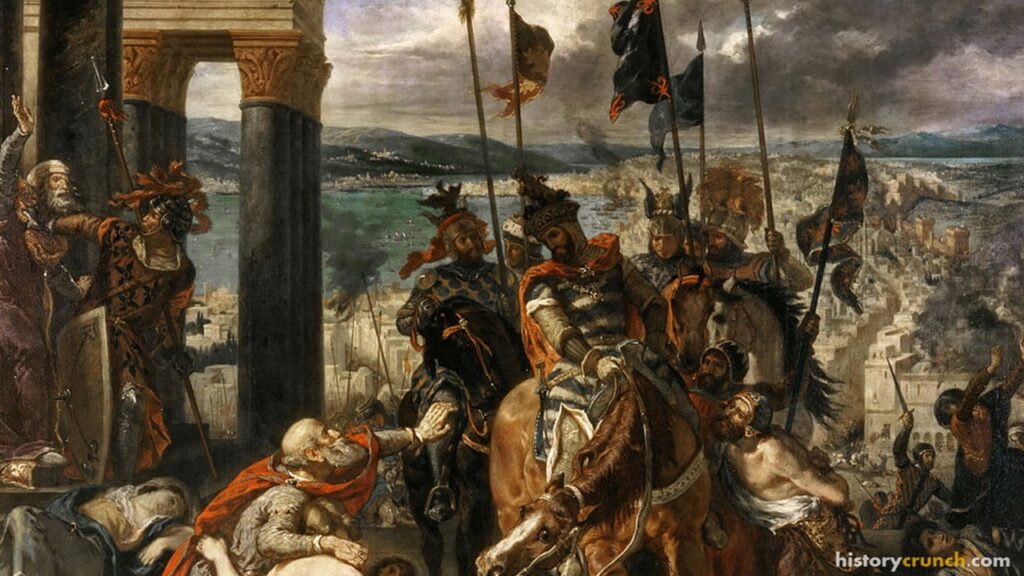
The European crusaders participated in the crusades for several key reasons. First and foremost was the religious faith of the participants. They were devoutDeeply committed to religious faith and practice. Catholics and wanted to be faithful to the church. When Pope Urban II called on Europeans to free the Holy Land from Muslim control in 1095, thousands of European Christians took up the mission. At the time, it was not common for people to question the church or religious faith and as a result many joined the crusades in order to carry out their religious duty. The second reason for European participation in the crusades was that they believed that by participating in the fight they could be forgiven for their previous sins. In fact, the Pope promised forgiveness for past sins and as a result many of the first crusaders believed that they would ascend to heaven soon after capturing Jerusalem. Third, the crusades were a convenient distraction for many peasants from the harshness of daily life under feudalismA rigid, hierarchical system of government common in medieval Europe in which an absolute monarch ruled and people were born into fixed social classes.. Under feudalism, peasants worked or farmed tirelessly and their taxes were used to pay for most activities in society. The mission of the crusades offered the average peasant an escape from this reality and allowed them the ability to fight shoulder-to-shoulder with others towards a common goal. Fourth, the crusades gave those participating an opportunity to go on an adventure to a faraway land. In the time of the Middle Ages, most people were born, lived and died in the same relative area. The crusades offered people the ability to travel to a distant land and interact with other people. Many Europeans enjoyed the adventure of the crusades. Fifth, many of the nobility and peasants from Europe participated in the crusades because they believed that they could obtain fortune for themselves in the wealthy Middle Eastern civilizations.
 FactsthatCrunch
Europeans who joined the Crusades faced real benefits and serious costs for their choice.
Impacts of the Crusades
The crusades were a major event in the Middle Ages and had a profound impact on the world at the time. For example, one of the first major impacts of the crusades was that it increased interaction between different societies and groups of people. For instance, the crusades caused the religions of Christianity, Judaism and Islam to clash. In this conflict, people of all faiths travelled vast distances to fight over the city of Jerusalem, which each faith considered important to its religious heritage. This clash of religious ideals caused a sharing of ideas between the different religious groups and helped the principles of each religious faith to spread into new areas. Arguably, the clash between these three religions and this area of the world continues still today. Beyond religion, the interaction between different groups of people led to a spread of scientific and philosophical knowledge. The existence of the Silk Road had already caused a massive spread of ideas and knowledge across Eurasia, but the crusades continued and expanded the trend. At the outbreak of the crusades in the 11th century, the Middle East was a major center of learning and knowledge. Due to its geographical location, the major Middle Eastern civilizations were at the crossroads of the Silk Road and therefore benefitted greatly from having access to both European and Asian knowledge.
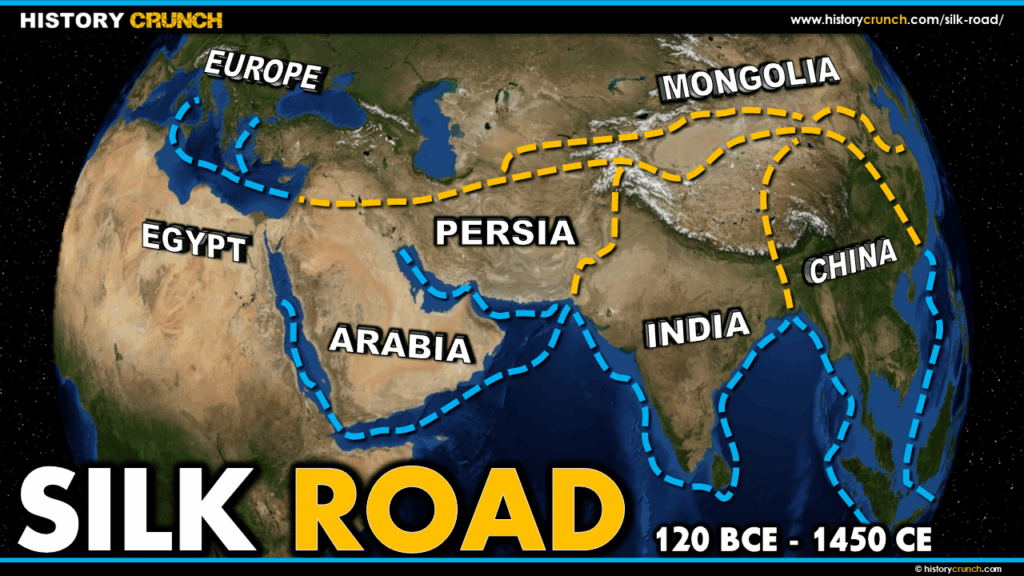
As such, when European crusaders came into contact with Middle Eastern peoples they were exposed to new ideas and inventions which eventually made their way back into European society. For example, the Europeans learned new understandings about mathematics from Middle Eastern mathematicians who were by far the most advanced at that time. Also related to knowledge, the different societies involved in the crusades were exposed to each other’s culture. This meant that each side learned new understandings about food, cultural practices and celebrations.
Another major impact of the crusades was the effect it had on trade. The pilgrimage of thousands of Europeans to the Holy Land created a need for new routes for supply shipments to feed and arm the crusaders. As such, towns and cities grew in size along the route to the Holy Land with many shops and markets. As well, port cities in Italy grew in size and wealth as merchants worked to meet the needs of travelling crusaders. In fact, some of these cities grew to such prominence that they became the famous city-states of the Renaissance centuries after.
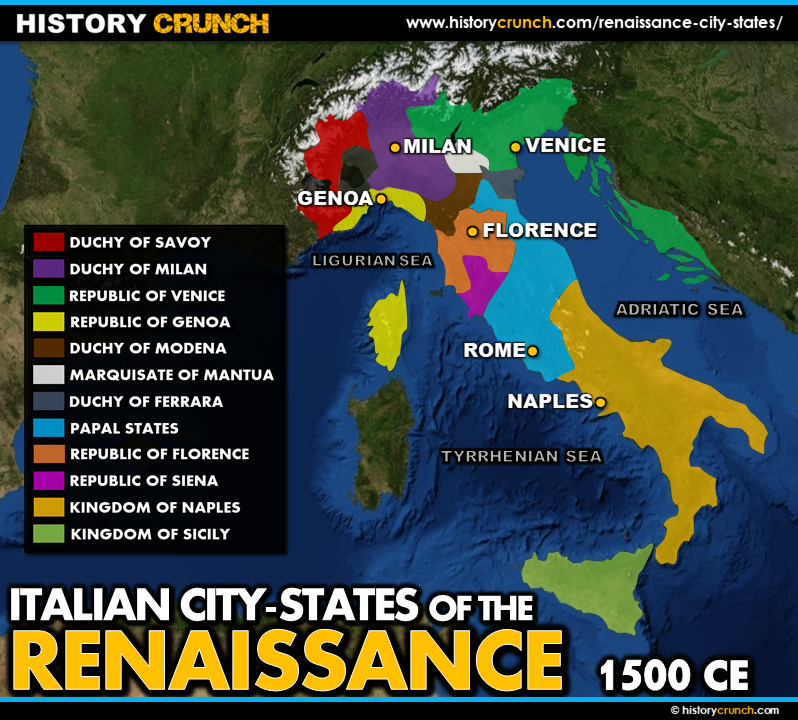
A third major impact of the crusades was the effect it had on the role of feudalism in the lives of Europeans. Feudalism was a form of government common during medieval Europe that involved society being structured in a very rigid and hierarchical way. It was popular in European society from the 9th century until the 15th century and was the form of government in which the country was dominated by an absolute monarch, in which all power was held within a single king. The monarch would rule over the country while the rest of the people were bound by a hierarchical system in which people were placed into classes in which they were born. Due to the crusades, thousands of nobles and peasants left Europe in order to ‘take up the cross’ in the Holy Land. This meant that large populations of people left their land to fight and since feudalism was centered on the principles of land ownership and farming, this caused feudalism to lose its significance in European societies. As well, the increase in trade at certain ports and towns led to the rise of a merchant or middle class. This meant that peasants were able to build up small fortunes for themselves through trading. As a result, the feudal system began to lose its hold on society which eventually led to the ideals of the RenaissanceA period of cultural and intellectual rebirth in Europe that historians link partly to the spread of knowledge caused by the Crusades. and the emergence of powerful city-states instead of absolute monarchs. In all, the crusades had a profound impact on the world, but especially led to changes and advancements in Europe.
In conclusion, the crusades were a vitally important event to European and Middle Eastern History. They were centered on a clash between different religions and helped transform Europe and the Middle East during the years of the Middle Ages. As well, many historians consider the effects of the crusades as an important event in the emergence of the Renaissance in Europe a few centuries later.
 FactsthatCrunch
Tap each impact to read what it led to.
Crusades – Infographic
Explore Crusades · 1095 – 1291 CE
Keep exploring Crusades with these History Crunch resources.
Key Vocabulary
Crusade
Pilgrimage
Byzantine Empire
Crusader states
Feudalism
Devout
Renaissance
Frequently Asked Questions
What were the Crusades?
The Crusades were a series of religious wars fought by Christian crusaders from Europe during the Middle Ages. They began in 1095 CE and aimed to capture the Holy Land from Muslim rulers who had controlled the region for centuries. The word crusade means “cross,” so crusaders saw themselves as “taking up the cross.”
When did the Crusades begin and end?
The Crusades lasted from 1095 CE until 1272 CE, a span of nearly two centuries. The movement started after Pope Urban II called for a crusade at the Council of Clermont on November 27th, 1095 CE. Over this period there were about nine main crusades along with many smaller ones.
Why was Jerusalem so important in the Crusades?
Jerusalem was the center of the fighting because it held deep meaning for three major religions. Christians saw it as the site of Jesus Christ’s crucifixion and resurrection. Muslims honored it as the place where the prophet Muhammad ascended to meet God, and Jewish people viewed it as the land promised by Abraham.
Why did Europeans join the Crusades?
Many Europeans joined the Crusades because of strong religious faith and loyalty to the Catholic Church. The Pope also promised forgiveness of past sins for those who fought, which drew many to the cause. Others joined to escape the hardships of feudalism, to seek adventure, or to gain wealth in the Middle East.
What were the crusader states?
The crusader states were territories that European crusaders captured and controlled along the route to the Holy Land. The main ones were the County of Edessa, the Principality of Antioch, the Kingdom of Jerusalem, and the County of Tripoli. All sat in the Eastern Mediterranean and served as bases for further attacks.
How did the Crusades affect Europe?
The Crusades increased contact between Europe and the Middle East, which spread knowledge, trade, and culture. Europeans learned advanced ideas in math and science from Middle Eastern scholars. The loss of nobles and peasants also weakened feudalism and helped lead to the Renaissance centuries later.
Cite This Article
To cite this article as a source, use one of the formats below.
MLA: Beck, Elias. “Crusades: A Detailed Overview.” HistoryCrunch, 18 October 2026, https://historycrunch.com/crusades-overview/.
APA: Beck, E. (2026). Crusades: A Detailed Overview. HistoryCrunch. https://historycrunch.com/crusades-overview/
Chicago: Beck, Elias. “Crusades: A Detailed Overview.” HistoryCrunch. October 18, 2026. https://historycrunch.com/crusades-overview/
Sources
- Fordham Medieval Sourcebook
- The Met (Heilbrunn Timeline)
- Carole Hillenbrand, The Crusades: Islamic Perspectives.