The Second Industrial Revolution occurred from the late 19th century into the early 20th century and was a period of technological, economic, and social change. Building on the foundation laid by the First Industrial Revolution, this era introduced a wave of innovations that dramatically transformed industries, enhanced productivity, and reshaped the global economy. Key developments in steel production, electricity, chemical manufacturing, and transportation played crucial roles in this time period.
 FactsthatCrunch
Four key sectors drove the Second Industrial Revolution, each with its own breakthrough technology, leading figures, and lasting effects.
What Caused the Second Industrial Revolution?
The Second Industrial Revolution began around the 1870s and continued into the early 20th century. It was a period characterized by significant technological advancements and the widespread adoption of new manufacturing processes. Unlike the First Industrial Revolution, which was centered in Britain, the Second Industrial Revolution had a wider geographical impact, influencing countries such as the United States, Germany, and Japan. Furthermore, this period was marked by rapid urbanization, increased industrial output, and profound economic growth.
Innovations in the Second Industrial Revolution
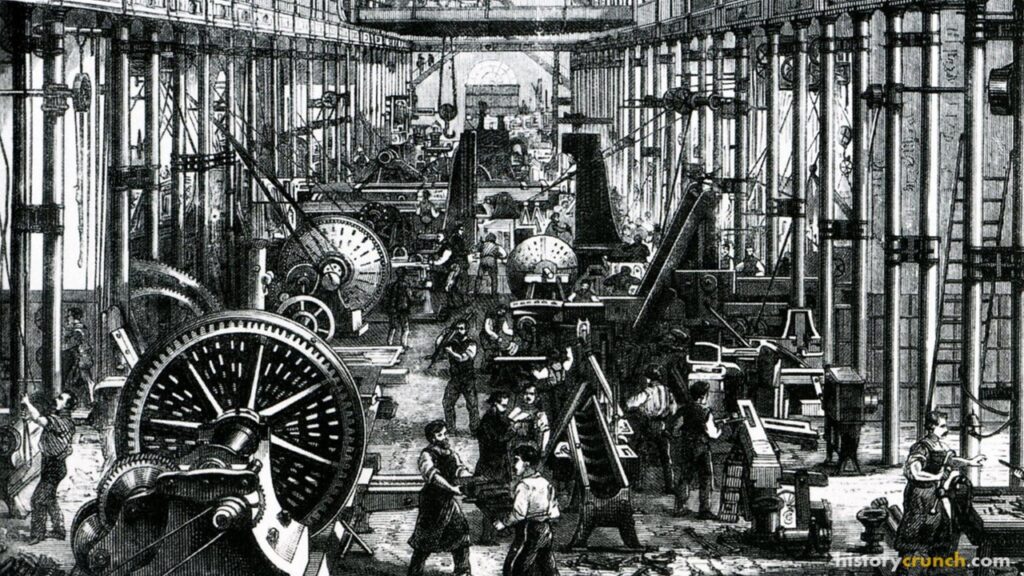
Several groundbreaking inventions and technological advancements occurred during the Second Industrial Revolution. For instance, the main innovations occurred in steel production, electricity, transportation and communication technologies.
One of the most significant advancements was in steel production. The Bessemer processA method invented in the 1850s that made steel cheaper and faster to produce than before., developed by Henry Bessemer in the 1850s, revolutionized the production of steel by making it cheaper and more efficient to produce. This innovation paved the way for the construction of skyscrapers, bridges, railways, and ships, which fueled industrial and urban growth. Steel became the backbone of modern infrastructure and an essential material in manufacturing. Furthermore, it was incredibly important to industrialization in the United States.
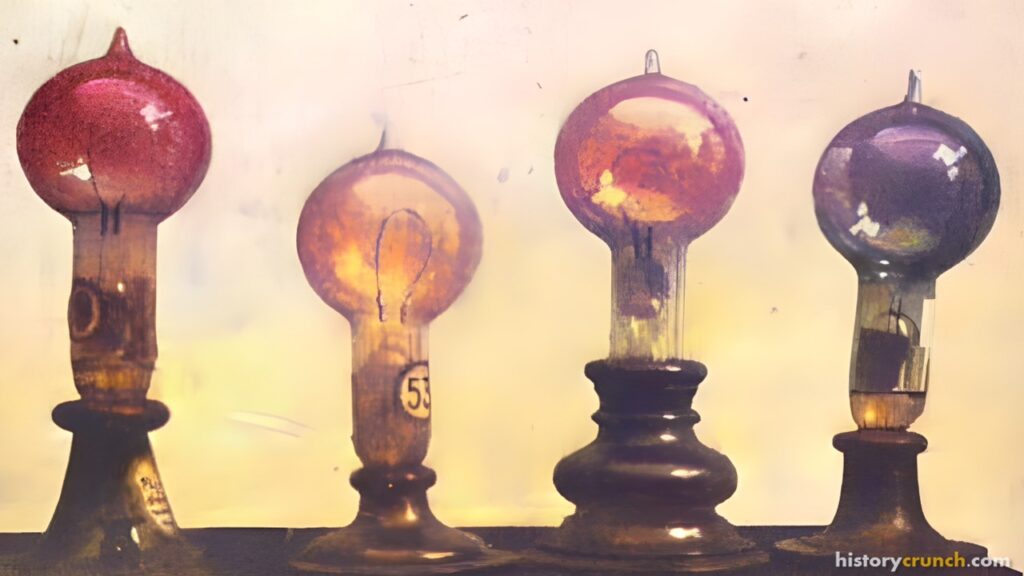
The development of electricity was another important development of the Second Industrial Revolution. For instance, Thomas Edison’s invention of the incandescent light bulb in 1879 and the establishment of electrical power stations revolutionized the way people lived and worked. Electricity provided a reliable and flexible source of energy that could power homes, factories, and transportation systems. As well, Nikola Tesla’s work on alternating current (AC) further improved the efficiency and distribution of electrical power, making it possible to transmit electricity over long distances.
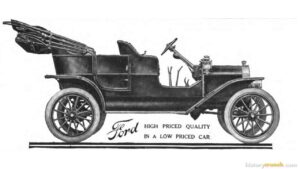
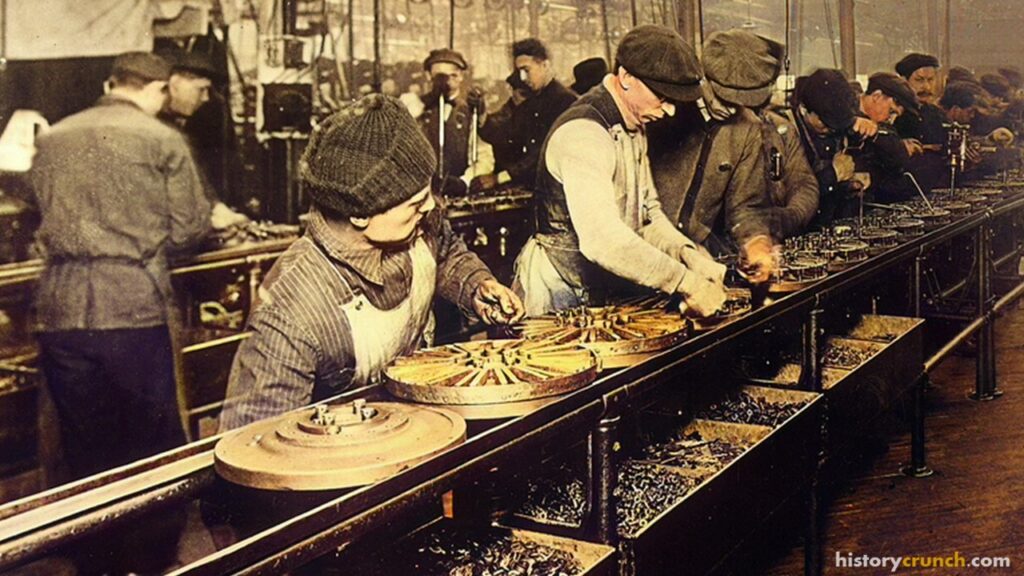
Transportation technologies experienced dramatic improvements during this time as well. For instance, the expansion of railway networks allowed for the movement of goods and people across vast distances, which contributed to economic growth. Also, the invention of the internal combustion engineAn engine that burns fuel inside itself to produce motion, making automobiles and airplanes possible. led to the development of automobiles and airplanes, further revolutionizing transportation. In fact, the Wright brothers’ famous first successful powered flight in 1903 marked the beginning of the aviation industry, while Henry Ford’s introduction of the assembly line in 1913 revolutionized automobile production, making cars affordable for the average person.
Communication technologies also saw significant advancements during the Second Industrial Revolution. For example, the invention of the telephone by Alexander Graham Bell in 1876 transformed how people communicated, making long-distance communication faster and more efficient. As well, the development of wireless telegraphyA method of sending messages without wires, pioneered by Marconi and forming the basis of modern radio., pioneered by Guglielmo Marconi, laid the foundation for modern radio and communication systems.
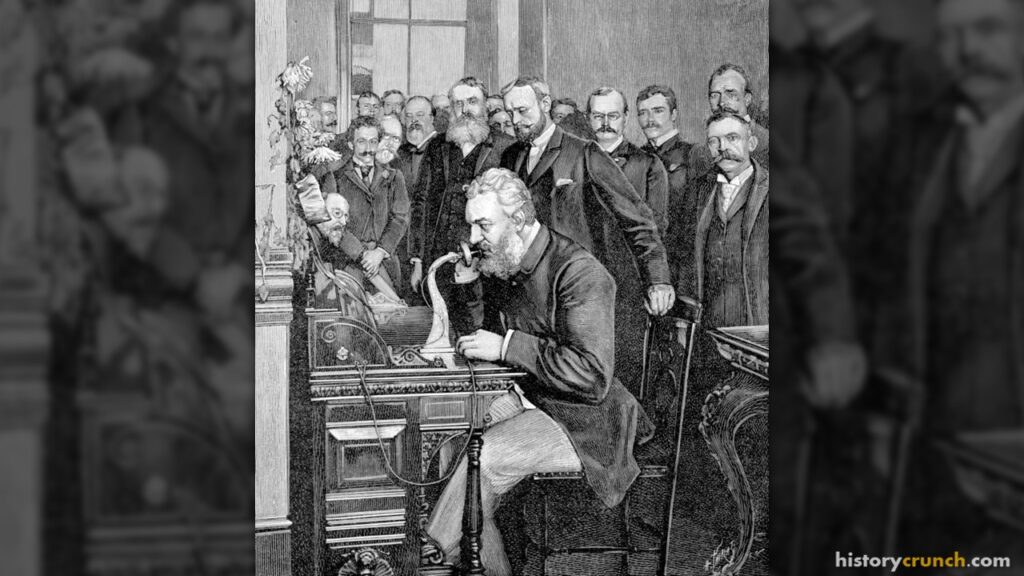
Can you put these four Second Industrial Revolution inventions in the order they appeared?
Impacts of the Second Industrial Revolution
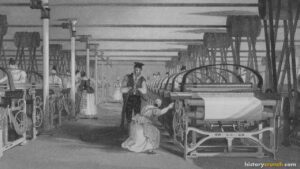
The Second Industrial Revolution had a profound impact on industry and the global economy. More specifically, it led to the rise of large-scale manufacturing and mass production, which significantly increased output and efficiency of many different industrial sectors. For example, factories became more mechanized, with assembly lines and specialized machinery streamlining production processes. This shift resulted in lower costs, higher productivity, and the creation of new consumer markets.
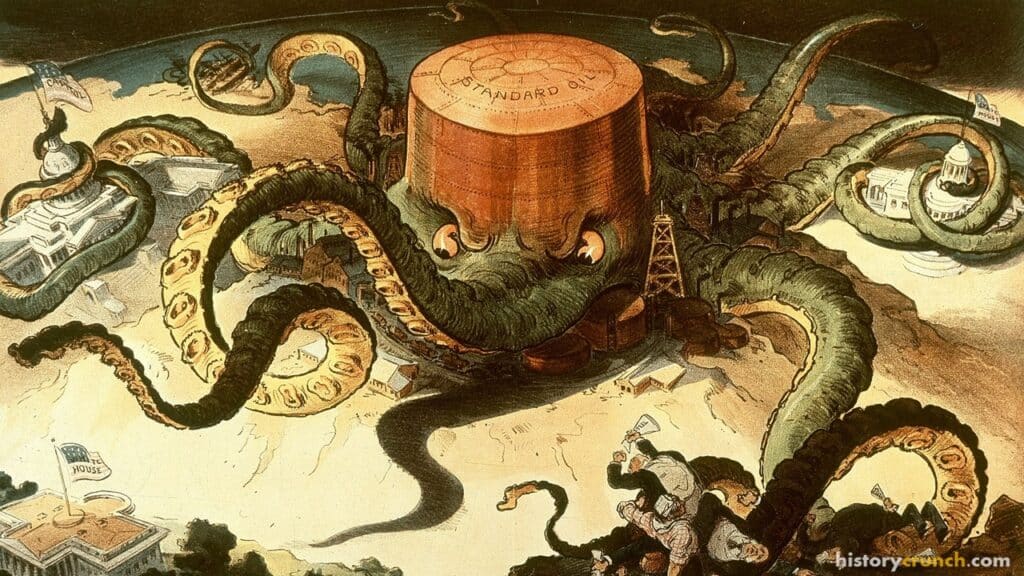
The era of the Second Industrial Revolution also saw the emergence of big businesses and industrial giants. Corporations like Standard Oil, U.S. Steel, and General Electric dominated their respective industries, benefiting from the growth of industrialization and technological advancements. This period is known as the ‘Gilded Age’ in the United States, which was a period of rapid economic growth, industrialization, and wealth accumulation in the United States. This period also witnessed the rise of monopoliesSituations where one company controls an entire industry, reducing competition for other businesses. and trusts, leading to concerns about market competition and prompting regulatory measures such as antitrust laws. For instance, some people criticized the tactics of the main businessmen of the era and referred to them as ‘robber barons’.
Another important impact of the Second Industrial Revolution was urbanization, which increased as people migrated to cities in search of employment opportunities in factories. This rapid urban growth led to the expansion of urban infrastructure, including housing, transportation, and public services. However, it also brought challenges such as overcrowding, poor sanitation, and inadequate living conditions.
 FactsthatCrunch
Industrial Revolution timeline · 1760 – 1840
Key Vocabulary
Bessemer process
Incandescent light bulb
Internal combustion engine
Wireless telegraphy
Monopolies
Robber barons
Frequently Asked Questions
When did the Second Industrial Revolution take place?
The Second Industrial Revolution began around the 1870s and lasted into the early 20th century. It built on the changes started by the First Industrial Revolution. Unlike the earlier period, it spread widely and shaped countries like the United States, Germany, and Japan.
What were the main inventions of the Second Industrial Revolution?
The main inventions came in steel, electricity, transportation, and communication. Cheaper steel made buildings, bridges, and railways possible, while electricity powered homes and factories. The telephone, the automobile, and the airplane also changed daily life during this time.
How did electricity change life during this period?
Electricity gave people a reliable and flexible source of energy for the first time. Thomas Edison’s light bulb in 1879 and new power stations let homes and factories run after dark. Nikola Tesla’s work on alternating current allowed electricity to travel over long distances.
What was the Gilded Age?
The Gilded Age was a time of fast economic growth and wealth in the United States. Huge companies like Standard Oil, U.S. Steel, and General Electric grew powerful during this era. Some wealthy businessmen were called “robber barons” because critics disliked their tactics.
How did the Second Industrial Revolution affect cities?
The Second Industrial Revolution caused rapid urbanization as people moved to cities for factory jobs. Cities expanded their housing, transportation, and public services to hold the growing population. However, this fast growth also brought overcrowding, poor sanitation, and hard living conditions.
Cite This Article
To cite this article as a source, use one of the formats below.
MLA: Woida, K.L. “Second Industrial Revolution: A Detailed Summary.” HistoryCrunch, 25 September 2026, https://historycrunch.com/second-industrial-revolution/.
APA: Woida, K. L. (2026). Second Industrial Revolution: A Detailed Summary. HistoryCrunch. https://historycrunch.com/second-industrial-revolution/
Chicago: Woida, K.L. “Second Industrial Revolution: A Detailed Summary.” HistoryCrunch. September 25, 2026. https://historycrunch.com/second-industrial-revolution/
Sources
- Emma Griffin, A Short History of the British Industrial Revolution.
- The Science Museum Group
- Robert C. Allen, The Industrial Revolution: A Very Short Introduction.
- Fordham Modern History Sourcebook