
Slavery in the United States ran for two hundred and forty-six years, from the sale of about twenty Africans at Jamestown in 1619 to the ratification of the Thirteenth Amendment in December of 1865. This timeline follows it by date: the laws that made a person property and made the condition hereditary, the trade that carried perhaps 400,000 people across the Atlantic to North America, the cotton that multiplied the demand for them, the risings on the German Coast and in Southampton County, the compromises of 1820 and 1850 that postponed the reckoning, the abolitionists who refused to wait, and the war that ended it. It closes with the three amendments that tried to decide what freedom would mean. Every card sits on a real date and links to the article behind it.
From Jamestown to the Fifteenth Amendment
Slavery in the United States ran for two hundred and forty-six years, from the sale of about twenty Africans at Jamestown in 1619 to the ratification of the Thirteenth Amendment in December of 1865. This timeline follows it by date: the laws that made a person property and made the condition hereditary, the trade that carried perhaps 400,000 people across the Atlantic to North America, the cotton that multiplied the demand for them, the risings on the German Coast and in Southampton County, the compromises of 1820 and 1850 that postponed the reckoning, the abolitionists who refused to wait, and the war that ended it. It closes with the three amendments that tried to decide what freedom would mean. Every card sits on a real date and links to the article behind it.
By ship in 1619, and then by law over the next fifty years.
About twenty Africans were sold at Jamestown for food.
From the sugar islands: Barbados wrote them, Jamaica copied them, South Carolina copied Jamaica.
Barbados declared enslaved people property and set punishments without trial.
The Atlantic leg of the slave trade, in which about one captive in eight died.
A chartered company ran the English trade from 1672.
No. Every colony had it, New York burned rebels for it, and the North ended it slowly.
Massachusetts legalized it first.
Yes, in New York, at Stono, and in plots the colonies punished with fire.
Twenty-three New Yorkers rose in 1712.
The German Coast in 1811, Vesey's plot in 1822 and Nat Turner's rising in 1831, each answered with executions and harsher laws.
The German Coast was the largest rising and the least remembered.
Captives took the ships, and the law had to decide whether that was murder.
The Amistad captives seized the schooner off Cuba.
Nothing by name, and three things in practice: three-fifths, twenty years of trade, and the return of fugitives.
Vermont had banned slavery ten years before the Constitution was written.
Because the cotton gin made cotton the most profitable crop on earth and cotton needed hands.
Whitney's gin cleaned cotton fifty times faster than a person.
One child at a time, over decades, with the owners' consent.
Vermont banned it outright in its constitution.
A line across the map in 1820 that kept the peace for thirty-four years and then broke.
Tallmadge asked whether slavery would follow the flag west.
The editor who turned anti-slavery from patience into a demand for freedom now.
The Liberator demanded immediate emancipation from its first issue.
From a Quaker society in 1775 to a quarter of a million members by 1838.
Philadelphia Quakers founded the first anti-slavery society in the world.
An escaped slave who became the most important Black American of the century.
He escaped Baltimore on a train with a borrowed seaman's pass.
Escaped once, then went back into Maryland about fourteen times to bring out about seventy others.
She walked ninety miles to Pennsylvania alone in 1849.
A woman who walked out of slavery in New York and spent forty years asking both movements why they left her out.
She left her owner with her baby daughter in 1826.
Because they were the only accounts of slavery written from inside it.
Equiano's was the first to reach a mass audience.
It sold 300,000 copies in a year and made readers weep for people they had called property.
Stowe wrote it in fury at the Fugitive Slave Act.
Put federal law behind the slave catcher in 1793, and made every Northerner one in 1850.
The Constitution's fugitive clause is where it starts.
Clay's last bargain: California free, the territories to decide, and a fugitive slave law for the South.
Clay laid eight resolutions before the Senate in January.
Because Douglas let the settlers decide, and both sides sent settlers with guns.
Douglas wanted a railroad and wrote in popular sovereignty to get Southern votes.
That Black Americans could never be citizens and Congress could not ban slavery anywhere.
The Missouri Compromise was the law the court struck down.
He killed five men in Kansas and was hanged for Harpers Ferry; both sides have argued since.
He vowed his life to ending slavery after Lovejoy's murder.
Kansas brought him back into politics, and a Senate race he lost made him famous.
He joined the new party at Bloomington in 1856.
Because he won without a single Southern vote, and the South read that as the end of its power in the Union.
The Democrats split into Northern and Southern halves.
Declared free the enslaved people in the Confederate states and opened the army to Black soldiers.
Escaped people reached Union lines before the government had a policy.
By a constitutional amendment that passed the House by two votes and was ratified eight months after Lincoln's death.
The Senate passed it in April of 1864; the House fell short in June.
Because the Proclamation reached Texas only when the army did, two and a half years late.
The Proclamation freed people only where the army could enforce it.
The South passed Black Codes to control them, and Congress answered with citizenship and the vote.
Mississippi's code copied the slave code with the word slave removed.
They shared platforms, printers and enemies, and split over who got the vote first.
The mob broke up a women's anti-slavery meeting to get at Garrison.
Slavery came to the English colonies by ship and by law, in that order. About twenty Africans were sold at Jamestown in 1619, and for forty years the colonies had no clear rule about what they were. Then the rules arrived. Massachusetts wrote slavery into law in 1641, Virginia ruled in 1662 that a child took its mother's status, and the sugar islands of Barbados and Jamaica wrote codes that treated a person as property and shipped them north for copying. By 1705 Virginia had gathered its laws into one code and drawn the color line in ink. The trade that fed it was a chartered business run from London, and by 1700 English ships carried more captives across the Atlantic than any other nation's.
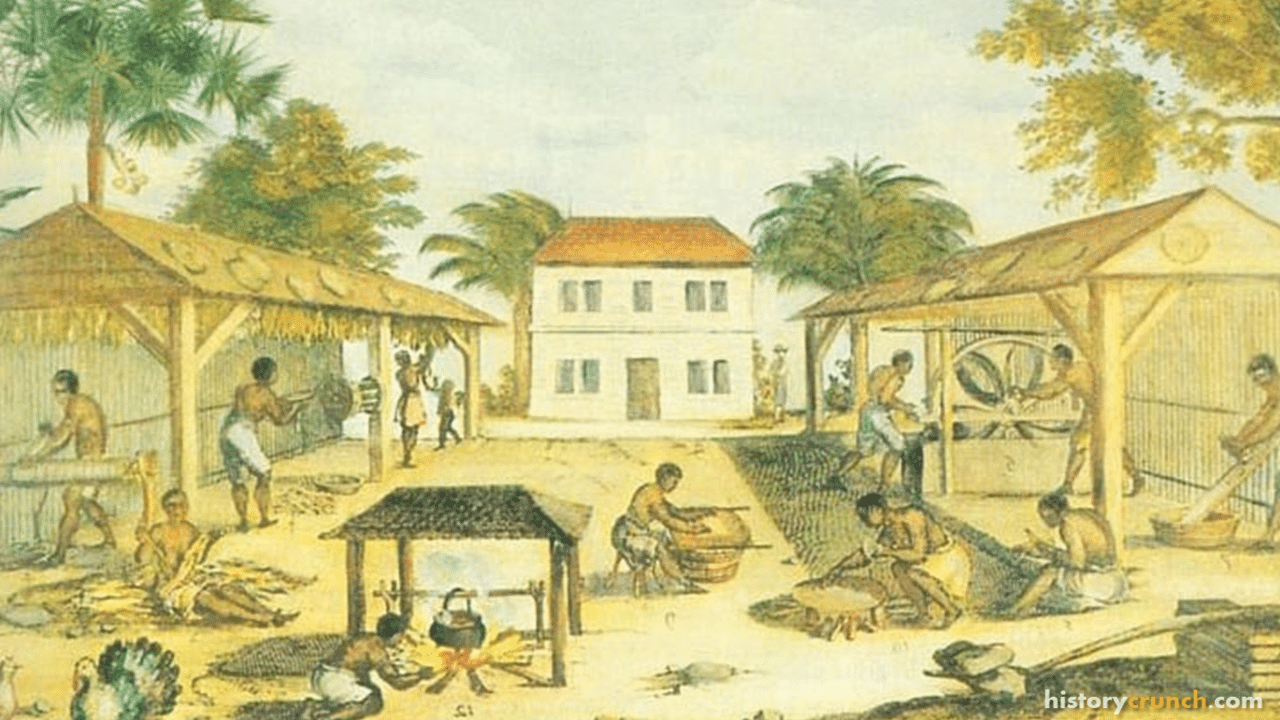
In late August of 1619 an English ship called the White Lion anchored at Point Comfort in the Colony of Virginia and sold about twenty captive Africans to the settlers of Jamestown in exchange for food. The Africans had been taken from a Portuguese slave ship bound for Mexico. Slavery had existed in the Spanish and Portuguese colonies for a century already, but this was the first recorded sale of enslaved Africans in the English colonies that became the United States.
LEARN MORESHOW LESSwhy it matters · key numbersARRIVALEvery date on this timeline runs from this one. Two hundred and forty-six years separate the White Lion from the Thirteenth Amendment, and slavery was legal in some part of the country for all of them.
In 1641 the Massachusetts Bay Colony adopted a legal code called the Body of Liberties. One clause allowed the holding of captives taken in a just war and of 'strangers' sold to the colony, which was a lawyer's way of saying that a person could be owned. It was the first English colony in North America to give slavery the protection of a written law, twenty years before Virginia or Maryland did the same.
LEARN MORESHOW LESSwhy it mattersLAWThe North is often remembered as the free half of the country. Its oldest colony made slavery legal first, and the ships that carried enslaved people were built and owned in New England ports.
On September 27th, 1661 the assembly of Barbados, England's richest sugar colony, passed 'An Act for the Better Ordering and Governing of Negroes'. It declared enslaved Africans to be property, denied them the protections of English law and set out punishments a master could inflict without trial. It was copied almost word for word by Jamaica in 1664 and later by South Carolina, which was settled largely by Barbadian planters.
LEARN MORESHOW LESSwhy it mattersLAWThe slave codes of the American South were not invented in America. They arrived from the Caribbean already written, and the men who wrote them had run the harshest plantations in the English world.
In December of 1662 the Virginia assembly declared that any child born in the colony would be 'bond or free only according to the condition of the mother'. Under English common law a child took the father's status. Reversing it meant that every child born to an enslaved woman was enslaved for life, whoever the father was, and it made slavery something that passed down generations rather than a condition that ended with one person: chattel slavery, in which a human being is property.
LEARN MORESHOW LESSwhy it mattersLAWThis one sentence turned slavery from a labor arrangement into an inheritance. It is the legal reason there were four million enslaved people in 1860 when the importing of Africans had ended in 1808.
England had taken Jamaica from Spain in 1655 and by 1664 its planters had adopted the Barbados slave code. The Jamaican version was tightened again in 1684 and it was this text, with its lists of offenses and punishments, that South Carolina took as its model when it wrote the first slave code on the American mainland in 1712.
LEARN MORESHOW LESSwhy it mattersLAWThe line of copying runs Barbados to Jamaica to South Carolina to Georgia. Reading a Georgia slave code from 1770 is reading a Caribbean law a century old.
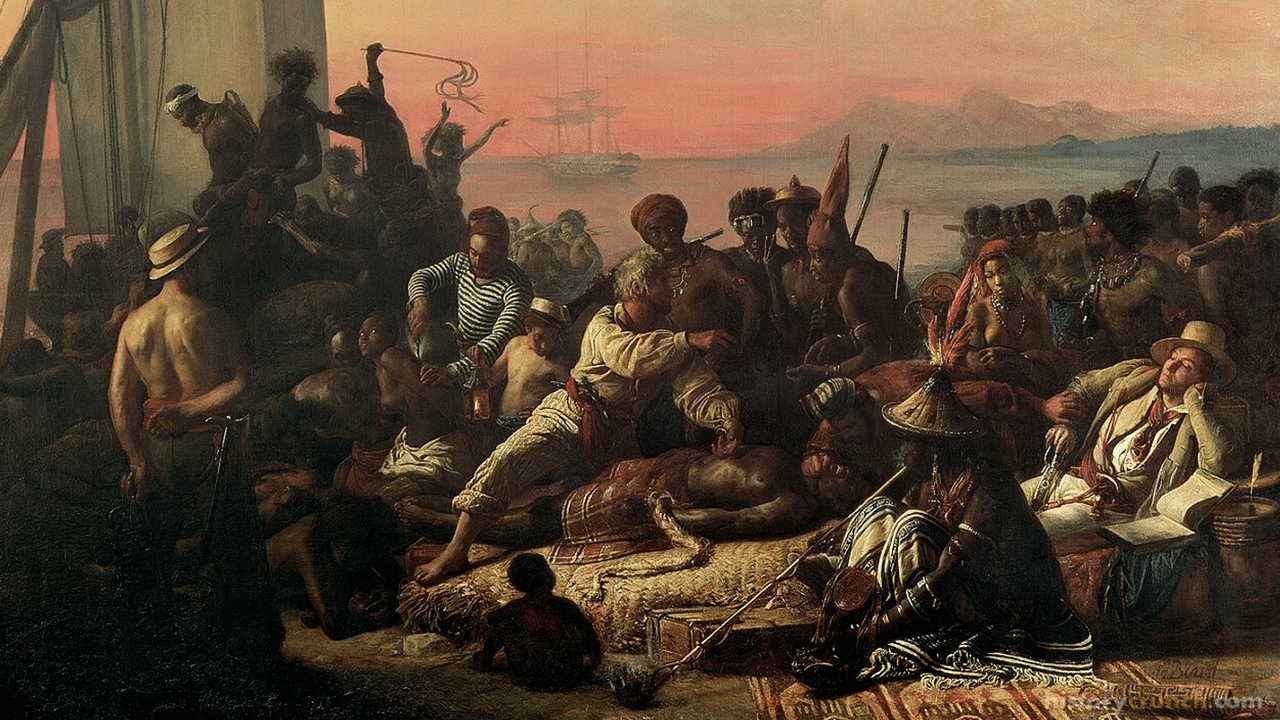
On September 27th, 1672 King Charles II granted a charter to the Royal African Company, giving it a monopoly on English trade with West Africa, including the trade in people, the middle leg of the triangular trade that carried goods to Africa, captives to the Americas and sugar home. Over the next four decades the company shipped tens of thousands of Africans to English colonies. When its monopoly was broken in 1698, private merchants from Bristol, Liverpool and the American ports poured into the trade and the numbers rose sharply.
LEARN MORESHOW LESSwhy it mattersTRADEThe Atlantic slave trade was a business run by chartered companies and city merchants, not a side effect of settlement. The English entered it late and by 1700 carried more captives than any other nation.
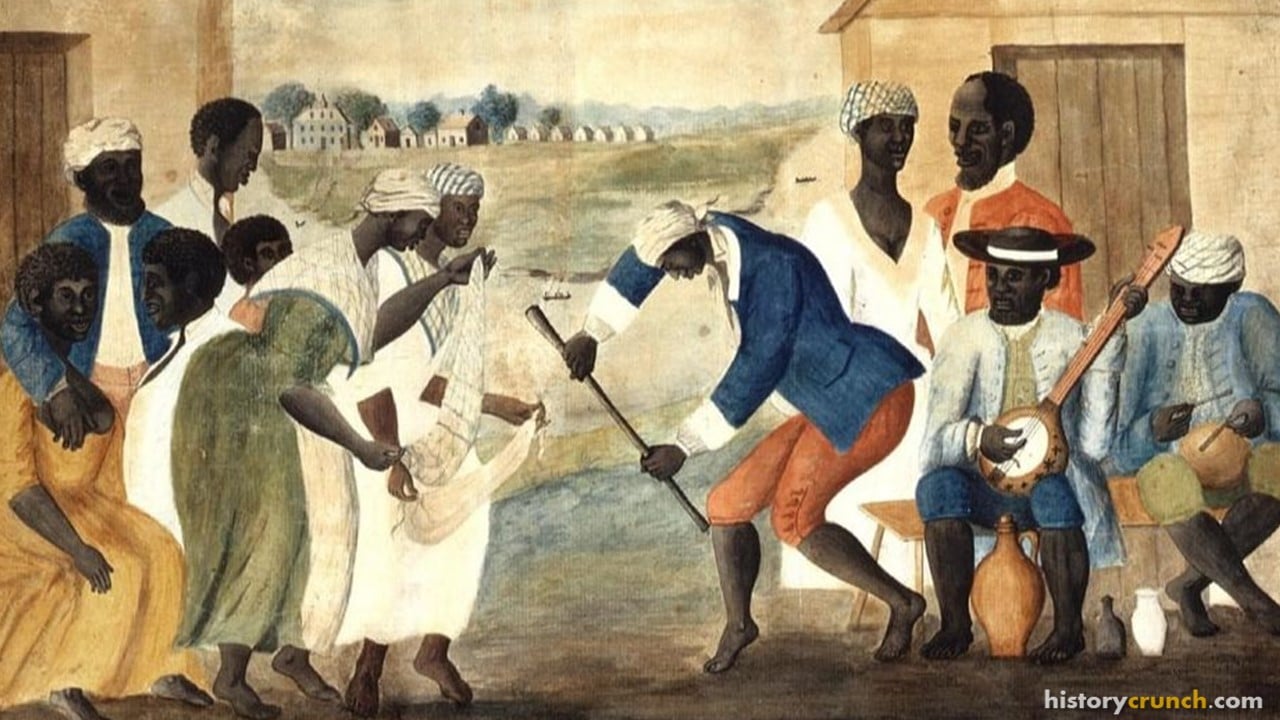
In October of 1705 the Virginia assembly collected forty years of separate acts into a single slave code. It defined all enslaved Africans as real estate, forbade them to own property, carry weapons or leave a plantation without a pass, and stated that a master who killed an enslaved person while correcting them had committed no crime. Free white servants were given rights in the same law that enslaved Black people were denied.
LEARN MORESHOW LESSwhy it mattersLAWThe 1705 code drew the color line in ink. Before it, servitude and slavery had overlapped; after it, to be Black in Virginia was to be presumed enslaved.
In the sixty years before the Revolution slavery spread into every colony and hardened in the ones that depended on it. South Carolina wrote the mainland's first slave code in 1712 and by 1739, when the Stono rebels marched for Florida, its enslaved people outnumbered its free. New York burned rebels at the stake in 1712 and again in 1741. Georgia banned slavery and gave up the ban when rice paid better than principle. And in 1775, five days before the shooting started at Lexington, a room of Philadelphia Quakers founded the first society in the world to oppose slavery. The argument had begun, and so had the war that would postpone it.
On the night of April 6th, 1712 a group of about twenty-three enslaved Africans set fire to a building on Maiden Lane in New York City and attacked the white colonists who came to put it out, killing nine. The militia hunted the rebels down within a day. Twenty-one were executed, some by burning, one by being broken on the wheel. New York then passed a law making it nearly impossible for a master to free a slave.
LEARN MORESHOW LESSwhy it mattersRESISTANCESlavery was not a Southern institution in 1712. New York City held more enslaved people than any town north of Charleston, and it punished rebellion with the same fire the Caribbean used.
On June 7th, 1712 South Carolina adopted the first full slave code in what became the United States, taking its text from Jamaica's. It required masters to search slave quarters for weapons every two weeks, set whipping as the punishment for leaving a plantation without leave, and allowed a master to kill a slave who resisted. South Carolina was by then the only mainland colony where enslaved people outnumbered whites.
LEARN MORESHOW LESSwhy it mattersLAWThis is the law the other Southern colonies copied. Georgia adopted a version of it in 1770 after lifting its own ban on slavery.
Georgia was founded in 1733 as a colony for the poor and as a military buffer against Spanish Florida. Its trustees banned slavery in 1735, partly to keep the colony a place of small farms and partly because armed slaves near the Spanish border seemed dangerous. Planters from South Carolina lobbied against the ban for fifteen years, and in 1751 the trustees gave way. By 1770 Georgia had its own slave code.
LEARN MORESHOW LESSwhy it mattersLAWGeorgia is the one colony that tried to keep slavery out and failed. The reason it failed, rice profits across the river in South Carolina, says a great deal about why the others never tried.
On Sunday, September 9th, 1739 about twenty enslaved men led by a man named Jemmy broke into a store on the Stono River near Charleston, seized guns and marched south toward Spanish Florida, where escaped slaves had been promised freedom. Their number grew to nearly a hundred. The colonial militia caught them that afternoon. Most of the rebels were killed in the fighting or executed afterward, and their heads were set on posts along the road.
LEARN MORESHOW LESSwhy it matters · key numbersRESISTANCEIt was the largest slave uprising in the British mainland colonies. South Carolina answered with the Negro Act of 1740, which banned enslaved people from assembling, earning money, learning to write or growing their own food.
In the spring of 1741 a series of fires in New York City, beginning at the governor's house on March 18th, convinced the city's magistrates that enslaved people and poor whites were plotting to burn the town. A grand jury sat for months. Thirty Black men and four whites were executed, thirteen of the Black men by burning, and more than seventy people were sold out of the colony. Historians still argue over whether any plot existed.
LEARN MORESHOW LESSwhy it mattersRESISTANCEThe 1741 panic shows what fear did in a slave society. Suspicion alone was enough to burn a man, and the trials were the largest in the colony's history.
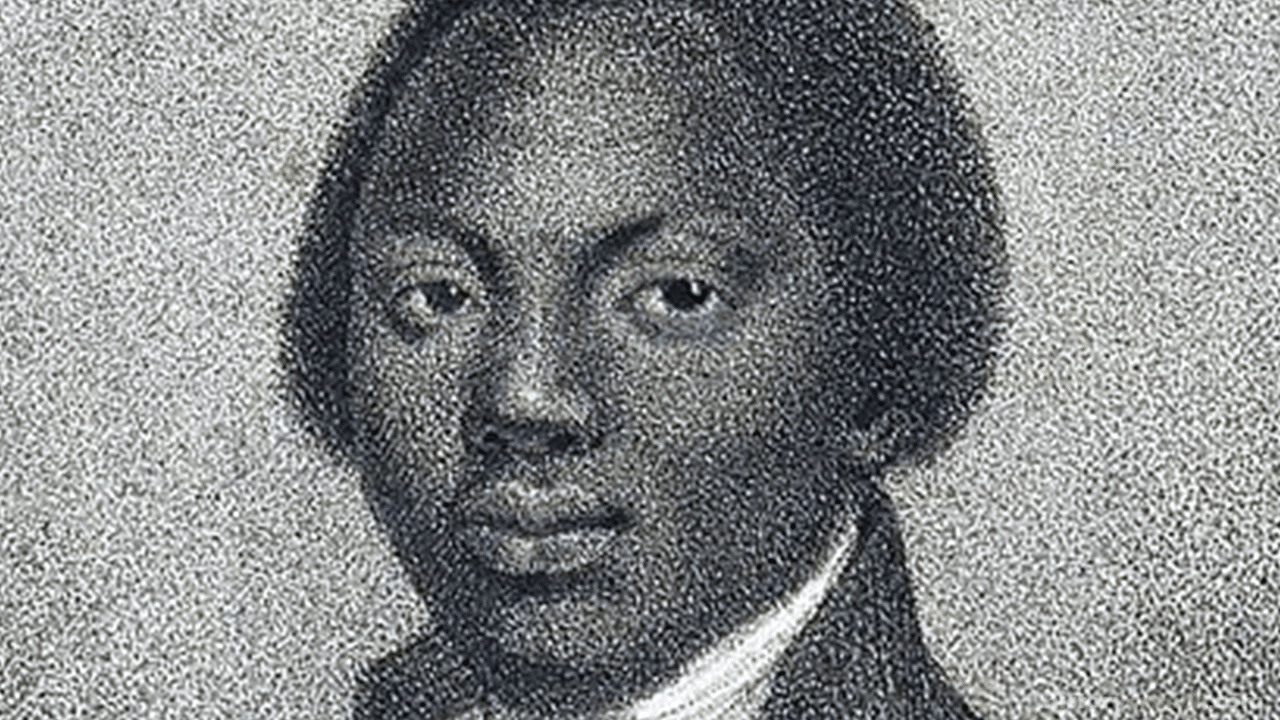
Olaudah Equiano was born in 1745 in the Kingdom of Benin, in what is now southern Nigeria. At about eleven he was kidnapped with his sister, marched to the coast and sold onto a slave ship bound for Barbados. He was later sold to a Royal Navy officer, served through the Seven Years' War, learned to read and write, and was sold again to a Quaker merchant in Montserrat. His memory of the ship's hold is still the description of the Middle Passage that people quote.
LEARN MORESHOW LESSwhy it matters · 1 key figurePEOPLEEquiano is the voice of the Middle Passage on this timeline because he crossed it and then wrote it down. Very few who made the crossing left any record at all.
On July 10th, 1766 Olaudah Equiano paid his owner, the merchant Robert King, forty pounds sterling for his own freedom. He had saved the money by trading on his own account during voyages between the Caribbean islands. He was about twenty-one. He spent the next decade at sea, including a voyage toward the Arctic in 1773, before settling in England in 1777 and joining the campaign against the slave trade.
LEARN MORESHOW LESSwhy it matters · key numbers · 1 key figurePEOPLESelf-purchase was rare and depended on a master willing to honor the bargain. Equiano's receipt is a reminder that freedom, when it came, usually had to be bought.
On May 10th, 1770 Georgia passed a slave code modeled on South Carolina's. It forbade enslaved people to learn to read or write, to gather in groups, to travel without a written pass or to own boats, and it set a death penalty for striking a white person twice. Georgia's rice and indigo planters had by then imported thousands of Africans, and the colony that had banned slavery in 1735 was one of the harshest slave colonies on the mainland.
LEARN MORESHOW LESSwhy it mattersLAWThirty-five years separate Georgia's ban from Georgia's code. The colony's founders lost the argument to the profits of rice, and the code they got was a Caribbean law at fourth hand.
On April 14th, 1775, five days before the fighting at Lexington and Concord, a group of Philadelphia Quakers founded the Society for the Relief of Free Negroes Unlawfully Held in Bondage. It was the first organization in the world formed to oppose slavery. It went quiet during the Revolutionary War and was refounded in 1784 as the Pennsylvania Abolition Society, with Benjamin Franklin as its president from 1787.
LEARN MORESHOW LESSwhy it mattersABOLITIONThe American Abolitionist Movement has a founding date, and it comes before the country does. Quakers had argued against slavery among themselves since 1688; in 1775 they took the argument public.
The Revolution said all men were created equal and the Constitution counted some of them as three-fifths. Between those two documents the country split along a line it would follow to the Civil War. Vermont and Pennsylvania began ending slavery in the 1770s; New York and New Jersey followed so slowly that the last enslaved people in the North were freed by the Thirteenth Amendment. The South went the other way. The Fugitive Slave Act of 1793 put federal law behind the slave catcher, and the same year a Massachusetts graduate on a Georgia plantation built a machine that made cotton the most profitable crop on earth. When the import trade closed in 1808 slavery did not shrink. It began to grow by birth.
On July 8th, 1777 the Republic of Vermont, not yet a state, adopted a constitution whose first chapter declared that no person born anywhere could be held as a servant, slave or apprentice after the age of twenty-one for men or eighteen for women. It was the first written constitution in North America to ban slavery. Enforcement was patchy, but the principle was on paper fourteen years before Vermont joined the Union.
LEARN MORESHOW LESSwhy it mattersLAWVermont wrote abolition into a constitution while the Continental Congress was still debating whether the words 'all men are created equal' applied to anyone in chains.
On March 1st, 1780 the Pennsylvania legislature passed An Act for the Gradual Abolition of Slavery. No one already enslaved was freed, but every child born to an enslaved mother after that date would be free at twenty-eight, and no new slaves could be brought into the state. Connecticut and Rhode Island passed similar laws in 1784, New York in 1799 and New Jersey in 1804.
LEARN MORESHOW LESSwhy it mattersLAWGradual emancipation freed the future and left the present in chains. It is why slavery lingered in the North for decades: Connecticut's last enslaved people were freed in 1848, and New Jersey still held a few in 1860.
The Constitution signed on September 17th, 1787 never used the word 'slave', but three of its clauses protected slavery. The three-fifths clause counted enslaved people as three-fifths of a person in fixing each state's seats in Congress, which gave the South extra power. Congress was forbidden to ban the importing of slaves before 1808. And a fugitive clause required that a person 'held to service' who escaped to another state be returned.
LEARN MORESHOW LESSwhy it matters · key numbersLAWThe Fugitive Slave Acts of 1793 and 1850, the Missouri Compromise and the Dred Scott decision all rest on words written here. The founders postponed the argument, and the country paid for the delay in 1861.
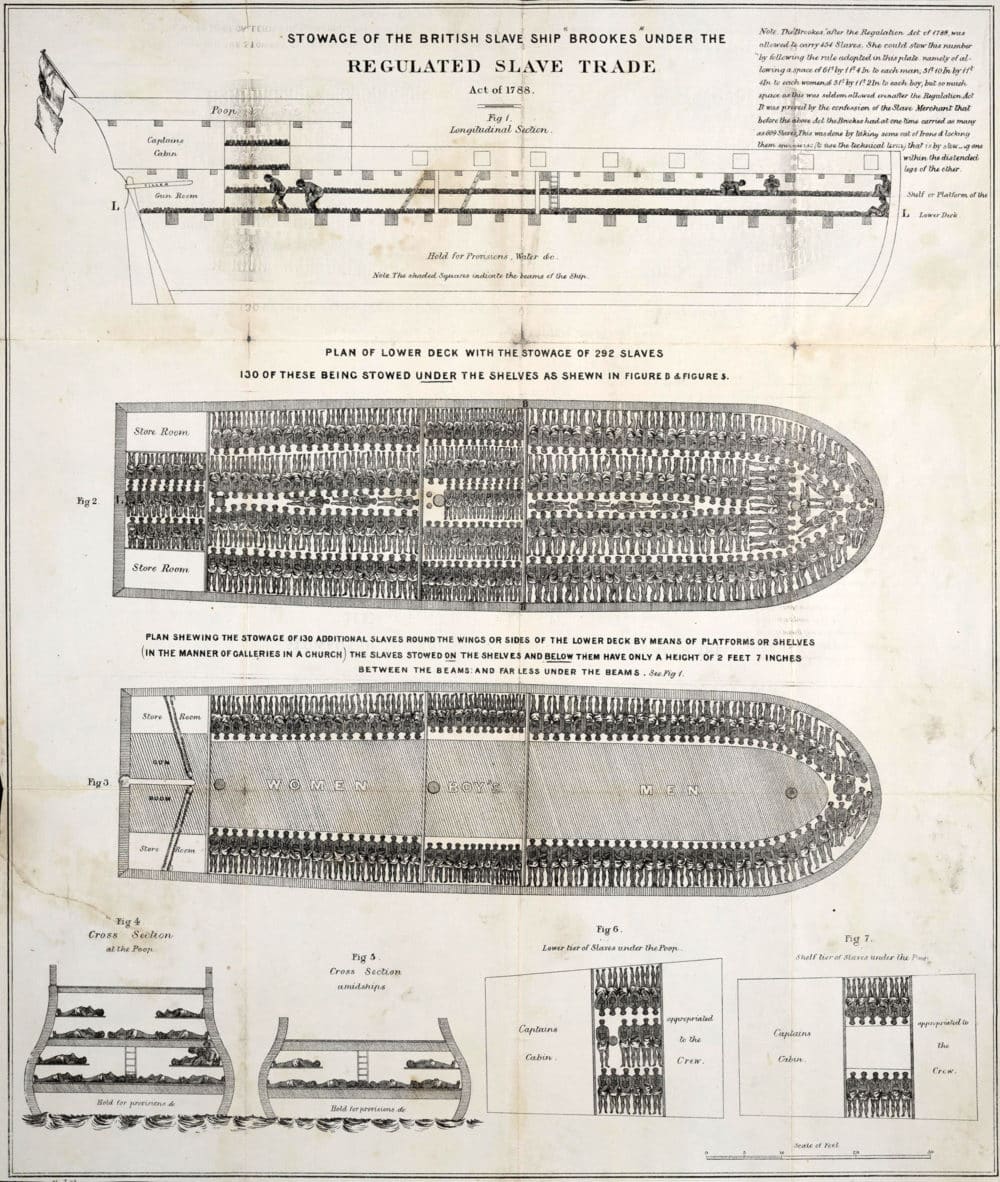
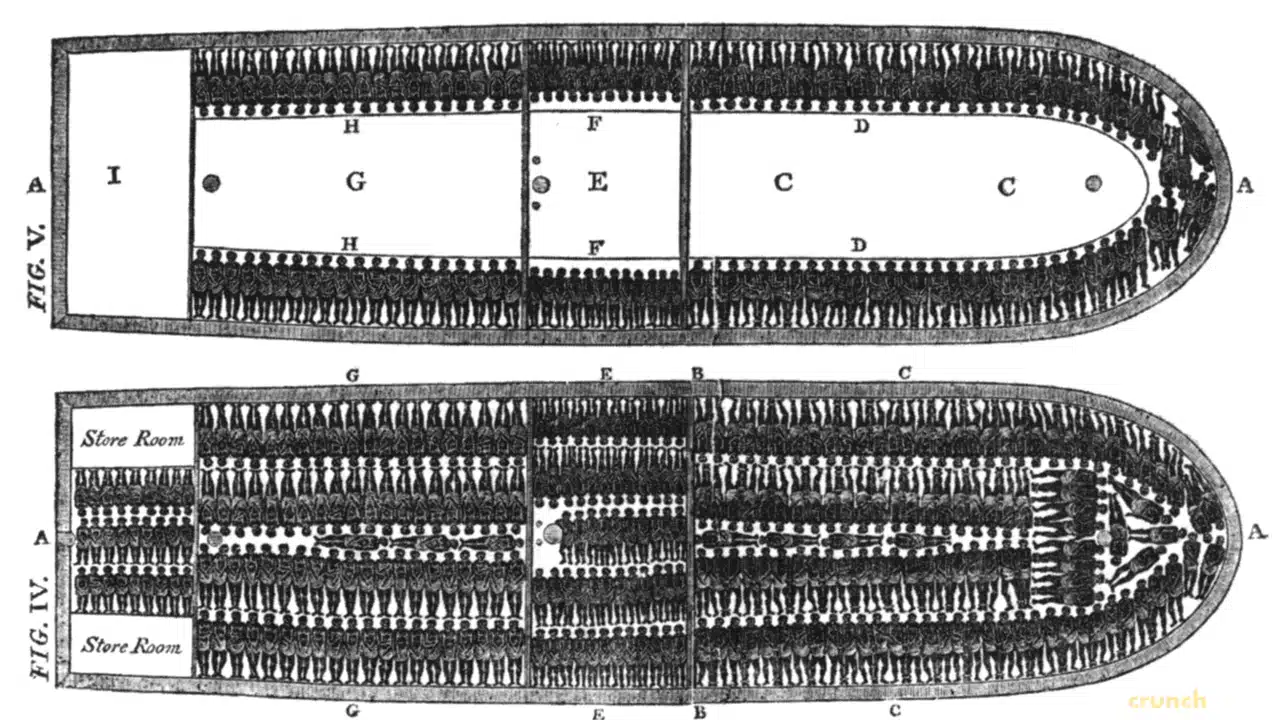
In 1788 Parliament passed the Regulated Slave Trade Act, limiting the number of captives a British ship could carry by its tonnage. Abolitionists in Plymouth then drew the deck plan of a Liverpool ship called the Brookes, showing 482 people packed in rows, which was the new legal maximum; the ship had carried more than 600. Printed in 1789 and pasted up across Britain, it became the most famous image of the Middle Passage.
LEARN MORESHOW LESSwhy it matters · key numbersCULTURENobody had to read to understand the Brookes print. It turned the Middle Passage from a rumor into a diagram, and it is still the picture most people see when they hear the words.
In March of 1789 Olaudah Equiano published The Interesting Narrative of the Life of Olaudah Equiano, or Gustavus Vassa, the African, in London. It told of his kidnapping as a child, the hold of the slave ship, his years in the Navy and the Caribbean, and his purchase of his own freedom. It ran through nine editions in his lifetime and was a best seller by 1792. Equiano toured Britain and Ireland selling it and speaking against the trade.
LEARN MORESHOW LESSwhy it matters · a source · 1 key figureCULTUREIt was the first slave narrative to reach a mass audience, and it put a name and a voice to the cargo. Frederick Douglass and Solomon Northup wrote in the tradition Equiano started.
IN THEIR OWN WORDS“The stench of the hold while we were on the coast was so intolerably loathsome, that it was dangerous to remain there for any time.”
Olaudah Equiano, 1789
The first United States census, taken as of August 2nd, 1790, counted 697,681 enslaved people in a population of 3.9 million. Virginia alone held nearly 300,000. Every state except Massachusetts reported some, though in most of New England the numbers were tiny. Over the next seventy years, with the import trade closed after 1808, the enslaved population grew almost entirely by birth to nearly four million.
LEARN MORESHOW LESSwhy it matters · key numbersPEOPLEThe census is the plainest measure there is. About one person in six in the new republic was enslaved, and the share was above one in three in Virginia, South Carolina and Georgia.
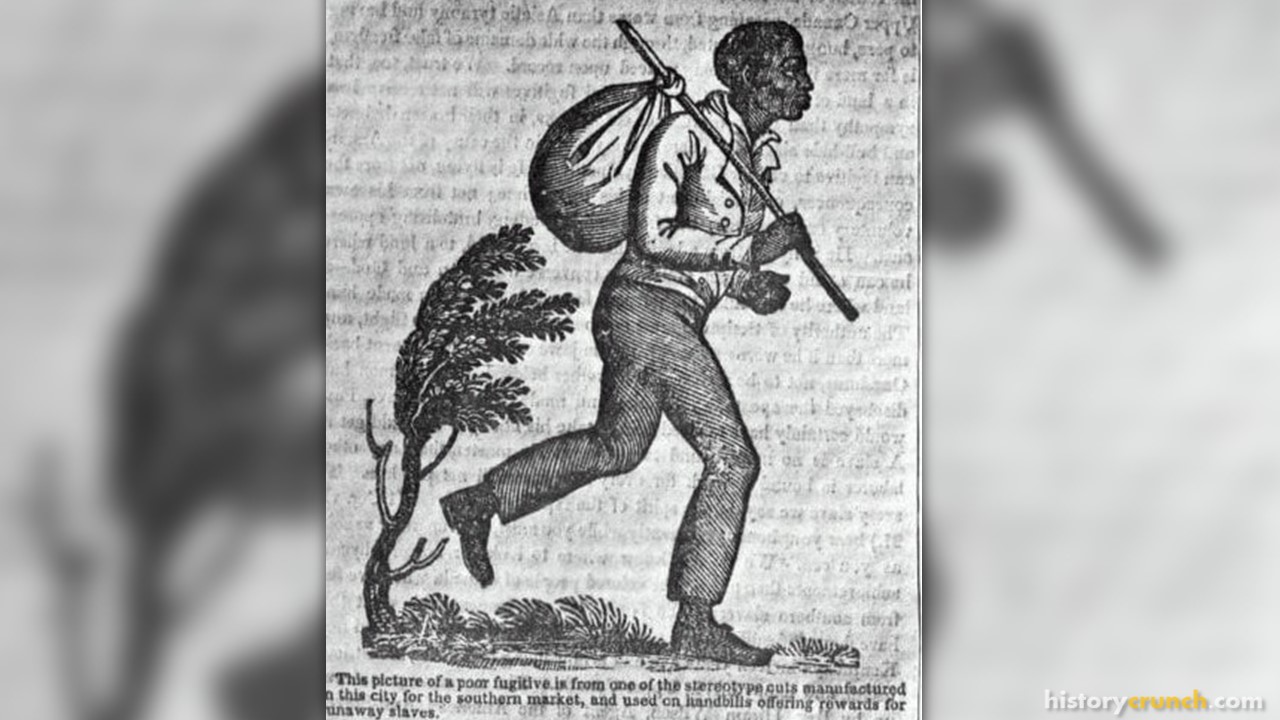
On February 12th, 1793 President George Washington signed the first Fugitive Slave Act. It allowed a slave owner or his agent to seize a person who had escaped to another state, bring them before a judge or magistrate, and take them back on the owner's word alone. Anyone who hid or helped an escaped slave could be fined five hundred dollars. The accused had no right to a jury and no right to testify.
LEARN MORESHOW LESSwhy it matters · key numbersLAWThe act put the law of the whole country behind the slave catcher, and it made every free state a place where a Black person could be seized on a stranger's oath. It also gave the Underground Railroad its reason to exist.
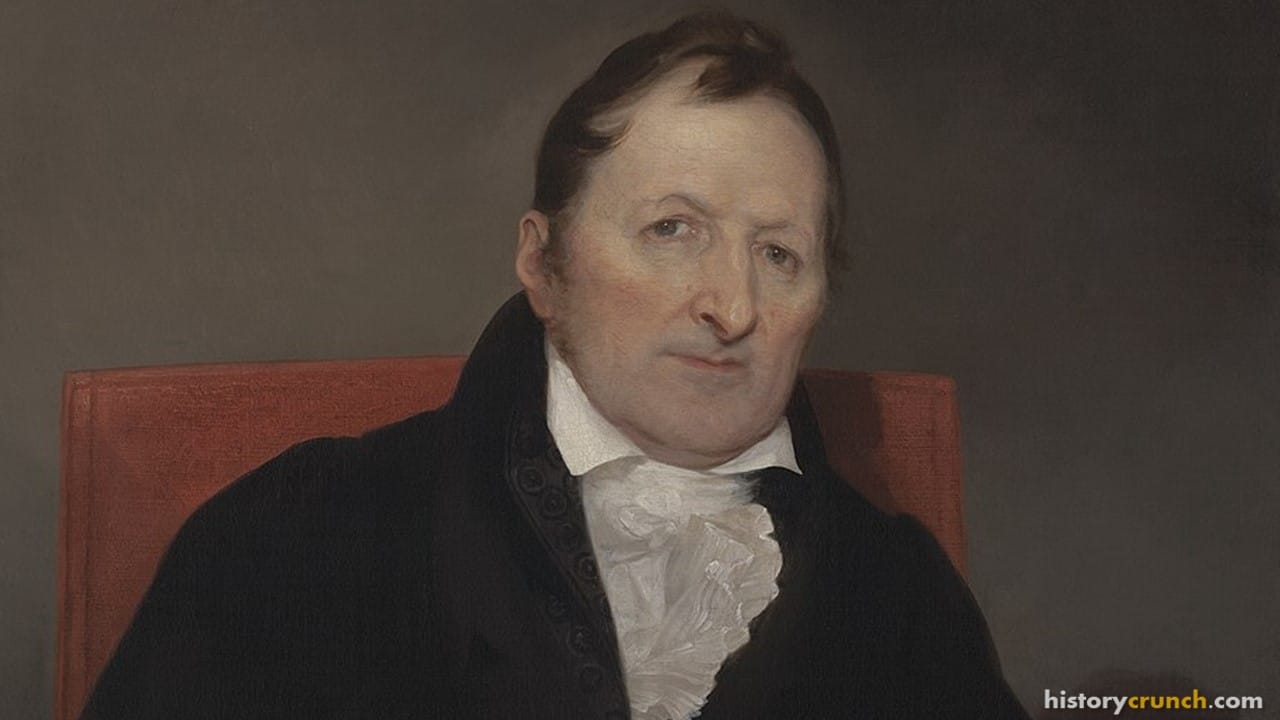
In 1793, while staying on a Georgia plantation, a young Massachusetts graduate named Eli Whitney built a machine, the cotton gin, that pulled the seeds out of short-staple cotton fifty times faster than a person could by hand. He applied for a patent on October 28th, 1793 and received it on March 14th, 1794. Cotton that had been barely worth growing became the most profitable crop in the world, and the land from Georgia to Texas was turned over to it.
LEARN MORESHOW LESSwhy it matters · 1 key figureECONOMYThe gin did not free anyone from work; it multiplied the work. Cotton needed hands to plant, hoe and pick, and the demand for enslaved labor rose with every bale. Before the gin some Southerners thought slavery might fade. After it, none did.
On March 29th, 1799 New York passed its Act for the Gradual Abolition of Slavery. Children born to enslaved mothers after July 4th of that year would be free, but only after serving the mother's owner until twenty-eight for men and twenty-five for women. Those already enslaved stayed so. A second act in 1817 set July 4th, 1827 as the day the last of them would be freed. Sojourner Truth, born about 1797, walked away a year early.
LEARN MORESHOW LESSwhy it mattersLAWNew York had held more enslaved people than any Northern state, and it took twenty-eight years to let them all go. Gradual emancipation was a bargain with owners, not a gift to the enslaved.
In the summer of 1800 an enslaved blacksmith named Gabriel, owned by Thomas Prosser, planned to march on Richmond with hundreds of followers, seize the arsenal and take the governor hostage. The rising was set for August 30th. A violent storm washed out the roads that night, two enslaved men told their masters, and the militia was called out. Gabriel was captured in September and hanged with about twenty-five others.
LEARN MORESHOW LESSwhy it mattersRESISTANCEGabriel's plan borrowed the language of the American and French revolutions, and that was what terrified Virginia. The state answered by tightening its laws on the movement, education and freeing of enslaved people.
On February 15th, 1804 New Jersey passed a gradual abolition act, the last of the Northern states to do so. Children born after July 4th, 1804 would be free at twenty-five for men and twenty-one for women; everyone already enslaved stayed enslaved. In 1846 the state renamed its remaining slaves 'apprentices for life'. The 1860 census still found eighteen of them, and they were not freed until the Thirteenth Amendment.
LEARN MORESHOW LESSwhy it mattersLAWThe free North was free on a schedule, and in New Jersey the schedule ran out only when the Civil War did.
On March 25th, 1807 the Slave Trade Act received royal assent and it became illegal for any British subject to carry slaves or for any British ship to enter the trade. Two decades of petitions, boycotts of slave-grown sugar and evidence gathered by Thomas Clarkson and argued by William Wilberforce had finally carried Parliament. The Royal Navy's West Africa Squadron began stopping slave ships, and Britain pressed other nations to follow.
LEARN MORESHOW LESSwhy it mattersABOLITIONBritain had been the largest carrier of enslaved Africans. Its withdrawal changed the sea lanes, and its navy became the enforcement arm of abolition for the next sixty years.
The Constitution had forbidden Congress to end the slave trade before 1808. Congress passed the Act Prohibiting Importation of Slaves on March 2nd, 1807, to take effect on the first day allowed, January 1st, 1808. From then on it was a crime to bring a new enslaved person into the United States from abroad. Smuggling continued on a small scale, but the great majority of the four million enslaved people of 1860 were born in America.
LEARN MORESHOW LESSwhy it mattersLAWClosing the import trade did not weaken slavery. It made enslaved people more valuable, turned Virginia and Maryland into breeders and sellers for the cotton states, and created the internal slave trade that broke up families for the next fifty years.
Cotton took the South west and took slavery with it. The enslaved population passed two million by 1830 and the internal trade that fed the new plantations of Alabama, Mississippi and Louisiana broke up families by the hundred thousand. The people it held fought back: on the German Coast in 1811, in Charleston in 1822, in Southampton County in 1831, aboard the Amistad and the Creole. And in the North a movement grew that did not want slavery contained but ended. Garrison started The Liberator in 1831, Douglass escaped in 1838 and published in 1845, Tubman walked out of Maryland in 1849. Henry Clay held the Union together with a compromise in 1820, and by the end of this era he was preparing another.
On the night of January 8th, 1811 an enslaved driver named Charles Deslondes led a rising on the sugar plantations of the German Coast, upriver from New Orleans in the Territory of Orleans, the largest slave revolt of the Antebellum South. The rebels wounded a planter, killed his son, seized weapons and marched toward the city in something like military order, their number growing to between two and five hundred. Militia and federal troops broke them on January 10th. About ninety-five rebels were killed in the fighting or executed, and their heads were displayed on poles along the river road.
LEARN MORESHOW LESSwhy it matters · key numbersRESISTANCEIt was the largest slave revolt in the country's history and one of the least remembered, because the planters made sure it was. The heads along the levee were the point.
On December 21st, 1816 a meeting in Washington founded the American Colonization Society, with Henry Clay among its speakers. Its plan was to move free African Americans to a colony on the west coast of Africa. In 1822 the first settlers landed at what became Liberia. Some supporters were sincere opponents of slavery; others were slave owners who wanted free Black people, whom they saw as a danger, out of the country. Black abolitionists such as Frederick Douglass rejected the whole idea.
LEARN MORESHOW LESSwhy it matters · 1 key figureABOLITIONColonization was the respectable answer to slavery for thirty years, and it was an answer that treated Black Americans as foreigners in their own country. The abolitionists of the 1830s defined themselves against it.
By 1818 the Territory of Missouri had enough settlers to become a state, and its slave owners assumed it would join as a slave state. On February 13th, 1819 Representative James Tallmadge of New York proposed that no more slaves be brought into Missouri and that children born there be freed at twenty-five. The House passed it, the Senate refused it, and Congress adjourned deadlocked. The country's newspapers filled with the argument for the first time.
LEARN MORESHOW LESSwhy it mattersPOLITICSTallmadge asked the question the Constitution had postponed: would slavery follow the flag west? Thomas Jefferson, reading the debates at Monticello, called it 'a fire bell in the night'.
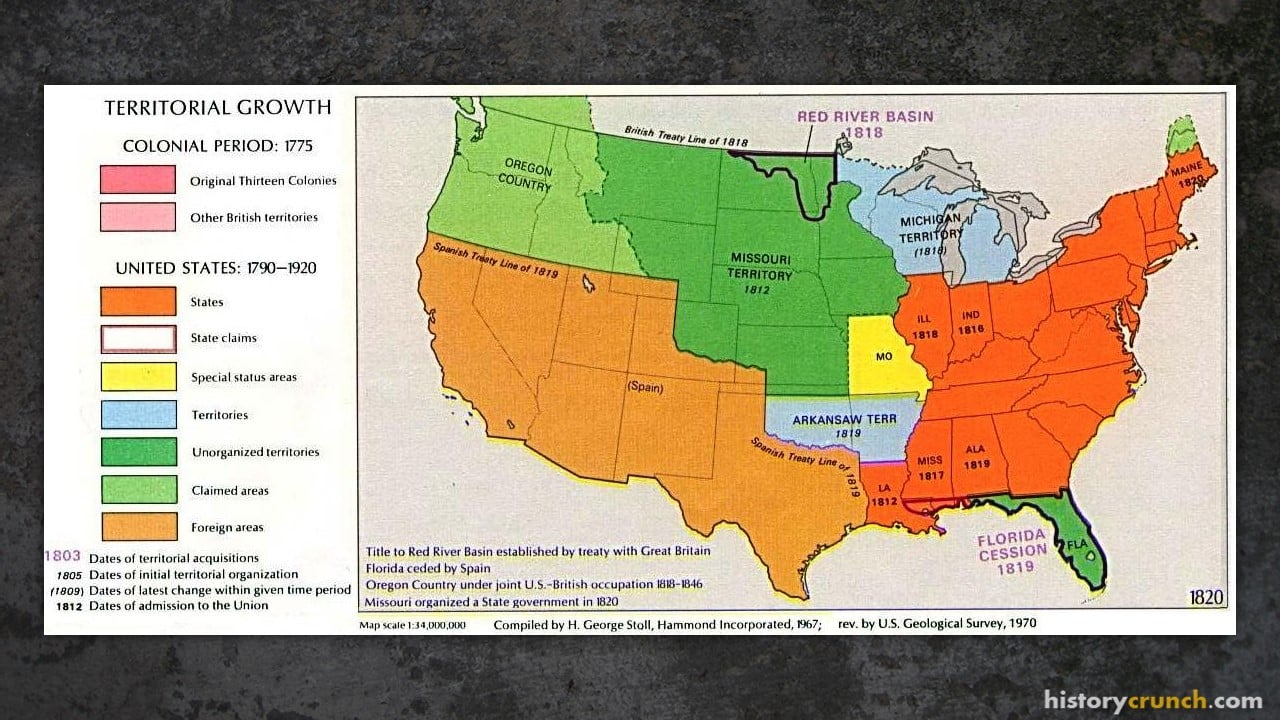
On March 6th, 1820 President James Monroe signed the Missouri Compromise, steered through the House by Speaker Henry Clay. Missouri would enter the Union as a slave state and Maine as a free one, keeping the Senate balanced at twelve states each. In the rest of the Louisiana Purchase, slavery was banned north of the line of 36 degrees 30 minutes, Missouri's southern border. The line held for thirty-four years.
LEARN MORESHOW LESSwhy it matters · key numbers · 1 key figurePOLITICSThe compromise settled nothing and postponed everything. Every later crisis, in 1850, 1854 and 1857, was a fight over the line drawn here, and the Supreme Court finally ruled it unconstitutional in the Dred Scott case.
Denmark Vesey was a free Black carpenter in Charleston who had bought his freedom with a lottery prize in 1800. In 1822 he was accused of organizing thousands of enslaved people to seize the city's arsenals, kill the white population and sail for Haiti. Two enslaved informers betrayed the plan before the date set in July. Vesey was hanged on July 2nd, 1822 with five others, and thirty-five men were executed in all. South Carolina then banned free Black sailors from leaving their ships in Charleston harbor.
LEARN MORESHOW LESSwhy it matters · key numbersRESISTANCEWhether the plot was as large as the court claimed is still argued. What is not argued is the response: a free Black church was pulled down, and the state passed laws that treated every free Black person as a suspect.
In late 1826 Isabella Baumfree, enslaved since birth in Ulster County, New York, walked away from her owner John Dumont with her baby daughter Sophia after he broke a promise to free her a year before the state's emancipation date. A Quaker family took her in and bought her remaining time. In 1828 she went to court to recover her son Peter, who had been sold illegally into Alabama, and won. She took the name Sojourner Truth in 1843.
LEARN MORESHOW LESSwhy it matters · 1 key figurePEOPLETruth's escape was not a run through the woods but a walk, in daylight, with a baby. She said later that she did not run because she thought that would be wrong, so she walked.
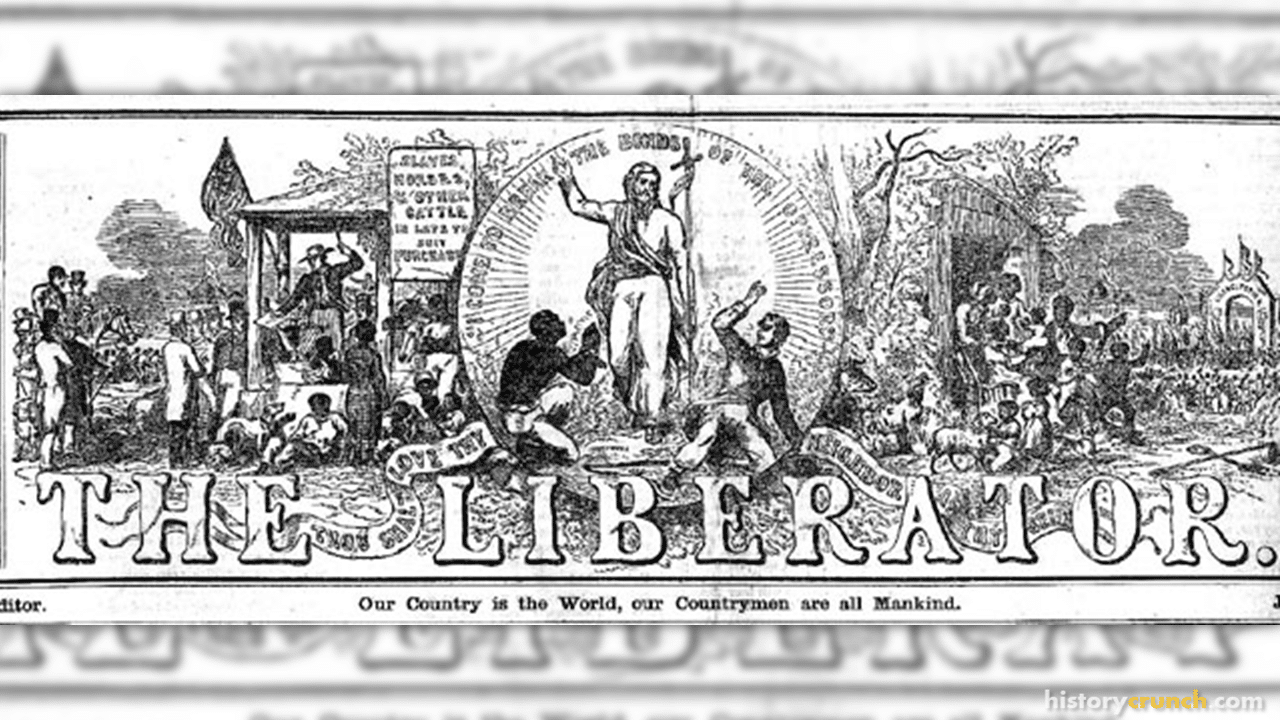
On January 1st, 1831 William Lloyd Garrison, aged twenty-five, published the first issue of The Liberator in Boston, with his partner Isaac Knapp. Earlier anti-slavery papers had argued for gradual emancipation and colonization. Garrison demanded immediate freedom for every enslaved person and no compensation for owners. The paper never sold more than three thousand copies, most of them to free Black readers, but it was quoted and attacked across the country every week for thirty-five years.
LEARN MORESHOW LESSwhy it matters · a source · 1 key figureABOLITIONThe Liberator's first editorial set the tone of the whole movement that followed: 'I will not equivocate, I will not excuse, I will not retreat a single inch, and I will be heard.'
IN THEIR OWN WORDS“I am in earnest. I will not equivocate. I will not excuse. I will not retreat a single inch. And I will be heard.”
William Lloyd Garrison, The Liberator, January 1st, 1831
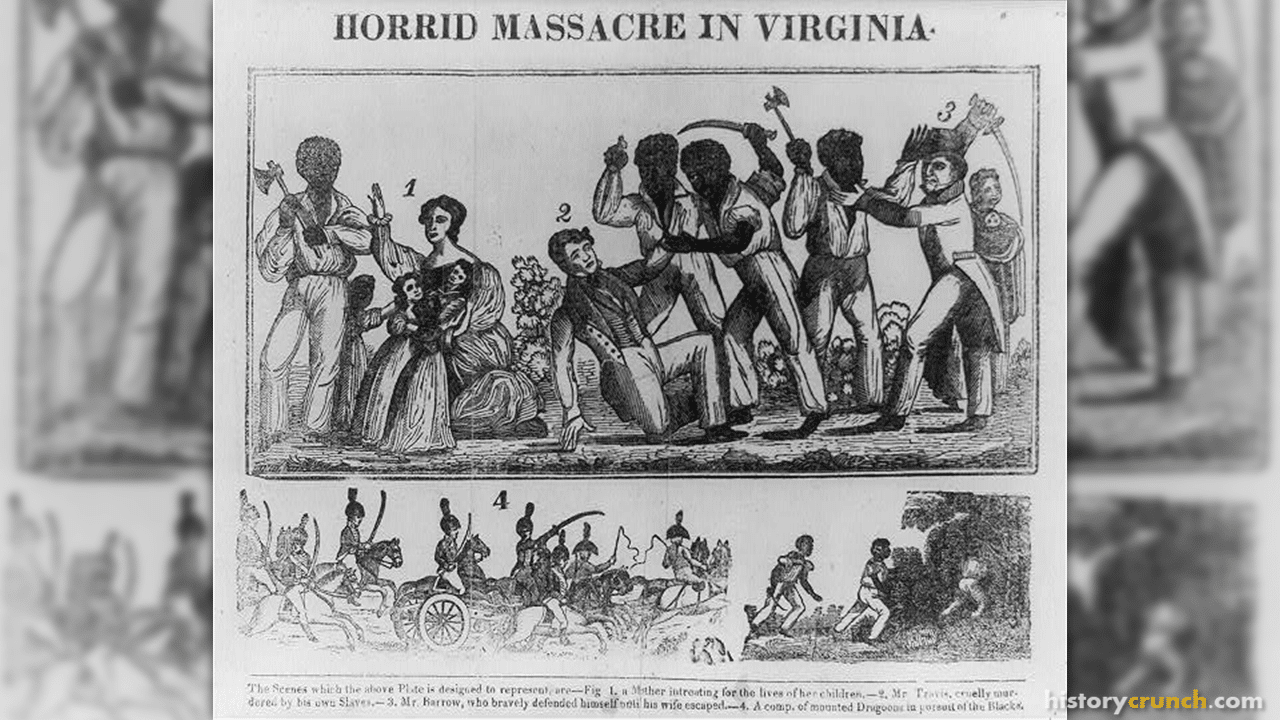
Nat Turner, an enslaved preacher in Southampton County, Virginia, believed he had been chosen by God to lead his people out of bondage. He took a solar eclipse on February 12th, 1831 as his sign. On the night of August 21st he and a small band killed the family that held him and moved from farm to farm, gathering about seventy followers and killing around sixty white people in two days. The militia scattered them on August 23rd. Turner hid for two months before he was caught.
LEARN MORESHOW LESSwhy it matters · key numbers · 1 key figureRESISTANCEIt was the deadliest slave rebellion in the country and the one the South never forgot. Virginia's legislature debated ending slavery that winter, voted not to, and instead passed the harshest slave laws in its history.
Nat Turner was captured on October 30th, 1831, tried on November 5th and hanged on November 11th in the county seat of Jerusalem, Virginia. Before he died he dictated an account of the rising to a lawyer named Thomas Gray, published as The Confessions of Nat Turner, in which he described his visions and named no regret. About fifty-five Black people were executed by the state for the rebellion, and mobs killed as many as two hundred more who had taken no part in it.
LEARN MORESHOW LESSwhy it matters · 1 key figureRESISTANCEThe Confessions became the South's nightmare and the North's evidence. After 1831 every Southern state made it a crime to teach an enslaved person to read, on the theory that a man who could read the Bible could read it the way Turner had.
On January 6th, 1832 Garrison and eleven others founded the New England Anti-Slavery Society in the basement of the African Meeting House on Beacon Hill in Boston. It was the first organization in the country to demand that slavery end at once rather than by degrees, and it opened its membership to Black members and, unusually, to women. Its lecturers were mobbed in towns across New England for the next decade.
LEARN MORESHOW LESSwhy it matters · 1 key figureABOLITIONImmediatism was the movement's great break with its own past. Before 1832 respectable anti-slavery meant colonization and patience; after it, the word abolitionist meant someone who wanted freedom now.
On August 28th, 1833 the Slavery Abolition Act received royal assent, ending slavery in the British colonies from August 1st, 1834. About 800,000 enslaved people, most of them in the Caribbean, were freed, though many were bound to their former owners as 'apprentices' until 1838. Parliament paid the owners twenty million pounds in compensation, about forty percent of the government's annual spending, and paid the freed nothing.
LEARN MORESHOW LESSwhy it matters · key numbersABOLITIONAmerican abolitionists watched Britain do in one act what the United States would take a war to do. Their opponents watched too, and pointed at the sugar islands' falling profits as proof that freedom would ruin the South.
On December 4th, 1833 sixty-two delegates from ten states met in Philadelphia and founded the American Anti-Slavery Society, with Garrison writing its Declaration of Sentiments and the New York merchant Arthur Tappan as president. It sent out lecturers, printed pamphlets by the million and flooded Congress with petitions. By 1838 it claimed 1,350 local societies and 250,000 members. It lasted until 1870, when its members judged the Fifteenth Amendment had finished its work.
LEARN MORESHOW LESSwhy it matters · key numbers · 1 key figureABOLITIONThe society turned abolition from a scatter of local groups into a national campaign with a press, a lecture circuit and a mailing list. Southern postmasters burned its pamphlets in the street.
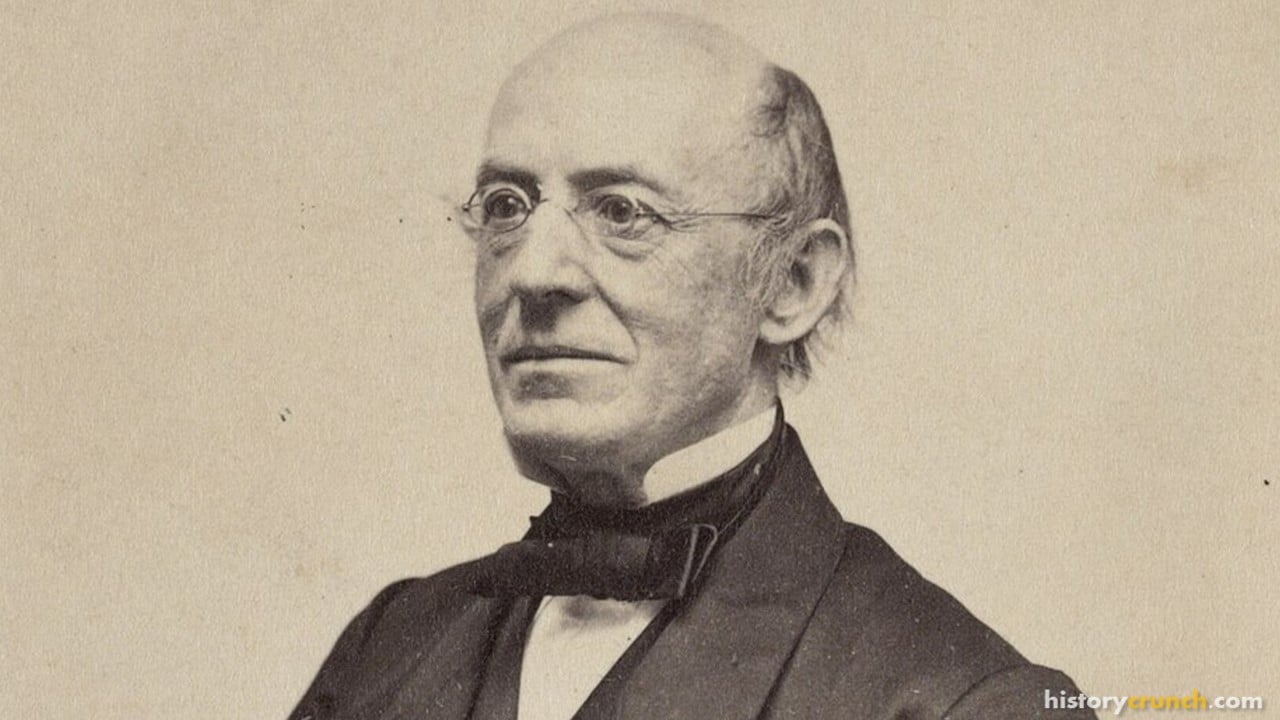
On October 21st, 1835 a crowd of several thousand, described by a witness as 'gentlemen of property and standing', broke up a meeting of the Boston Female Anti-Slavery Society, found Garrison hiding in a carpenter's shop, put a rope around him and dragged him through the streets. The mayor got him into the city jail for his own safety. Garrison wrote on the cell wall that he had been confined for 'preaching the abominable and dangerous doctrine that all men are created equal'.
LEARN MORESHOW LESSwhy it matters · 1 key figureABOLITIONThe mob was not a rabble. It was Boston's merchants, whose cotton mills and shipping depended on the South. Anti-slavery was a threat to Northern money long before it was a threat to Southern property.
Elijah Lovejoy, a Presbyterian minister, had already had three presses thrown into the Mississippi for printing an anti-slavery paper at St. Louis and then at Alton, Illinois. On the night of November 7th, 1837 a mob attacked the warehouse where his fourth press was stored. Lovejoy was shot five times and died within minutes. He was thirty-four. The press was dragged out, broken up and thrown into the river.
LEARN MORESHOW LESSwhy it matters · 1 key figureABOLITIONLovejoy was the movement's first martyr, and the murder changed minds that pamphlets had not. In Hudson, Ohio, a wool merchant named John Brown stood up in church and vowed his life to the destruction of slavery.
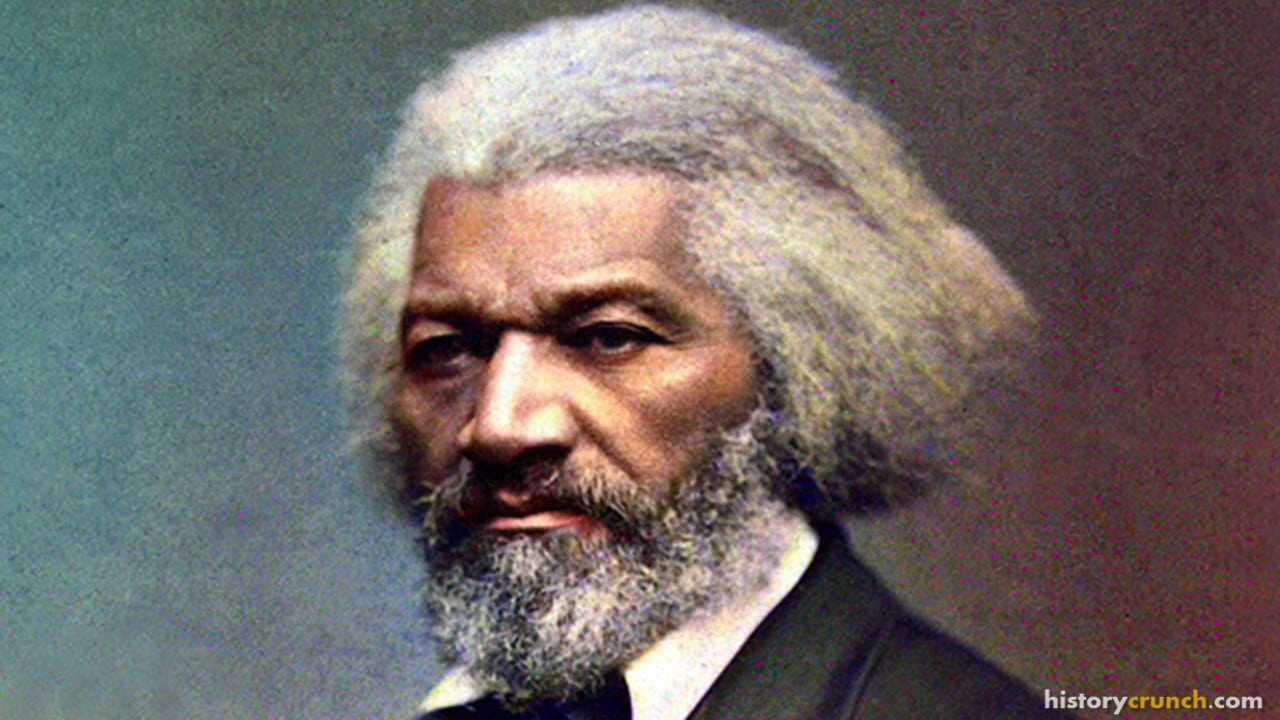
Frederick Douglass, born into slavery in Talbot County, Maryland, in February of 1818, had learned to read in secret in Baltimore and had been sent to a 'slave breaker' at sixteen. On September 3rd, 1838, dressed as a sailor and carrying a free Black seaman's papers lent by a friend, he boarded a train north. He was in New York within a day. Anna Murray, the free woman who had helped him plan it, followed and married him; they settled in New Bedford, Massachusetts.
LEARN MORESHOW LESSwhy it matters · 1 key figurePEOPLEDouglass kept the details of his escape secret for forty years so that the route could be used again. When he finally told it, in 1881, the point of the story was how ordinary it was: a borrowed paper and a train ticket.
In early 1839 Portuguese slavers kidnapped several hundred people in Sierra Leone and sold them in Havana, though importing Africans into Cuba had been illegal since 1820. Fifty-three of them, led by a Mende man named Sengbe Pieh, called Cinque by the Spanish, were put aboard the schooner La Amistad for the Cuban coast. On July 2nd they broke free, killed the captain and the cook, and ordered the two surviving Spaniards to sail east to Africa. The Spaniards steered north by night instead.
LEARN MORESHOW LESSwhy it matters · key numbersRESISTANCEThe Amistad captives did what the law said an enslaved person could not: they took the ship. The question of whether that was murder or self-defense went to the Supreme Court.
After nearly two months of zigzagging, the Amistad was found off Long Island on August 26th, 1839 by the United States brig Washington, whose officers claimed the ship and the Africans as salvage. The captives were jailed in New Haven, Connecticut. Spain demanded them back as property under a treaty of 1795, and President Martin Van Buren, facing an election, was ready to hand them over. New England abolitionists hired lawyers and a Mende interpreter and took the case to court.
LEARN MORESHOW LESSwhy it mattersRESISTANCEFor eighteen months the Amistad captives were the most famous prisoners in America, and thousands of people who had never met an African walked into a New Haven jail to look at them.
John Quincy Adams, seventy-three years old and thirteen years out of the presidency, argued the captives' case before the Supreme Court for eight and a half hours over two days. On March 9th, 1841 the court ruled, with one dissent, that the Africans had been kidnapped in violation of Spanish law and had therefore acted as free people defending themselves. They were released. The thirty-five survivors sailed for Sierra Leone in November of 1841.
LEARN MORESHOW LESSwhy it matters · key numbersLAWThe ruling did not touch slavery in the United States, and the court said so. But it was the first time the Supreme Court had taken the side of Africans who had killed to be free, and the country noticed.
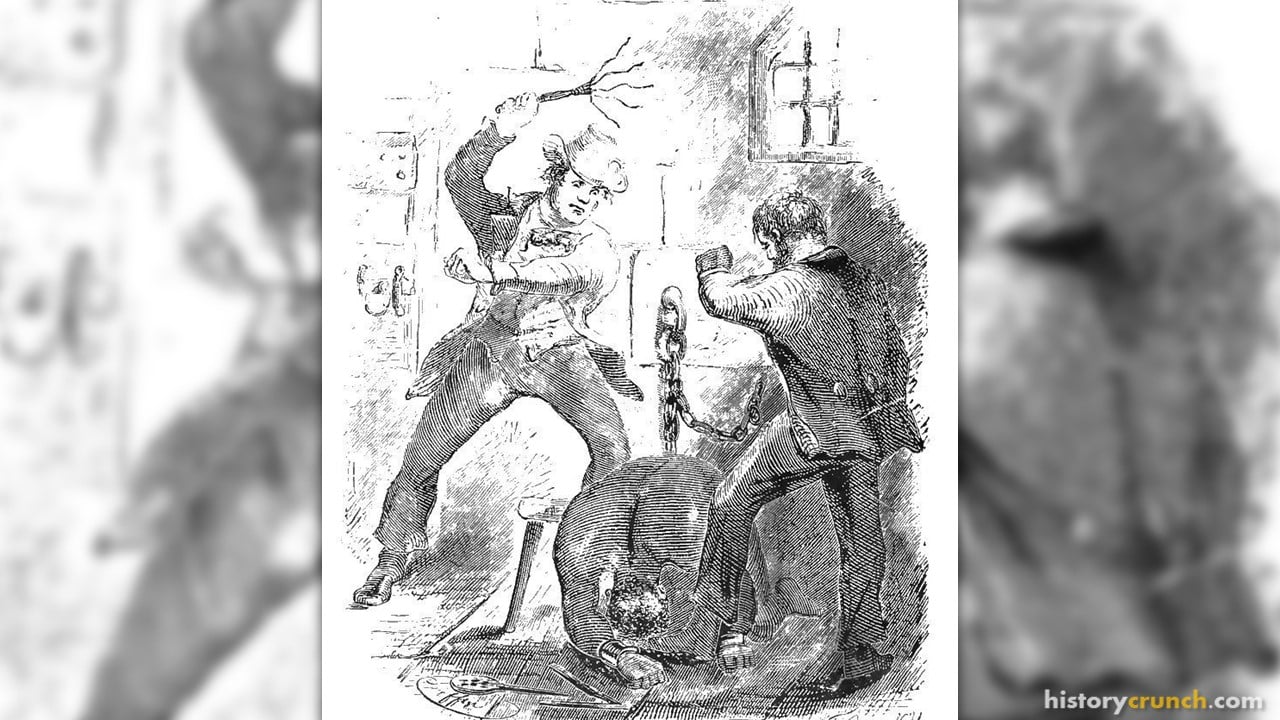
Solomon Northup was born free in Minerva, New York, in 1807, and by 1841 was a farmer, carpenter and violinist in Saratoga Springs with a wife and three children. In March of that year two men offered him work as a fiddler in a circus and took him to Washington, D.C. There he was drugged, woke in chains in a slave pen within sight of the Capitol, and was beaten when he said he was free. He was shipped to New Orleans and sold to a Louisiana planter.
LEARN MORESHOW LESSwhy it matters · 1 key figurePEOPLEKidnapping free Black people was a trade in itself, and the capital of the United States had a slave pen a few hundred yards from Congress. Northup's twelve years began there.
On November 7th, 1841 nineteen enslaved men led by Madison Washington seized the brig Creole, which was carrying 135 people from Virginia to the slave markets of New Orleans. They forced the crew to sail to Nassau in the Bahamas, where slavery had been abolished by Britain. The British authorities freed everyone aboard who had not taken part in the killing of a slave trader during the rising, and 128 people walked ashore free.
LEARN MORESHOW LESSwhy it matters · key numbersRESISTANCEThe Creole was the most successful slave revolt in American history, and it succeeded because a British colony was closer than a free state. Southern senators demanded war; Britain paid a settlement fourteen years later and returned no one.
On June 1st, 1843, Pentecost Sunday, Isabella Baumfree left New York City with a few coins and told her friends that the Spirit had called her to travel and preach. She took the name Sojourner Truth, meaning one who journeys and speaks what is true. She walked east through Long Island and Connecticut, preaching at camp meetings, and settled that winter in a Massachusetts community where she met Garrison and Douglass.
LEARN MORESHOW LESSwhy it matters · 1 key figurePEOPLETruth could not read or write, and her words are quoted more often than those of the men who could. The name she chose was a job description.
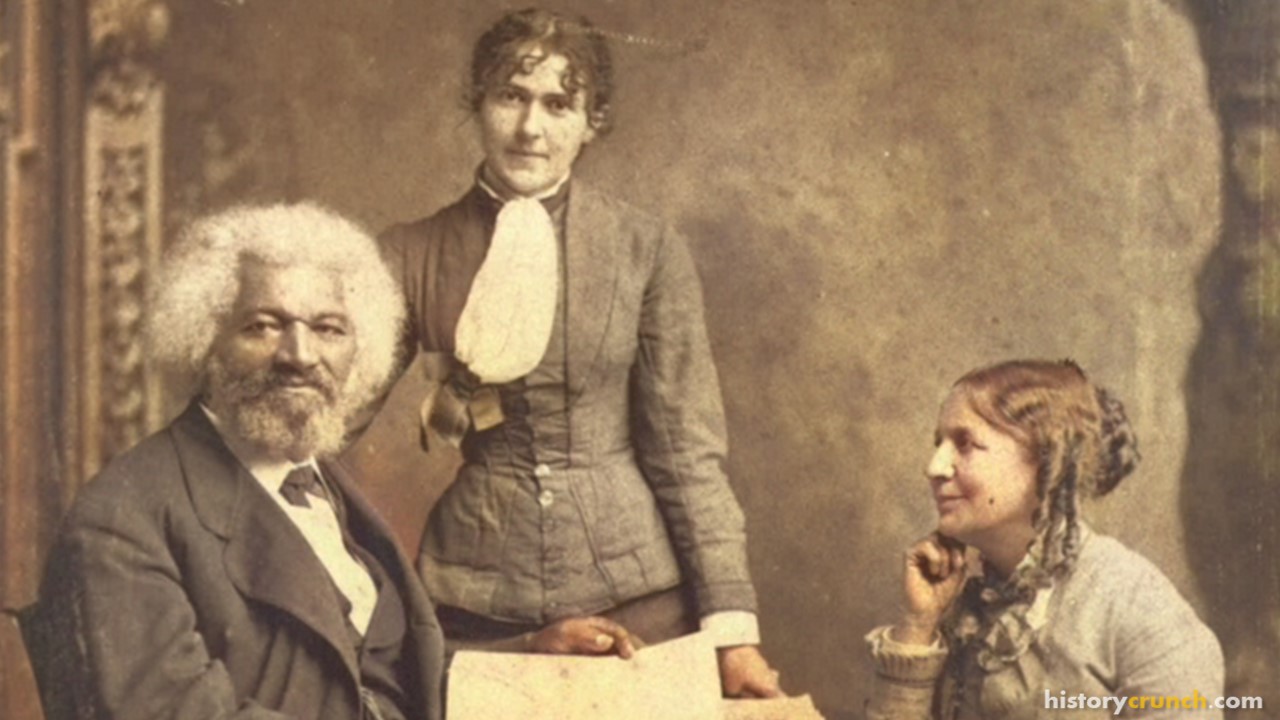
Frederick Douglass had been lecturing for the Massachusetts Anti-Slavery Society since 1841, and audiences had begun to doubt that a man who spoke so well had ever been a slave. His answer, published in Boston on May 28th, 1845, was the Narrative of the Life of Frederick Douglass, An American Slave, which named his owners and the places he had lived. It sold thirty thousand copies in five years. Because the book made him easy to find, he sailed for Britain that August and stayed two years.
LEARN MORESHOW LESSwhy it matters · key numbers · 1 key figureCULTUREThe Narrative is the slave narrative every other one is measured against. Douglass wrote it to prove he was real, and it made him too real to stay in the country.
While Douglass toured Britain and Ireland, two Quaker sisters in Newcastle, Ellen and Anna Richardson, raised 150 pounds and bought his freedom from his legal owner, Hugh Auld of Maryland. The manumission papers were filed on December 12th, 1846. Some abolitionists objected that paying for a man conceded that he had been property. Douglass answered that he preferred to be free in fact and argue the principle afterward.
LEARN MORESHOW LESSwhy it matters · key numbers · 1 key figurePEOPLEDouglass came home in 1847 a free man on paper and a famous one, and with enough money from British supporters to start his own newspaper.
On December 3rd, 1847 the first issue of The North Star appeared in Rochester, New York, edited and owned by Frederick Douglass. Garrison had advised against it, and the two men drifted apart over the next few years. The paper was named for the star that guided escaping slaves north. Its motto was 'Right is of no Sex, Truth is of no Color, God is the Father of us all, and we are all Brethren'. In 1851 it merged with another paper and became Frederick Douglass' Paper.
LEARN MORESHOW LESSwhy it matters · 1 key figureCULTUREA Black-owned, Black-edited national newspaper was itself an argument. Douglass's house in Rochester was also a station on the Underground Railroad, and the paper's office was a few blocks from Lake Ontario and Canada.
The first women's rights convention in the United States met at Seneca Falls, New York, on July 19th and 20th, 1848. When Elizabeth Cady Stanton's resolution demanding the vote for women looked likely to fail, Frederick Douglass rose and argued for it, and it passed. He was the only Black person present and one of about forty men. Abolitionism and women's rights had grown up together: the Grimke sisters, Lucretia Mott and Sojourner Truth worked in both.
LEARN MORESHOW LESSwhy it matters · 1 key figureRIGHTSThe two movements shared platforms, printers and enemies. They would split bitterly over the Fifteenth Amendment in 1869, when the vote went to Black men and not to any women.
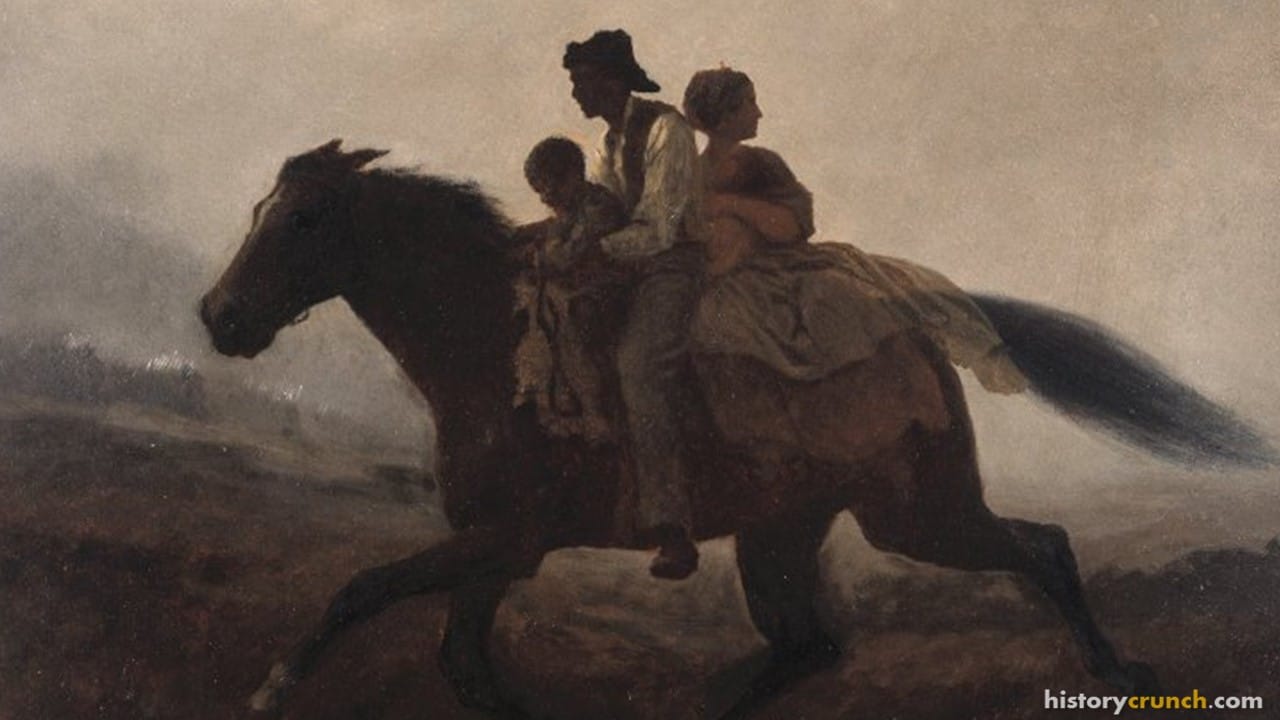
Harriet Tubman was born Araminta Ross in Dorchester County, Maryland, in about 1822, and carried a head injury from an overseer's thrown weight all her life. When her owner died in 1849 and his widow began selling off slaves, she left. On September 17th she set out with two of her brothers; they turned back, and she went on alone, walking by night about ninety miles to Pennsylvania. She was free, and she said later that she looked at her hands to see if she was the same person.
LEARN MORESHOW LESSwhy it matters · a source · 1 key figurePEOPLETubman's escape was the first of about fourteen trips. Everyone else on this timeline who escaped did it once; she went back into Maryland again and again to bring out her family and about seventy others.
IN THEIR OWN WORDS“When I found I had crossed that line, I looked at my hands to see if I was the same person. There was such a glory over everything.”
Harriet Tubman, recalling her escape
The Mexican War handed the United States a country's worth of new land, and the argument over whether slavery could go there tore the old parties apart. Clay's Compromise of 1850 bought ten years and cost the North its innocence: the Fugitive Slave Act made every citizen a slave catcher, and the escapes and rescues and kidnappings that followed made more abolitionists than thirty years of pamphlets. Stowe's novel sold three hundred thousand copies in a year. Then in 1854 Stephen Douglas repealed the Missouri Compromise to get a railroad, Kansas filled up with armed men from both sides, John Brown answered the sack of Lawrence with broadswords, and a Springfield lawyer who had left politics came back.
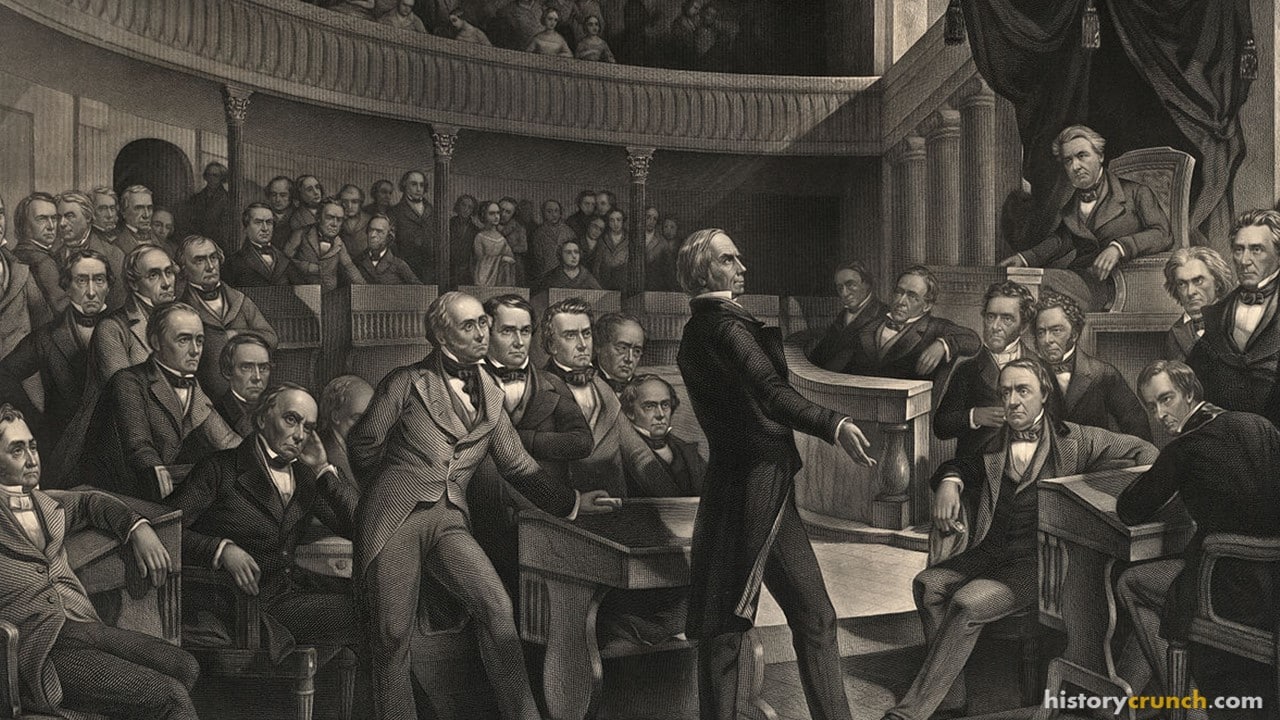
The Mexican-American War had ended in 1848 with the United States holding California and the Southwest, and the question of slavery in the new lands had deadlocked Congress. On January 29th, 1850 Senator Henry Clay of Kentucky, seventy-two years old and dying of tuberculosis, presented eight resolutions to settle it: California free, the other territories to decide for themselves, the slave trade ended in Washington, and a stronger fugitive slave law for the South.
LEARN MORESHOW LESSwhy it matters · 1 key figurePOLITICSClay had brokered the Missouri Compromise thirty years earlier. This was his last attempt to hold the Union together with a bargain, and the debate it opened ran for seven months.
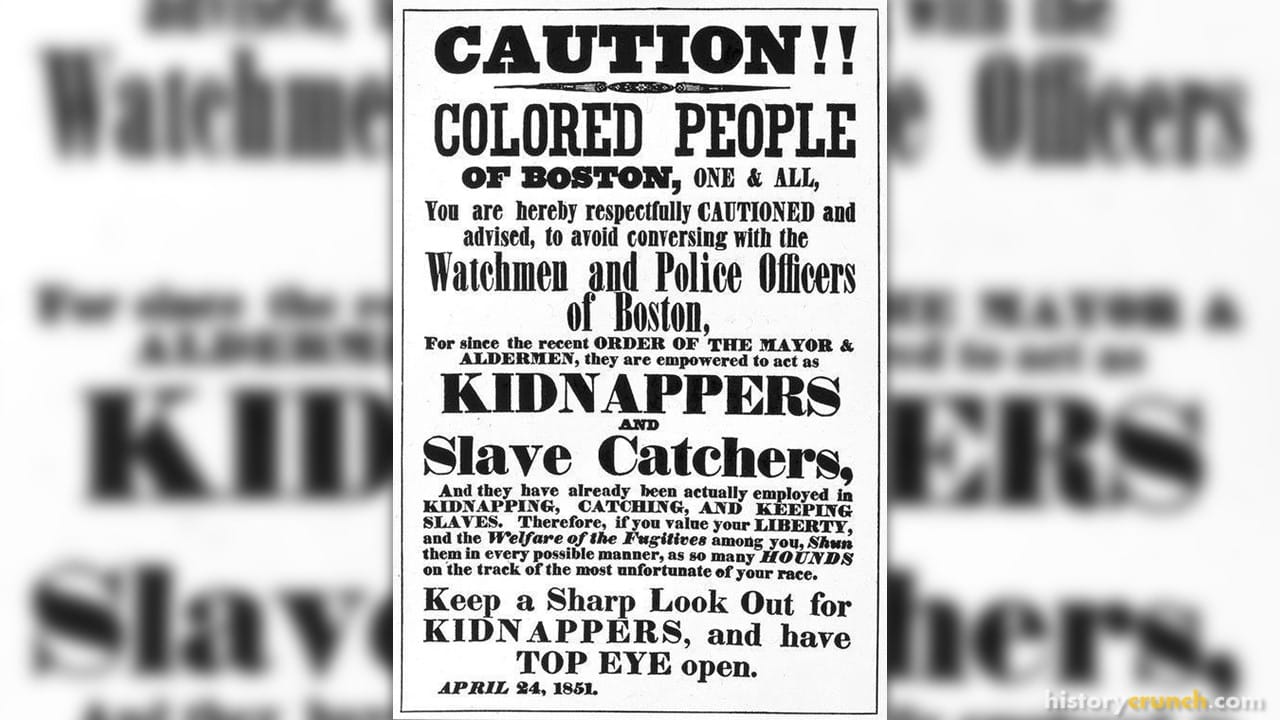
The Fugitive Slave Act, signed by President Millard Fillmore on September 18th, 1850, was the price the South demanded for the Compromise. It required federal marshals and ordinary citizens in every state to help capture escaped slaves, on pain of a thousand-dollar fine and six months in jail. The accused could not testify or have a jury. The commissioner who heard the case was paid ten dollars if he returned the person to slavery and five if he freed them.
LEARN MORESHOW LESSwhy it matters · key numbersLAWThe act made every Northerner a slave catcher by law and turned free Black communities into hunting grounds. It did more to make abolitionists than any pamphlet, and it sent thousands of escaped people, including Harriet Tubman's passengers, on to Canada.
Clay's single bill had failed in July, and Senator Stephen Douglas of Illinois broke it into five separate acts and passed them one at a time between September 9th and 20th, 1850. California entered as a free state. The territories of Utah and New Mexico would vote on slavery themselves. Texas gave up its claim to New Mexico for ten million dollars. The slave trade, though not slavery, was banned in the District of Columbia. And the Fugitive Slave Act became law.
LEARN MORESHOW LESSwhy it matters · 2 key figuresPOLITICSThe Compromise bought the Union ten years. Historians disagree over whether that decade let the North grow strong enough to win the war that followed, or simply put it off.
On May 29th, 1851 Sojourner Truth rose at the Ohio Women's Rights Convention in Akron and answered ministers who had argued that women were too weak for the vote. She spoke of plowing and planting as hard as any man, of bearing children and seeing them sold. The speech was reported at the time in plain English by Marius Robinson; the version with the refrain 'Ain't I a woman?' was written twelve years later by Frances Gage and is the one everyone remembers.
LEARN MORESHOW LESSwhy it matters · 1 key figureRIGHTSTruth stood in both movements at once and asked each of them why it left her out. The speech is the clearest statement in the century that the fight for the enslaved and the fight for women were the same fight.
Harriet Beecher Stowe, a minister's daughter living in Maine, wrote Uncle Tom's Cabin in fury at the Fugitive Slave Act. It appeared in weekly installments in the abolitionist paper The National Era from June 5th, 1851 until April 1st, 1852. Stowe had never lived in the South; she drew on slave narratives, on what she had seen across the river from Cincinnati and on the death of her own infant son, which she said taught her what a mother felt when a child was sold.
LEARN MORESHOW LESSwhy it matters · 1 key figureCULTUREA novel did what the pamphlets had not: it put readers in the cabin. Stowe's readers wept for people they had been taught to think of as property.
After the Fugitive Slave Act, the free states were no longer safe, and Harriet Tubman began taking her passengers all the way to Canada. In December of 1851 she led a group of eleven escaped people, including one of her brothers, from Maryland through Pennsylvania and New York to St. Catharines in Ontario, stopping at Frederick Douglass's house in Rochester on the way. She made the trip in winter, when the nights were long and the rivers were frozen.
LEARN MORESHOW LESSwhy it matters · key numbers · 1 key figurePEOPLECanada was free soil under British law, and after 1850 the Underground Railroad's real terminus was there. About thirty thousand people crossed before the war.
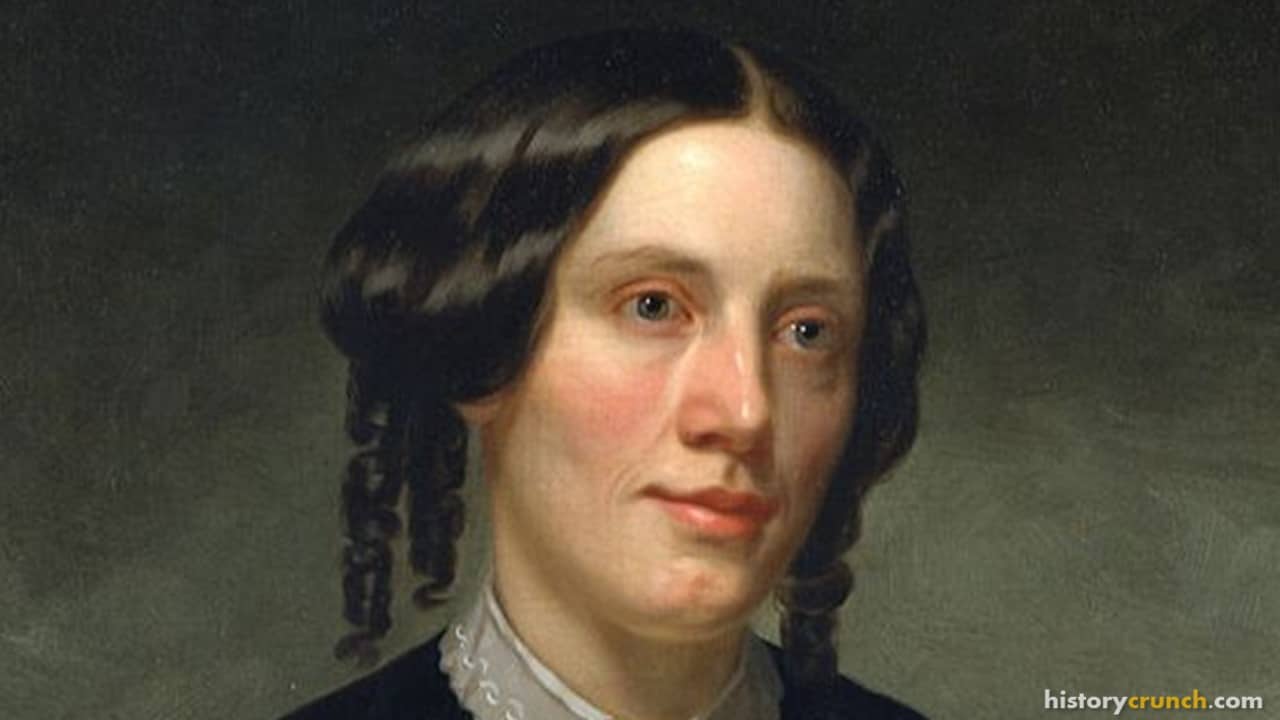
Uncle Tom's Cabin appeared in two volumes on March 20th, 1852. It sold ten thousand copies in its first week and three hundred thousand in the United States in its first year, and more in Britain. It was translated into dozens of languages and turned into plays that ran for the rest of the century. Southern writers answered with novels of contented slaves, and Southern states banned the book.
LEARN MORESHOW LESSwhy it matters · key numbers · 1 key figureCULTURENo book in American history had sold like it. Whether Lincoln really greeted Stowe as the little woman who started the great war, the story survives because so many people believed it could be true.
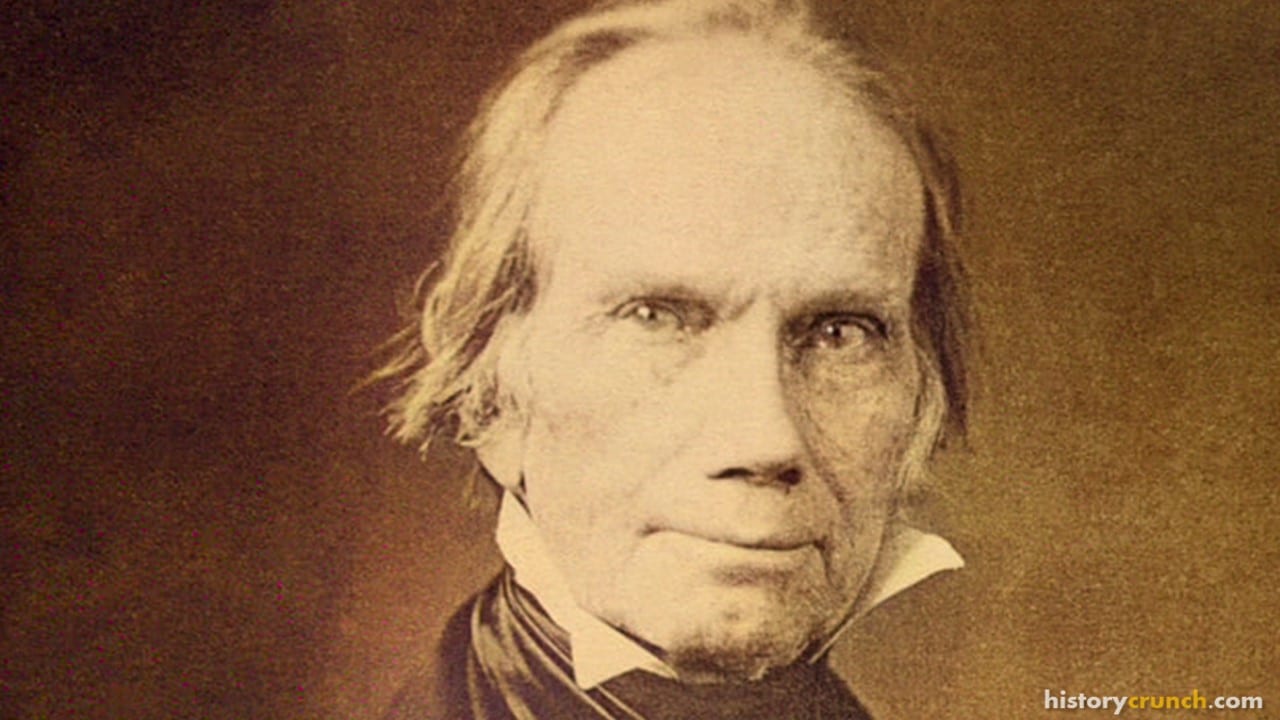
Henry Clay died of tuberculosis in Washington on June 29th, 1852, aged seventy-five. He had run for president three times and lost, and had made the two great compromises that held the Union together in 1820 and 1850. His body lay in state in the Capitol, the first person to be given that honor, and was buried at Lexington, Kentucky, on July 10th. The Whig Party he had led split over slavery within four years and vanished.
LEARN MORESHOW LESSwhy it matters · 1 key figurePEOPLEClay's death is the end of the age of compromise. The men who took his place, Douglas on one side and Lincoln on the other, both claimed him, and neither could do what he had done.
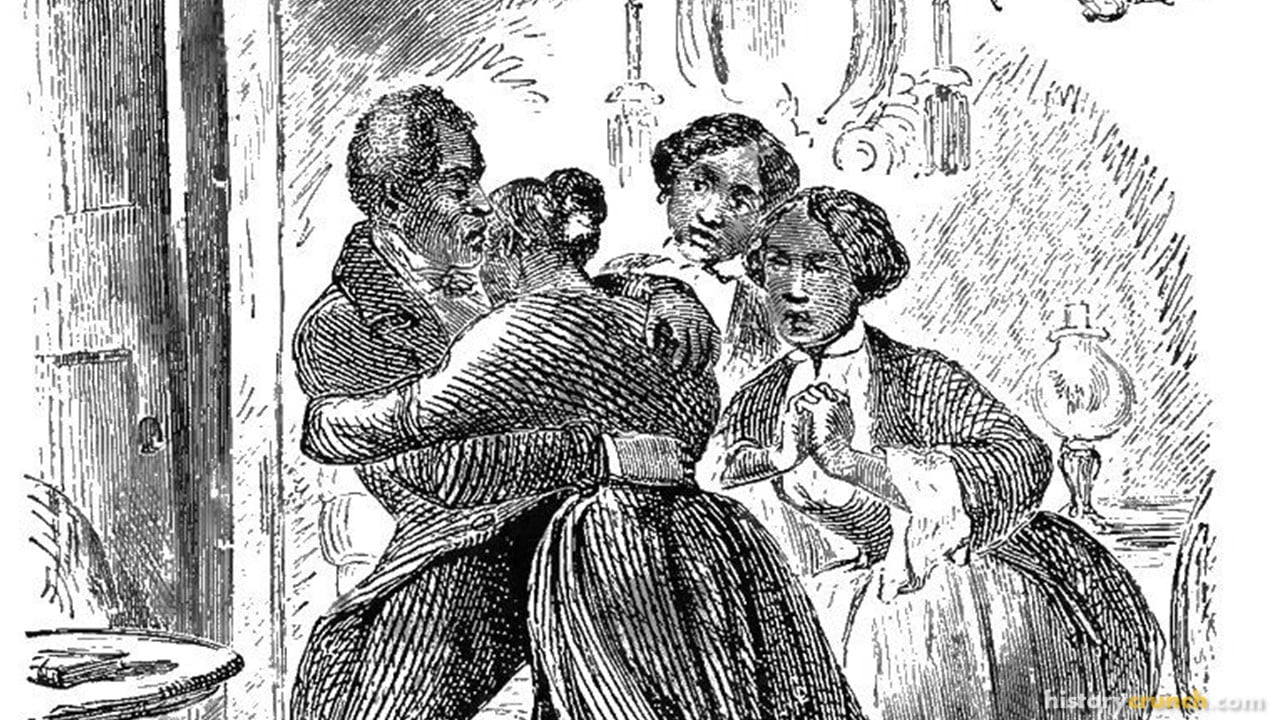
In 1852 a Canadian carpenter named Samuel Bass, working on the Louisiana plantation of Edwin Epps, agreed to smuggle out a letter for Northup. It reached his family in New York, and the state's governor sent an agent south with proof of his freedom. Northup walked off the Epps plantation on January 4th, 1853. Back in Washington he brought charges against James Burch, the trader who had first sold him, and lost; a slave could not testify against a white man.
LEARN MORESHOW LESSwhy it matters · 1 key figurePEOPLENorthup had twelve years to lose, and he got them back only because one white man was willing to post a letter. The men who kidnapped him were never punished.
Northup dictated his story to a lawyer named David Wilson, and Twelve Years a Slave was published in July of 1853, dedicated to Harriet Beecher Stowe. It sold thirty thousand copies in three years. Where Stowe had imagined slavery, Northup described it with names, dates and places that could be checked, and they were. His account of the slave pen in Washington and of cotton picking on the Epps plantation is still the most detailed record of the Deep South from inside.
LEARN MORESHOW LESSwhy it matters · 1 key figureCULTURENorthup disappears from the record after 1857. Nobody knows where or how he died, which is the last thing slavery took from him.
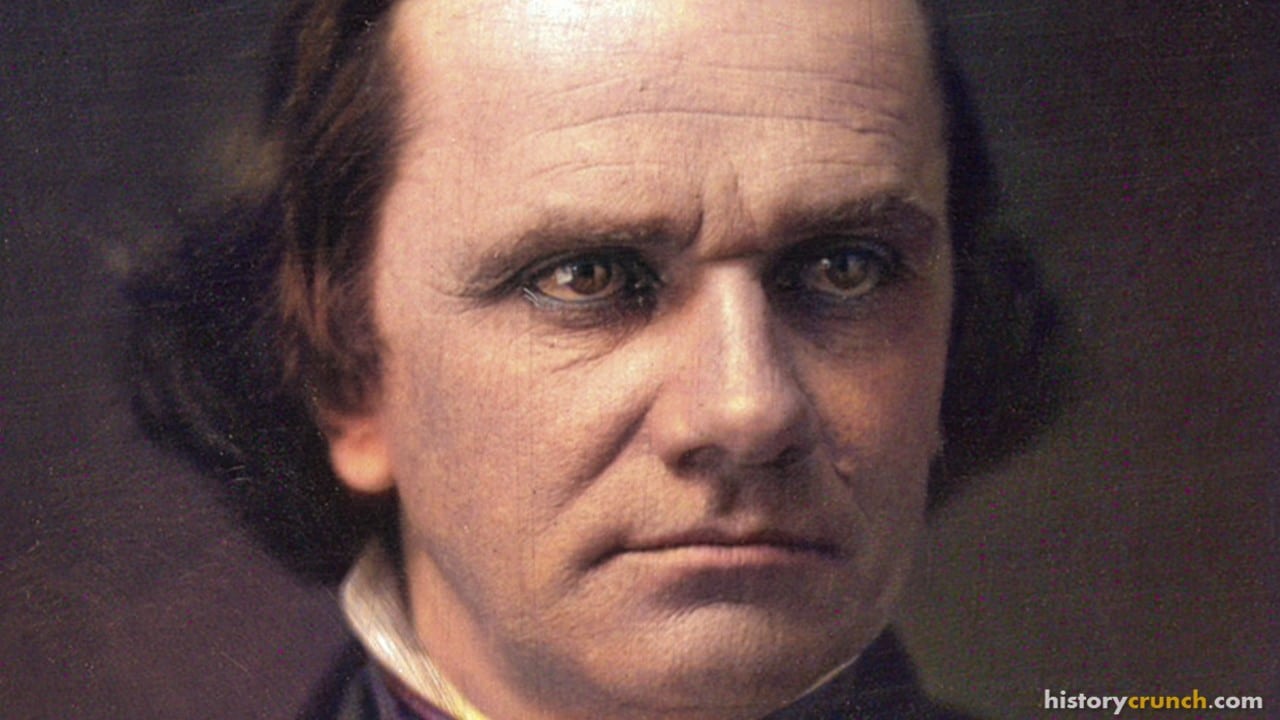
On January 4th, 1854 Senator Stephen Douglas of Illinois introduced a bill to organize the territories of Kansas and Nebraska so that a railroad could run west from Chicago. To win Southern votes he wrote in 'popular sovereignty': the settlers themselves would vote on slavery. Since both territories lay north of the Missouri Compromise line, the bill repealed the 1820 ban outright. Douglas said he knew it would raise 'a hell of a storm'.
LEARN MORESHOW LESSwhy it matters · 1 key figurePOLITICSDouglas wanted a railroad and a presidency. He got a party split, a new party called the Republicans, and a small war in Kansas.
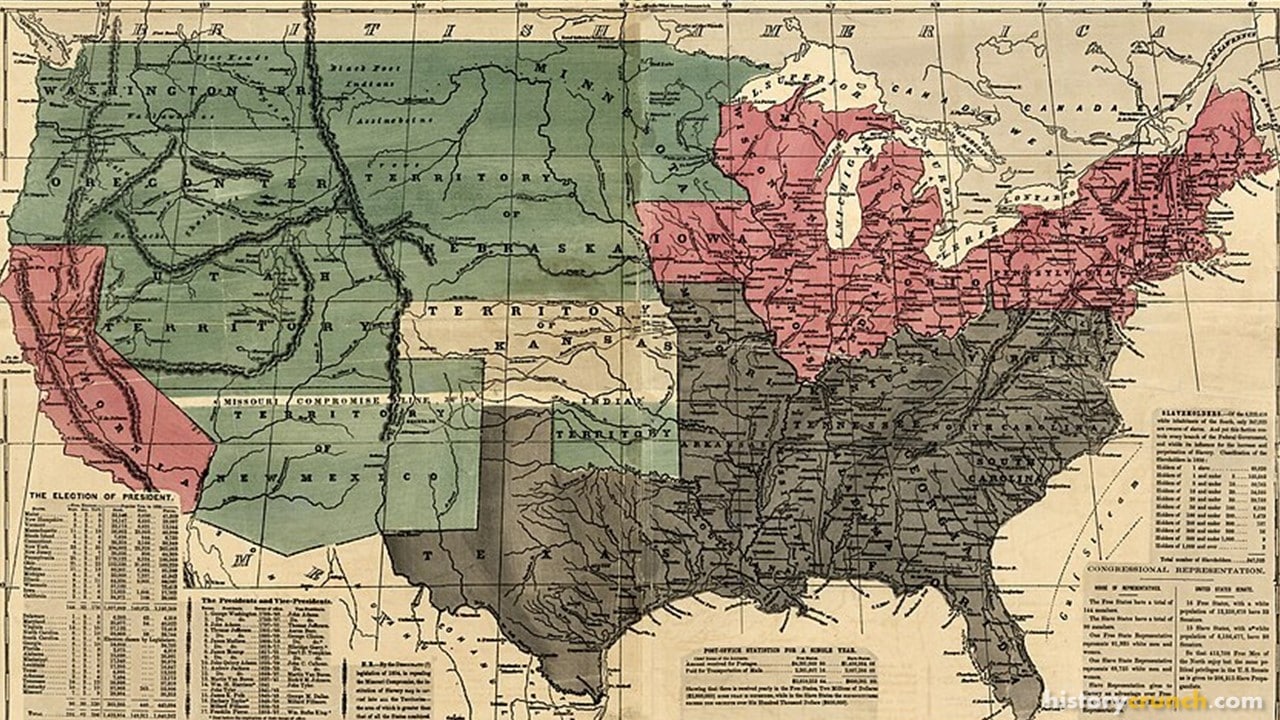
President Franklin Pierce signed the Kansas-Nebraska Act on May 30th, 1854. The Missouri Compromise line that had kept slavery out of the northern plains for thirty-four years was gone. Anti-slavery Northerners of both parties, who had trusted the line, felt betrayed, and that summer they began meeting under a new name, Republican. Pro-slavery Missourians and anti-slavery New Englanders both started sending settlers into Kansas to win the vote.
LEARN MORESHOW LESSwhy it matters · 1 key figureLAWThis is the law that ended the Whigs, made the Republicans and put Abraham Lincoln back into politics. He said later that the repeal of the Missouri Compromise 'aroused him as he had never been before'.
At an abolitionist picnic in Framingham, Massachusetts, on July 4th, 1854, William Lloyd Garrison held up a copy of the Fugitive Slave Act and burned it, then a copy of the court order returning Anthony Burns to slavery, then the Constitution of the United States, calling it 'a covenant with death and an agreement with hell'. Most of the crowd cheered. Douglass, who by then argued that the Constitution could be read as an anti-slavery document, did not.
LEARN MORESHOW LESSwhy it matters · 1 key figureABOLITIONGarrison's fire is the movement's radical edge in one gesture. The argument between him and Douglass, over whether the country's founding law was the enemy or the weapon, ran right through the war.
On March 30th, 1855 Kansas held its first election for a territorial legislature. About five thousand armed Missourians rode across the border, voted and rode home; in some districts the votes cast were several times the number of registered settlers. The pro-slavery legislature they elected made it a crime to question slavery in Kansas and set the death penalty for helping a slave escape. Free-state settlers refused to recognize it and elected their own government at Topeka.
LEARN MORESHOW LESSwhy it matters · key numbersPOLITICSPopular sovereignty was supposed to let Kansas decide. Instead Kansas got two governments, two constitutions and a year of killing.
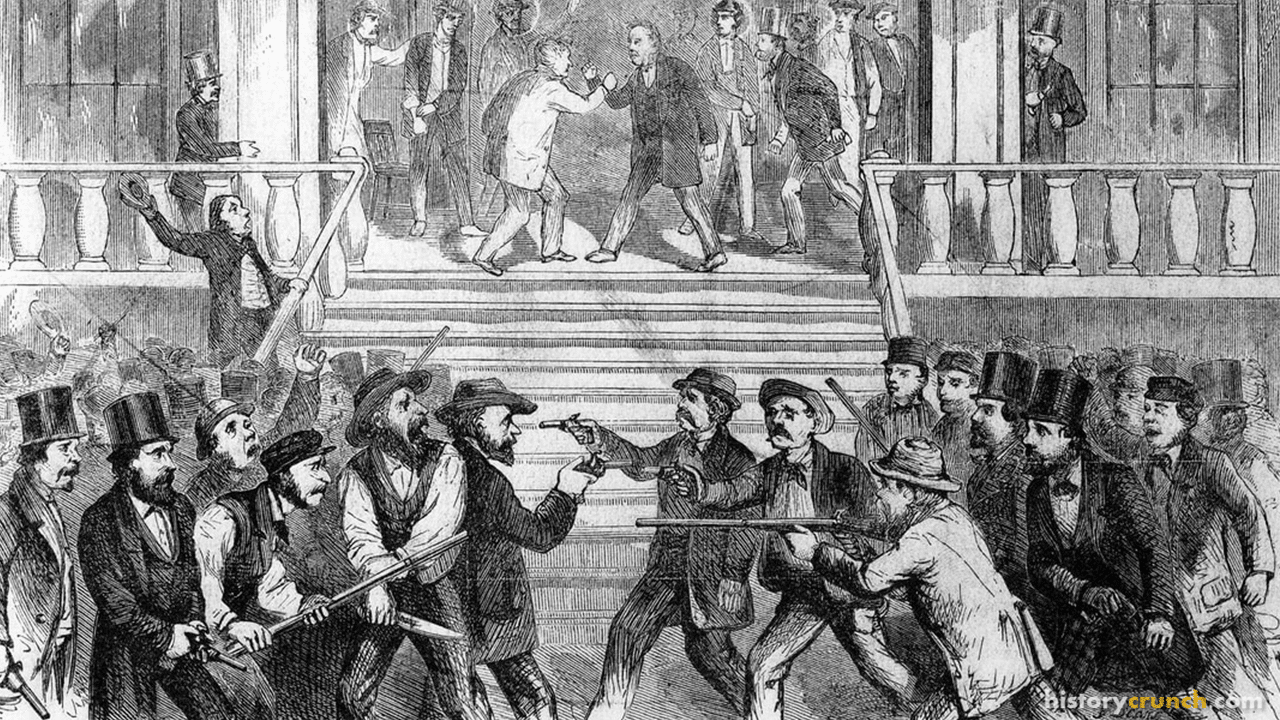
On May 21st, 1856 a pro-slavery posse sacked the free-state town of Lawrence, Kansas. Three nights later, on May 24th and 25th, John Brown, four of his sons and three others dragged five pro-slavery settlers from their cabins along Pottawatomie Creek and killed them with broadswords. None of the five had been at Lawrence. Brown said he was answering the sack of the town and the caning of Senator Charles Sumner in Washington two days before.
LEARN MORESHOW LESSwhy it matters · key numbers · 1 key figureVIOLENCEPottawatomie made Bleeding Kansas a war. About fifty-five people were killed in the territory over the next year, and Brown, now a wanted man, began planning something larger.
Abraham Lincoln had served one term in Congress as a Whig, lost interest in politics and gone back to his law practice in Springfield. The Kansas-Nebraska Act brought him back. On May 29th, 1856, at the convention that founded the Illinois Republican Party in Bloomington, he gave a speech so forceful that the reporters forgot to take notes; it is remembered as the Lost Speech. He campaigned for the party's first presidential candidate, John Fremont, that autumn.
LEARN MORESHOW LESSwhy it matters · 1 key figurePOLITICSLincoln was forty-seven and had held no office for seven years. Four years later he was president. The Republican Party was his road, and it existed because of Kansas.
In four years the country ran out of compromises. The Supreme Court ruled in 1857 that Black Americans could never be citizens and that Congress could not keep slavery out of any territory. Lincoln answered that a house divided could not stand and lost a Senate race by saying so. John Brown attacked Harpers Ferry in 1859, failed, hanged, and was sung about by the armies that marched south two years later. In 1860 the Democrats split in two and Lincoln won the presidency with no Southern votes at all. South Carolina left the Union before he took office, six states followed, and on April 12th, 1861 the guns opened on Fort Sumter.
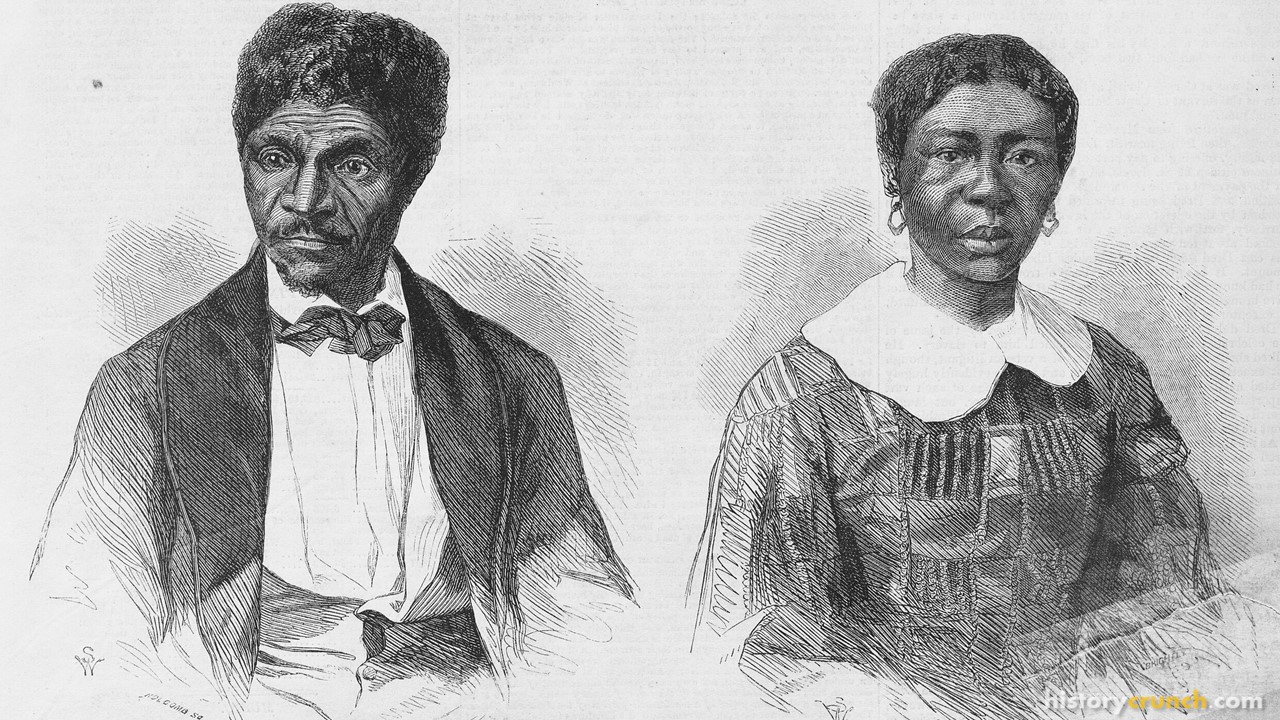
Dred Scott had been taken by his owner, an army surgeon, to live for years in Illinois and the Wisconsin Territory, where slavery was banned, and had sued for his freedom in Missouri in 1846. On March 6th, 1857 Chief Justice Roger Taney delivered the Supreme Court's decision. Black people, free or enslaved, were not and could never be citizens, so Scott had no right to sue. And Congress had no power to ban slavery in any territory, so the Missouri Compromise had been unconstitutional all along.
LEARN MORESHOW LESSwhy it matters · a source · 1 key figureLAWTaney meant to settle the slavery question forever. Instead he told the North that no free territory was safe and no Black American had rights a white man was bound to respect, and he made a Republican president far more likely.
IN THEIR OWN WORDS“They had no rights which the white man was bound to respect.”
Chief Justice Roger Taney, describing the founders' view of Black Americans, March 6th, 1857
Two months after the Supreme Court told Dred Scott he could never be free, his ownership passed to Taylor Blow, the son of the Virginia family that had held him as a boy and had been paying his legal costs. On May 26th, 1857 Blow freed Scott, his wife Harriet and their two daughters. Scott went to work as a porter at a St. Louis hotel, a celebrity to the guests. He died of tuberculosis on September 17th, 1858, sixteen months after his freedom.
LEARN MORESHOW LESSwhy it matters · 1 key figurePEOPLEThe man whose case had split the country was freed by a private act of decency, which is what the law had refused him. He had a year and a half of it.
On June 16th, 1858 the Illinois Republican convention in Springfield chose Abraham Lincoln to run against Stephen Douglas for the Senate. In his acceptance speech Lincoln said the country could not go on half slave and half free: it would become all one or all the other. He accused Douglas, the Dred Scott court and President Buchanan of working together to spread slavery into every state. His friends thought the speech too radical to win.
LEARN MORESHOW LESSwhy it matters · a source · 1 key figurePOLITICSThe house divided speech gave the Republicans their argument and the South its proof that Lincoln meant to end slavery. He lost the Senate race. The speech won him the country.
IN THEIR OWN WORDS“A house divided against itself cannot stand. I believe this government cannot endure, permanently half slave and half free.”
Abraham Lincoln, June 16th, 1858
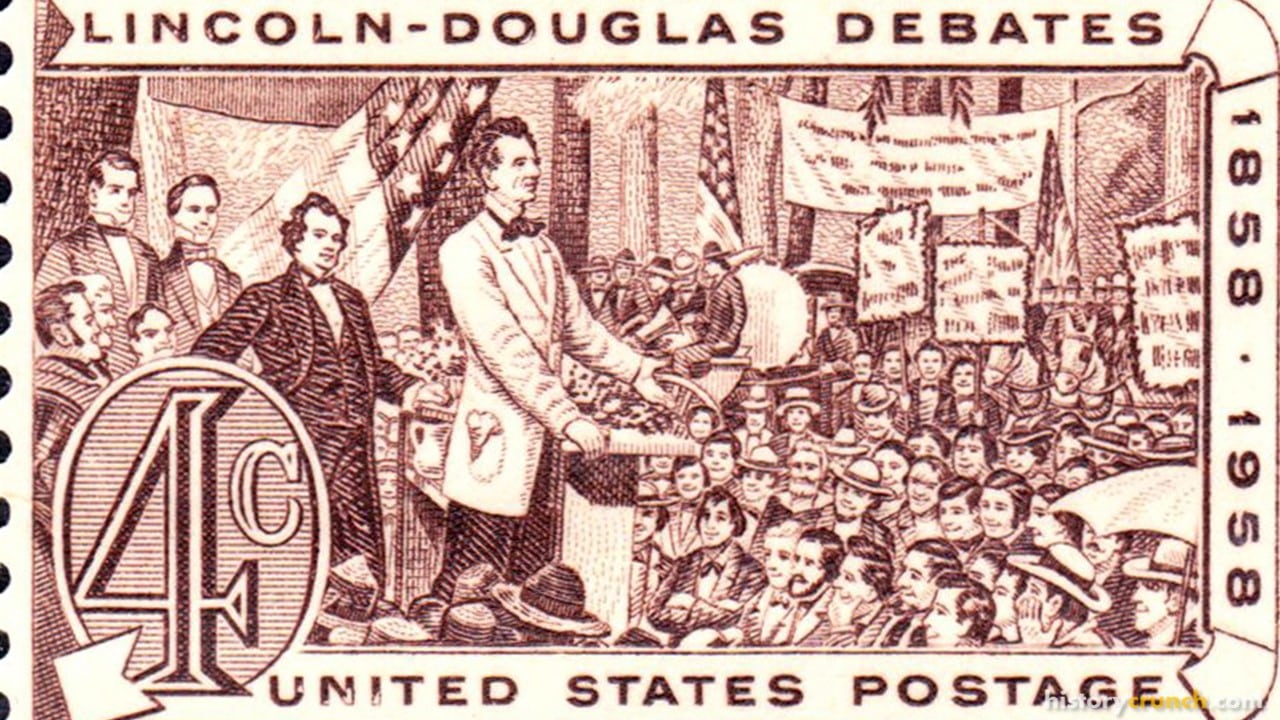
Lincoln and Douglas met seven times between August 21st and October 15th, 1858, in seven towns across Illinois, before crowds of up to fifteen thousand. Each debate ran three hours: one man spoke for an hour, the other for ninety minutes, and the first replied for thirty. The single subject was slavery in the territories. Douglas argued that each territory should decide; Lincoln argued that slavery was wrong and must not spread. Newspapers printed every word across the country.
LEARN MORESHOW LESSwhy it matters · key numbers · 2 key figuresPOLITICSDouglas won the Senate seat, since the legislature chose senators and his party held it. But the debates made Lincoln a national figure, and the position Douglas took at Freeport cost him the South two years later.
In August of 1859 John Brown met Frederick Douglass in an abandoned stone quarry near Chambersburg, Pennsylvania, and asked him to join an attack on the federal arsenal at Harpers Ferry. Brown believed enslaved people would rise and join him. Douglass told him the arsenal was 'a perfect steel trap' and that he would never get out alive. Brown's follower Shields Green, an escaped slave, chose to go with Brown. Douglass went home to Rochester.
LEARN MORESHOW LESSwhy it matters · 2 key figuresABOLITIONDouglass and Brown had known each other for twelve years and agreed about almost everything except this. Douglass was right about the trap, and Green died on the gallows for choosing the other way.
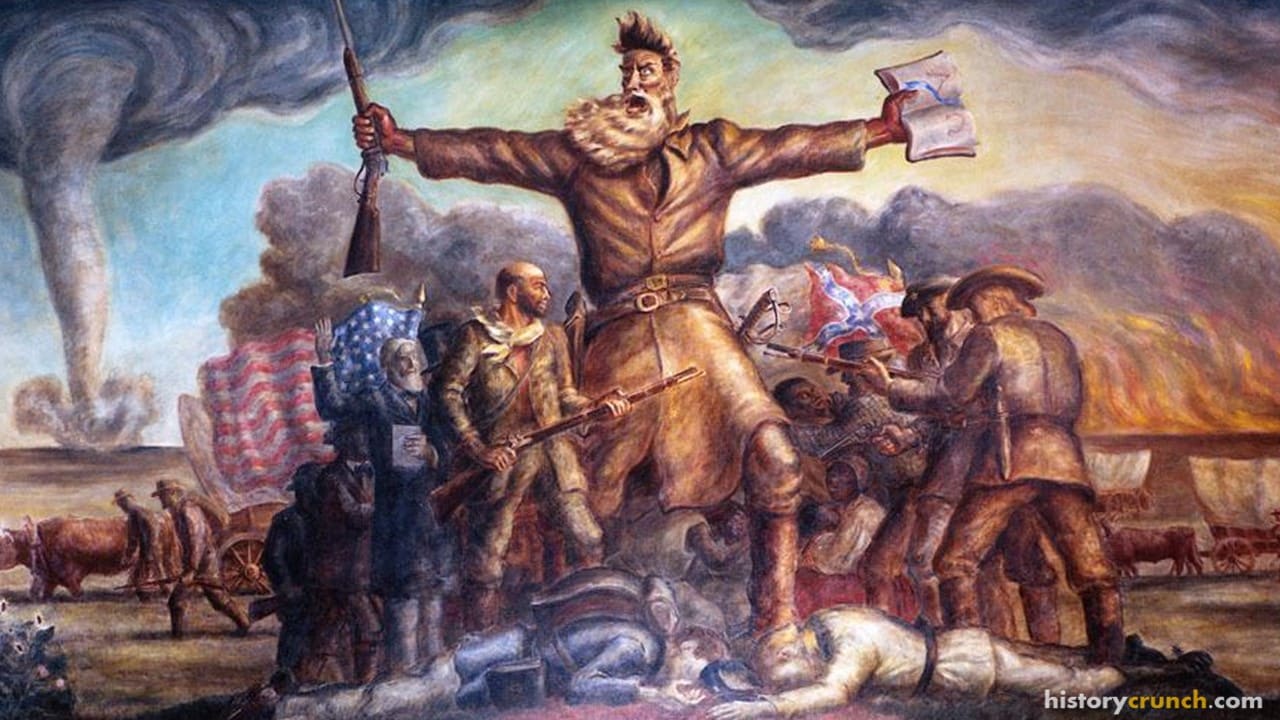
After two pro-slavery constitutions had failed, one of them rejected by Congress, a convention at Wyandotte wrote a constitution banning slavery in Kansas. On October 4th, 1859 the territory's voters approved it by about two to one. Southern senators blocked Kansas's admission for more than a year. It entered the Union as a free state on January 29th, 1861, after the first Southern states had already left it.
LEARN MORESHOW LESSwhy it mattersPOLITICSBleeding Kansas ended the way Douglas said popular sovereignty would let it end, with a vote. It just took five years, two governments and about fifty-five dead to reach the vote.
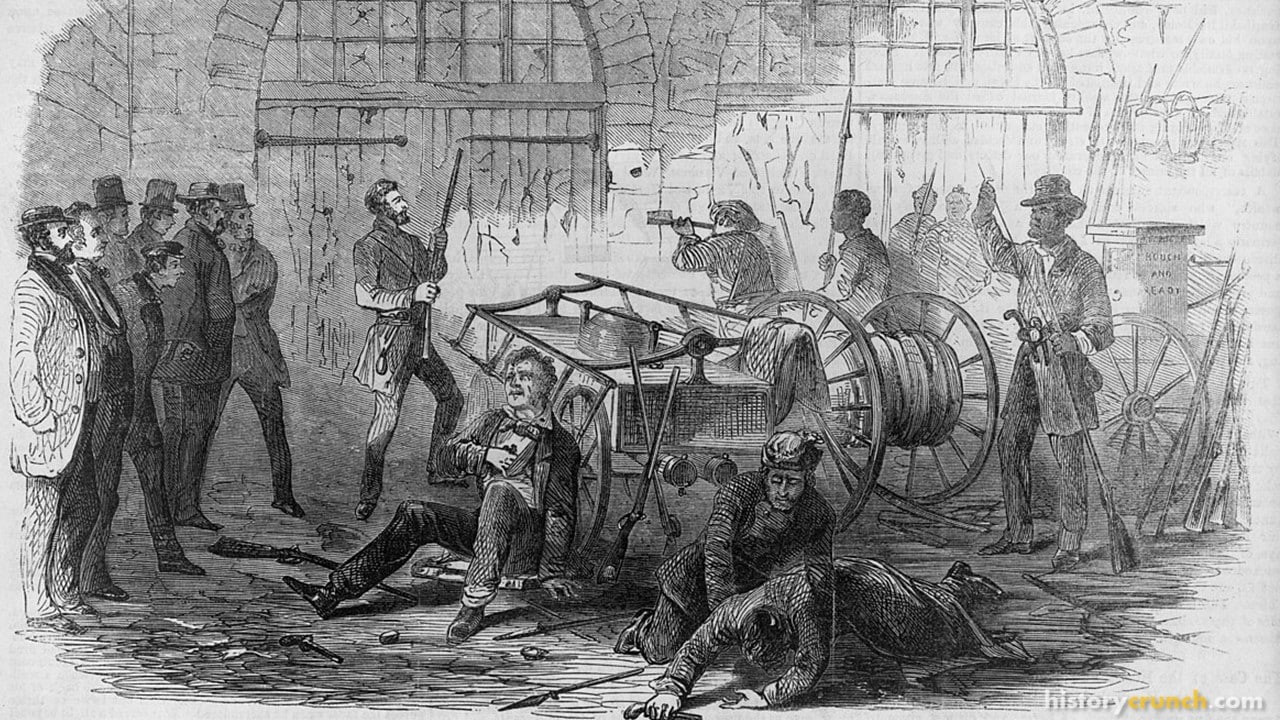
On the night of Sunday, October 16th, 1859 John Brown and twenty-one men, five of them Black, crossed the Potomac and took the federal armory and arsenal at Harpers Ferry, Virginia, with its hundred thousand rifles. Brown expected enslaved people from the countryside to join him. None came. By the next day the raiders were pinned in the armory's engine house by militia. On October 18th a company of marines under Colonel Robert E. Lee stormed it. Ten of Brown's men were dead, including two of his sons.
LEARN MORESHOW LESSwhy it matters · key numbers · 1 key figureVIOLENCEThe raid failed in every practical sense and succeeded in every other. It convinced the South that the North meant to arm the slaves, and it gave the North a martyr.
Brown's trial for treason against Virginia, murder and inciting slaves to rebel opened on October 27th, 1859 in Charles Town, nine days after his capture. He was still wounded from the assault and lay on a cot in the courtroom. The trial took a week. On November 2nd, sentenced to hang, he told the court that if it was necessary that he should mix his blood with the blood of millions in a slave country whose rights were disregarded by wicked laws, then let it be done.
LEARN MORESHOW LESSwhy it matters · a source · 1 key figureLAWBrown on trial was more dangerous to the South than Brown with a rifle. Newspapers printed his words and Northern churches rang their bells for him.
IN THEIR OWN WORDS“I believe that to have interfered as I have done in behalf of His despised poor was not wrong, but right.”
John Brown to the court, November 2nd, 1859
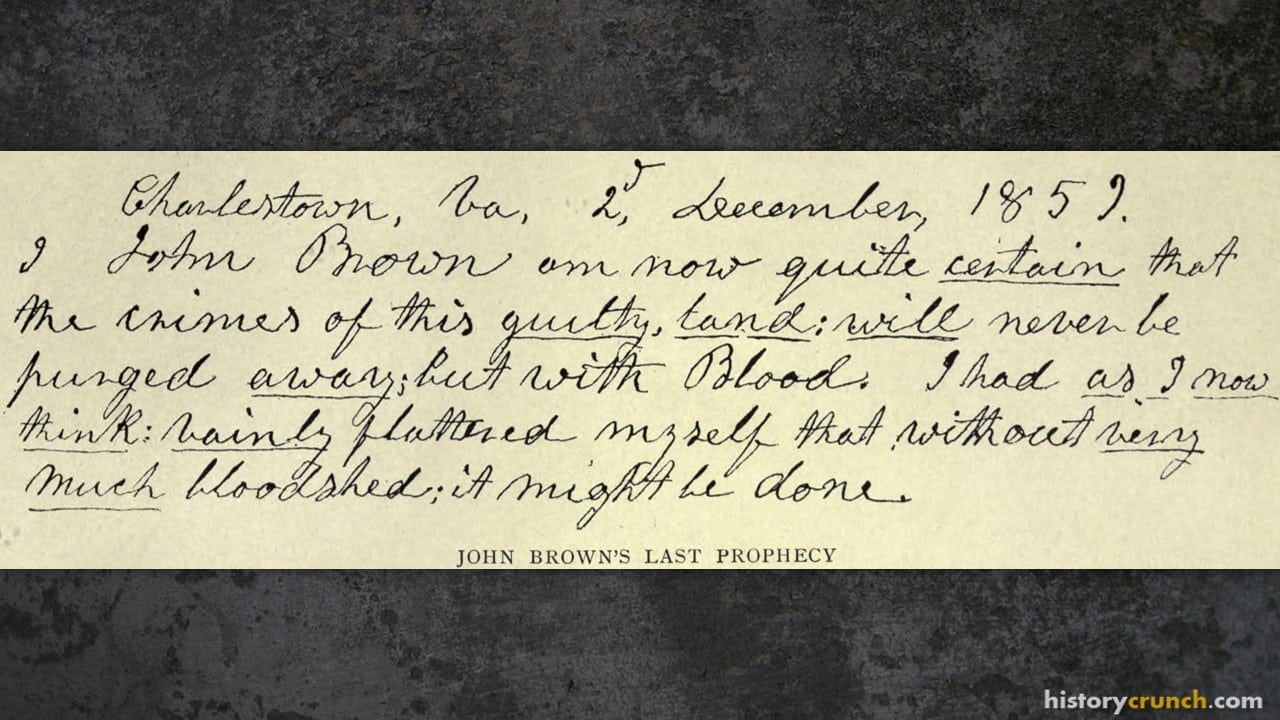
John Brown was hanged at Charles Town on December 2nd, 1859, before fifteen hundred soldiers and no civilians; the cadets from the Virginia Military Institute were commanded by Thomas Jackson, and John Wilkes Booth watched from the ranks of a Richmond militia company. Brown handed a guard a note on his way out of the jail: 'I, John Brown, am now quite certain that the crimes of this guilty land will never be purged away but with blood.'
LEARN MORESHOW LESSwhy it matters · a source · 1 key figureVIOLENCESixteen months later the blood began. Union soldiers marched into Virginia singing that John Brown's body lay a-mouldering in the grave, and his soul was marching on.
IN THEIR OWN WORDS“I, John Brown, am now quite certain that the crimes of this guilty land will never be purged away but with blood.”
John Brown, note handed to a guard, December 2nd, 1859
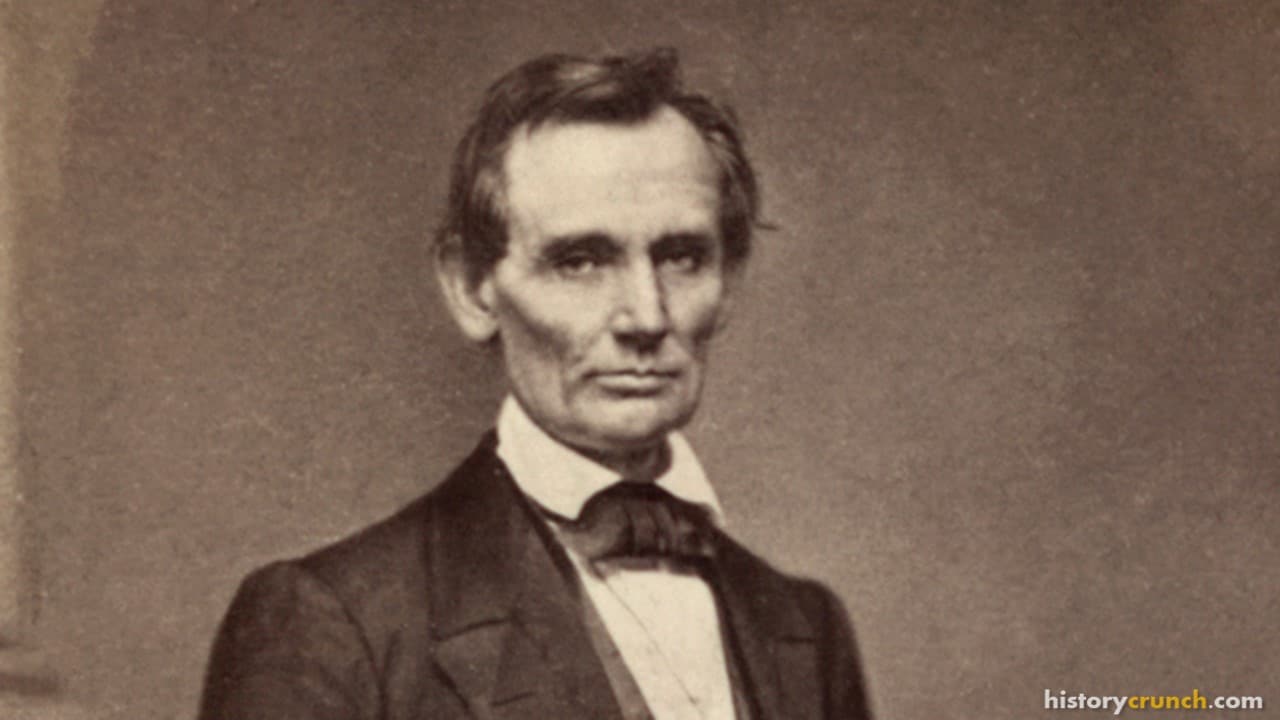
On February 27th, 1860 Abraham Lincoln spoke to fifteen hundred people at the Cooper Union in New York City. He had gone through the records of the thirty-nine signers of the Constitution to show that a majority had voted, at one time or another, to let Congress control slavery in the territories. He ended by telling Republicans to have faith that right makes might. New York's newspapers printed the speech in full, and the Eastern party leaders who had thought of him as a prairie lawyer began to take him seriously.
LEARN MORESHOW LESSwhy it matters · 1 key figurePOLITICSLincoln said afterward that the Cooper Union speech made him president. The photograph Mathew Brady took that morning, which showed a calm and formal man rather than a rustic, did the rest.
The Republican National Convention met in a wooden hall called the Wigwam in Chicago. The favorite was Senator William Seward of New York, but his years of anti-slavery speeches made him look unelectable in the states that mattered. On the third ballot on May 18th, 1860 the delegates chose Abraham Lincoln, who had never held office higher than a single term in the House. His managers had packed the galleries with Illinois supporters and made promises Lincoln had told them not to make.
LEARN MORESHOW LESSwhy it matters · 1 key figurePOLITICSThe Republicans chose the candidate who could win Pennsylvania and Indiana. That he was also the one who had said a house divided could not stand was, to the South, the only thing that mattered.
The Democratic convention at Charleston in April of 1860 broke up when Southern delegates walked out over the party's refusal to demand federal protection for slavery in the territories. The Northern wing met again at Baltimore and nominated Stephen Douglas on June 23rd. The Southern wing nominated Vice President John Breckinridge on a platform of protecting slavery everywhere. A fourth candidate, John Bell of Tennessee, ran for a Constitutional Union Party that promised only to keep the Union.
LEARN MORESHOW LESSwhy it matters · 1 key figurePOLITICSThe last national party had broken along the same line as everything else. With the Democratic vote split, Lincoln could win the presidency with no Southern votes at all, and did.
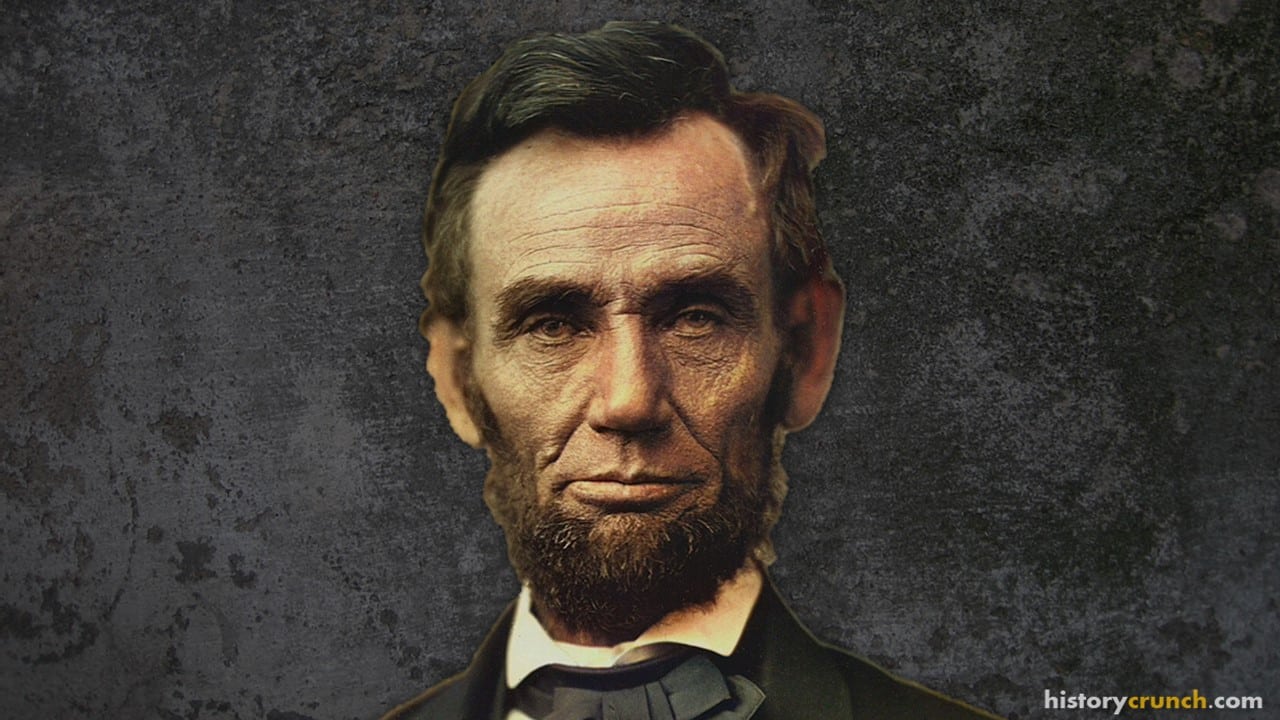
On November 6th, 1860 Abraham Lincoln won the presidency with 180 electoral votes against 123 for the other three candidates combined, carrying every free state but New Jersey and no slave state at all. He won just under forty percent of the popular vote, and in ten Southern states he was not on the ballot. South Carolina's legislature called a secession convention within days.
LEARN MORESHOW LESSwhy it matters · key numbers · 1 key figurePOLITICSFor the first time a president had been chosen by one section against the united opposition of the other. The South read the result as the end of its power in the Union, and acted on it.
On December 20th, 1860 a convention in Charleston voted 169 to 0 to take South Carolina out of the United States. Its declaration of causes named slavery in its first paragraph and the election of a president 'whose opinions and purposes are hostile to slavery' as the reason for leaving. Six more states followed by February 1st, 1861, and on February 8th they founded the Confederate States of America at Montgomery, Alabama.
LEARN MORESHOW LESSwhy it matters · key numbersPOLITICSThe seceding states said in their own documents what they were seceding for. The argument that the war was about something other than slavery was made afterward, not at the time.
Kansas became the thirty-fourth state on January 29th, 1861, under the free-state constitution its voters had approved in 1859. The Southern senators who had blocked it had resigned their seats and gone home to their seceding states, so there was no one left to object. Seven years of fighting over whether Kansas would be slave or free had ended, and the larger fight was six weeks away.
LEARN MORESHOW LESSwhy it mattersPOLITICSKansas got its answer only because the South had left the room. Bleeding Kansas was the rehearsal; the war was the performance.
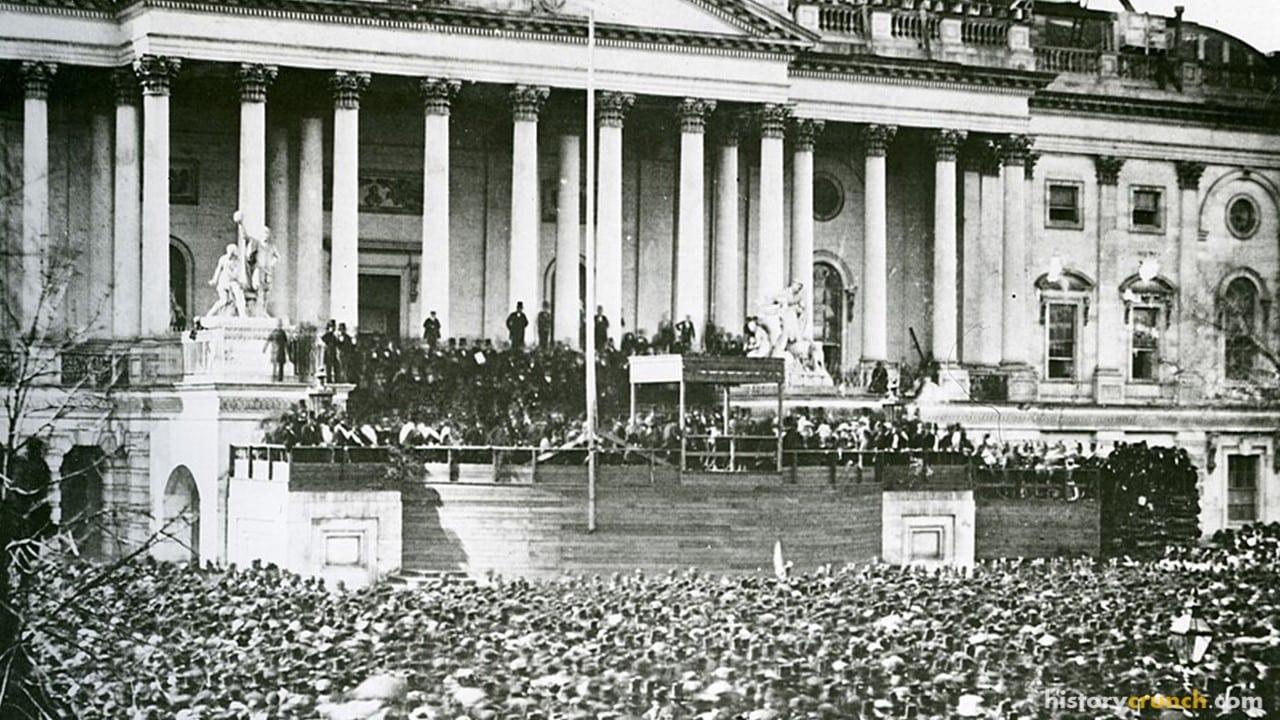
Abraham Lincoln was sworn in on March 4th, 1861 on the east steps of a Capitol whose dome was still a skeleton of iron. Seven states had already left. His address promised that he had no purpose to interfere with slavery in the states where it existed and no lawful right to do so, that secession was illegal, and that he would hold federal property. He ended by appealing to 'the better angels of our nature'. The South was not listening.
LEARN MORESHOW LESSwhy it matters · 1 key figurePOLITICSLincoln took office as a man who hated slavery and had sworn to protect it where it stood. It took eighteen months of war to move him from the second position to the first.
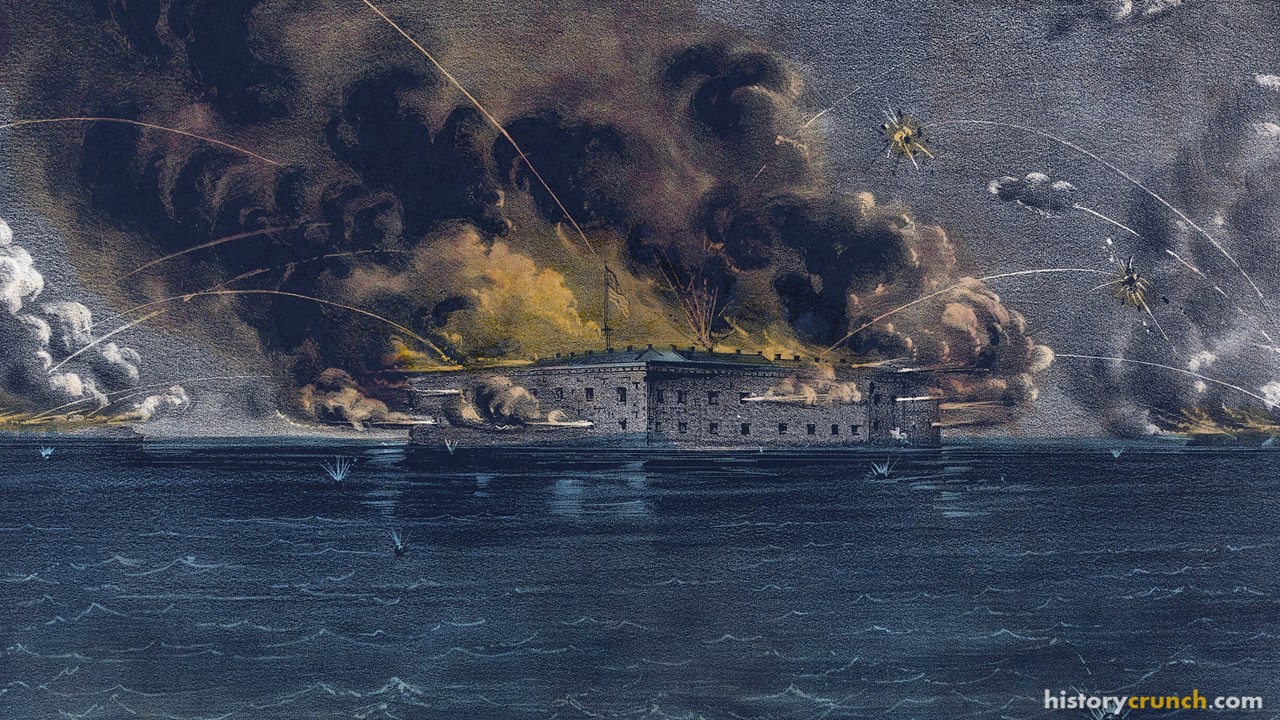
At 4:30 in the morning on April 12th, 1861 Confederate batteries opened fire on Fort Sumter, a federal fort on an island in Charleston harbor that Lincoln had refused to give up. The garrison surrendered after thirty-four hours with no one killed in the bombardment. Lincoln called for seventy-five thousand volunteers. Four more slave states, Virginia among them, joined the Confederacy rather than fight it. The war over slavery had begun.
LEARN MORESHOW LESSwhy it matters · key numbersWARBoth sides said at the start that the war was about the Union. Within two years it was openly about slavery, and by its end 620,000 men were dead and four million people were free.
The war began to save the Union and ended slavery because the enslaved made it. They walked into Union lines by the thousand before the government had a policy, and General Butler's 'contraband' ruling was the first official admission that the army would not send them back. Lincoln freed the District of Columbia in April of 1862, announced the Emancipation Proclamation in September and signed it on New Year's Day 1863, and 180,000 Black men enlisted to enforce it. The Thirteenth Amendment passed the House by two votes in January of 1865; Lincoln was dead by April; Texas learned it was free in June; Georgia's ratification in December ended slavery everywhere. The Black Codes, the Civil Rights Act and the Fourteenth and Fifteenth Amendments were the first battles of the next war, over what freedom would mean.
On May 23rd, 1861 three enslaved men who had been forced to build Confederate defenses rowed across the James River to Fort Monroe, Virginia, and asked for protection. Their owner came the next day under a flag of truce and demanded them back under the Fugitive Slave Act. General Benjamin Butler, a Massachusetts lawyer, refused: Virginia claimed to have left the Union, so its law did not apply, and the men were 'contraband of war', property used against the United States. By August nine hundred people had reached the fort.
LEARN MORESHOW LESSwhy it matters · key numbersWARButler's ruling was a lawyer's trick, and it was the first crack in the wall. Enslaved people made the Union army an army of liberation by walking into its lines before the government had decided anything.
On April 16th, 1862 Lincoln signed an act freeing the roughly three thousand enslaved people in the District of Columbia. Owners loyal to the Union were paid up to three hundred dollars for each person, the only time the federal government ever paid compensation for freeing slaves. It was the first emancipation Congress had ever passed. Two months later, on June 19th, Congress banned slavery in all the territories, reversing the Dred Scott decision by statute.
LEARN MORESHOW LESSwhy it matters · key numbersLAWThe capital freed its slaves before the country did. Washington's Black residents kept April 16th as a holiday for decades, and the district still does.
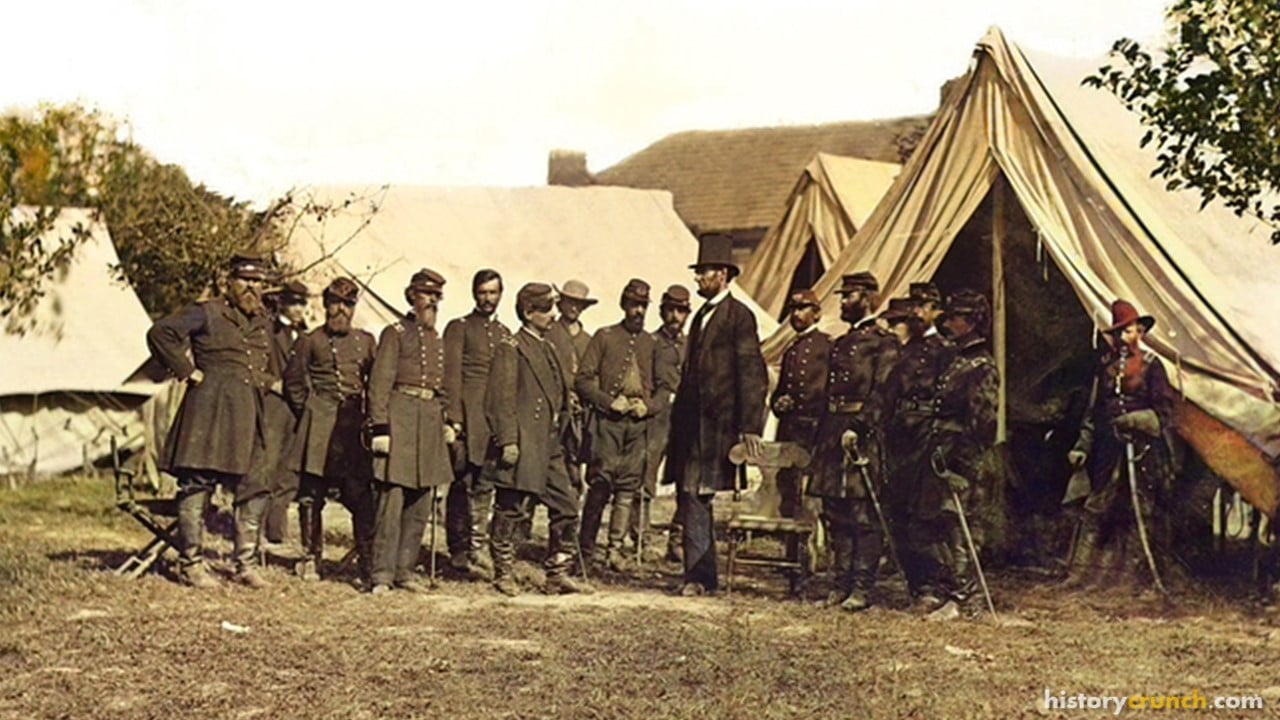
Lincoln had drafted a proclamation in July of 1862 and been told by his cabinet to wait for a victory so it would not look like desperation. The battle of Antietam on September 17th gave him one. On September 22nd he announced that on January 1st, 1863 every enslaved person in any state still in rebellion would be free, and that the army would enforce it. Slavery in the loyal border states was untouched. The South had a hundred days to come back into the Union and keep its slaves. None did.
LEARN MORESHOW LESSwhy it matters · 1 key figureLAWThe war changed its meaning on this date. Britain and France, which had considered recognizing the Confederacy, could no longer do it without taking the side of slavery.
On November 25th, 1862 Harriet Beecher Stowe called on President Lincoln in Washington. She wanted to be sure he meant to issue the final Emancipation Proclamation on New Year's Day before she wrote to the women of Britain asking them to support the Union. The story that Lincoln greeted her with 'So you're the little woman who wrote the book that started this great war' was told by her family years later and is not in any record from the day.
LEARN MORESHOW LESSwhy it matters · 2 key figuresPEOPLEWhether or not Lincoln said it, the meeting shows how the country saw her. A novelist had come to check that the president would keep his word.
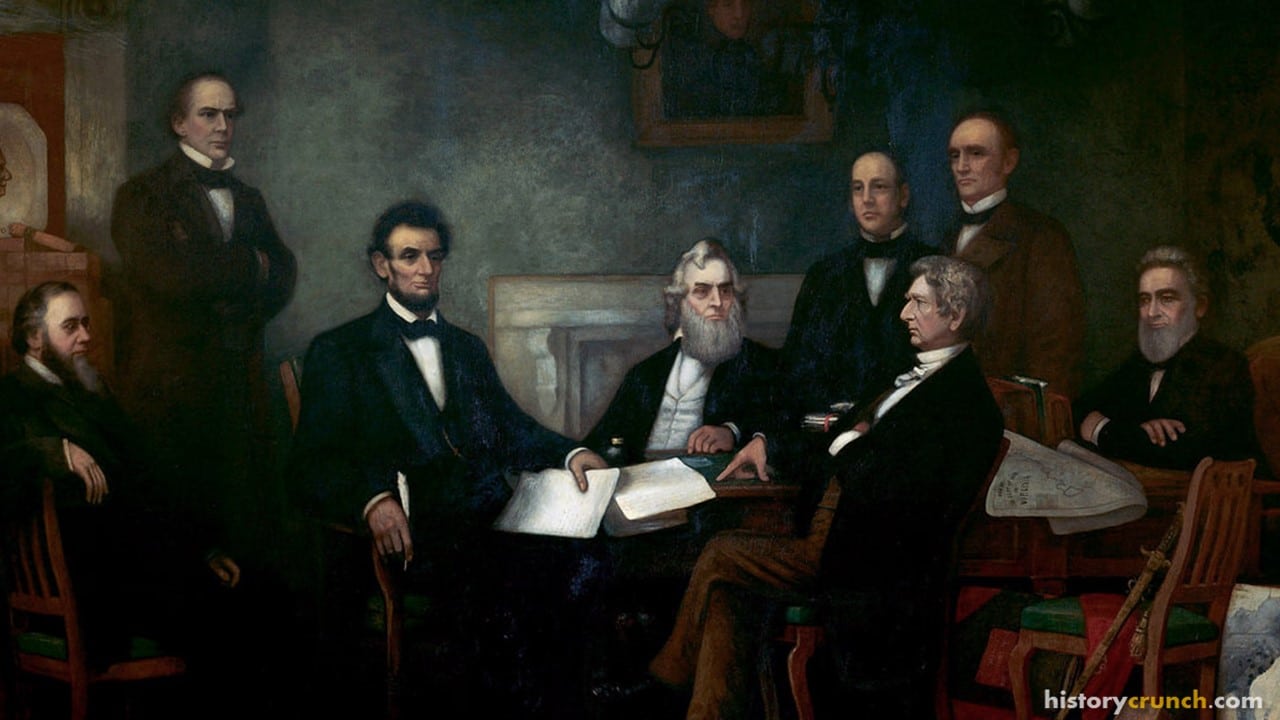
On the afternoon of January 1st, 1863, after three hours of shaking hands at a New Year's reception, Lincoln signed the Emancipation Proclamation, saying that if his name ever went into history it would be for this act. It declared free the enslaved people in the ten Confederate states, about 3.1 million of the 4 million in the country, and it opened the Union army and navy to Black soldiers. It did not touch the border states or the parts of the South already under Union control.
LEARN MORESHOW LESSwhy it matters · key numbers · a sourceLAWThe proclamation freed nobody on the day it was signed and everybody as the army advanced. About 180,000 Black men enlisted under it, and the Union could not have won without them.
IN THEIR OWN WORDS“If my name ever goes into history it will be for this act, and my whole soul is in it.”
Abraham Lincoln, January 1st, 1863
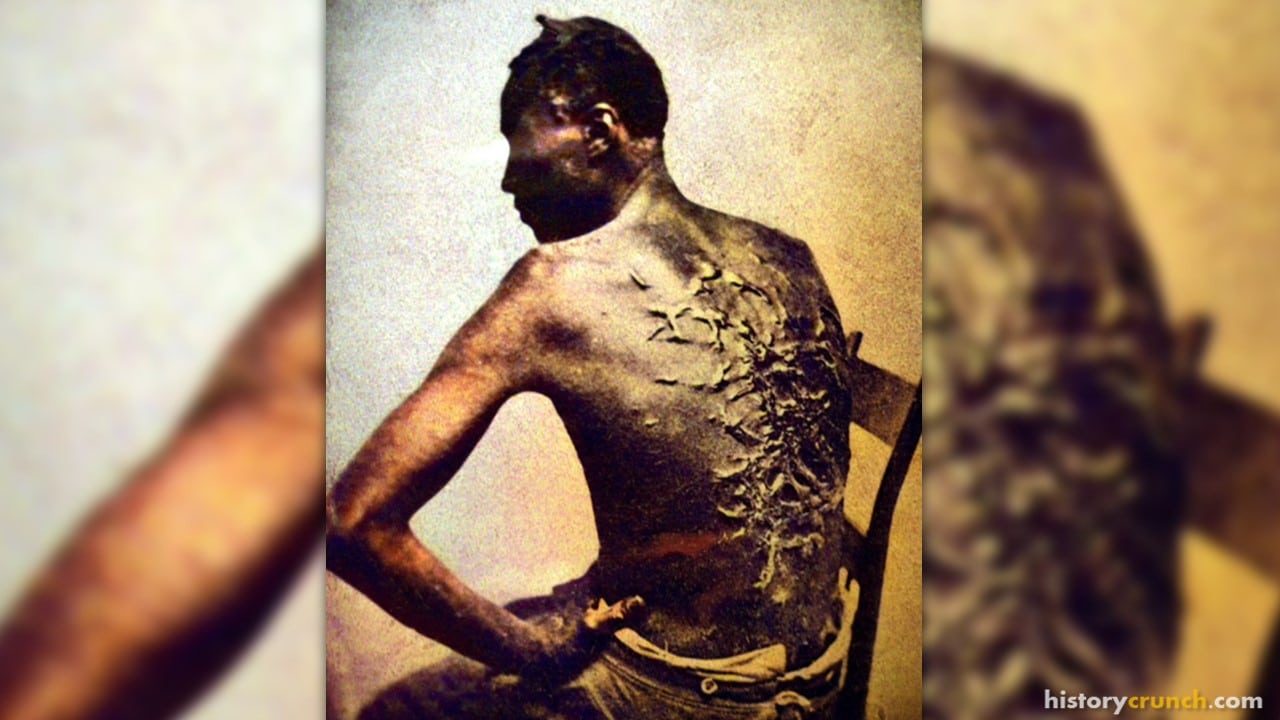
In March of 1863 an enslaved man named Gordon walked into a Union camp at Baton Rouge, Louisiana, after ten days of flight through the swamps with onions in his pockets to throw off the dogs. During his medical examination photographers took a picture of his back, covered in the ridged scars of a whipping the previous autumn. The photograph was printed as a card and sold across the North, and Harper's Weekly published an engraving of it on July 4th, 1863.
LEARN MORESHOW LESSwhy it mattersCULTUREThe pamphlets had said what a whip did. The photograph showed it, and there was no answering it. Gordon enlisted in the Union army the same spring.
On August 10th, 1863 Frederick Douglass walked into the White House without an appointment and was received within minutes. Two of his sons were serving in the 54th Massachusetts, the Black regiment that had stormed Fort Wagner three weeks before. Douglass told the president that Black soldiers were paid seven dollars a month against a white soldier's thirteen, could not become officers and were being killed when captured. Lincoln promised equal pay would come; it did, in June of 1864.
LEARN MORESHOW LESSwhy it matters · key numbers · 2 key figuresPEOPLEIt was the first time a Black American had been received at the White House as a political equal. Douglass said Lincoln treated him as one man treats another.
The Emancipation Proclamation was a war measure and could be undone by a court or a later president. Only an amendment could end slavery for good. On April 8th, 1864 the Senate passed the Thirteenth Amendment, 38 to 6. The House voted on June 15th and fell thirteen votes short of the two-thirds it needed. Lincoln made the amendment part of the Republican platform and won re-election in November on it.
LEARN MORESHOW LESSwhy it matters · key numbersLAWThe gap between the Senate vote and the House vote is the gap between what the war had made possible and what the country had accepted. Closing it took the election of 1864 and a winter of arm twisting.
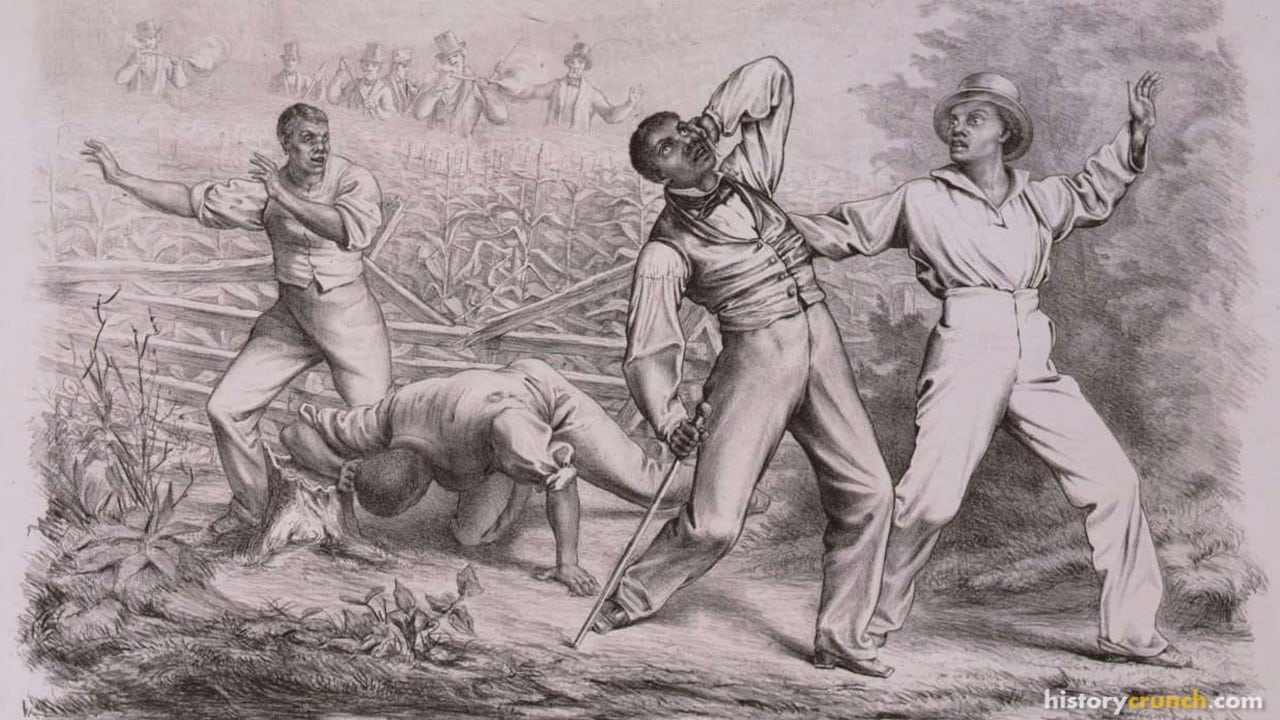
On June 28th, 1864 Lincoln signed an act repealing both the Fugitive Slave Act of 1793 and the Fugitive Slave Act of 1850. The laws had been dead in practice since Butler's contraband ruling and the Emancipation Proclamation; the Union army had stopped returning anyone. Repeal made it official that no federal officer would ever again hunt a person for a slave owner.
LEARN MORESHOW LESSwhy it mattersLAWThe law that had turned the North into slave-catching country lasted seventy-one years. It ended with a signature that almost nobody noticed, because the army had already ended it.
On October 29th, 1864 Sojourner Truth, now about sixty-seven, was received by Lincoln at the White House. He showed her the Bible that the Black people of Baltimore had given him and signed her autograph book 'For Aunty Sojourner Truth'. She stayed on in Washington to work among the freed people crowding into the capital, and the next year she rode the city's streetcars to force them to carry Black passengers.
LEARN MORESHOW LESSwhy it matters · 2 key figuresPEOPLETruth had spent forty years telling audiences that a Black woman was a person. In 1864 the president of the United States agreed, in writing, in her book.
On January 31st, 1865 the House of Representatives voted 119 to 56 for the Thirteenth Amendment, two votes more than the two-thirds required. Sixteen Democrats had changed their votes since June, some persuaded by Lincoln's re-election, some by promises of government jobs. The galleries, which held Black spectators for the first time, broke into cheering that lasted several minutes. Lincoln signed the joint resolution the next day, though a president's signature was not needed.
LEARN MORESHOW LESSwhy it matters · key numbers · 1 key figureLAWThe vote was the closest thing the country had to a decision to end slavery, and it passed by two. The amendment then went to the states, and to a president who would not live to see it ratified.
On April 9th, 1865 General Robert E. Lee surrendered the Army of Northern Virginia to General Ulysses Grant at Appomattox Court House, Virginia. Grant let the Confederates go home with their horses and forbade celebration. The other Confederate armies gave up over the following weeks. About 620,000 soldiers had died in four years. Slavery had ended in fact wherever the Union army stood, and the Thirteenth Amendment was on its way through the state legislatures.
LEARN MORESHOW LESSwhy it matters · key numbersWARThe war that began over whether slavery would spread ended with slavery destroyed. Lincoln had five days left.
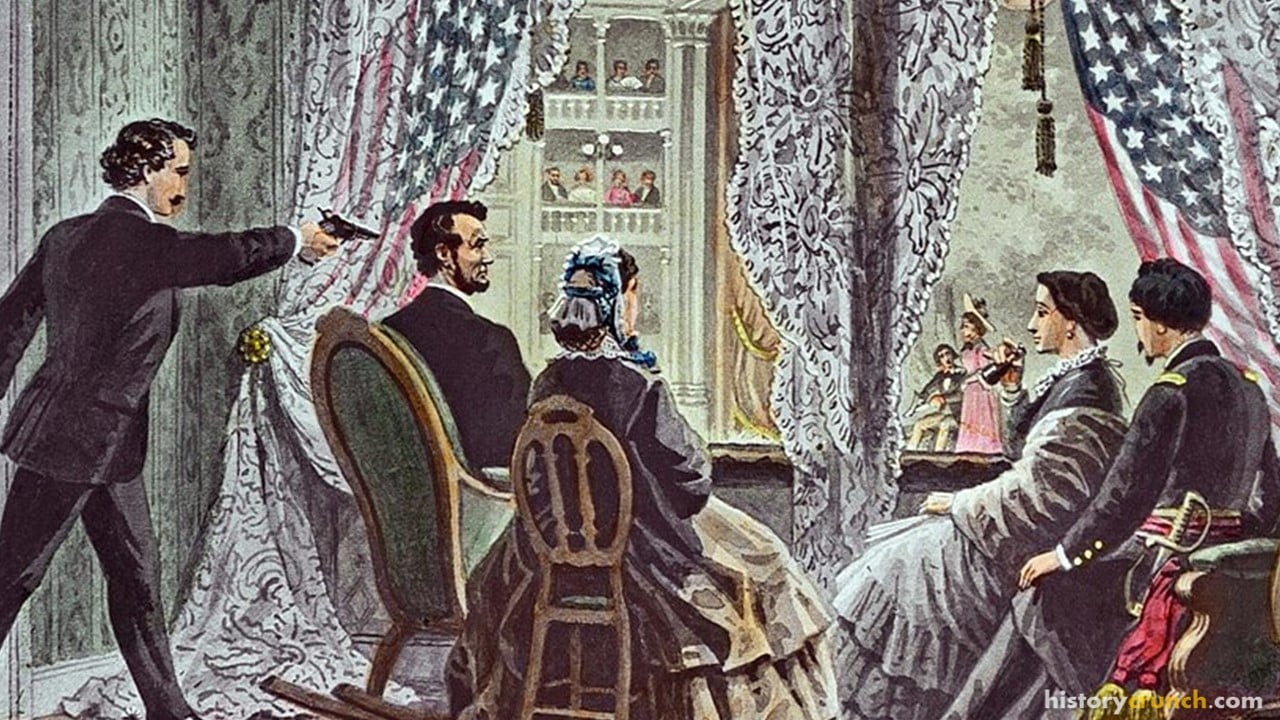
On April 11th, 1865 Lincoln gave a speech from the White House window suggesting that literate Black men and Black veterans should be allowed to vote. John Wilkes Booth, standing in the crowd, said that meant citizenship for Black people and that it would be the last speech Lincoln ever made. On the evening of April 14th Booth shot Lincoln in the head in his box at Ford's Theatre. The president died the next morning at 7:22.
LEARN MORESHOW LESSwhy it matters · 1 key figurePEOPLELincoln was killed for saying that Black men should vote. His successor, Andrew Johnson, thought they should not, and the fight over Reconstruction began with the man who might have led it in his grave.
Texas was the last Confederate state the Union army reached. On June 19th, 1865 General Gordon Granger landed at Galveston and issued General Order Number 3, announcing that all slaves were free and that the relationship between former masters and slaves was now one of employer and hired labor. About 250,000 enslaved people in Texas learned that they had been free under the Emancipation Proclamation for two and a half years.
LEARN MORESHOW LESSwhy it matters · key numbersLAWFreedom arrived in Texas when the army did, which is the plainest lesson of the whole war. June 19th became Juneteenth, celebrated by Black Texans from 1866 and a federal holiday in 2021.
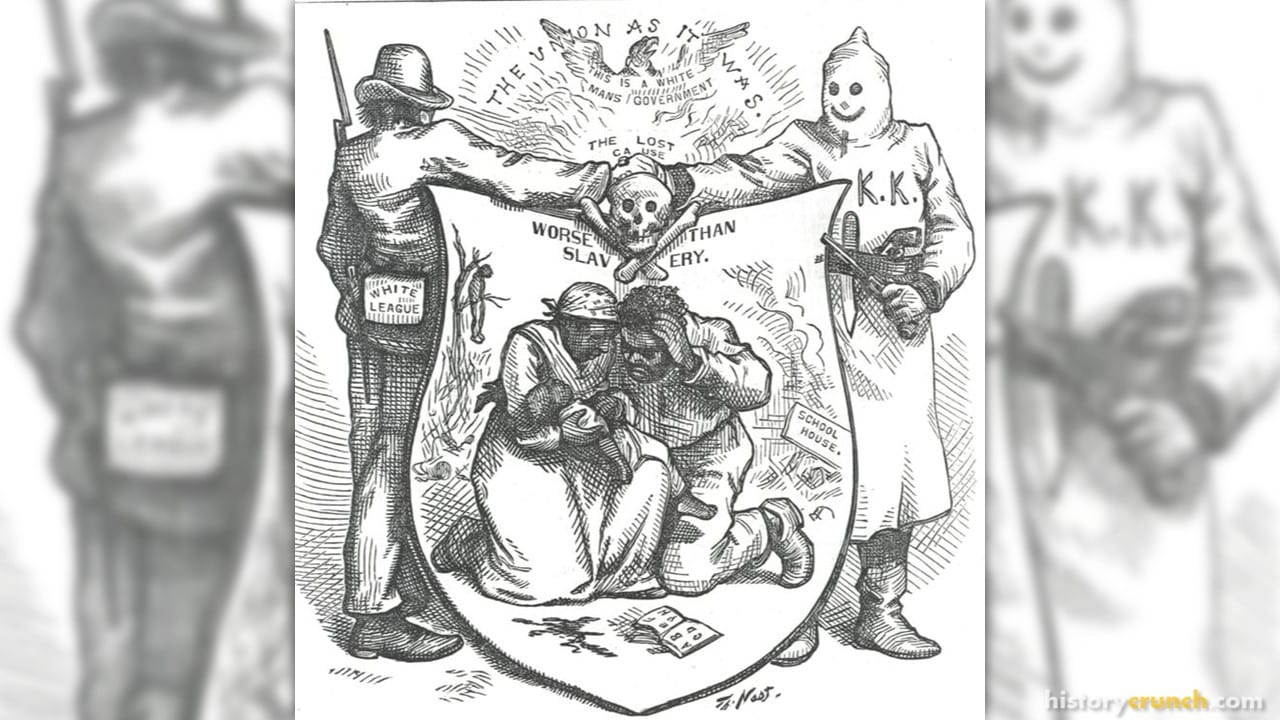
On November 24th, 1865 Mississippi's new legislature, elected under President Johnson's lenient Reconstruction plan, passed the first of the Black Codes. Freed people could not own farmland, could be arrested under a vagrancy law if they had no written labor contract by January, could be hired out to pay their fines, and could not carry guns or testify against whites. South Carolina and other Southern states followed within weeks. The codes copied the old slave codes with the word slave removed.
LEARN MORESHOW LESSwhy it mattersLAWThe South had lost the war and set about winning the peace. The Black Codes convinced Northern Republicans that emancipation without civil rights was slavery under another name, and they answered with the Civil Rights Act and the Fourteenth Amendment.
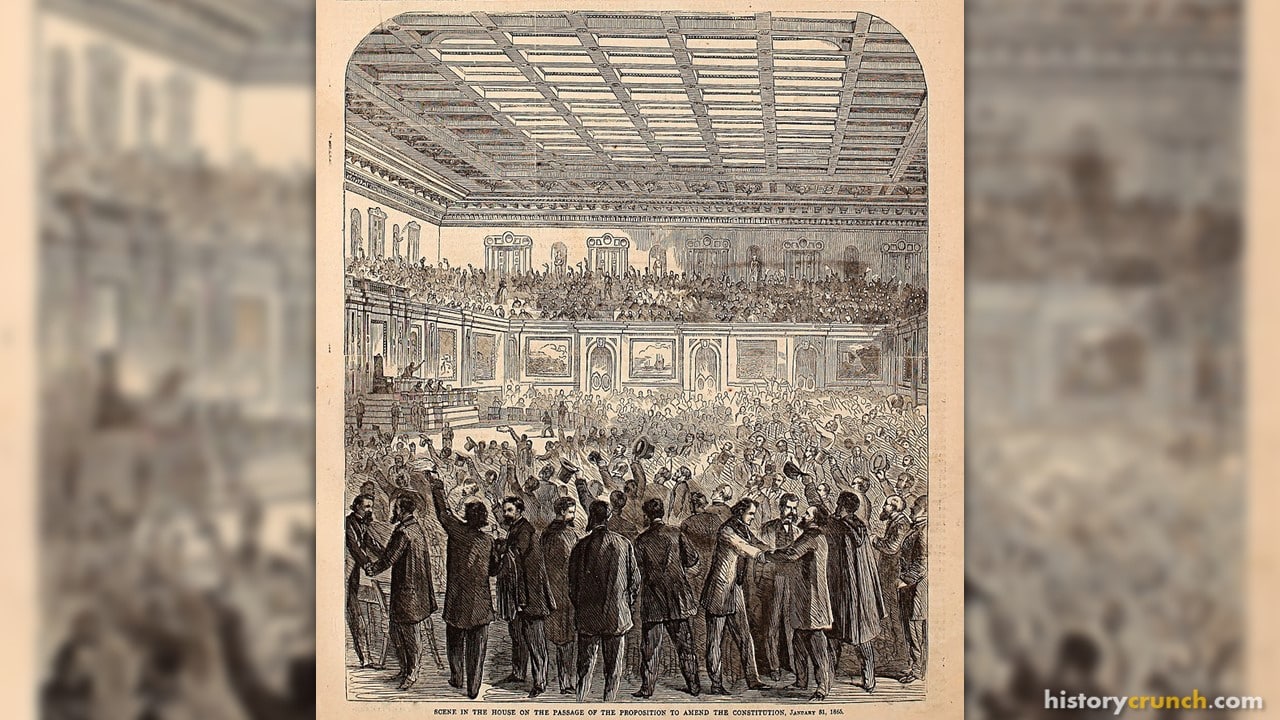
On December 6th, 1865 Georgia became the twenty-seventh state to ratify the Thirteenth Amendment, three-quarters of the thirty-six states. Secretary of State William Seward certified it on December 18th. Slavery and involuntary servitude were abolished everywhere in the United States 'except as a punishment for crime'. The roughly forty thousand people still enslaved in Kentucky and Delaware, which the Proclamation had not touched, were freed on that day.
LEARN MORESHOW LESSwhy it matters · key numbersLAWTwo hundred and forty-six years after Jamestown, slavery was unconstitutional. The exception for crime was noticed at the time and became the loophole through which Southern states forced Black men back into unpaid labor for the next century.
On December 29th, 1865, eleven days after the Thirteenth Amendment was certified, William Lloyd Garrison published the final issue of The Liberator, the 1,820th, and closed the paper. He had promised in 1831 to keep it going until slavery was dead, and it was. He argued that the American Anti-Slavery Society should disband too, lost that argument to Wendell Phillips, and resigned. He spent his last years campaigning for women's suffrage and temperance.
LEARN MORESHOW LESSwhy it matters · key numbers · 1 key figureABOLITIONGarrison had been the most hated man in America and lived to see his cause written into the Constitution. Few reformers get to close their own newspaper because they won.
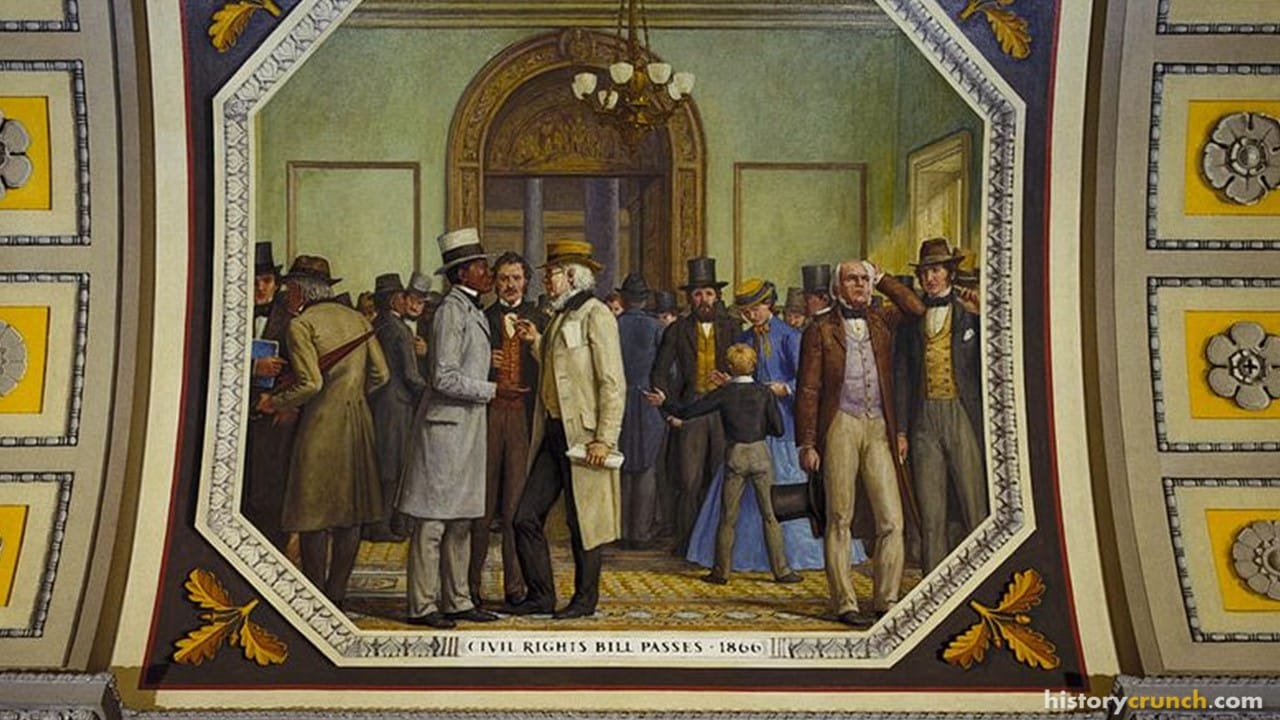
The Civil Rights Act of 1866 declared everyone born in the United States a citizen, regardless of race, with the same right to make contracts, own property, sue and testify as white citizens. President Andrew Johnson vetoed it, saying it favored Black people over whites. On April 9th, 1866, the first anniversary of Appomattox, Congress overrode his veto, the first time in American history that Congress had overridden a president on a major law.
LEARN MORESHOW LESSwhy it mattersLAWThe act answered the Black Codes directly. Because a later Congress could repeal it, its authors wrote it into the Constitution as the Fourteenth Amendment within two months.
Ratified on July 9th, 1868, the Fourteenth Amendment declared that every person born or naturalized in the United States was a citizen, and that no state could deny anyone equal protection of the laws or take life, liberty or property without due process. It reversed the Dred Scott decision in its first sentence. Congress had required the former Confederate states to ratify it before they could return to the Union; most had refused in 1866 and were made to accept it in 1868.
LEARN MORESHOW LESSwhy it mattersLAWThe equal protection clause is the sentence the twentieth-century civil rights movement was fought with. It took eighty-six years and Brown v. Board of Education for the Supreme Court to read it as written.
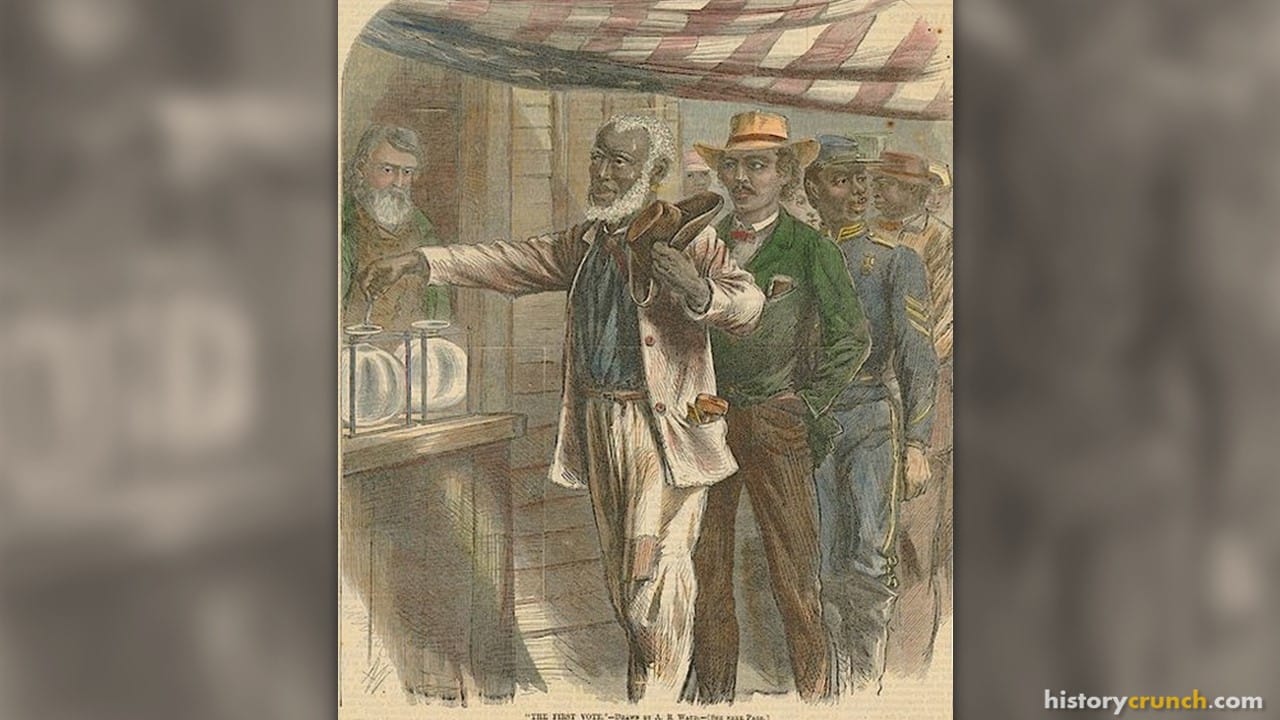
Iowa's ratification on February 3rd, 1870 completed the Fifteenth Amendment, which forbade any state to deny the vote 'on account of race, color, or previous condition of servitude'. Black men in the South had already been voting under military Reconstruction; the amendment was meant to make it permanent and to extend it to the North, where most states still barred them. The American Anti-Slavery Society declared its work done and dissolved that spring.
LEARN MORESHOW LESSwhy it matters · 1 key figureLAWThe amendment said nothing about literacy tests, poll taxes or violence, and after 1877 the Southern states used all three to take back what it had given. The right it promised was not made real until the Voting Rights Act of 1965.

I'm a passionate history and geography teacher with over 15 years of experience working with students in the middle and high school years. I have an Education Degree with a focus in World History. I have been writing articles for History Crunch since 2015 and love the challenge of creating historical content for young learners!

I'm the founder of History Crunch, which I first began in 2015 with a small team of like-minded professionals. I have an Education Degree with a focus in Social Studies education. I spent nearly 15 years teaching history, geography and economics in secondary classrooms to thousands of students. Now I use my time and passion researching, writing and thinking about history education for today's students and teachers.

K.L. is a content writer for History Crunch. She is a fantastic history and geography teacher that has been helping students learn about the past in new and meaningful ways since the mid-2000s. Her primary interest is Ancient History, but she is also driven by other topics, such as economics and political systems.
To cite this timeline as a source, use one of the formats below.
MLA: Beck, E., et al. “Slavery in the United States Timeline.” HistoryCrunch, 21 September 2026, https://historycrunch.com/slavery-in-the-united-states-timeline/.
APA: Beck, E., Millar, B., & Woida, K.L. (2026). Slavery in the United States Timeline. HistoryCrunch. https://historycrunch.com/slavery-in-the-united-states-timeline/
Chicago: Beck, E., B. Millar, and K.L Woida. “Slavery in the United States Timeline.” HistoryCrunch. September 21, 2026. https://historycrunch.com/slavery-in-the-united-states-timeline/
© History Crunch
By ship in 1619, and then by law over the next fifty years.
From the sugar islands: Barbados wrote them, Jamaica copied them, South Carolina copied Jamaica.
The Atlantic leg of the slave trade, in which about one captive in eight died.
No. Every colony had it, New York burned rebels for it, and the North ended it slowly.
Yes, in New York, at Stono, and in plots the colonies punished with fire.
The German Coast in 1811, Vesey's plot in 1822 and Nat Turner's rising in 1831, each answered with executions and harsher laws.
Captives took the ships, and the law had to decide whether that was murder.
Nothing by name, and three things in practice: three-fifths, twenty years of trade, and the return of fugitives.
Because the cotton gin made cotton the most profitable crop on earth and cotton needed hands.
One child at a time, over decades, with the owners' consent.
A line across the map in 1820 that kept the peace for thirty-four years and then broke.
The editor who turned anti-slavery from patience into a demand for freedom now.
From a Quaker society in 1775 to a quarter of a million members by 1838.
An escaped slave who became the most important Black American of the century.
Escaped once, then went back into Maryland about fourteen times to bring out about seventy others.
A woman who walked out of slavery in New York and spent forty years asking both movements why they left her out.
Because they were the only accounts of slavery written from inside it.
It sold 300,000 copies in a year and made readers weep for people they had called property.
Put federal law behind the slave catcher in 1793, and made every Northerner one in 1850.
Clay's last bargain: California free, the territories to decide, and a fugitive slave law for the South.
Because Douglas let the settlers decide, and both sides sent settlers with guns.
That Black Americans could never be citizens and Congress could not ban slavery anywhere.
He killed five men in Kansas and was hanged for Harpers Ferry; both sides have argued since.
Kansas brought him back into politics, and a Senate race he lost made him famous.
Because he won without a single Southern vote, and the South read that as the end of its power in the Union.
Declared free the enslaved people in the Confederate states and opened the army to Black soldiers.
By a constitutional amendment that passed the House by two votes and was ratified eight months after Lincoln's death.
Because the Proclamation reached Texas only when the army did, two and a half years late.
The South passed Black Codes to control them, and Congress answered with citizenship and the vote.
They shared platforms, printers and enemies, and split over who got the vote first.
No question matches that word.
Research question 1By ship in 1619, and then by law over the next fifty years.
Research question 2From the sugar islands: Barbados wrote them, Jamaica copied them, South Carolina copied Jamaica.
Research question 3The Atlantic leg of the slave trade, in which about one captive in eight died.
Research question 4No. Every colony had it, New York burned rebels for it, and the North ended it slowly.
Research question 5Yes, in New York, at Stono, and in plots the colonies punished with fire.
Research question 6The German Coast in 1811, Vesey's plot in 1822 and Nat Turner's rising in 1831, each answered with executions and harsher laws.
Research question 7Captives took the ships, and the law had to decide whether that was murder.
Research question 8Nothing by name, and three things in practice: three-fifths, twenty years of trade, and the return of fugitives.
Research question 9Because the cotton gin made cotton the most profitable crop on earth and cotton needed hands.
Research question 10One child at a time, over decades, with the owners' consent.
Research question 11A line across the map in 1820 that kept the peace for thirty-four years and then broke.
Research question 12The editor who turned anti-slavery from patience into a demand for freedom now.
Research question 13From a Quaker society in 1775 to a quarter of a million members by 1838.
Research question 14An escaped slave who became the most important Black American of the century.
Research question 15Escaped once, then went back into Maryland about fourteen times to bring out about seventy others.
Research question 16A woman who walked out of slavery in New York and spent forty years asking both movements why they left her out.
Research question 17Because they were the only accounts of slavery written from inside it.
Research question 18It sold 300,000 copies in a year and made readers weep for people they had called property.
Research question 19Put federal law behind the slave catcher in 1793, and made every Northerner one in 1850.
Research question 20Clay's last bargain: California free, the territories to decide, and a fugitive slave law for the South.
Research question 21Because Douglas let the settlers decide, and both sides sent settlers with guns.
Research question 22That Black Americans could never be citizens and Congress could not ban slavery anywhere.
Research question 23He killed five men in Kansas and was hanged for Harpers Ferry; both sides have argued since.
Research question 24Kansas brought him back into politics, and a Senate race he lost made him famous.
Research question 25Because he won without a single Southern vote, and the South read that as the end of its power in the Union.
Research question 26Declared free the enslaved people in the Confederate states and opened the army to Black soldiers.
Research question 27By a constitutional amendment that passed the House by two votes and was ratified eight months after Lincoln's death.
Research question 28Because the Proclamation reached Texas only when the army did, two and a half years late.
Research question 29The South passed Black Codes to control them, and Congress answered with citizenship and the vote.
Research question 30They shared platforms, printers and enemies, and split over who got the vote first.