The Amistad was an important event in American history in relation to slavery and the fight to end it during the 19th century. For instance, it involved a group of Africans who had been illegally captured and sold into slavery, then rose up against their captors aboard a Spanish ship. The event grew into a famous court case that reached the Supreme Court of the United States and became a rallying point during the timeframe of the American Abolitionist Movement. As such, the Amistad remains one of the most important examples of enslaved people fighting for their own freedom before the American Civil War.
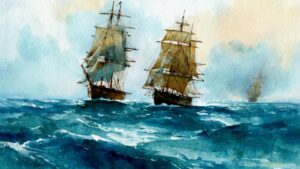
The word Amistad is Spanish for “friendship,” and it was the name of the schooner at the center of the story. A schooner is a type of sailing ship with two or more masts. The Amistad affair refers to the 1839 revolt aboard that ship, along with the legal battle that followed once the vessel reached the United States. United States v. Schooner Amistad was a United States Supreme Court case resulting from the rebellion of Africans on board the Spanish schooner La Amistad in 1839, and it was an unusual freedom suit that involved international diplomacy as well as United States law.
What Was the American Abolitionist Movement?
The American Abolitionist Movement is the name for the advancements made in the United States toward ending the practice of slavery. For instance, the term “abolition” means to stop or end something. As such, an abolitionist is someone who was working to ban slavery. The American Abolitionist Movement is considered to have occurred from the late 1700s until 1865 when the American government abolished slavery following the end of the American Civil War.
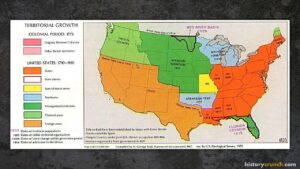
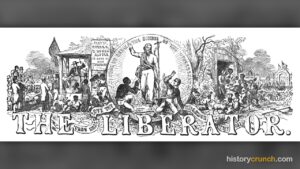
By the 1830s the movement had grown more determined and better organized. In fact, there was quite a divide between the Northern and Southern states in relation to their views on slavery. More specifically, the Northern states were the first to support abolition, and by the end of the 18th century most Northern states had some sort of anti-slavery legislation. Abolitionists sent petitions to Congress, published anti-slavery newspapers, and looked for ways to show the public how cruel and unjust slavery truly was.
The Amistad affair took place at a critical moment for this movement. Abolitionists were desperately seeking a way to dramatize the horrors of slavery, and the Amistad case seemed to provide a providential opportunity to illustrate the federal government’s complicity with slavery and the discrepancy between slavery and American ideals of natural rights. As a result, the case became one of the most talked about events of its time.
How Did the Africans End Up on the Amistad?
The story began far from the United States. In early 1839, Portuguese slave hunters abducted a large group of African people in Sierra Leone and transported them aboard the slave ship Tecora to Havana, Cuba, for auction to the highest bidder. These captives were members of the Mende people of West Africa. Their long ocean crossing, known as the Middle Passage, was brutal, and many died before ever reaching land.
By this time, buying and shipping enslaved people from Africa was illegal under international agreements. In fact, though the United States, Britain, Spain, and other European powers had abolished the importation of enslaved peoples by that time, the transatlantic slave trade continued illegally, and Havana was an important trading hub. Corrupt colonial officials in Cuba helped slave traders get around the law. More specifically, they signed paperwork that falsely labeled newly arrived Africans as people who had lived in Cuba for years, which made it look legal to sell them.
Two Spanish men then purchased a group of these captives. Don Pedro Montez and Don Jose Ruiz purchased 53 of the captives, members of the Mende people, in Havana and loaded them aboard the schooner Amistad for a trip to a nearby plantation. The group included 49 adult males and four children, three of them girls. The ship set sail in the summer of 1839 for another part of the Cuban coast.
What Happened During the Revolt?
The captives did not remain prisoners for long. Just three days into the journey, the would-be enslaved people revolted, when 25-year-old Sengbe Pieh, known as Cinque, escaped from his shackles and set about releasing the other captives. Cinque was a rice farmer from Mendeland, and he became the leader of the uprising.
Once free, the Africans armed themselves and fought back. The Mende killed members of the ship’s crew, including the captain, and ordered Montez and Ruiz to sail for Africa. They spared the two Spaniards because they needed someone who could navigate the ship home. However, the plan did not work as the Africans hoped.
The Spaniards tricked their captors during the voyage. In reality, the ship sailed east during the day, using the sun’s position to determine its direction, but at night the slave traders quietly redirected their course away from Africa. This zigzag path pushed the Amistad slowly toward North America instead of back across the Atlantic. The trip stretched on for weeks, and conditions aboard grew desperate. As stated above, the captives had little fresh water and food, and several of the Africans died before the journey ended.
How Was the Amistad Captured?
After roughly two months at sea, the wandering ship finally reached American waters. On August 26th, 1839, the Amistad reached Long Island, New York, and there the federal brig Washington seized the ship and its cargo. By this point the ragged vessel with its all-Black crew had already drawn attention in newspaper reports along the coast.
American authorities then took control of the situation. They charged the Mende with murder, imprisoned them in New Haven, Connecticut, and towed the Amistad to New London. The American revenue cutter’s captain filed for salvage rights to the Amistad’s cargo of Africans, meaning he wanted to be paid for capturing what he treated as valuable property. As a result, the human beings aboard the ship were suddenly at the center of a fight over who, if anyone, owned them.
Why Did the Amistad Become a Court Case?
Once the Amistad reached the United States, several groups made competing demands. The two Spaniards demanded the return of their supposedly Cuban-born enslaved workers, while the Spanish government called for the Africans’ extradition to Cuba to stand trial for piracy and murder, and in opposition to both groups, American abolitionists advocated the return of the illegally bought people to Africa. The question of what should happen to the captives quickly moved into the American courts.
The case also became a diplomatic problem for the government. For instance, Spain’s foreign minister argued that the holding of the ship and its cargo violated a 1795 treaty between the United States and Spain, and he demanded their return. President Martin Van Buren did not want to anger Spain, and he also worried about losing political support in the South. In fact, Van Buren feared that the Amistad case would undermine his political support in the South and damage his bid for reelection.
Abolitionists took the opposite view and rushed to help the captives. They were desperately seeking a way to dramatize the horrors of slavery. They raised money, hired lawyers, and worked to tell the Africans’ side of the story. One important step was finding someone who could speak with the captives directly. More specifically, they engaged the services of James Covey, a West African serving aboard a British naval vessel who could speak the Mendi language, and Covey was allowed to leave his naval duties indefinitely in order to serve as interpreter for the Africans. With his help, the captives could finally explain in court how they had been kidnapped and illegally sold.
What Did the Supreme Court Decide?
The case worked its way up through the federal court system. A district court ruled in favor of the Africans, finding that they had been illegally enslaved. However, the government did not accept the outcome. The Van Buren administration appealed the decision, and the case came before the US Supreme Court in January 1841.
To help win the case, the abolitionists brought in a powerful ally. U.S. Representative John Quincy Adams of Massachusetts, who had served as the sixth president of the United States from 1825 to 1829, joined the Africans’ defense team. Adams was a strong opponent of slavery, and he argued the case in person before the Court. He insisted that the captives had been free people, illegally seized, who had every right to defend themselves.
The Court agreed with that argument. On March 9, 1841, the Supreme Court ruled, with only one dissent, that the Africans had been illegally enslaved and had thus exercised a natural right to fight for their freedom. With the ruling, the surviving captives were declared free. In the end, in November, with the financial assistance of their abolitionist allies, the Amistad Africans departed America aboard the Gentleman on a voyage back to West Africa.
Significance of Amistad
The Amistad affair is significant because it became one of the most famous legal victories against slavery in American history. For instance, the historian Samuel Eliot Morison described it in 1969 as the most important court case involving slavery before being eclipsed by that of Dred Scott in 1857. The ruling confirmed in the nation’s highest court that the captives had been free people all along.
The case also gave the abolitionist movement powerful momentum. The affair played a pivotal role in shifting the abolitionist movement away from the tactics of moral suasion to new methods of political and legal agitation, which would arouse substantial numbers of Northerners against the immoralities of slavery. In this way, the story of the Amistad helped turn ordinary people against slavery and strengthened the anti-slavery cause across the North.
Finally, the Amistad stands as a powerful example of resistance. The captives did not wait quietly for others to free them. Instead, Cinque and his companions risked their lives to fight for their own liberty, and their courage inspired others in the decades before the American Civil War. As such, the Amistad remains an important chapter in the overall history of slavery and its end in the United States.
Frequently Asked Questions
What Does the Word Amistad Mean?
The word Amistad means “friendship” in Spanish. It was the name of the schooner that carried the Mende captives along the coast of Cuba in 1839. Many writers have pointed out how strange that name seems, given the cruelty the Africans faced aboard the ship.
Who Was Cinque?
Cinque was the leader of the Amistad revolt, and his birth name was Sengbe Pieh. He was a young rice farmer from Mendeland, in present-day Sierra Leone, who was kidnapped and illegally sold into slavery. After the revolt and the trial, he returned to West Africa with the other survivors.
Where Did the Amistad Revolt Take Place?
The revolt took place at sea off the coast of Cuba in the summer of 1839. The captives had been loaded onto the ship in Havana and were being taken to another part of the island. After the uprising, the ship drifted north and was finally seized near Long Island, New York.
Why Was John Quincy Adams Involved in the Amistad Case?
John Quincy Adams joined the defense because he was a respected former president and a strong opponent of slavery. By 1841 he was serving in Congress and agreed to argue the case before the Supreme Court. His experience and reputation gave the captives a stronger chance of winning their freedom.
What Happened to the Amistad Africans After the Trial?
The surviving Africans were freed and eventually sailed home to West Africa in late 1841. Abolitionists and Christian missionaries raised the money needed to pay for the voyage. Sadly, many of the original captives had already died at sea or in prison while waiting for the case to be decided.
Cite This Article
To cite this article as a source, use one of the formats below.
MLA: Millar, B. “Amistad: A Detailed Summary.” HistoryCrunch, 16 August 2026, https://historycrunch.com/amistad/.
APA: Millar, B. (2026). Amistad: A Detailed Summary. HistoryCrunch. https://historycrunch.com/amistad/
Chicago: Millar, B. “Amistad: A Detailed Summary.” HistoryCrunch. August 16, 2026. https://historycrunch.com/amistad/
Sources
- Jerry Bentley & Herbert Ziegler, Traditions & Encounters: A Global Perspective on the Past.
- J.M. Roberts & Odd Arne Westad, The Penguin History of the World.