German Reunification was one of the most important events at the end of the Cold War, marking the moment when two separate German nations became a single country once again. On October 3rd, 1990, East Germany and West Germany officially joined together to form one unified Federal Republic of Germany. This event ended more than four decades of division that had split the German people, their families, and their cities since the close of World War II.
Reunification refers to the process of bringing two divided parts of a country back together under one government. In the case of Germany, this meant merging communist East Germany, which had been controlled by the Soviet Union, with democratic and capitalist West Germany, which was allied with the United States and Western Europe. The two states had followed completely different political and economic paths for nearly fifty years, so joining them together was a major and complicated undertaking.
What Was the Cold War?
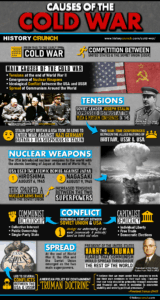
To understand German Reunification, it helps to first understand the Cold War, the overall period in which it took place. The Cold War lasted from approximately 1945 until 1990 and was one of the most significant events of the 20th century. In general, it was a period of increased tensions and hostility between the superpowers of the United States and the Soviet Union (USSR).
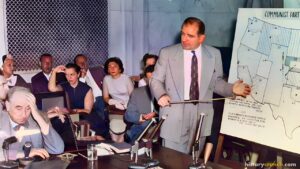
At its heart, the Cold War was a competition between two very different ways of organizing society. The Soviet Union was a communist nation based on the ideas of collectivism and government control of the economy. The United States, on the other hand, was a democratic and capitalist nation based on individual freedom and private ownership. Throughout the Cold War, the Soviet Union tried to spread communism to new regions, while the United States tried to stop it through a policy called containment.
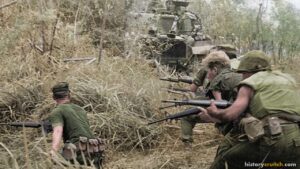
Even though the two superpowers never fought each other directly on a battlefield, their rivalry shaped nearly every part of world affairs for decades. It included events such as the Berlin Blockade, the Korean War, the Vietnam War, and the Cuban Missile Crisis. Germany, and especially the city of Berlin, sat right at the center of this global struggle.
Why Was Germany Divided in the First Place?
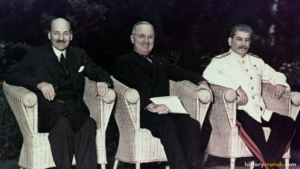
Germany’s division began at the end of World War II in 1945. After Nazi Germany was defeated, the victorious Allied Powers took control of the country and divided it into zones of occupation. The Soviet Union controlled the eastern portion, while Britain, France, and the United States controlled the western portion.
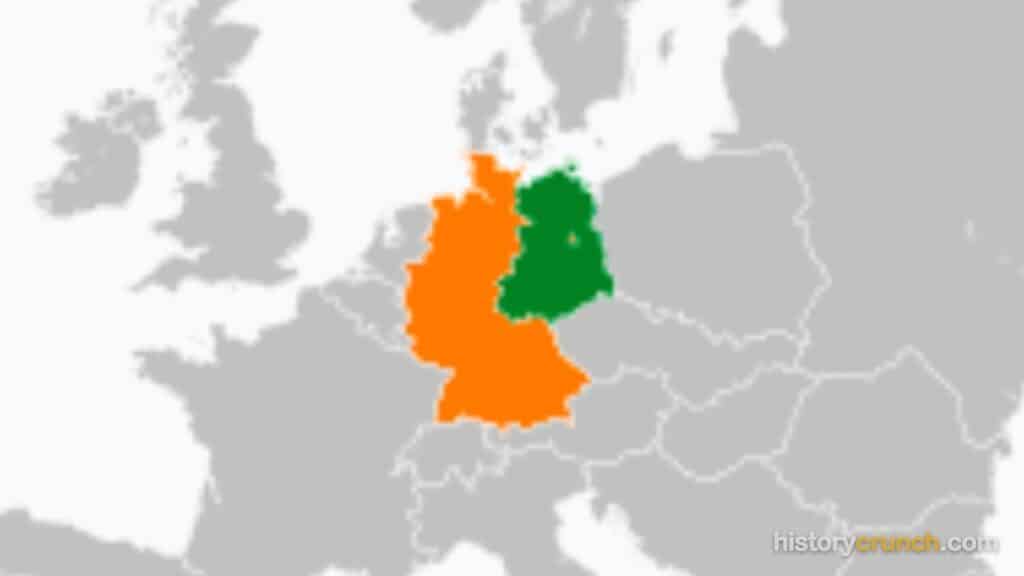
As tensions between the Soviets and the Western Allies grew, these zones hardened into two separate countries. In 1949, the western zones became the Federal Republic of Germany, commonly called West Germany, and the eastern zone became the German Democratic Republic, commonly called East Germany. West Germany developed into a wealthy, democratic, and capitalist nation, while East Germany became a communist state under Soviet influence.
The city of Berlin, located deep inside East Germany, was itself split into eastern and western halves. In fact, so many East Germans fled into West Berlin in search of freedom and opportunity that the East German government built the Berlin Wall in 1961 to stop them. For nearly thirty years, the Berlin Wall stood as the most visible symbol of a divided Germany and a divided Europe.
How Did Gorbachev’s Reforms Change Things?
A major turning point came with the leadership of Mikhail Gorbachev, who became the head of the Soviet Union in 1985. Gorbachev believed the Soviet system needed major reforms in order to survive, so he introduced two important policies. The first was glasnost, meaning openness, and the second was perestroika, meaning restructuring.
Glasnost allowed people to speak more freely and openly criticize the government, while perestroika tried to reshape the struggling Soviet economy. Although Gorbachev hoped these reforms would strengthen the Soviet Union, they actually helped weaken its grip on power. More specifically, he made it clear that the Soviet Union would no longer use its military to keep communist governments in control across Eastern Europe.
This change had enormous consequences for East Germany and the rest of the Soviet bloc. Without the threat of Soviet tanks, people across Eastern Europe felt free to demand democratic reforms. In reality, Gorbachev’s refusal to use force made peaceful revolution possible, and it opened the door to German Reunification.
How Did the Fall of the Berlin Wall Lead to Reunification?
During 1989, discontent inside East Germany reached a boiling point. Neighboring countries such as Hungary and Poland were already loosening their border controls, and thousands of East Germans used these openings to escape to the West. At the same time, huge crowds of citizens gathered in East German cities to demand freedom and reform.
The pressure finally broke on November 9th, 1989, when an East German official announced that citizens were free to cross into West Berlin. That night, both East and West Berliners gathered at the Berlin Wall to celebrate. They used hammers, bulldozers, and cranes to dismantle the barrier that had divided their city for almost thirty years.
The fall of the Berlin Wall symbolized the crumbling authority of the Soviet Union and the lessening tensions of the Cold War. It also proved fatal for the East German government, which quickly began to lose all of its power. Once the wall was open, the idea of joining the two Germanys back together moved from a distant dream to a real possibility within a matter of months.
How Did the Two Germanys Officially Reunite?
After the wall fell, events moved very quickly. West German Chancellor Helmut Kohl became the leading figure pushing for reunification, and just days after the fall of the wall he presented a plan to bring the two Germanys together. In March of 1990, East Germany held its first free elections, and voters strongly supported parties that favored a speedy reunification.
One of the biggest early steps was joining the two economies. In July of 1990, the two Germanys formed a monetary union, which gave East Germans the strong currency of West Germany. This step was important because a growing flood of East German refugees moving west threatened to cripple the East German economy, and leaders wanted to slow that movement.
Reunification also required the approval of the four powers that had occupied Germany after World War II, which were the United States, the Soviet Union, Britain, and France. The final barrier fell when Gorbachev dropped his objection to a united Germany remaining in the NATO military alliance, in exchange for financial aid to the Soviet Union. A treaty of unification was then approved, and it took effect on October 3rd, 1990.
On that day, East Germany officially joined West Germany as five new states, and the two halves of Berlin became one city once again. After forty-five years of division, Germany was a single nation. That date is now celebrated every year as a public holiday in Germany known as the Day of German Unity.
What Challenges Followed Reunification?
Although reunification was celebrated with great joy, joining the two Germanys was not easy. West Germany was wealthy and modern, while East Germany’s economy had fallen far behind after decades of communist control. As a result, the government spent enormous amounts of money to rebuild the eastern regions, modernize factories, and improve living standards.
Many East Germans also had to adjust to a completely new way of life. They faced new jobs, new businesses, and a new political system, and some struggled with unemployment as old state-run factories closed. For years, differences in wealth and opportunity remained between the eastern and western parts of the country, a gap that took a long time to close.
Significance of German Reunification
German Reunification was significant because it brought a peaceful end to one of the clearest symbols of Cold War division and reunited a nation that had been split for decades. For many observers, the joining of East and West Germany effectively marked the end of the Cold War itself, even though the Soviet Union would not collapse until December of 1991.
The event also had a powerful effect on the rest of Europe. It encouraged the collapse of communist governments across Eastern Europe and inspired a new drive toward European cooperation and unity. In addition, it put a formal end to the unfinished business of World War II by settling questions about Germany’s borders and its place in the world.
Finally, reunification transformed Germany into one of the most powerful and influential nations in Europe. A united Germany became a leading force in trade, politics, and diplomacy across the continent. For all of these reasons, German Reunification is remembered as a landmark moment that helped shape the modern world.
Frequently Asked Questions
When did Germany reunify?
Germany officially reunified on October 3rd, 1990. This came almost one year after the fall of the Berlin Wall on November 9th, 1989. The date is now celebrated each year as a national holiday called the Day of German Unity.
Who was the leader of Germany during reunification?
Helmut Kohl was the West German Chancellor who led the push for reunification. He served as chancellor from 1982 to 1998 and is often called the main architect of German unity. Kohl worked closely with world leaders, including Mikhail Gorbachev and United States President George H. W. Bush, to make reunification possible.
Why was Germany split into two countries?
Germany was split after World War II because the Allied Powers divided the defeated country into occupation zones. The Soviet-controlled zone became communist East Germany, while the zones controlled by Britain, France, and the United States became democratic West Germany. Growing Cold War tensions turned this temporary division into two separate nations by 1949.
Did reunification end the Cold War?
Many people view German Reunification as the symbolic end of the Cold War in Europe. It removed one of the most visible dividing lines between the communist East and the democratic West. However, the Cold War did not fully end until the Soviet Union itself collapsed in December of 1991.
What was the capital of reunified Germany?
Berlin became the capital of the reunified Germany. The eastern and western halves of the once-divided city were joined together as a single city again. Over the following years, the German government gradually moved its offices from the former West German capital of Bonn back to Berlin.
Cite This Article
To cite this article as a source, use one of the formats below.
MLA: Millar, B. “German Reunification: A Detailed Summary.” HistoryCrunch, 16 August 2026, https://historycrunch.com/german-reunification/.
APA: Millar, B. (2026). German Reunification: A Detailed Summary. HistoryCrunch. https://historycrunch.com/german-reunification/
Chicago: Millar, B. “German Reunification: A Detailed Summary.” HistoryCrunch. August 16, 2026. https://historycrunch.com/german-reunification/
Sources
- Norman Davies, Europe: A History.