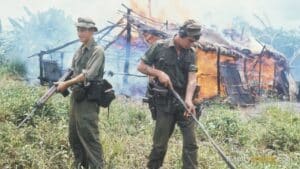
Laos in the Vietnam War is one of the most important and often overlooked parts of the larger conflict in Southeast Asia. Although Laos was officially a neutral country, it became a major battleground because of its location next to Vietnam. North Vietnam used Laotian territory to move soldiers and supplies south, while the United States dropped enormous amounts of bombs on the country in a mostly hidden campaign. As a result, a small and poor nation was pulled into a war that was never truly its own.
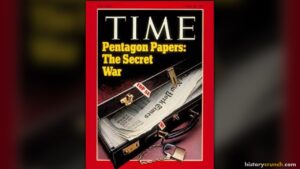
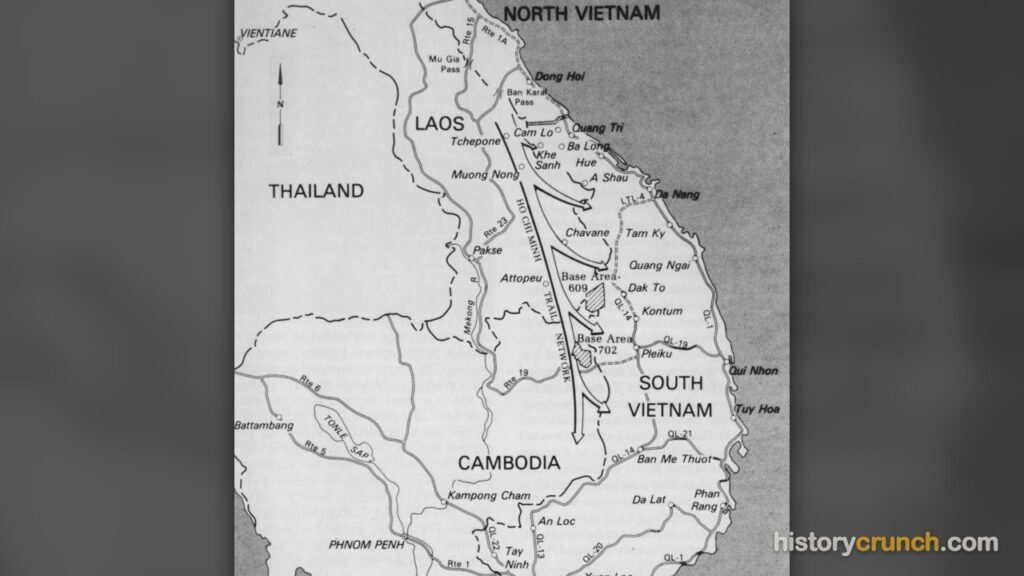
Laos is a landlocked country in Southeast Asia, which means it has no coastline and is surrounded by land on all sides. Laos is a landlocked country, sandwiched between China to the north, Cambodia to the south, Vietnam to the east and Thailand to the west. This position placed it directly between the warring sides and made its jungles and mountains valuable to North Vietnam. Because much of the fighting there was kept secret from the public, the conflict in Laos is often called the “Secret War.”
What Was the Vietnam War?
The Vietnam War was a long and costly conflict that grew out of the Cold War rivalry between the United States and communist nations. The war was fought between the communist government of North Vietnam and the government of South Vietnam, which was supported primarily by the United States, and it grew out of decades of tension related to the history of colonialism, nationalism, and the ideological conflict of the Cold War between the United States and the Soviet Union. The roots of the war reached back to the period of French colonial rule in the region known as French Indochina, which included Vietnam, Laos, and Cambodia.
The Vietnam War was a significant conflict that took place from 1955 to 1975, and it was a major conflict during the time of the Cold War that has left a lasting legacy on American history and world history. North Vietnam was backed by communist allies such as the Soviet Union and China, while South Vietnam received support from the United States. In fact, the United States entered the war directly and played a large military role for several years during the 1960s and early 1970s.
American leaders feared that if one country in the region fell to communism, its neighbors would soon follow. This idea, known as the Domino Theory, helped explain why the United States became so deeply involved not just in Vietnam but also in nearby Laos and Cambodia. As the war grew, the borders of the fighting spread far beyond Vietnam itself.
Why Did the War Spread Into Laos?
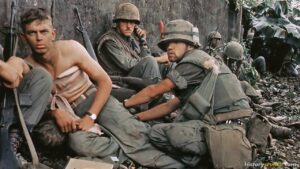
The Vietnam War did not stay inside the borders of Vietnam. The conflict expanded into neighboring countries like Laos and Cambodia, where North Vietnamese Army and Viet Cong soldiers moved and operated, at times pursued by South Vietnamese and American forces. This spillover turned Laos into an active war zone even though it had declared itself neutral.
Like Vietnam, Laos had a difficult colonial history. Like Vietnam, Laos fell under French colonial control in the late 19th century, but it lacked the natural resources, labor force, and coastline of its neighbors, so it was never a profitable colony, and as a consequence it was not as closely administered or developed as Vietnam. Laos was granted full independence from France on November 9th, 1953, and became a constitutional monarchy.
After independence, Laos was split by its own political struggle. A communist movement called the Pathet Lao gained strength and allied itself with North Vietnam. Vietnam’s nationalist and communist movement inspired the rise of the Pathet Lao in Laos and the Khmer Rouge in Cambodia. This meant that Laos faced both an internal civil war and pressure from the fighting next door in Vietnam.
What Was the Ho Chi Minh Trail?
The main reason Laos became so important was the Ho Chi Minh Trail. The Ho Chi Minh Trail was a logistical system that ran from North Vietnam to South Vietnam through the neighboring kingdoms of Laos and Cambodia. More specifically, it was a huge network of roads, paths, and jungle trails that North Vietnam used to send troops, weapons, food, and supplies southward.
The trail carried enormous amounts of manpower and material to communist fighters in the south. The system provided support, in the form of manpower and materiel, to the National Front for the Liberation of South Vietnam, called the Viet Cong by the opposition, and the People’s Army of Vietnam, or North Vietnamese Army, during the Vietnam War. Construction on the network began in 1959, and over the following years it was steadily improved and expanded.
Because so much of the trail ran through Laos, the country became one of the most fought-over places in the entire war. The critical stretch was in Laos, which was supposedly neutral but which in actuality was one of the major battle areas of the war. The dense forests and rugged mountains made the trail hard to see from the air and difficult to destroy, which frustrated American commanders for years.
How Did the United States Get Involved in Laos?
American involvement in Laos was carried out mostly in secret. The United States wanted to stop the spread of communism in Laos but did not want to openly break the country’s neutrality. In 1962, an international agreement in Geneva declared that Laos should remain neutral and free of foreign troops, yet both the United States and North Vietnam ignored these promises in practice.
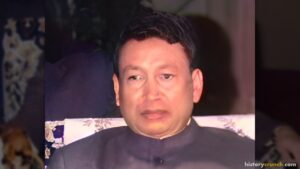
Because open military action was off limits, the Central Intelligence Agency ran much of the American effort in Laos. The CIA led the effort, training and funding a guerrilla army of Hmong soldiers under General Vang Pao, and over 30,000 Hmong fighters had boots on the ground, preventing the invasion of Laos, protecting classified radar installations, rescuing downed American pilots, and gathering intelligence. These fighters became a key part of the hidden ground war against the Pathet Lao and North Vietnamese forces.
Local soldiers also fought alongside American advisors and pilots. Lao Special Guerrilla Unit and Royal Lao Army soldiers fought along the Ho Chi Minh Trail, which transited Laos and made it a key battlefield in the conflict, and these soldiers were supported by U.S. CIA case officers and U.S. Army Special Forces. In this way the United States fought a large war in Laos without ever formally declaring one.
Why Was Laos So Heavily Bombed?
The most devastating part of the war in Laos was the American bombing campaign. The goal was to cut the Ho Chi Minh Trail and to support friendly forces on the ground. One of the earliest efforts was Operation Barrel Roll, which began in late 1964. It became an interdiction campaign against the Ho Chi Minh Trail, North Vietnam’s main logistical corridor, which ran from southwestern North Vietnam, through southeastern Laos, and into South Vietnam.
The bombing grew heavier as the war dragged on. The rain of ordnance that fell upon the trail peaked during 1969, when 433,000 tons fell on Laos, which was made possible by the close-out of Operation Rolling Thunder and the beginning of Operation Commando Hunt in November 1968. Despite this massive effort, the trail was hard to shut down because supplies could be rerouted and the jungle hid much of the traffic.
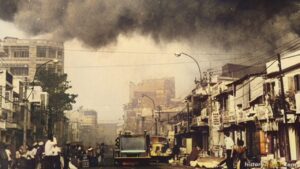
The scale of the bombing was staggering and its effects still linger today. The officially neutral country became a battleground in the Cold War, with American bombers dropping over two million tons of bombs over Laos, more than all the bombs dropped during World War II combined, and today Laos is the most heavily bombed nation in history. A large amount of this ammunition never exploded, leaving dangerous leftovers scattered across the land.
What Happened to Laos After the War?
When the Vietnam War ended in 1975, the communist side won not only in Vietnam but also in Laos. The Pathet Lao took control of the country and ended the monarchy that had ruled for decades. This victory came shortly after the fall of South Vietnam and the communist takeover of Cambodia.
The new government treated many wartime enemies harshly, especially the Hmong who had fought alongside the United States. The new Pathet Lao government viewed Hmong fighters as a serious threat to its legitimacy, leading to widespread executions, imprisonments, and forced re-education camps. Fearing for their lives, around 100,000 Hmong fled to Thailand, where they lived in refugee camps before resettling in the United States, France, Australia, and other countries.
The physical damage from the war lasted long after the fighting stopped. Unexploded ordnance, mostly from United States bombing, remains a problem. According to the Laotian government in 2017, there were 29,522 deaths and 21,048 injuries from explosive ordnance during the war or as a result of unexploded ordnance since the end of the war. Farmers and children have been harmed by old bombs for generations.
Significance of Laos in the Vietnam War
Laos in the Vietnam War shows how a single conflict can spill across borders and change the fate of an entire region. Although Laos tried to stay neutral, its location made it impossible to escape the fighting between North Vietnam and the United States. In reality, the war there was just as destructive as the war in Vietnam itself, even though most of it was hidden from public view.
The Secret War also reveals how the Cold War pushed powerful nations to fight in indirect and often hidden ways. The United States relied on the CIA and local allies rather than a public declaration of war, which kept the conflict out of the headlines for years. This approach allowed the fighting to grow enormous in scale without the same level of debate at home that surrounded the war in Vietnam.
Finally, the story of Laos is a reminder of the long human cost of war. The heavy bombing left behind unexploded ordnance that still threatens people today, and the political changes forced tens of thousands of refugees to flee their homeland. For these reasons, Laos remains an essential part of understanding the full history and consequences of the Vietnam War.
Frequently Asked Questions
Why Was the War in Laos Called the Secret War?
The war in Laos was called the Secret War because the United States kept its military role there hidden from the American public and much of the world. Since Laos was officially neutral, an open war would have broken international agreements. As a result, the effort was run largely by the CIA using local fighters and unmarked aircraft rather than regular combat troops.
Who Were the Pathet Lao?
The Pathet Lao were a communist movement in Laos that fought to control the country and later took power in 1975. They were closely allied with North Vietnam and received support from the Soviet Union and China. Their long struggle against the American-backed government made Laos part of the same Cold War contest that fueled the Vietnam War.
What Role Did the Hmong Play in the War?
The Hmong were an ethnic group from the highlands of Laos who fought as America’s main ground allies during the Secret War. Trained and funded by the CIA, they attacked communist forces, guarded secret bases, and rescued downed pilots. After the war, many Hmong faced persecution from the new government and were forced to flee as refugees.
Why Is Laos the Most Bombed Country in History?
Laos is the most bombed country in history because the United States dropped more than two million tons of bombs on it during the war. Much of this bombing targeted the Ho Chi Minh Trail, which ran through Laotian territory. The amount of ammunition dropped was greater than all the bombs used in World War II combined.
Is Laos Still Affected by the War Today?
Yes, Laos is still deeply affected by the war today, mainly because of unexploded bombs that remain buried in the ground. These leftover explosives continue to injure and kill people, especially farmers and children, decades after the fighting ended. Clearing this ordnance remains a slow and dangerous task that will take many more years to complete.
Cite This Article
To cite this article as a source, use one of the formats below.
MLA: Millar, B. “Laos in the Vietnam War: A Detailed Summary.” HistoryCrunch, 16 August 2026, https://historycrunch.com/laos-in-the-vietnam-war/.
APA: Millar, B. (2026). Laos in the Vietnam War: A Detailed Summary. HistoryCrunch. https://historycrunch.com/laos-in-the-vietnam-war/
Chicago: Millar, B. “Laos in the Vietnam War: A Detailed Summary.” HistoryCrunch. August 16, 2026. https://historycrunch.com/laos-in-the-vietnam-war/
Sources
- Fredrik Logevall, Embers of War.
- Wilson Center Digital Archive