The American home frontThe civilian side of a nation during wartime, including everyday people, businesses, and government agencies that support a war effort from inside the country. during the Korean War is an important chapter in understanding how the United States adjusted to fighting a major overseas conflict while also preparing for the dangers of the Cold War. When North Korea invaded South Korea in June of 1950, American life quickly changed in ways large and small. The government reintroduced the military draft, restarted wartime economic controls, and asked citizens to accept limits on wages and prices, all while a deep fear of communism spread across the country.
The term home front refers to the civilian side of a nation during wartime, meaning the everyday people, businesses, and government agencies that support a war effort from within the country rather than on the battlefield. On the home front, ordinary citizens experienced the war through things like taxes, factory work, news reports, and civil defenseGovernment-organized efforts to prepare ordinary civilians to survive a possible enemy attack, such as a nuclear strike. drills. During the Korean War, the American home front was shaped by the government’s effort to mobilize the economy and by a rising fear of communist influence at home.
 FactsthatCrunch
Americans faced strict World War II-style rationing of everyday goods during the Korean War.
What Was the Cold War?
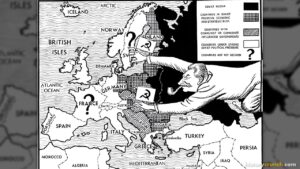
The Korean War took place during the early years of the Cold War, which was a long period of tension and rivalry between the United States and the Soviet Union that followed the end of World War II. Rather than fighting each other directly, the two superpowers competed for influence around the world through political pressure, an arms race, and support for opposing sides in smaller conflicts. The Korean War is often described as a Cold War proxy warA conflict where two major powers support opposing sides instead of fighting each other directly., since the United States backed South Korea while the Soviet Union and communist China supported North Korea.
At the heart of the Cold War was a clash between two ways of organizing society. The United States promoted capitalism and democracy, while the Soviet Union promoted communism, a system in which the government owns most property and controls the economy. American leaders followed a policy called containmentA U.S. policy aimed at stopping communism from spreading to new regions of the world., which aimed to stop the spread of communism to new regions. For more background, the site’s article on the causes of the Korean War explains how these Cold War rivalries led to the outbreak of fighting.
This atmosphere of fear and competition helps explain why events in a faraway country mattered so much to Americans at home. To many people, the invasion of South Korea looked like the first step in a larger communist plan for world domination. As a result, the war on the battlefield was closely tied to the mood, politics, and economy of the United States itself.
FactsthatCrunchHow Did the Korean War Begin for Americans?
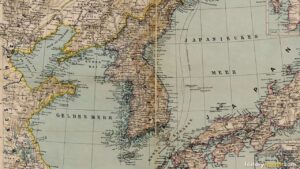
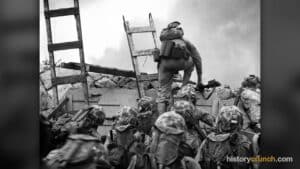
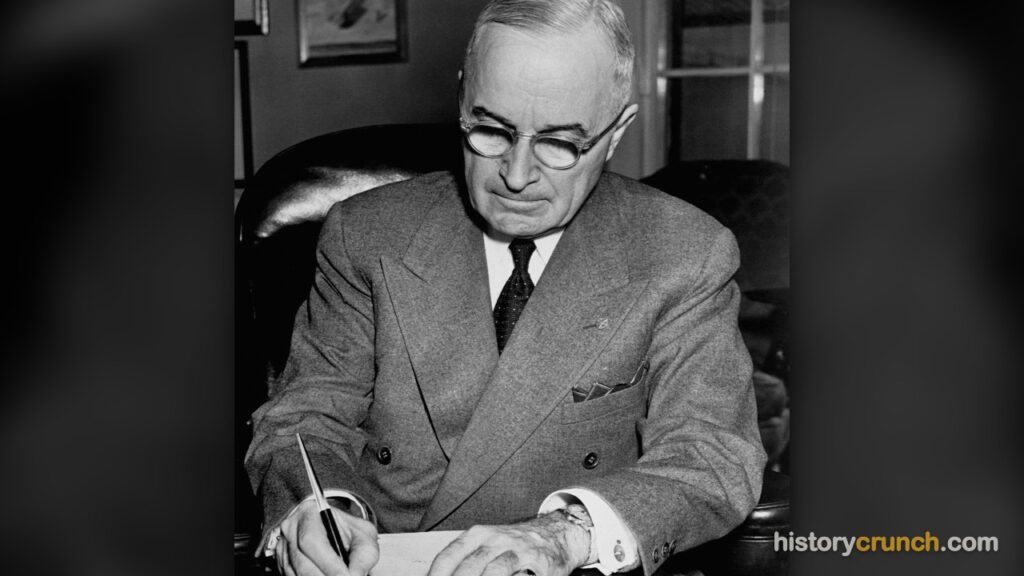
The Korean War began on June 25th, 1950, when soldiers from communist North Korea crossed the 38th parallel and invaded South Korea. The 38th parallel was the dividing line that had split Korea into a communist north and a non-communist south after World War II. President Harry S. Truman viewed the invasion as an act of aggression that had to be stopped, and within days the United States committed troops to defend South Korea as part of a United Nations force.
Importantly, the United States never formally declared war on North Korea. Instead, Truman called the effort a police action and sent forces under the authority of the United Nations. This meant that Americans went to war without the kind of clear national declaration that had marked World War II, which shaped how the public understood and reacted to the conflict.
In fact, the decision to enter the war came very quickly, and the government had to move fast to prepare the country. Because so many veterans and factories from World War II were still fresh in memory, Americans understood what a major war might require. The challenge for Truman was how to fight in Korea, and prepare for a possible larger war, without turning American life completely upside down.
FactsthatCrunchHow Did the Draft Affect the Home Front?
One of the most direct ways the war reached American families was through the military draft, a system that required young men to serve in the armed forces. The draft had continued after World War II, and once fighting began in Korea it was expanded to fill the ranks of the growing military. For many communities, this meant that young men were called away from jobs, schools, and families to train and serve.
The draft created shortages of workers in some cities just as factories needed more hands to produce war materials. For instance, industrial areas that had thrived during World War II now had to replace young men who were being called into service. This tension between the need for soldiers and the need for workers became a common feature of the home front.
As stated above, the war was not accompanied by a formal declaration, and over time the fighting settled into a long and bloody stalemate near the 38th parallel. As casualties mounted and the war dragged on with no clear victory, the draft became a source of frustration for many Americans who questioned why so many young men were being sent to fight in a distant conflict.
FactsthatCrunchHow Did the War Change the American Economy?
The outbreak of war in Korea set off a wave of inflationA general rise in prices that reduces how much money can buy. and hoarding on the home front, as worried consumers rushed to buy goods before prices climbed higher. Inflation means a general rise in prices that reduces how much money can buy. To control this problem, the government created new agencies and gave itself power to manage important parts of the economy through the Defense Production ActA law passed by Congress in 1950 giving the government power to manage key parts of the economy during the war., which Congress passed in 1950.
To hold down inflation, the government set up the Office of Price Stabilization to limit how much prices could rise, along with the Wage Stabilization Board to limit how much wages could increase. More specifically, these agencies tried to keep the economy steady so that war materials could be produced without constant disputes between businesses and workers over pay and profits. Truman had hoped to avoid heavy controls at first, but rising prices forced the government to act.
In reality, much of this mobilization went beyond what the Korean War alone required. American leaders used the war as a reason to build up the nation’s overall military and industrial strength for the long Cold War ahead, a plan tied to a secret policy document known as NSC 68. Military spending rose sharply, and the buildup helped shape a permanent link between government and defense industries that would last for decades.
FactsthatCrunchHow did the government fight inflation on the Korean War home front?
Why Did Truman Seize the Steel Mills?
One of the most dramatic events on the home front was the steel mill seizure of 1952, which grew out of a labor dispute in an industry that was essential to the war. Steel was needed to build the weapons, vehicles, and equipment that American forces used in Korea, so any interruption in production was a serious threat. When steelworkers prepared to strike over wages, Truman worried that a shutdown would cripple the war effort.
In April of 1952, Truman issued an executive orderA direct instruction issued by the president to manage operations of the federal government. directing the government to seize and operate the nation’s steel mills. He argued that this action was necessary to keep steel flowing and to protect national security. The move was deeply controversial, angering both the steel companies and many workers, and it added to a sense that the war was giving the government too much power.
The steel companies challenged the seizure in court, and the case reached the Supreme Court in the decision known as Youngstown Sheet and Tube Company v. Sawyer. The Court ruled against Truman, deciding that the president did not have the authority to seize private property in this way without permission from Congress. This landmark ruling set important limits on presidential power, even during a national emergency.
FactsthatCrunchHow Did the Supreme Court Rule on Truman's Steel Mill Seizure in 1952?
In June 1952, the Supreme Court ruled 6 to 3 against President Truman in Youngstown Sheet and Tube Co. v. Sawyer, deciding that he had no constitutional authority to seize private steel mills, even to protect the Korean War effort. The Court found that Truman had acted beyond the powers granted to the president, because Congress had not given him permission to take over private property in this way. The ruling set a lasting limit on presidential power during national emergencies.
How Did Fear of Communism Shape Daily Life?
The Korean War took place during a period of intense fear of communism in the United States, often called the Red Scare. This fear grew stronger after the Soviet Union tested its first nuclear bomb in 1949 and after communists took control of China that same year. When the war began in 1950, many Americans became even more convinced that communism was a growing threat both abroad and at home.
This climate gave rise to a movement known as McCarthyism, named after Senator Joseph McCarthy, who accused many people of being secret communists or communist sympathizers. In this atmosphere, suspicion and accusations spread through government, schools, and the entertainment industry, and open disagreement could be risky. Many Americans felt pressure to prove their loyalty and to avoid anything that might make them appear soft on communism.
At the same time, the threat of nuclear war led the government to promote civil defense, which meant preparing civilians to survive a possible atomic attack. Truman created the Federal Civil Defense Administration in 1950, and schoolchildren across the country practiced duck and cover drills in which they hid under their desks. Families were encouraged to prepare for emergencies, and the fear of sudden attack became a real part of everyday life.
During the Korean War, American schoolchildren practiced duck and cover drills as part of civil defense preparations against a possible nuclear attack.
Significance of American Home Front in the Korean War
The American home front during the Korean War is significant because it shaped the country’s approach to the entire Cold War that followed. The war pushed the United States to build a large, permanent military and to create a lasting partnership between government and defense industries. This buildup would influence American politics, spending, and foreign policy for decades to come.
The war also tested the limits of government power at home, most clearly in the steel mill seizure and the Supreme Court decision that followed. That ruling remains an important example of how the courts can check the power of the president, even in wartime. In this way, events on the home front helped define the balance between security and constitutional limits in American government.
Finally, the Korean War is often called the Forgotten War because it received far less attention than World War II or the later war in Vietnam. Even so, the home front experience of fear, mobilization, and sacrifice left a deep mark on American society. It helped set the tone for the anxious, watchful mood that would define the United States throughout the long years of the Cold War.
FactsthatCrunchThe Korean War drove significant growth in U.S. defense spending, reshaping the federal budget in just three years.
Korean War timeline · 1950 – 1953
Key Vocabulary
Home front
Proxy war
Containment
Defense Production Act
McCarthyism
Civil defense
Executive order
Frequently Asked Questions
What was the American home front during the Korean War?
The American home front during the Korean War was the civilian side of the country that supported the war effort from within the United States. It included the draft, wartime economic controls, defense production, and a rising fear of communism. Unlike World War II, this home front operated during a conflict that was never formally declared a war.
Was there rationing during the Korean War like in World War II?
There was far less rationing during the Korean War than during World War II, and everyday consumer goods were mostly available. Many Americans strongly opposed a return to the shortages of the Great Depression and World War II, so the government relied more on price and wage controls than on strict rationing. In fact, much of the country enjoyed a booming economy during the war years.
Why is the Korean War called the Forgotten War?
The Korean War is called the Forgotten War because it received much less public attention than World War II before it or the Vietnam War after it. It came only a few years after World War II, and it ended in a stalemate rather than a clear victory. As a result, its impact on American life has often been overlooked despite its heavy cost.
What was the steel strike of 1952 about?
The steel strike of 1952 was a dispute over wages between steelworkers and steel companies during the Korean War. Steelworkers had not received a pay raise for some time even as the companies earned large profits from wartime production. When the workers threatened to strike, Truman seized the mills to keep steel flowing, which led to a major Supreme Court case.
How did the Korean War affect ordinary American families?
The Korean War affected ordinary families most directly through the draft, which called young men away from home to serve in the military. Families also felt the effects of price and wage controls, higher taxes, and the constant fear of nuclear war. Children even practiced duck and cover drills in school as part of the nation’s civil defense efforts.
Cite This Article
To cite this article as a source, use one of the formats below.
MLA: Millar, B. “American Home Front in the Korean War: A Detailed Summary.” HistoryCrunch, 15 August 2026, https://historycrunch.com/american-home-front-in-the-korean-war/.
APA: Millar, B. (2026). American Home Front in the Korean War: A Detailed Summary. HistoryCrunch. https://historycrunch.com/american-home-front-in-the-korean-war/
Chicago: Millar, B. “American Home Front in the Korean War: A Detailed Summary.” HistoryCrunch. August 15, 2026. https://historycrunch.com/american-home-front-in-the-korean-war/
Sources
- Sheila Miyoshi Jager, Brothers at War: The Unending Conflict in Korea.
- William Stueck, The Korean War: An International History.