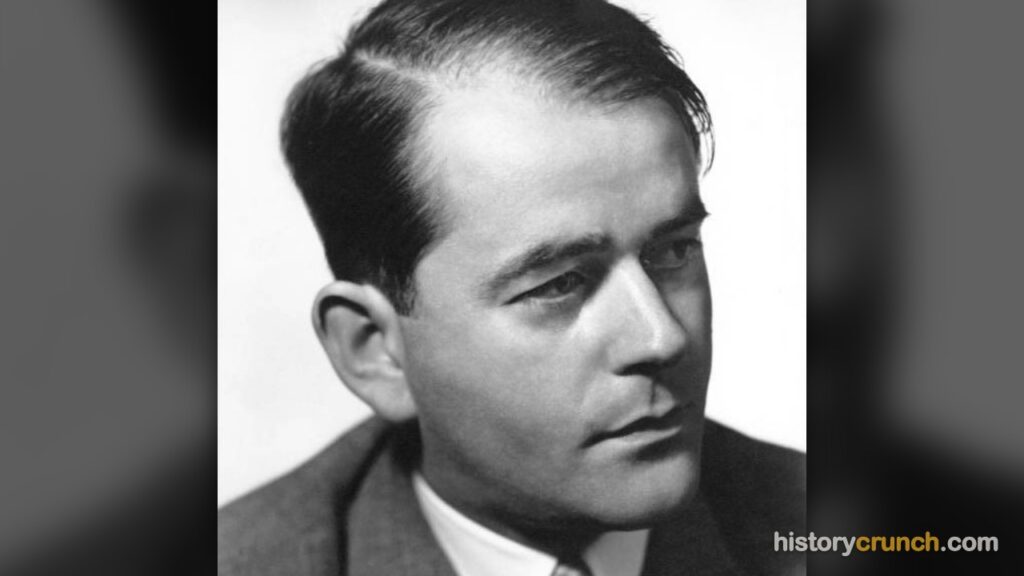
Albert Speer was one of the most important figures in the leadership of Nazi Germany, serving first as Adolf Hitler‘s chief architect and later as the minister in charge of weapons production during World War II. He is remembered both for the massive buildings he designed for the Nazi Party and for the way he used forced and slave labor to keep German factories running until the very end of the war.
Speer is also famous for how he behaved after the war. At the trials held in Nuremberg, he admitted a general sense of guilt while claiming he had known nothing about the Holocaust. This helped him avoid a death sentence and later allowed him to present himself to the world as the so-called “good Nazi,” a label that historians have questioned ever since.
Early Life and Background
Albert Speer was born on March 19th, 1905, in the German city of Mannheim. He was born into a prosperous upper-middle-class family of master builders, and his father, also named Albert, was an architect in the city. In fact, both his father and grandfather worked in building and design, and Speer eventually followed in their footsteps.
As a young man, Speer was drawn to mathematics, but he chose to study architecture instead. He studied architecture at the Karlsruhe Institute of Technology and continued his training in Munich and Berlin. Speer studied in the technical colleges in Munich and Berlin, before gaining his architectural license in 1927.
Germany at this time was going through the difficult years of the Weimar Republic, its first attempt at democracy. Many Germans were angry about the terms of the Treaty of Versailles, the peace agreement forced on Germany after World War I, and the country suffered through economic crisis and unemployment. These conditions helped the Nazi Party gain support, and they eventually pulled the young architect toward politics.
Joining the Nazi Party
In late 1930, Speer attended a rally in Berlin and heard Adolf Hitler give a speech. It was at Berlin University that he first heard Adolf Hitler speak in 1930, and he came under Hitler’s spell. The experience made a deep impression on the young man, who was searching for direction in an uncertain time.
As a result, after hearing Adolf Hitler speak at a Berlin rally in late 1930, Speer enthusiastically joined the Nazi Party in January 1931. More specifically, it was Hitler’s personality, rather than the details of Nazi ideas, that drew Speer in. Hitler appeared to the young Speer to offer the complete answer to Communism and the political futility of the Weimar system.
Speer’s talent as an architect soon brought him to the attention of important Nazi officials. Eventually, after submitting a design for the Nazis’ new Nuremberg rally grounds, Speer was given an audience with Hitler, and the pair got along well, with Hitler considering Speer a kindred spirit. This personal bond would shape the rest of Speer’s career.
Rise to Power
The turning point in Speer’s rise came when the Nazis took control of Germany. Hitler became the Chancellor of Germany, leader of the democratically elected government, on January 30th, 1933. Not long afterward, the Nazi Party used a series of laws and events to turn Germany into a dictatorship, and Hitler gained near-total power.
With Hitler now in charge, Speer’s career soared. Hitler was impressed by Speer’s efficiency and talent, and, soon after becoming chancellor, he made Speer his personal architect in 1933. The two men shared a love of grand buildings, and Hitler treated Speer as a trusted member of his inner circle.
As Hitler’s architect, Speer designed enormous structures meant to display Nazi power. The Nuremberg rally grounds, much of which had been designed by Speer, were used for propaganda events aiming to demonstrate Nazi power, and Speer also helped design Berlin’s Reich Chancellery. These buildings were huge and dramatic, and they were designed to make the individual feel small next to the might of the state.
In 1937, Speer took on an even larger role in reshaping the German capital. In 1937, Hitler appointed Speer as General Building Inspector for Berlin. In this position he planned a complete rebuilding of the city into a grand Nazi capital. However, this work came with a dark side. In this capacity he was responsible for the Central Department for Resettlement that evicted Jewish tenants from their homes in Berlin.
Minister of Armaments
Speer’s role changed dramatically during World War II, which the Nazis had started by invading Poland in 1939. In February 1942, Speer was appointed as Reich Minister of Armaments and War Production. He took over the job after the previous minister died in a plane crash, and he quickly proved to be a skilled organizer.
In this new role, Speer was responsible for keeping German factories producing the weapons, vehicles, and equipment the military needed. He had both the technical and administrative skill to oversee a large, but crucially important, department efficiently. Under his direction, weapons production actually increased for a time, even as Allied bombers pounded German cities.
To achieve this, Speer relied on a brutal system of forced labor. In this role, Speer set up a system of conscript and slave labor, mostly supplied from concentration camps. Prisoners and captured foreign workers were forced to labor under terrible conditions, and many died. As armaments minister, he expanded the use of slave labor, supplied primarily from concentration camps, that maintained production of war material for Germany.
In reality, this record would later become the main reason Speer was convicted of crimes. Although he tried to present himself as a manager who only cared about factories and numbers, the workers whose suffering fueled those factories were victims of the Nazi regime he served.
End of the War and the Nero Decree
As the war turned against Germany, Speer began to act against some of Hitler’s most extreme orders. In March of 1945, with defeat certain, Hitler issued what became known as the Nero Decree. In March 1945, Hitler issued the infamous Nero Decree, ordering German forces to destroy factories, railroads, bridges, power plants, and other infrastructure before the Allies could capture them.
This was a “scorched earth” policy, meaning Germany’s own resources would be destroyed rather than left for the enemy. Towards the end of the war, Speer believed Germany should try to lose as quickly as possible, as the country could no longer win and therefore should try to inflict the least internal damage. As a result, he worked quietly to prevent the order from being carried out. Speer later claimed that he refused to carry out the order, and according to his account, he quietly instructed officials to preserve Germany’s industrial infrastructure instead.
Whether Speer acted out of genuine conscience or in order to look better after the war is still debated. Even so, his defiance of the Nero Decree became one of the main arguments he used to defend himself once the fighting was over.
Nuremberg Trials and Later Life
After Germany’s defeat, Speer was arrested and put on trial at Nuremberg, where the Allies prosecuted the surviving leaders of the Nazi regime. He was among the 24 major war criminals charged with the crimes of the Nazi regime before the International Military Tribunal. Throughout the trial, Speer insisted that he had not known about the mass murder of Jews and others in the Holocaust.
This strategy set him apart from the other defendants and likely spared his life. He was found guilty of war crimes and crimes against humanity, principally for the use of slave labor, narrowly avoiding a death sentence. More specifically, at the Nuremberg trials, Albert Speer was convicted of war crimes and crimes against humanity, and he served a 20-year prison sentence.
Speer spent his sentence in Spandau Prison in Berlin. He was known as prisoner number 5, and against prison rules he wrote the notes for what would become bestselling books, including Inside the Third Reich. After serving the full 20 years, Speer was released in 1966, grew wealthy, lived in a cottage in Heidelberg, West Germany, and cultivated his image as a “good Nazi” who had spoken candidly about his past.
In his final years, Speer became a well-known public figure and gave many interviews about life inside the Nazi regime. Speer died of a stroke in 1981. However, after his death in 1981, scholars uncovered documents, private letters, and decades of historical research that told a different story.
Significance of Albert Speer
Albert Speer is significant because he shows how ordinary talent and ambition could be turned toward terrible ends within the Nazi regime. As Hitler’s architect and later his armaments minister, Speer helped make the Nazi state look powerful and kept its war machine running long after defeat was likely.
His use of slave labor also connects him directly to the suffering of the Holocaust and the concentration camp system, even though he tried to distance himself from those crimes. For this reason, Speer stands as an important example of how leaders can enable great harm while claiming to be concerned only with their jobs.
Finally, Speer’s careful effort to rebuild his reputation makes him an important case study in how history is remembered and rewritten. His twenty years in prison allowed Speer to cultivate an image of the good Nazi, an image and a legacy that historians would debate during his lifetime and long after his death. In fact, that debate over whether he was truly ignorant of Nazi crimes continues today.
Frequently Asked Questions
Who was Albert Speer?
Albert Speer was a German architect who became one of Adolf Hitler’s closest associates. He designed grand buildings and rally grounds for the Nazi Party and later ran Germany’s weapons production during World War II, which made him one of the most powerful men in the Nazi government.
Why is Albert Speer called the “good Nazi”?
Speer was called the “good Nazi” because he expressed regret at the Nuremberg trials and claimed he had not known about the Holocaust. This image was largely one he created himself, and later research raised serious doubts about how honest and innocent he really was.
What buildings did Albert Speer design?
Speer designed several major Nazi structures, most famously the Nuremberg rally grounds and the new Reich Chancellery in Berlin. He also created plans to completely rebuild Berlin into a grand capital, though most of those plans were never finished because of the war.
Why was Albert Speer not sentenced to death?
Speer avoided the death penalty because he accepted a general sense of responsibility while denying direct knowledge of the worst Nazi crimes. His cooperation and his claim of ignorance set him apart from other defendants, and he received a 20-year prison sentence instead of execution.
What happened to Albert Speer after prison?
After his release in 1966, Speer became a wealthy and popular author and public figure in West Germany. He wrote bestselling books about his time in the Nazi regime and died in 1981, though evidence uncovered after his death challenged the innocent image he had worked to build.
Cite This Article
To cite this article as a source, use one of the formats below.
MLA: Millar, B. “Albert Speer: A Detailed Biography.” HistoryCrunch, 14 August 2026, https://historycrunch.com/albert-speer/.
APA: Millar, B. (2026). Albert Speer: A Detailed Biography. HistoryCrunch. https://historycrunch.com/albert-speer/
Chicago: Millar, B. “Albert Speer: A Detailed Biography.” HistoryCrunch. August 14, 2026. https://historycrunch.com/albert-speer/
Sources
- Jerry Bentley & Herbert Ziegler, Traditions & Encounters: A Global Perspective on the Past.
- J.M. Roberts & Odd Arne Westad, The Penguin History of the World.