V-J Day, short for Victory over Japan Day, marked the end of the fighting in World War II and stands as one of the most important moments of the twentieth century. It was the day that Imperial Japan agreed to surrender to the Allied powers, bringing an end to nearly six years of global war. Coming months after the defeat of Nazi Germany in Europe, the Japanese surrender finally ended the deadliest conflict in human history and opened the door to the postwar world.
The term V-J Day is used for more than one date, which can be confusing. In the United States, people often mark August 14th, 1945, the day President Harry S. Truman announced that Japan had accepted the Allied surrender terms. In Japan and much of the world, the date is August 15th, 1945, because of the time difference. The formal signing of the surrender documents took place later, on September 2nd, 1945, aboard the battleship USS Missouri in Tokyo Bay.
What Was World War II?
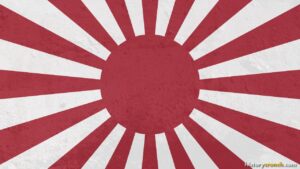
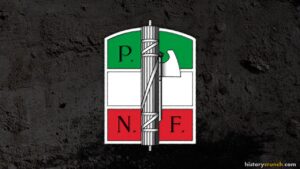
World War II was a global conflict that lasted from 1939 to 1945 and involved most of the world’s nations. It was fought between two large alliances. On one side were the Allies, led by the United States, Great Britain, and the Soviet Union. On the other side were the Axis powers, made up mainly of Nazi Germany, Fascist Italy, and Imperial Japan.
The war in Europe began on September 1st, 1939, when Nazi Germany invaded Poland. The war in the Pacific is usually dated to December 7th, 1941, when Japan launched a surprise attack on the American naval base at Pearl Harbor in Hawaii. That attack drew the United States directly into the fighting and turned the conflict into a truly worldwide war.
World War II was the deadliest war in history. Estimates of the total number of people killed range widely, but many historians place the figure at roughly 60 million or more, including both soldiers and civilians. The war ended in two stages. Germany surrendered first, in May of 1945, and Japan surrendered a few months later, an event remembered as V-J Day.
Why Did the Pacific War Continue After Germany Surrendered?
The war in Europe ended on May 8th, 1945, a day the Allies called V-E Day, short for Victory in Europe Day. Yet the celebrations were quieter than they might have been, because the war against Japan in the Pacific was still raging. For the Allies, and especially the United States, the hardest fighting of the Pacific War seemed to lie ahead.
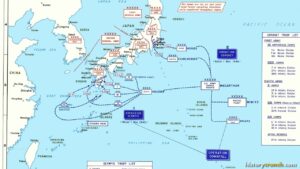
By this point, the Allies were clearly winning in the Pacific. Throughout 1944, American forces had won a series of major victories, including battles in the Mariana Islands and the huge naval clash at Leyte Gulf, which destroyed most of Japan’s remaining fleet. The American strategy, often called island hopping, slowly moved Allied forces closer and closer to the Japanese home islands.
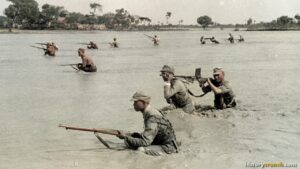
Even so, Japan refused to give up. The battles for Iwo Jima and Okinawa in early 1945 were extremely bloody and cost tens of thousands of lives on both sides. In fact, American planners feared that an invasion of Japan itself could produce hundreds of thousands of Allied casualties, since Japanese forces had shown they would fight to the very end rather than surrender.
How Did the Atomic Bombs and the Soviet Union Force Japan to Surrender?
In July of 1945, the Allied leaders issued the Potsdam Declaration, which called on Japan to surrender or face what they described as prompt and complete destruction. The Japanese government refused. As a result, the United States decided to use a powerful new weapon that had been developed in secret, the atomic bomb.
On August 6th, 1945, an American B-29 bomber called the Enola Gay dropped an atomic bomb, codenamed Little Boy, on the city of Hiroshima. The blast destroyed much of the city and killed tens of thousands of people almost instantly, with many more dying later from burns and radiation. When Japan still did not surrender, a second atomic bomb, codenamed Fat Man, was dropped on the city of Nagasaki on August 9th, 1945, causing further terrible destruction and loss of life. You can read more about these events in the Atomic Bombing of Japan article.
At almost the same time, another major event pressured Japan. On August 8th, 1945, the Soviet Union declared war on Japan and quickly launched a massive invasion of Japanese-held Manchuria in China. Facing both the atomic bombs and a powerful new enemy, Japan’s leaders realized that continued resistance was hopeless.
Historians still debate which factor mattered most in ending the war. Some argue that the atomic bombings were the deciding blow, while others point to the Soviet declaration of war as the final push. In reality, the combination of these events together convinced the Japanese government that it could no longer keep fighting.
What Happened on V-J Day?
After days of tense debate, Japan’s leaders decided to accept the Allied surrender terms, on the condition that Emperor Hirohito could remain as head of state. On August 14th, 1945, President Harry S. Truman announced to the American people that Japan had surrendered, and he declared a two-day national holiday. The following day, August 15th, Emperor Hirohito spoke to the Japanese people by radio, an unusual event, and told them that the war had come to an end.
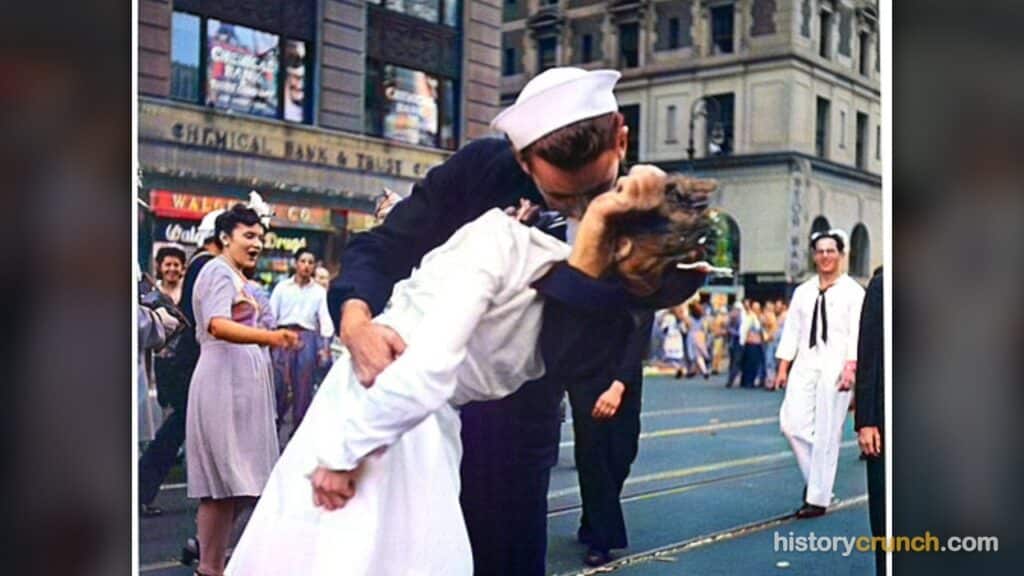
News of the surrender set off enormous celebrations across the United States and the Allied nations. Huge crowds filled the streets of cities such as New York, Washington, and San Francisco. One of the most famous photographs in American history, showing a sailor kissing a woman in Times Square, was taken during these celebrations.
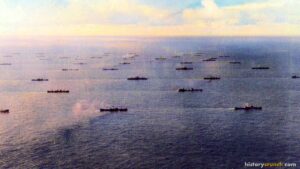
Although the fighting had essentially stopped, the war was not yet formally over. That step came on September 2nd, 1945, when Japanese officials and Allied representatives gathered aboard the American battleship USS Missouri in Tokyo Bay. There they signed the Instrument of Surrender, the official document that ended World War II. Because of this ceremony, the United States government has often marked September 2nd as the official V-J Day.
Why Is V-J Day Celebrated on Different Dates?
One of the most confusing things about V-J Day is that it is remembered on several different dates. This happened because of the way events unfolded over a few weeks in August and September of 1945. Each date marks a different moment in the process of Japan’s surrender.
August 14th is remembered in the United States because that was the day Truman announced the surrender to the American public. August 15th is the date used in Japan and much of the rest of the world, since the announcement reached those places after midnight because of the time difference. September 2nd marks the formal signing of the surrender documents aboard the USS Missouri, which legally ended the war. Different countries chose different dates to hold their own celebrations and remembrances.
Significance of V-J Day
V-J Day was historically significant because it marked the end of World War II, the largest and deadliest conflict the world had ever seen. After nearly six years of fighting that had spread across Europe, Asia, Africa, and the Pacific, the surrender of Japan finally brought the global war to a close. For millions of people, the day meant relief, joy, and the hope of returning to normal life.
At the same time, the day was shadowed by the enormous cost of the war. More than 400,000 Americans had died in the conflict, and tens of millions of people around the world had lost their lives. In fact, the celebrations were mixed with grief for those who would never come home.
The end of the war also reshaped the entire world. The United States and the Soviet Union emerged as the two most powerful nations, or superpowers, and their rivalry soon grew into the long standoff known as the Cold War. Japan was placed under Allied occupation and rebuilt as a democracy, while the use of atomic weapons at Hiroshima and Nagasaki opened a dangerous new age of nuclear weapons. As such, V-J Day marked not only the end of one era but also the beginning of another.
Frequently Asked Questions
What does V-J Day stand for?
V-J Day stands for Victory over Japan Day. The letter V stands for victory and the letter J stands for Japan. The name was modeled on V-E Day, or Victory in Europe Day, which had marked the earlier surrender of Nazi Germany in May of 1945.
What is the difference between V-E Day and V-J Day?
V-E Day marked the end of the war in Europe, while V-J Day marked the end of the war in the Pacific. V-E Day took place on May 8th, 1945, when Nazi Germany surrendered. V-J Day came a few months later, in August and September of 1945, and marked the surrender of Japan and the final end of all World War II fighting.
Where was the Japanese surrender signed?
The formal Japanese surrender was signed aboard the American battleship USS Missouri, which was anchored in Tokyo Bay. The ceremony took place on September 2nd, 1945, and was led on the Allied side by General Douglas MacArthur. Officials from many Allied nations attended to witness the signing of the surrender document.
Did the Japanese emperor stay in power after the surrender?
Yes, Emperor Hirohito was allowed to remain as head of state after Japan surrendered. This was an important condition for the Japanese leaders who agreed to end the war. However, under the Allied occupation that followed, the emperor’s role was changed to a symbolic one, and Japan was rebuilt as a democratic nation.
How did people celebrate V-J Day?
People celebrated V-J Day with huge public gatherings, parades, and cheering crowds that filled city streets. In the United States, President Truman declared a two-day national holiday so people could mark the moment. The celebrations mixed enormous relief and happiness that the long war was finally over with sorrow for the many people who had died.
Cite This Article
To cite this article as a source, use one of the formats below.
MLA: Millar, B. “V-J Day: A Detailed Summary.” HistoryCrunch, 14 August 2026, https://historycrunch.com/v-j-day/.
APA: Millar, B. (2026). V-J Day: A Detailed Summary. HistoryCrunch. https://historycrunch.com/v-j-day/
Chicago: Millar, B. “V-J Day: A Detailed Summary.” HistoryCrunch. August 14, 2026. https://historycrunch.com/v-j-day/
Sources
- J.M. Roberts & Odd Arne Westad, The Penguin History of the World.
- Jerry Bentley & Herbert Ziegler, Traditions & Encounters: A Global Perspective on the Past.