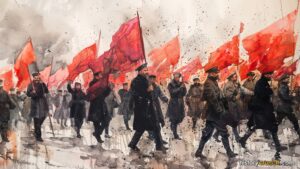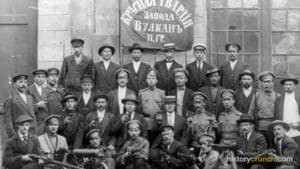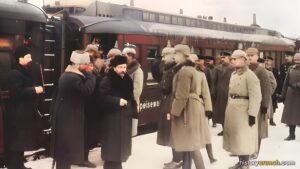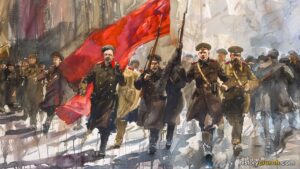
Ideology stood at the very center of the Russian Revolution of 1917, and it is one of the most important reasons the events in Russia changed the course of the entire 20th century. The revolution was not only a fight over who would rule Russia. It was a struggle between competing sets of beliefs about how society, government, and the economy should be organized. These ideas gave the different groups their goals, their language, and their reasons for taking action, and they ultimately shaped the kind of state that emerged when the fighting was over.
An ideology is a connected set of beliefs and ideas about how a society and its government should work. In the Russian Revolution, several ideologies competed for the future of the country, including different forms of socialism and communism, more moderate reformist ideas, and older beliefs in monarchy and autocracy. The group that eventually won, the Bolsheviks, followed an ideology known as Marxism, which they adapted into a version later called Marxist-Leninism.
What Was the Russian Revolution of 1917?
The Russian Revolution of 1917 was one of the most significant events of the early 20th century. It involved the downfall of the monarchy of Russia and led to the establishment of the world’s first communist state. For centuries before 1917, Russia had been ruled by an emperor called a tsar, who held nearly complete power in a system known as autocracy. By the early 1900s, many Russians had grown deeply unhappy with this system and with the hardships of daily life.
The revolution unfolded in two main stages during the same year. The February Revolution forced Tsar Nicholas II to give up his throne, ending more than 300 years of rule by the Romanov family. A temporary government, known as the Provisional Government, then took charge, but it struggled to solve Russia’s problems.
The second stage was the October Revolution, in which the Bolsheviks seized power in the city of Petrograd, which is now St. Petersburg. The October Revolution resulted in the overthrow of the Provisional Government and the establishment of Bolshevik rule in Russia. Soon after, the country fell into the Russian Civil War, a brutal conflict between the Bolsheviks and their opponents that lasted until 1922 and ended with the creation of the Soviet Union.
Why Did Ideology Matter So Much in 1917?
Ideology mattered so much because Russia in the early 20th century was a country full of anger and hope, and different groups had very different visions of what should replace the old order. For many decades, the tsar had crushed opposition and denied ordinary people a real voice in government. As a result, underground political movements developed powerful ideas about justice, equality, and revolution.
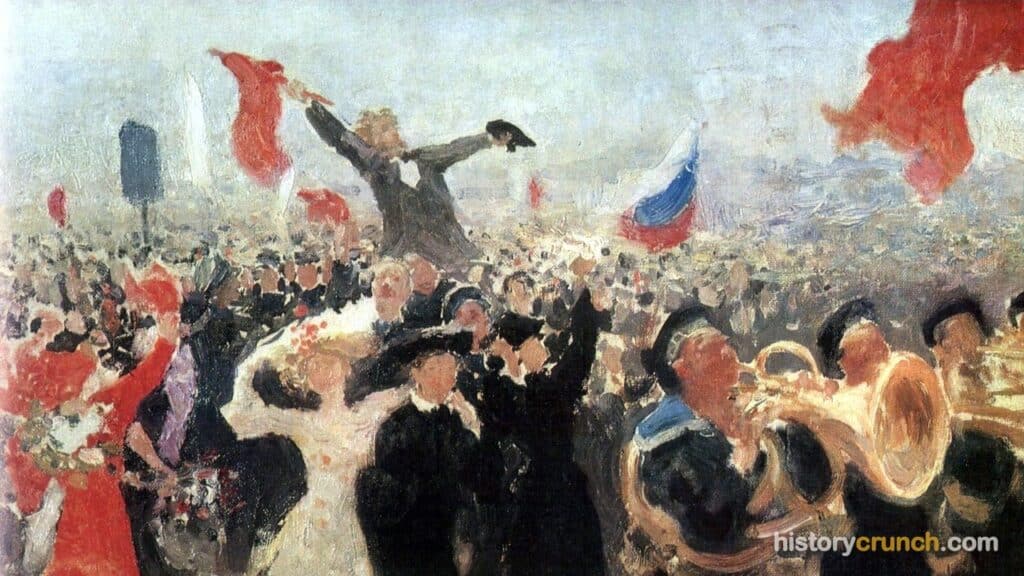
When the tsar’s government finally collapsed in 1917, these ideas suddenly moved from secret meetings into the open. In reality, the revolution became a contest of ideologies as much as a contest for power. Each group offered the Russian people a different answer to the same basic questions about land, bread, peace, and freedom.
Widespread poverty and inequality made these ideas even more powerful. Many Russians felt marginalized and frustrated with a deeply uneven social order, which pushed them to support movements promising sweeping change. In fact, socialist and communist ideas found strong support among workers in the cities and among peasants in the countryside.
What Were the Main Ideologies of the Russian Revolution?
Several major ideologies competed during the revolutionary years, and understanding them helps explain why events unfolded the way they did. The oldest of these was autocracy and monarchism, the belief that Russia should be ruled by a single powerful emperor supported by the nobility and the church. This was the system that had governed Russia for centuries, and it collapsed in February of 1917.
Opposing the old order were the liberals, who wanted Russia to become more like the constitutional governments of Western Europe. Liberals hoped for an elected parliament, protection of individual rights, and gradual reform rather than violent revolution. Many members of the Provisional Government held these more moderate, reform-minded views.
Further to the left were the socialists, who believed that wealth and property should be shared more equally rather than held by a small ruling class. Socialism came in several different forms in Russia. For instance, the Socialist Revolutionaries focused heavily on the peasants and wanted land to be redistributed to the people who farmed it.
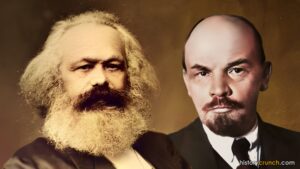
The most influential socialist ideology of all was Marxism, the ideas of the German thinker Karl Marx. Marxists believed that history is shaped by a long struggle between social classes. More specifically, they argued that the current struggle was between the working class, called the proletariat, and the wealthy owners of factories and businesses, called the bourgeoisie.
How Did Marxism Split the Russian Revolutionaries?
Even among Russian Marxists, there were deep disagreements about how a revolution should happen. These disagreements caused a famous split in 1903 within the main Marxist party, the Russian Social Democratic Labor Party. The party divided into two rival factions, the Bolsheviks and the Mensheviks.
The word Bolshevik came from the Russian word for majority, while Menshevik came from the word for minority. The Mensheviks held more moderate and gradual views. They believed that Russia first needed to pass through a long stage of capitalism and industrial growth before a true workers’ revolution could succeed, and they favored a large, open party that welcomed many members.
The Bolsheviks, led by Vladimir Lenin, were far more radical. Lenin argued that Russia did not need to wait through long stages of development. Instead, he believed a revolution could happen quickly if it were led by a small, tightly organized group of dedicated revolutionaries. This difference over speed, strategy, and organization became one of the most important ideological divides of the entire revolution.
What Was Marxist-Leninism?
Marxist-Leninism was the ideology that combined the basic ideas of Karl Marx with the political and economic views of Vladimir Lenin. Lenin adapted Marxist theory to fit the conditions of Russia, where industry lagged far behind other parts of Western Europe. In short, Marxist-Leninism offered a guide for carrying out a socialist revolution and then building a communist state.
One central idea was the vanguard party. Lenin argued that the working class could not organize a successful revolution on its own and needed a disciplined party of professional revolutionaries to lead the way. This vanguard would guide the workers, spread revolutionary ideas, and seize political power on their behalf.
A second key idea was the dictatorship of the proletariat. This did not mean rule by a single dictator in the usual sense. Instead, it described a temporary stage in which the working class would hold power and suppress the old ruling class in order to move society from capitalism toward communism. During this stage, the government would take control of major industries and the economy.
Finally, Marxist-Leninism called for a centrally planned economy in which the state, rather than private owners, controlled production. After taking power, the Bolshevik government moved to put these ideas into practice. It nationalized major industries and banks, bringing them under state ownership, and it issued a Land Decree to redistribute land to the peasants.
How Did Ideology Shape the Outcome of the Revolution?
The Bolsheviks understood that ideas needed to connect with the everyday needs of ordinary people. As such, they promoted the powerful slogan “Peace, Land, and Bread,” which promised an end to war, land for the peasants, and food for the hungry. This simple message made their complex ideology feel real and urgent to millions of Russians.
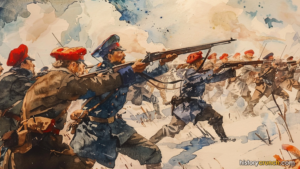
Ideology also fueled the Russian Civil War that followed the October Revolution. The war was fought between the Bolshevik forces, known as the Reds, and a wide coalition of opponents known as the Whites. This coalition included monarchists, liberals, and rival socialists who were united mainly by their opposition to Bolshevik rule.
The Bolshevik victory in that war meant that their ideology, and not any of the competing ones, would shape the new state. In 1922, the Bolsheviks and other socialist republics formally established the Soviet Union. From that point on, Marxist-Leninism became the official ideology of a vast and powerful country.
Significance of Ideology in the Russian Revolution
The significance of ideology in the Russian Revolution is that it turned a national crisis into an event that reshaped the entire world. The ideas behind the revolution did not stay inside Russia’s borders. They inspired revolutionary movements around the globe and contributed to the rise of socialism and communism in many other countries during the 20th century.
The Soviet Union that emerged from the revolution became a model for other nations seeking alternatives to capitalism and monarchy. Its example influenced later revolutions in places such as China, Cuba, and parts of Southeast Asia. In this way, the ideological choices made in 1917 echoed across many decades of world history.
Ideology also helped set the stage for one of the defining struggles of the 20th century, the Cold War. The clash between the communist ideas of the Soviet Union and the capitalist and democratic ideas of Western nations shaped global politics for generations. As stated above, the beliefs at the heart of the Russian Revolution continued to influence the world long after the fighting itself had ended.
At the same time, the story of ideology in the revolution is complicated. The Bolsheviks are celebrated by some as champions of workers’ rights and social justice, while others criticize them for the harsh and authoritarian methods they used to hold power. Because of this, ideology in the Russian Revolution remains central to discussions about the nature of revolutionary change and the challenges of building a new kind of society.
Frequently Asked Questions
What ideology did the Bolsheviks follow in the Russian Revolution?
The Bolsheviks followed Marxism, which they adapted into an ideology later known as Marxist-Leninism. This set of beliefs combined the ideas of Karl Marx with the strategies of Vladimir Lenin and aimed to create a classless society run by and for the working class. It became the official ideology of the Soviet Union after 1922.
What is the difference between the Bolsheviks and the Mensheviks?
The main difference was over how and when a revolution should happen. The Bolsheviks, led by Lenin, wanted a fast revolution led by a small, disciplined party, while the Mensheviks believed Russia needed a longer period of capitalism first and favored a larger, more open party. Both groups began as parts of the same Marxist party before splitting in 1903.
What did the slogan “Peace, Land, and Bread” mean?
“Peace, Land, and Bread” was the Bolshevik slogan that summarized their promises to the Russian people. Peace meant ending Russia’s costly involvement in World War I, land meant giving farmland to the peasants, and bread meant solving the severe food shortages. The slogan turned a complex ideology into a simple message that ordinary people could easily support.
What is the dictatorship of the proletariat?
The dictatorship of the proletariat was the idea of a temporary stage in which the working class would hold political power. During this stage, the workers would suppress the former ruling class and reorganize society in order to move from capitalism toward communism. In practice in the Soviet Union, this power was controlled mainly by the Communist Party’s leaders.
How did the ideology of the Russian Revolution affect the rest of the world?
The ideology of the Russian Revolution inspired communist and socialist movements in many other countries throughout the 20th century. The Soviet Union served as a model for later revolutions in nations such as China and Cuba. The clash between these communist ideas and Western democratic and capitalist ideas also helped shape the Cold War.
Cite This Article
To cite this article as a source, use one of the formats below.
MLA: Millar, B. “Ideology in the Russian Revolution: A Detailed Summary.” HistoryCrunch, 11 August 2026, https://historycrunch.com/ideology-in-the-russian-revolution/.
APA: Millar, B. (2026). Ideology in the Russian Revolution: A Detailed Summary. HistoryCrunch. https://historycrunch.com/ideology-in-the-russian-revolution/
Chicago: Millar, B. “Ideology in the Russian Revolution: A Detailed Summary.” HistoryCrunch. August 11, 2026. https://historycrunch.com/ideology-in-the-russian-revolution/
Sources
- S.A. Smith, Russia in Revolution: An Empire in Crisis 1890-1928.
- Orlando Figes, A People's Tragedy.
- Library of Congress — Revelations from the Russian Archives