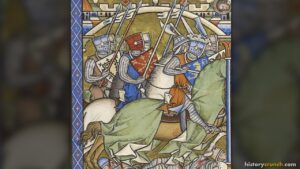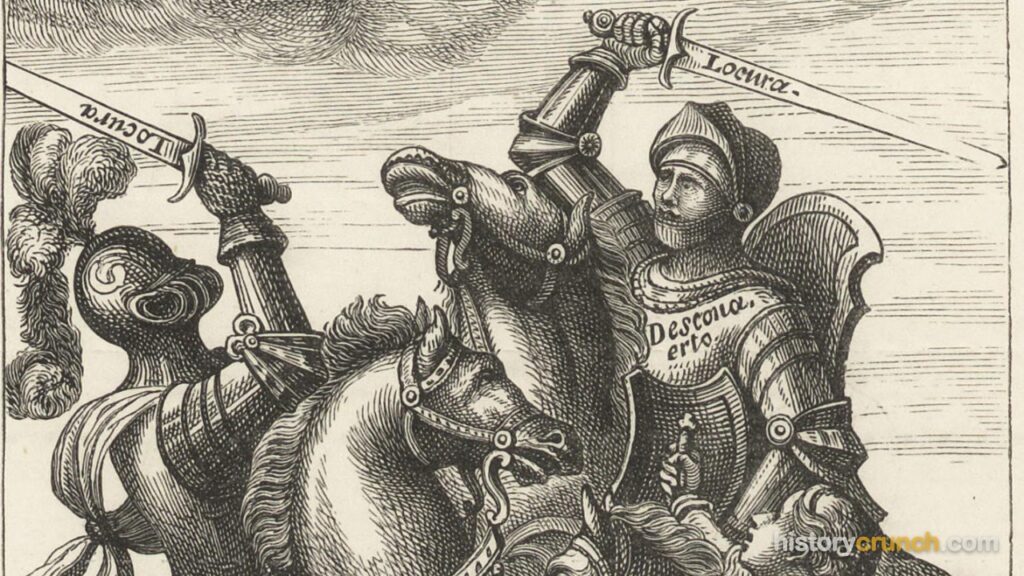
Chivalry was one of the most important cultural ideas of the Middle Ages, and it shaped how the warrior class of Europe was expected to behave for hundreds of years. At its core, chivalry was a code of conduct followed by knights, and it combined ideals such as bravery, loyalty, honor, and courtesy with a strong sense of religious duty. Although it began mainly as a set of rules for mounted soldiers, chivalry slowly grew into a wider system of values that touched nearly every part of noble life in Medieval Europe.
More specifically, chivalry can be defined as an informal code of honorable behavior expected of knights during the Middle Ages. It was never written down in a single official document that everyone across Europe agreed to follow. Instead, it was passed on through training, custom, and popular stories, which meant its exact rules could shift from place to place and change over time.
What Were the Middle Ages?
The Middle Ages, also called the medieval period, was the long stretch of European history that lasted roughly from the late 5th century CE to the late 15th century CE. In the history of Europe, this period lasted approximately from the late 5th to the late 15th centuries, and it began with the fall of the Western Roman Empire and ended before the transition into the Renaissance. Historians often place it as the middle era between the ancient world and the modern world.
During the Middle Ages, most of Europe was organized around a system called feudalism. In this system, land was the main form of wealth and power, and it was exchanged for loyalty and service. In a feudal society, the land was owned by noble lords and worked by the local peasants, who were also referred to as serfs, while the lords received the land from the monarch who in return expected the noble lords to provide the king with soldiers for his armies. Understanding this structure helps explain why knights, and the code they followed, became so important.
In fact, knights sat in the middle of the feudal hierarchy. Beneath the nobles were the knights, who were granted smaller pieces of land in exchange for serving the nobles in battle. Because these armed and well-trained men held so much power, medieval society needed a way to guide how they used it. That need is a large part of why chivalry developed.
Where Did Chivalry Come From?
The word chivalry comes from the French word cheval, meaning horse, and chevalier, meaning knight or horseman. Chivalry was originally a purely martial code for elite cavalry units and only later did it acquire its more romantic connotations of good manners and etiquette. This origin makes sense, because a knight was above all a soldier who fought on horseback and needed expensive war horses and armor.
Chivalry first took shape in the late 11th and 12th centuries CE. It first developed as a code of honor that emphasized bravery, loyalty, and generosity for knights at war in the 11th and 12th centuries. As stated above, medieval Europe was a violent place, and heavily armed knights could easily cause harm to ordinary people. A code of conduct offered a way to set limits on that behavior.
The rise of chivalry was also closely tied to the growth of the knightly class itself. The development of chivalry went hand in hand with the rise of knights, who were heavily armored, mounted warriors from elite backgrounds, starting around the time of the Norman conquest of England in 1066. Over the following generations, knighthood grew from a rough military role into a respected social position tied to the nobility.
What Were the Main Values of Chivalry?
Chivalry combined military, religious, and social expectations into a single ideal of how a knight should live. Evolving from the late 11th century onwards, essential chivalric qualities to be displayed included courage, military prowess, honor, loyalty, justice, good manners, and generosity, especially to those less fortunate than oneself. A truly chivalrous knight was supposed to be brave in battle but also fair and merciful outside of it.
Religion played a central role in these values. The Catholic Church encouraged knights to see their fighting skills as a way to protect the weak and defend the faith rather than simply to gain wealth or glory. In this view, popular stories often presented the ideal knight as pious, generous, and merciful, which set a moral standard that real knights were urged to live up to.
Loyalty was another key value, and it fit neatly with the feudal system. A knight was expected to remain faithful to his lord, to keep his word once it was given, and to defend those he had sworn to protect. In reality, this loyalty helped hold feudal society together, since so much depended on promises between lords and their armed followers.
At the same time, chivalry helped mark off the upper classes from everyone else. Chivalry was a religious, moral and social code which helped distinguish the higher classes from those below them and which provided a means by which knights could earn themselves a favorable reputation so that they might progress in their careers and personal relations. A knight with a strong reputation for honor could gain trust, rewards, and influence.
How Did a Person Become a Knight?
Becoming a knight was a long process that usually began in childhood. Boys from noble families often started as pages, serving in a lord’s household and learning good manners while beginning basic training. Squires and pages of the Middle Ages yearned to become knights.
After several years, a page could become a squire, meaning he served an experienced knight directly. During this stage he learned to ride, handle weapons, and care for armor and horses, all while absorbing the values of chivalry. Only after proving himself, often through skill and courage, could a squire finally be made a knight in a special ceremony.
In many cases this new status came with land and clear duties. At first, most knights were of humble origins, most of them not even possessing land, but by the later twelfth century knights were considered members of the nobility and followed a system of courteous knightly behavior called chivalry. By this point, being a knight meant far more than fighting well.
How Did Chivalry Appear in Literature and Courtly Love?
One of the most famous parts of chivalry was the idea of courtly love, which spread widely through medieval stories and songs. Chivalry influenced the conduct of medieval military campaigns and also had important religious and literary dimensions, and it gave rise to the phenomenon of courtly love, the subject of much romance literature, as well as to the practice of heraldry. In these tales, a knight often devoted his deeds to winning the admiration of a noble lady.
Much of this literature was written during the height of the chivalric movement. Chivalry as a movement, sometimes called the chivalric movement, was associated with the late 12th and early 13th centuries in Europe, and the idea was developed and refined between 1170 and 1220. Poems and romances from this period turned real knights into legendary heroes and helped fix the image of the perfect knight in people’s minds.
These stories mattered because they taught chivalry to the next generation. Some romances were written for young noblemen who were being trained for knighthood, and they modeled the behavior expected of a proper knight. Over time, this literature made chivalry into a shared ideal across much of Europe, even if few knights ever fully lived up to it.
How Did Chivalry Decline?
By the later Middle Ages, changes in warfare began to weaken the role of the traditional knight. New weapons made heavily armored horsemen far less dominant on the battlefield. During and after the fourteenth century, weapons that were particularly effective against horsemen appeared on the battlefield, such as the longbow, pike, halberd, and cannon.
As kings built more centralized governments and relied more on paid soldiers, the old feudal knight lost much of his military importance. Even so, the outward customs connected to chivalry did not vanish right away. Despite the knights’ gradual loss of military importance, the system by which noble families were identified, called heraldry, continued to flourish and became more complex, while the magnificence of their war games, called tournaments, also increased, as did the number of new knightly orders, such as the Order of the Garter.
In this way, chivalry gradually shifted from a practical military code into a symbol of noble status and ceremony. By the 14th century the notion of chivalry had become more romantic and idealized, largely thanks to a plethora of literature on the subject, and so the code persisted right through the medieval period with occasional revivals thereafter.
Significance of Chivalry in the Middle Ages
Chivalry was significant because it gave the warrior class of Medieval Europe a shared set of values that guided both war and daily life. By promoting ideals such as courage, loyalty, honor, and mercy, it tried to turn dangerous soldiers into protectors who followed rules of proper conduct. This helped bring at least some order to a society that was often violent and divided.
The code also had a lasting effect on European culture. It shaped centuries of literature, art, and social manners, and it produced traditions such as heraldry and knightly tournaments that survived long after knights stopped being important in battle. Many later ideas about gentlemanly behavior can be traced back to these medieval roots.
Finally, chivalry remains one of the most recognizable features of the Middle Ages today. The image of the honorable knight in shining armor continues to appear in books, films, and popular culture, which shows how deeply this medieval ideal has stayed in the modern imagination. Even the everyday use of the word chivalry to mean courtesy comes directly from this medieval origin.
Frequently Asked Questions
What is chivalry in simple terms?
Chivalry was the code of honorable behavior that knights in the Middle Ages were expected to follow. It combined bravery, loyalty, honor, and good manners with religious duty. In everyday life, the word is now often used to mean politeness and respect, but in medieval times it was mainly a guide for warriors.
When did chivalry begin?
Chivalry began to take shape in the late 11th and 12th centuries CE. It grew out of the military customs of mounted knights in France and Germany and spread across much of Europe. The idea reached its most detailed and romantic form during the High Middle Ages.
Why was chivalry created?
Chivalry was created largely to control the behavior of knights in a violent society. Because knights were heavily armed and could easily harm ordinary people, the code set rules meant to encourage restraint, fairness, and the protection of the weak. It also helped knights build good reputations that could improve their careers.
What is courtly love?
Courtly love was a romantic ideal connected to chivalry that appeared in medieval poems and stories. It described a knight devoting his brave deeds to a noble lady he admired, often treating her with deep respect and devotion. This idea was more of a literary tradition than a description of most real relationships.
Why did chivalry decline?
Chivalry declined mainly because knights slowly lost their importance on the battlefield. New weapons like the longbow and cannon made armored horsemen less effective, and kings relied more on paid armies and stronger central governments. As a result, chivalry survived mostly as a set of ceremonies and social ideals rather than a practical military code.
Cite This Article
To cite this article as a source, use one of the formats below.
MLA: Millar, B. “Chivalry in the Middle Ages: A Detailed Summary.” HistoryCrunch, 26 July 2026, https://historycrunch.com/chivalry-in-the-middle-ages/.
APA: Millar, B. (2026). Chivalry in the Middle Ages: A Detailed Summary. HistoryCrunch. https://historycrunch.com/chivalry-in-the-middle-ages/
Chicago: Millar, B. “Chivalry in the Middle Ages: A Detailed Summary.” HistoryCrunch. July 26, 2026. https://historycrunch.com/chivalry-in-the-middle-ages/
Sources
- Fordham Medieval Sourcebook
- Barbara Rosenwein, A Short History of the Middle Ages.