The weapons used in the Vietnam War shaped nearly every part of the conflict, from the way soldiers fought in the jungle to the massive bombing campaigns carried out from the air. In fact, the different weapons used by each side reflected the larger struggle of the Cold War, as the United States armed South Vietnam with American equipment while the Soviet Union and China supplied North Vietnam and its allies. These weapons ranged from simple booby traps made of sharpened bamboo to advanced jet aircraft and guided missiles.
In simple terms, the weapons of the Vietnam War included the firearms, artillery, aircraft, chemicals and traps that both sides used to gain an advantage during the fighting between 1955 and 1975. Some were built for large, open battles, while others were designed for the hidden, close-range combat of the Vietnamese jungle. Together, these weapons helped define how the war was fought and why it became so deadly.
What Was the Vietnam War?
The Vietnam War was a major military conflict that took place primarily between 1955 and 1975, and it pitted the communist government of North Vietnam against South Vietnam and its main ally, the United States. It was one of the longest and most controversial wars in American history, and it deeply divided the American public while causing terrible loss of life across Southeast Asia. The war ended with a North Vietnamese victory and the reunification of Vietnam under communist rule.
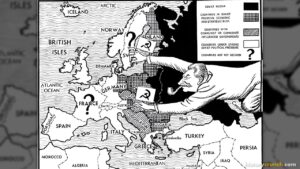
The war was also an important part of the Cold War, which was the long period of tension between the United States and the Soviet Union after World War II. The United States entered the conflict to stop the spread of communism, following a policy known as containment. As a result, the two sides in Vietnam were backed by rival global powers, and each supplied its allies with very different types of weapons.
More specifically, the fighting in Vietnam was not a conventional war with a single front line. Instead, much of the combat took place in dense jungle, rice paddies and small villages. This unusual setting had a huge effect on which weapons worked well and which ones failed.
What Infantry Weapons Were Used in the Vietnam War?
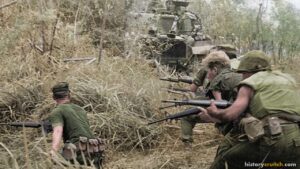
The most common infantry weapon carried by American soldiers was the M-16 rifle, a lightweight automatic rifle that fired small, fast-moving bullets. When it was first introduced, however, the M-16 gained a poor reputation because early versions jammed often in combat. In many cases a spent shell would get stuck in the chamber, which forced soldiers to clear the weapon by hand in the middle of a firefight.
The problems with the early M-16 were serious enough to lead to a government investigation in the United States. Over time the rifle was improved with better gunpowder, a cleaning kit and design changes, and it became far more reliable. Before the M-16 became standard, many American troops carried the M-14 rifle, which was heavier and based on a World War II design.
On the communist side, the standard weapon was the AK-47, a Soviet-designed automatic rifle manufactured in the Soviet Union and China. The AK-47 was simple, tough and dependable, and it could keep firing even when it was dirty or muddy. For this reason it earned respect from American soldiers, who sometimes found it more reliable in jungle conditions than their own early rifles.
Both sides also used machine guns to lay down heavy fire. American troops relied heavily on the M-60 machine gun, which could be carried by an infantry team or mounted on a helicopter, truck or tank. Communist forces used similar Soviet-designed light machine guns, along with mortars and rocket-propelled grenades that were well suited to hit-and-run attacks.
How Was Air Power Used in the War?
Air power was one of the greatest advantages held by the United States and South Vietnam. American forces used a wide range of aircraft to bomb enemy targets, support troops on the ground and move soldiers quickly across difficult terrain. In fact, the United States dropped more bombs during the Vietnam War than were dropped by all sides during World War II.
The most powerful bomber was the B-52 Stratofortress, a huge eight-engine aircraft that could carry tens of thousands of pounds of bombs. These bombers flew at very high altitudes, often out of range of anti-aircraft fire, and they carried out massive raids against supply lines, bases and troop positions. Their heavy bombing runs caused widespread destruction, and they also played a role in pressuring North Vietnam toward peace talks near the end of the war.
Fighter jets such as the F-4 Phantom also played a major role in the air war. These aircraft battled enemy fighter planes and dropped bombs on ground targets. North Vietnam defended its skies with Soviet-built MiG fighters, along with radar-guided surface-to-air missiles and shoulder-fired missiles that made bombing missions dangerous.
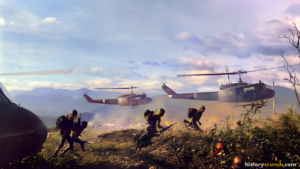
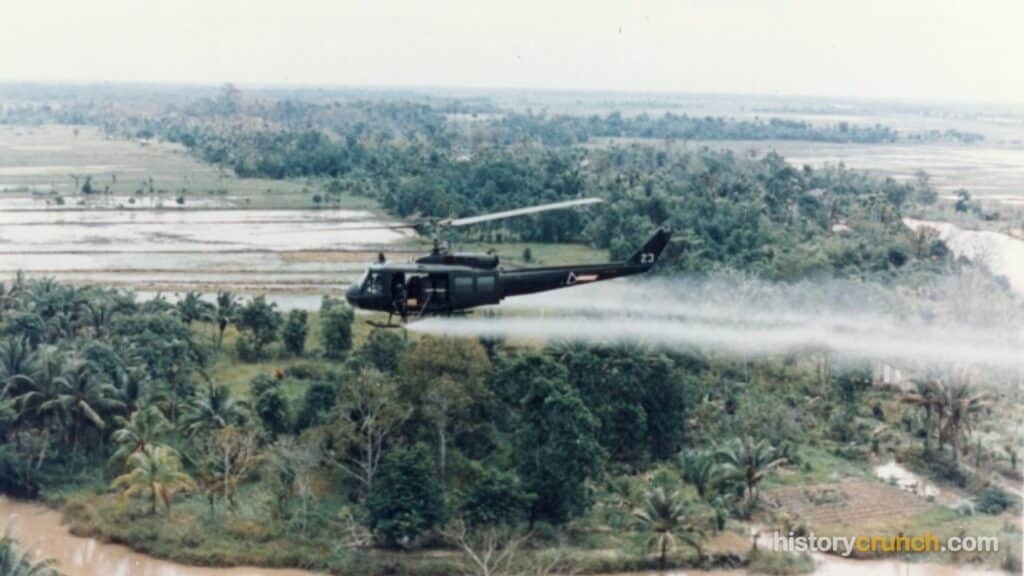
Perhaps the most famous aircraft of the war was the helicopter. The UH-1, better known as the “Huey,” became a symbol of the entire conflict. Helicopters carried soldiers into remote jungle clearings, delivered supplies, evacuated the wounded in missions known as “dustoff,” and attacked enemy positions as armed gunships. As a result, helicopters allowed troops to move in ways that had never been possible in earlier wars.
What Heavy Weapons and Vehicles Were Used?
Beyond rifles and aircraft, both sides used heavier weapons and armored vehicles. A common piece of artillery was the 105mm howitzer, a large gun that could be towed by a truck or carried into position by helicopter. It could fire high-explosive shells over long distances at a steady rate, giving ground troops important support during battles.
Tanks were also used, though not as widely as in earlier wars. The American M-48 tank carried mounted machine guns and provided support for troops, but Vietnam’s soft, soggy terrain made it difficult to use tanks in many areas. Because of this, armored personnel carriers such as the M-113 were often more useful, since they transported troops and performed reconnaissance across muddy ground.
North Vietnamese and Viet Cong forces generally used lighter equipment, especially in the earlier years of the war. They relied on mortars, recoilless rifles and small arms that could be moved quietly through the jungle. Later in the conflict, as the fighting became more conventional, North Vietnam brought in heavier weapons and tanks supplied by its communist allies.
What Chemical Weapons and Traps Were Used?
The Vietnam War is also remembered for the use of chemicals and hidden traps. The United States sprayed large amounts of chemical defoliants, or herbicides, to destroy the thick jungle that hid enemy soldiers and supply routes. The most well known of these was Agent Orange, which killed plants and crops across wide areas and later caused serious health problems for many people exposed to it.
American forces also used napalm, a sticky, jelly-like substance that burned at extremely high temperatures. Napalm was dropped from aircraft and used to clear areas and attack enemy positions, but it also caused terrible injuries and became one of the most controversial weapons of the war.
The Viet Cong, who often lacked heavy weapons, relied heavily on simple but deadly booby traps. These included sharpened bamboo stakes hidden in pits, tripwires connected to explosives, and traps triggered by unsuspecting soldiers. In reality, these low-cost traps caused fear and casualties out of proportion to their simple design, and they forced American troops to move carefully through the jungle.
Significance of Weapons in the Vietnam War
The weapons used in the Vietnam War were significant because they showed how modern technology could not guarantee victory in an unconventional conflict. The United States held a clear advantage in firepower, aircraft and equipment, yet it was unable to defeat an enemy that used the jungle, guerrilla tactics and simple weapons to its advantage. As a result, the war became an example of how a stronger military can struggle against a determined opponent.
The war also introduced or expanded weapons and tactics that would shape future conflicts. For instance, the widespread use of helicopters changed how armies moved and fought, and this idea of air mobility influenced militaries for decades afterward. At the same time, the controversy over chemical weapons such as Agent Orange and napalm raised lasting questions about the human cost of modern warfare.
Finally, the contrast between American and communist weapons reflected the overall struggle of the Cold War. Each side armed its allies as part of a global competition between capitalism and communism. In this way, the weapons of the Vietnam War were not only tools of battle but also symbols of a much larger conflict that stretched far beyond Southeast Asia.
Frequently Asked Questions
What was the main weapon used by American soldiers in the Vietnam War?
The main weapon used by American soldiers was the M-16 rifle. It was lightweight and fired automatically, which allowed soldiers to carry more ammunition than with older rifles. Its introduction marked a shift toward the smaller, faster bullets that many modern militaries still use today.
Why was the AK-47 so effective in Vietnam?
The AK-47 was effective because it was simple, rugged and easy to maintain in harsh jungle conditions. It could keep firing even when covered in dirt or mud, which made it dependable for guerrilla fighters who could not always clean their weapons. Its low cost and ease of use also meant that new soldiers could learn to fire it quickly.
What was Agent Orange used for in the Vietnam War?
Agent Orange was a chemical herbicide used to destroy the thick jungle and crops that provided cover and food for enemy forces. By clearing away plants, the United States hoped to expose hidden soldiers and supply trails. Years later, exposure to the chemical was linked to serious illnesses among both soldiers and Vietnamese civilians.
Why were helicopters so important in the Vietnam War?
Helicopters were important because they gave American forces the ability to move quickly across difficult jungle terrain. They carried troops into battle, delivered supplies, evacuated the wounded and attacked enemy positions as gunships. This flexibility changed the way armies fought and made air mobility a central part of future warfare.
What kind of traps did the Viet Cong use?
The Viet Cong used simple booby traps such as pits filled with sharpened bamboo stakes and tripwires connected to explosives. These traps were cheap to make but caused injuries, deaths and constant fear among American troops. They were a key part of the guerrilla tactics that helped communist forces offset their lack of heavy weapons.
Cite This Article
To cite this article as a source, use one of the formats below.
MLA: Millar, B. “Weapons in the Vietnam War: A Detailed Summary.” HistoryCrunch, 16 August 2026, https://historycrunch.com/weapons-in-the-vietnam-war/.
APA: Millar, B. (2026). Weapons in the Vietnam War: A Detailed Summary. HistoryCrunch. https://historycrunch.com/weapons-in-the-vietnam-war/
Chicago: Millar, B. “Weapons in the Vietnam War: A Detailed Summary.” HistoryCrunch. August 16, 2026. https://historycrunch.com/weapons-in-the-vietnam-war/
Sources
- Fredrik Logevall, Embers of War.
- Wilson Center Digital Archive
- George C. Herring, America's Longest War.