The formation of the Soviet Union was one of the most important political events of the 20th century, creating the world’s first large communist state and shaping global affairs for nearly seventy years. In December of 1922, four Soviet republics joined together to create the Union of Soviet Socialist Republics, better known as the USSR. This new nation grew directly out of the Russian Revolution of 1917 and the brutal civil war that followed, and it replaced the old Russian Empire with a government built on the ideas of communism.
The Soviet Union was a communist state, which means it was a country whose government controlled the economy and aimed to end private ownership of land, factories, and businesses. Its leaders followed the ideas of a set of beliefs called Marxism, which taught that workers should control the means of production rather than wealthy owners. In reality, power in the Soviet Union was held tightly by a single political party, the Communist Party, which governed from the capital city of Moscow.
What Was the Russian Revolution?
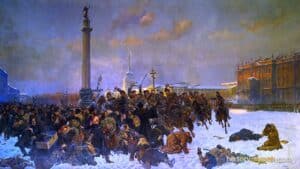
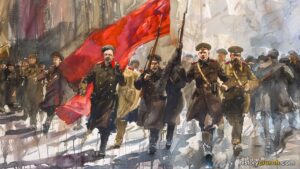
The Russian Revolution of 1917 was a series of uprisings that overthrew the Russian monarchy and led to the creation of the world’s first communist state. For centuries, Russia had been ruled by an emperor called a tsar, and the last tsar was Nicholas II of the Romanov dynasty. By the early 20th century, many Russians were angry about poverty, food shortages, and Russia’s costly involvement in World War I.
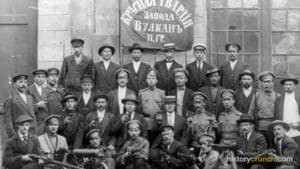
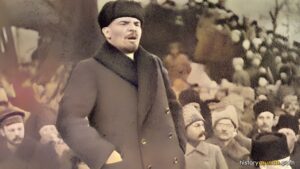
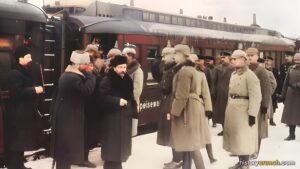
The revolution unfolded in two main phases. First, the February Revolution of 1917 forced Tsar Nicholas II to give up his throne, ending the Romanov dynasty and creating a temporary government known as the Provisional Government. Then, in the October Revolution of 1917, a group of radical socialists called the Bolsheviks, led by Vladimir Lenin, seized power. Lenin became the head of a new government called the Council of People’s Commissars, and the Bolsheviks began building the Soviet state.
These events set the stage for the formation of the Soviet Union. The Bolsheviks aimed to transform Russia into a communist society based on Marxist principles. However, they first had to survive a long and violent struggle for control of the country.
How Did Russia Leave World War I?
One of the first major actions of the new Bolshevik government was to pull Russia out of World War I. Russia had suffered terrible losses in the war, and the fighting had drained the country of food, money, and soldiers. The Bolsheviks had promised the Russian people peace, so ending the war was one of their most urgent goals.
To achieve this, the Bolsheviks signed the Treaty of Brest-Litovsk with Germany and the other Central Powers on March 3rd, 1918. Under the treaty, Russia gave up huge amounts of territory, including Finland, the Baltic provinces, parts of Poland, and Ukraine. Many Russians saw the treaty as a national humiliation and a betrayal, which increased opposition to the Bolsheviks.
The treaty was later canceled when Germany surrendered to the Allies in November of 1918, near the end of World War I. Even so, the damage was done, and the anger over Brest-Litovsk helped push Russia toward a devastating civil war. The Bolsheviks would spend the next several years fighting to hold on to power and to win back much of the land they had lost.
What Was the Russian Civil War?
The Russian Civil War was a brutal conflict fought from 1918 to 1922 between the Bolsheviks and their many enemies. The two main sides became known by colors. The Bolshevik forces were called the Reds, while the wide coalition of groups that opposed them were called the Whites. You can read more about this struggle in the HistoryCrunch article at https://historycrunch.com/russian-civil-war-and-the-russian-revolution/.
The White forces were not a single united group. Instead, they included pro-monarchists who wanted to restore the tsar, along with conservatives, liberals, and various nationalist factions who each opposed Bolshevik rule for their own reasons. Several foreign powers, including Britain, France, Japan, and the United States, also sent troops and supplies to help the Whites, adding an international dimension to the war.
Despite facing so many enemies, the Reds had important advantages. They controlled the central heartland of Russia, including the major cities of Moscow and Petrograd, along with the railroads and factories. Under the leadership of Leon Trotsky, the Bolsheviks organized a powerful new fighting force called the Red Army. By 1922, the Reds had defeated the White forces and gained control over most of the former Russian Empire.
What Was War Communism?
During the civil war, the Bolsheviks used a harsh set of economic policies known as War Communism. Under this system, the government took direct control of the economy in order to supply the Red Army and keep the cities fed. More specifically, the state nationalized land, industry, and small businesses, which means it seized private property and placed it under government control.
The government also forced peasants to hand over their grain to feed soldiers and city workers. Many farmers resisted these seizures, and violence broke out across the countryside. As a result, food production fell sharply, and widespread famine and discontent spread through the country.
By 1921, War Communism had pushed the economy to the edge of collapse. In response, Lenin introduced a softer set of policies called the New Economic Policy, or NEP, which allowed some private trade and small businesses to operate again. This shift helped the country recover just as the new Soviet state was about to be officially created.
How Was the Soviet Union Officially Formed?
After winning the civil war, the Bolsheviks moved to unite the territories under their control into a single nation. On December 30th, 1922, the Union of Soviet Socialist Republics was officially created through a treaty joining several Soviet republics together. This event marked the true birth of the Soviet Union as a country.
At first, the new nation was made up of four founding republics. These were the Russian republic, the Ukrainian republic, the Belarusian republic, and the Transcaucasian republic, which covered the region of modern Georgia, Armenia, and Azerbaijan. Over time, more republics would be added, and the Soviet Union eventually grew to include fifteen republics stretching across Europe and Asia.
In 1924, the Soviet Union adopted its first constitution, which set up a federal system of government. On paper, power flowed upward from local councils called soviets, which were set up in villages, factories, and cities, all the way to a national assembly called the All-Union Congress of Soviets. In reality, however, real power was held by the Communist Party and its small leadership group called the Politburo, which ruled from Moscow.
Who Led the Early Soviet Union?
Vladimir Lenin was the central figure in the founding of the Soviet Union and served as its leader from 1917 until his death in 1924. He guided the Bolsheviks through the revolution, the civil war, and the creation of the new communist state. His ideas about how to build a socialist society, later called Marxism-Leninism, shaped the government for decades.
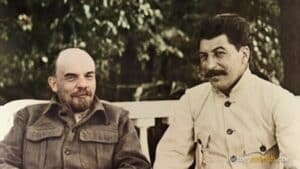
When Lenin died in early 1924, a struggle for power broke out within the Communist Party. Two of the leading figures were Leon Trotsky, the organizer of the Red Army, and Joseph Stalin, who had been appointed to the powerful role of General Secretary in 1922. That position gave Stalin control over party appointments, which he used to build a network of loyal supporters.
By the late 1920s, Stalin had pushed aside Trotsky and his other rivals to gain near-total control of the Soviet Union. Under his rule, the country moved toward rapid industrialization and the forced collectivization of farming, along with strict control over nearly every part of daily life. In this way, the early years of the Soviet Union set the stage for one of the most powerful and feared governments of the 20th century.
Significance of Formation of the Soviet Union
The formation of the Soviet Union was a turning point in world history because it created the first large state built entirely on communist ideas. For the first time, a major world power was governed by leaders who rejected private ownership and capitalism, and who hoped to spread their revolution to other countries. This inspired communist and socialist movements around the globe.
The new nation also became one of the largest countries on Earth, eventually covering nearly one-sixth of the world’s land surface. Its creation replaced the centuries-old Russian Empire with a very different kind of government, changing the map and the balance of power in Europe and Asia. In fact, the rise of the Soviet Union helped set the stage for many of the major conflicts of the century that followed.
Most importantly, the formation of the Soviet Union led directly to the tensions of the Cold War, a long rivalry between the Soviet Union and the United States that lasted for decades after World War II. The country remained a global superpower until it finally broke apart in 1991. For these reasons, understanding how the Soviet Union came to be is key to understanding much of modern history.
Frequently Asked Questions
When Was the Soviet Union Formed?
The Soviet Union was officially formed on December 30th, 1922. This happened after the Bolsheviks won the Russian Civil War and joined several Soviet republics together through a founding treaty. The name of the new country was the Union of Soviet Socialist Republics, which is often shortened to USSR.
What Does USSR Stand For?
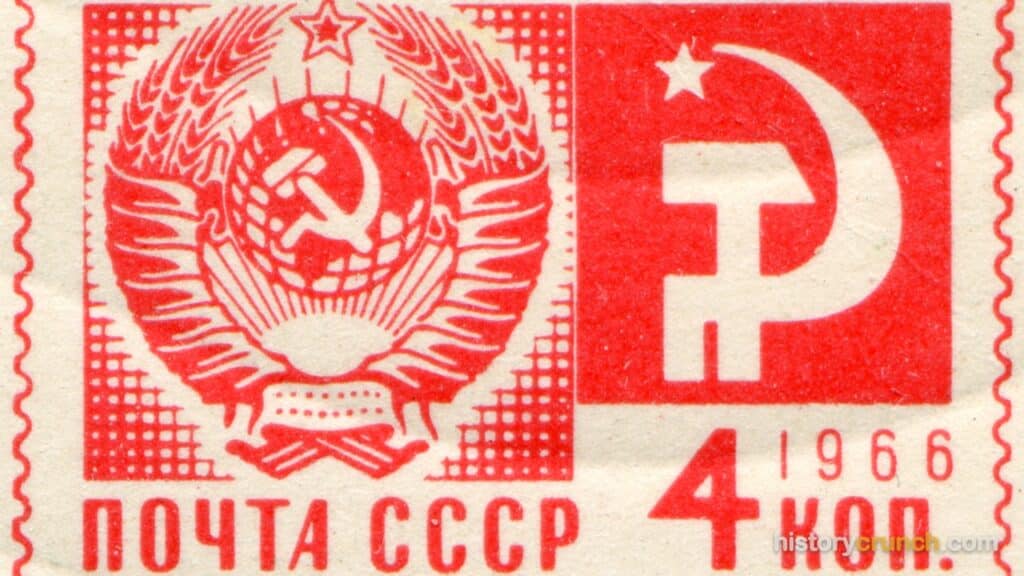
USSR stands for the Union of Soviet Socialist Republics. The word “soviet” comes from a Russian term meaning a council, which points to the local worker and soldier councils that were meant to be the base of the government. The full name was chosen to show that the country was a union of many socialist republics rather than a single empire.
Which Republics First Made Up the Soviet Union?
The Soviet Union began with four founding republics in 1922. These were the Russian republic, the Ukrainian republic, the Belarusian republic, and the Transcaucasian republic. The Transcaucasian republic was later split into the separate republics of Georgia, Armenia, and Azerbaijan, and over time the union grew to a total of fifteen republics.
Who Was the First Leader of the Soviet Union?
Vladimir Lenin was the first leader of the Soviet Union. He had led the Bolsheviks during the Russian Revolution and headed the new government from 1917 until his death in 1924. After Lenin died, Joseph Stalin gradually took control and ruled the country for nearly thirty years.
Why Was the Soviet Union Created?
The Soviet Union was created to unite the territories controlled by the Bolsheviks into a single communist state. After winning the civil war, the Bolsheviks wanted a stable government that could organize the economy and defend against enemies both inside and outside the country. Uniting the republics also allowed the Communist Party to spread its ideas and to build a powerful nation based on Marxist beliefs.
Cite This Article
To cite this article as a source, use one of the formats below.
MLA: Millar, B. “Formation of the Soviet Union: A Detailed Summary.” HistoryCrunch, 11 August 2026, https://historycrunch.com/formation-of-the-soviet-union/.
APA: Millar, B. (2026). Formation of the Soviet Union: A Detailed Summary. HistoryCrunch. https://historycrunch.com/formation-of-the-soviet-union/
Chicago: Millar, B. “Formation of the Soviet Union: A Detailed Summary.” HistoryCrunch. August 11, 2026. https://historycrunch.com/formation-of-the-soviet-union/
Sources
- J.M. Roberts & Odd Arne Westad, The Penguin History of the World.
- Jerry Bentley & Herbert Ziegler, Traditions & Encounters: A Global Perspective on the Past.