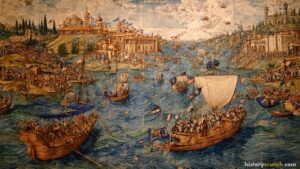
Trade was an important part of life during the Middle Ages and played a major role in shaping European society and economy over time. While trade largely collapsed in the Early Middle Ages following the fall of the Western Roman Empire, it slowly recovered and grew throughout the medieval period. In general, trade in the Middle Ages involved the exchange of goods, ideas and culture between different regions of Europe, Asia and Africa, and had a profound impact on the events that followed, including the Renaissance.
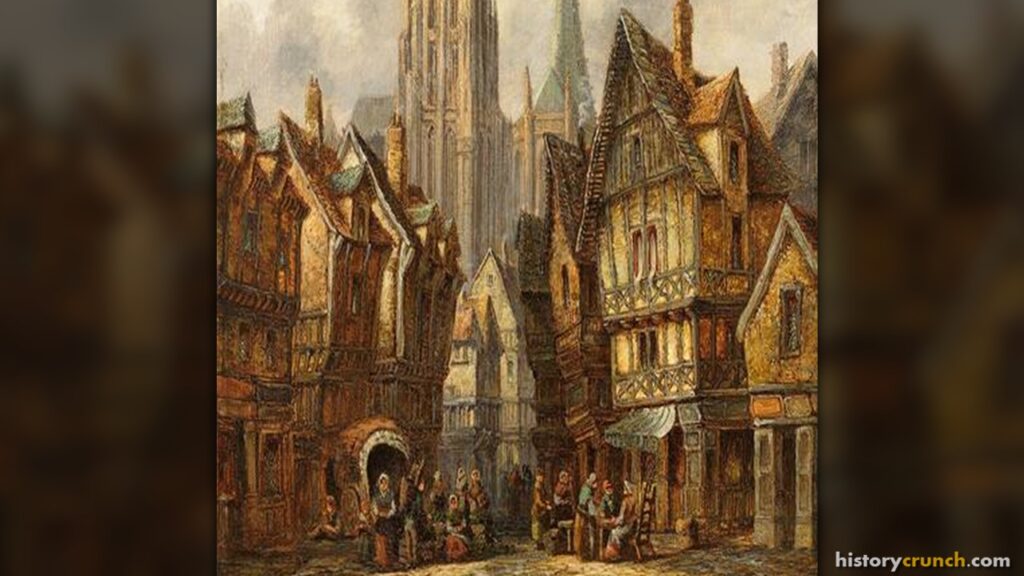

What Was Trade Like in the Middle Ages?
Trade in the Middle Ages refers to the buying and selling of goods between different people, regions and civilizations during the medieval period in Europe, which lasted from approximately the 5th century to the 15th century. In the Early Middle Ages, trade had declined significantly following the fall of the Western Roman Empire in 476 CE. The collapse of Roman roads, currency and political order made long-distance trade difficult and dangerous. As a result, most people in the Early Middle Ages lived and worked within the local economy of their manorA self-sufficient estate owned by a lord where peasants lived and farmed during the Middle Ages. or village under the feudal systemA social structure where peasants worked land owned by nobles in exchange for protection and basic needs.. However, as Europe stabilized politically and new kingdoms and trade networks emerged, trade gradually recovered and became an increasingly important part of medieval life.
FactsthatCrunchWhy did long-distance trade collapse after the fall of the Western Roman Empire?
Trade in the Early and High Middle Ages
During the Early Middle Ages, most trade in Europe was local and small in scale. Peasants and serfs living under the Manor System produced agricultural goods for their local lord and traded with nearby villages for basic necessities. Long-distance trade was rare and difficult, as roads had deteriorated and travel was dangerous due to the frequent conflicts between the many kingdoms that had replaced the Western Roman Empire.
However, by the High Middle Ages, which began around the 11th century, trade had begun to recover significantly. Towns and cities grew in size across Europe, and with them came markets, fairs and merchants who specialized in buying and selling goods. For instance, large trade fairs were held regularly in regions such as Champagne in France, where merchants from across Europe gathered to buy and sell a wide variety of goods. These fairs became important centers of economic activity and helped connect different regions of Europe through trade. As such, the growth of trade during the High Middle Ages helped transform the economy of medieval Europe and contributed to the rise of a new merchant classA new group of people in medieval society who gained wealth and power through buying and selling goods. that would eventually challenge the traditional feudal hierarchy of nobles and peasants.
The Silk Road
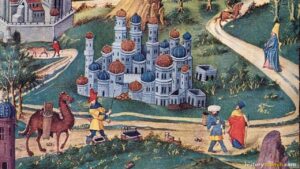
One of the most important trade networks connected to the Middle Ages was the Silk Road. The Silk RoadAn ancient network of trade routes stretching over 4,000 miles connecting China to the Mediterranean. was an ancient trade route across much of Asia and Europe and was an important aspect of many different historical periods, including the Middle Ages. It is perhaps one of the earliest and largest trade networks in human history and played a vital role to many different civilizations throughout Eurasia from approximately 120 BCE to 1450 CE. At its height, the Silk Road stretched from China in the east to the Mediterranean area including Italy in the west, which was a span of over 4,000 miles. Along the way it traveled through many different regions including: India, Persia, the Middle East, Africa and Eastern Europe.
There were many different civilizations that participated in the Silk Road over the centuries of its existence. Chinese and Mongol traders played an important role in the Silk Road, as many of their goods were highly desired in faraway markets such as Europe. European traders often traveled to areas in the Middle East to secure rare and desirable products from the Far East. For their part, the traders of Middle Eastern civilizations were essentially the middle men who traded goods from both sides. This situation greatly benefited the Middle Eastern societies in several ways. For instance, it meant they had access to a wide range of goods from both Asia and Europe and allowed them to gain knowledge from across the continent, which led to the Middle East becoming one of the centers of learning during the Middle Ages.
The most popular items traded along the Silk Road were food items and luxury goodsRare, expensive items such as silk, spices, and precious gems that only wealthy people could afford to buy.. For example, merchants and traders in the East transported goods such as: silks, glass-based products, paper, spices, apples and oranges to Europe. On the other hand, goods such as: grapes, cotton, gold, silver and wool moved eastward toward China. As such, the Silk Road was not only a network for the exchange of goods but also for the exchange of ideas, beliefs and culture between very different civilizations.
Along the Silk Road in the Middle Ages, did each of these goods travel eastward toward China or westward toward Europe?
Trade and the Crusades
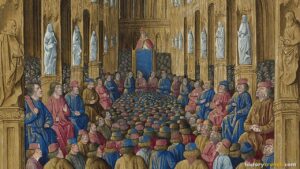
Another important factor in the growth of trade during the Middle Ages was the Crusades. The Crusades were a series of religious wars carried out by Christian crusaders from Europe during the timeframe of the Middle Ages. Beginning in 1095 CE, the Crusades saw European knights and noblemen travel to the Middle East in an attempt to capture the Holy Land away from Muslim people that had controlled the region for the previous centuries. While the Crusades were primarily a religious event, they also had a significant impact on trade in the Middle Ages.
For instance, the movement of thousands of European crusaders to the Middle East created a major demand for goods and supplies along the routes to the Holy Land. Towns and cities grew in size along these routes as merchants worked to meet the needs of traveling crusaders. As well, port cities in Italy grew in size and wealth as merchants organized the shipping of people and supplies across the Mediterranean Sea. For example, cities such as Venice and Genoa became major centers of trade during the time of the Crusades and used their wealth and influence to build powerful city-statesPowerful independent cities that governed themselves and their surrounding territories, like Venice and Genoa in Italy. that would later become central to the Renaissance. Furthermore, the interaction between European crusaders and Middle Eastern peoples exposed Europeans to new goods, ideas and technologies that they brought back with them to Europe, which further stimulated trade and cultural exchange.
FactsthatCrunchBy the early 1100s, Italian port cities had grown rich moving crusaders and their supplies across the Mediterranean Sea, beginning with the First Crusade in 1095 CE. Venice and Genoa had collected enormous fees for this shipping work, and both cities had built up fleets, trading contacts, and stores of wealth that no other European cities could match. In early 1100s CE, city leaders in Venice and Genoa faced a choice about what to do with that accumulated wealth and influence.
Goods Traded in the Middle Ages
A wide variety of goods were traded across medieval Europe and beyond during the Middle Ages. Luxury goods from Asia, such as silk, spices and precious gems, were among the most highly sought after items in medieval European markets. These goods traveled along the Silk Road and were sold at high prices to the nobility and wealthy merchants of Europe. Other important goods traded in the Middle Ages included: wool and cloth from England and the Low Countries, timber and furs from northern Europe, wine and olive oil from southern Europe and grain from regions across the continent.
The trade in wool and cloth was particularly important in the Middle Ages. For instance, England became one of the most important producers of wool in Europe during the High Middle Ages, and wool was exported in large quantities to cloth-making centers in Flanders (modern-day Belgium) and northern Italy. The cloth produced in these regions was then sold across Europe and beyond, generating significant wealth for the merchants and cities involved. As such, the wool trade was one of the most important economic activities of the Middle Ages and helped connect different regions of Europe through a shared network of production and exchange.
FactsthatCrunchWhere did medieval trade goods come from? Follow the spectrum from rare luxuries shipped thousands of miles to everyday goods produced close to home.
Tap a point to read its detail.
Impact of Trade on Medieval Society
Trade had a profound impact on medieval European society in several important ways. First, the growth of trade contributed to the rise of towns and cities across Europe. As trade increased, merchants and craftsmen settled in towns where they could buy and sell goods more easily. These towns grew in size and importance over time and became centers of economic and cultural life. Second, the growth of trade led to the rise of a new merchant class in European society. This merchant class accumulated wealth through trade and gradually gained influence and power that rivaled that of the traditional nobility. As such, the rise of the merchant class helped undermine the rigid social hierarchy of the feudal system and contributed to its eventual decline.
Third, the exchange of goods along trade routes also led to the exchange of ideas, knowledge and culture between different societies. For instance, the Silk Road and the Crusades both brought Europeans into contact with the advanced knowledge of Middle Eastern civilizations, which had access to the learning of both Europe and Asia. This exposure to new ideas played an important role in sparking the intellectual curiosity that would eventually lead to the Renaissance. As well, the trade routes that carried goods across Europe and Asia also carried diseases, most notably the bubonic plagueA deadly disease that spread along trade routes and caused massive death across Europe in the 14th century., which spread along the Silk Road and caused the devastating events of the Black Death in the 14th century.
FactsthatCrunchThe bubonic plague spread along the Silk Road from Central Asia toward Europe
Significance of Trade in the Middle Ages
In conclusion, trade was a vital and transformative part of life during the Middle Ages. It helped rebuild the European economy after the collapse of the Western Roman Empire, connected different regions and civilizations through networks of exchange and contributed to the rise of towns, cities and a new merchant class. As such, understanding trade in the Middle Ages is important because it helps explain many of the major developments that followed, including the decline of feudalism, the growth of powerful city-states and the eventual emergence of the Renaissance.
FactsthatCrunch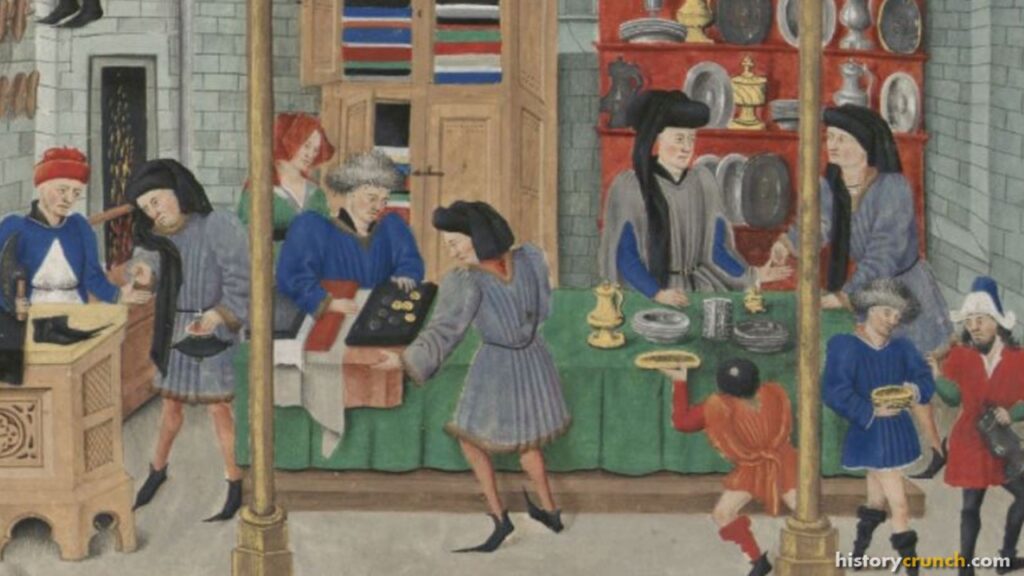
Explore Middle Ages · 476 – 1500 CE
Keep exploring Middle Ages with these History Crunch resources.
Key Vocabulary
Feudal system
Manor
Silk Road
Luxury goods
Merchant class
City-states
Bubonic plague
Frequently Asked Questions
Why did trade decline in the Early Middle Ages?
Trade declined because the Western Roman Empire fell in 476 CE and took its roads, currency and order with it. Without safe roads and a shared money system, long-distance travel became slow and dangerous. Most people instead lived and worked within the local economy of their manor or village under the feudal system.
What was the Silk Road?
The Silk Road was an ancient trade route that stretched over 4,000 miles (6,400 km) across Asia and Europe. It linked China in the east to the Mediterranean and Italy in the west. Traders carried silk, spices, paper and glass westward, while gold, silver, wool and cotton moved east toward China.
How did the Crusades affect medieval trade?
The Crusades, which began in 1095 CE, boosted trade by creating demand for supplies along the routes to the Holy Land. Italian port cities such as Venice and Genoa grew rich by shipping people and goods across the Mediterranean Sea. Crusaders also returned home with new goods, ideas and technologies that encouraged more exchange.
What goods were most important in medieval trade?
Luxury goods from Asia, such as silk, spices and precious gems, were among the most wanted items in European markets. Closer to home, wool and cloth were especially valuable, with England producing large amounts of wool. That wool was sent to cloth-making centers in Flanders and northern Italy, then sold across Europe.
How did trade change medieval society?
Trade helped towns and cities grow as merchants and craftsmen settled where goods were bought and sold. It also created a wealthy merchant class that challenged the power of the nobility and weakened the feudal system. The same routes spread new ideas, but they also carried disease, including the plague that caused the Black Death.
Cite This Article
To cite this article as a source, use one of the formats below.
MLA: Millar, B. “Trade in the Middle Ages: A Detailed Summary.” HistoryCrunch, 17 October 2026, https://historycrunch.com/trade-in-the-middle-ages/.
APA: Millar, B. (2026). Trade in the Middle Ages: A Detailed Summary. HistoryCrunch. https://historycrunch.com/trade-in-the-middle-ages/
Chicago: Millar, B. “Trade in the Middle Ages: A Detailed Summary.” HistoryCrunch. October 17, 2026. https://historycrunch.com/trade-in-the-middle-ages/
Sources
- Jacques Le Goff, Medieval Civilization 400-1500.
- Chris Wickham, Medieval Europe.
- Barbara Rosenwein, A Short History of the Middle Ages.