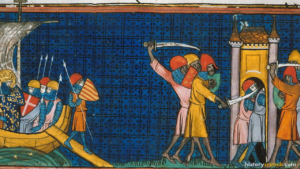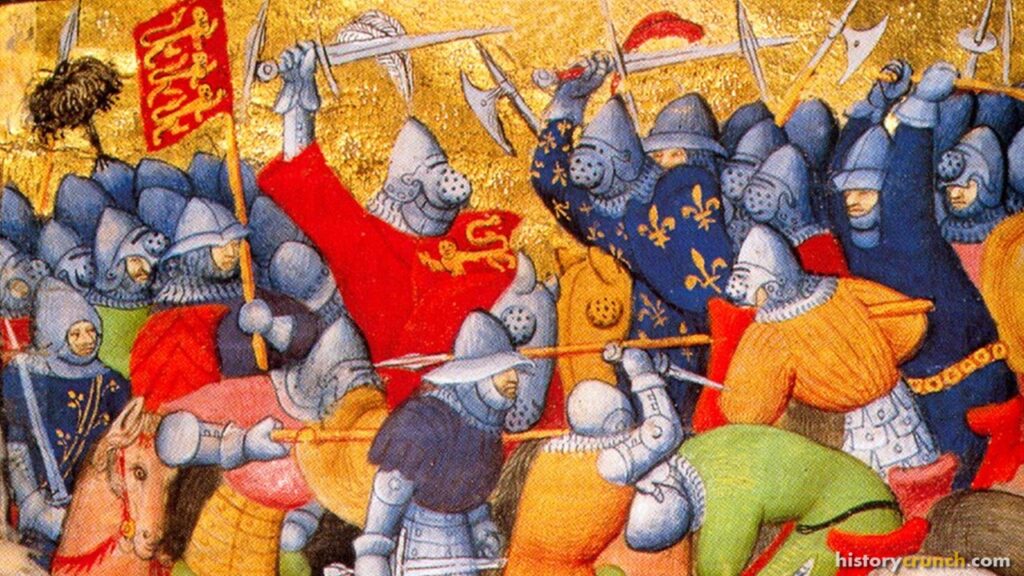
The Hundred Years War was a long series of conflicts fought between England and France from 1337 to 1453. Despite its name, the war actually lasted approximately 116 years and involved five different English kings and five different French kings over the course of its duration. The war grew out of longstanding disputes over the French throne and English-held territories in France, and included some of the most famous battles of the Middle Ages.
What Were the Middle Ages?
The Middle Ages, also known as the Medieval Period, was a period of European history that lasted from approximately 500 CE to 1500 CE. It began with the fall of the Western Roman Empire and ended with the start of the Renaissance. During this time, European society was organized around the feudal system, in which kings sat at the top of society and granted land to nobles and lords in exchange for military service and loyalty. Europe at the time was divided among many different kingdoms that were often in conflict with one another over territory, trade, and political power. As such, warfare was a common part of life during the Middle Ages, and it was within this world that the Hundred Years War took place.
Causes of the Hundred Years War
There were several main causes of the Hundred Years War, and they had been building for many decades before the fighting actually began. The most important cause was a dispute over who had the right to rule France. When the French King Charles IV died on February 1st, 1328, he left no male heir, which created a major problem for the French nobility. King Edward III of England believed he had a strong claim to the French throne because his mother, Isabella, was the sister of Charles IV. However, the French nobility disagreed and instead chose Philip of Valois, a cousin of the deceased king, to become King Philip VI of France. Edward III was deeply unhappy with this decision but initially accepted it and even did homageA formal ceremony where one ruler pledged loyalty and submission to another, more powerful ruler. to Philip VI in 1329.
As well, there was a long-standing dispute over English-held territories in France. For many generations, the kings of England had also held the title of Duke of Aquitaine and controlled a large region in southwestern France known as Guyenne, or Gascony. This arrangement was deeply uncomfortable for the French kings, who saw English control of French land as a threat to their authority. Tensions between the two countries had been simmering for over a century before the war began. In May of 1337, King Philip VI formally declared Guyenne confiscatedOfficially seized or taken away by a government or authority, usually as punishment. and took over English lands in France. In response, Edward III declared that he was the rightful king of France and launched a military campaign against Philip. This exchange of actions in 1337 is generally considered to be the start of the Hundred Years War.
 FactsthatCrunch
Major Battles of the Hundred Years War
The Hundred Years War was not one long continuous conflict but rather a series of major battles and campaigns separated by long periods of truceA temporary agreement to stop fighting, allowing both sides to pause without ending the war. and negotiation. One of the first and most important battles of the war was the Battle of Crécy on August 26th, 1346, in which the English army under Edward III crushed a much larger French force in northern France. The English longbowmenSoldiers who fought using a tall, powerful bow that could fire arrows rapidly over long distances. played a major role in this victory, firing rapidly and cutting down the heavily armored French knights before they could reach the English lines. The Battle of Crécy showed that traditional medieval tactics relying on armored cavalry were no longer reliable against a well-organized army using the longbow. Following this victory, Edward III besieged the French port city of Calais, capturing it in August of 1347. Calais remained under English control for over two centuries, serving as a vital foothold for England on the French coast.
Another major battle was the Battle of Poitiers on September 19th, 1356, in which English forces led by Edward, the Black Prince, the eldest son of Edward III, defeated a much larger French army and captured the French King John II himself. The capture of the French king was an enormous blow to France. John II was taken to England and held prisoner, which eventually led to negotiations and the signing of the Treaty of Brétigny in 1360. Under this treaty, France agreed to pay a ransom of three million gold ecus for John’s release and to hand over large territories in southwestern France to English control. In return, Edward III agreed to give up his claim to the French throne. With that said, the war was far from over, and fighting resumed in later years as France worked to win back the lands it had lost.
One of the most famous battles of the entire war was the Battle of Agincourt on October 25th, 1415. English King Henry V, who had revived English claims to the French throne, led an army of around six thousand men against a French force that historians estimate numbered between 12,000 and 36,000. Despite being vastly outnumbered, the English won a stunning victory, again largely due to the devastating effectiveness of the longbow against the heavily armored French knights who became bogged down in muddy ground. The Battle of Agincourt became one of the most celebrated moments in English history and greatly strengthened Henry V’s position. By 1420, Henry V had negotiated the Treaty of Troyes with the French king, Charles VI, which recognized Henry as the heir to the French throne and gave England control over much of northern France including Paris.
Joan of Arc and the Turning of the War
Despite the remarkable English victories at Agincourt and elsewhere, France eventually began to turn the tide of the war. A major turning point came in 1429, when English forces had laid siege to the important French city of Orléans, which controlled access to the southern part of France still held by the French crown. The fall of Orléans would have been a devastating blow to France, and the situation looked very serious for the French DauphinThe title given to the eldest son of the French king, meaning he was next in line to rule France., the future King Charles VII.
It was at this moment that Joan of Arc entered the story. Joan was a young French peasant girl from the village of Domrémy who claimed to have received messages from God instructing her to help drive the English out of France. Joan convinced Charles VII to allow her to lead French forces to Orléans, and in April and May of 1429 she inspired the French troops to lift the siege, driving the English back and saving the city. For instance, her arrival transformed the spirit of the French army at a moment when morale had been very low, and the relief of Orléans marked a dramatic change in the fortunes of the war.
Following the lifting of the Siege of Orléans, French forces went on to win several important victories that gradually pushed the English back across France. Joan of Arc was later captured by English allies in May of 1430 and burned at the stake on May 30th, 1431, at the age of approximately nineteen years old. With that said, her impact on the war proved lasting. The French continued to advance under Charles VII and won back large areas of territory. In 1435, the important ally of England, the Duke of Burgundy, switched sides and made peace with the French king, which was a major blow to the English cause.
FactsthatCrunch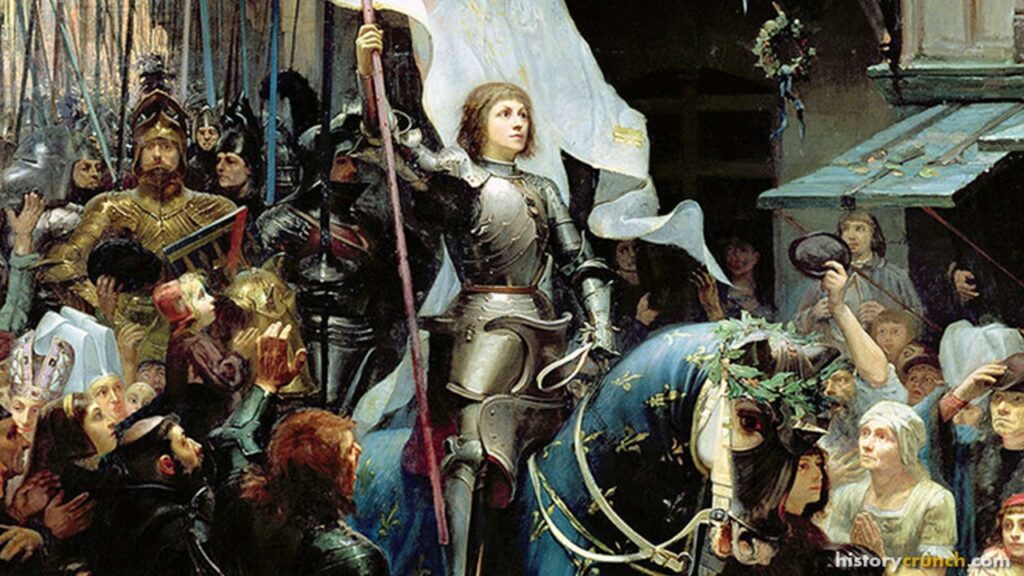
End and Outcome of the Hundred Years War
The Hundred Years War came to a decisive end in 1453 when French forces defeated the English at the Battle of Castillon on July 17th, 1453, in southwestern France. The French made effective use of artilleryLarge, heavy weapons such as cannons that fire explosive projectiles over long distances. and cannons in this battle, which helped overcome the English longbowmen who had been so dominant in earlier conflicts. Following this defeat, the English were driven out of Bordeaux and lost control of nearly all of Gascony, leaving England in possession of only the port city of Calais on the northern coast of France. No formal peace treaty was ever signed between England and France to officially end the war, but the fighting effectively stopped after 1453.
Significance of the Hundred Years War
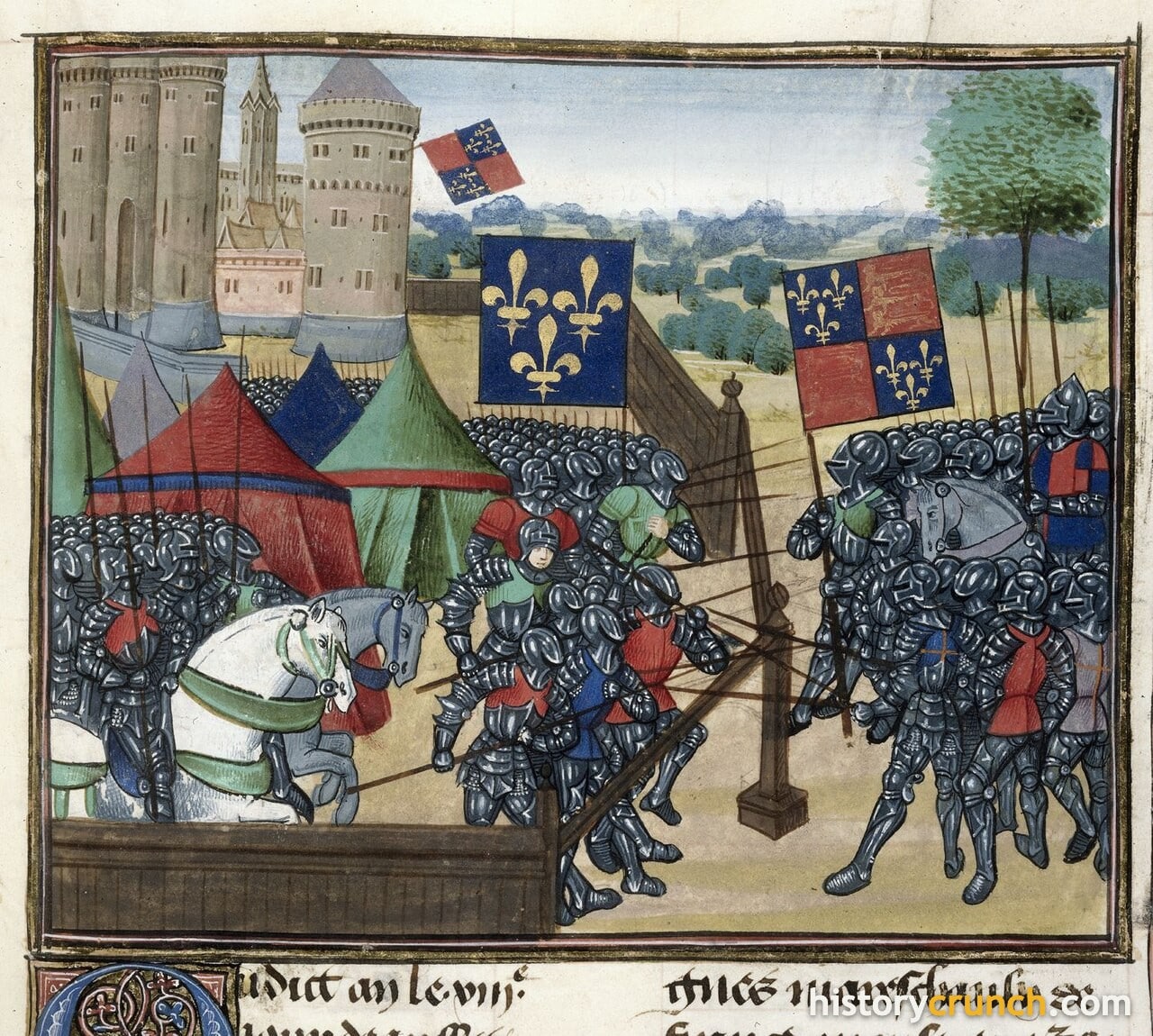
The Hundred Years War had a major and lasting impact on both England and France. For France, the victory helped to strengthen the power of the French monarchy and create a stronger sense of national identityA shared sense of belonging to and pride in one country among its people. among the French people. The war brought ordinary French people together around the idea of defending their country against a foreign invader, and this sense of shared purpose helped to build a stronger French national identity. As well, the war produced one of France’s most famous national heroes in Joan of Arc, who was declared a saint in 1920 and remains a symbol of French courage and patriotism to this day.
For England, the loss of its territories in France was a significant blow. The disagreements over the conduct of the war and the failure to hold onto the French lands contributed to a power struggle within the English nobility that eventually led to the Wars of the Roses, a civil war between rival English royal families that began in 1455. With that said, the loss also pushed England to look outward and eventually expand its power through trade and exploration at sea in the years that followed.
As well, the Hundred Years War had a significant impact on warfare more broadly. The success of the English longbow against heavily armored French knights throughout the earlier stages of the war showed that traditional medieval methods of fighting were changing. The growing use of cannons and artillery in the later stages of the war, particularly at the Battle of Castillon in 1453, pointed toward the kinds of warfare that would replace the old feudal system of mounted knights. In this way, the Hundred Years War marked an important turning point not just in the history of England and France but in the history of the Middle Ages as a whole.
FactsthatCrunchHow did the Hundred Years War change the way armies fought in the Middle Ages?
Explore Middle Ages · 476 – 1500 CE
Keep exploring Middle Ages with these History Crunch resources.
Key Vocabulary
Homage
Confiscated
Longbowmen
Truce
Dauphin
Artillery
National identity
Frequently Asked Questions
How long did the Hundred Years War actually last?
The war lasted about 116 years, from 1337 to 1453, despite its name. It was not one steady fight but a series of battles and campaigns broken up by long truces. Five English kings and five French kings ruled during this time.
What caused the Hundred Years War?
The main cause was a dispute over who had the right to rule France. When King Charles IV died in 1328 with no male heir, Edward III of England claimed the throne through his mother. The French instead chose Philip VI, and arguments over English-held land in France added to the tension.
Why was the English longbow so important?
The longbow let English archers fire quickly and cut down French knights before they reached the lines. It helped win major battles like Crécy in 1346 and Agincourt in 1415. These victories showed that armored cavalry was no longer reliable against a well-organized army.
How did Joan of Arc change the war?
Joan of Arc helped lift the English siege of Orléans in 1429, which turned the war in France’s favor. She was a young peasant girl who said God told her to drive the English out of France. She was captured and burned at the stake in 1431, but French forces kept winning afterward.
How did the Hundred Years War end?
The war ended in 1453 when France defeated England at the Battle of Castillon on July 17th, 1453. The French used cannons and artillery to overcome the English longbowmen. England lost nearly all its French land and kept only the port of Calais, though no formal peace treaty was ever signed.
Why was the Hundred Years War significant?
The war strengthened the French monarchy and helped build a stronger sense of national identity in France. In England, the loss of French land led to a power struggle that sparked the Wars of the Roses in 1455. The war also changed warfare by showing the power of longbows and early cannons over mounted knights.
Cite This Article
To cite this article as a source, use one of the formats below.
MLA: Woida, K.L. “Hundred Years War: A Detailed Summary.” HistoryCrunch, 15 October 2026, https://historycrunch.com/hundred-years-war/.
APA: Woida, K. L. (2026). Hundred Years War: A Detailed Summary. HistoryCrunch. https://historycrunch.com/hundred-years-war/
Chicago: Woida, K.L. “Hundred Years War: A Detailed Summary.” HistoryCrunch. October 15, 2026. https://historycrunch.com/hundred-years-war/
Sources
- Jacques Le Goff, Medieval Civilization 400-1500.
- Barbara Rosenwein, A Short History of the Middle Ages.
- The Met (Heilbrunn Timeline): medieval art