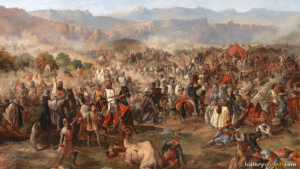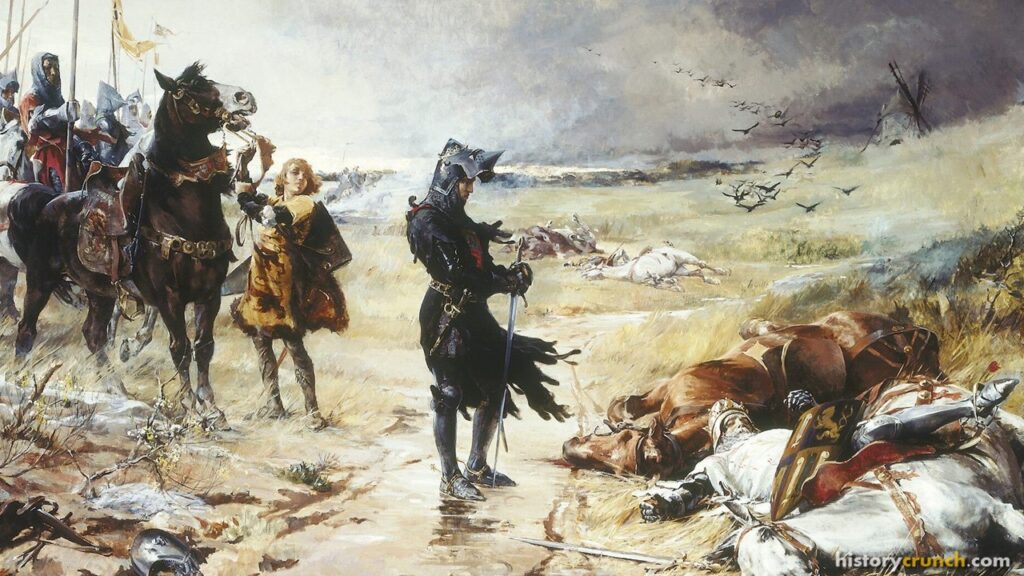
The Hundred Years War was a long series of conflicts fought between England and France from 1337 to 1453. Historians have identified several main causes of the war, including a dispute over the right to rule France, longstanding disagreements over English-held territories on French soil, and growing political rivalry between the two kingdoms. As such, the causes of the Hundred Years War were not the result of a single event but rather a combination of tensions that had been building for generations before the fighting actually began.
 FactsthatCrunch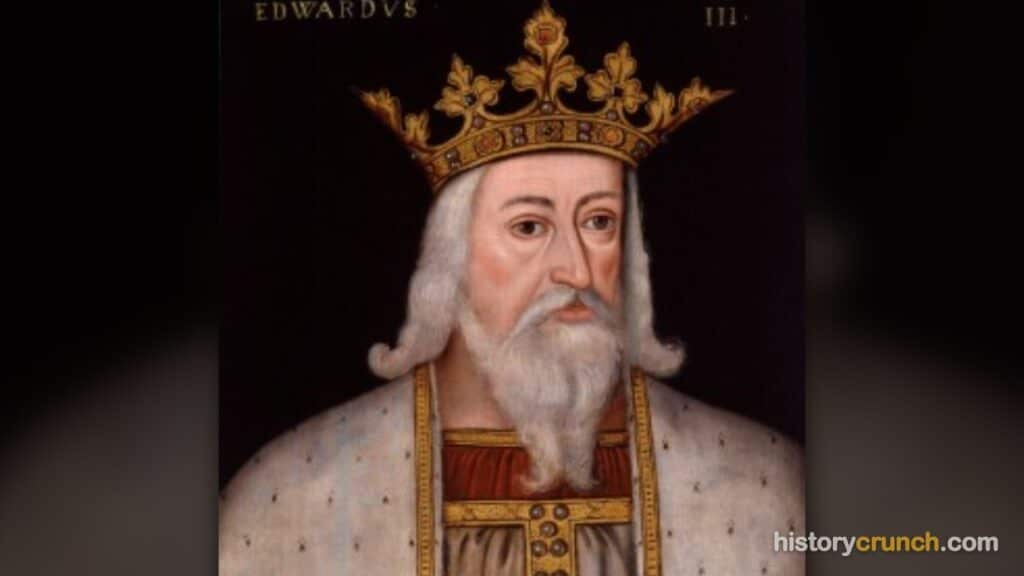
What Was the Hundred Years War?
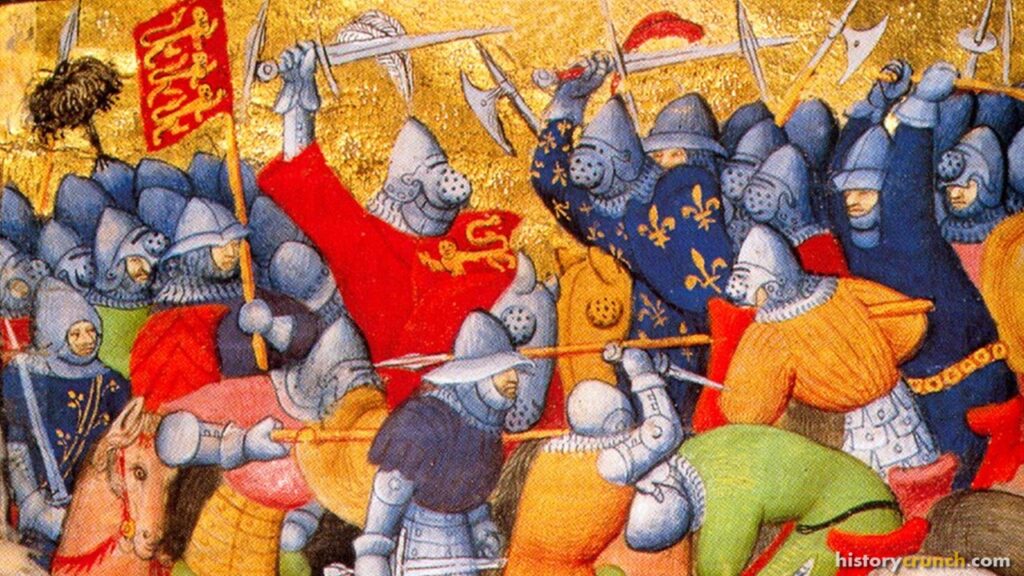
The Hundred Years War was one of the most significant conflicts of the Middle Ages. It was fought between the kingdoms of England and France from 1337 to 1453 and involved five different English kings and five different French kings over its duration. Despite its name, the war actually lasted approximately 116 years. It was not a single continuous conflict but rather a series of major battles and campaigns separated by long periods of truce and negotiation. The war had a major impact on both England and France and helped shape the development of both countries as separate and distinct nations. In general, historians point to three main causes of the Hundred Years War: the dispute over the French succession, the question of English lands in France, and the political rivalry and tension between the two kingdoms.
Causes of the Hundred Years War – Dispute Over the French Throne
One of the most important causes of the Hundred Years War was a dispute over who had the right to become the next king of France. This dispute began on February 1st, 1328, when the French King Charles IV died without leaving a male heirA son or male relative who legally inherits a title or throne after a ruler dies. to take his place on the throne. As this was a common problem in medieval kingdoms, the French nobility gathered to decide who the next king should be. There were two main candidates. The first was King Edward III of England, who was the nephew of Charles IV through his mother, Isabella of France, who had been the sister of the deceased king. Edward believed that his family connection gave him a strong claim to the French throne.
The second candidate was Philip of Valois, a cousin of Charles IV and a member of the powerful French noble family known as the House of Valois. The French nobility chose Philip, who was crowned King Philip VI of France in 1328. For their part, the French argued that the crown could not pass through a female line, meaning that Edward’s claim through his mother was not valid. Edward III was deeply unhappy with this decision but initially accepted it, doing homageA formal ceremony where a lesser lord pledged loyalty and obedience to a more powerful king. to Philip VI at Amiens in June of 1329. As well, he renewed this homage in 1331. With that said, Edward never truly gave up his claim to the French throne, and this unresolved dispute remained a source of tension between the two kingdoms for years. In 1337, when relations between England and France broke down completely, Edward formally declared himself the rightful king of France, which was one of the immediate triggers for the start of the war.
FactsthatCrunchIt is June 1329 CE, during the Middle Ages, and you are Edward III of England, a young king caught in a dispute at the heart of what will become the Hundred Years War. The French nobility crowned Philip VI in 1328 after King Charles IV died without a male heir, passing over your claim even though Charles IV was your uncle through your mother, Isabella of France. If you press your claim now, you risk war with a powerful kingdom; if you submit, you may lose your right to the French throne forever.
Causes of the Hundred Years War – English Lands in France
A second major cause of the Hundred Years War was the long-standing dispute over English-held territories in France. This problem had its roots in the Norman Conquest of England in 1066, when William, Duke of Normandy, invaded England and became King William I. From that point onward, the kings of England also held titles and lands in France, which made them technically vassalsLords who owed loyalty and service to a more powerful ruler in exchange for land. of the French crown. In other words, the kings of England were required to pay homage to the kings of France for the lands they held on French soil, which created an awkward and often tense relationship between the two kingdoms.
Over the following centuries, England gradually lost most of its French territories. By the time of Edward III, the main English-held territory that remained in France was the Duchy of Guyenne, also known as Gascony, a large region in southwestern France. This territory was very valuable to England for trade reasons and had been under English control since the Treaty of Paris in 1259, when Henry III of England formally accepted its ownership in exchange for giving up claims to Normandy and other regions. For instance, wine from Gascony was one of the most important goods traded between France and England, and the region generated significant wealth for the English crown.
The French kings had long resented English control of Guyenne. Philip VI and his predecessors had repeatedly tried to take back this territory, arguing that English control of land within France was a threat to their authority. In May of 1337, Philip VI formally declared Guyenne confiscatedOfficially seized or taken away by a government or ruler, usually as punishment or by force. and announced that France was taking control of the duchy. This was the immediate trigger that caused Edward III to launch his military campaign against France and declare himself the rightful king of France. As such, the dispute over Guyenne was one of the most direct causes of the outbreak of the Hundred Years War.
FactsthatCrunchCauses of the Hundred Years War – Political Rivalry and the Scottish Alliance
A third important cause of the Hundred Years War was the broader political rivalry between England and France and the way in which both kingdoms interfered in each other’s affairs. For example, France had maintained a longstanding alliance with Scotland, which was known as the Auld AllianceA longstanding agreement between France and Scotland to support each other against England.. This alliance was important because Scotland was frequently in conflict with England over its independence, and French support for Scotland was seen by the English as a deliberate attempt to weaken them. For instance, in 1336, Philip VI sent a military expedition to help the Scottish King David II against England. Edward III viewed this as a hostile act and it increased his determination to confront France directly.
As well, England and France were rivals for influence over the wealthy textile-producingMaking woven cloth or fabric, often on a large commercial scale. region of Flanders, which is in the area of modern-day Belgium. The cities of Flanders depended heavily on importing English wool to produce their cloth, and they had strong economic ties with England as a result. France, on the other hand, had political control over Flanders and wanted to use it to increase its own power. When England and France began moving toward open conflict in the 1330s, both sides worked to win the support of the Flemish cities. The competing interests of England and France in Flanders added another layer of tension to an already difficult relationship and contributed to the outbreak of the war in 1337.
FactsthatCrunchFrance and Scotland held a longstanding mutual defense agreement that forced England to watch both its northern border and its French territories at the same time. This two-front pressure made the French alliance with Scotland feel like a direct threat to English security, pushing Edward III to confront France rather than manage the rivalry indefinitely.
In 1336, Philip VI sent a military expedition to support Scottish King David II against England, and Edward III treated that act as confirmation that France intended to use Scotland as a weapon against him.
Key Vocabulary
Vassals
Homage
Male heir
Confiscated
Auld Alliance
Textile-producing
Frequently Asked Questions
What were the main causes of the Hundred Years War?
Historians point to three main causes of the Hundred Years War. These were the dispute over who should rule France, the argument over English lands in France, and the political rivalry between the two kingdoms. These tensions had been building for generations before the fighting began in 1337.
Why did Edward III claim the French throne?
Edward III claimed the French throne because he was the nephew of the French King Charles IV. His mother, Isabella of France, was the sister of Charles IV, who died without a male heir in 1328. The French nobles rejected Edward’s claim and chose Philip of Valois instead, arguing the crown could not pass through a female line.
Why did English lands in France cause conflict?
English kings held lands in France, which made them vassals of the French crown and created tension. This went back to the Norman Conquest of 1066, when the Duke of Normandy became King of England. The main remaining English territory was the Duchy of Guyenne, also called Gascony, in southwestern France. French kings resented this control and wanted the land back.
What event triggered the start of the war in 1337?
In May of 1337, Philip VI declared Guyenne confiscated and announced that France was taking the duchy. This act pushed Edward III to launch a military campaign and declare himself the rightful king of France. Rising tension over the French throne and Scotland had already made war likely.
What was the Auld Alliance?
The Auld Alliance was a longstanding alliance between France and Scotland. It worried England because Scotland often fought England over its independence. In 1336, Philip VI sent a military expedition to help the Scottish King David II. Edward III saw this as a hostile act that increased his will to confront France.
How long did the Hundred Years War last?
Despite its name, the Hundred Years War actually lasted about 116 years, from 1337 to 1453. It was not one continuous conflict but a series of battles and campaigns separated by long truces. The war involved five English kings and five French kings over its length.
Cite This Article
To cite this article as a source, use one of the formats below.
MLA: Woida, K.L. “Causes of the Hundred Years War: A Detailed Summary.” HistoryCrunch, 15 October 2026, https://historycrunch.com/causes-of-the-hundred-years-war/.
APA: Woida, K. L. (2026). Causes of the Hundred Years War: A Detailed Summary. HistoryCrunch. https://historycrunch.com/causes-of-the-hundred-years-war/
Chicago: Woida, K.L. “Causes of the Hundred Years War: A Detailed Summary.” HistoryCrunch. October 15, 2026. https://historycrunch.com/causes-of-the-hundred-years-war/
Sources
- The Met (Heilbrunn Timeline): medieval art
- Jacques Le Goff, Medieval Civilization 400-1500.