The Russian Revolution of 1917 was an incredibly significant event that transformed the course of history, not only for Russia but also for the entire world. The revolution marked the end of the Romanov dynasty and the birth of the Soviet Union, ushering in a new era of political, social, and economic ideologies. The revolution had far-reaching consequences, shaping the 20th century geopolitical landscape and influencing subsequent revolutions and movements across the globe. For instance, the Russian Revolution had immediate impacts on the events of World War I, and later on events such as World War II and the Cold War.
Causes of the Russian Revolution
There are several significant causes for the Russian Revolution of 1917. However, to understand the significance of the Russian Revolution and its causes, it’s first important to investigate the conditions present in Russia during the early 20th century. At the time, the country was struggling with several key issues, which each contributed to the eventual outbreak of the revolution. These issues included: anger towards the Tsar and government of Russia, economic instability, and widespread discontent among the citizens towards the role of Russia in World War I.
Major Events of the Russian Revolution
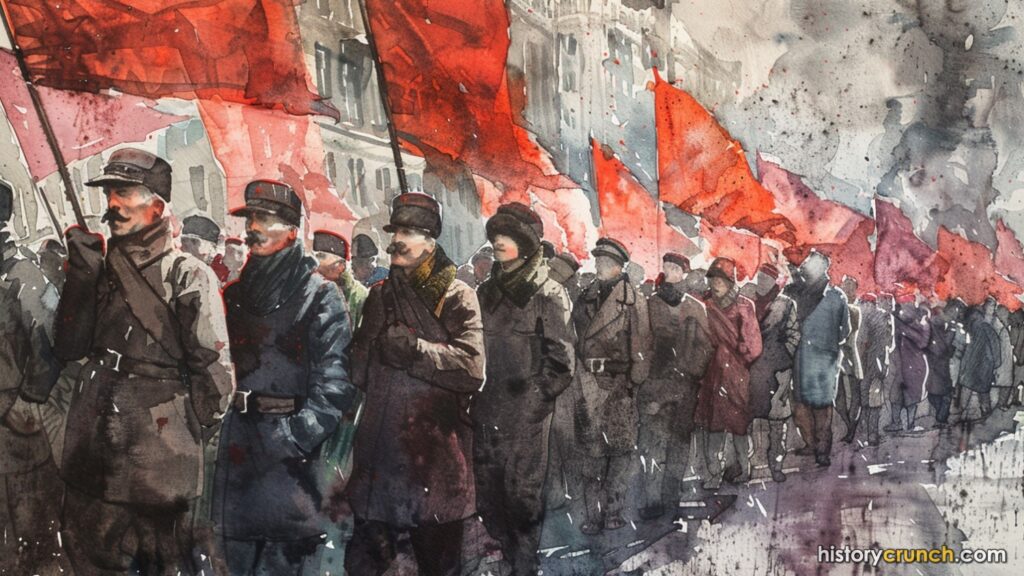
The Russian Revolution of 1917 unfolded as a series of major events. First, was the February Revolution of 1917. The February Revolution of 1917, was an important aspect of the overall Russian Revolution, and marked a significant turning point in Russian history. As food shortages in Russia intensified, workers, soldiers, and women took to the streets in February of 1917, demanding an end to the war, improved living conditions, and political reforms. The protests quickly escalated into larger demonstrations, with slogans demanding bread, peace, and the end of autocracy.
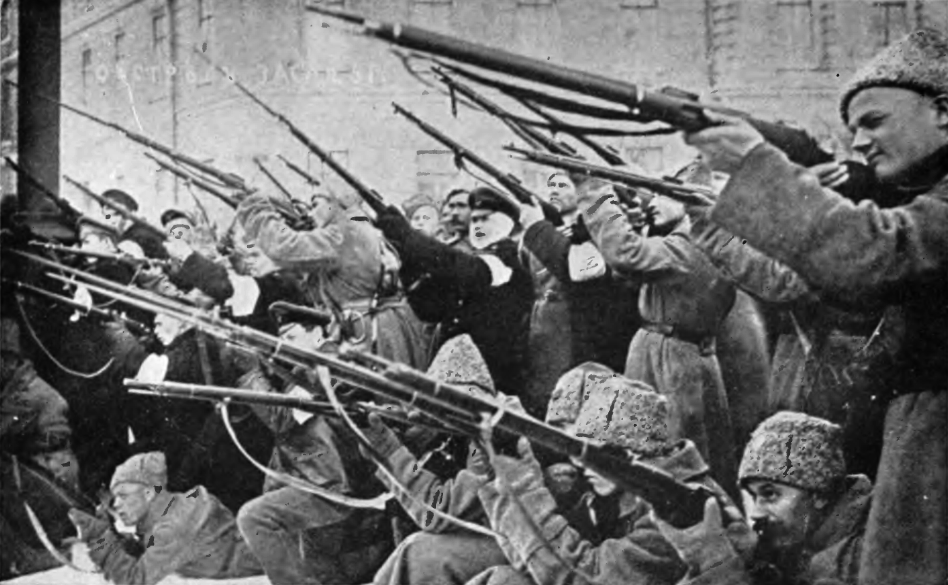
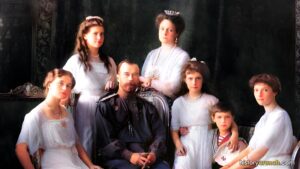
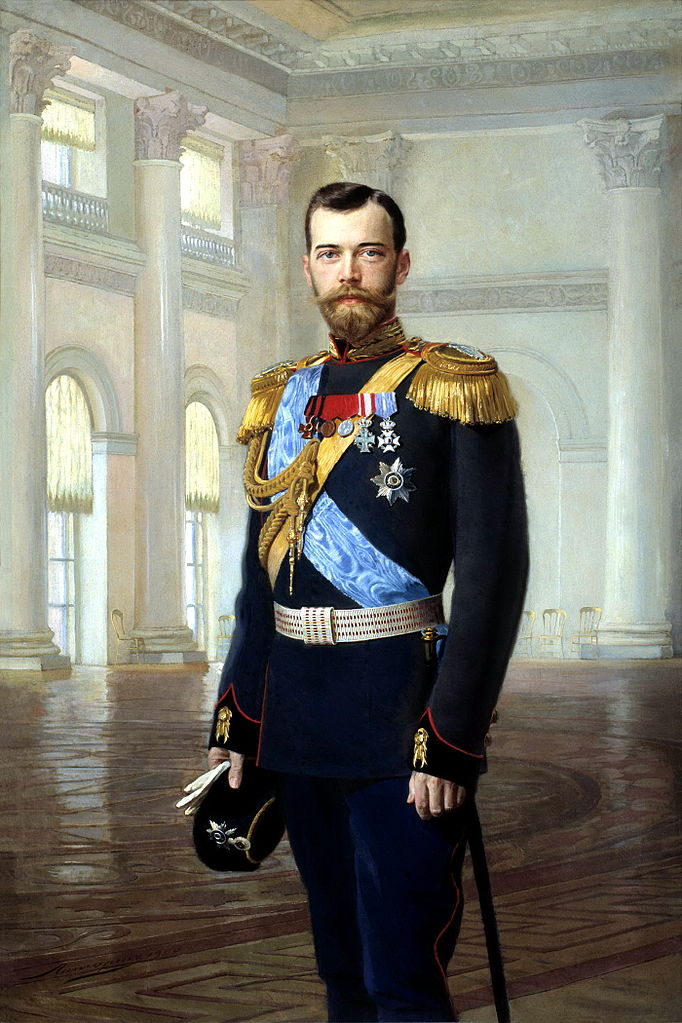
Eventually, the civil unrest forced Tsar Nicholas II to abdicate the throne. Faced with mounting pressure and realizing the loss of support from both the military and the populace, Nicholas II abdicated the throne on March 15th of 1917. This marked the end of the Romanov dynasty and sent Russia on a path of political upheaval.
As well, the February Revolution led to the establishment of a Provisional Government, which initially included liberal and moderate socialist elements. In fact, the new government promised democratic reforms and an end to autocracy. However, the Provisional Government faced challenges as it struggled to meet the demands of the people and navigate the complexities of war.
The October Revolution of 1917, also known as the ‘Bolshevik Revolution’, was the second and more radical phase of the Russian Revolution of 1917. It took place in Petrograd (Saint Petersburg) and marked the high point of the revolutionary process that had begun with the February Revolution earlier in that same year. Ultimately, the October Revolution resulted in the overthrow of the Provisional Government and the establishment of Bolshevik (Communist) rule in Russia.
The climax of the October Revolution occurred at the end of October in 1917 in an event referred to as the ‘Storming of the Winter Palace’. Bolshevik forces, with the support of the Red Guard and sailors from the Kronstadt naval base, stormed the Winter Palace in Petrograd, where the Provisional Government was located. The Red Guard arrested the ministers, effectively ending the Provisional Government’s authority.
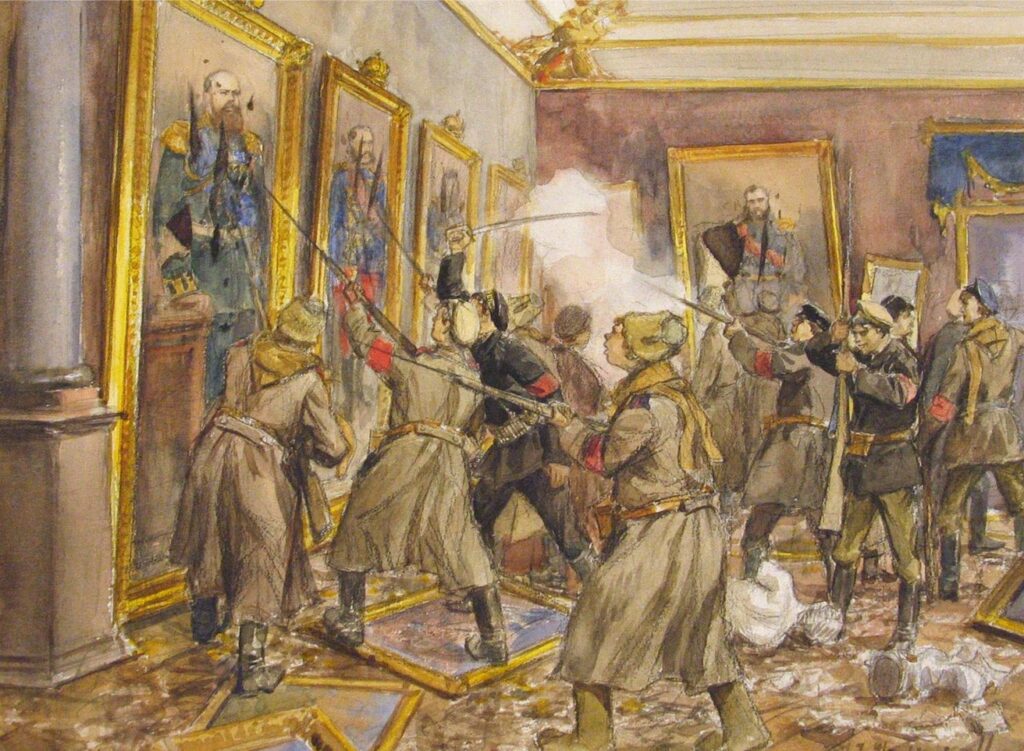
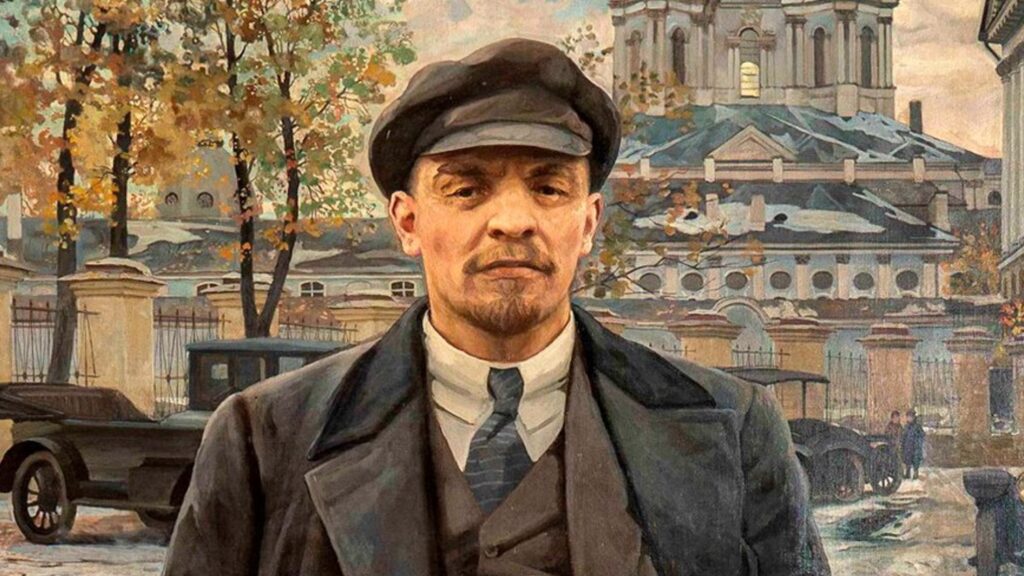
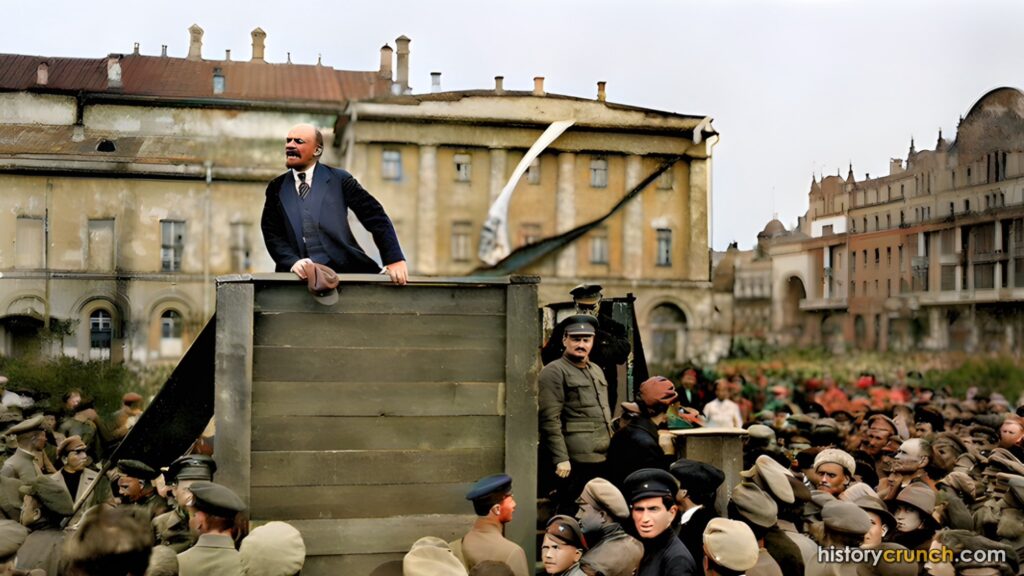
Following the seizure of the Winter Palace, the All-Russian Congress of Soviets, dominated by the Bolsheviks and Left Socialist-Revolutionaries, announced the formation of the Council of People’s Commissars. Vladimir Lenin became the head of government, and the Bolsheviks established their rule, marking the beginning of Soviet power in Russia.
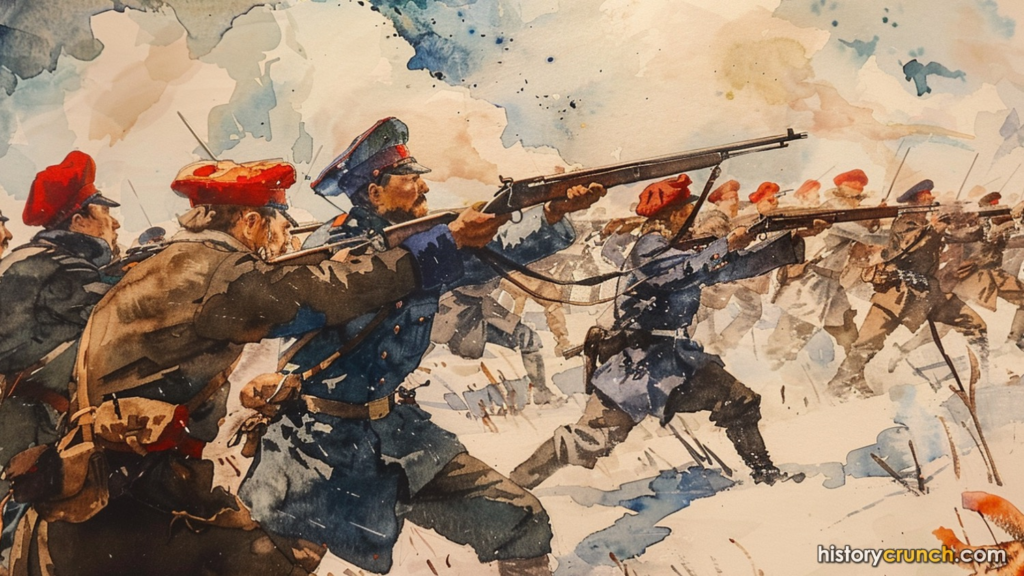
The next major event of the Russian Revolution was the outbreak of the Russian Civil War (1918-1922) was a complex and brutal conflict that unfolded in the aftermath of the October Revolution of 1917, as various groups battled for control over the future of Russia. Historians consider it to be a major point of significance in the overall Russian Revolution of 1917. The civil war was marked by ideological, political, and social struggles between the Bolshevik (Red) forces, led by Vladimir Lenin, and the anti-Bolshevik (White) forces. The conflict also saw the involvement of foreign powers, adding an international dimension to the struggle.
The Russian Civil War resulted in immense suffering, with millions of casualties and widespread famine. With that said, the war ultimately solidified Bolshevik control, leading to the establishment of the Soviet Union in 1922. The Bolsheviks’ ideology, inspired by Marxist principles, aimed at creating a classless society with the means of production owned by the proletariat (working-class). It was referred to as ‘Marxist-Leninism‘.
Significance of the Russian Revolution of 1917
The Russian Revolution of 1917 is one of the most significant events of the 20th century. It fundamentally changed the political, social, and economic landscape of Russia and set the stage for many of the major events that occurred in the decades after. For example, the formation of the Soviet Union altered the geopolitical landscape, leading to the emergence of two superpowers during the Cold War – the United States and the Soviet Union.
The Russian Revolution inspired revolutionary movements globally, and contributed to the rise of socialism and communism. The establishment of the Soviet Union served as a model for other nations seeking alternative forms of governance, and created a competition with more capitalist and democratic systems.
The Russian Revolution also marked the end of centuries of autocratic rule under the Romanov dynasty. The abdication of Tsar Nicholas II in the February Revolution and the subsequent establishment of the Soviet state under Bolshevik leadership in the October Revolution ushered in a new era of governance based on socialist principles. For instance, the Bolsheviks implemented radical reforms, including land redistribution, nationalization of industry, and the establishment of collective farms. These changes had profound effects on Russian society and its economic structure.