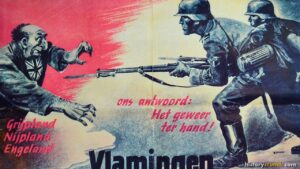
Vichy France was the authoritarianA government style where one person or group holds total power and citizens have few freedoms. French regime that ruled over the southern regions of France during much of World War II after the defeat of France by Nazi Germany in 1940. Vichy France was based in Vichy, France, and it governed from 1940 to 1944 while collaborating with Nazi Germany and trying to preserve limited French control under occupation.
 FactsthatCrunch
Vichy France – Background
Vichy France grew out of the collapse of France in the spring of 1940 during the events of the Battle of France. Nazi German forces invaded on May 10th, 1940, defeated the French army in a fast campaign, and entered Paris, France, on June 14th, 1940. Just days later, on June 22nd, 1940, France signed an armisticeA formal agreement between warring sides to stop fighting, usually while a peace deal is worked out. with Nazi Germany. That agreement divided the country into an occupied northern zone and an unoccupied southern zone, although Nazi Germany still held the real balance of power.
This defeat created a political crisis inside France. Many leaders believed the war should continue from North Africa, but Marshal Philippe Pétain and his supporters argued that France should stay on the mainland and accept an armistice. As a result, the old French Third Republic fell apart at the same time that Nazi Germany was taking military control of much of the country.
FactsthatCrunchHow fast did the Fall of France happen? These key events show how many days each milestone came after the German invasion began on May 10th, 1940.
Vichy France – Creation of the Regime
Vichy France was formally created on July 10th, 1940, when the French National Assembly met in Vichy, France, and granted full powers to Pétain. Soon afterward, the republican system was replaced by a new authoritarian regime centered on Pétain as the official head of state. Historians agree that this was a major turning point because France moved away from parliamentary democracy and toward one-man rule under wartime crisis.
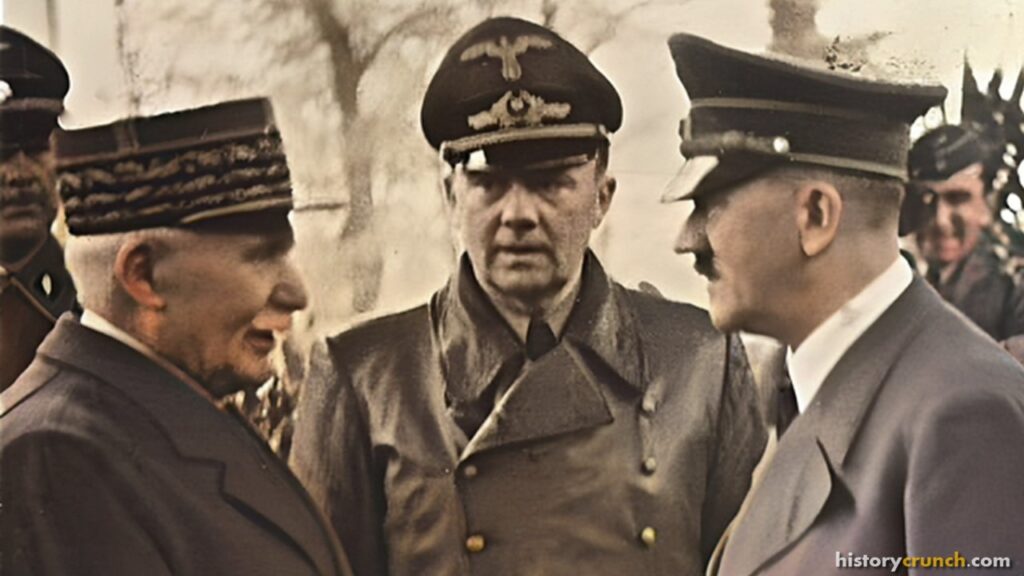
Although Vichy France claimed to protect French interests, it ultimately collaborated with Nazi Germany in important ways. A famous moment came on October 24th, 1940, when Pétain met Adolf Hitler at Montoire-sur-le-Loir, France. Soon afterward, Pétain openly stated that he was entering the path of collaborationWorking together with an enemy occupying power in ways that help that enemy’s goals.. This was significant because Vichy France was no longer simply a defeated government trying to survive. It was increasingly cooperating with Nazi German power directly.
Vichy France kept control over parts of the French administration, police, and colonial empire, but that control came with growing dependence on Nazi Germany. The regime worked with Nazi German authorities in political policing, repression, and economic cooperation.
At first, Vichy France still ruled the unoccupied southern zone with some room to act on its own. That changed after Allied forces landed in North Africa on November 8th, 1942, in Operation Torch. More specifically, on November 11th, 1942, German forces occupied the southern zone as well. Therefore, after late 1942, Vichy France remained in place, but it had even less independence than before.
FactsthatCrunch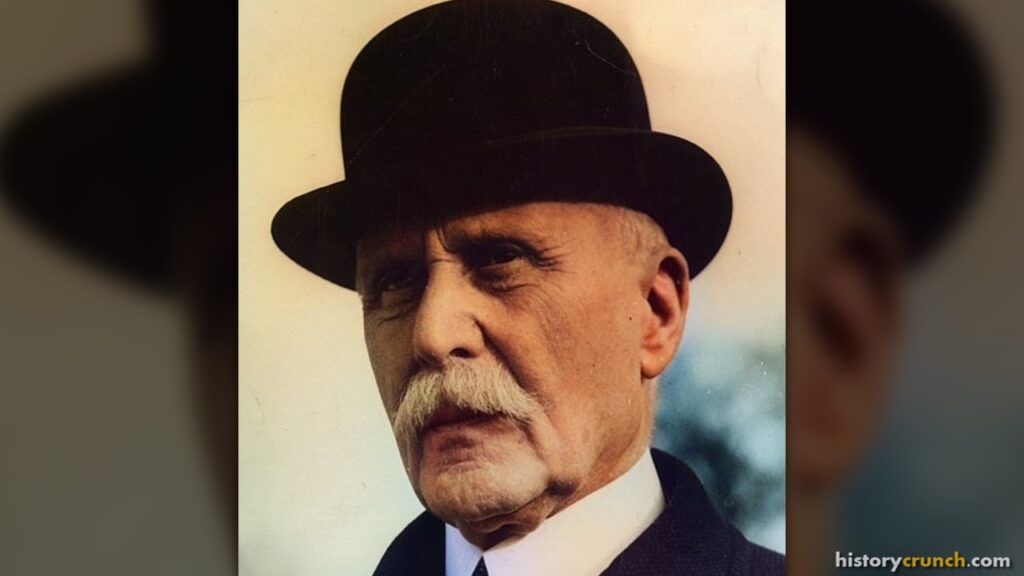
Vichy France – Repression and the Holocaust
One of the darkest parts of Vichy France was its role in anti-Jewish persecution during the events of the Holocaust. For example, the regime passed anti-Semitic laws, removed Jewish people from public life, and helped carry out arrests and deportationsThe forced removal of people from their home country, often to a prison camp or territory controlled by an enemy..
A clear example came in the Vél d’Hiv roundup in Paris, France, on July 16th and 17th, 1942. French police arrested about 13,000 Jewish men, women, and children, and most of those arrested were later deported to Auschwitz, the Nazi concentration camp. The roundup became one of the most infamous events connected to Vichy France because it showed direct French participation in the persecution of the Jews during the Holocaust.
Vichy France also repressed political opponents, supported censorship, and tried to crush resistance. However, it should be noted that not all French people accepted the Vichy France regime. For example, Charles de Gaulle and the Free French movement rejected Vichy’s legitimacyThe right of a government to hold power, as recognized by its own people or by international standards., while resistance networks inside France grew stronger over time.
Vichy France – Fall of Vichy France
The fall of Vichy France came as Allied and Free French forces advanced in 1944. The Normandy Invasion landings on June 6th, 1944, began the liberation of France, which led to increased resistance activity. As Nazi German control weakened, the authority of Vichy France collapsed with it. By August of 1944, the republican government was being restored, and the Vichy regime lost what remained of its power in France.
After liberation, many leading figures of Vichy France were arrested or put on trial. Pétain was later convicted of treason, though his death sentence was commutedOfficially reduced to a lesser punishment, such as changing a death sentence to imprisonment. because of his age and previous World War I record. The legacy of Vichy France remained deeply controversial in France because it raised painful questions about collaboration, responsibility, and the behavior of the French state under occupation.
FactsthatCrunchWhy did German forces occupy the southern zone of France on November 11th, 1942?
Vichy France – Significance
Vichy France was significant because it represented the collapse of democratic republican government in France during World War II and showed how occupation could lead to authoritarian rule and collaboration. It also played an important role in the persecution of Jewish people, the suppression of opponents, and the wider political struggle over the future of France during the war.
Vichy France is also important because its legacy lasted long after 1944. The regime forced France to confront difficult questions about guilt, resistance, and national identity. Historians agree that Vichy France cannot be understood only as a Nazi German creation imposed from outside. It must also be understood as a French regime that made choices of its own during one of the darkest periods of modern European history.
FactsthatCrunch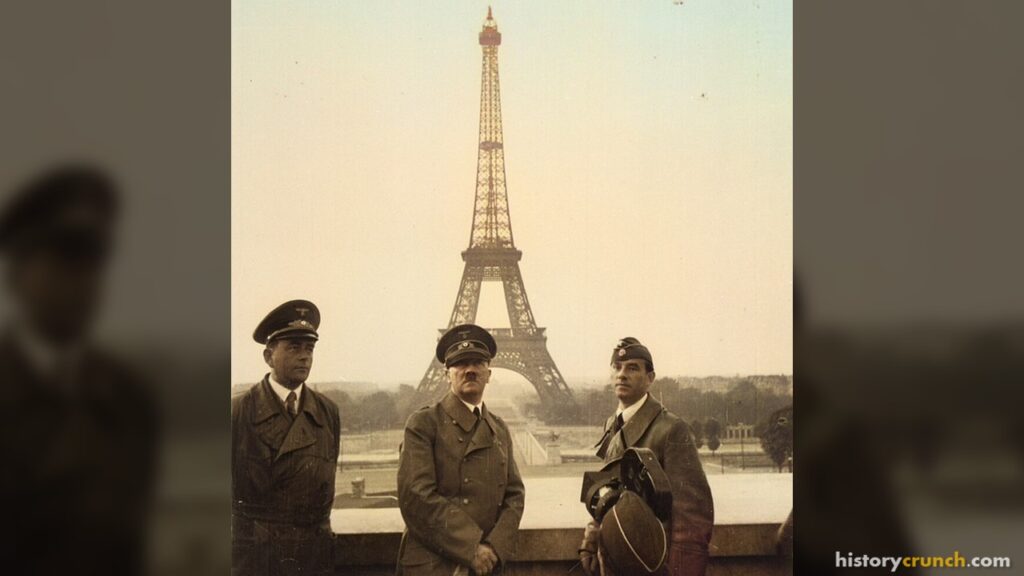 Black & whiteColor
Explore World War II · 1939 – 1945
Keep exploring World War II with these History Crunch resources.
Key Vocabulary
Authoritarian
Armistice
Collaboration
Anti-Semitic
Deportations
Legitimacy
Commuted
Frequently Asked Questions
What was Vichy France?
Vichy France was the authoritarian French government that ruled parts of France from 1940 to 1944. It formed after Nazi Germany defeated France in 1940 and collaborated with the Nazis during World War II. The regime was based in the town of Vichy and led by Marshal Philippe Pétain.
Who led Vichy France?
Marshal Philippe Pétain led Vichy France as its head of state. The French National Assembly granted him full powers on July 10th, 1940, ending the Third Republic. Pétain was a World War I hero, which made many French people trust him at first.
What was the Vél d’Hiv roundup?
The Vél d’Hiv roundup was a mass arrest of Jewish people in Paris on July 16th and 17th, 1942. French police arrested about 13,000 Jewish men, women, and children. Most were later deported to Auschwitz, which showed direct French help in the Holocaust.
How did Vichy France fall?
Vichy France collapsed in 1944 as Allied and Free French forces freed the country. The Normandy Invasion on June 6th, 1944, began the liberation and boosted resistance activity. By August of 1944, the republican government was being restored and the regime lost its power.
Why is Vichy France controversial?
Vichy France is controversial because it was a French regime that chose to collaborate with Nazi Germany. It passed anti-Semitic laws and helped arrest and deport Jewish people during the Holocaust. The regime forced France to face hard questions about guilt, responsibility, and resistance.
Cite This Article
To cite this article as a source, use one of the formats below.
MLA: Millar, B. “Vichy France: A Detailed Summary.” HistoryCrunch, 1 October 2026, https://historycrunch.com/vichy-france/.
APA: Millar, B. (2026). Vichy France: A Detailed Summary. HistoryCrunch. https://historycrunch.com/vichy-france/
Chicago: Millar, B. “Vichy France: A Detailed Summary.” HistoryCrunch. October 1, 2026. https://historycrunch.com/vichy-france/
Sources
- The National WWII Museum
- Max Hastings, Inferno / All Hell Let Loose.
- Gerhard L. Weinberg, A World at Arms.