Philippe Pétain was a French military leader who became famous for his role at Verdun in World War I. He is also remembered for leading Vichy France during World War II, which made him one of the most controversial figures in modern French history because he was seen as collaborating with Nazi Germany during World War II.
 FactsthatCrunch
Pétain rose to national fame by organizing the French defense at the Battle of Verdun in 1916 and restoring order in the French Army after widespread mutinies in 1917, earning him the rank of Marshal of France in November 1918. He later led Vichy France from 1940 to 1944, cooperating with Nazi Germany and issuing anti-Jewish laws starting in October of 1940, which turned his reputation from honored war leader to convicted collaborator.
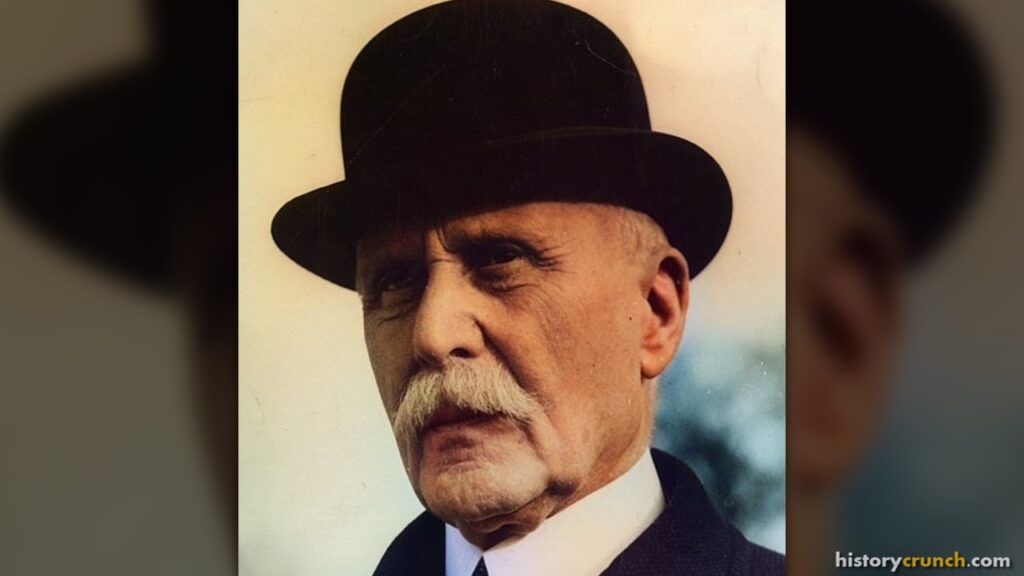
Philippe Pétain – Early Life
Henri Philippe Bénoni Omer Joseph Pétain was born on April 24th, 1856, in Cauchy-à-la-Tour, France. He came from a rural family in northern France, attended military school, and entered the Saint-Cyr Military Academy in 1876. These early experiences placed him on the path toward a long army career.
Pétain’s rise in the army was slow at first. He argued that firepowerThe use of weapons and heavy shooting power to defeat an enemy, rather than charging soldiers forward. and careful defense were more important than reckless infantry attacks, which went against the ideas favored by many French officers before World War I. However, those views later seemed much more practical once modern industrial warfare began.
FactsthatCrunchPhilippe Pétain – Rise in the French Army
When World War I began in August of 1914, Pétain quickly moved upward in command. Within a short time, he rose from brigade command to corps command and gained a reputation as one of France’s more capable senior officers. This was important because it placed him in position for a much larger role later in the war.
A major turning point came in 1916 at the Battle of Verdun. Pétain helped organize the French defense, improved the movement of supplies and reinforcements along the “Voie SacréeThe vital road used to move French supplies and troops to Verdun during the 1916 battle.,” and rotated exhausted soldiers more often than many commanders had done before. Therefore, his leadership at Verdun helped turn him into one of the most admired French generals of the war.
FactsthatCrunchIn 1916, Pétain took charge of the French defense at Verdun, organized the flow of supplies and troops along the Voie Sacrée, and rotated exhausted soldiers more regularly than most commanders had done before.
A capable but not yet famous general, known mainly for his views on firepower and careful defense
Widely admired as one of France's greatest generals, setting the stage for his appointment as commander-in-chief in 1917
Philippe Pétain – World War I
Pétain became even more important in 1917 after the failure of the Nivelle Offensive and the French army mutiniesWhen soldiers refuse to obey orders or rebel against their commanders. that followed. In May of 1917, he became commander-in-chiefThe top military leader with authority over an entire army. of the French Army and worked to restore discipline. He did punish some mutineers, but he also improved leave, food, rest, and military conditions, which helped stabilize the army without causing an even greater crisis.
By the end of World War I, Pétain was widely seen as one of France’s great military leaders. He was made Marshal of France in November 1918, which showed how highly he was regarded after the war. As such, his World War I reputation became the foundation of the authority he still held many years later.
FactsthatCrunchIn May of 1917, Pétain became commander-in-chief of the French Army after the failed Nivelle Offensive triggered widespread mutinies among French soldiers.
Philippe Pétain – Vichy France
After World War I, Pétain remained an important public figure in France and held major military and political posts. However, the most controversial stage of his life began during World War II. After France collapsed under German attack in June of 1940, Pétain became prime minister on June 16th, 1940, and soon afterward became chief of state of the new Vichy regime.
Vichy France ruled from July of 1940 until 1944 and collaborated with Nazi Germany. Under Pétain, the regime accepted authoritarian rule, cooperated with Germany, and issued anti-Jewish laws beginning in October of 1940. This is significant because Pétain’s government was not remembered only for military defeat, but also for helping carry out persecution inside France during the Holocaust era.
Pétain tried to present himself as the protector of France in a moment of disaster, but his wartime legacy became deeply damaged. While some French people at first supported him because of his World War I fame, his cooperation with Nazi Germany and the actions of the Vichy state later caused many people to see him as a symbol of collaborationCooperating with an enemy occupying your country, seen as betrayal by many. rather than national defense.
FactsthatCrunchPhilippe Pétain – Death
After World War II, Pétain was put on trial for treason. The trial lasted from July 23rd, 1945, to August 15th, 1945, and he was convicted and sentenced to death. However, because of his age and his World War I service, the sentence was commutedWhen a harsh legal punishment is officially reduced to something less severe. to life imprisonment.
Philippe Pétain died on July 23rd, 1951, on the Île d’Yeu, where he was serving his prison sentence. His final years reflected how completely his reputation had changed from national hero to condemned collaborator.
FactsthatCrunchPétain's Treason Trial Opens in Paris
On July 23rd, 1945, Philippe Pétain appeared before the French High Court of Justice in Paris, charged with treason for leading Vichy France and cooperating with Nazi Germany during the war. Pétain delivered an opening statement denying the court's right to judge him, then remained largely silent throughout the proceedings. The jury of 24 members was drawn equally from French parliamentarians and Resistance veterans, and the prosecution was led by Attorney General André Mornet.
Philippe Pétain – Significance
Philippe Pétain was significant because his life shows one of the sharpest reversals in modern European history. He helped save French resistance at Verdun in World War I and became one of the most honored soldiers in France, yet he later led Vichy France and became tied to collaboration, repression, and national humiliation in World War II.
At the same time, Pétain remains one of the most controversial figures in French history. Some people remember the military hero of 1916, while others focus on the Vichy leader of 1940 to 1944. Regardless, Philippe Pétain is important to study because his career shows how a celebrated war leader could later become associated with one of the darkest chapters in France’s modern past.
FactsthatCrunchHow do people remember Philippe Pétain differently depending on which part of his life they focus on?
Explore World War I
Keep exploring World War I with these History Crunch resources.
Key Vocabulary
Firepower
Voie Sacrée
Mutinies
Commander-in-chief
Authoritarian
Collaboration
Commuted
Frequently Asked Questions
Why is Philippe Pétain famous for the Battle of Verdun?
Pétain became a national hero for organizing France’s defense at Verdun in 1916. He improved the flow of supplies and troops along the road known as the “Voie Sacrée.” He also rotated tired soldiers more often, which helped the army hold the line during a long and brutal battle.
What was Vichy France and what role did Pétain play?
Vichy France was the government that ruled part of France from July of 1940 until 1944 after Germany defeated the country. Pétain served as its chief of state and led a regime that cooperated with Nazi Germany. His government also passed anti-Jewish laws starting in October of 1940.
Why is Pétain considered a controversial figure?
Pétain is controversial because his reputation changed from honored hero to condemned collaborator. He saved French resistance at Verdun, yet he later led a government tied to repression and persecution. People still debate whether to remember the soldier of 1916 or the Vichy leader of 1940 to 1944.
What happened to Pétain after World War II?
Pétain was put on trial for treason in the summer of 1945 and convicted. He was sentenced to death, but the sentence was changed to life in prison because of his age and his World War I service. He died on July 23rd, 1951, while imprisoned on the Île d’Yeu.
How did Pétain help the French army during World War I?
Pétain became commander-in-chief in May of 1917 and worked to restore order after widespread army mutinies. He punished some mutineers but also improved leave, food, and rest for soldiers. This balanced approach helped stabilize the army without triggering a larger crisis, and he was named Marshal of France in 1918.
Cite This Article
To cite this article as a source, use one of the formats below.
MLA: Millar, B. “Philippe Pétain: A Detailed Biography.” HistoryCrunch, 1 October 2026, https://historycrunch.com/philippe-petain/.
APA: Millar, B. (2026). Philippe Pétain: A Detailed Biography. HistoryCrunch. https://historycrunch.com/philippe-petain/
Chicago: Millar, B. “Philippe Pétain: A Detailed Biography.” HistoryCrunch. October 1, 2026. https://historycrunch.com/philippe-petain/
Sources
- Imperial War Museum
- Fordham Modern History Sourcebook
- John Keegan, The First World War.