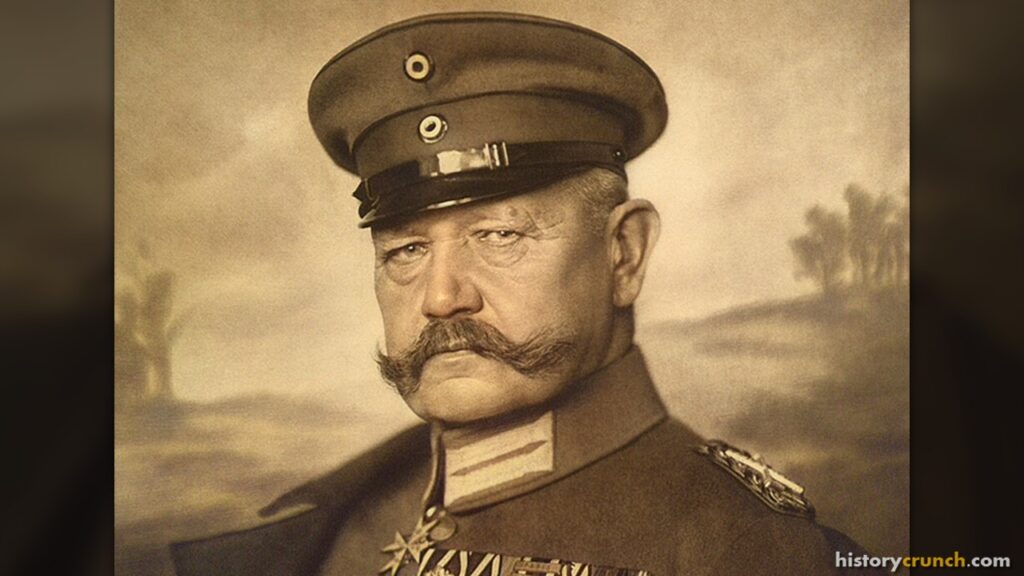
Paul von Hindenburg was a German military leader and statesmanA senior political leader who plays an important role in running a country’s government. who played a major role in both World War I and the final years of the Weimar Republic. He was born on October 2nd, 1847 in Posen, Prussia, and he later became one of the most famous German commanders of the First World War before serving as President of Germany from May 12th, 1925 to August 2nd, 1934. Hindenburg is remembered both for his military reputation and for his political decisions during the years before Adolf Hitler took full control of Germany.
 FactsthatCrunch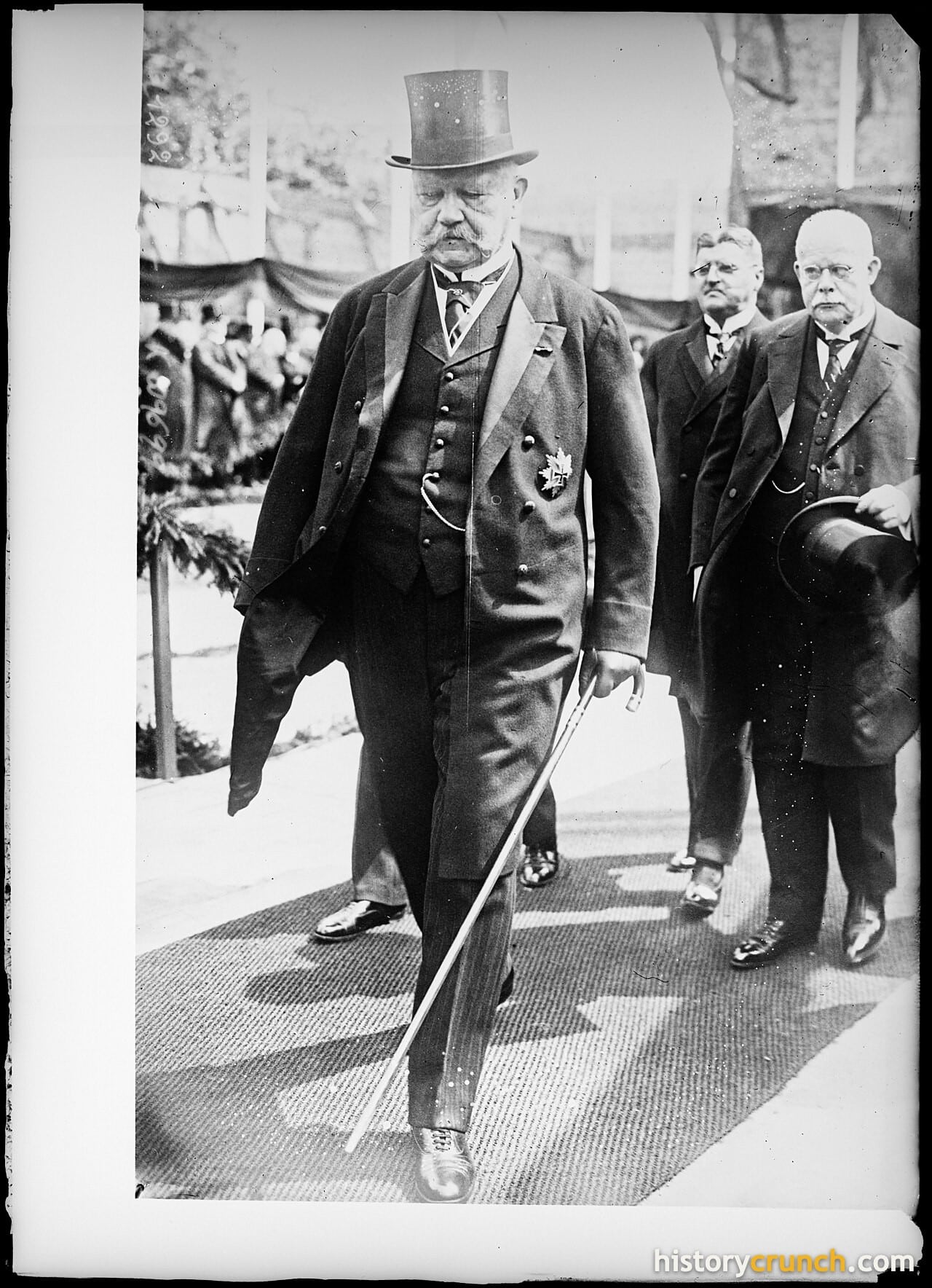
Paul Von Hindenburg – Early Life
Paul von Hindenburg was born as Paul Ludwig Hans Anton von Beneckendorff und von Hindenburg on October 2nd, 1847. He came from a Prussian military family and entered army service while he was still young. As a result, his long military career began well before World War I, and he served in the Austro-Prussian War of 1866 and the Franco-Prussian War of 1870 to 1871. Therefore, by the time the 20th century began, Hindenburg had already spent decades inside the Prussian and German military tradition. Hindenburg retired from the army in 1911, but that retirement did not last. When World War I began in August of 1914, he was called back into service.
FactsthatCrunchAs a young Prussian officer, Hindenburg stood in the Hall of Mirrors at Versailles in January 1871 when the German Empire was proclaimed, after fighting in both the Austro-Prussian War and the Franco-Prussian War.
He came from a Prussian military family and spent more than forty years in the army before retiring in 1911. World War I brought him back, and within weeks he was a national hero after Tannenberg.
Paul Von Hindenburg – World War I
Hindenburg first became famous during the opening stages of World War I on the Eastern Front. From August 26th to August 30th, 1914, German forces under Paul von Hindenburg and Erich Ludendorff defeated the Russian army at the Battle of Tannenberg in East Prussia. The battle was a major German victory, and Russian losses were devastating. This was a turning point in Hindenburg’s public reputation, since it transformed him into a national hero inside of Germany. In fact, the Battle of Tannenberg was likely the most significant battle on the Eastern FrontThe zone of fighting in World War I between Germany and Russia in eastern Europe. of World War I.
Hindenburg’s military importance grew even further as the war continued. For instance, on November 27th, 1914, he was promoted to field marshalThe highest rank an officer can hold in the German army., and in August of 1916 he took over Germany’s top military command. By 1916, he and Ludendorff effectively controlled much of Germany’s war effort, while Kaiser Wilhelm II became far less important in practical military decision-making. This is significant in a specific way, because it shows that Hindenburg was no longer only a battlefield commander. He had become one of the central decision-makers in wartime Germany, and played an important role in German political and social life.
By 1916, what did Hindenburg and Ludendorff effectively control in Germany?
Paul Von Hindenburg – President of Germany
After World War I ended in November of 1918, Germany experienced revolution, the fall of the monarchy, and the creation of the Weimar Republic. Furthermore, in 1925, after the death of Friedrich Ebert, Hindenburg was elected president of Germany and took office on May 12th, 1925. This is important because many conservative Germans trusted Hindenburg as a respected war hero, and his election gave the Weimar RepublicThe democratic government that ruled Germany from 1919 until Hitler took power in 1933. a president who symbolized the old imperial and military traditions.
Hindenburg remained president during some of the most unstable years in modern German history. For instance, he governed through a period that included political violence, the weakening of parliamentary government and the deep crisis caused by the outbreak of the Great Depression in 1929. As conditions worsened, extremist parties gained support, including the Nazi Party under the leadership of Adolf Hitler.
As a result, Hindenburg is most often remembered today for his connection to Adolf Hitler’s rise to power. During the early 1930s, Germany faced repeated political deadlock, and Hindenburg relied increasingly on appointed chancellors rather than stable parliamentary majorities. In the presidential election of March and April of 1932, Hindenburg, then 84 years old, defeated Hitler in the second round with 53 percent of the vote to Hitler’s 37 percent. That July, the Nazis became the largest party in the ReichstagThe national parliament of Germany that made laws during the Weimar Republic period., which increased the pressure on Hindenburg to work with Hitler in some way. On August 13th, 1932, Hindenburg refused Hitler’s demand to be made chancellor with full powers, and it took another five months of political deadlock and backroom deals to change his mind.
Finally, on January 30th, 1933, Hindenburg appointed Adolf Hitler as Chancellor of Germany. He did so as part of a coalition arrangement in which conservative elites believed Hitler could be controlled. This decision was one of the most important political choices in modern German history, because it gave Hitler legal access to the powers of the German state and ultimately led to the rise to power of the Nazi Party in Germany.
In fact, only weeks later, after the Reichstag Fire on February 27th, 1933, Hindenburg approved the Reichstag Fire Decree, which suspended major civil liberties in Germany. Then, on March 23rd, 1933, he signed the Enabling Act, which allowed Hitler and his cabinet to make laws without the normal participation of the Reichstag. Therefore, although Hindenburg did not create Nazism, his actions in 1933 helped destroy the democratic system he had been elected to protect and created the conditions for the establishment of the Nazi regime that would eventually carry out the events of World War II and the Holocaust.
Paul Von Hindenburg – Death
Paul von Hindenburg died on August 2nd, 1934 at the age of 86. By the time of his death, Hitler had already weakened German democracy and consolidated much of his authority. In fact, instead of holding a new presidential election, Hitler’s government merged the offices of president and chancellor. This resulted in Hitler becoming both head of government and head of state under the title Führer und ReichskanzlerThe title Hitler took after Hindenburg’s death, meaning he was both head of state and head of government..
The timing of Hindenburg’s death was politically crucial. While he had not stopped Hitler in 1933, his office still represented a separate source of constitutional authority in Germany. Once Hindenburg died, that final barrier disappeared. This is significant because Hitler no longer had to share formal state authority with any other national figure. As such, Hindenburg’s death represented the final stage in Hitler’s rise to power and set the stage for the atrocities of Nazi Germany.
FactsthatCrunchTap each impact to read what it led to.
Paul Von Hindenburg – Significance
Paul von Hindenburg was important for two main reasons. First, he was one of Germany’s most famous military leaders of World War I, especially after the Battle of Tannenberg in August of 1914. Second, he was the president whose decisions helped open the way for Adolf Hitler’s fascist dictatorship. These two roles make Hindenburg a key figure in understanding how Germany moved from Imperial rule to democratic instability and then to Nazi rule.
Overall, Hindenburg was at the center of several major turning points in modern German history. His military fame made him a symbol of German strength, but his presidency ended with the collapse of the Weimar Republic and the rise of Hitler. Therefore, Hindenburg remains one of the most important and controversial figures in the history of 20th century Germany.
FactsthatCrunchOn January 30th, 1933, President Paul von Hindenburg appointed Adolf Hitler as Chancellor of Germany as part of a coalition arrangement in which conservative elites believed Hitler could be controlled. This gave Hitler legal access to the powers of the German state.
Political deadlock, repeated failed governments, and Nazi pressure after the party became the largest in the Reichstag in July 1932
Within weeks, civil liberties were suspended, and the Enabling Act of March 23rd, 1933 allowed Hitler to make laws without the Reichstag
Explore World War I
Keep exploring World War I with these History Crunch resources.
Key Vocabulary
Statesman
Eastern Front
Field marshal
Weimar Republic
Reichstag
Enabling Act
Führer und Reichskanzler
Frequently Asked Questions
Why did Paul von Hindenburg appoint Adolf Hitler as chancellor?
Hindenburg appointed Hitler chancellor on January 30th, 1933, as part of a coalition deal. Conservative elites around Hindenburg believed they could control Hitler once he held office. The Nazis had become the largest party in the Reichstag, which added pressure to include them in government. This choice gave Hitler legal access to the powers of the German state.
What was the Battle of Tannenberg?
The Battle of Tannenberg was a major German victory over Russia in East Prussia during World War I. German forces under Hindenburg and Erich Ludendorff won it between August 26th and August 30th, 1914. Russian losses were devastating, and the win made Hindenburg a national hero. It was likely the most important battle on the Eastern Front.
Did Hindenburg ever defeat Hitler in an election?
Yes, Hindenburg defeated Hitler in the presidential election of March and April of 1932. In the second round he won 53 percent of the vote to Hitler’s 37 percent, at the age of 84. Even so, the Nazis became the largest party in the Reichstag that July. Political deadlock soon pushed Hindenburg toward working with Hitler.
How did Hindenburg’s death help Hitler gain full power?
Hindenburg’s death on August 2nd, 1934, removed the last separate source of state authority in Germany. His office still stood apart from the chancellor under the constitution. Instead of holding a new election, Hitler’s government merged the offices of president and chancellor. Hitler then ruled as both head of state and head of government with the title Führer und Reichskanzler.
What role did Hindenburg play in World War I?
Hindenburg rose from battlefield commander to one of Germany’s top wartime leaders. He was called back from retirement in August of 1914 and won fame at Tannenberg. He became a field marshal on November 27th, 1914, and took over Germany’s top military command in August of 1916. By then he and Ludendorff controlled much of the war effort, while the Kaiser lost influence.
Cite This Article
To cite this article as a source, use one of the formats below.
MLA: Millar, B. “Paul von Hindenburg: A Detailed Biography.” HistoryCrunch, 1 October 2026, https://historycrunch.com/paul-von-hindenburg/.
APA: Millar, B. (2026). Paul von Hindenburg: A Detailed Biography. HistoryCrunch. https://historycrunch.com/paul-von-hindenburg/
Chicago: Millar, B. “Paul von Hindenburg: A Detailed Biography.” HistoryCrunch. October 1, 2026. https://historycrunch.com/paul-von-hindenburg/
Sources
- Hew Strachan, The First World War.
- Imperial War Museum