Serfdom is the term used to describe the social status of most peasants under feudalism in the Middle Ages. Furthermore, serfdom is an important concept in relation to the Manor System in western Europe during the same timeframe. More specifically, it occurred from the High Middle Ages until the mid-19th century. With that said, serfdom became increasingly rare as a social system through both the Black Death and Renaissance in the 14th and 15th centuries.
Serfdom – What Was It?
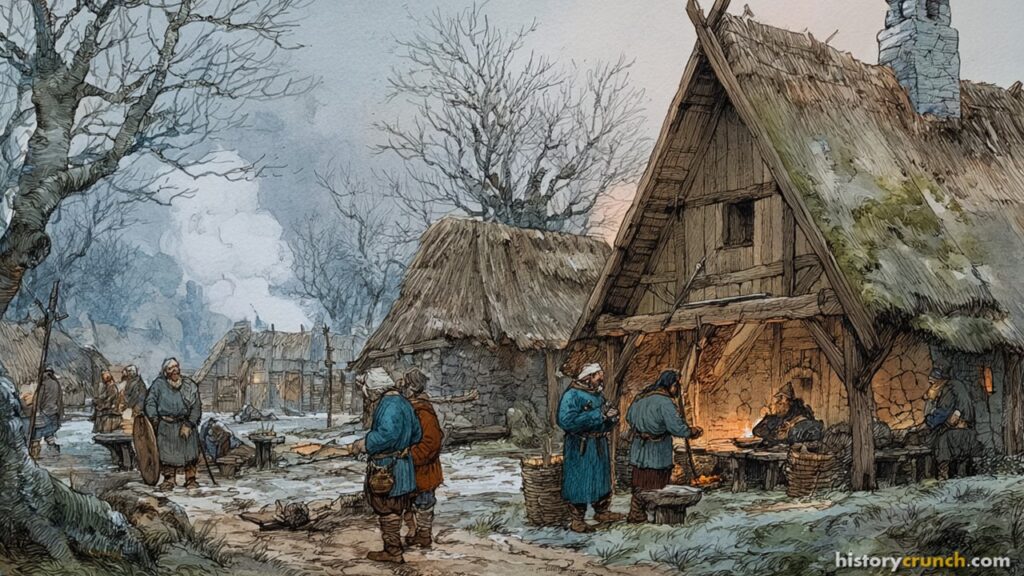
In general, serfdom was a form of debt-bondageA system where a person is forced to work for someone else to repay a real or assumed debt, like a form of slavery. (a type of slavery) meaning the serfs (peasants) were forced to live and work for a lord of the manor under the Manor SystemThe economic and social arrangement in medieval Europe where a lord controlled an estate and the peasants who lived and worked on it.. As such, the serfs often spent their time working in the fields of the lord’s lands. This was to produce agricultural products for the lord of the manor, while also producing food for their own subsistenceProducing just enough food to feed oneself or one’s family, with nothing left over to sell or trade.. Serfs were also required to do other work as needed, including: constructing roads, working in mines and completing tasks in the forests.
The Manor System during the Middle Ages formed the basic unit of European society at the time. It caused the lord of the manor and the serfs within the lands of the manor to be bound together socially and economically. For instance, in exchange for living and working on the lands of the manor, serfs received protection and justice from the lord. This highlights the ‘bondage’ portion of serfdom. For example, the essence of serfdom was the connection between the serf and the lord. For example, each owed the other a debt (work, land, protection, etc.) and the relationship created a social cohesion in European society.
To be clear, serfs did not own or have title to the lands on which they lived and worked. Instead, they were bound to the lands that were controlled by the lord of the manor. If the lord decided to sell or exchange the land to another lord, the serf remained on the land and instead served a new lord. While a serf in Medieval Europe was not necessarily considered a slave, they lacked certain protections and freedoms that most people today enjoy. Still serfs could not be bought and sold by the lords but were essentially tied to the land on which they worked.
 FactsthatCrunch
Medieval serfs owned the land they lived and worked on.
Serfdom – How Did Someone Become a Serf?
Serfdom was one of several classes in Medieval European society, which included others, such as: lord of the manor, freemen, villeinThe most common type of serf in western Europe, who rented a home from a lord and worked the lord’s fields seasonally., knight, and slave. Serfs were only above slaves on this system and often lacked prestige or power in European society at the time. As a result, the standard of living for serfs was low and they experienced difficult and tiring lives. Serfs were considered peasants in medieval society. Another type of peasant at the time was freemen. Freemen were peasants who lived and worked on the land of a lord but were not bound by the same rules or obligations as a serf. For instance, freemen were known to pay rent to the lord instead of owing a debt of service.
A person became a serf in medieval society usually through force or out of economic necessity. More specifically, sometimes lords pressured local people into serfdom in order to gain control over a specific region. Other times, people gave up their status as freemen to become serfs due to economic hardship. For instance, if a freeman in the Middle Ages experienced several years of poor harvests it could potentially force them into serfdom with a local lord. Regardless, some people sought out the status as a serf because the lord offered his serfs protection against attack.
FactsthatCrunchSerfdom – Types
There were several different types of serfs in the Middle Ages, including: villein, bordarsA lower rank of serf, mainly in medieval England, given only a very small plot of land, typically 1 to 5 acres., cottagers, and slaves. Villeins were the most common type of serfs in western Europe during the Middle Ages. They generally had more rights and privileges than other forms of serfdom at the time. Essentially, villein serfs rented homes from the lord of the manor (with or without attached lands) and were required to assist by completing service in the fields of the manor. The work required of the villein serfs was generally seasonal and focused around harvest in the fall and seeding in the spring. The remainder of their time was generally spent working on the lands set aside for them by the lord such that they could generate food for themselves.
Below villein were ‘bordars’ and ‘cottagers’. The terms were sometimes interchangeable and were most commonly used in medieval England. These serfs were generally similar to the villein in that they lived and worked on the lands of the lord of the manor but bordars and cottagers were given much smaller sections of land in which to work. For example, the cottages on the manor were usually built on 1 to 5 acres of land, which was only enough land to feed a family.
Below the bordars and cottagers in the social hierarchyA ranked ordering of groups in society from most powerful at the top to least powerful at the bottom. of the Middle Ages were slaves. Because of their status, slaves had the least amount of rights and privileges in the Manor System. In general, slaves were treated poorly by the lord of the manor and lacked the rights to the land of the other serfs. With that said, slavery was rare throughout the Middle Ages.
FactsthatCrunchVilleins were the most common type of serf in western Europe during the Middle Ages.
Serfdom – History
Serfdom as a system, was prevalent throughout much of Europe in the Middle Ages. It combined with the Manor System and Feudalism to create a social hierarchy in medieval European society. It was closely linked to the agricultural output of the time while also creating a class system in which each person had a specific role to complete. Serfdom remained in western Europe only until about the 15th century. At the time, both the Black Death and the advent of the Renaissance caused serfdom to decline. More specifically, the Black Death led to the end of serfdom because it caused people to abandon their traditional lands as they sought to escape the spread of the plague. This caused upheaval and unrest in medieval society and tore apart the traditional social frameworks of the Middle Ages. The Renaissance furthered the decline of serfdom in western Europe because it promoted humanistRelating to a set of values, spread during the Renaissance, that placed importance on human dignity and challenged traditional medieval ideas. values which challenged the traditional ideas and views of society. With that said, serfdom spread and remained in eastern Europe until much later in history. For example, serfdom remained in Russia until the 19th century and its lingering effects played a significant role in the outbreak of the Russian Revolution at the start of the 20th century.
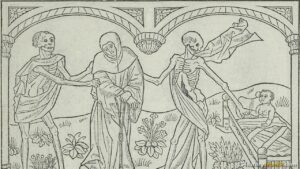
FactsthatCrunchAs the plague spread through Europe in the mid-14th century, serfs abandoned their traditional lands to escape the disease. This mass movement broke apart the social bonds that held the Manor System together and left lords unable to enforce the old rules of serfdom.
Serfs were bound to the land, obligated to work for lords in exchange for protection
Serfdom faded in western Europe by approximately the 15th century as the old order collapsed
Serfdom – Significance
Serfdom in the Middle Ages was highly significant for the lives of the people that lived through it. For instance, serfdom was a central aspect of the economy in Medieval Europe and was the main system that controlled food production, labor, and resources that supported the rest of society. Without serfs, the Manor System would not have functioned, as it was responsible for producing the crops and goods needed to sustain both peasants and the nobility. Serfdom also provided social stability during a time of constant warfare and political upheaval in Medieval Europe. This is because it tied people to the land and to their local communities, ensuring that manors were self-sufficient even when trade and communication were limited. Finally, the system of serfdom reinforced the social hierarchy of the Middle Ages in Europe, wherein everyone had a defined role.
FactsthatCrunchSerfdom was central to the medieval economy, controlling food production, labor, and resources across Europe for centuries.
Without serf labor, the Manor System could not produce the crops and goods that fed both peasants and the nobility.
Serfs farmed the lord's fields and also grew their own food, which kept manors self-sufficient even when long-distance trade was limited.
By tying workers to the land, serfdom gave manors a reliable, year-round workforce for plowing, harvesting, road building, and mining.
When the Black Death pushed serfs to flee their lands in the 14th century, the loss of that labor force cracked the entire economic system of medieval Europe.
Explore Middle Ages · 476 – 1500 CE
Keep exploring Middle Ages with these History Crunch resources.
Key Vocabulary
Debt-bondage
Manor System
Subsistence
Villein
Bordars
Humanist
Social hierarchy
Frequently Asked Questions
What was serfdom in the Middle Ages?
Serfdom was a form of debt-bondage that forced peasants to live and work for a lord of the manor. Serfs farmed the lord’s fields and also grew food for themselves. In return, they received protection and justice from the lord. This two-way bond was the heart of the system.
Were serfs the same as slaves?
No, serfs were not the same as slaves, though both lacked many freedoms. Serfs could not be bought or sold by lords, but they were tied to the land they worked. Slaves ranked below serfs and held the fewest rights of all. Slavery itself was rare during the Middle Ages.
How did someone become a serf?
People usually became serfs through force or out of economic need. Lords sometimes pressured locals into serfdom to gain control of a region. Other times, freemen gave up their status after years of poor harvests left them desperate. Some chose serfdom because the lord offered protection against attack.
What were the different types of serfs?
The main types of serfs were villeins, bordars, cottagers, and slaves. Villeins were the most common and held the most rights, renting homes and working the lord’s fields. Bordars and cottagers worked much smaller plots, often just 1 to 5 acres. Slaves ranked lowest and had the fewest rights of all.
Why did serfdom decline in western Europe?
Serfdom declined in western Europe by about the 15th century due to the Black Death and the Renaissance. The plague pushed people to flee their lands, which broke apart the old social order. The Renaissance spread humanist values that challenged traditional views of society. In eastern Europe, however, serfdom lasted far longer.
How long did serfdom last in Russia?
Serfdom remained in Russia until the 19th century, much longer than in western Europe. Its lingering effects left deep anger among the lower classes. These tensions helped spark the Russian Revolution at the start of the 20th century. The long delay set eastern Europe apart from the west.
Cite This Article
To cite this article as a source, use one of the formats below.
MLA: Beck, Elias. “Serfdom: A Detailed Summary.” HistoryCrunch, 14 October 2026, https://historycrunch.com/serfdom/.
APA: Beck, E. (2026). Serfdom: A Detailed Summary. HistoryCrunch. https://historycrunch.com/serfdom/
Chicago: Beck, Elias. “Serfdom: A Detailed Summary.” HistoryCrunch. October 14, 2026. https://historycrunch.com/serfdom/
Sources
- Jacques Le Goff, Medieval Civilization 400-1500.
- Fordham Medieval Sourcebook