Japanese-American InternmentForced confinement of a group of people, usually during wartime, in guarded camps away from their homes. in World War II was one of the most controversial events in American history. During World War II, the United States government forcibly relocated over 120,000 Japanese-Americans, including many who were citizens, into internment camps. The government was prompted to do this following the Japanese attack on Pearl Harbor in 1941. Despite no evidence of disloyalty, Japanese-Americans endured discrimination, loss of property, and significant other hardships.

Japanese-American Internment – Background
Japanese-Americans are American citizens who are of Japanese heritage. As such, it’s important to consider the history of Japanese immigration into the United States. In fact, Japanese immigration to the United States began to grow significantly in the late 19th century. Many of the Japanese immigrants arrived in the United States in search of economic opportunities. Many of the early Japanese immigrants settled along the west coast of the United States in regions, such as: California, Oregon and Washington. Many also settled in Hawaii.
Japanese immigrants often faced anti-Asian sentiment, which was made worse by fears of economic competition and racial prejudice. For instance, Japanese-Americans were often confined to segregated neighborhoods and were barred from many public facilities and social organizations. Despite this, Japanese-Americans made significant contributions to American society, especially in relation to agriculture and small businesses.
World War II in Europe began on September 1st, 1939 when Nazi Germany invaded the country of Poland. However, the United States did not participate in the fighting until 1941, when it was surprise attacked by the Japanese Imperial Navy. More specifically, the Japanese attack on Pearl Harbor occurred on December 7th, 1941 and caused the United States to immediately join the war effort on the side of the Allied nations. The attack on Pearl Harbor drastically heightened fears among the American public against Japanese-Americans. In fact, due to fear among the American public and paranoia that Americans of Japanese ancestry would remain loyal to Japan, Japanese-Americans were relocated and interned during the remainder of the war.
FactsthatCrunchJapanese-American Internment – Summary
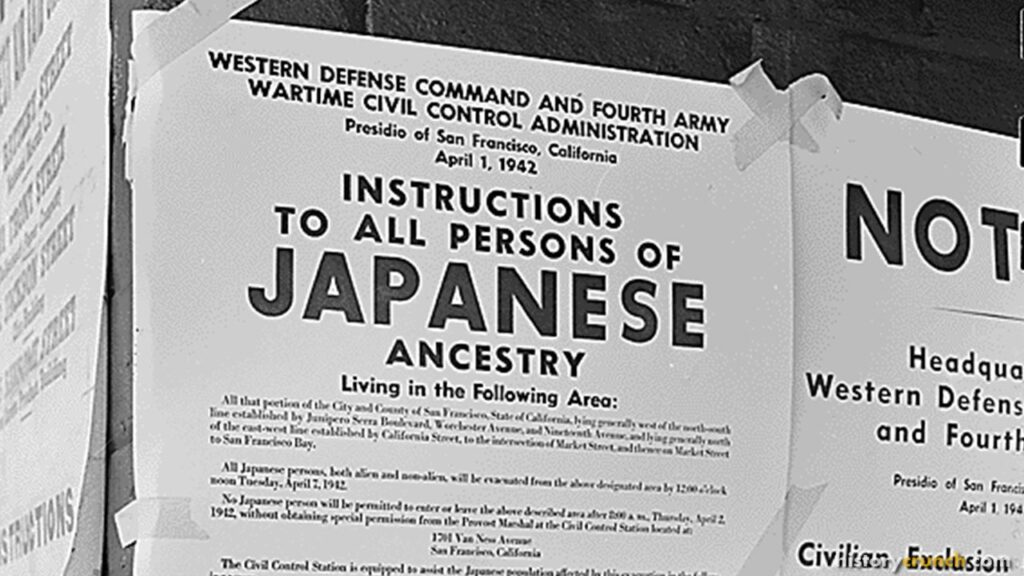
Internment means that Japanese-Americans were removed from their homes and property and forced into guarded camps. For instance, on February 19th, 1942, President Franklin D. Roosevelt signed Executive Order 9066A presidential directive signed in 1942 giving the Secretary of War power to remove people deemed threats to national security., which authorized the Secretary of War to remove individuals deemed ‘threats to national security’. Though the order did not mention specific ethnicities, it was used almost exclusively against those of Japanese descent. As such, the executive order essentially forced the relocationThe forced movement of Japanese-Americans from their homes on the west coast to camps in the interior of the country. of Japanese-Americans to the interior of the country and forced them to live in internment camps.
These families were forced to sell their land, homes and possessions at a loss and move to the camps. In fact, some families were given less than 48 hours to sell their possessions. Also, they were forced to only bring with them what they could carry themselves. This meant the Japanese-Americans were forced to sell or abandon much of their property and possessions.
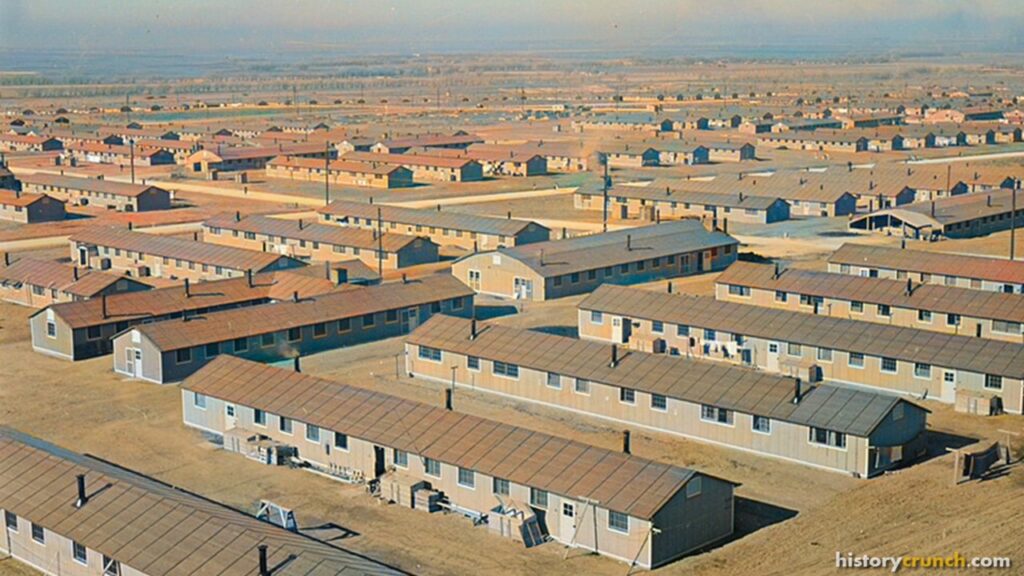
There were ten main internment camps and they were located in remote areas in states such as: California, Arizona, Idaho, Wyoming, Colorado, Utah, and Arkansas. These ten main camps included: Manzanar and Tule Lake (California), Granada (Colorado), Jerome and Rohwer (Arkansas), Minidoka (Idaho), Heart Mountain (Wyoming), Topaz (Utah) and Gila River and Poston (Arizona). It should be noted that these were just the internment camps. There were also numerous other ‘assembly’ centers, where Japanese-Americans were detained while en route to the internment camps.
Life in the camps was difficult. Japanese-American families were forced to live in small, poorly constructed barracksCheaply built military-style housing units where internees were forced to live, with thin walls and little insulation. that resembled military-style housing. The barracks had little to no insulation from the temperatures. As such, the buildings were hot in the summer and freezing in the winter. As well, the buildings were built so cheaply, that the thin walls and communal bathrooms meant that there was little privacy.
The camps were controlled by armed guards and the Japanese-American people were kept behind barbed-wire fences. The people were not allowed to leave for fear that they would act out against the United States. The daily routine for the Japanese-Americans often centered on work. For instance, residents could take paid camp jobs, often performing labor, such as: cooking, farming, or maintenance. Food and health care were generally lacking.
Despite the challenges in the camps, the Japanese-American people fostered a sense of community by establishing schools, churches, and more. Schools were established for children, staffed by both internees and government-assigned teachers. However, resources were limited and conditions poor.
By late 1944, as the balance of power in World War II turned in favor of the Allies, the United States government began closing the internment camps. For instance, in December of 1944, the exclusion ordersGovernment rules that restricted Japanese-Americans from certain areas; ending these in December 1944 allowed internees to return home. were ended, and Japanese-American internees were allowed to return to their homes. However, many found their property stolen, homes vandalized, or businesses ruined. While the last internment camp, Tule Lake, closed in March of 1946, the impacts left on the Japanese-American community were profound and lasting.
Japanese-American Internment – Significance
The internment of Japanese-Americans during the events of World War II was a highly significant event and is still studied today. First, this period of internment had a profound impact on the lives of Japanese-Americans. For example, they lost homes, businesses, and economic opportunities. Many had to start over completely after the war, while also facing ongoing racism and economic hardship. In fact, the hardships faced by Japanese-Americans eventually led to a period of reconciliationA process of acknowledging and attempting to make up for past wrongs done to a group of people. in American society, as modern populations struggled to handle historical wrongs. Eventually in 1988, the United States Congress apologized for the event and compensated each survivor $20,000. More specifically, President Ronald Reagan signed the Civil Liberties ActA 1988 law signed by President Reagan that formally apologized for the internment and paid each survivor $20,000., which offered a formal apology and provided financial compensation. The Civil Liberties Act stated that the internment was based on “race prejudice, war hysteria, and a failure of political leadership.”
Another important significance of the internment of Japanese-Americans during World War II, was the implications it had for rights and freedoms. In particular, the internment of Japanese-Americans during World War II remains a dark chapter in the United States since it went against the democratic rights and freedoms that the country holds. For instance, the internment stands as an example of constitutional rights being suspended based on race or ethnicity. Japanese-Americans were punished without ever having been found guilty of committing a crime. They had little or no legal recourse and were denied the rights that should have been guaranteed to them by the constitution. Today, the story of Japanese-American internment is taught widely as a critical lesson about the importance of protecting minority rights, even during national crises.
FactsthatCrunchthese actions were carried out without adequate security reasons and without any acts of espionage or sabotage documented by the Commission, and were motivated largely by racial prejudice, wartime hysteria, and a failure of political leadership.
United States Congress · Washington, D.C. · August 10th, 1988
These words come from the Civil Liberties Act of 1988, the law in which the United States government formally apologized for forcing Japanese-Americans from their homes into guarded camps during World War II. The law stated plainly that the internment was driven by prejudice and fear, not by any real military need, since no acts of spying or sabotage were ever documented. President Ronald Reagan signed the act on August 10th, 1988, and it paid $20,000 to each surviving internee.
Explore World War II · 1939 – 1945
Keep exploring World War II with these History Crunch resources.
Key Vocabulary
Internment
Executive Order 9066
Relocation
Barracks
Exclusion orders
Civil Liberties Act
Reconciliation
Frequently Asked Questions
Why were Japanese-Americans placed in internment camps?
Japanese-Americans were placed in camps because of fear and suspicion after the attack on Pearl Harbor on December 7th, 1941. The government worried that they might stay loyal to Japan, though no evidence of disloyalty was ever found. This fear was fueled by racial prejudice that had existed for decades. Over 120,000 people were forced from their homes as a result.
What was Executive Order 9066?
Executive Order 9066 was signed by President Franklin D. Roosevelt on February 19th, 1942. It allowed the Secretary of War to remove people considered threats to national security from certain areas. The order did not name any group, but it was used almost entirely against people of Japanese descent. It became the legal basis for the forced relocation.
What were conditions like inside the camps?
Conditions in the camps were harsh and uncomfortable for the families held there. People lived in small, cheaply built barracks with thin walls and little insulation. The buildings were hot in summer and freezing in winter, and shared bathrooms left almost no privacy. Armed guards and barbed-wire fences surrounded the camps, and food and health care were often lacking.
How many internment camps were there and where were they?
There were ten main internment camps, all built in remote areas away from the west coast. They included Manzanar and Tule Lake in California, Granada in Colorado, and Jerome and Rohwer in Arkansas. Others were Minidoka in Idaho, Heart Mountain in Wyoming, Topaz in Utah, and Gila River and Poston in Arizona. Separate assembly centers also held people before they reached the main camps.
Did the United States ever apologize for the internment?
Yes, the United States formally apologized in 1988 when President Ronald Reagan signed the Civil Liberties Act. The law gave each surviving internee $20,000 in compensation. It also stated that the internment resulted from race prejudice, war hysteria, and a failure of political leadership. The apology came more than 40 years after the last camp closed in 1946.
Cite This Article
To cite this article as a source, use one of the formats below.
MLA: Woida, K.L. “Japanese-American Internment in World War II: A Detailed Summary.” HistoryCrunch, 1 October 2026, https://historycrunch.com/japanese-american-internment-in-world-war-ii/.
APA: Woida, K. L. (2026). Japanese-American Internment in World War II: A Detailed Summary. HistoryCrunch. https://historycrunch.com/japanese-american-internment-in-world-war-ii/
Chicago: Woida, K.L. “Japanese-American Internment in World War II: A Detailed Summary.” HistoryCrunch. October 1, 2026. https://historycrunch.com/japanese-american-internment-in-world-war-ii/
Sources
- The National WWII Museum
- Gerhard L. Weinberg, A World at Arms.
- Max Hastings, Inferno / All Hell Let Loose.
- Imperial War Museum