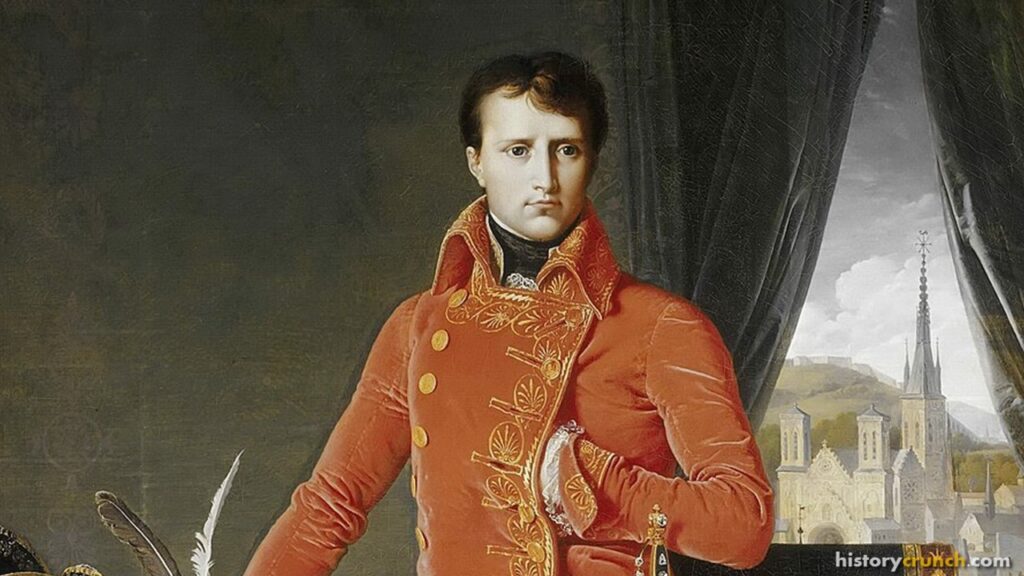
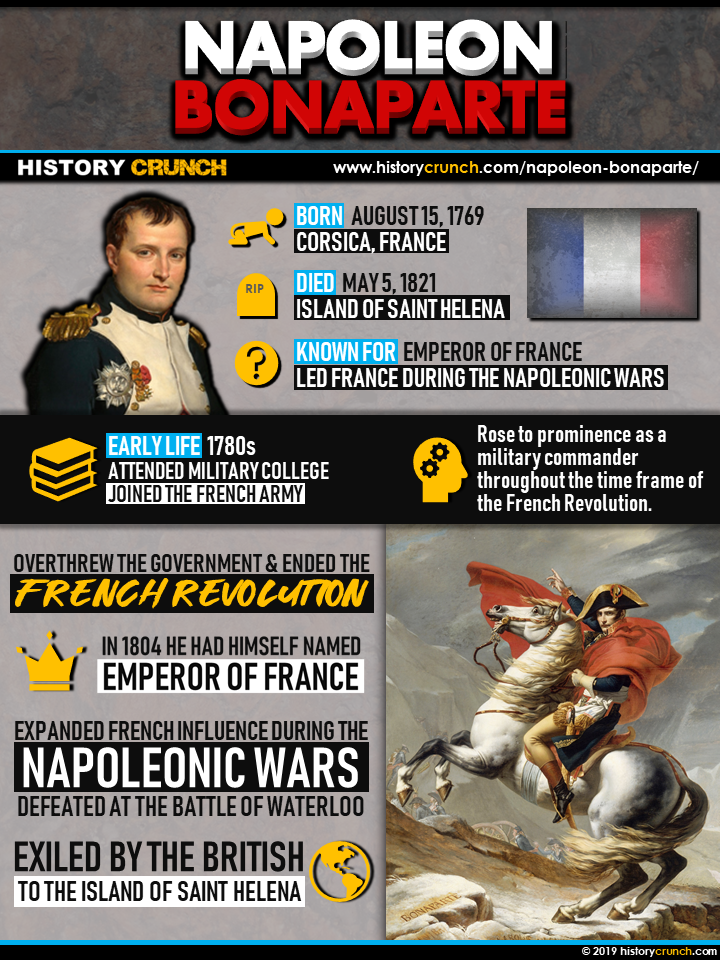
Napoleon Bonaparte was an important historical figure who rose to power during the French Revolution and eventually became Emperor of France in 1804. He is known for his sweeping reforms across Europe, including the Napoleonic CodeA civil code of laws Napoleon introduced in 1804 that reformed France’s legal system and promoted rule of law., which influenced the establishment of modern legal systems. Also, Napoleon expanded French territory through a series of successful military campaigns. However, his ambition led to costly wars and eventual defeat, most notably in Russia and at the Battle of Waterloo in 1815. Despite his fall, Napoleon remains one of history’s most influential leaders and his life continues to be a subject of study still today.
 FactsthatCrunch
Napoleon rose from a minor noble family in Corsica to command the armies of France and eventually rule as Emperor, reshaping the borders of Europe through a decade of major wars. He introduced the Napoleonic Code in 1804, a civil law system that established the principle of rule of law and influenced legal systems across Europe and beyond.
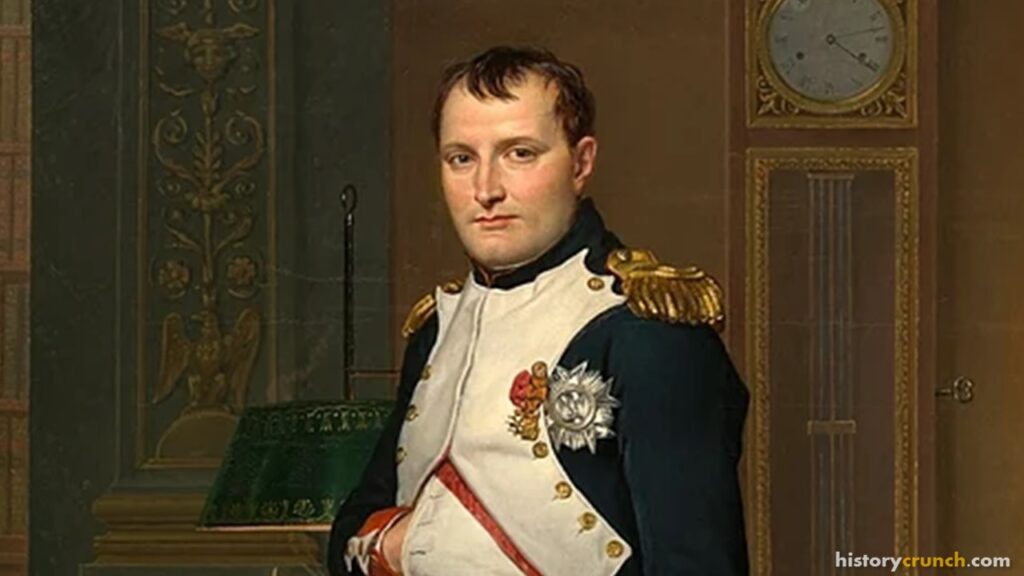
Napoleon Bonaparte – Early Life
Napoleon Bonaparte was born on the French island of Corsica, on August 15th, 1769 as Napoleone di Buonaparte, but he changed his name to Napoleon Bonaparte during his 20s. His father, Carlo Buonaparte of Ajaccio, Corsica was an 18-year-old student when he married Maria-Letizia Ramolino, a 14-year-old girl also from Ajaccio. Both Carlo and Maria were descendants of minor Italian nobility and their ancestors were Italian mercenaries in Genoa Bay who settled in Corsica at the beginning of the 16th century. It is assumed that the Buonapartes were originally from Tuscany.
Napoleon did not receive any formal education until he was nine when he attended school and managed to obtain a place at the military college at Brienne thanks to his protector Comte de Marbeuf who was the governor of Corsica, and a family friend of Bonaparte’s.
Napoleon Bonaparte – French Military
After the military academy at Brienne, Napoleon went into the École Militaire in Paris, graduating in 1785. Soon after that he became a second lieutenant in the French army. During the French Revolution in 1789 he joined the JacobinsA radical group of revolutionaries that Napoleon joined during the French Revolution in 1789., a radical group of revolutionaries. He was promoted to brigadier generalA military rank one step above colonel, commanding a brigade of soldiers. in 1793 following his successful command of artillery at the siege of the British garrison at Toulon. On October 5th, 1795, Napoleon put down a rebellion by royalist forces which led to his promotion to the commander of the Army of the Interior and just one year after that to the commander of the French army of Italy.
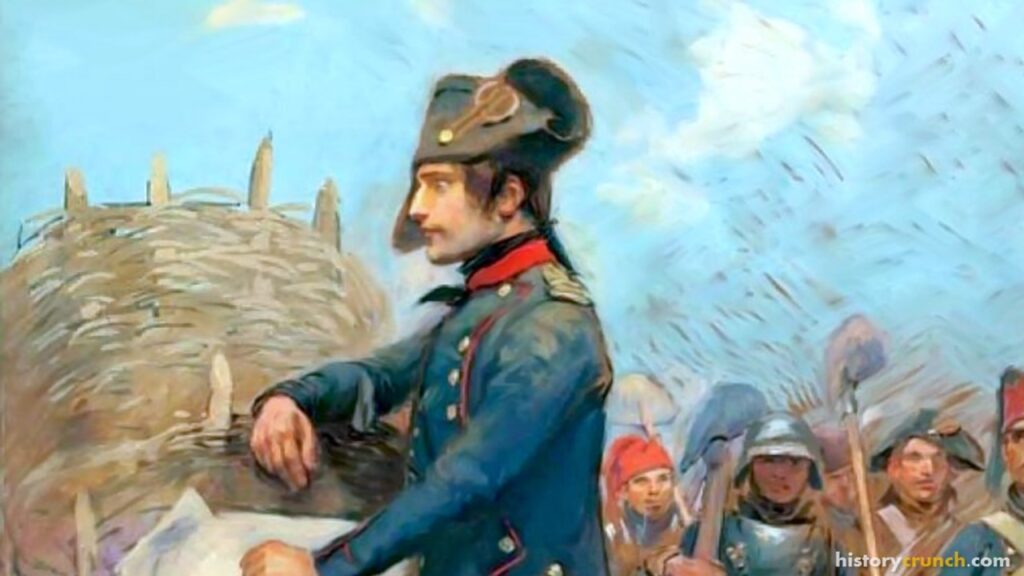
Napoleon’s troops captured extensive territory in Italy, and he called on the Italian people to recognize him as their new leader. In May 1796, he forced Sardinia to sign a peace treaty, then turned to the war against the Austrians. He managed to beat the Austrians at Rivoli which led to the truce and the Treaty of Campo Formio in 1797. The Italian campaign and military success over the Italian and Austrian armies provided Napoleon a great reputation among his fellow soldiers and the people of France.
Also in 1796, Napoleon, who was 26 years old at the time, married Josephine de Beauharnais, a 32-year-old widow with two teenage children of her own. The marriage lasted until 1809 when he divorced her because she had not produced any children for him to have an heir.
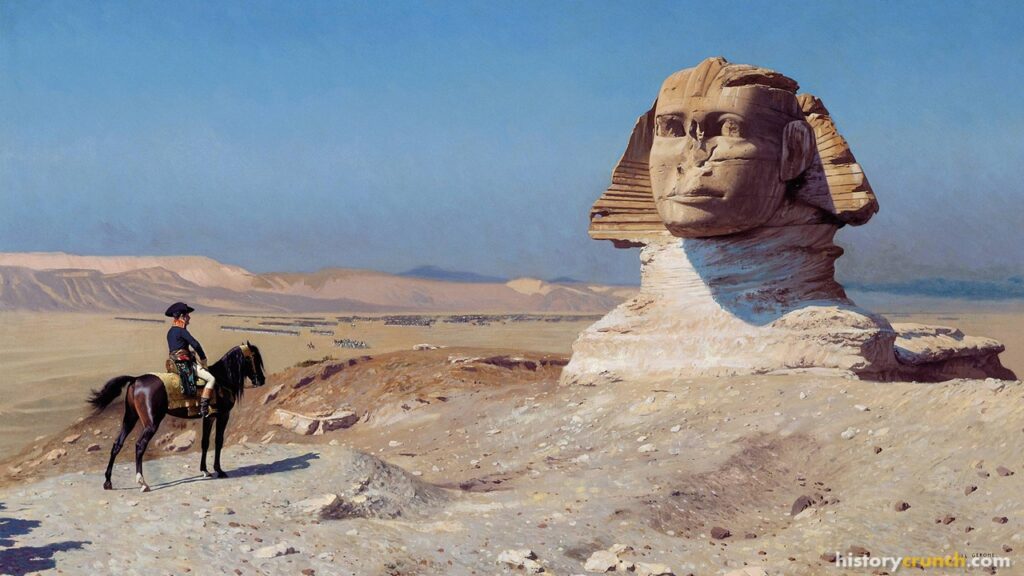
Next, he led a series of battles against Egypt which was an Ottoman province at the time. He won several battles in Egypt, but British admiral Horatio Nelson destroyed his fleet at the Battle of the Nile. Despite the loss of the fleet, he returned to France a national hero.
 FactsthatCrunch
What did Napoleon Bonaparte's successful command of artillery at the siege of Toulon in 1793 win him?
Napoleon Bonaparte – Overthrow of the Directory
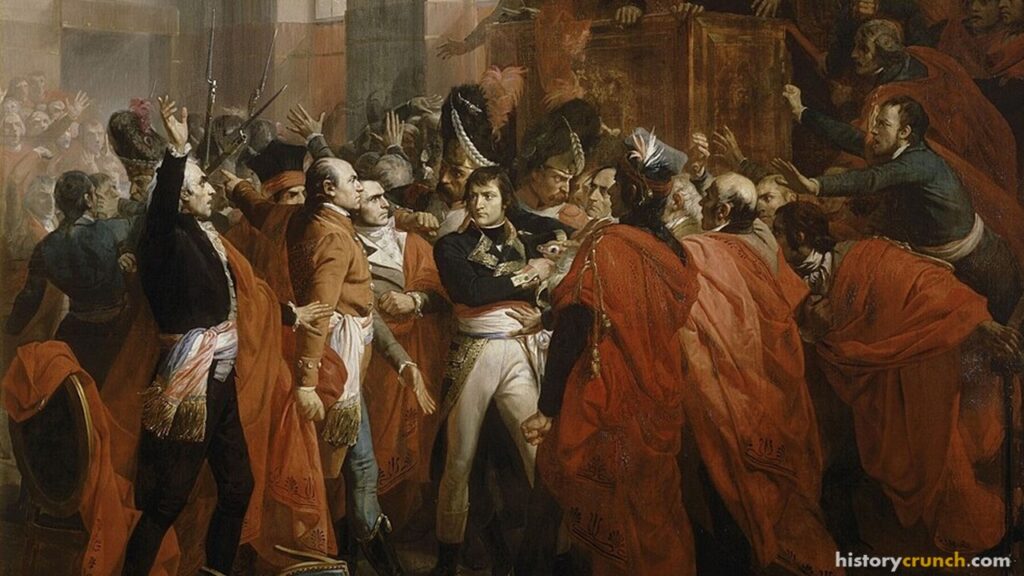
At the time the Directory (the five-member council that was running France) was overseeing the end stages of the French Revolution. Inspired by supporters in Paris, Napoleon led an overthrow of the DirectoryThe five-member council that governed France during the final stage of the French Revolution before Napoleon took over. and helped establish the French Consulate in its place.
Napoleon Bonaparte overthrew the Directory on November 9th, 1799, with the help of loyal troops and political allies. In fact, he dissolved the ineffective and unpopular Directory government and replaced it with the Consulate, positioning himself as First ConsulThe title Napoleon gave himself as the top leader of France after he overthrew the Directory in 1799.. This marked the end of the French Revolution and the beginning of Napoleon’s rise to power. Napoleon became the first consul and his rule over France began.
 FactsthatCrunch
In November 1799, during the final stages of the French Revolution, Napoleon Bonaparte and his political allies in Paris moved against the Directory, the five-member council running France. The Directory was widely seen as ineffective and unpopular, and Napoleon had the loyalty of his troops. He was positioned to seize control of the French government, but the outcome was not yet certain.
Napoleon Bonaparte – Napoleonic Wars
Immediately after coming to power, Napoleon launched a military campaign against members of the Second CoalitionAn alliance of several countries joined together to fight a common enemy. (Austria, Great Britain, Naples, the Ottoman Empire, Portugal, and Russia). Napoleon destroyed the Austrians at Marengo in 1800. The Austrians suffered a huge loss in soldiers and were forced out of Italy. As a result, the Treaty of Lunéville was signed in 1801, which set the Rhine River as France’s new eastern border. As well, the victory strengthened Napoleon’s stance in France politically and with the people of the country. He became the Emperor of France in 1804 and in 1805 he declared himself the king of Italy.
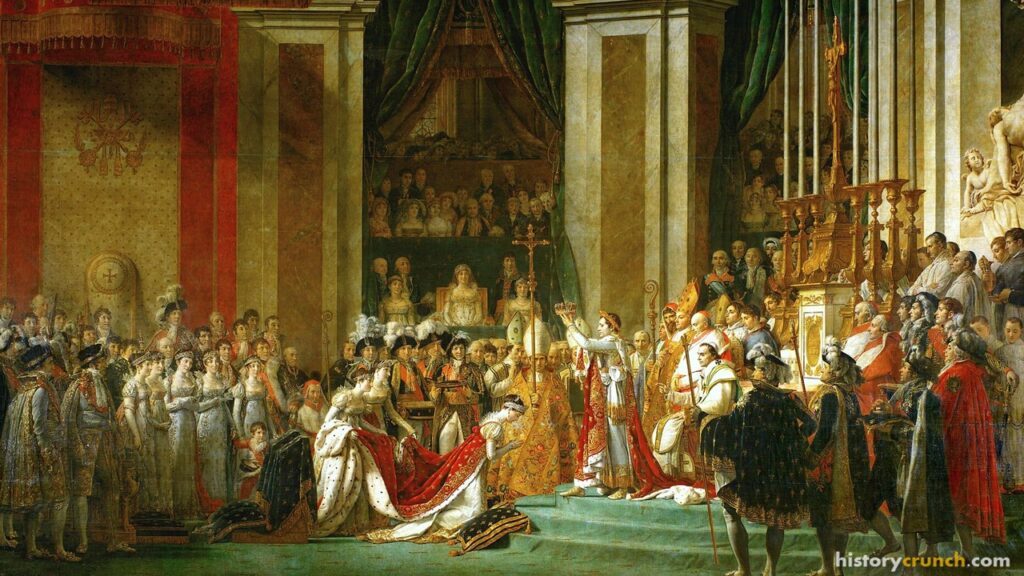
For the next decade, Napoleon undertook several major conflicts known today as the Napoleonic Wars. These conflicts saw France face off against several European powers as Napoleon sought to expand France’s territory in the continent. As well, he introduced many significant reforms into French society as he stabilized the country following the excesses of the French Revolution. For example, he introduced the Napoleonic Code in 1804 which was a civil code of laws. The Napoleonic Code reformed the country’s laws and introduced the idea of rule of law.
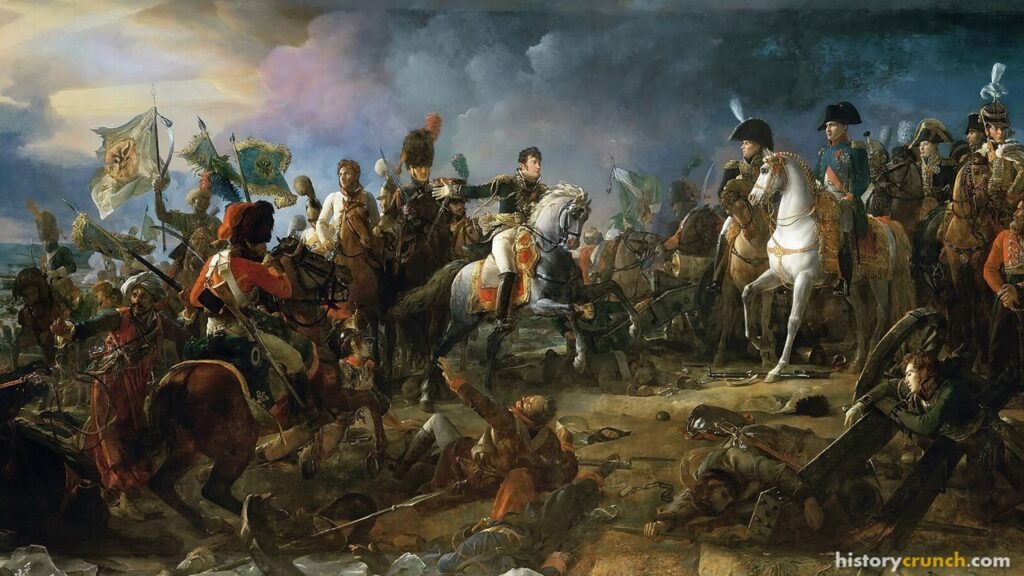
French forces moved eastward into Austria and in 1805, Napoleon encircled the Austrian army and forced General Karl Mack to surrender. He occupied Vienna, and at Austerlitz in 1805 he won a great victory over Austrian and Russian soldiers, which many historians consider to be Napoleon’s greatest military achievement. Austria was forced to sign the Treaty of Pressburg and leave the Third Coalition. Next, Napoleon’s forces marched into Berlin and he won another victory at Friedland in 1807 against Russia. By the Treaties of Tilsit in 1807 half of Prussia’s territory was given to France and Napoleon had power over a major part of continental Europe.
In 1810, after divorcing his first wife Josephine, Napoleon married Marie Louise, the 19-year-old Archduchess of Austria. The couple had one child, Napoleon Francis Joseph Charles, who was born in 1811. At his birth, Napoleon gave him the title of the King of Rome.
 FactsthatCrunch
How did French-controlled territory in Europe change across Napoleon's major battles from 1800 to 1815?
French victories at Marengo in 1800, Austerlitz in 1805, and Friedland in 1807 steadily expanded French-controlled territory across continental Europe, and the Treaties of Tilsit in 1807 cost Prussia roughly half of its territory. The failed Russian campaign of 1812 reversed that growth, as French forces could not hold Moscow and were forced to retreat with enormous losses. Defeats at Leipzig in 1813 and Waterloo in 1815 ended French territorial expansion entirely, returning France's borders close to where they had been before the Napoleonic Wars.
Napoleon Bonaparte – Decline and Death
The first signs of Napoleon’s decline began in the Peninsular War (1808–1814). This war saw British forces team up with both Spanish and Portuguese forces to push France off of the Iberian Peninsula. This was a major loss for Napoleon and was made worse by the catastrophic loss he was also experiencing in Russia.
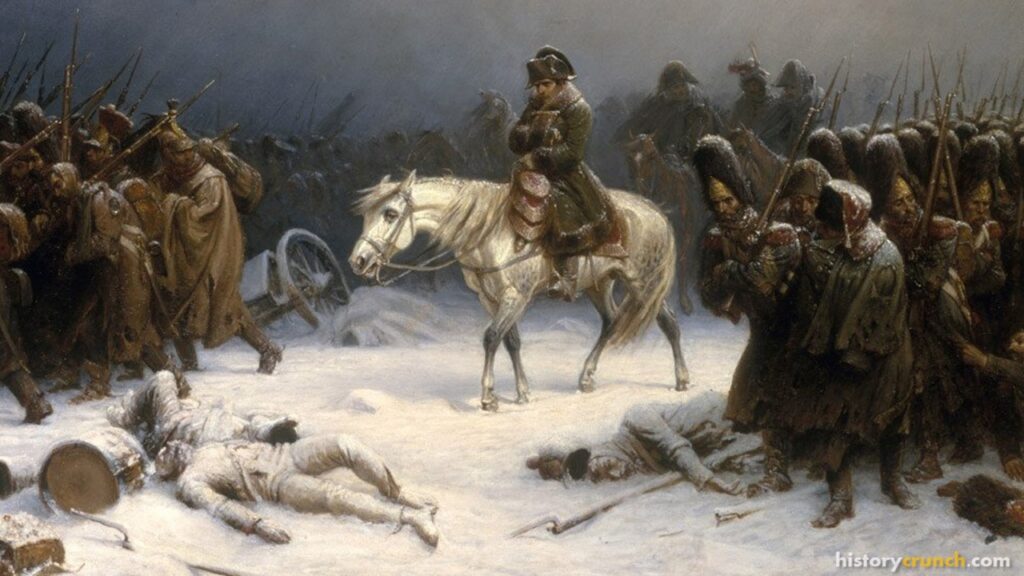
Napoleon’s army was 500,000 men strong when he invaded Russia in 1812. French troops moved quickly into Russia, forcing Russian General Mikhail Kutuzov to rapidly withdraw deep into the country. At Borodino, a small village west of Moscow, a battle was held with great losses on both sides. Kutuzov withdrew further, and Napoleon entered Moscow on September 14th, 1812. To the shock of the French, the city was nearly abandoned and had been burned by the Russians. Russian citizens burned the city in order to not allow Napoleon’s troops to resupply. The lack of supplies and freezing cold of the Russian winter eventually forced Napoleon to order his forces to retreat. As they did, the Russian forces repeatedly attacked the French troops and by the time Napoleon and his army left Russia he had less than 100,000 soldiers remaining. This was a major loss that Napoleon would be unable to recover from.
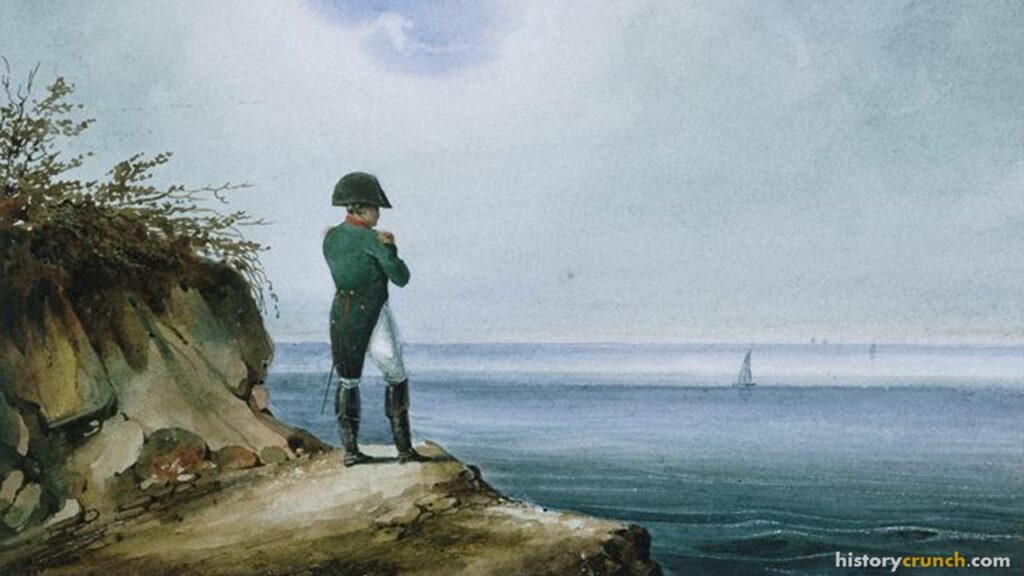
After his forces retreated from Russia, the Sixth Coalition against France was made. At the Battle of Leipzig, the Sixth Coalition won, and French troops were forced to return to France. Napoleon refused peace, and Coalition troops marched into Paris on March 31st, 1814. Napoleon abdicatedFormally gave up power as a ruler or emperor. on April 11th, 1814 and went into exileForced removal of a person to a distant place, away from their home country, as punishment. on the island of Elba off the coast of Italy. While the Congress of Vienna was establishing the borders of Europe, Napoleon escaped from Elba, landed at Cannes, and proceeded to Paris. He entered the city on March 20th, 1815 and thus began a period of rule known as “The Hundred Days” which saw him try to regain his position in France. Once again European armies were sent against Napoleon and he was famously defeated at the Battle of Waterloo. This time he was banished to the island of Saint Helena, a British controlled island in the south of the Atlantic Ocean. He died there on May 5th in 1821. His remains were eventually brought to France in 1840 where they remain today.
Napoleon Bonaparte – Significance
Napoleon Bonaparte was one of the most significant leaders in the 19th century and certainly one of the most influential leaders in history. For example, he had a profound impact on France and Europe during and after the French Revolution. More specifically, he preserved and expanded many revolutionary ideals, such as legal equality and secular education, through the Napoleonic Code. As a military leader, he reshaped the map of Europe and spread French nationalist ideals. Napoleon centralized power in France, strengthening the state while ending the violence and stagnation that was common in the French Revolution. Though his imperial ambitions led to widespread war and suffering, his reforms also modernized European governments and institutions. Historians continue to study his life and significance still to this day, with many focusing on his consolidation of power and establishment of the Napoleonic Code.
 FactsthatCrunch
Napoleon Bonaparte – Infographic
French Revolution timeline · 1789 – 1799
Key Vocabulary
Jacobins
Brigadier general
Directory
First Consul
Napoleonic Code
Abdicated
Exile
Frequently Asked Questions
Where and when was Napoleon Bonaparte born?
Napoleon was born on the French island of Corsica on August 15th, 1769. His birth name was Napoleone di Buonaparte, but he changed it to Napoleon Bonaparte in his 20s. His parents were descendants of minor Italian nobility, and the family likely came from Tuscany.
How did Napoleon become the ruler of France?
Napoleon took power by overthrowing the Directory, the five-member council running France, on November 9th, 1799. He replaced it with the Consulate and named himself First Consul. This ended the French Revolution and started his rise, and he became Emperor of France in 1804.
What was the Napoleonic Code?
The Napoleonic Code was a civil code of laws introduced in 1804 that reformed France’s legal system. It spread the idea of rule of law and legal equality across the country. This code influenced modern legal systems in many parts of Europe and beyond.
Why did Napoleon’s invasion of Russia fail?
Napoleon’s 1812 invasion of Russia failed mainly because of a lack of supplies and the freezing winter. He entered Moscow but found it nearly abandoned and burned by the Russians, who wanted to block resupply. His army of 500,000 men shrank to fewer than 100,000 by the time it left Russia.
How and where did Napoleon die?
Napoleon died on May 5th, 1821, on the island of Saint Helena in the south Atlantic Ocean. He was banished there by the British after his defeat at the Battle of Waterloo in 1815. His remains were later brought back to France in 1840, where they still rest today.
Cite This Article
To cite this article as a source, use one of the formats below.
MLA: Beck, Elias. “Napoleon Bonaparte: A Detailed Biography.” HistoryCrunch, 22 September 2026, https://historycrunch.com/napoleon-bonaparte/.
APA: Beck, E. (2026). Napoleon Bonaparte: A Detailed Biography. HistoryCrunch. https://historycrunch.com/napoleon-bonaparte/
Chicago: Beck, Elias. “Napoleon Bonaparte: A Detailed Biography.” HistoryCrunch. September 22, 2026. https://historycrunch.com/napoleon-bonaparte/
Sources
- Jeremy D. Popkin, A New World Begins: The History of the French Revolution.
- Peter McPhee, Liberty or Death: The French Revolution.
- William Doyle, The Oxford History of the French Revolution.
- Fordham Modern History Sourcebook