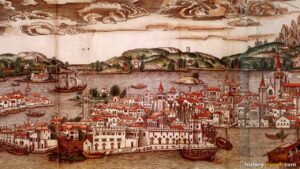
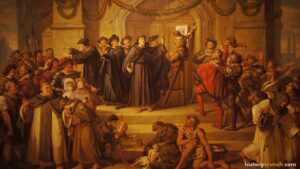
Florence in the Renaissance was known for its flourishingGrowing rapidly and successfully in creative or economic activity. art, architecture, and intellectual life during the timeframe of the Renaissance. Its strong economy, banking industry, and political stability made Florence a model of Renaissance innovation and humanist values. As well, Renaissance artists such as Michelangelo and Leonardo da Vinci contributed to amazing artistic accomplishments in Florence.
 FactsthatCrunch
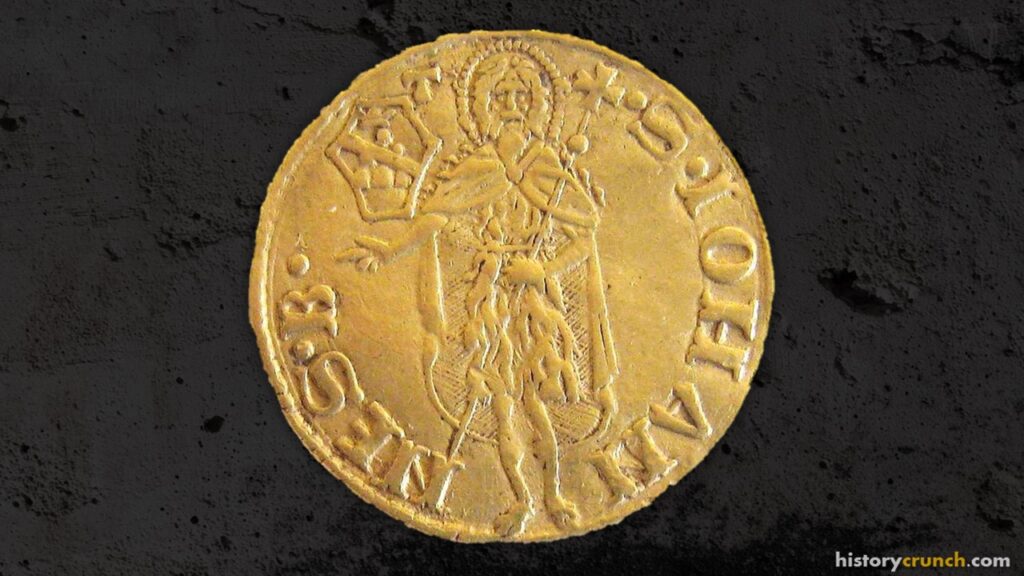
The florin was a gold coin first issued in 1252 by the Republic of Florence. It was trusted across Europe because its gold content stayed consistent and reliable. Over time it became one of the most widely used currencies on the continent.
Because merchants from London to Naples accepted the florin without question, Florentine bankers were able to open branches far beyond their home city.
What Was the Renaissance?
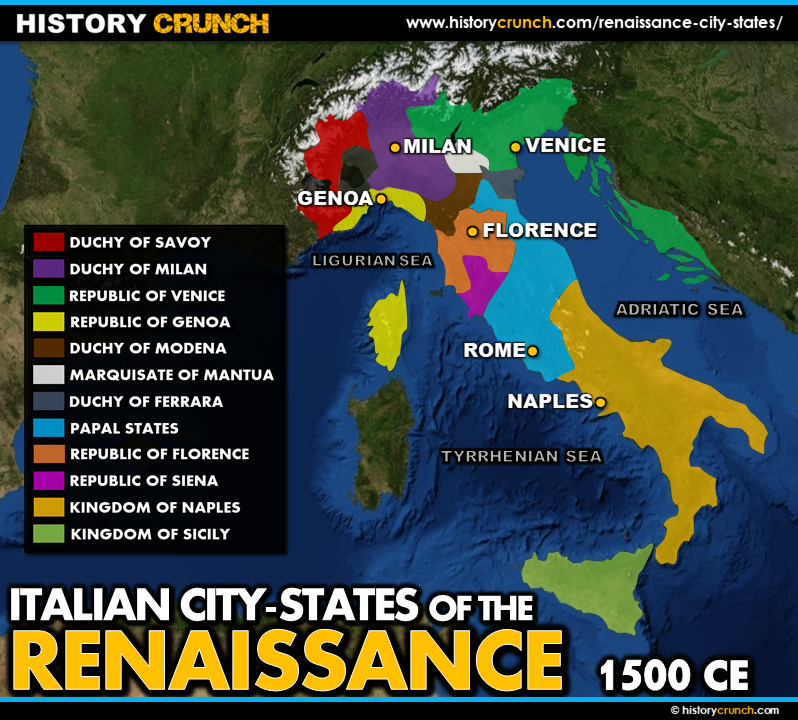
The Renaissance is an important event in European history that stretched from the 14th century to the 17th century. It was preceded by the Middle Ages in Europe and eventually led to other major events such as the Age of Enlightenment. In historical terms the Renaissance is important because it led to a major shift in European thought and worldview. The Renaissance is considered to have begun in the city-states of the Italian peninsula, such as: Genoa, Florence, Milan, Naples, Rome and Venice.
In each of these city-states, the significant changes of the overall Renaissance occurred and unfolded. For example, the most significant changes that emerged as a result of the Renaissance can be seen in European architecture, art, literature, mathematics, music, philosophy, politics, religion and science. Intellectual thought in these fields flourished during the timeframe of the Renaissance and led to many people questioning long held beliefs about each. This created an environment of discovery and curiosity in which new ideas were constantly being introduced and tested. As well, European life before the start of the Renaissance was dominated by feudalism and the Manor System, but these both played small roles for citizens in the powerful Italian city-states. As such, the major Italian city-states listed above were well positioned to undergo the societal shift brought about by the new Renaissance ideas.
Florence Before the Renaissance
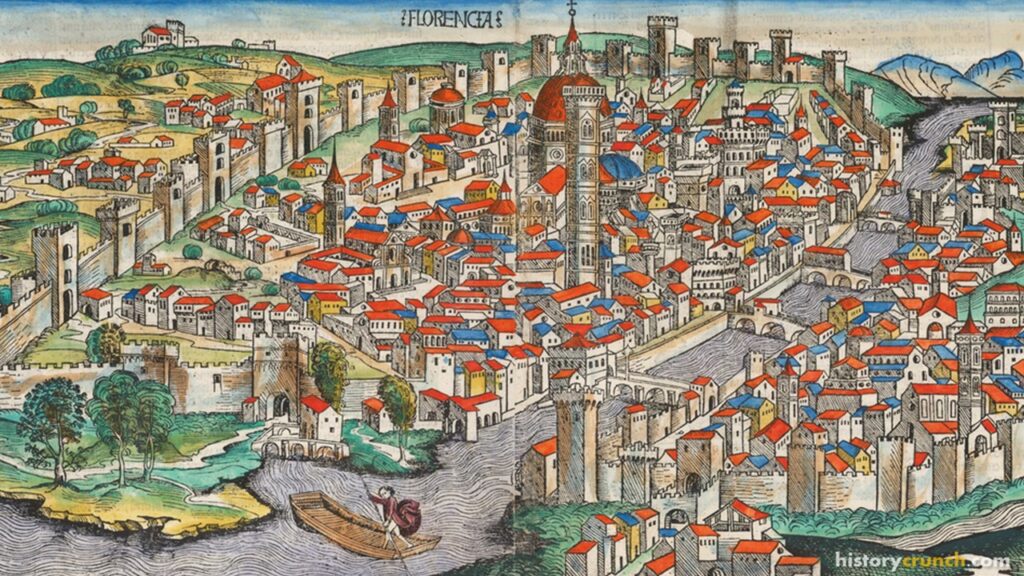
Florence is one of the most significant city-states from the Renaissance in Italy and developed in the northern section of the Italian peninsula. The region is surrounded by hills with the Arno River in the center. As such, the city-state of Florence developed in the valley of the hills and around the river. Historians believe that people had been living in the region since ancient history but it became a much more significant area in the timeframe of the Middle Ages and the Renaissance.
While Florence experienced political strife throughout the Middle Ages, it also prospered economically. For instance, the ‘florinA gold coin first issued in 1252 that became one of Europe’s most widely used currencies.’ (which was a coin and method of currency) was first introduced in 1252 for the RepublicA form of government in which citizens and their elected leaders hold power, instead of a king or lord. of Florence. The florin is significant because it highlights the economic strength of Florence in the Middle Ages. For instance, the florin was widely used beyond the borders of the Republic of Florence due to its gold weight and its reliability as a currency. As a result, the florin became one of the most common currencies in all of Europe at the time. In fact, the florin remained in use without a major change to its design until 1533. This caused the bankers of Florence to gain power in the city-state and beyond. For example, the major banks of Florence created branches in other cities and regions and led to Florence’s economic and political influence spreading throughout the Italian peninsula. As such, Florence prospered as a center of trade and commerce.
 FactsthatCrunch
How did the Black Death reaching Europe in 1347 affect people differently depending on where they lived?
Florence in the Renaissance – Early History
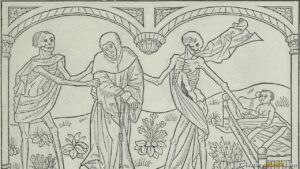
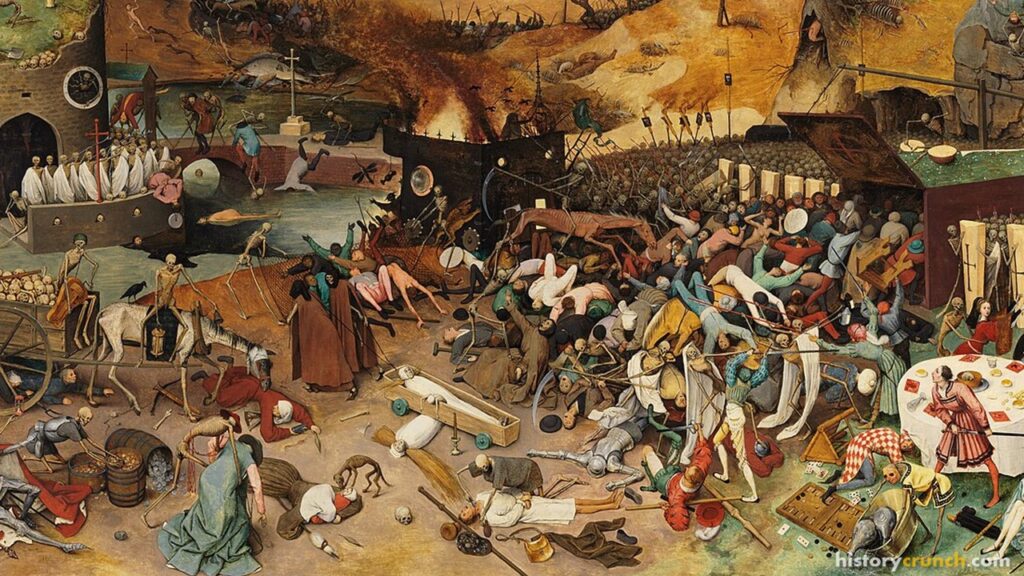
By the mid-1300s (which was the start of the Renaissance), Florence was one of the largest cities in all of Europe with estimates placing the total population of the city between 80,000 and 100,000 people. It was a diverse society, with some people finding success in the common industries of the city-states, while others struggled. For instance, in 1338 it is estimated that there were about 17,000 beggars in Florence of which 4,000 of them were receiving public relief. On the other hand, approximately 25,000 of the people were engaged in employment in the city’s main industry: wool production. Many of the workers in Florence belonged to guildsProfessional organizations that grouped workers in the same trade and trained newcomers through apprenticeships., which were professional organizations related to whole industries. These guilds saw workers apprentice towards a trade in different occupations, such as: wool production, silk production, etc. With that said, the city-state was ravaged by the Black Death. The plague spread from Asia into Europe in 1347 and had devastating impacts for all of the European continent. For instance, many historians have argued that the large death tolls of the Black Death led to major societal changes, such as: demise of the feudal system and political and economic changes. Cities with large populations were especially hit hard because people were living in much closer situations and the plague was able to spread more easily.
Florence first emerged as a republic in the early 12th century. A republic is a form of government in which the people of the state have a great deal more power and influence than they previously did under an absolute monarchy, which was the common form of government in Middle Ages Europe. However, in Florence, the republic did not last long due to several factors, including: economic strife, wars with neighboring states, and civil conflict between rival families.
Florence in the Renaissance – Medici Family
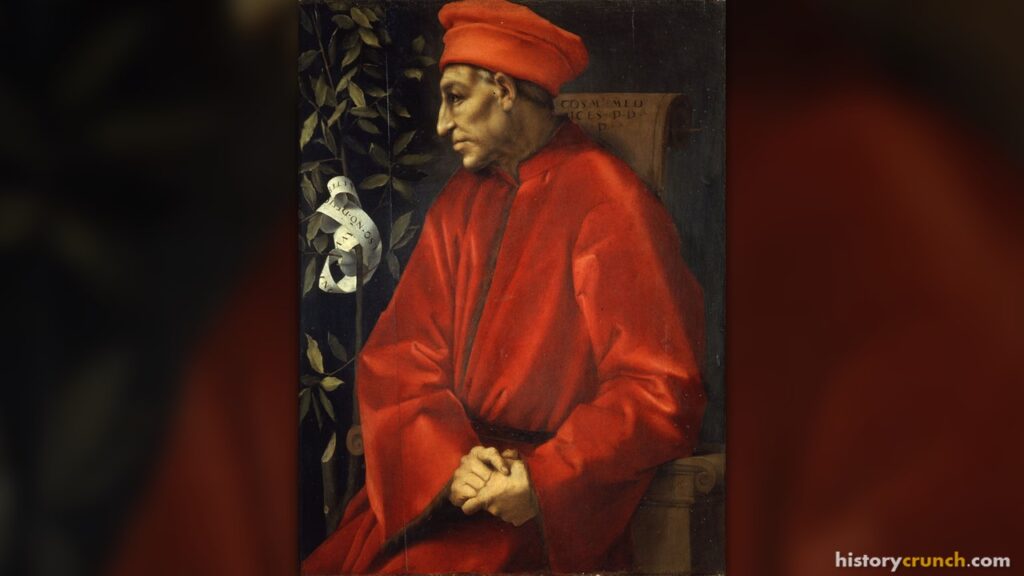
The most powerful of the rival families in Renaissance Florence were the Medici. They were a wealthy family from the Tuscany region and established the famous Medici Bank. The bank, which was first created in 1397, became the largest in Europe during the timeframe of the Renaissance and allowed them to wield political and economic control throughout Europe. For example, the Medici family gained political control over Florence in the 1430s, which ultimately led to the end of the Florence Republic and led to their reign as monarchs over the city-state. With their massive wealth, the Medici became patronsWealthy supporters who paid for artists and thinkers to create their work. of famous Renaissance artists including: Leonardo da Vinci and Michelangelo.

Cosimo de Medici was the first Medici family member to control the Florence city-state. While Florence was still considered to be a republic at the start of the Medici reign, the immense wealth and power of Medici meant that Cosimo de Medici could effectively rule over the city-state from behind the scenes. Famously, Cosimo de Medici supported early Renaissance art and humanismA Renaissance intellectual movement that placed great value on human achievement, learning, and potential. in Florence which helped establish the city-state as the center of Renaissance Europe. For instance, he had Florence construct many buildings to support Renaissance ideals such as libraries, churches and academies. As well, he oversaw the negotiations of the Treaty of Lodi from 1454. This treaty ended the war between Florence and other city-states such as: Venice, Milan, Rome and Naples.
Cosimo de Medici was eventually succeeded by his son Piero di Cosimo de Medici and later his grandson Lorenzo de Medici. Lorenzo de Medici continued the patronage of his grandfather and sponsored several famous Renaissance artists and sculptors. After Lorenzo’s death in 1492, his son Piero took over control of Florence, however it was to be short-lived. In 1494, the French (under the leadership of King Charles VIII) invaded Italy. This caused Piero to be forced into exile and the Medici rule over Florence ended. The Florence Republic was restored.
Modern Florence is a major city in the country of Italy and is the capital city of the Italian region of Tuscany.
 FactsthatCrunch
By November 1494, King Charles VIII of France had marched his army into Italy, threatening Florence and the Medici family's hold on the city-state. Piero de Medici had ruled Florence for only two years, taking over after his father Lorenzo died in 1492. Now Piero faced a choice that would determine the fate of Renaissance Florence: he had to decide whether to resist the French invasion or abandon the city entirely.
Explore Renaissance · 1300 – 1600 CE
Keep exploring Renaissance with these History Crunch resources.
Key Vocabulary
Flourishing
Florin
Guilds
Black Death
Republic
Patrons
Humanism
Frequently Asked Questions
Why was Florence important during the Renaissance?
Florence was a leading center of Renaissance art, learning, and new ideas. Its strong economy and banking industry gave it wealth and political power across Italy. Famous artists like Michelangelo and Leonardo da Vinci worked in the city and created lasting masterpieces.
Who were the Medici family?
The Medici were a wealthy family from Tuscany who gained control over Florence in the 1430s. They founded the Medici Bank in 1397, which became the largest bank in Europe. Their money and power let them act as patrons for famous Renaissance artists and thinkers.
What was the florin?
The florin was a gold coin first introduced in 1252 for the Republic of Florence. It was trusted for its reliable gold weight, so people used it far beyond the city’s borders. This made it one of the most common currencies in Europe and boosted Florence’s bankers.
How did the Black Death affect Florence?
The Black Death struck Florence hard after the plague reached Europe in 1347. Large cities suffered most because people lived close together, which helped the disease spread quickly. Many historians argue the high death tolls led to major changes, such as the decline of the feudal system.
Who was Cosimo de Medici?
Cosimo de Medici was the first Medici family member to control Florence. The family’s wealth let him rule from behind the scenes while the city was still a republic. He supported early Renaissance art and humanism and helped arrange the Treaty of Lodi in 1454.
How did Medici rule over Florence end?
Medici rule ended in 1494 when the French, led by King Charles VIII, invaded Italy. Piero de Medici was forced into exile, and the Florence Republic was restored. This happened two years after the death of Lorenzo de Medici in 1492.
Cite This Article
To cite this article as a source, use one of the formats below.
MLA: Beck, Elias. “Florence in the Renaissance: A Detailed Summary.” HistoryCrunch, 19 October 2026, https://historycrunch.com/florence-in-the-renaissance/.
APA: Beck, E. (2026). Florence in the Renaissance: A Detailed Summary. HistoryCrunch. https://historycrunch.com/florence-in-the-renaissance/
Chicago: Beck, Elias. “Florence in the Renaissance: A Detailed Summary.” HistoryCrunch. October 19, 2026. https://historycrunch.com/florence-in-the-renaissance/
Sources
- Fordham Modern History Sourcebook
- The Met (Heilbrunn Timeline)
- Jerry Brotton, The Renaissance: A Very Short Introduction.