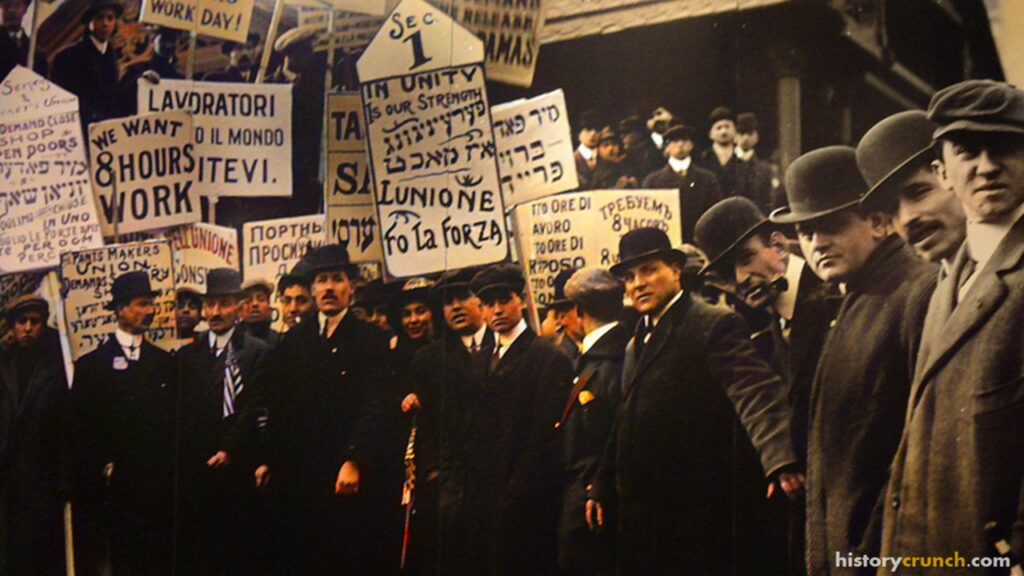
The American labor movement refers to the parts of American history that have significantly shaped the working conditions, rights, and lives of millions of American workers. From the early struggles of labor unionsAn organized group of workers that negotiates together with employers over wages and conditions. to the achievements of labor laws, this movement highlights the fight for fair wages, reasonable working hours, and safe working conditions. This article explores the history, key events, and impacts of the American labor movement. As a historical event, the American Labor Movement is best related to the events of the Industrial Revolution (Gilded Age), Great Depression and modern American history.
 FactsthatCrunch
American Labor Movement – Origins
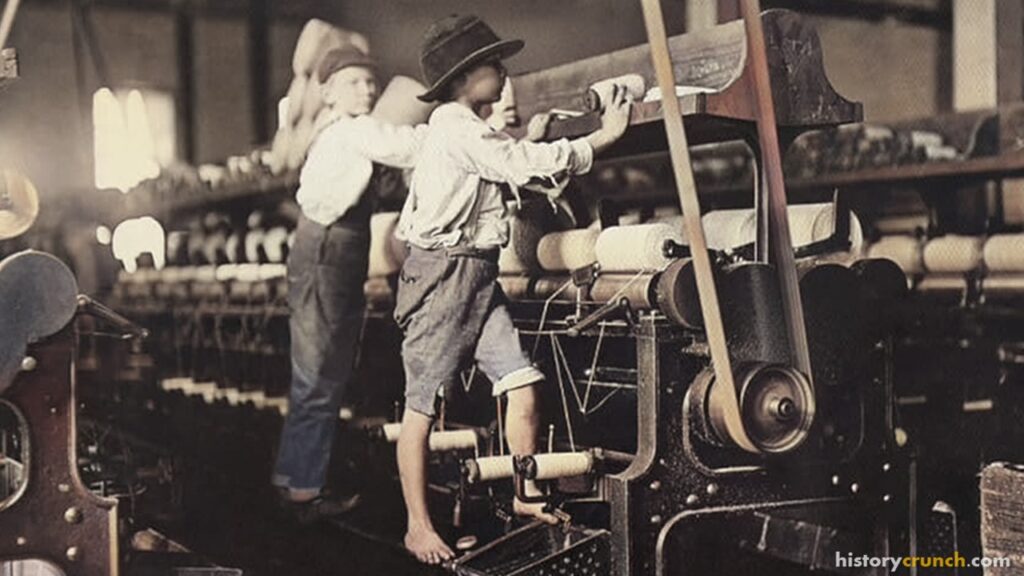
The origins of the American labor movement can be traced back to the early 19th century, during the events of the Industrial Revolution. This period was a time of incredible change, both technologically and socially. For instance, it saw societies shift from agrarianBased on farming and rural life rather than industry or city manufacturing. economies to industrialized cities, where factories and mills became the primary sources of employment. However, working conditions in these factories were often harsh and dangerous, with long hours and low pay. Child labor was also a common issue in industrial factories and mines of the time. The struggles and hardships of the working-class people in the Industrial Revolution were the main factor that ultimately led to the rise of the labor movement. One of the main strategies used by the early labor movement was the establishment of labor unions. In short, a labor union is an organized association of workers formed to protect and improve their rights and interests through collective bargainingThe process where workers, through their union, negotiate as a group with an employer over pay and conditions. with employers over wages, working conditions, and other employment terms.
The first American labor unions began to form in the late 1700s and early 1800s, such as the Federal Society of Journeymen Cordwainers in 1794 and the Mechanics’ Union of Trade Associations in the 1820s. These early unions focused on protecting the interests of skilled workers, advocating for shorter working hours and higher wages. However, they faced significant opposition from employers and the government, which often viewed unions as something that interfered with business operations.
One of the early successes of the labor movement was the push for a 10-hour workday. For example, in the 1830s and 1840s, labor activists organized strikesA work stoppage organized by employees to pressure employers into meeting their demands. and petitions to reduce the standard workday from 12 to 14 hours to 10 hours. This movement saw some victories, with several states passing laws to limit working hours for specific industries.
 FactsthatCrunch
Factory workers in the 1800s faced very long daily hours, and labor activists fought to cut those hours down, step by step.
American Labor Movement – Early Organizations
The late 19th century was a period of significant growth for the American labor movement. For instance, this period of time was marked by the formation of national labor organizations and major strikes that highlighted the tensions between workers and employers in the industrial age. Specifically, the Knights of Labor and the American Federation of Labor were important organizations from this time.
Founded in 1869, the Knights of Labor was one of the first significant national labor organizations in the United States. The Knights argued in favor of social reforms, including the eight-hour workday, equal pay for equal work, and the abolition of child labor. As an organization, it grew rapidly in the 1880s, reaching a peak membership of approximately 700,000. However, the Knights’ influence lessened after the Haymarket Riot of 1886, which was a violent labor protest in Chicago that turned deadly when a bomb was thrown at police. It ultimately led to a crackdown on labor movements and heightened tensions between workers and law enforcement.
The American Federation of Labor (AFL) was established in 1886 by Samuel Gompers. It focused on the workplace needs of skilled workers, such as higher wages and better working conditions. The American Federation of Labor adopted a more conservative approach than the Knights of Labor, emphasizing collective bargaining and strikes as tools to achieve its objectives. As an organization, it grew steadily and became one of the most powerful labor federations in the United States.
 FactsthatCrunch
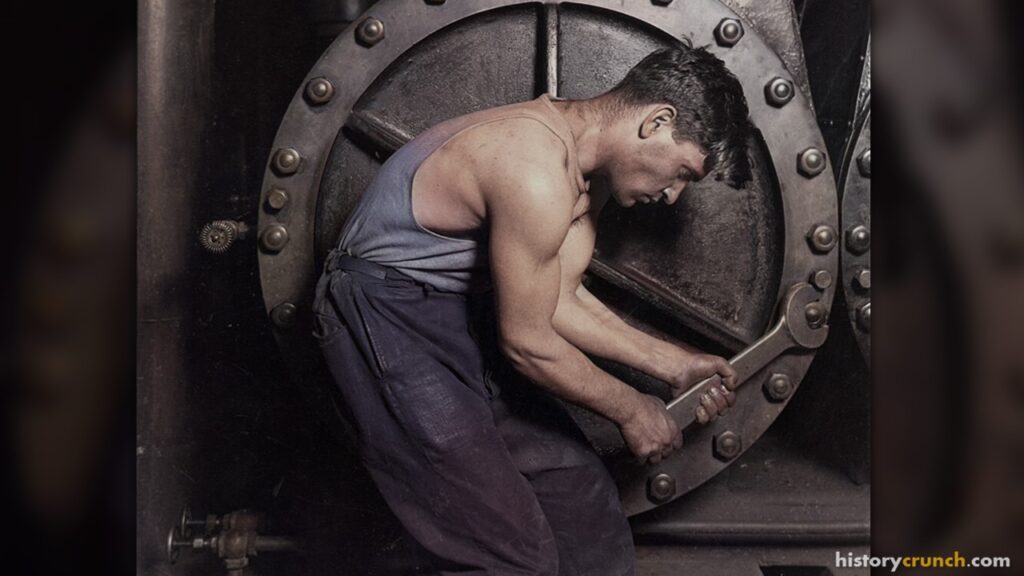
The Knights hoped to reform society as a whole, while the AFL focused on winning better deals for its members through bargaining and strikes. The AFL's approach lasted longer and shaped American unions in the 20th century.
American Labor Movement – Major Strikes
The labor movement in the late 19th and early 20th centuries led to several major strikes and conflicts that highlighted the deep divisions between labor and management at the time. Two of the most significant strikes from this period were the Homestead Strike of 1892 and the Pullman Strike of 1894.
The Homestead Strike of 1892 was a violent strike that occurred at the Carnegie Steel Company’s Homestead plant in Pennsylvania. When management attempted to break the union and cut wages, workers seized the plant. The strike ended in a bloody confrontation between strikers and private security agents, resulting in multiple deaths. The violence of the strike ultimately weakened the power of labor unions and set a precedent for employer control in labor disputes.
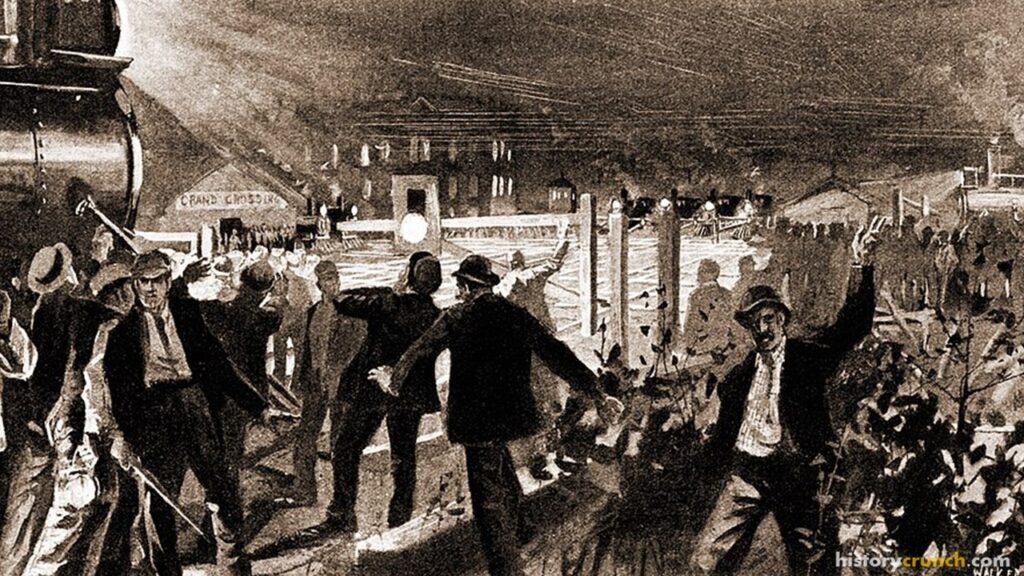
Another important strike from this era was the Pullman Strike of 1894. This was a nationwide railroad strike that began at the Pullman Company in Chicago, where workers protested wage cuts and high rents in company-owned housing. The strike spread across the country, disrupting rail traffic and mail delivery. Eventually, President Grover Cleveland sent federal troops to break up the strike, which led to violent clashes and the deaths of several workers.
 FactsthatCrunch
American Labor Movement – Major Reforms
The hardships experienced by the working class in the Industrial Revolution (Gilded Age) led to workers fighting for significant changes. In fact, the early 20th century saw significant legislative reforms that improved working conditions and strengthened labor rights. Three key reforms were the Wagner Act, the Social Security Act and the Fair Labor Standards Act.
Also known as the National Labor Relations Act, the Wagner Act of 1935 guaranteed the right of workers to form unions and engage in collective bargaining. It established the National Labor Relations Board (NLRB) to oversee labor disagreements and enforce labor laws. This act significantly strengthened the power of labor unions and helped them grow in membership and influence throughout parts of the 20th century.
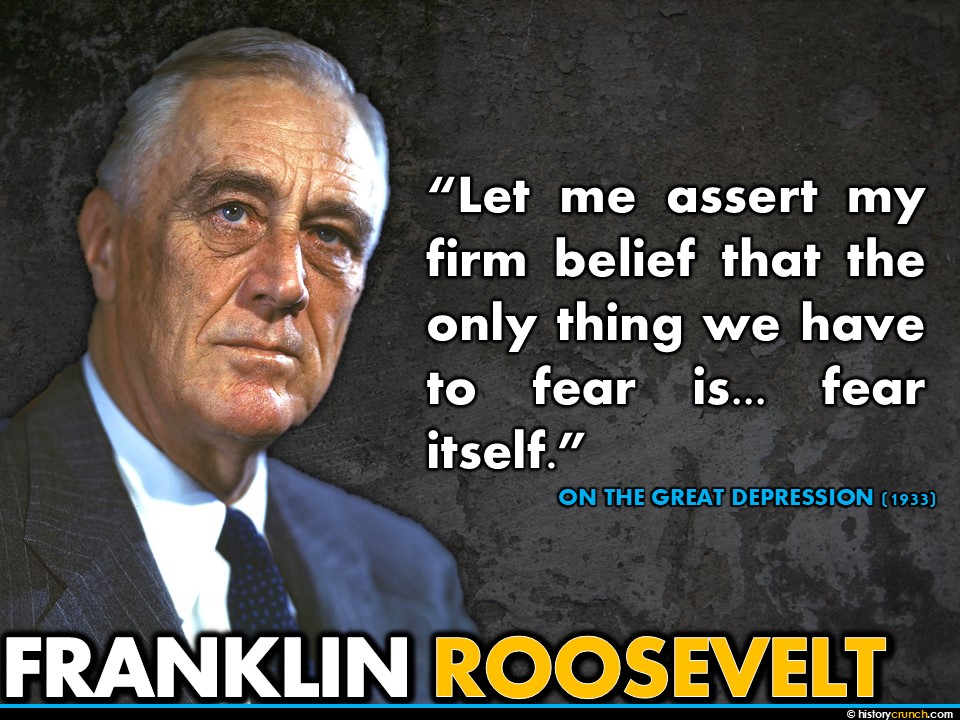
Also, the Social Security Act of 1935 was an important advancement for the American labor movement. This act provided financial assistance to the elderly, unemployed, and disabled, marking a major step toward social welfare in the United States. It was part of President Franklin D. Roosevelt’s ‘New Deal’, which hoped to address the economic hardships of the Great Depression and provide a safety net for American workers.
Finally, one of the most important labor laws during the American labor movement, the Fair Labor Standards Act (FLSA) of 1938, established minimum wageThe lowest hourly pay an employer is legally allowed to give a worker., overtime pay, and child labor standards. It ensured that workers received fair compensation for their labor and protected them from exploitation.
 FactsthatCrunch
American Labor Movement – Challenges
The American labor movement continued to advance in the years after World War II (1939-1945). However, the labor movement also experienced new challenges due to changing economic conditions and political leanings.
For instance, the Taft-Hartley Act of 1947 was a major piece of legislation that impacted the American labor movement. In short, this act restricted the activities and power of labor unions in the United States. It ended certain union practices and allowed states to pass right-to-work lawsState laws that allow workers to take a job without being required to join or pay dues to a union.. This ultimately limited the ability of labor unions to carry out collective bargaining. The Taft-Hartley Act was seen as a response to the growing power of labor unions and marked a shift in labor relations across America, as more influence was given to employers.
Another major issue facing the American labor movement in the 20th century is the declining role of labor unions in modern workplaces. In recent decades, union membership has declined due to various factors, including globalizationThe process by which businesses and economies around the world become increasingly connected and competitive., changes in the economy, and anti-union policies. Despite these challenges, labor unions continue to exist in certain industries. These unions advocate for workers’ rights as they adapt to the modern workforce’s needs.
 FactsthatCrunch
What were the main effects of right-to-work laws on American labor unions?
American Labor Movement – Significance
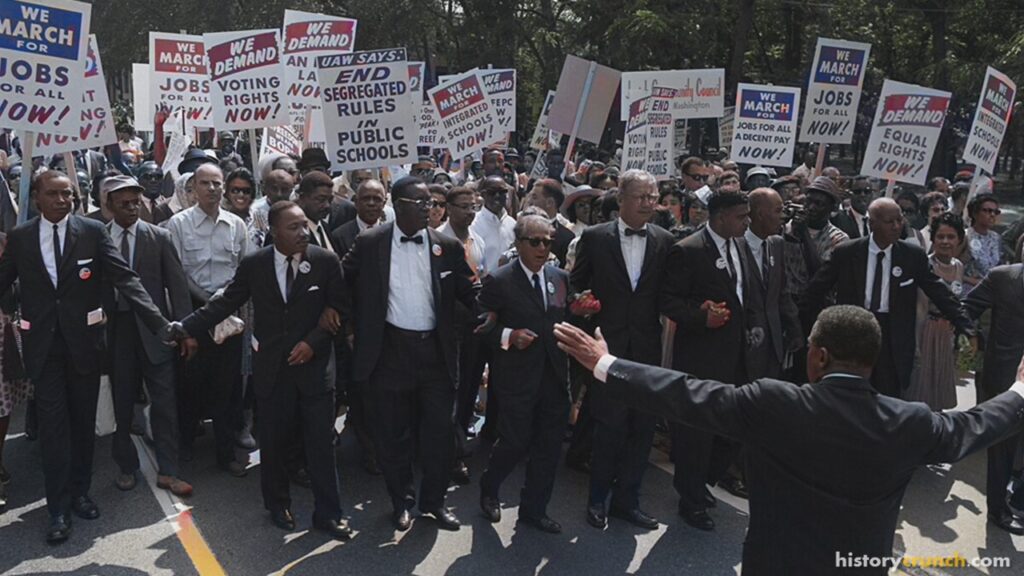
The American labor movement has left a lasting legacy on American society and remains significant still today. It emerged from the industrial workplaces of the 19th century and continued to develop throughout the 20th century. The labor movement has been important in terms of granting many of the rights and protections that workers enjoy today, including the eight-hour workday, minimum wage, and workplace safety standards. The movement has also played a critical role in promoting social justice and equality, influencing wider societal changes. For instance, the labor movement in America occurred alongside other movements, including: the fight to end child labor, the early women’s rights movement and the Civil Rights Movement of the 1950s and 1960s. As such, the American labor movement has had a profound impact on numerous different aspects of American life.
Despite facing numerous challenges, the American labor movement’s legacy continues to inspire efforts to improve working conditions and protect workers’ rights in today’s ever-changing economy.
Industrial Revolution timeline · 1760 – 1840
Key Vocabulary
Agrarian
Labor union
Collective bargaining
Strike
Right-to-work laws
Minimum wage
Globalization
Frequently Asked Questions
What was the American labor movement?
The American labor movement was the long effort by workers to win fair wages, safer jobs, and shorter hours. It began during the Industrial Revolution and grew through the 20th century. Workers often joined labor unions to bargain with employers as a group.
Why did the labor movement begin in the 1800s?
The labor movement began because factory jobs during the Industrial Revolution were harsh and dangerous. Workers faced long hours, low pay, and unsafe conditions, and child labor was common. These hardships pushed workers to organize and demand better treatment.
What was the difference between the Knights of Labor and the AFL?
The Knights of Labor pushed for wide social reforms like the eight-hour workday and an end to child labor. The American Federation of Labor, founded by Samuel Gompers in 1886, took a more cautious path. It focused on skilled workers and used collective bargaining and strikes to reach its goals.
What laws helped American workers the most?
Three New Deal era laws gave workers major protections during the 1930s. The Wagner Act of 1935 secured the right to form unions and bargain as a group. The Social Security Act of 1935 aided the elderly and jobless, and the Fair Labor Standards Act of 1938 set a minimum wage and overtime pay.
Why did union membership decline over time?
Union membership fell because of globalization, a changing economy, and anti-union policies. The Taft-Hartley Act of 1947 also limited union power and allowed states to pass right-to-work laws. Even so, unions still exist in some industries and keep fighting for workers’ rights.
Cite This Article
To cite this article as a source, use one of the formats below.
MLA: Woida, K.L. “American Labor Movement: A Detailed Summary.” HistoryCrunch, 27 September 2026, https://historycrunch.com/american-labor-movement/.
APA: Woida, K. L. (2026). American Labor Movement: A Detailed Summary. HistoryCrunch. https://historycrunch.com/american-labor-movement/
Chicago: Woida, K.L. “American Labor Movement: A Detailed Summary.” HistoryCrunch. September 27, 2026. https://historycrunch.com/american-labor-movement/
Sources
- Robert C. Allen, The Industrial Revolution: A Very Short Introduction.
- Emma Griffin, A Short History of the British Industrial Revolution.