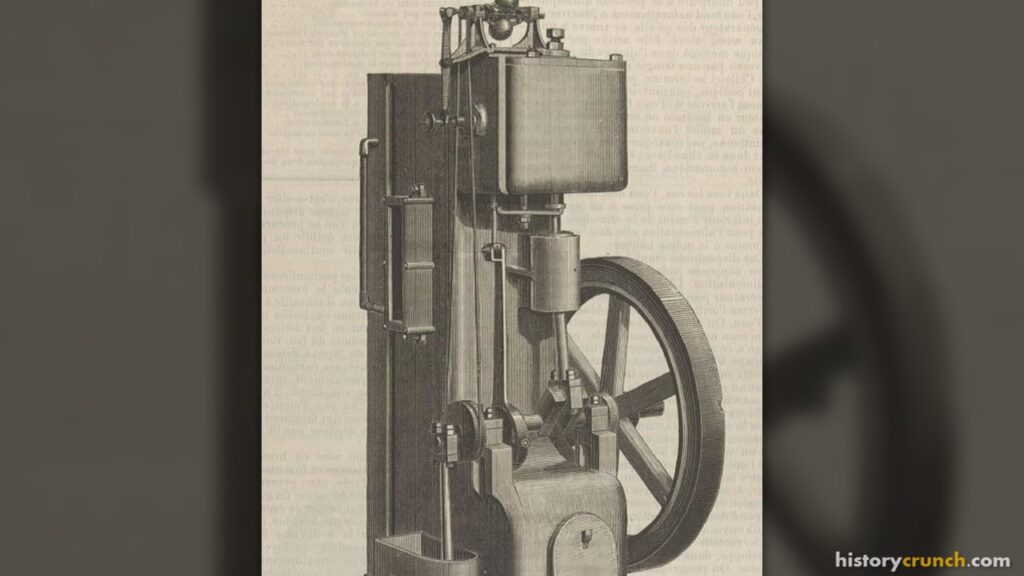
The invention of the steam engine in the late 18th century revolutionized industry and transportation by providing a powerful and efficient source of mechanical energy. This innovation enabled factories to be located away from water sources, leading to greater flexibility and growth in industrial production. Steam engines also transformed transportation, powering locomotives and ships, which facilitated faster movement of goods and people. The widespread adoption of steam power significantly accelerated the Industrial Revolution, driving economic expansion and technological progress.
 FactsthatCrunch
Tap each impact to read what it led to.
Invention of the Steam Engine by Thomas Newcomen
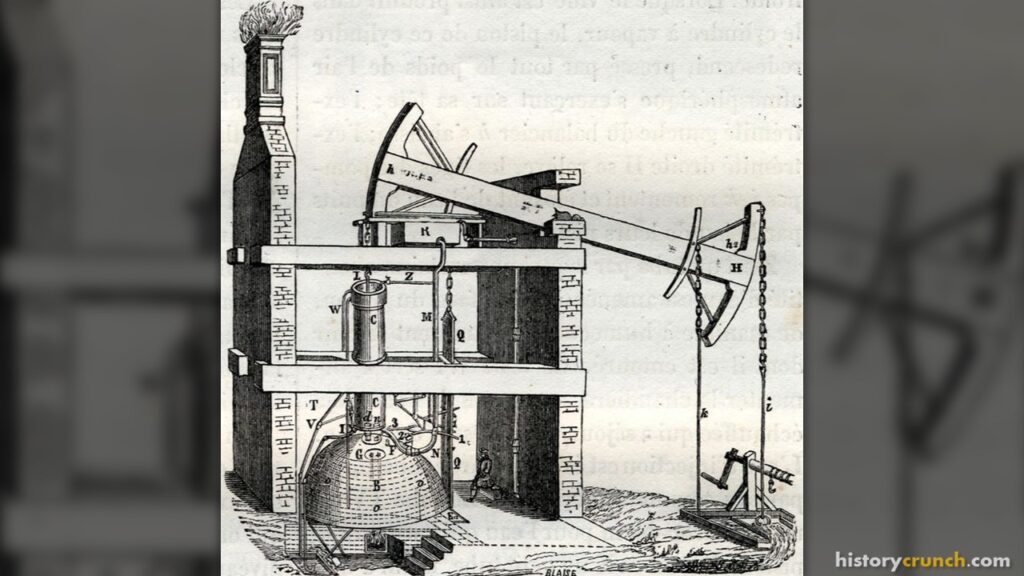
The invention of the steam engine during the Industrial Revolution is perhaps one of the most significant events during the time period. The first practical steam engine was invented by Thomas Newcomen, in 1712. Newcomen worked as an ironmongerA person who sells or makes iron goods and tools. in Devon, England and produced mining items for Cornish tin and coal mine owners who often complained that they were struggling to deal with flooding in their mines. Traditional methods of removing water from the mines were slow and hard work. Newcomen realized that he could help the tin mine owners, so he developed a pump engine that used a pistonA sliding part inside a cylinder that moves back and forth to create mechanical power. in a cylinder; it was the first of its kind. Therefore, the first main use of the steam engine in the Industrial Revolution was for the purposes of removing water from mines in a more efficient manner to allow quicker removal of important minerals.
 FactsthatCrunch
The Newcomen engine, built in 1712, was the first practical steam engine and was used to pump floodwater out of underground mines.
The Steam Engine and James Watt
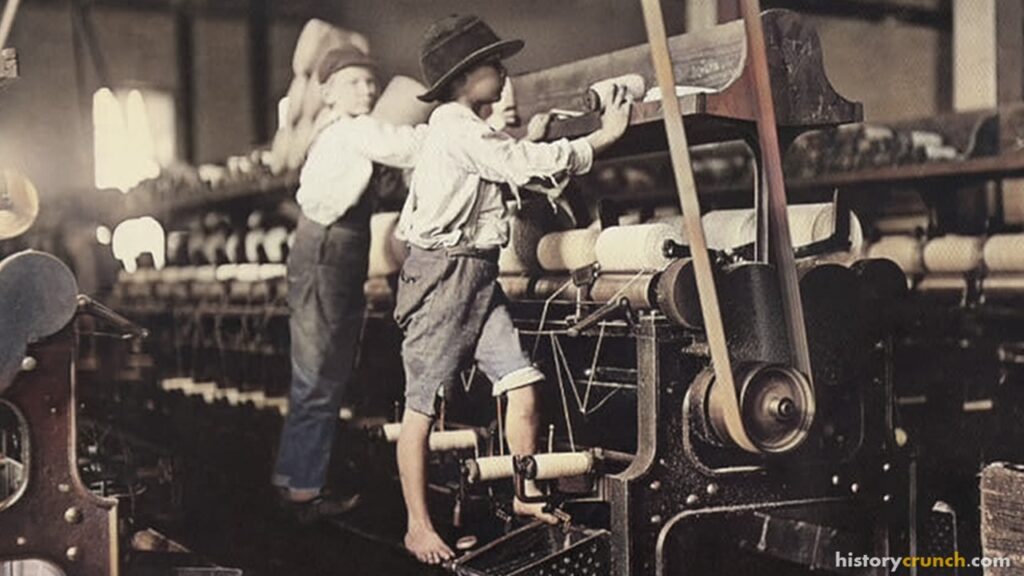
The steam engine was later improved by British inventor James Watt. In 1764, Watt was given a Newcomen steam engine to repair. He started working on it and soon realized that it was inefficientWasting energy or effort instead of working in the best possible way.. As a result, Watt wanted to improve the design. He was successful, and found a way to stop the engine from wasting heat and fuel by adding a separate condensing chamberA separate compartment Watt added to cool steam outside the main cylinder, so the cylinder stayed hot and less fuel was wasted.. Watt patentedReceived an official government right giving an inventor sole control over their new design. his new steam engine design, and it paved the way for other mechanical design work. With Watt’s improvements steam engines were soon used in many different industries and for many purposes. They were bought by mine owners, cotton mills, and waterworks and as a result, the steam engines helped to power the Industrial Revolution, allowing once very manual work to be replaced by engines.

The Steam Engine and the Industrial Revolution
Steam engines helped to improve productivity and increase efficiency. For example, later innovations, such as the steam train and boat used steam engine technology to revolutionize transportation. In 1807, Robert Fulton launched the first commercially successful steamboat, the Clermont, on the Hudson River in New York. Steamboats soon changed travel and trade in the United States, Britain and Europe. The steam boat allowed more goods to be shipped by canal and waterways which furthered the impacts of industrializationThe process by which a society shifts from hand labor to machine-based manufacturing on a large scale.. In 1814, George Stephenson built his first steam locomotive, ten years after Richard Trevithick ran the first one in 1804. Similar to the steam boat, the steam train increased the ability of industrialized nations to transport people and goods long distances. This allowed industrialized nations, such as Britain, to move goods to market and to transport raw materials into factories.
In conclusion, the steam engine was a major invention of the Industrial Revolution and was important to the advancement of industrialization throughout different sectors, such as: the textile industry, mining and transportation.
 FactsthatCrunch
Before steam power, factories had to be built next to rivers. What did James Watt's improved steam engine allow factory owners to do that water-powered mills could not?
Industrial Revolution timeline · 1760 – 1840
Key Vocabulary
Ironmonger
Piston
Inefficient
Condensing chamber
Patented
Industrialization
Frequently Asked Questions
Who invented the steam engine?
Thomas Newcomen built the first practical steam engine in 1712 in England. He worked as an ironmonger in Devon and made mining tools for local mine owners. His engine used a piston inside a cylinder to power a pump.
What was the first steam engine used for?
The first steam engine was used to pump water out of flooded mines. Cornish tin and coal mines often filled with water, which slowed the removal of minerals. Newcomen’s pump engine cleared the water faster than older, hand-powered methods.
How did James Watt improve the steam engine?
James Watt added a separate condensing chamber so the main cylinder no longer had to be cooled and reheated with every stroke. In 1764, he was asked to repair a Newcomen engine and saw that it wasted energy. He patented his improved design, which was far more efficient and useful in many industries.
How did the steam engine change transportation?
Steam power was used to build both steamboats and steam trains. Robert Fulton launched the first commercially successful steamboat in 1807, and George Stephenson built his first steam locomotive in 1814. These machines let nations move people, goods, and raw materials over long distances much faster.
Why was the steam engine important to the Industrial Revolution?
The steam engine gave factories a powerful and steady source of mechanical energy. It let factories be built away from rivers, since they no longer needed water wheels for power. Mine owners, cotton mills, and waterworks all used steam engines to replace slow manual labor.
Cite This Article
To cite this article as a source, use one of the formats below.
MLA: Beck, Elias. “Invention of the Steam Engine: A Detailed Summary.” HistoryCrunch, 25 September 2026, https://historycrunch.com/invention-of-the-steam-engine/.
APA: Beck, E. (2026). Invention of the Steam Engine: A Detailed Summary. HistoryCrunch. https://historycrunch.com/invention-of-the-steam-engine/
Chicago: Beck, Elias. “Invention of the Steam Engine: A Detailed Summary.” HistoryCrunch. September 25, 2026. https://historycrunch.com/invention-of-the-steam-engine/
Sources
- Emma Griffin, A Short History of the British Industrial Revolution.
- Fordham Modern History Sourcebook