Thomas Edison is one of the most significant figures in American history in terms of innovation and invention. More specifically, he played an important role in the development of the United States in the late Industrial Revolution. For instance, he is best remembered today for the inventions of the incandescent light bulb and the phonograph. He was also a successful entrepreneur and started several companies, including General Electric, which is still one of the largest companies in the world.
 FactsthatCrunch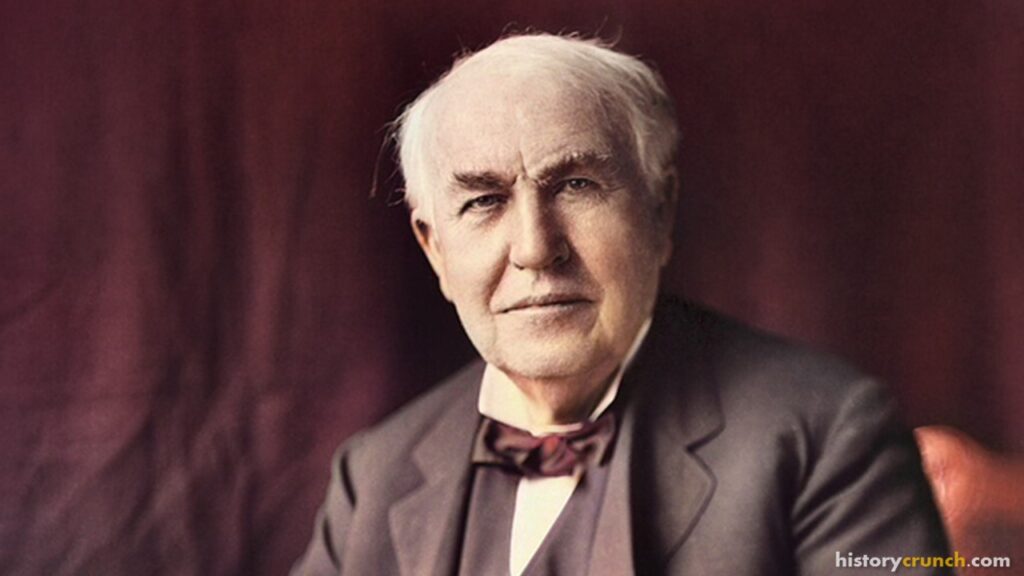
Thomas Edison – Early Life
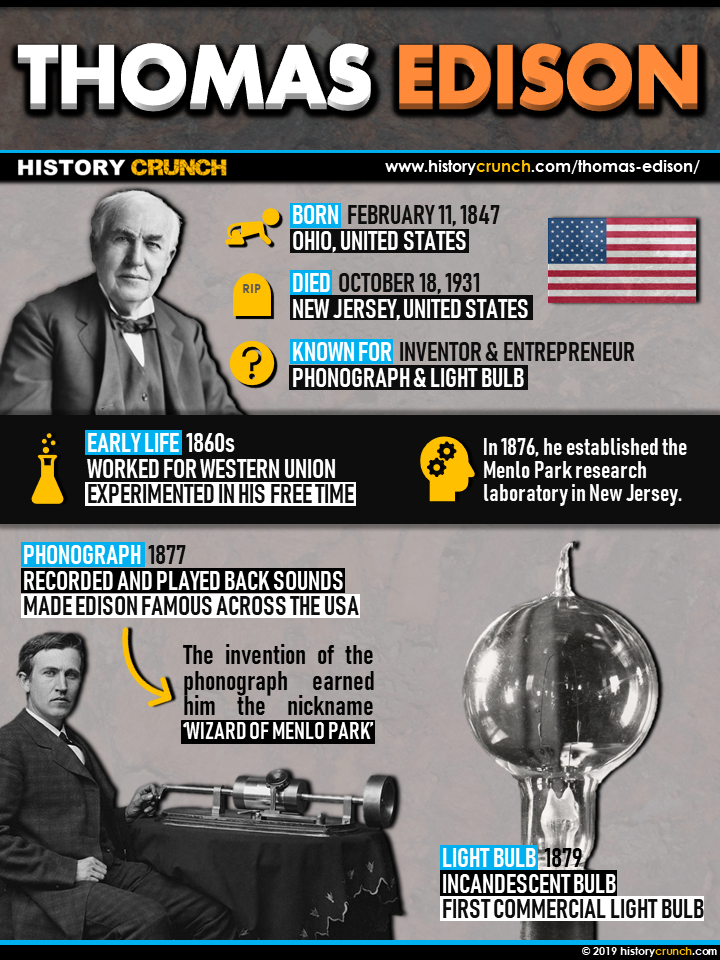
Thomas Edison was born on February 11th, 1847 in Ohio, United States. As a young boy Edison grew up in Michigan with his six brothers and sisters and his parents Samuel and Nancy. He did not go to school and instead was taught by his mother at home. When he was a teenager in order to supplementTo add to something in order to increase or make up for what is lacking. the family income he sold candy and newspapers on the trains near his house. Later Edison became a telegraph operator.
Edison moved to Kentucky in 1866 when he was nineteen years old, and he worked on the news wire for the Associated Press. He worked the night shifts so that he would have time to read about qualitative analysis and conduct chemical experiments. During his time as a telegrapher he invented a number of items including the electric vote recorder, which was also the first invention that he patentedOfficially registered an invention with the government so no one else can make or sell it without permission.. However, none were that successful, and unfortunately, Edison’s experiments led to him being fired as a result of a sulfuric acid spillage accident. Regardless, he would go on to become one of the most famous inventors of all time and had a profound effect on the later stages of the Industrial Revolution in the United States.
 FactsthatCrunch
Edison's very first patented invention, an electric vote recorder, was turned down by the lawmakers it was built for.
Edison applied for the patent in 1868, while working as a telegraph operator, and received it in 1869. The machine let lawmakers record their votes quickly with the flip of a switch. But members of Congress did not want faster voting, because slow roll calls gave them time to argue and bargain, so no one bought it. Edison said he learned to invent only things people actually wanted.
Thomas Edison – Menlo Park Laboratory
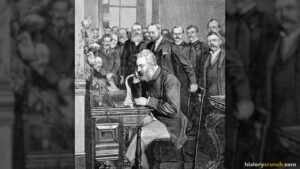
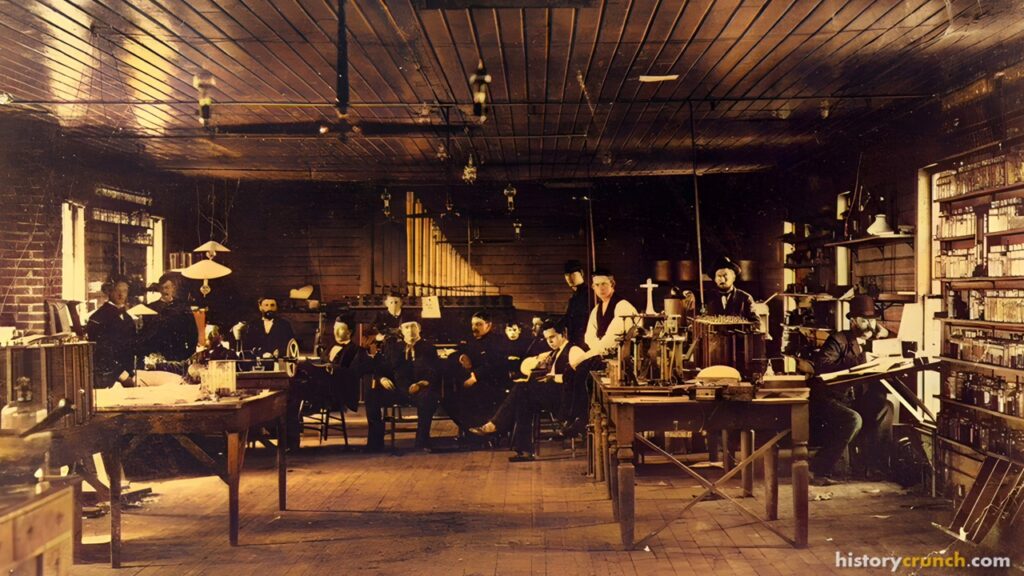
Edison married twice and had a number of children. However, he preferred to be in the lab and be experimenting rather than being with his family. Although this was not great for family relations it did allow Edison to spend time inventing. For example, in 1876 Edison famously developed his own research laboratory called the Menlo Park Laboratory. Edison built the laboratory in New Jersey by using the funds from the sale of his Quadruplex Telegraph, which was his first major success. The lab was set up in order to produce technological innovation and improvement, and it was very successful. In fact, the Menlo Park Laboratory was not just a place for Edison to work, but also served as a site for other inventors that wanted to mentor and train with Edison. In general, Thomas Edison directed the research of the people working at Menlo Park and took full legal ownership over any innovations created in the laboratory. During his time at the lab, working with others, Edison developed an improved carbon transmitter that made Bell’s new telephone louder and clearer, and the first successful lightbulb. Both inventions were important in order to allow people to communicate, and to allow industry and families to function, even at night. For example, he invented the phonograph in 1877, which is a device that recorded and reproduced sound. It was the first device to ever do this and amazed the American public at the time. It was so well received by the public that Edison was enduringly called ‘The Wizard of Menlo Park’.
 FactsthatCrunch
What was Thomas Edison's Menlo Park Laboratory built to do?
Thomas Edison – Invention of the Light Bulb
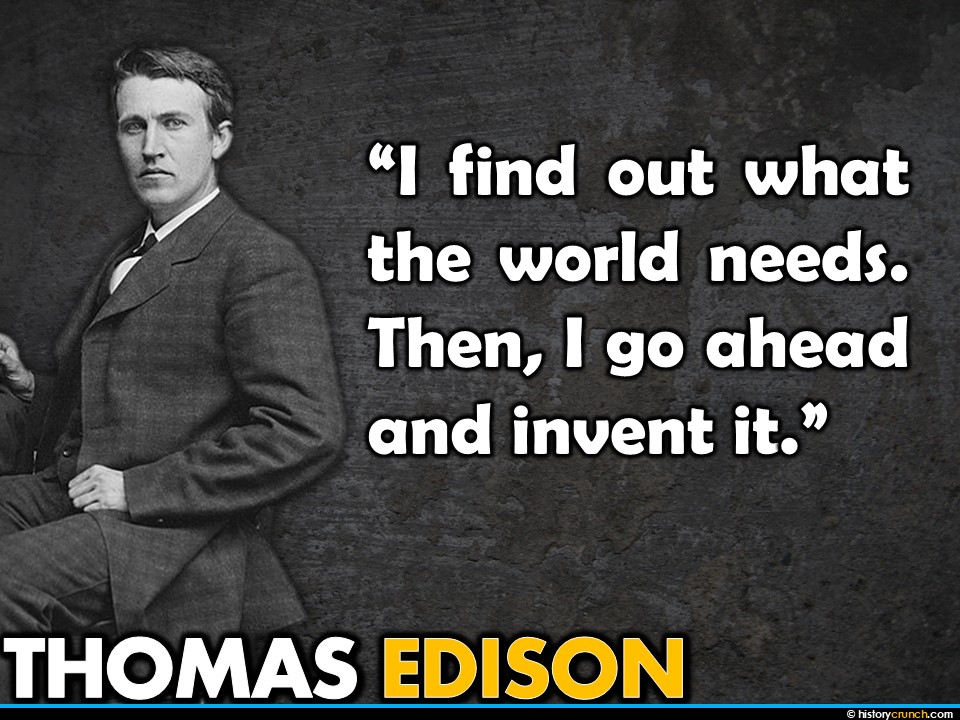
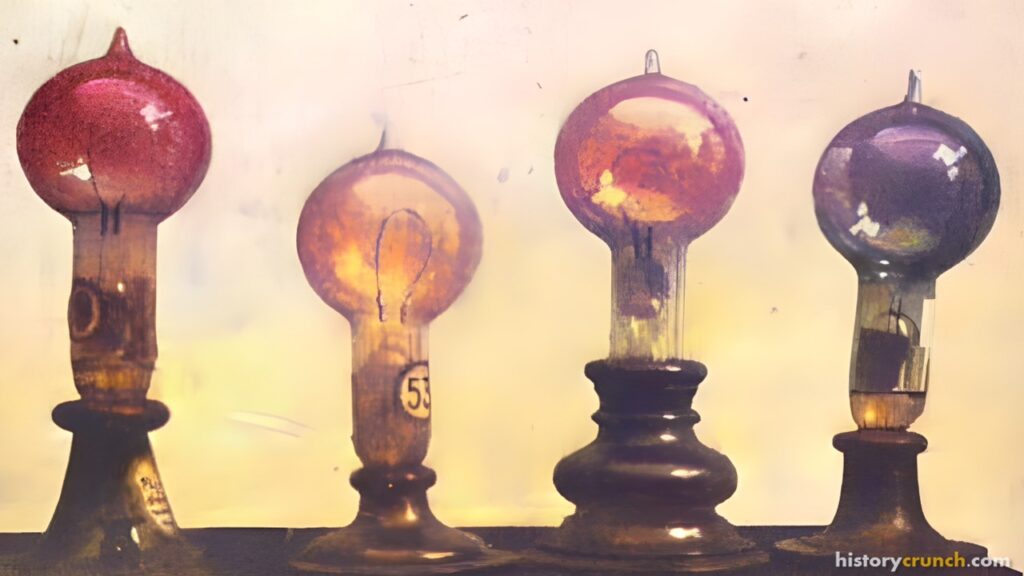
In 1878, Edison began work on likely his most famous invention – the incandescent light bulb. At the time, most of the lighting in homes and business was from either gas or oil lamps. In fact, several other inventors had previously introduced their own versions of the incandescentProducing light by being heated, as a wire glowing inside a glass bulb. light bulb. However, these earlier versions suffered from some major shortfalls, including: short lifespans and high cost. As such, in 1878, Edison set out to develop the first incandescent light bulb that could be used on a mass-scale and replace the gas and oil lamps. He officially obtained a patent for his version of the light bulb, which used a carbon filamentA thin thread of carbon inside a light bulb that glows when electricity passes through it., on January 27th, 1880. Edison and a team of financial backers had already formed the Edison Electric Light Company in 1878 to fund this work. He made his first demonstration of the light bulb in Menlo Park on December 31st, 1879. It was at this time that he is widely credited with saying that “We will make electricity so cheap that only the rich will burn candles”. Edison’s incandescent light bulb was the first mass-produced electric lighting solution and was sold across the United States and Europe.
In fact, Edison started his own electric utility company (Edison Illuminating Company) in 1880 and, in 1882, began delivering electricity for his light systems to customers in New York City. However, as time passed, Edison’s design for Direct Current (DC) delivery system faced stiff competition from the competing Alternating Current (AC) systems that were being developed by the Westinghouse Electric Company. Edison continually dismissed the AC designs and was eventually removed as the head of his own company in 1892 by prominent financial stakeholders, including J.P. Morgan. After his departure, Edison’s company merged with another electric company of the time and became known as General Electric.
 FactsthatCrunch
We will make electricity so cheap that only the rich will burn candles.
This famous line is widely credited to Edison around the time of his first public demonstration of the light bulb at Menlo Park, New Jersey. It captured his goal: electric light cheap enough for ordinary homes, replacing the gas and oil lamps most people used.
Thomas Edison – Death and Legacy
During his lifetime, Edison helped to pave the way for a new era of technology. He was a freethinker and his talents as a businessman and inventor enabled him to develop over 1000 patents, and over fourteen companies, one of which was General Electric, which remains one of the biggest publicly traded companies globally. In fact, while Edison is remembered today for inventing the lightbulb and phonograph, he also played a significant role in other fields of study and led to many other inventions. These included: fluoroscopy, telegraph, motion picture camera, battery, and different types of chemicals. Thomas Edison died on October 18th, 1931 and will be forever known as one of the single greatest inventors in the history of the United States.
 FactsthatCrunch
Thomas Edison earned 1,093 United States patents across his career, covering fields from electric power to sound recording.
Edison filed his first successful U.S. patent application on October 13th, 1868, when he was 21 years old. He also held approximately 1,239 patents in 34 other countries, bringing his worldwide total to 2,332. His busiest periods were 1872 to 1890 and 1897 to 1912, and in his peak year of 1882 alone he completed 106 successful applications.
Thomas Edison – Infographic
Industrial Revolution timeline · 1760 – 1840
Key Vocabulary
Supplement
Patented
Incandescent
Carbon filament
Frequently Asked Questions
What is Thomas Edison best known for?
Thomas Edison is best known for the incandescent light bulb and the phonograph. He was also a successful businessman who started more than fourteen companies. Over his life he earned more than 1,000 patents in many fields.
Did Thomas Edison invent the light bulb?
Edison did not invent the very first light bulb, but he made the first one that worked well for everyday use. Earlier versions had short lifespans and cost too much. His carbon filament design, patented on January 27th, 1880, was the first that could be mass-produced and sold widely.
Why was Edison called “The Wizard of Menlo Park”?
Edison earned that nickname after building his research laboratory at Menlo Park, New Jersey, in 1876. There he invented the phonograph in 1877, the first device to record and play back sound. The public was amazed by his steady stream of new inventions from the lab.
How did Thomas Edison start General Electric?
Edison founded the Edison Electric Light Company to sell his new light bulb. His direct current system later lost ground to alternating current backed by rivals. In 1892 financial backers, including J.P. Morgan, removed him, and his company merged with another to become General Electric.
When was Thomas Edison born and when did he die?
Thomas Edison was born on February 11th, 1847, in Ohio and died on October 18th, 1931. He grew up in Michigan and was taught at home by his mother. He worked as a telegraph operator before becoming a full-time inventor.
Cite This Article
To cite this article as a source, use one of the formats below.
MLA: Beck, Elias. “Thomas Edison: A Detailed Biography.” HistoryCrunch, 26 September 2026, https://historycrunch.com/thomas-edison/.
APA: Beck, E. (2026). Thomas Edison: A Detailed Biography. HistoryCrunch. https://historycrunch.com/thomas-edison/
Chicago: Beck, Elias. “Thomas Edison: A Detailed Biography.” HistoryCrunch. September 26, 2026. https://historycrunch.com/thomas-edison/
Sources
- Fordham Modern History Sourcebook
- Robert C. Allen, The Industrial Revolution: A Very Short Introduction.
- Emma Griffin, A Short History of the British Industrial Revolution.
- Joel Mokyr, The Enlightened Economy.