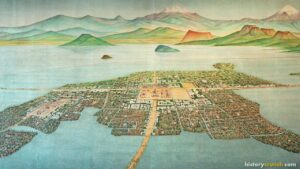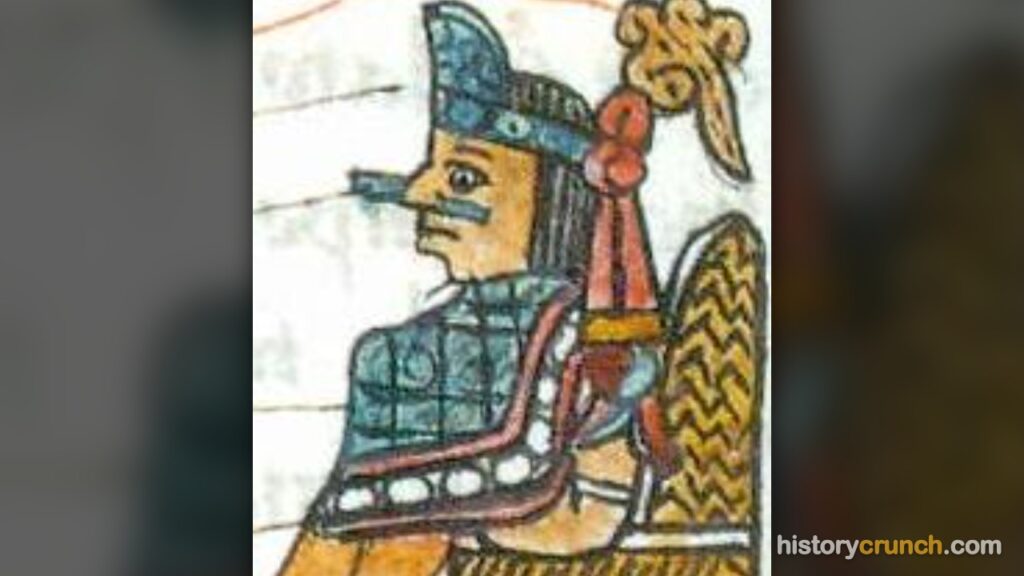
Cuitlahuac was one of the most important Aztec rulers of the early sixteenth century, even though he governed for only a short time. He became the tenth huey tlatoani, or Great Speaker, of the Aztec Empire in the summer of 1520, at the exact moment that Spanish conquistadors and their allies were tearing the empire apart. Unlike his older brother, the previous ruler Moctezuma II, Cuitlahuac chose to fight the invaders rather than negotiate with them. For this reason he is best remembered as the leader who organized the Aztec resistance and drove Hernan Cortes out of the Aztec capital of Tenochtitlan.
The Aztec Empire was a powerful collection of city-states in what is today central Mexico. It grew out of the Aztec Triple Alliance, a political and military pact formed in 1428 between the cities of Tenochtitlan, Texcoco, and Tlacopan, and it was ruled by a line of leaders known as the huey tlatoani. Cuitlahuac ruled during the Spanish conquest of the Aztec Empire, the two-year struggle that ended the empire and began Spanish rule in Mexico.
Early Life and Background
Cuitlahuac was born around the year 1476 into the royal family of Tenochtitlan, the capital of the Aztec Empire. He was one of the many sons of Axayacatl, who had ruled as the sixth huey tlatoani of the empire. This royal birth meant that Cuitlahuac grew up surrounded by the customs, religion, and politics of the Aztec ruling class.
His family connections tied him to power in more than one direction. His mother was the daughter of the ruler of Iztapalapa, a city on the shores of Lake Texcoco whose leader was also named Cuitlahuac. In addition, one of his older brothers was Moctezuma II, who became the ninth ruler of the Aztec Empire in 1502. Being both the son of one emperor and the brother of another placed Cuitlahuac close to the center of Aztec government from an early age.
As a young member of the royal family, Cuitlahuac would have received the strict education given to Aztec nobles. This training focused heavily on religion, history, and the art of war. In fact, by the time the Spanish arrived, Cuitlahuac had a strong reputation as an experienced warrior, which shaped how his people viewed him in the crisis that followed.
Ruler of Iztapalapa and Adviser to Moctezuma
Before he ever became emperor, Cuitlahuac served as the tlatoani, or ruler, of Iztapalapa, the city of his maternal grandfather. A tlatoani was the local ruler of a single Aztec city, while the huey tlatoani was the supreme ruler of the whole empire. Governing Iztapalapa gave Cuitlahuac years of practice in leadership, war, and politics.
Cuitlahuac was also one of the chief advisers to his brother Moctezuma II. When Hernan Cortes and his men marched toward Tenochtitlan in 1519, Cuitlahuac reportedly warned Moctezuma not to allow the strangers into the capital. More specifically, he distrusted the Spanish and their intentions from the start. Moctezuma, however, chose a more cautious path and welcomed the visitors with gifts, allowing them to enter the city as guests.
The situation soon turned dangerous. Cortes grew fearful that the Aztecs would turn against him, so he took Moctezuma captive and tried to rule the empire through the imprisoned emperor. During this time, the Spanish also seized a number of important nobles, and Cuitlahuac was among those taken prisoner. As a result, one of the strongest voices for resistance was locked away just as the crisis reached its peak.
Rise to Power
The turning point came while Cortes was away from Tenochtitlan. In the spring of 1520, Cortes was forced to leave the city to deal with a rival Spanish force sent by the governor of Cuba to arrest him. He left one of his captains, Pedro de Alvarado, in charge of the capital. While Cortes was gone, Alvarado ordered a brutal massacre of Aztec nobles during a religious festival at the Great Temple.
The massacre enraged the people of Tenochtitlan, who rose up and laid siege to the Spanish inside the city. When Cortes returned, he found the capital in open revolt. Desperate to calm the crowds, the Spanish released Cuitlahuac, supposedly so that he could reopen the city market and allow food to reach the trapped invaders. In reality, freeing such a respected warrior gave the Aztecs the capable leader they needed.
Soon after, Moctezuma II died. According to some accounts, he was stoned by his own people while trying to calm them from a palace rooftop, while other accounts claim the Spanish killed him as they fled the city. Either way, his death left the throne empty at the most dangerous moment in Aztec history. With the Spanish driven out of the capital, the Aztec nobles elected Cuitlahuac as the new huey tlatoani, the tenth ruler of the Aztec Empire.
Major Achievements
Once freed, Cuitlahuac wasted no time in organizing the Aztec resistance against the Spanish. His most famous achievement came during the night of June 30th, 1520, an event the Spanish later called La Noche Triste, meaning “The Sad Night.” On that night the Aztecs attacked Cortes and his men as they tried to sneak out of Tenochtitlan along one of the raised roads that crossed the lake.
The fighting was a disaster for the Spanish. Many of Cortes’ soldiers were killed or drowned as they struggled to escape, weighed down by the gold they had looted. Cortes himself was injured during the flight, and this defeat became the most humiliating loss the Spanish suffered during the entire conquest. The survivors fled to the friendly city of Tlaxcala to recover, chased by Aztec warriors.
As emperor, Cuitlahuac understood that the Spanish would return, so he began preparing for the next round of fighting. He worked to build and maintain alliances with the cities around Tenochtitlan and tried to keep the empire’s tribute-paying peoples loyal so they would not defect to the Spanish. In addition, he removed rulers of nearby cities who had become puppets of the invaders and replaced them with leaders loyal to the Aztec cause.
Even so, these efforts were not enough to turn the tide. For instance, Cuitlahuac failed to convince the Tlaxcala, the main native allies of the Spanish, to break their alliance with Cortes. As stated above, the Tlaxcala were old enemies of the Aztec, and they saw the arrival of the Spanish as a chance to strike back. On top of this, some of the empire’s tributary peoples rebelled, which forced Cuitlahuac to split his army and prevented him from crushing the Spanish while they were still weak.
Later Life and Death
Cuitlahuac’s reign was tragically short, lasting only about 80 days. During these weeks a new and invisible enemy struck the Aztec people. When the Spanish and other Europeans arrived in the Americas during the Age of Exploration, they brought with them diseases that had never existed in the New World, including smallpox, influenza, and measles.
Smallpox spread rapidly through Tenochtitlan between September and November of 1520. Because the native peoples of the Americas had no natural defenses against it, the disease killed enormous numbers of people in a very short time. Cuitlahuac was among the victims, dying of smallpox late in 1520 after ruling for only a few months.
His death struck the Aztec Empire at the worst possible moment. In a matter of months the empire had lost two rulers, first Moctezuma II and then Cuitlahuac, leaving the Aztecs without stable leadership in the middle of a war for survival. A new huey tlatoani, Cuauhtemoc, was chosen in February of 1521. Cuauhtemoc would become the last Aztec ruler, defending the capital until it finally fell to the Spanish and their allies on August 13th, 1521.
Significance of Cuitlahuac
Cuitlahuac is significant because he led the strongest and most successful Aztec resistance against the Spanish invaders. His victory during La Noche Triste showed that the Spanish were not unbeatable, and it forced Cortes to retreat, regroup, and rebuild his army before he could try again. For a brief moment, it looked as though the Aztecs might drive the invaders out of Mexico for good.
His life also highlights the two forces that doomed the Aztec Empire. First, the Spanish gained thousands of native allies, such as the Tlaxcala, who resented Aztec rule and were eager to help bring the empire down. Second, European diseases like smallpox devastated the Aztec population and killed capable leaders like Cuitlahuac himself. In reality, the empire was weakened as much by illness and division as by Spanish weapons.
Today, Cuitlahuac is remembered in Mexico as a symbol of resistance against foreign conquest. His name lives on in Mexican towns, streets, and public places, and his story remains a key part of understanding how the Aztec Empire fell. Though he ruled for only 80 days, his choice to fight rather than surrender secured his place in history.
Frequently Asked Questions
Who was Cuitlahuac?
Cuitlahuac was the tenth ruler, or huey tlatoani, of the Aztec Empire, governing for about 80 days in 1520. He was the brother of Moctezuma II and became emperor during the Spanish conquest, when he led the Aztec resistance against Hernan Cortes. Before becoming emperor, he had served as the ruler of the city of Iztapalapa.
How did Cuitlahuac die?
Cuitlahuac died of smallpox in late 1520, only a few months into his reign. The disease had been brought to the Americas by Europeans and spread quickly because native peoples had no natural protection against it. His death robbed the Aztecs of experienced leadership at a critical moment in the war.
How long did Cuitlahuac rule the Aztec Empire?
Cuitlahuac ruled for roughly 80 days, making his one of the shortest reigns in Aztec history. He took power after Moctezuma II died in the summer of 1520 and died of smallpox before the end of that year. His short reign was one reason the Aztecs struggled to organize a lasting defense.
What did Cuitlahuac do during the Spanish conquest?
Cuitlahuac organized the Aztec forces that drove the Spanish out of Tenochtitlan during La Noche Triste in June of 1520. He also tried to build alliances with nearby cities and keep the empire’s tributary peoples loyal in preparation for the next Spanish attack. His efforts made him the most effective Aztec leader against the invaders.
Who became Aztec ruler after Cuitlahuac?
Cuauhtemoc became the Aztec ruler after Cuitlahuac died, taking power in February of 1521. He was the eleventh and final huey tlatoani of the Aztec Empire and led the defense of Tenochtitlan during its final siege. The city fell to the Spanish and their allies on August 13th, 1521, ending the empire.
Cite This Article
To cite this article as a source, use one of the formats below.
MLA: Millar, B. “Cuitlahuac: A Detailed Biography.” HistoryCrunch, 18 July 2026, https://historycrunch.com/cuitlahuac/.
APA: Millar, B. (2026). Cuitlahuac: A Detailed Biography. HistoryCrunch. https://historycrunch.com/cuitlahuac/
Chicago: Millar, B. “Cuitlahuac: A Detailed Biography.” HistoryCrunch. July 18, 2026. https://historycrunch.com/cuitlahuac/
Sources
- J.M. Roberts & Odd Arne Westad, The Penguin History of the World.
- Jerry Bentley & Herbert Ziegler, Traditions & Encounters: A Global Perspective on the Past.