James Watt was a significant figure in the timeframe of the Industrial Revolution and is remembered today as a noted inventor. For example, he improved upon the invention of the steam engine, which had a profound impact on production in England and around the world during the time of the Industrial Revolution. For example, James Watt’s steam engine transformed the textile industry, mining operations and general production facilities.
 FactsthatCrunch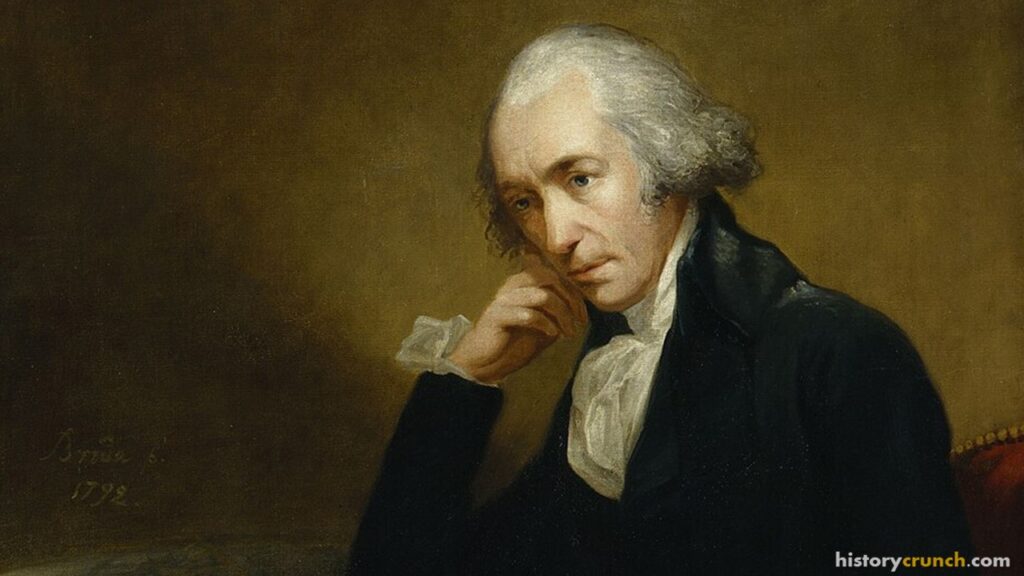
James Watt – Early Life
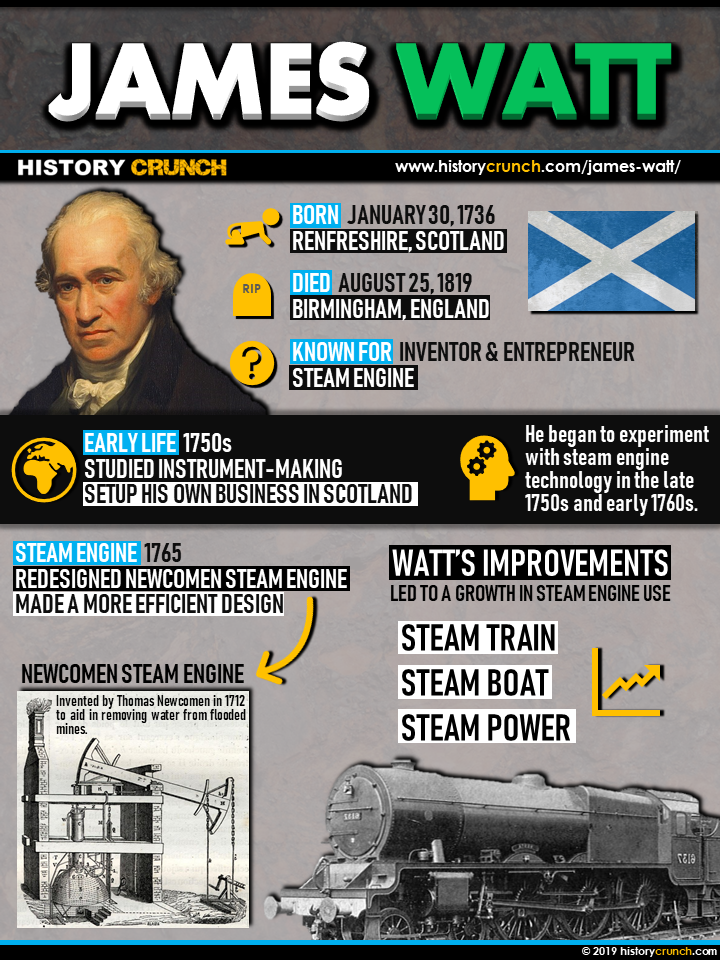
James Watt was born on January 19th, 1736 in Scotland. His father was a successful ship builder, and so Watt grew up surrounded by builders and engineers. After attending school, Watt started work as a maker of mathematical instrumentsTools used to make precise measurements, like compasses or scales, built and sold as a trade., but quickly he became much more interested in the new steam engine technology that had started to take off.
 FactsthatCrunch
What jobs did mathematical instruments makers do in James Watt's time?
James Watt – Steam Engine
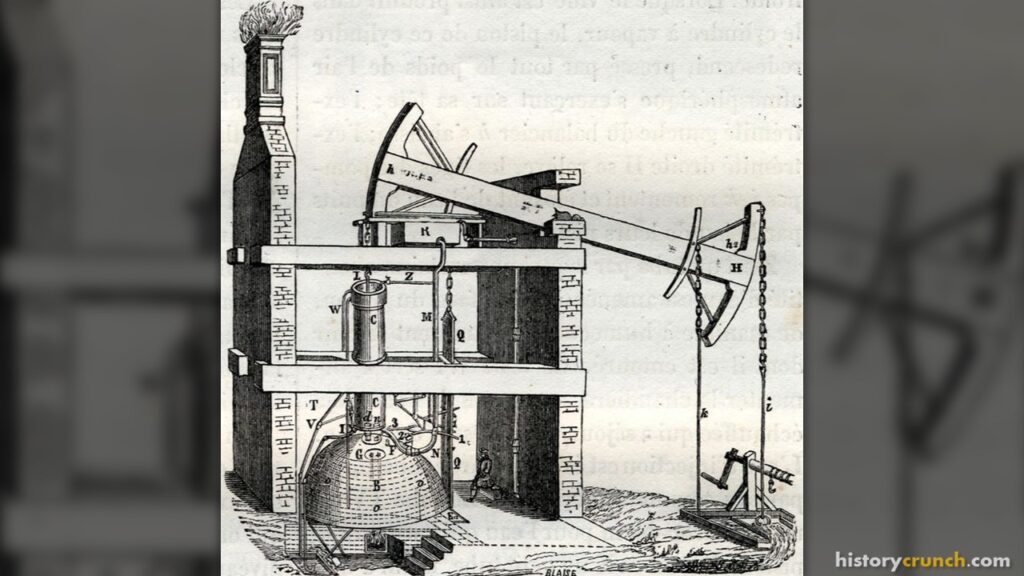
In 1764, Watt was given a Newcomen steam engine to repair. He started working on it and soon realized that it was inefficientWasting more energy or effort than needed to get a job done.. As a result, Watt wanted to improve the design. He was successful, and found a way to stop the engine from wasting heat and fuel by adding a separate condensing chamberA separate compartment added to a steam engine that cools steam outside the main cylinder, so the cylinder stays hot and less fuel is wasted.. Watt patentedReceived official government protection giving an inventor the sole right to make or sell a new design. his new steam engine design, and it paved the way for other mechanical design work.
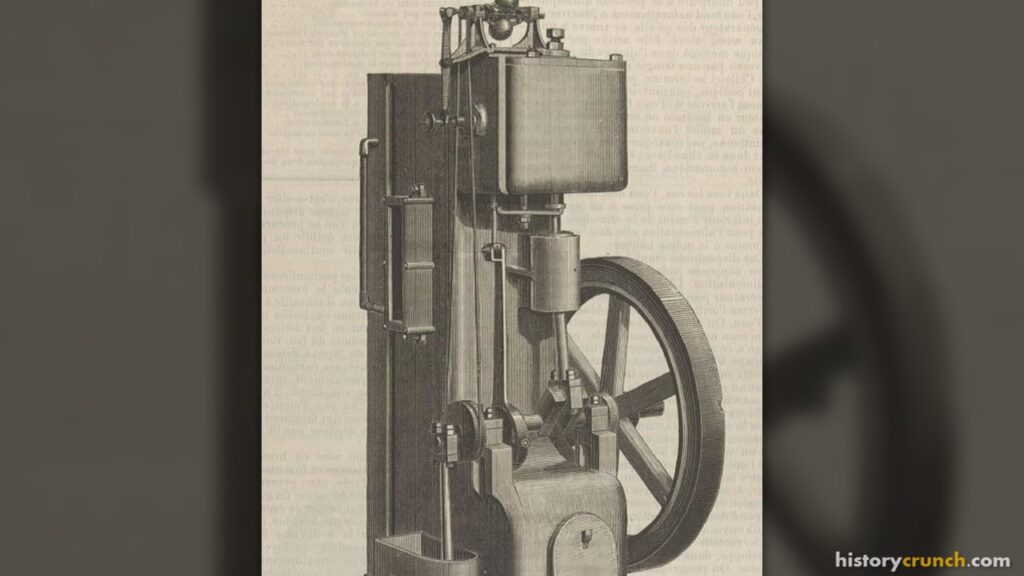
Watt continued working on steam engines and in 1775 he partnered with Matthew Boulton, and together they began to manufactureTo produce goods in large quantities, often using machines. steam engines. Steam engines were bought by mine owners, cotton mills, and waterworks and as a result, the steam engines they produced helped to power the Industrial Revolution, allowing once very manual work to be replaced by engines. Steam engines helped to improve productivity and increase efficiency. The Watt and Boulton partnership was very successful, and became the most important and sought after engineering firm in the country.
Watt and Boulton became wealthy men, and in 1800 Watt retired from the firm. Watt continued to research and he invented a number of important mechanical items including the steam indicator which records pressure inside the engine.
 FactsthatCrunch
When Watt examined the Newcomen steam engine in 1764, what was the main problem he identified?
James Watt – Death and Legacy
Watt died in 1819. The Watt, a unit of measurementA standard amount used to express and compare a physical quantity, like power or length. of mechanical and electrical power, was named after James Watt in remembrance of his life’s work. As well, his contribution to the steam engine made him one of the most significant inventors of the Industrial Revolution, as he helped improve mechanizationReplacing human or animal labor with machines to do work faster and in greater amounts. and production.
FactsthatCrunchThe Watt as a Unit of Power: How It Compares to Everyday Devices
The watt is the standard international unit of power, equal to one joule of energy used per second. The name was proposed in 1882 and adopted internationally in 1889, in recognition of James Watt's work improving the steam engine. Today the watt is used worldwide to rate everything from tiny phone chargers to large kitchen appliances. The numbers above are typical ratings.
James Watt – Infographic
Industrial Revolution timeline · 1760 – 1840
Key Vocabulary
Mathematical instruments
Inefficient
Condensing chamber
Patented
Manufacture
Mechanization
Unit of measurement
Frequently Asked Questions
Who was James Watt?
James Watt was a Scottish inventor who greatly improved the steam engine. He was born in Scotland on January 19th, 1736, and grew up around builders and engineers. His work helped power the Industrial Revolution in England and around the world.
How did James Watt improve the steam engine?
Watt added a separate condensing chamber, so the main cylinder no longer had to be cooled and reheated with every stroke. In 1764 he was asked to repair a Newcomen steam engine and saw that it wasted energy. His new design made the engine far more efficient, and he patented it.
Who was Matthew Boulton?
Matthew Boulton was the business partner who helped Watt manufacture steam engines. The two joined forces in 1775 and built the most sought after engineering firm in the country. Their engines were bought by mine owners, cotton mills, and waterworks.
Why is the watt named after James Watt?
The watt, a unit that measures mechanical and electrical power, was named in his honor. It recognizes his life’s work on the steam engine and machines. Today the unit is used worldwide to describe how much power a device uses.
What impact did James Watt have on the Industrial Revolution?
Watt’s improved steam engine let machines replace much slow manual work. It transformed the textile industry, mining, and general production by raising output and efficiency. These changes made him one of the most important inventors of the Industrial Revolution.
Cite This Article
To cite this article as a source, use one of the formats below.
MLA: Beck, Elias. “James Watt: A Detailed Biography.” HistoryCrunch, 25 September 2026, https://historycrunch.com/james-watt/.
APA: Beck, E. (2026). James Watt: A Detailed Biography. HistoryCrunch. https://historycrunch.com/james-watt/
Chicago: Beck, Elias. “James Watt: A Detailed Biography.” HistoryCrunch. September 25, 2026. https://historycrunch.com/james-watt/
Sources
- Joel Mokyr, The Enlightened Economy.
- Emma Griffin, A Short History of the British Industrial Revolution.