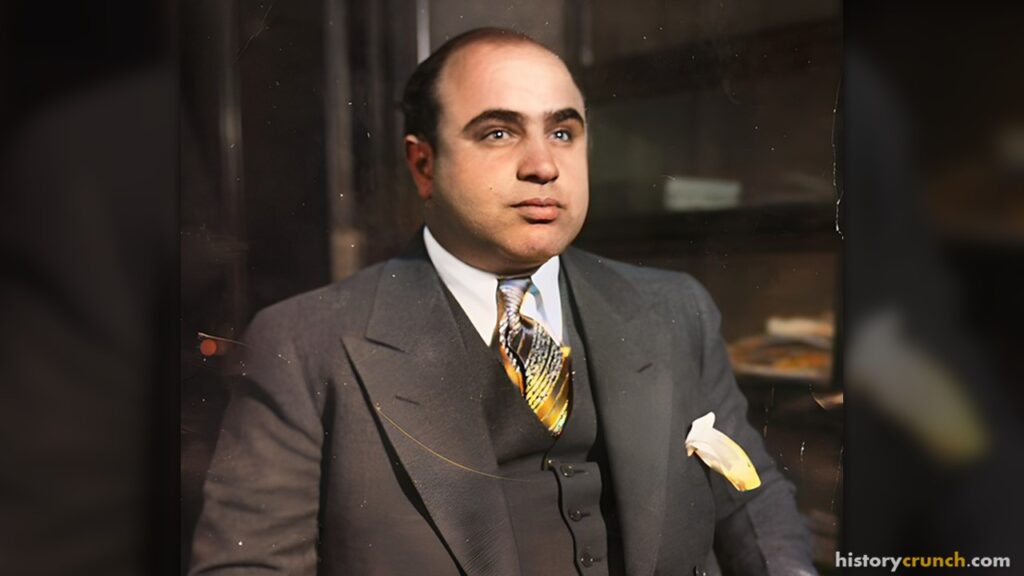
Al Capone, also known by the nickname ‘Scarface’, is one of the most notorious gangsters in American history. His name is synonymous with organized crime during the Prohibition Era in the 1920s and early 1930s. This article explores Al Capone’s rise to power, his criminal activities, and his eventual downfall.
AL CAPONE – EARLY LIFE
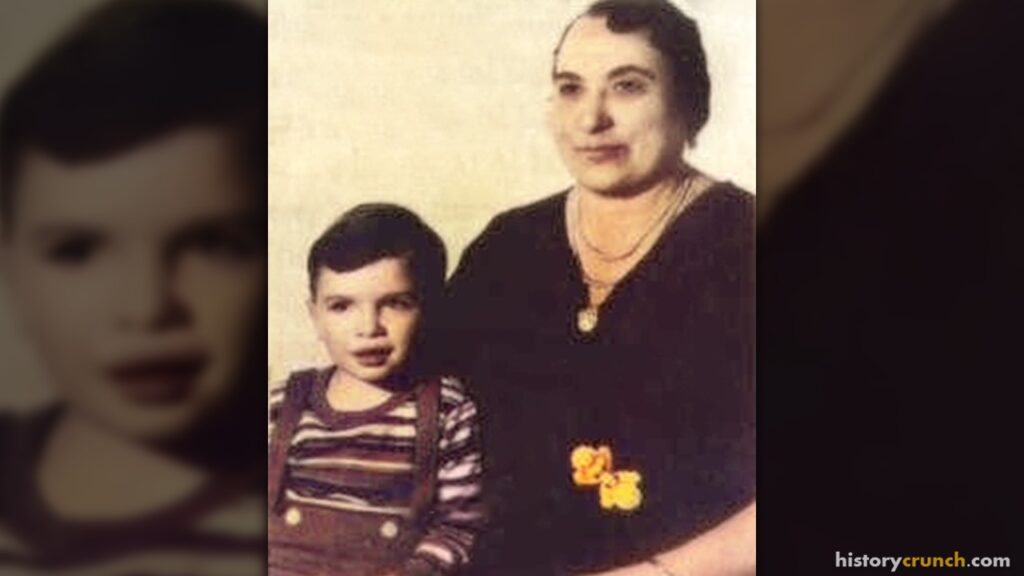
Alphonse Gabriel Capone was born on January 17th, 1899, in Brooklyn, New York, to Italian immigrant parents. Growing up in a poor neighborhood, Capone dropped out of school after the sixth grade and quickly became involved in petty crime. His early involvement in street gangs, such as the Five Points Gang, set the stage for his future in organized crime.
AL CAPONE – RISE TO POWER
In 1919, Capone moved to Chicago at the invitation of Johnny Torrio, a mentor and prominent mobster. Torrio saw potential in Capone and brought him into his criminal operations, which included illegal alcohol distribution, gambling, and prostitution. When Torrio was severely injured in an assassination attempt in 1925, he retired, leaving Capone in charge.
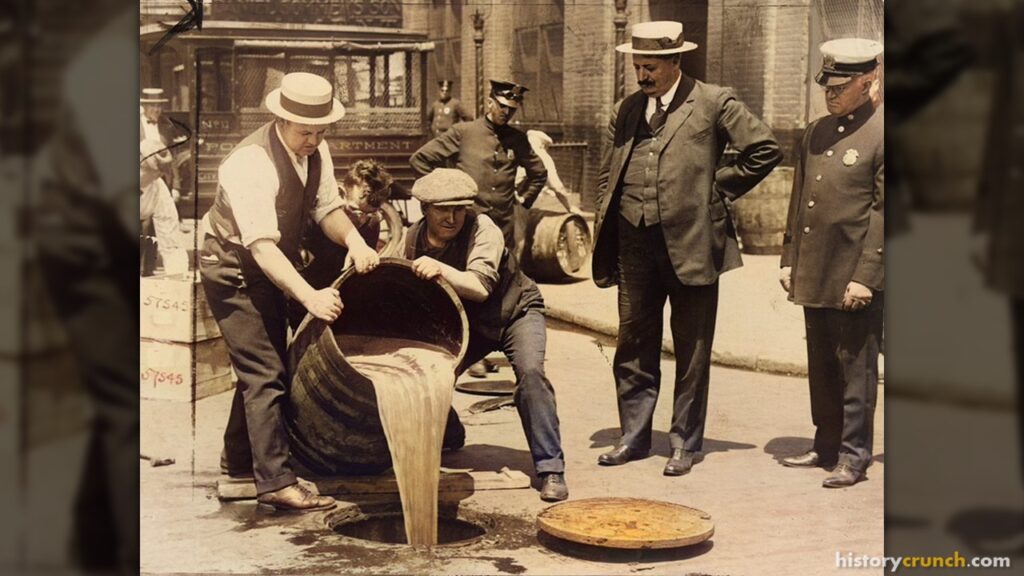
Capone quickly rose to power, becoming the boss of the Chicago Outfit, a criminal organization that dominated the city. He capitalized on Prohibition, the period from 1920 to 1933 when the manufacture, sale, and transportation of alcoholic beverages were illegal in the United States. The goal was to reduce crime and other societal problems, but it actually led to the rise of illegal speakeasies, bootlegging, and organized crime. For example, figures like Al Capone became infamous for their roles in the illegal alcohol trade during the era of Prohibition. In fact, Capone’s gang smuggled liquor into Chicago from Canada and other regions, making a fortune from illegal sales.
AL CAPONE – CRIMINAL ACTIVITY
Capone’s criminal empire extended beyond just alcohol and bootlegging during the Prohibition Era. For example, he controlled gambling operations, ran brothels, and engaged in various forms of extortion. Despite his criminal activities, Capone portrayed himself as a businessman and philanthropist, which is someone who supports causes with donations or personal time. For instance, he donated to charities and opened soup kitchens during the Great Depression, which earned him a positive reputation among many of the general public.
However, his public image could not mask the violence and corruption associated with his operations. Specifically, Capone’s gang was involved in numerous violent conflicts with rival gangs, leading to a period known as the ‘Beer Wars’. The most infamous of these conflicts was the St. Valentine’s Day Massacre on February 14th, 1929, where seven members of a rival gang were brutally murdered. Although Capone was widely believed to have organized and ordered the massacre, he was never charged for it.
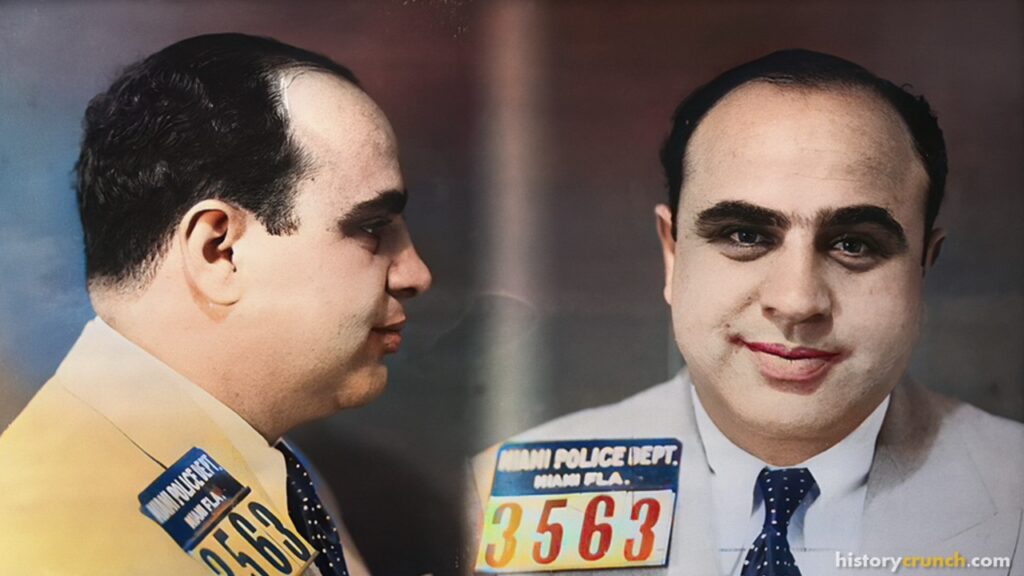
Despite his success, Capone’s criminal activities eventually caught up with him. The federal government, under the direction of President Herbert Hoover, made it a priority to bring Capone to justice. Due to the difficulty of securing evidence for his more violent crimes, authorities focused on his financial activities. As a result, in 1931, Capone was charged with tax evasion. Despite his attempts to bribe and intimidate jurors, he was found guilty and sentenced to 11 years in federal prison. Capone served his sentence in several prisons, including the infamous Alcatraz in San Francisco Bay. His health deteriorated during his time in prison and led to his death.
AL CAPONE – DEATH AND LEGACY
Al Capone was released from prison in 1939 after serving seven years, having received a reduction for good behavior. However, he was no longer the powerful crime boss he had once been. His health continued to decline, and he lived the remainder of his life at his estate in Palm Island, Florida. Al Capone died on January 25th, 1947, at the age of 48, from complications related to syphilis.
Al Capone left a considerable legacy in American history and culture. As a crime boss, he was infamous and a symbol of the lawlessness and excess of the Prohibition Era.