The Enclosure Movement, a pivotal yet contentious period in agricultural history, fundamentally transformed rural landscapes, economies, and societies in England from the 16th century through the 19th century. This article explores the origins, history, and outcomes of the Enclosure Movement, especially in relation to the events of the Industrial Revolution.
 FactsthatCrunch
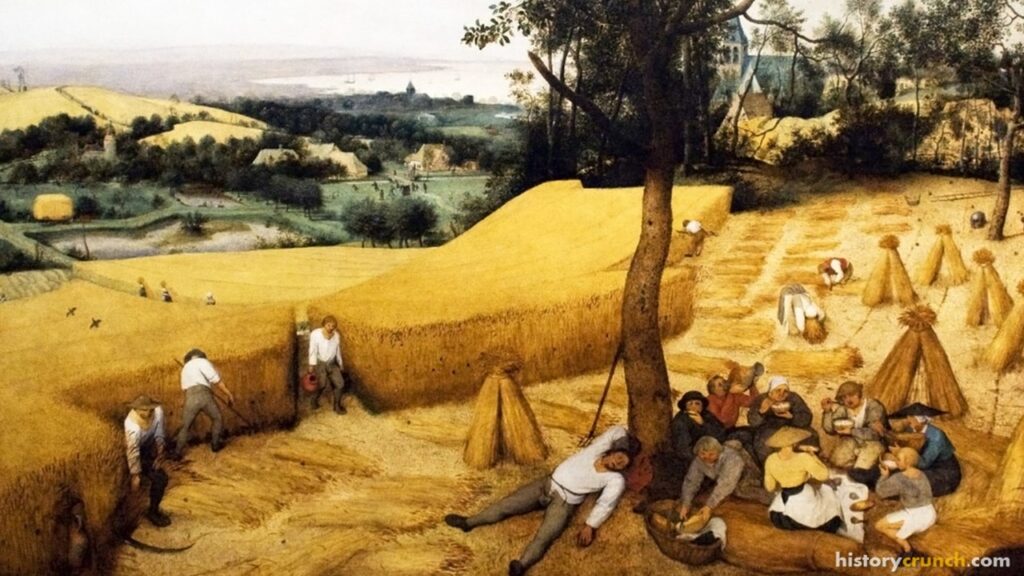
The Enclosure Acts turned shared common lands into privately owned farms, pushing many rural farmers off the land.
What Was the Enclosure Movement?
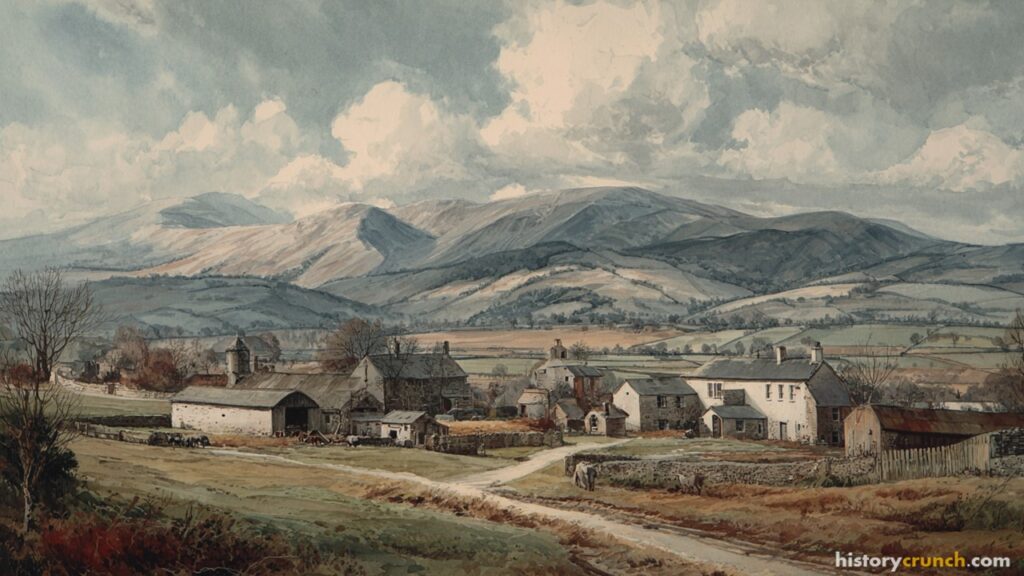
The Enclosure Movement refers to the process in England by which communal landsFields and pastures owned by no single person but shared and used together by an entire village community. traditionally held in the open field systemA farming method where villagers each worked small strips of land and shared common areas for grazing and crops. were combined into individual, privately-owned plots of land. This was often achieved through Acts of Parliament and also by informal agreements. Previously, lands in villages were collectively farmed in an open-field system, where villagers shared common lands for grazing livestock and growing crops. This process of ‘enclosure’ became especially common during the time of the British Agricultural Revolution and the Industrial Revolution in the 18th and 19th centuries.
 FactsthatCrunch
Enclosure Movement and the Industrial Revolution
The Industrial Revolution had several causes, but one of the most important was the impact of the British Agricultural Revolution. The British Agricultural Revolution mainly involved innovations in farming that led to a dramatic increase in food production. For example, Charles Townshend’s idea of crop rotationA farming technique of growing different crops on the same land in different seasons to increase food output. allowed farmers to grow more food, while Jethro Tull’s seed drillA machine invented by Jethro Tull that planted seeds faster and more efficiently than doing so by hand. allowed faster and more efficient farming practices. While these were important features of the Agricultural Revolution, there was another that also had a big impact on the Industrial Revolution.
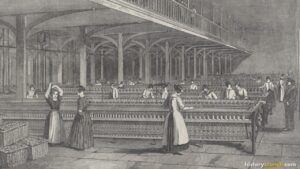
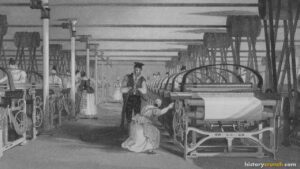
Another important feature of the Agricultural Revolution was the Enclosure Movement. In the decades and centuries before the 1700s, British farmers planted their crops on small strips of land while allowing their animals to graze on common fields shared collectively. However, in the 1700s, the British parliament passed legislation, referred to as the Enclosure ActsLaws passed by the British Parliament that allowed shared common lands to be converted into privately owned plots., which allowed the common areas to become privately owned. This led to wealthy farmers buying up large sections of land in order to create larger and more complex farms. Ultimately, this forced smaller farmers off of their land. Having lost their way of life, many of these farmers went to local towns and cities in search of work. This was important to the overall Industrial Revolution, because it helped create a system that created a large workforce for the factories and mines.
In general, the Enclosure Movement involved the British parliament passing a series of acts that allowed increased private ownership, which was a key characteristic of the Industrial Revolution. It forced the poor people to migrate to centralized locations such as industrial cities and towns and to seek work in factories and mines. Therefore, historians often view it as one of the main causes of the Industrial Revolution.
 FactsthatCrunch
Impacts of the Enclosure Movement
As stated above, the Enclosure Movement caused farmers to adopt more intensive and innovative farming methods. Crop rotation, selective breeding, and the use of machinery became possible on enclosed lands, leading to increased productivity and the ability to support more populous areas. This shift was important in supporting the growing urban populations of the Industrial Revolution.
With that said, one of the most significant economic impacts of the Enclosure Movement was the creation of a ‘landless working classFormer farmers who lost access to common land and had to seek paid work in city factories and mines.‘. As communal lands were enclosed, many rural farmers lost their means of subsistenceA basic level of farming or income that provides just enough food and resources to survive., which forced them to seek employment in the newly created factories of the Industrial Revolution. This led to a mass migration of people to urban areas, which was important in providing the labor force required for industrial growth but also led to overcrowded cities and poor living conditions.
 FactsthatCrunch
Enclosure of common land in England improved farming output but took away the land and livelihoods that village communities had shared for centuries.
Industrial Revolution timeline · 1760 – 1840
Key Vocabulary
Communal lands
Open field system
Enclosure Acts
Crop rotation
Seed drill
Landless working class
Subsistence
Frequently Asked Questions
What was the Enclosure Movement?
The Enclosure Movement was the process of turning shared village lands into private, fenced-off plots in England. Before this, villagers farmed together in an open-field system and shared common land for grazing animals. Enclosure combined these strips into larger farms owned by individuals. It took place from the 16th century through the 19th century.
What were the Enclosure Acts?
The Enclosure Acts were laws passed by the British Parliament that allowed common lands to become privately owned. Many enclosures were carried out through these acts, while others happened by informal agreement. The laws let wealthy farmers buy up large sections of land. As a result, smaller farmers were often forced off the land they once used.
How did the Enclosure Movement help cause the Industrial Revolution?
The Enclosure Movement pushed poor farmers off their land and into towns and cities to find work. This created a large workforce for the new factories and mines of the Industrial Revolution. Without this labor supply, industrial growth would have been much harder. For this reason, historians often view enclosure as one of the main causes of the Industrial Revolution.
What was the open-field system?
The open-field system was a way of farming where villagers worked small strips of land and shared common areas. People grazed their animals and grew crops on land held collectively by the community. This system was common in England for centuries before enclosure. It slowly disappeared as shared lands were fenced off into private farms.
What is meant by the “landless working class”?
The landless working class was the group of former farmers who lost access to the land that fed them. Once common lands were enclosed, these people had no way to grow their own food. Many moved to cities to seek jobs in factories and mines. Their labor powered the Industrial Revolution but often led to crowded cities and poor living conditions.
Cite This Article
To cite this article as a source, use one of the formats below.
MLA: Beck, Elias. “Enclosure Movement: A Detailed Summary.” HistoryCrunch, 25 September 2026, https://historycrunch.com/enclosure-movement/.
APA: Beck, E. (2026). Enclosure Movement: A Detailed Summary. HistoryCrunch. https://historycrunch.com/enclosure-movement/
Chicago: Beck, Elias. “Enclosure Movement: A Detailed Summary.” HistoryCrunch. September 25, 2026. https://historycrunch.com/enclosure-movement/
Sources
- Emma Griffin, A Short History of the British Industrial Revolution.
- Joel Mokyr, The Enlightened Economy.
- Fordham Modern History Sourcebook