
The Napoleonic Era ran from the coup that made a Corsican general the ruler of France in November of 1799 to his final defeat at Waterloo in June of 1815, and this timeline reaches back to his birth and forward to his death on Saint Helena in 1821. It follows the story by date: the Revolution that opened the army to talent, the victories in Italy and Egypt, the Consulate that rebuilt France and wrote the Civil Code, the campaigns of 1805 to 1807 that broke Austria, Prussia and Russia in turn, the blockade that led to Spain and to Moscow, the year the nations rose, and the settlement at Vienna that governed Europe for a century. Every card sits on a real date and links to the article behind it.
From Corsica to Saint Helena
The Napoleonic Era ran from the coup that made a Corsican general the ruler of France in November of 1799 to his final defeat at Waterloo in June of 1815, and this timeline reaches back to his birth and forward to his death on Saint Helena in 1821. It follows the story by date: the Revolution that opened the army to talent, the victories in Italy and Egypt, the Consulate that rebuilt France and wrote the Civil Code, the campaigns of 1805 to 1807 that broke Austria, Prussia and Russia in turn, the blockade that led to Spain and to Moscow, the year the nations rose, and the settlement at Vienna that governed Europe for a century. Every card sits on a real date and links to the article behind it.
By winning. Toulon, Italy and Egypt made his name; the crisis of 1799 gave him his chance.
Born a poor Corsican noble, he got into the army through a charity place at Brienne.
Both. He kept its laws and land sales and threw away its elections.
The Revolution began with the Estates-General in 1789.
To cut Britain's road to India. It cost a fleet and an army, and it still made him a hero.
He sailed with 35,000 soldiers and 167 scholars.
By taking the sea away from Napoleon three times: the Nile, Copenhagen and Trafalgar.
The Nile stranded Napoleon in Egypt.
A widow from Martinique who gave him a place in Paris society. It ended because there was no heir.
They married two days before he left for Italy.
The Bank of France, the Concordat, the prefects, the lycees and above all the Civil Code.
The Bank steadied a currency ruined by revolution.
Equality before the law, free sale of land, strong fathers. It went everywhere French armies went and stayed.
2,281 articles, with Napoleon chairing half the drafting sessions.
Very close in 1799. Zurich and Marengo turned it around.
Britain and Russia formed it while Napoleon was in Egypt.
Because neither Britain nor France kept the Peace of Amiens, and Britain would not give up Malta.
The peace lasted fourteen months.
By marching. Ulm was won on the roads and Austerlitz on a hill he had given away.
The army left the Channel camps on August 27th.
Because it made invading Britain impossible, so he tried to starve it instead, and that led to Spain and Russia.
The invasion camps at Boulogne waited two years for the navy.
It had not changed since 1786 and it fought in two places at once against a faster enemy.
Jena and Auerstedt were fought fifteen miles apart on the same day.
A ban on British trade with Europe. It failed because Europe needed British goods more than Napoleon needed obedience.
The Berlin Decree closed the ports.
Two emperors divided Europe. It lasted three years.
Eylau was a draw in the snow.
It saw Napoleon tied down in Spain. It got its first victory over him, then a worse defeat and a marriage.
Archduke Charles crossed the Inn without a declaration.
Because it bled 300,000 men for six years and never healed.
He took the Spanish throne from an ally.
Defense first, then attack: the ridge at Vimeiro, the Lines of Torres Vedras, then Salamanca and Vitoria.
Two-deep lines behind a ridge at Vimeiro.
That it was fought by civilians and answered with firing squads. The Third of May is the war's most famous image.
The rising and the executions came on consecutive days.
Austria's foreign minister from 1809. He bent until Austria was strong, then chose the moment to fight.
He had studied Napoleon for three years as ambassador in Paris.
Distance, disease and a Tsar who would not negotiate. The winter only finished what the summer began.
The quarrel was over the blockade.
Napoleon held the field and lost the campaign. Kutuzov lost the field and kept his army.
Kutuzov took command after Smolensk to fight one battle for Moscow.
It froze, starved and was hunted by Cossacks. The Berezina saved a remnant.
100,000 left Moscow on October 19th.
Austerlitz humbled him, Tilsit made him a partner, Moscow made him a crusader, and Paris made him the arbiter of Europe.
He was on the field at Austerlitz and lost.
The allies agreed never to fight him and always to fight his marshals, and Austria's weight closed the ring.
Prussia switched sides in February.
Four days, half a million men, the Saxons changing sides and a bridge blown too soon.
Dresden was the last victory on German soil.
Because 70,000 cannot beat 300,000 however well they are led, and his marshals would not fight for Paris.
The allies crossed the Rhine on New Year's Day.
It was a compromise between killing him and trusting him. He left because France was unhappy and his pension unpaid.
Fontainebleau gave him Elba, a title and a pension.
Wellington held the ridge; Blucher marched to the sound of the guns; Napoleon's Guard broke.
The powers outlawed him before he had fired a shot.
Six years on a rock in the South Atlantic, watched twice a day, dictating memoirs. He died of stomach cancer in 1821.
He hoped to live in England and was refused.
Who got Poland, Saxony, Italy and the German Rhineland, and that the Bourbons should reign. It held for a century.
The first peace with France was generous.
The great powers meeting in congresses to keep the peace. No general war for a century; no freedom for anyone who wanted it.
Chaumont was the founding alliance.
By suppressing them: censors in the universities, troops in Naples, and a Holy Alliance of kings.
Alexander's Holy Alliance bound the eastern monarchs.
Occupation taught Spaniards, Germans and Italians that they were peoples. Prussia's army of 1813 was the first result.
Napoleon reduced three hundred German states to forty.
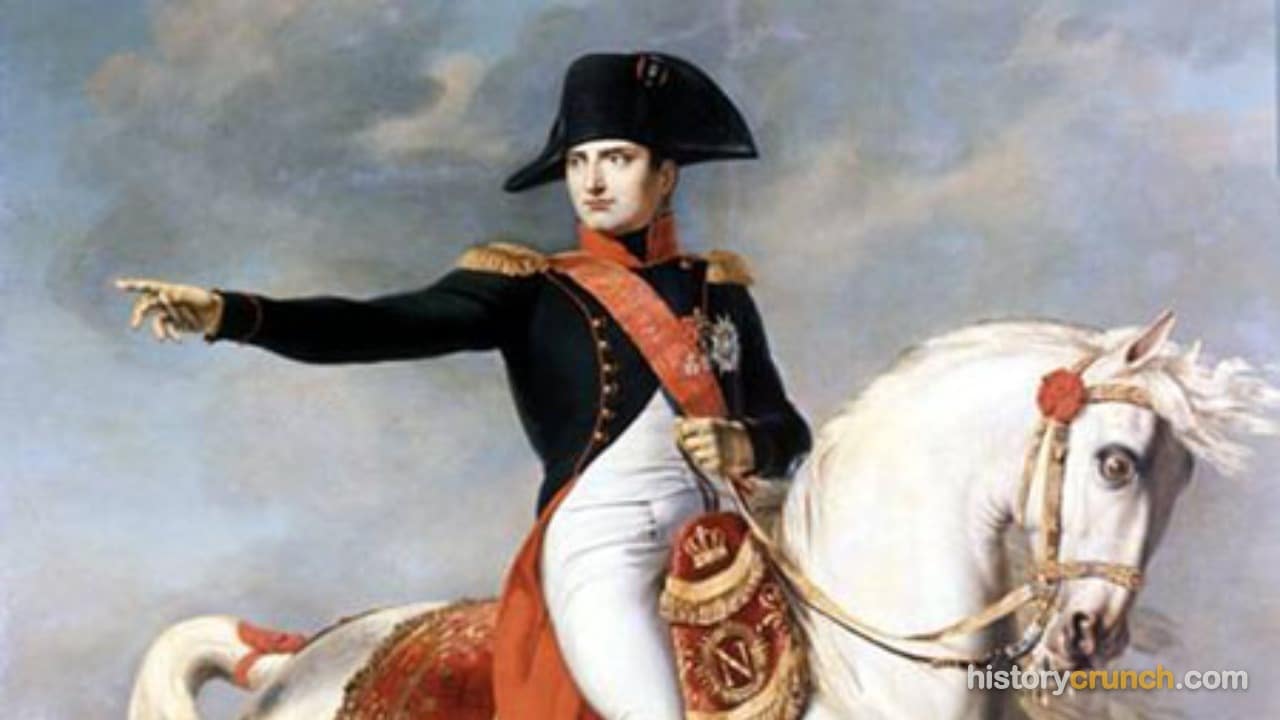
Napoleon Bonaparte was born a subject of France by one year and a noble by the thinnest of margins, and the army he joined in 1785 would have made him a captain and retired him. The Revolution of 1789 took the ceiling off. Its wars, which began with a vote in April of 1792 and did not end for twenty-three years, needed officers who could win, and a twenty-four-year-old artillery captain won at Toulon in 1793. Two years later his guns saved the government in the streets of Paris; a year after that he took a starving army into Italy and came out with a peace treaty he had written himself. Egypt in 1798 was meant to be the road to India. Nelson sank the fleet at the Nile, the road closed, and the general came home to a France that was losing the war and looking for a savior.
Napoleone di Buonaparte was born on August 15th, 1769 in Ajaccio, on the island of Corsica, which France had bought from Genoa only a year before. His parents, Carlo and Letizia, were minor Italian nobility with little money and eight children. A family friend who governed the island got the boy a place at the military school at Brienne in France when he was nine, and he spoke French with a Corsican accent for the rest of his life.
LEARN MORESHOW LESSwhy it matters · 1 key figurePERSONThe man who would rule France was not born French in any sense that mattered in 1769. He was an outsider who rose on merit and war, and that is exactly what the Revolution made possible.
In September of 1785, at sixteen, Napoleon finished the Ecole Militaire in Paris in a single year instead of the usual two and was commissioned a second lieutenant in the artillery. Artillery was the branch where mathematics counted for more than a family name, and it was the one branch of the royal army open to a poor provincial noble with brains. He spent the next four years in garrison towns reading history and writing essays.
LEARN MORESHOW LESSwhy it matters · 1 key figurePERSONUnder the old monarchy a lieutenant without money or connections could expect to retire a captain. The Revolution that began four years later took away the ceiling.
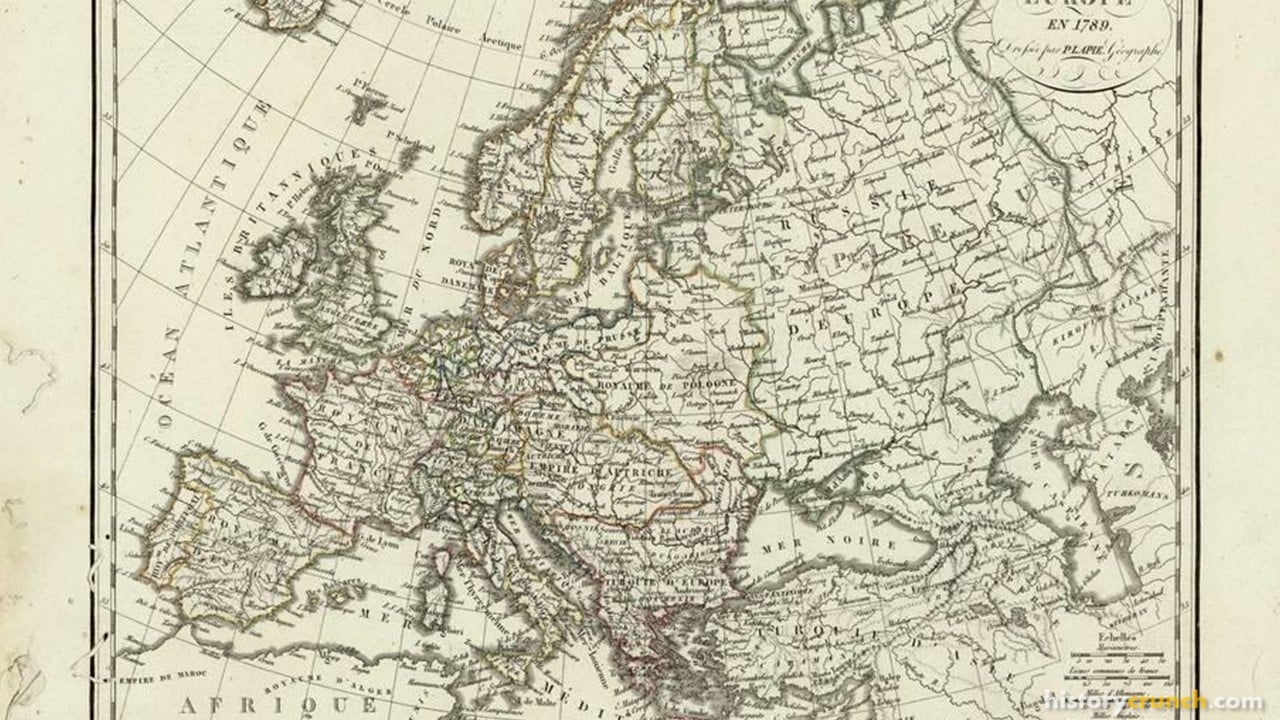
On May 5th, 1789 King Louis XVI opened the Estates-General at Versailles, the first meeting of France's old representative body since 1614, to ask for new taxes. Within two months the Third Estate had declared itself a National Assembly, and on July 14th a Paris crowd stormed the Bastille. Around France sat a Europe of absolute monarchs: the Habsburg emperor in Vienna, Frederick William II in Prussia, Catherine the Great in Russia, and a Holy Roman Empire of more than three hundred German states.
LEARN MORESHOW LESSwhy it matters · key numbersBACKGROUNDEvery war on this timeline was fought over what began at Versailles in 1789. The kings of Europe went to war with the Revolution first, and with Napoleon only after he had made himself its heir.
On April 20th, 1792 the French Legislative Assembly voted to declare war on Austria, whose emperor was the brother of the French queen Marie Antoinette and had threatened to intervene against the Revolution. Prussia joined Austria within weeks. The French army, stripped of its noble officers, lost its first battles, and by September Prussian troops were a hundred miles from Paris before being turned back at Valmy.
LEARN MORESHOW LESSwhy it matters · key numbersWARThe Napoleonic Wars grew straight out of the French Revolutionary Wars. From this vote until Waterloo in 1815, France was at peace with all of Europe for only fourteen months.
The French Convention executed Louis XVI by guillotine on January 21st, 1793. Eleven days later, on February 1st, France declared war on Britain and the Dutch Republic, and by March Spain, Portugal, Naples and most of the German states had joined Austria and Prussia in what became known as the First Coalition. For the first time nearly every major power in Europe was at war with France at once.
LEARN MORESHOW LESSwhy it mattersWARSeven coalitions would be formed against France between 1793 and 1815. This first one set the pattern: Britain paid, the continental powers fought, and the alliance fell apart whenever one member made a separate peace.
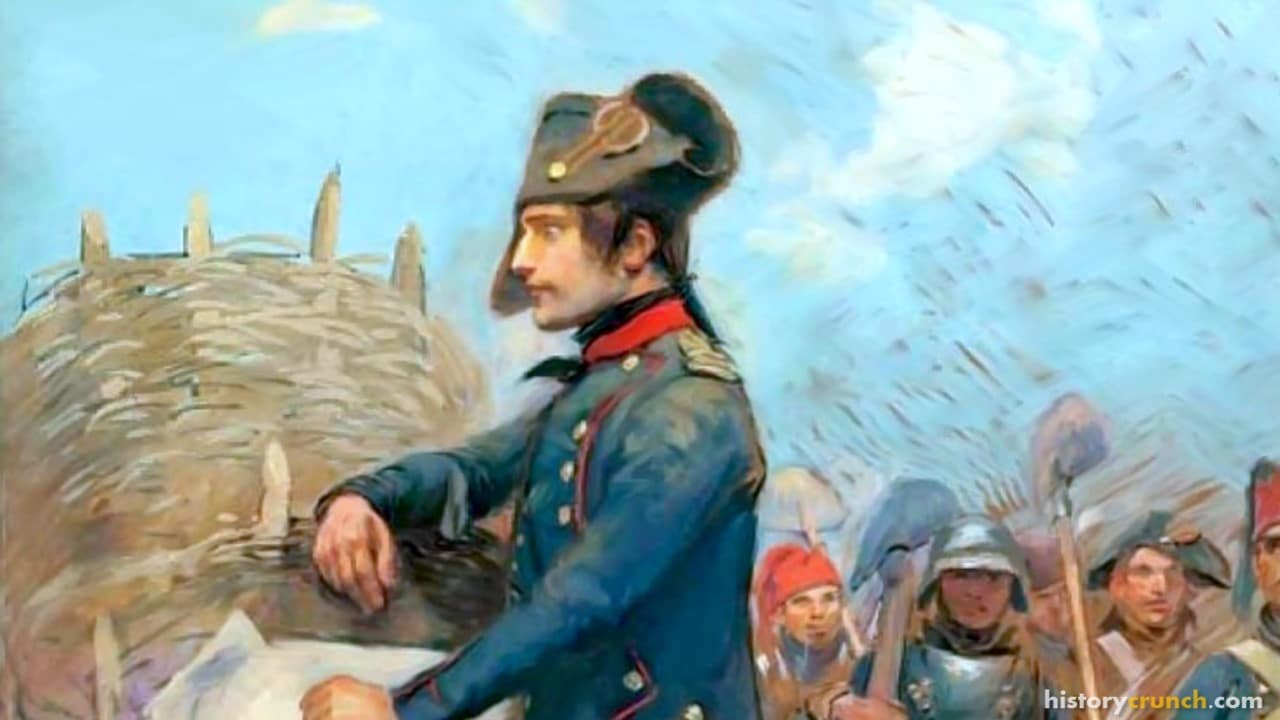
In the autumn of 1793 the royalist port of Toulon, France's main naval base on the Mediterranean, was held by a British and Spanish fleet. A young artillery captain named Napoleon Bonaparte worked out that the harbor could be made untenable if the batteries on the heights above it were taken. His plan was carried out on December 17th, the British fleet sailed away, and the town fell on December 19th, 1793. Three days later Bonaparte was promoted to brigadier general.
LEARN MORESHOW LESSwhy it matters · key numbers · 1 key figureBATTLEToulon is the first time the name Bonaparte meant anything to anyone in France. It also taught him the lesson he would apply for twenty years: find the one point that decides everything and put all your force there.
On October 5th, 1795, known as 13 Vendemiaire in the revolutionary calendar, about 25,000 royalist rebels marched on the National Convention in Paris. Paul Barras, put in charge of the defense, gave the artillery to General Bonaparte, who had cannon brought in and fired grapeshot into the columns in the streets around the Tuileries palace. Several hundred people were killed and the rising collapsed in an afternoon.
LEARN MORESHOW LESSwhy it matters · 1 key figurePOLITICSThe government that took power three weeks later, the Directory, owed its survival to a general. Four years later the same general would overthrow it.
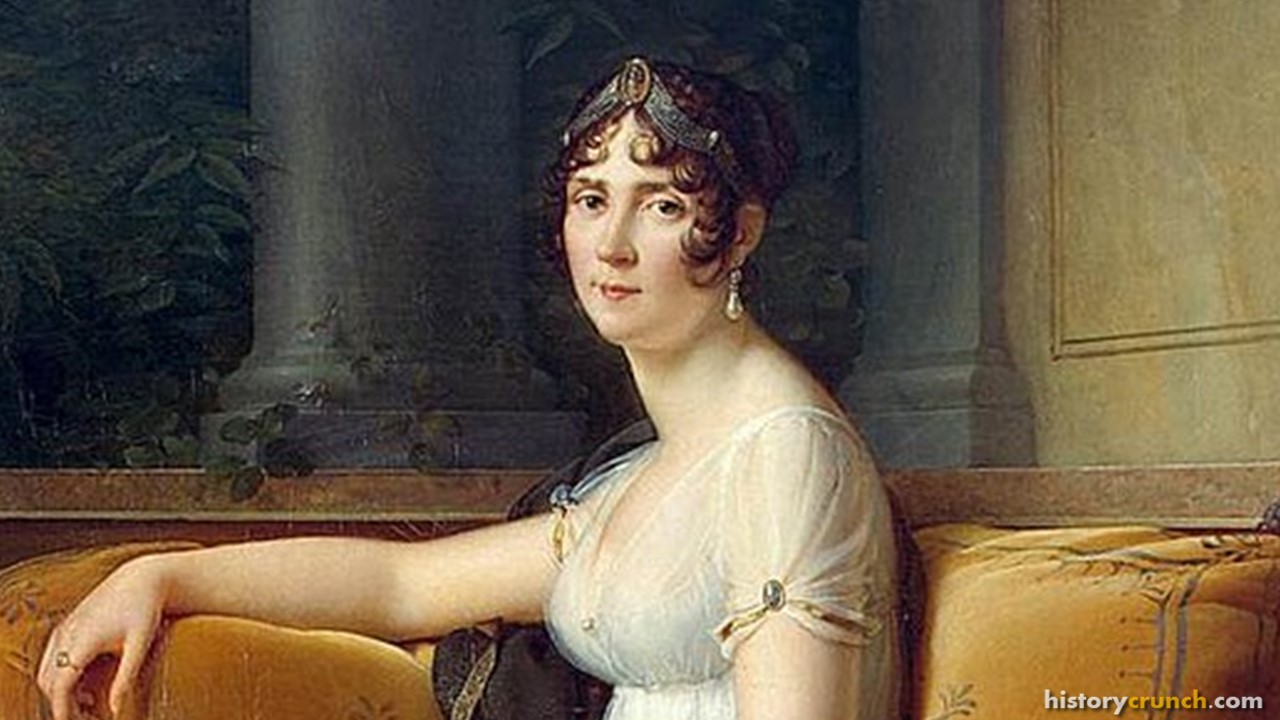
On March 9th, 1796 Napoleon, aged twenty-six, married Josephine de Beauharnais in a civil ceremony in Paris. She was thirty-two, a widow from the Caribbean island of Martinique whose first husband had been guillotined in 1794, and she had two children, Eugene and Hortense. Two days after the wedding Napoleon left to take command of the Army of Italy. His letters to her from the campaign are among the most passionate he ever wrote.
LEARN MORESHOW LESSwhy it matters · 2 key figuresPERSONJosephine gave Napoleon his entry into Paris society and, in 1804, the title of Empress. The marriage lasted until 1809, when the lack of an heir ended it.
Napoleon took command of the ragged, unpaid Army of Italy at Nice on March 27th, 1796 and attacked within two weeks. At Montenotte on April 12th he drove a wedge between the Austrian and Piedmontese armies, and in the next four weeks he knocked Piedmont out of the war, beat the Austrians at Lodi on May 10th and entered Milan on May 15th. The army that had been starving in March was living off northern Italy by summer.
LEARN MORESHOW LESSwhy it matters · 1 key figureBATTLEItaly in 1796 made Napoleon's name in France and his fortune in loot and paintings sent back to Paris. It also showed him that a general who won could make his own foreign policy.
Through the second half of 1796 Austria sent four armies down from the Alps to relieve the fortress of Mantua, which Napoleon was besieging. He beat each in turn. The last and largest attempt was broken at Rivoli on January 14th, 1797, where Napoleon concentrated his divisions on a plateau above the Adige River and destroyed an Austrian force of 28,000. Mantua surrendered on February 2nd and the road to Vienna lay open.
LEARN MORESHOW LESSwhy it matters · key numbersBATTLERivoli ended Austrian power in northern Italy. Within three months Napoleon was within eighty miles of Vienna and Austria was asking for terms.
On October 17th, 1797 Napoleon signed a peace treaty with Austria at Campo Formio in northern Italy, negotiating it himself with only loose instructions from the Directory in Paris. Austria gave up Belgium and recognized the French puppet Cisalpine Republic in Lombardy; in return Napoleon handed Austria the thousand-year-old Republic of Venice, which he had occupied in May. Britain was now the only major power still at war with France.
LEARN MORESHOW LESSwhy it mattersTREATYA twenty-eight-year-old general had redrawn the map of Europe and given away a republic without asking his government. The Directory accepted it because he had won, and that was a warning it did not read.
On May 19th, 1798 a fleet of about 400 ships left Toulon carrying Napoleon, some 35,000 soldiers and a commission of 167 scientists, engineers and artists. The plan was to seize Egypt from its Mameluke rulers, cut Britain's route to India and, in Napoleon's own imagination, follow Alexander the Great east. Malta was taken on the way on June 12th. The fleet reached Alexandria on July 1st, having slipped past Nelson's squadron in the dark.
LEARN MORESHOW LESSwhy it matters · key numbersCAMPAIGNThe scholars mattered as much as the soldiers in the long run. They founded the modern study of ancient Egypt, and one of their finds, the Rosetta Stone, unlocked hieroglyphics.
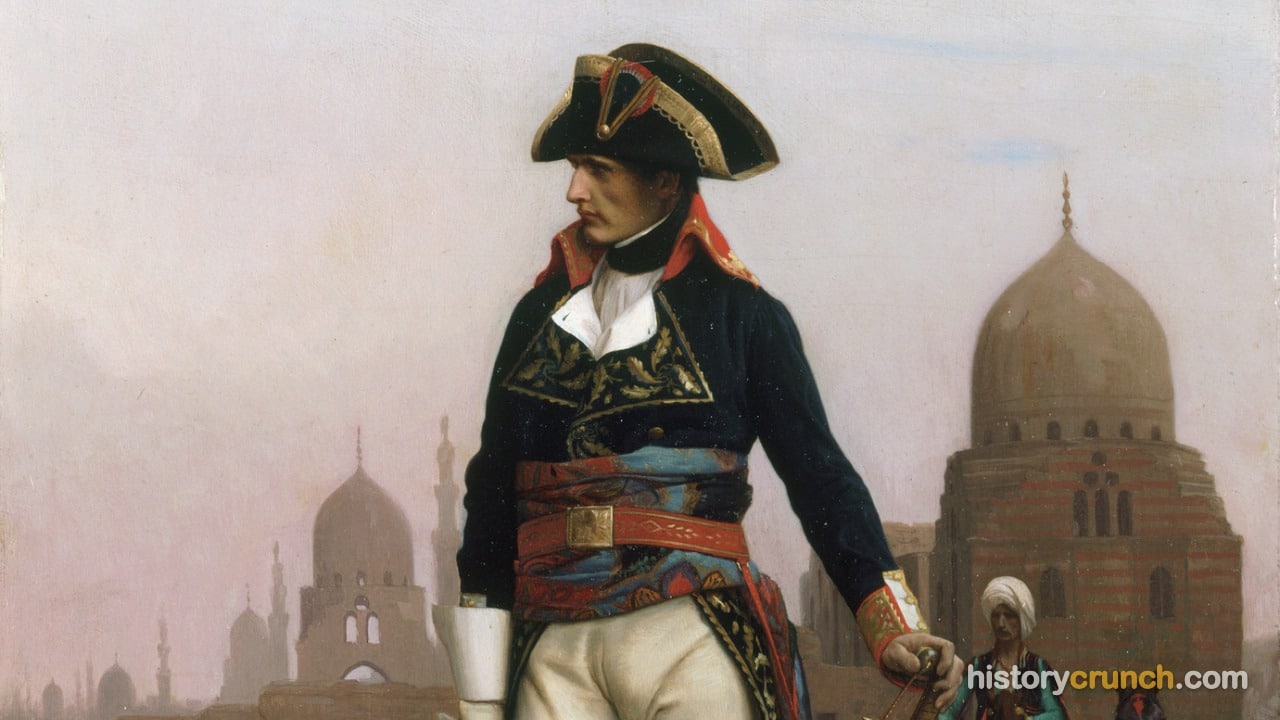
On July 21st, 1798, within sight of the pyramids of Giza, Napoleon's infantry formed into large squares and shot down repeated charges by the Mameluke cavalry, the finest horsemen in the Middle East. The French lost about 300 men; the Mamelukes lost several thousand and their rule over Egypt. Napoleon entered Cairo three days later and set about governing the country with printing presses, a scientific institute and a council of local notables.
LEARN MORESHOW LESSwhy it matters · key numbersBATTLEEgypt looked like a triumph for three weeks. Then Nelson found the French fleet at Aboukir Bay, and the army that had won the Pyramids was cut off from home.
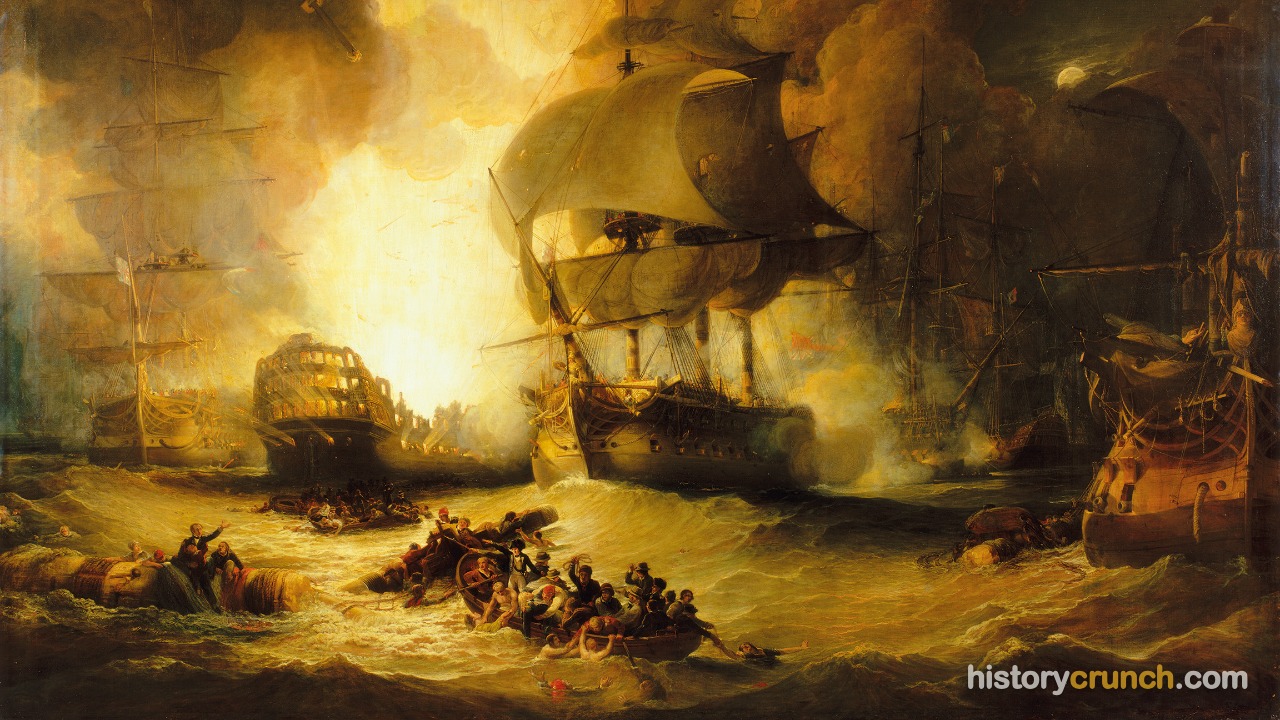
On the evening of August 1st, 1798 Rear Admiral Horatio Nelson found the French fleet anchored in a line at Aboukir Bay, east of Alexandria. Instead of waiting for morning he attacked at once, and several of his captains sailed between the French ships and the shore, where the French had not expected to be attacked. Around ten at night the French flagship L'Orient blew up with most of her crew. By morning eleven of the thirteen French ships of the line were taken or destroyed.
LEARN MORESHOW LESSwhy it matters · key numbers · 1 key figureBATTLEThe Nile marooned Napoleon's army in Egypt and ended French hopes in the eastern Mediterranean. It also brought Russia and Turkey into a new coalition and made Nelson the most famous sailor alive.
On December 24th, 1798 Britain and Russia signed an alliance against France, and Austria, Naples, Portugal and the Ottoman Empire joined them over the following months to form the Second Coalition. With Napoleon and his best army stranded in Egypt, the allies aimed to undo everything France had won since 1792. In the spring of 1799 a Russian army under General Suvorov drove the French out of northern Italy in a matter of weeks.
LEARN MORESHOW LESSwhy it mattersWARThe Second Coalition came closer than any before it to beating France, and its failure in late 1799 was the crisis that carried Napoleon to power.
The coup of 18 Brumaire in November of 1799 ended the Revolution and began something new: a republic in name with one man's hand on every lever. In five years as First Consul Napoleon built the France that outlasted him. The Bank of France in 1800, the Concordat with the Pope in 1801, the prefects, the lycees, the franc, and in March of 1804 the Civil Code that still governs half the world's courtrooms. Marengo in 1800 saved his government and Luneville in 1801 took Austria out of the war; the Peace of Amiens in 1802 gave Europe fourteen months of quiet. Then Britain declared war again, a Bourbon duke was shot in a moat at Vincennes, and on December 2nd, 1804 the man who had been a lieutenant nineteen years earlier put a crown on his own head in Notre-Dame.
In February of 1799 Napoleon marched north out of Egypt into Ottoman Syria to strike at the Turkish army gathering against him. He took Jaffa on March 7th, and on March 20th began a siege of the walled port of Acre, held by Ottoman troops and supported from the sea by a British squadron under Sir Sidney Smith. After two months and several failed assaults, with plague spreading in his camp, Napoleon gave up on May 20th, 1799 and led the army back to Cairo.
LEARN MORESHOW LESSwhy it matters · key numbersSIEGEAcre was the first place Napoleon was stopped. He later said that if Acre had fallen he would have changed the face of the world; instead he abandoned the army and went home.
On August 23rd, 1799 Napoleon slipped out of Egypt on a frigate with a handful of officers, leaving General Kleber in command of an army that could not get home. He had read in months-old newspapers that France was losing the war in Italy and Germany and that the Directory was despised. Dodging the British navy, he landed at Frejus in southern France on October 9th and was cheered all the way to Paris.
LEARN MORESHOW LESSwhy it matters · 1 key figurePERSONThe army he left behind held out until 1801 and then surrendered to the British. The general who left it was greeted as the man who might save the Republic.
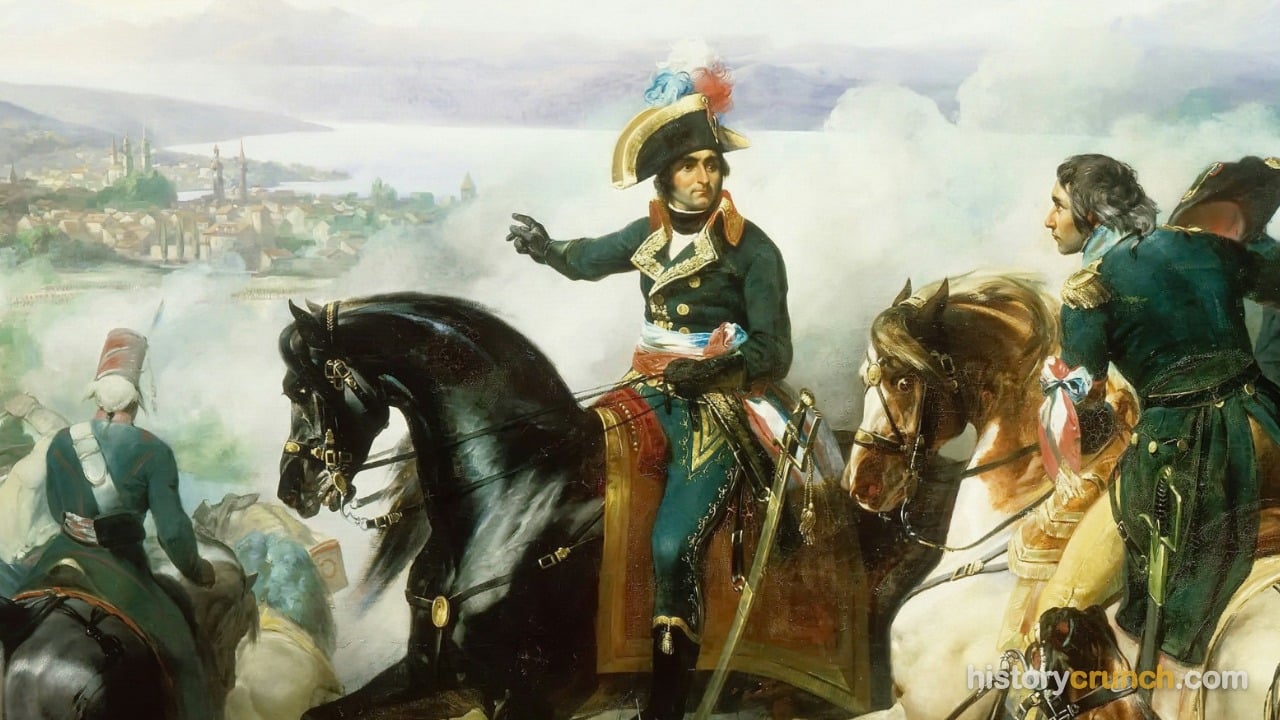
On September 25th and 26th, 1799 General Andre Massena attacked the Russian army holding Zurich under General Korsakov and drove it out of the city with the loss of about 8,000 men and its guns. The Russian commander Suvorov, marching over the Alps to join Korsakov, arrived to find no one to join and had to fight his way north through the mountains. Tsar Paul I, disgusted with his Austrian allies, pulled Russia out of the coalition.
LEARN MORESHOW LESSwhy it matters · key numbersBATTLEFrance's crisis of 1799 was over before Napoleon landed. He took power in November claiming to save a country that Massena had already saved.
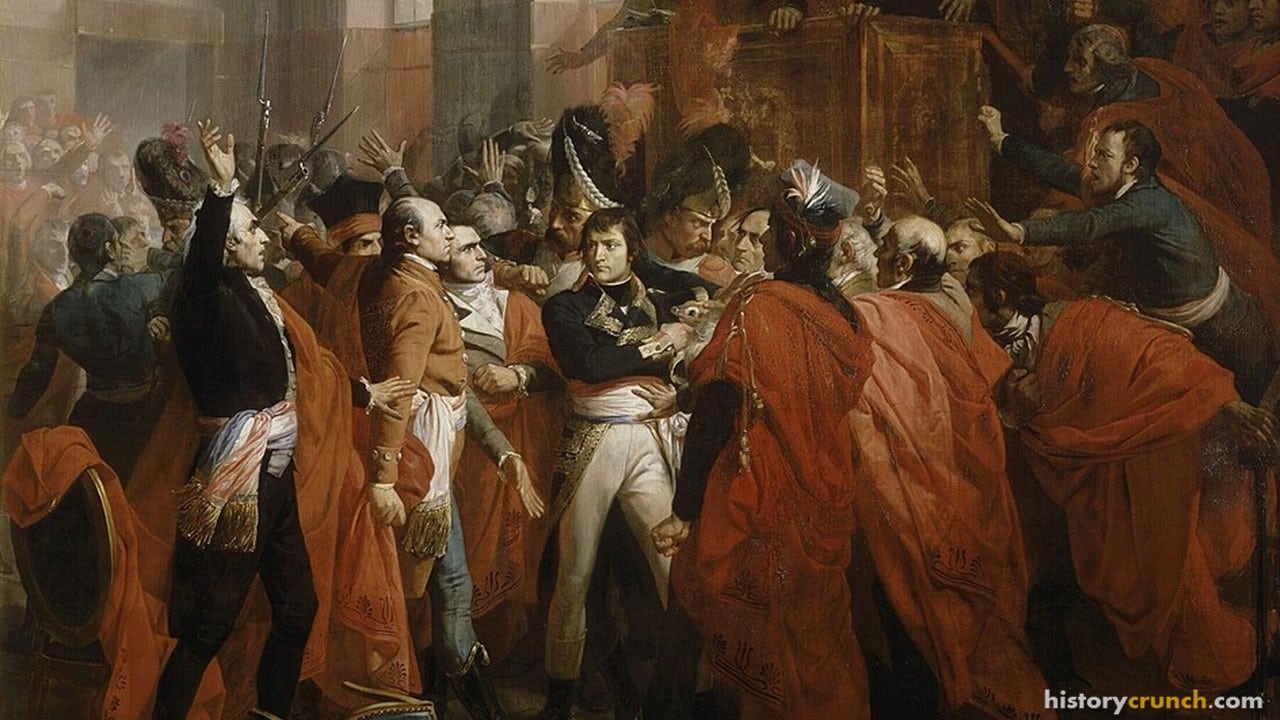
On November 9th, 1799, called 18 Brumaire in the revolutionary calendar, Napoleon and the Directory's own member Sieyes moved the two legislative councils out of Paris to Saint-Cloud on the excuse of a plot. The next day, when deputies of the Council of Five Hundred shouted him down and tried to have him outlawed, his brother Lucien called in the grenadiers, who cleared the hall at bayonet point. That night a rump of deputies voted the Directory out of existence and named three provisional consuls, Napoleon among them.
LEARN MORESHOW LESSwhy it matters · 1 key figureCOUPThis is the day most historians end the French Revolution. Ten years of assemblies, constitutions and elections ended with soldiers in a debating chamber.
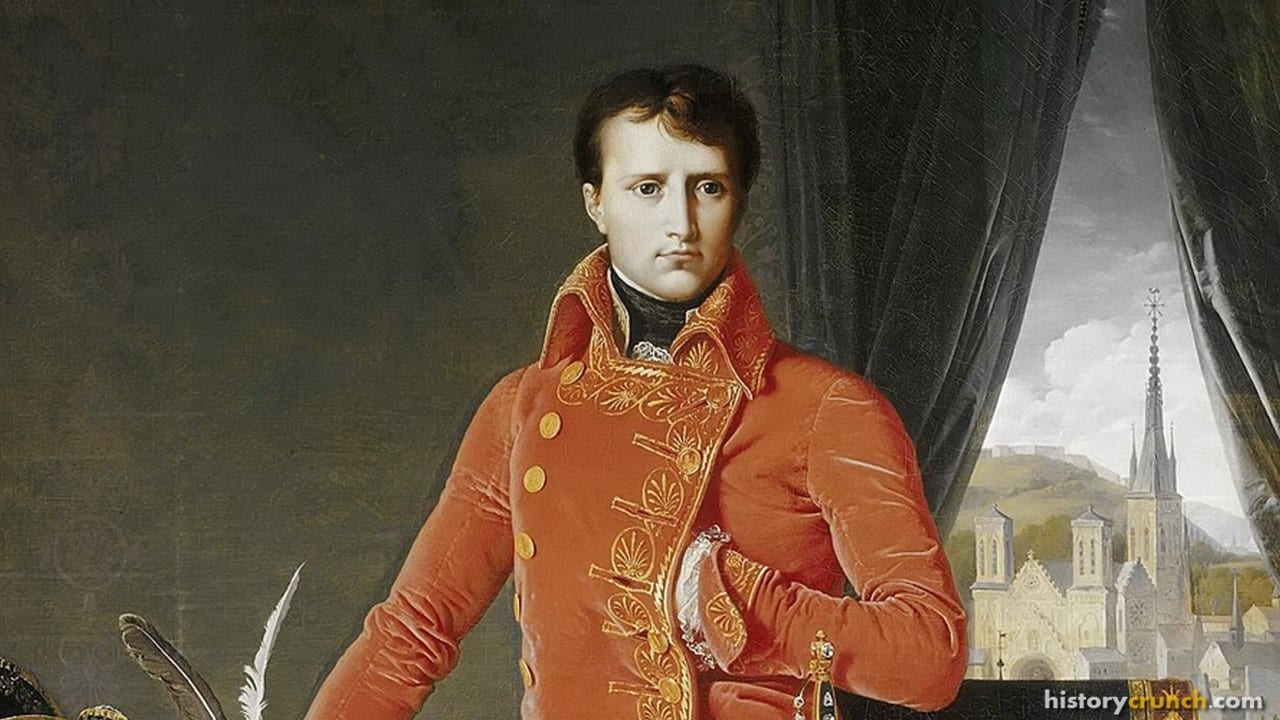
The new constitution, adopted on December 13th, 1799, set up three consuls to run France for ten years, but gave the First Consul the power to propose all laws, appoint all ministers, judges and officials and command the army. Napoleon took that post for himself. A plebiscite in February of 1800 approved the arrangement by an official count of three million to about 1,500, a result the interior ministry had inflated.
LEARN MORESHOW LESSwhy it matters · key numbers · 1 key figureGOVERNMENTThe Revolution had promised government by the people. The Year VIII constitution kept the vote and took away everything the vote had ever decided.
On January 18th, 1800 the First Consul created the Bank of France, a private bank under state supervision that would issue notes, lend to the government and steady a currency wrecked by ten years of revolution and paper money. Over the next few years he added a new tax collection system, a corps of prefects to run the departments from Paris and, in 1803, a gold and silver franc that held its value for more than a century.
LEARN MORESHOW LESSwhy it mattersREFORMNapoleon's wars were paid for by loot and by taxing the defeated, but the state that collected it was built in these first months of the Consulate.
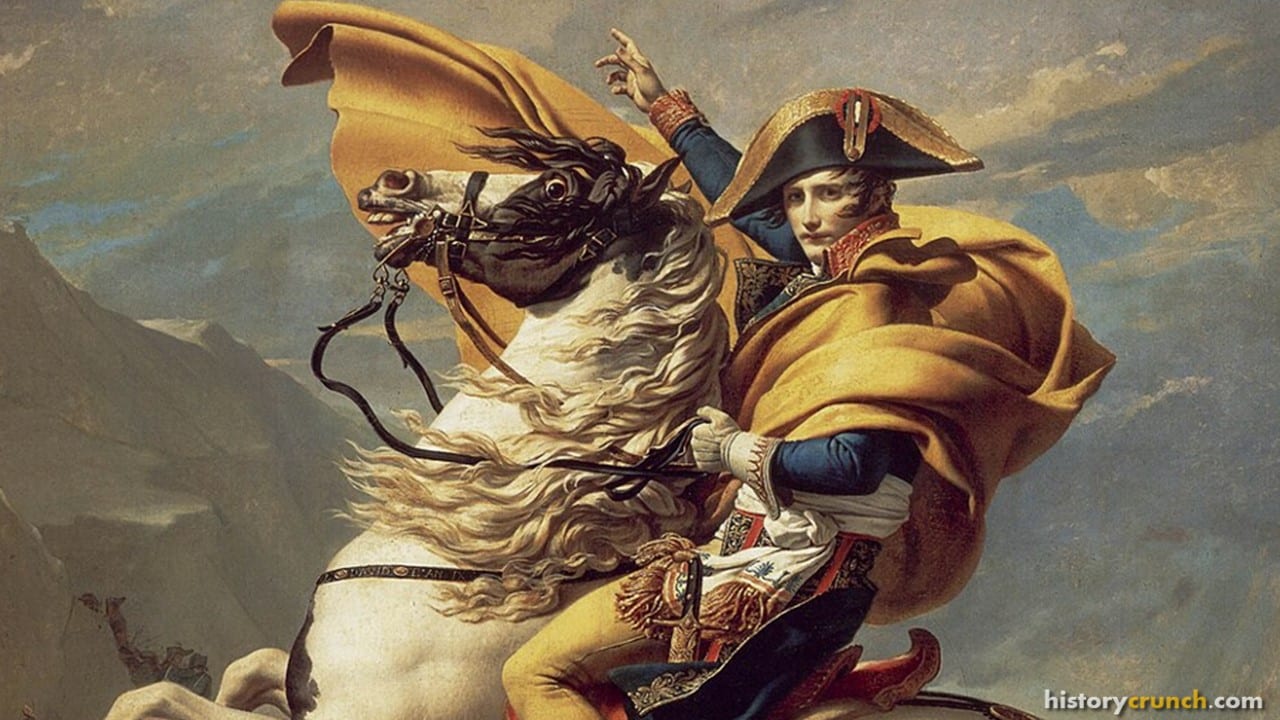
Between May 15th and 20th, 1800 Napoleon took about 40,000 men over the Great Saint Bernard Pass in the Alps, still deep in snow, with the cannon dragged in hollowed tree trunks. He came down into Italy behind the Austrian army that was besieging the French in Genoa. Jacques-Louis David's painting of the crossing shows him on a rearing horse; he made the climb on a mule led by a local guide.
LEARN MORESHOW LESSwhy it matters · key numbersCAMPAIGNThe painting was propaganda and Napoleon knew it. What the crossing did was put a French army where the Austrians could not believe one could be.
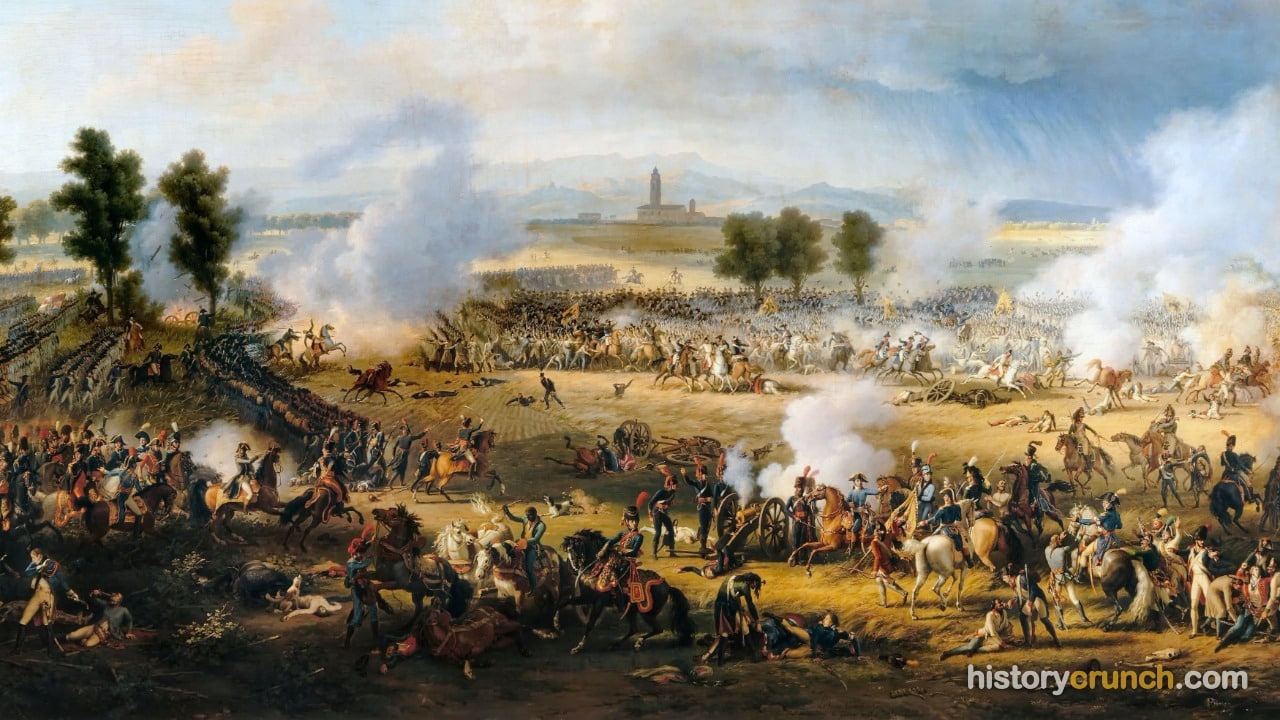
On June 14th, 1800 the Austrian army under General Melas attacked Napoleon near Marengo in Piedmont and by mid afternoon had driven the French back three miles. Melas, wounded, handed over command and went to rest. Then General Desaix arrived with a fresh division he had marched back toward the guns, a cavalry charge under Kellermann broke the Austrian column, and the battle turned in half an hour. Desaix was killed in the charge. Melas signed an armistice the next day and gave up northern Italy.
LEARN MORESHOW LESSwhy it mattersBATTLEMarengo saved the Consulate. Had Napoleon lost, the plotters in Paris were ready to replace him; instead he came home as the man who could not be beaten.
After a second French army under General Moreau beat the Austrians at Hohenlinden in Bavaria on December 3rd, 1800 and marched to within fifty miles of Vienna, Austria made peace. The Treaty of Luneville, signed on February 9th, 1801, confirmed the terms of Campo Formio and made the Rhine France's eastern border. The Holy Roman Empire lost all its land west of the river, and German princes who had lost territory there were to be compensated with church lands inside Germany.
LEARN MORESHOW LESSwhy it mattersTREATYLuneville left Britain alone against France for the second time in four years. It also started the carving up of the German church states that would end the Holy Roman Empire in 1806.
In the winter of 1800 Russia, Denmark, Sweden and Prussia formed a League of Armed Neutrality to keep the Royal Navy from searching their ships for French trade. On April 2nd, 1801 a British fleet attacked the Danish fleet and shore batteries at Copenhagen. When the commander in chief, Admiral Parker, signaled a withdrawal, Nelson, second in command, put his telescope to his blind eye and said he could not see it. The Danes agreed to a truce that afternoon, and the League collapsed when Tsar Paul was murdered a week later.
LEARN MORESHOW LESSwhy it matters · 1 key figureBATTLECopenhagen kept the Baltic open and Britain's naval supplies of timber and hemp flowing. The blind-eye story is the one every British schoolchild knew for the next century.
On July 15th, 1801 France and Pope Pius VII signed an agreement called the Concordat. The Church gave up its claim to the lands the Revolution had sold, accepted that the state would name bishops and pay the clergy, and recognized the Republic; in return Catholic worship was restored across France after a decade of persecution. Napoleon added his own 'Organic Articles' the next year that tightened state control further, and the Pope protested in vain.
LEARN MORESHOW LESSwhy it mattersREFORMThe Concordat healed the deepest wound the Revolution had made in ordinary French life. It also made every priest in France a salaried official of Napoleon's state.
On March 25th, 1802 Britain and France signed the Treaty of Amiens. Britain returned most of the colonies it had taken and agreed to leave Malta; France agreed to withdraw from Naples and the Papal States and to respect Portugal. For the first time since 1793 Europe was at peace. Thousands of British tourists crossed to Paris to look at the First Consul and the looted art in the Louvre.
LEARN MORESHOW LESSwhy it matters · key numbersTREATYThe peace lasted fourteen months. Neither side kept its promises about Malta or the Continent, and Britain declared war again in May of 1803.
On August 2nd, 1802 the Senate proclaimed Napoleon First Consul for life after a plebiscite in which the official count was 3.6 million in favor and about 8,000 against. A new constitution gave him the right to name his successor, to make treaties without the legislature and to pardon whom he chose. The ten-year term of 1799 had lasted two and a half years.
LEARN MORESHOW LESSwhy it matters · key numbersGOVERNMENTConsul for life was a king in all but name. The name came two years later.
On May 18th, 1803 Britain declared war on France. The immediate quarrel was Malta, which Britain refused to give up while French troops stayed in Holland and Switzerland and French agents surveyed British ports. Napoleon answered by arresting every British subject in France and gathering an army of about 100,000 men in camps around Boulogne to invade England. From this declaration to Napoleon's final defeat, the fighting is usually called the Napoleonic Wars.
LEARN MORESHOW LESSwhy it mattersWARBritain would stay at war with Napoleon without a break for the next twelve years. No other country did.
After a royalist plot to kill Napoleon was uncovered in February of 1804, he ordered French cavalry across the Rhine into the neutral German state of Baden to seize the Duke of Enghien, a Bourbon prince living there. The duke was brought to the fortress of Vincennes outside Paris, tried by a military court in the middle of the night on March 20th and shot in the moat before dawn on March 21st, 1804. There was no evidence he had been part of the plot.
LEARN MORESHOW LESSwhy it mattersEXECUTIONThe courts of Europe were horrified, and Tsar Alexander broke off relations. Napoleon's own police minister is supposed to have said it was worse than a crime, it was a mistake.
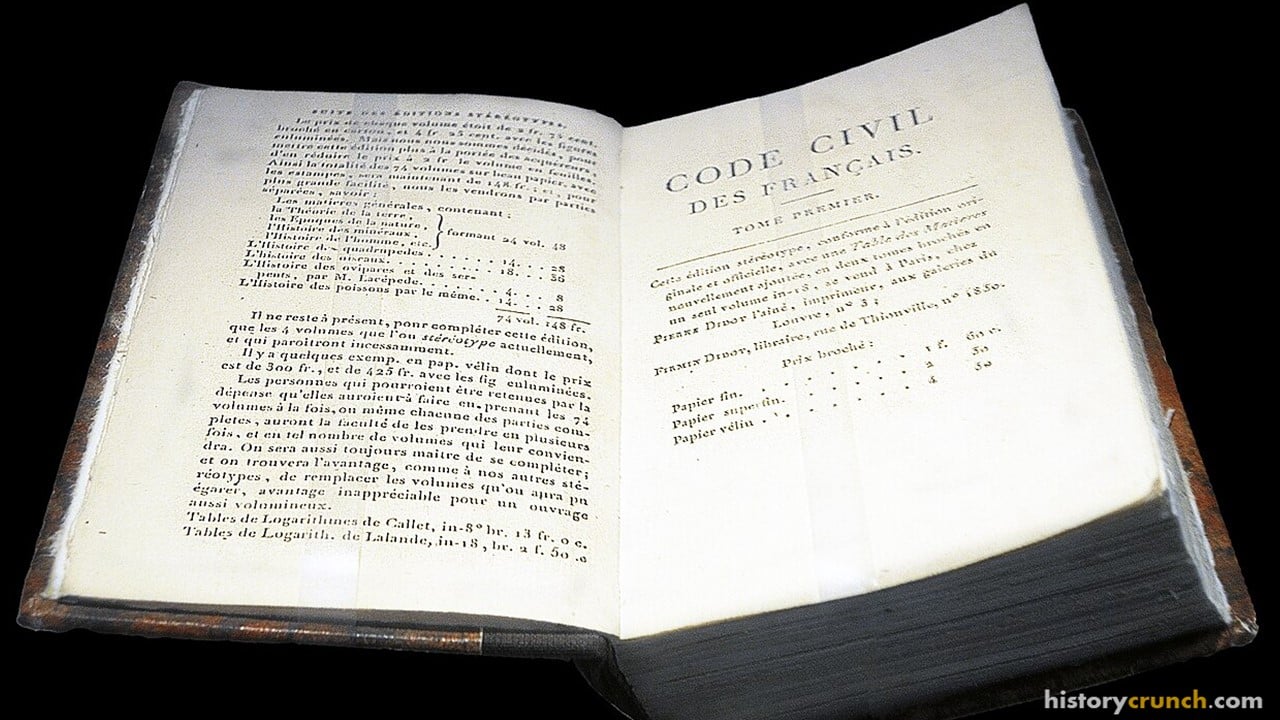
On March 21st, 1804 the Civil Code of the French was promulgated, 2,281 articles gathering the law of persons, property and contracts into one clear book. It confirmed the Revolution's core gains, equality before the law, the end of feudal dues and the right to buy and sell land freely, while restoring the authority of fathers over families and husbands over wives. Napoleon chaired more than half of the meetings that drafted it.
LEARN MORESHOW LESSwhy it matters · key numbersLAWThe Code went wherever French armies went and stayed after they left. It is still the base of civil law in France, Belgium, Italy, Spain, Latin America, Quebec and Louisiana.
On May 18th, 1804 the Senate voted to make Napoleon 'Emperor of the French' with the crown passing to his heirs, and a plebiscite later approved it by an official 3.5 million to about 2,500. He kept the word 'French' rather than 'France' to suggest that he ruled a people, not a territory, and he kept the republican forms of the Senate and the plebiscite. Eighteen of his generals were made Marshals of the Empire the next day.
LEARN MORESHOW LESSwhy it matters · key numbersGOVERNMENTBeethoven, who had dedicated his third symphony to Bonaparte, is said to have torn up the dedication page when he heard the news.
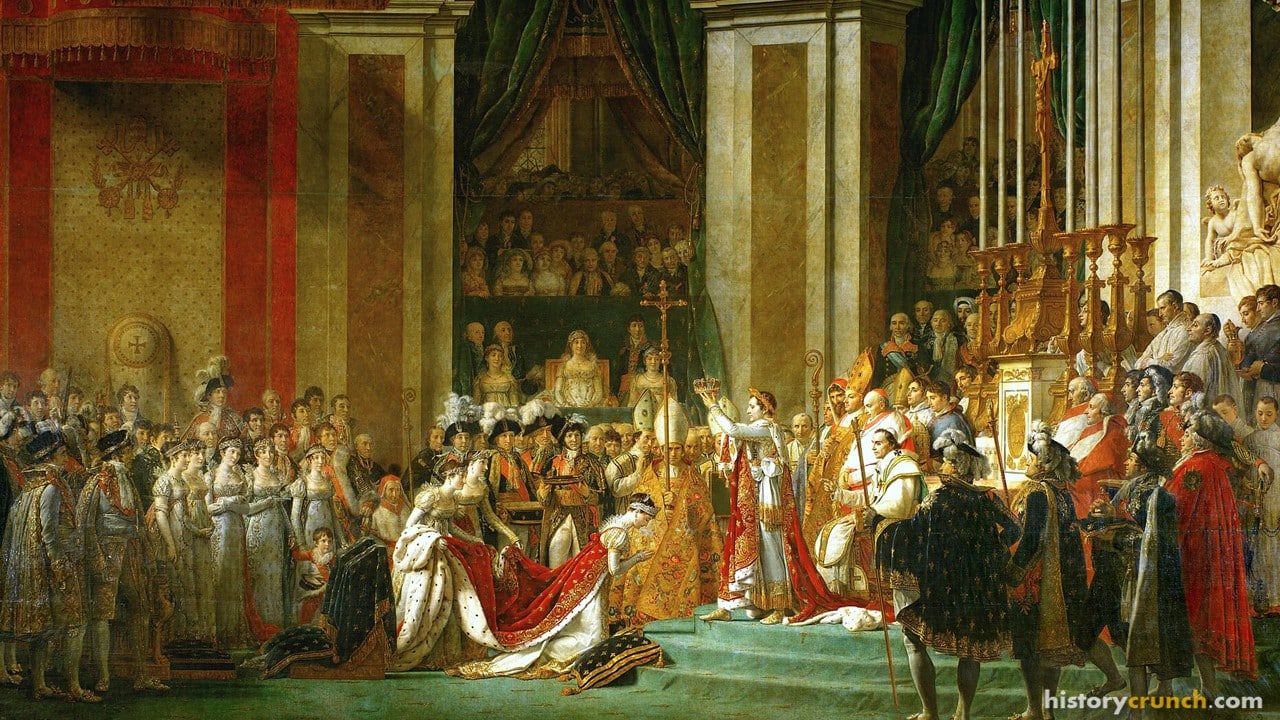
On December 2nd, 1804 Pope Pius VII, brought from Rome for the purpose, presided at Napoleon's coronation in the cathedral of Notre-Dame in Paris. At the moment of crowning Napoleon took the crown from the altar and placed it on his own head, then crowned Josephine as Empress. David's enormous painting of the ceremony took three years and shows the Pope raising his hand in blessing, a gesture Napoleon insisted be added.
LEARN MORESHOW LESSwhy it matters · 2 key figuresCEREMONYCharlemagne had knelt to the Pope in 800. Napoleon meant the whole of Europe to see that he knelt to no one.
In twenty-six months Napoleon beat the three great military powers of the Continent one after another. The army he had trained on the Channel coast to invade England turned east in August of 1805, swallowed an Austrian army whole at Ulm and broke the Austrians and Russians together at Austerlitz. Prussia came next: two battles on one October day in 1806 destroyed the army of Frederick the Great, and Napoleon signed the decree that founded the Continental System in the Prussian king's own palace. Russia took two campaigns, the frozen draw at Eylau and the rout at Friedland, and then the Tsar came to a raft on the Niemen and shook hands. The one thing Napoleon lost in these years was his fleet, at Trafalgar, and that loss shaped everything after it.
On April 11th, 1805 Britain and Russia signed a treaty pledging to raise 500,000 men to push France back inside its old borders, with Britain paying a subsidy for every soldier Russia put in the field. Austria, alarmed by the Enghien execution and by Napoleon's new crown, joined in August; Sweden and Naples followed. Prussia stayed neutral. It was the first of the coalitions formed against Napoleon as Emperor rather than against the Revolution.
LEARN MORESHOW LESSwhy it mattersWARThe coalition was meant to fight in the autumn of 1806. Napoleon did not wait for it.
On May 26th, 1805 Napoleon placed the Iron Crown of Lombardy, said to contain a nail from the Cross, on his own head in Milan Cathedral and declared, 'God gives it to me, beware who touches it.' The Italian Republic he had set up in 1802 became the Kingdom of Italy, with his stepson Eugene de Beauharnais as viceroy. A month later he annexed Genoa to France outright.
LEARN MORESHOW LESSwhy it matters · 1 key figureCEREMONYAustria had accepted a French republic in Lombardy at Luneville. A French king there, and Genoa gone, was what finally pushed Vienna into the Third Coalition.
For two years about 180,000 French troops had drilled in camps around Boulogne waiting for the navy to clear the Channel for an invasion of England. On August 27th, 1805, with Admiral Villeneuve's fleet bottled up in Cadiz and Austria mobilizing, Napoleon turned the whole army east. Marching in seven separate corps along parallel roads, it covered the 400 miles to the Rhine in under a month and was across the Danube before the Austrians knew it had left the coast.
LEARN MORESHOW LESSwhy it matters · key numbersCAMPAIGNThe two years at Boulogne made the Grande Armee. The invasion never sailed, but the army that had trained for it was the best in Europe.
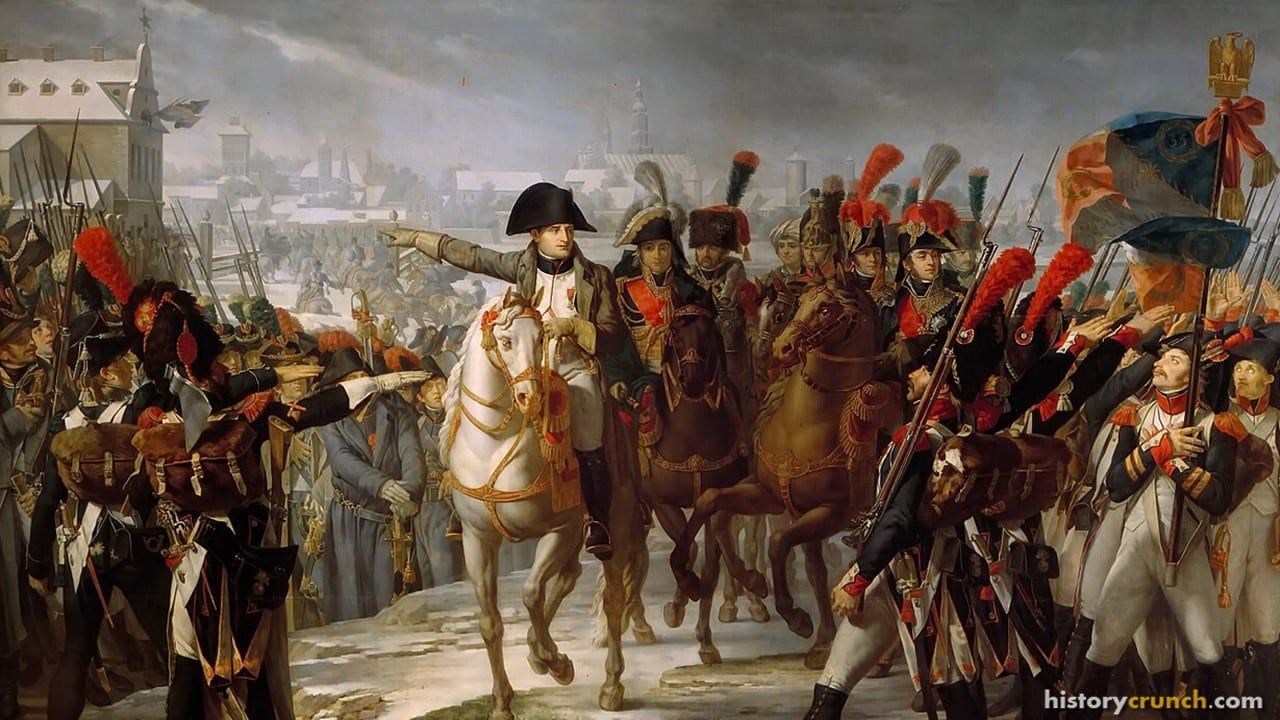
General Mack had led an Austrian army of about 70,000 into Bavaria to wait for the Russians. Napoleon's corps swept around behind him, cutting the road to Vienna, and on October 12th Napoleon addressed his troops on the bridge over the Lech at Augsburg as the ring closed. Mack surrendered the fortress of Ulm and about 30,000 men on October 20th, 1805; most of the rest of his army had been taken in pieces on the roads. The French lost fewer than 2,000.
LEARN MORESHOW LESSwhy it matters · key numbersBATTLEUlm is the campaign generals study as the model of winning by marching. A whole army was captured and almost nobody had to fight.
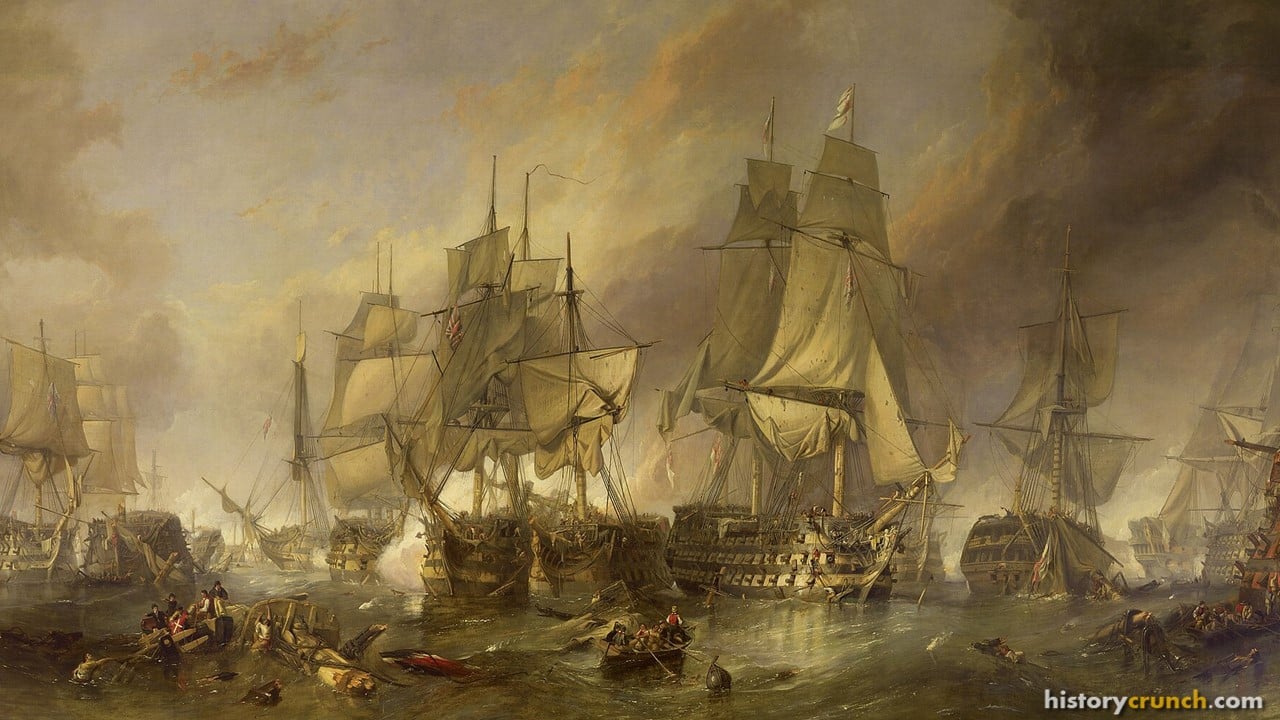
On October 21st, 1805 Nelson's 27 ships of the line attacked Villeneuve's 33 French and Spanish ships off Cape Trafalgar in two columns driven straight at the enemy line, breaking it in two places and turning the battle into a close-range melee where British gunnery told. Seventeen enemy ships were captured and one blew up; no British ship was lost. Before the action Nelson had the signal 'England expects that every man will do his duty' run up on HMS Victory.
LEARN MORESHOW LESSwhy it matters · key numbers · 1 key figureBATTLEAfter Trafalgar Napoleon never again tried to challenge the Royal Navy at sea. He would have to beat Britain some other way, and the Continental System was the attempt.
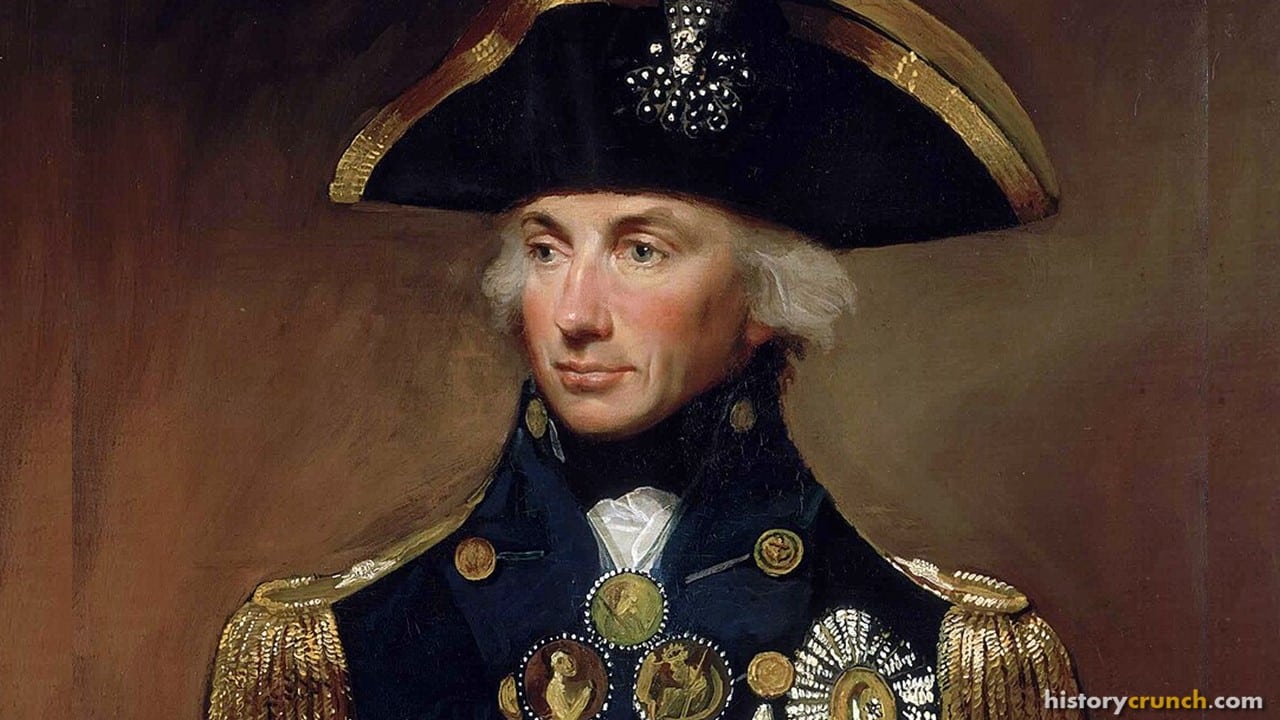
About an hour into the fighting at Trafalgar a French marksman in the rigging of the Redoutable shot Nelson through the shoulder and spine as he walked the quarterdeck of Victory in full uniform with his decorations showing. He was carried below and lived for three hours, long enough to be told that fourteen or fifteen enemy ships had struck. He was forty-seven. His body was brought home in a cask of brandy and buried in St. Paul's Cathedral in January of 1806.
LEARN MORESHOW LESSwhy it matters · a source · 1 key figurePERSONBritain gained command of the sea for a century and lost the man who had won it on the same afternoon.
IN THEIR OWN WORDS“Thank God I have done my duty.”
Horatio Nelson, October 21st, 1805WHAT TO NOTICEhis last recorded words
On November 13th, 1805 Marshals Murat and Lannes bluffed the Austrian guards on the main Danube bridge at Vienna into believing an armistice had been signed and walked their troops across before the charges could be fired. The Habsburg capital was occupied without a fight. Emperor Francis and the remains of his army had already retreated north into Moravia to join the Russians under Tsar Alexander.
LEARN MORESHOW LESSwhy it mattersCAMPAIGNVienna would be taken twice by Napoleon, in 1805 and 1809. No enemy army had entered it since the Turks were turned back in 1683.
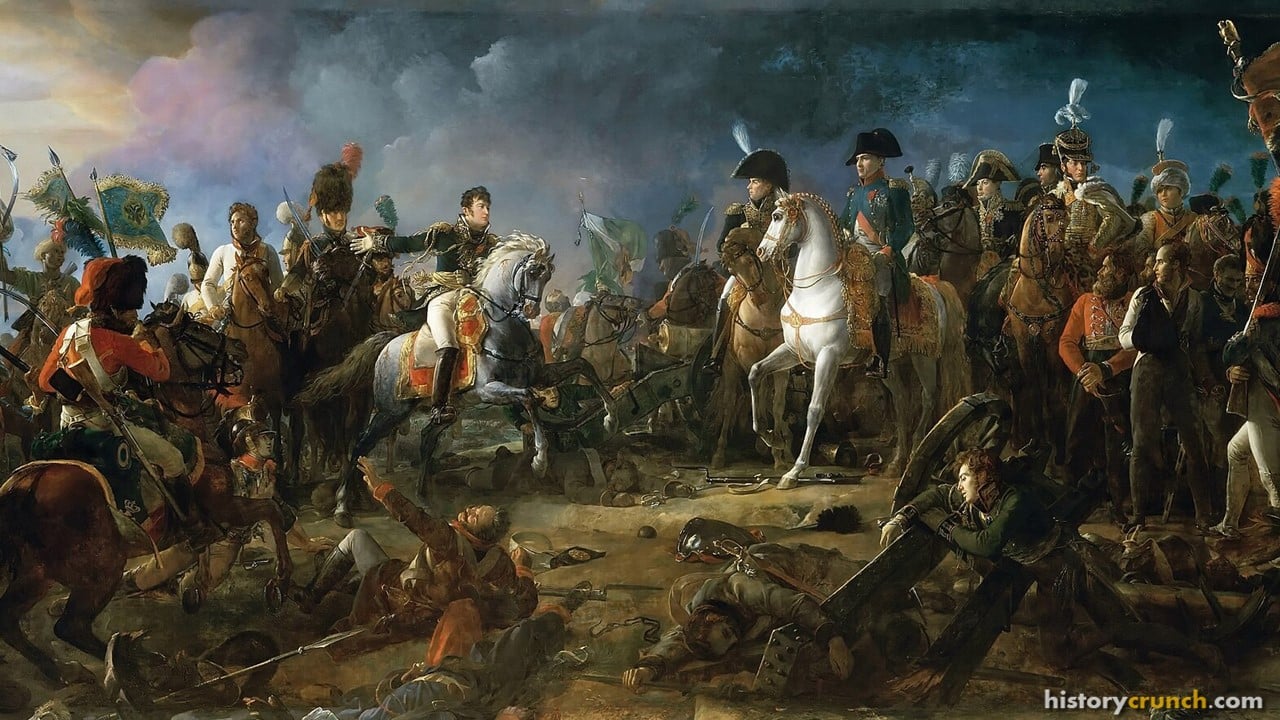
On December 2nd, 1805 Napoleon deliberately weakened his right and gave up the Pratzen Heights to tempt the Austro-Russian army of about 85,000 under Tsar Alexander and Emperor Francis into attacking there. When the allied columns had marched off the heights, Marshal Soult's corps came up out of the fog and took them, cutting the allied army in two. Some 27,000 allied soldiers were killed, wounded or captured against about 9,000 French. Emperor Francis asked for an armistice two days later.
LEARN MORESHOW LESSwhy it matters · key numbers · 2 key figuresBATTLEAusterlitz is the battle Napoleon himself thought his best. It is also the one that convinced him he could not be beaten, and that belief cost him Russia seven years later.
On December 26th, 1805, twenty-four days after Austerlitz, Austria signed the Treaty of Pressburg. It gave up Venice and its Adriatic coast to Napoleon's Kingdom of Italy, handed the Tyrol to Bavaria and other lands to Wurttemberg and Baden, and paid an indemnity of forty million francs. Bavaria and Wurttemberg were raised to kingdoms as Napoleon's allies. Austria had lost about three million subjects.
LEARN MORESHOW LESSwhy it matters · key numbersTREATYPressburg drove Austria out of Germany and Italy at once. What was left of its influence over the German states went with the Confederation of the Rhine seven months later.
On July 12th, 1806 sixteen German states, including the new kingdoms of Bavaria and Wurttemberg, signed a treaty forming the Confederation of the Rhine under Napoleon's 'protection'. They left the Holy Roman Empire, agreed to supply France with 63,000 troops in any war and adopted French-style administration and, in many cases, the Civil Code. By 1808 the Confederation covered nearly all of Germany outside Austria and Prussia.
LEARN MORESHOW LESSwhy it matters · key numbersPOLITICSNapoleon simplified the German map from more than three hundred states to about forty. The Germans who later united their country under Prussia were finishing a job he had started.
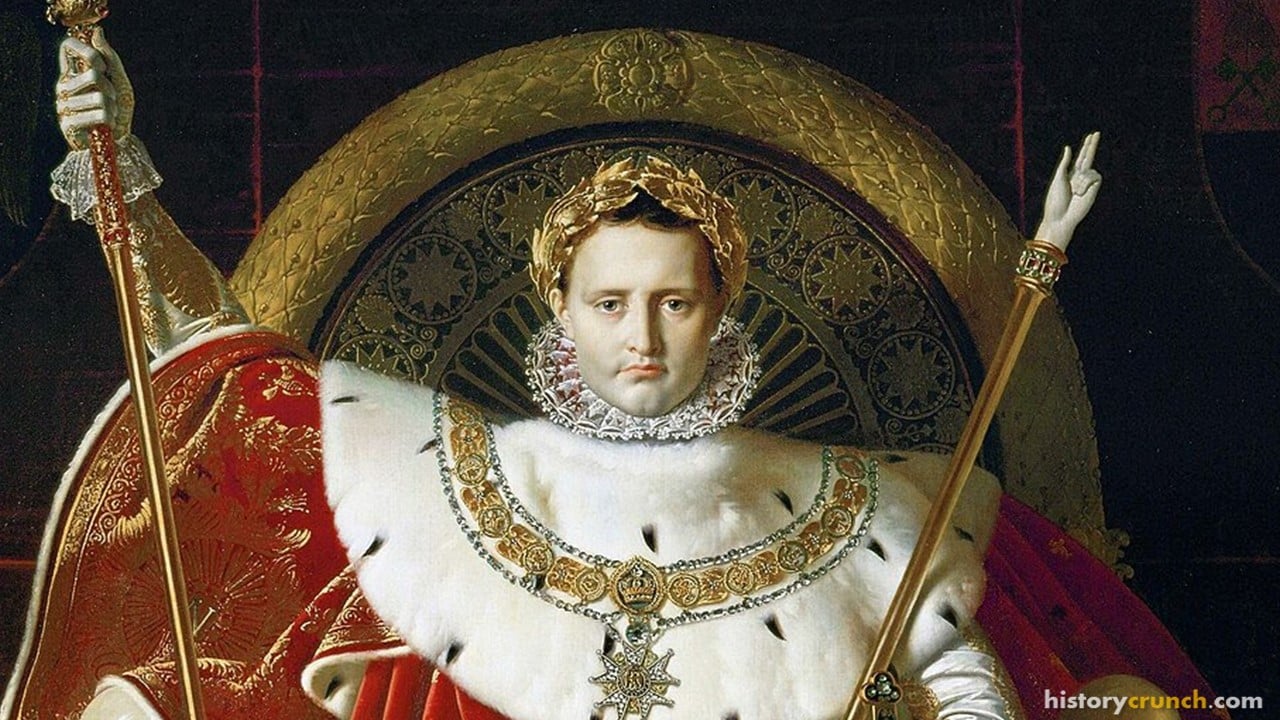
On August 6th, 1806 Emperor Francis II, faced with Napoleon's ultimatum and the departure of the Rhine states, formally laid down the crown of the Holy Roman Empire and released its members from their oaths. The Empire, founded by Charlemagne's coronation in 800 and reorganized by Otto the Great in 962, ceased to exist. Francis kept the title Emperor of Austria, which he had invented for himself two years earlier in case exactly this happened.
LEARN MORESHOW LESSwhy it matters · key numbersPOLITICSVoltaire had said it was neither holy, nor Roman, nor an empire, but it had been the frame of central Europe for a thousand years. Napoleon ended it with a letter.
Prussia, which had sat out 1805, sent Napoleon an ultimatum in September of 1806 demanding that French troops leave Germany. On October 14th two battles were fought fifteen miles apart. At Jena Napoleon with about 95,000 men routed a Prussian force of 38,000; at Auerstedt Marshal Davout's single corps of 27,000 beat the main Prussian army of 63,000 under the Duke of Brunswick, who was mortally wounded. The Prussian army, still run by veterans of Frederick the Great, dissolved in the retreat and its fortresses surrendered one after another.
LEARN MORESHOW LESSwhy it matters · key numbersBATTLEFrederick the Great's army had been the model for Europe for fifty years. Its collapse in one day forced the reforms that made the Prussian army of 1813.
On October 27th, 1806, thirteen days after Jena, Napoleon entered Berlin at the head of his Guard and took up residence in the Prussian royal palace. He visited the tomb of Frederick the Great in the garrison church at Potsdam, the royal town outside Berlin, and had Frederick's sword sent to Paris. King Frederick William III had fled east toward the Russian border, and the fortresses at Magdeburg, Stettin and Kustrin surrendered to French cavalry with barely a shot.
LEARN MORESHOW LESSwhy it matters · 1 key figureCAMPAIGNTwenty-two years later a Prussian army would enter Paris. The humiliation of 1806 is where German nationalism, as a political force, begins.
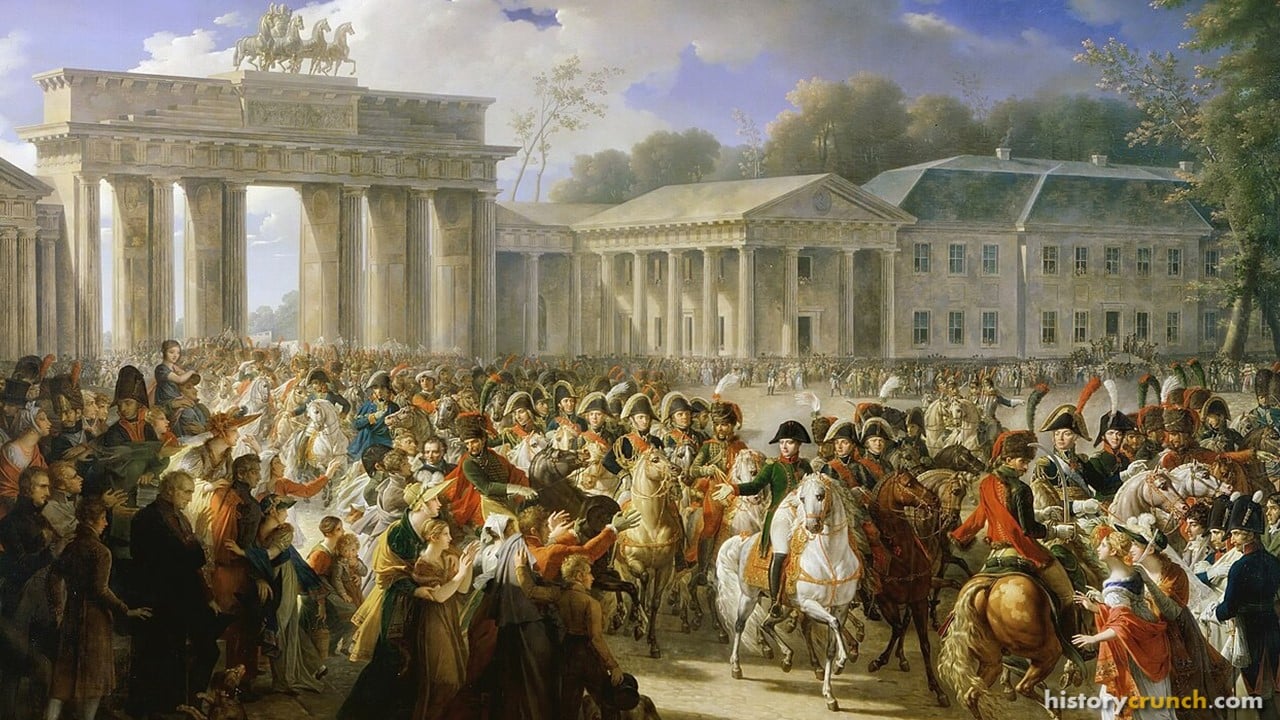
From the Prussian royal palace on November 21st, 1806 Napoleon signed the Berlin Decree declaring the British Isles in a state of blockade. No ship coming from Britain or its colonies could enter any port under French control, all British goods were to be seized and all British subjects on the Continent arrested. Since Trafalgar had made an invasion impossible, Napoleon meant to bankrupt Britain by closing Europe to its trade. Britain answered with Orders in Council blockading every port that obeyed the decree.
LEARN MORESHOW LESSwhy it mattersECONOMYThe Continental System is the reason for Portugal, for Spain and for Russia. Every one of the wars that destroyed Napoleon began as an attempt to make someone obey this decree.
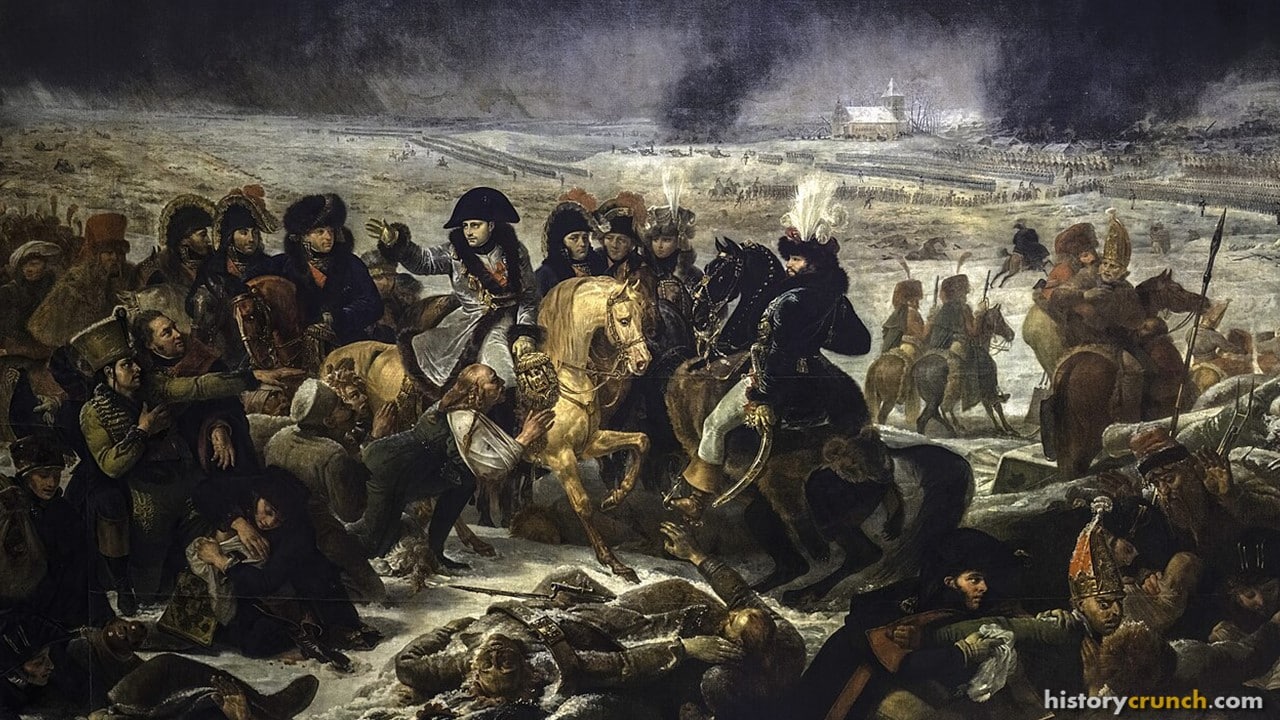
On February 7th and 8th, 1807 Napoleon met the Russian army under General Bennigsen at Eylau in East Prussia in a blizzard. A French corps under Augereau lost its way in the snow and was shot to pieces by Russian guns; the day was saved by a charge of 10,000 French cavalry under Murat, the largest of the wars. The Russians withdrew in the night, which let Napoleon claim a victory, but each side had lost around 20,000 men and nothing had been decided. Antoine-Jean Gros painted the Emperor touring the frozen field of wounded.
LEARN MORESHOW LESSwhy it matters · key numbersBATTLEEylau was the first time a Napoleonic battle ended without a winner. It took Napoleon four more months to force the decision he wanted.
On June 14th, 1807 Bennigsen crossed the Alle River at Friedland to attack what he thought was a single French corps, and found Napoleon arriving with the whole army. Hemmed in with the river behind them and the bridges under fire, the Russians lost about 20,000 men to fewer than 10,000 French. Bennigsen retreated to the Niemen, and Tsar Alexander, out of soldiers and out of allies, asked for an armistice within five days.
LEARN MORESHOW LESSwhy it matters · key numbersBATTLEFriedland did what Eylau had not. It put Russia at the table, and the table was a raft.
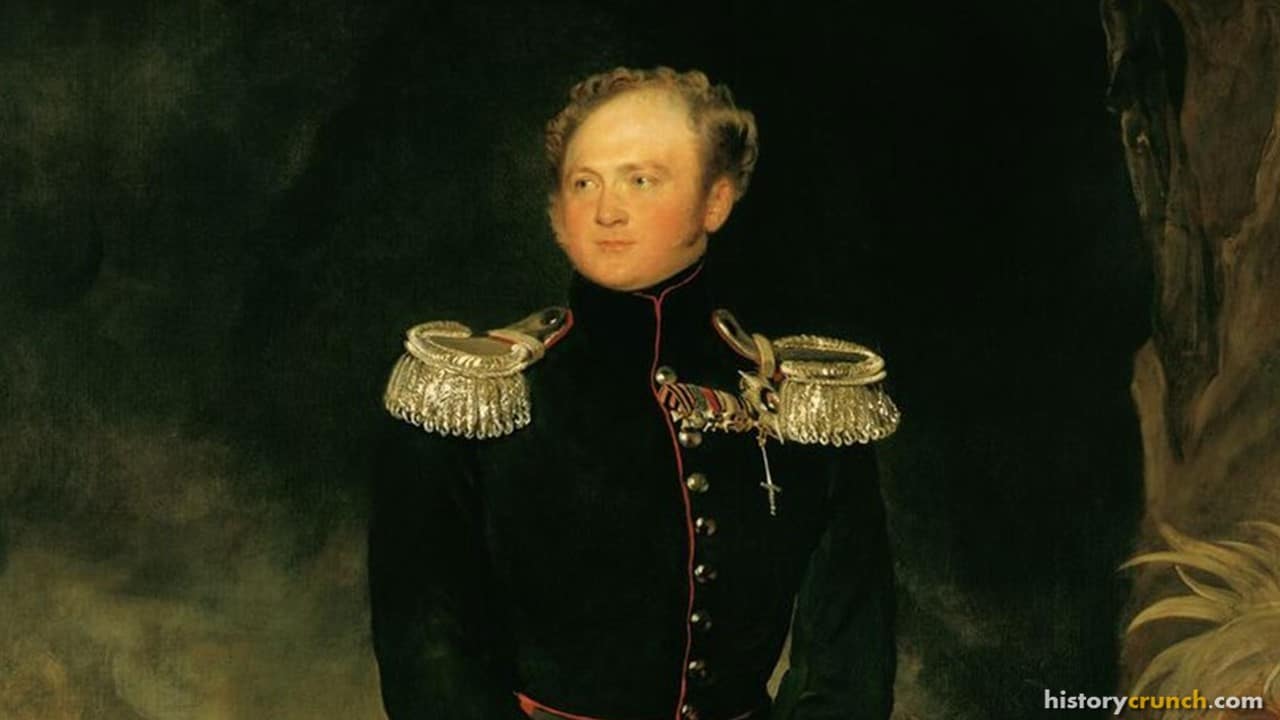
On June 25th, 1807 the two emperors met alone in a pavilion built on a raft moored in the middle of the Niemen River at Tilsit, the border between French-held Prussia and Russia, while King Frederick William of Prussia waited on the bank in the rain. Alexander is said to have opened with, 'I hate the English as much as you do.' Over two weeks of dinners and parades the twenty-nine-year-old tsar and the thirty-seven-year-old emperor agreed to divide Europe between them.
LEARN MORESHOW LESSwhy it matters · a source · 2 key figuresDIPLOMACYTilsit was the peak of Napoleon's power. From this raft he controlled or was allied with every state on the Continent, and the alliance with Russia lasted only three years.
IN THEIR OWN WORDS“I hate the English as much as you do.”
Tsar Alexander I to Napoleon, June 25th, 1807WHAT TO NOTICEas reported by the French side
Two treaties were signed at Tilsit. The first, with Russia on July 7th, 1807, cost Alexander almost nothing: he recognized Napoleon's conquests and agreed to join the Continental System against Britain, and in return got a free hand against Sweden and Turkey. The second, with Prussia on July 9th, took away all Prussian land west of the Elbe River and its Polish provinces, which became the Grand Duchy of Warsaw, and cut Prussia from about ten million people to under five. Prussia also had to pay an indemnity and limit its army to 42,000 men.
LEARN MORESHOW LESSwhy it matters · key numbersTREATYPrussia's humiliation produced the army reformers Scharnhorst and Gneisenau and the nationalism that turned on France in 1813. Russia's obligation produced the invasion of 1812.
Portugal, Britain's oldest ally, refused to close its ports to British trade. On November 30th, 1807 General Junot's exhausted French army marched into Lisbon after a forced march across Spain, which had let it pass under a treaty to partition Portugal. The day before, the Portuguese royal family and about 10,000 courtiers and officials had sailed for Brazil under British naval escort, taking the treasury and the fleet with them. Rio de Janeiro became the capital of the Portuguese empire.
LEARN MORESHOW LESSwhy it matters · key numbersINVASIONThe French got Lisbon and lost Portugal. Its ports stayed open to British goods from Brazil, and the French troops now stationed across Spain were the start of the Peninsular War.
On December 17th, 1807 Napoleon issued the Milan Decree, which ordered that any neutral ship that had submitted to a British search, paid British customs duties or called at a British port was to be treated as British and seized. Together with Britain's own Orders in Council it left neutral shipping, above all American, liable to capture by one side or the other whatever it did. Smuggling through Heligoland, Malta and the Baltic became a major industry.
LEARN MORESHOW LESSwhy it mattersECONOMYThe quarrel over neutral trade drove the United States to the Embargo Act of 1807 and, in 1812, to war with Britain.
Napoleon's power at Tilsit rested on his ability to close every port in Europe to Britain, and Portugal would not close. So French troops crossed Spain to take Lisbon, stayed, and in the spring of 1808 Napoleon took the Spanish throne for his brother. Madrid rose on the Second of May, a French army surrendered at Bailen in July, and a British general named Wellesley won at Vimeiro in August. For six years the Peninsular War drained French armies into a country that fought them from every village. Austria, encouraged, attacked in 1809 and gave Napoleon his first defeat at Aspern before losing at Wagram. He answered by marrying a Habsburg and getting the heir the Empire needed. Meanwhile Russia, bleeding money under the blockade, quietly opened its ports on the last day of 1810.
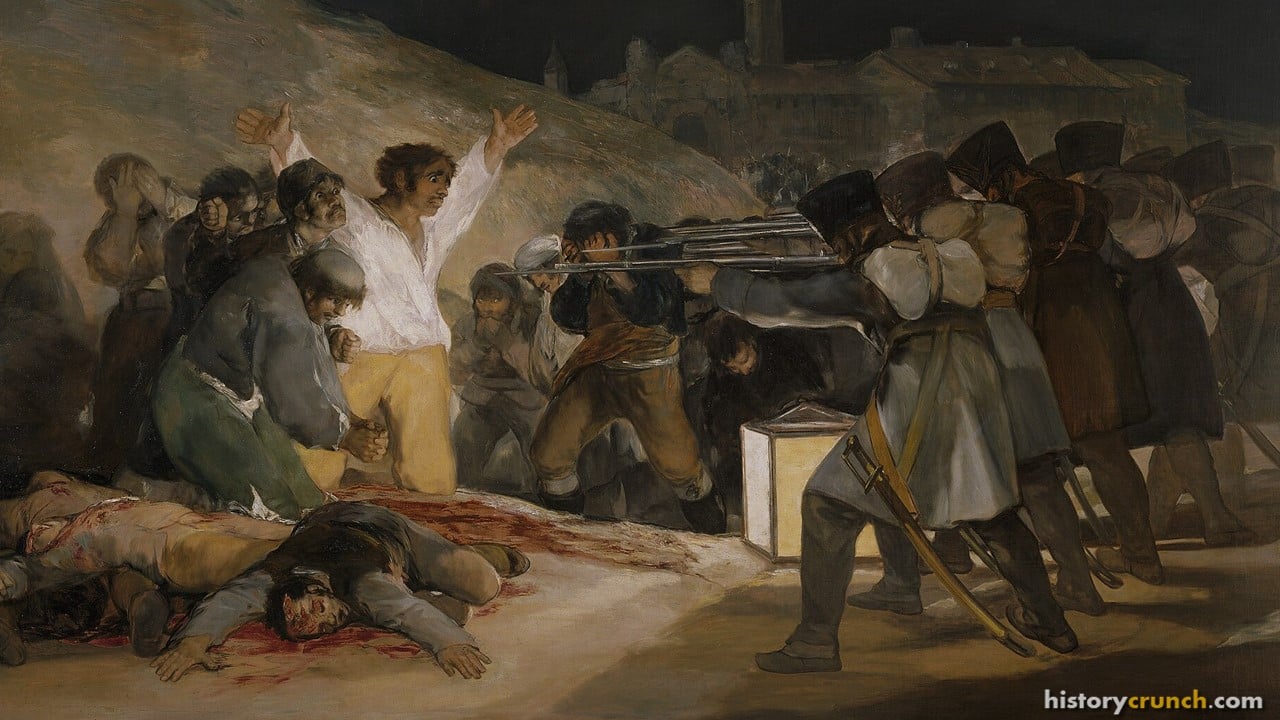
On May 2nd, 1808 crowds in Madrid attacked French troops who were escorting the last members of the Spanish royal family out of the city to Napoleon's meeting at Bayonne. Murat's Mameluke cavalry and infantry cleared the streets with sabers and grapeshot, and that night and the next morning firing squads shot hundreds of prisoners on the hill of Principe Pio. Goya painted both the fighting and the executions six years later.
LEARN MORESHOW LESSwhy it mattersUPRISINGThe Second of May is Spain's national day of resistance and the start of a war that tied down 300,000 French soldiers for six years. Napoleon called it his Spanish ulcer.
Napoleon summoned King Charles IV of Spain and his son Ferdinand VII, who had forced his father to abdicate in March, to Bayonne in southern France. On May 5th and 6th, 1808 he bullied Ferdinand into returning the crown to his father and Charles into handing it to Napoleon. The Bourbons were sent to comfortable house arrest in France. A Spanish assembly of notables was called to Bayonne to approve the arrangement and a new constitution.
LEARN MORESHOW LESSwhy it mattersPOLITICSNapoleon had taken a throne from a family that was his ally and had never fought him. Spain answered with the first national uprising of the Napoleonic Wars.
On June 6th, 1808 Napoleon proclaimed his elder brother Joseph, then King of Naples, King of Spain and the Indies. Joseph entered Madrid on July 20th and left it eleven days later when news arrived that a whole French corps had surrendered at Bailen. Across Spain provincial committees called juntas raised armies in the name of the imprisoned Ferdinand VII, and the British cabinet under the Duke of Portland agreed to send troops.
LEARN MORESHOW LESSwhy it mattersPOLITICSJoseph was a mild and decent man who wanted to be a good king of Spain. Spaniards called him Pepe Botella, Joe Bottle, and never accepted him for a day.
On July 19th, 1808 a Spanish army under General Castanos trapped General Dupont's corps of about 20,000 men in the heat of Andalusia near the town of Bailen. Cut off from water and harassed by armed villagers, Dupont surrendered on July 22nd with about 18,000 men. It was the first time a Napoleonic army had surrendered in the field. The prisoners were promised passage home; most were instead kept on prison hulks at Cadiz, where thousands died.
LEARN MORESHOW LESSwhy it matters · key numbersBATTLEBailen told Europe that French armies could be beaten. Austria began arming for war within weeks, and Napoleon decided he would have to go to Spain himself.
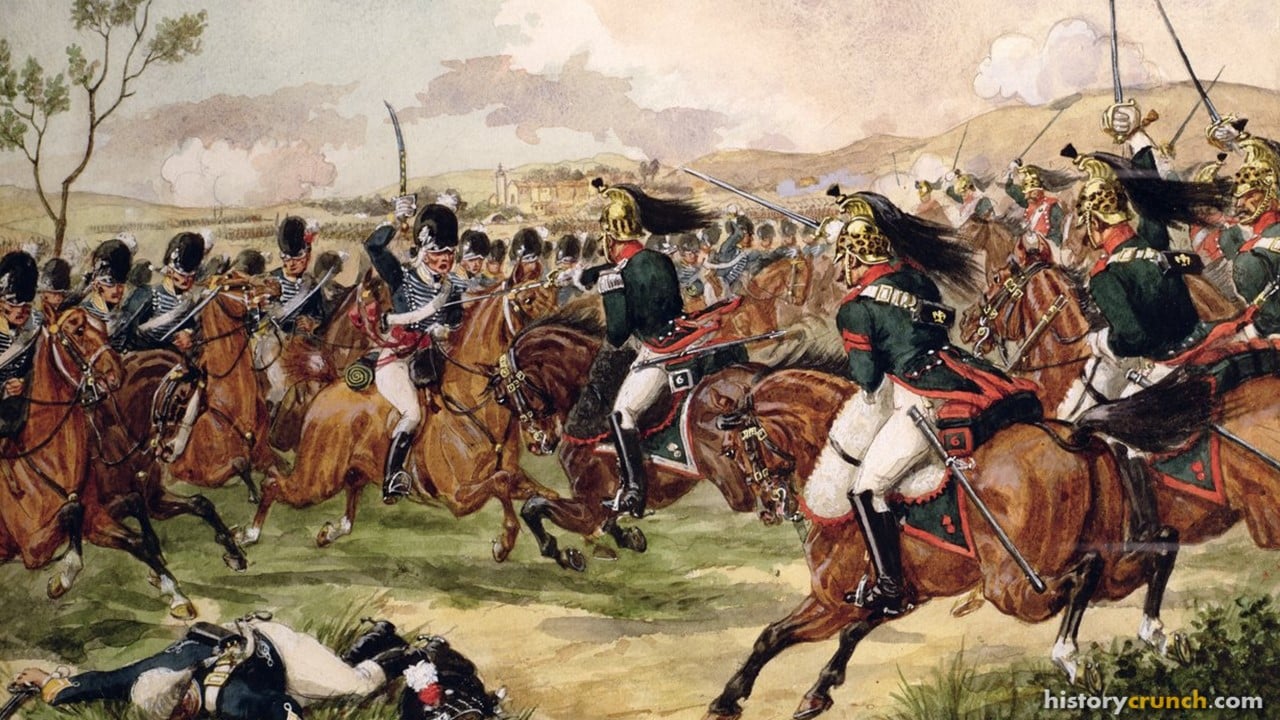
A British army of about 15,000 under Lieutenant General Sir Arthur Wellesley landed in Portugal on August 1st, 1808. On August 21st Junot attacked it at Vimeiro and was beaten back by British infantry firing in two-deep lines from behind a ridge, a method Wellesley would use for the next six years. His superiors then arrived, took command and signed the Convention of Cintra, which shipped Junot's army back to France in British ships with its loot. Public fury in Britain led to an inquiry.
LEARN MORESHOW LESSwhy it matters · 1 key figureBATTLEThe general who would beat Napoleon at Waterloo won his first battle against the French here. The government nearly ended his career for it the same month.
Napoleon crossed into Spain in early November of 1808 with about 200,000 veterans, broke the Spanish armies on the Ebro, stormed the Somosierra pass north of Madrid with a charge of Polish light horse on November 30th and accepted the capital's surrender on December 4th, 1808. He then turned north to catch the British army under Sir John Moore, which had marched into Spain from Portugal, and chased it through the snow toward the coast.
LEARN MORESHOW LESSwhy it matters · key numbersCAMPAIGNNapoleon spent ten weeks in Spain and never returned. He left the war to his marshals, and they never had enough men to end it.
Sir John Moore's army of about 25,000 retreated 250 miles through the mountains of Galicia in midwinter, losing thousands to cold and hunger, and reached the port of Corunna on January 11th, 1809. On January 16th Marshal Soult attacked while the troops were embarking. The British held their ridge until dark and got the army away, but Moore was struck by a cannonball and died that night. He was buried in his cloak on the ramparts.
LEARN MORESHOW LESSwhy it mattersBATTLECorunna looked like a British defeat and was a rescue. The army Moore saved was the core of the one Wellesley took back to Portugal in April.
On April 10th, 1809 Archduke Charles led the reformed Austrian army across the Inn River into Bavaria without a declaration of war, while a proclamation called on all Germans to rise against Napoleon. Austria had spent the money from Pressburg on a new army and had watched Napoleon send more than 100,000 men to Spain. Britain was the only ally, and its promised expedition to the Dutch coast did not sail until July.
LEARN MORESHOW LESSwhy it mattersWARAustria fought alone in 1809 and was beaten in four months. Its reward was to be the last power standing when Napoleon's empire fell.
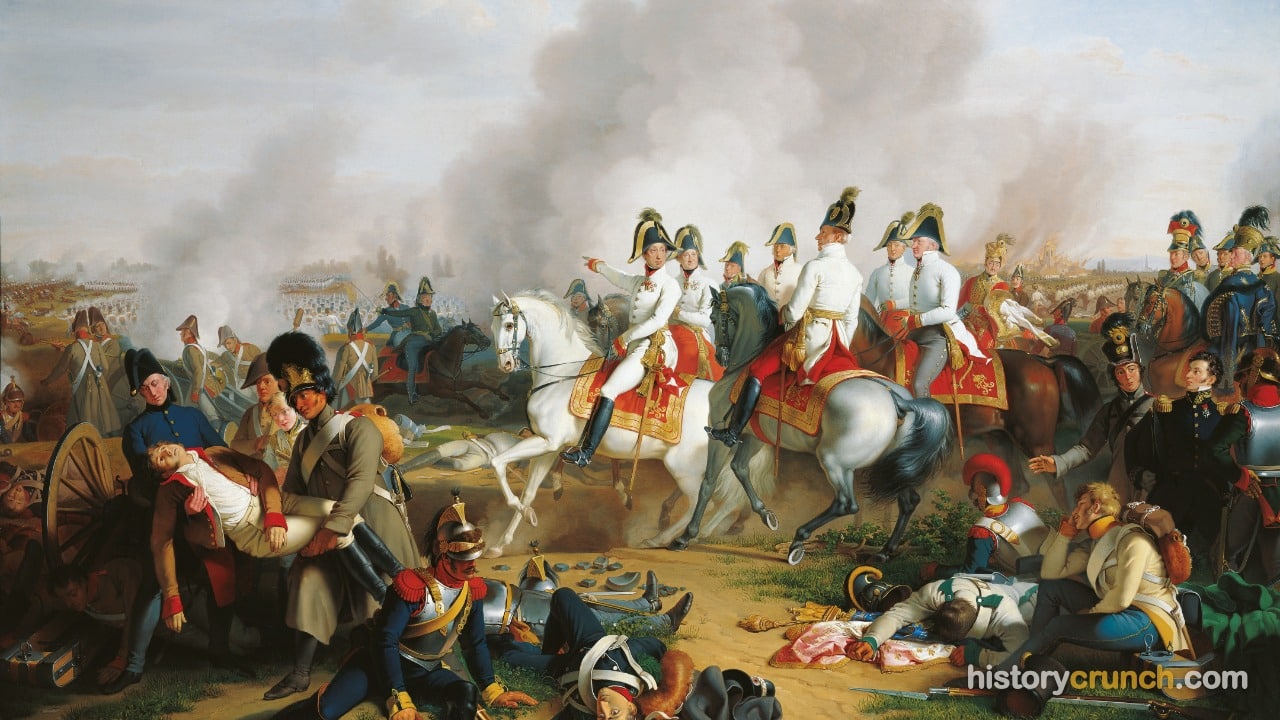
Napoleon took Vienna on May 13th, 1809, but Archduke Charles kept his army on the north bank of the Danube. On May 21st and 22nd the French crossed by pontoon bridges to the villages of Aspern and Essling, and Charles attacked with about 95,000 men while the swollen river broke the bridges behind them. After two days of fighting in the burning villages Napoleon pulled back to the island of Lobau. Marshal Lannes, one of his closest friends, had both legs smashed by a cannonball and died a week later.
LEARN MORESHOW LESSwhy it matters · key numbersBATTLEAspern was the first battle Napoleon had personally lost. Church bells rang across Austria, and the legend of the unbeatable Emperor had its first crack.
Napoleon spent six weeks bridging the Danube properly and gathering about 180,000 men on Lobau island. On the night of July 4th, 1809 he crossed in a storm, and on July 5th and 6th fought Archduke Charles's 140,000 on the plain of Wagram northeast of Vienna. A massed battery of more than 100 guns and a column attack by Macdonald's corps broke the Austrian center. Each side lost about 35,000 men. Charles asked for an armistice on July 12th.
LEARN MORESHOW LESSwhy it matters · key numbersBATTLEWagram was won by weight of guns and men rather than the maneuvers of 1805. The battles were getting bigger and bloodier, and the French army was no longer better than its enemies, only larger.
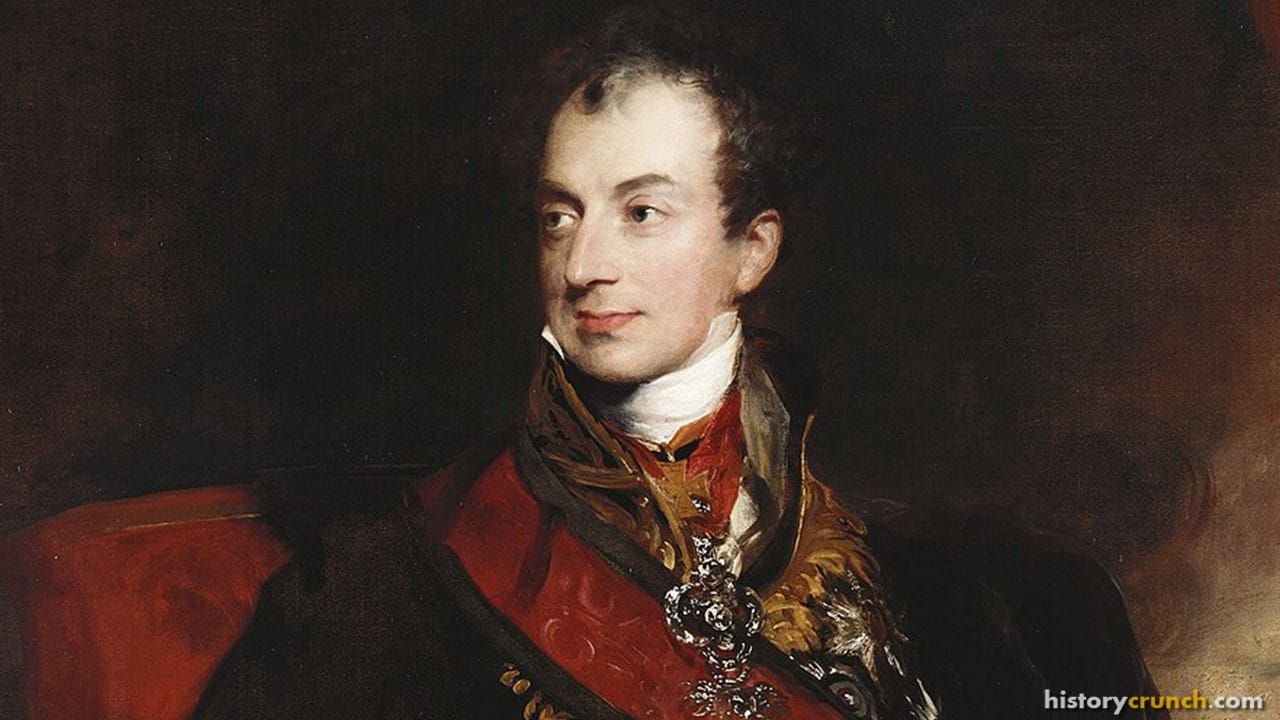
On October 8th, 1809, with Austria beaten and Napoleon still in Vienna, Emperor Francis appointed the thirty-six-year-old Klemens von Metternich as foreign minister. Metternich had spent three years as ambassador in Paris studying Napoleon at close range. His policy was to bend until Austria was strong enough to fight, which meant cooperating with France, even marrying a Habsburg archduchess to the Emperor, while rebuilding the army.
LEARN MORESHOW LESSwhy it matters · 1 key figurePERSONMetternich would run Austrian and, for a generation, European diplomacy until 1848. The order he built at Vienna in 1815 lasted a century.
On October 14th, 1809 Austria signed the Treaty of Schonbrunn at the imperial palace outside Vienna. It gave Salzburg to Bavaria, its Adriatic coast to France as the Illyrian Provinces, which cut Austria off from the sea, and western Galicia to the Grand Duchy of Warsaw. Austria paid an indemnity of 85 million francs, limited its army to 150,000 men and joined the Continental System. Two days earlier a German student had tried to stab Napoleon at a parade at Schonbrunn.
LEARN MORESHOW LESSwhy it matters · key numbersTREATYSchonbrunn was the last of the treaties Napoleon dictated to a beaten enemy. The next one, in 1814, would be dictated to him.
On December 15th, 1809, in a ceremony at the Tuileries before the imperial family, Napoleon and Josephine read out statements dissolving their marriage. She was forty-six and had borne no child in thirteen years with him; he now had an empire to pass on and two acknowledged illegitimate sons to prove the fault was not his. The Senate confirmed the divorce the next day. Josephine kept the title of Empress, the palace of Malmaison and an income of about three million francs a year.
LEARN MORESHOW LESSwhy it matters · 2 key figuresPERSONNapoleon wept at the ceremony and visited her at Malmaison for years afterward. He is supposed to have said her name on his deathbed.
On April 2nd, 1810 Napoleon married Marie Louise, the eighteen-year-old daughter of Emperor Francis of Austria, in the Louvre; a civil ceremony had been held the day before. Metternich had arranged the match after the Tsar had stalled on offering a Russian grand duchess. Napoleon, who had never seen her, had ridden out to meet her carriage in the rain and climbed in. The marriage made the Corsican soldier a nephew by marriage of the executed Marie Antoinette.
LEARN MORESHOW LESSwhy it matters · 2 key figuresPERSONThe Habsburgs had married their way to an empire for four centuries. Now they married a daughter to the man who had beaten them three times, and waited.
Marshal Massena invaded Portugal in the summer of 1810 with about 65,000 men to drive the British into the sea. On October 10th, after Wellington had pulled back behind them, his advance guard reached the Lines of Torres Vedras, three belts of forts, ditches and gun positions that Wellington had built in secret across the peninsula north of Lisbon over the previous year. The countryside in front had been stripped of food. Massena sat in front of the Lines for a month, then fell back to Santarem and starved through the winter.
LEARN MORESHOW LESSwhy it matters · key numbers · 1 key figureSIEGEWellington beat the largest French invasion of Portugal without a battle. Massena lost about 25,000 men to hunger and disease and retreated into Spain in March of 1811.
On December 31st, 1810 Alexander issued a decree that admitted neutral ships, in practice mostly carrying British goods, to Russian ports and put heavy duties on the French luxury goods that came overland. The blockade had cut off the grain, timber and hemp exports on which Russian landowners depended, and the ruble had lost half its value. Alexander had also been angered by Napoleon's enlargement of the Grand Duchy of Warsaw and his seizure of Oldenburg, a duchy ruled by the Tsar's brother-in-law.
LEARN MORESHOW LESSwhy it matters · 1 key figureECONOMYNapoleon treated the decree as a breach of Tilsit and began planning to force Russia back into line. That plan became the invasion of 1812.
On the night of March 5th, 1811 Massena's army, having eaten everything within reach of Santarem, began its retreat toward the Spanish border. Wellington followed, and the Anglo-Portuguese army was back on Spanish soil in April. Over the next year Wellington took the frontier fortresses of Ciudad Rodrigo in January of 1812 and Badajoz in April, the second at the cost of about 4,800 men in one night's assault and a sack of the town that lasted three days.
LEARN MORESHOW LESSwhy it matters · 1 key figureCAMPAIGNFrom here the war in the peninsula ran one way. The French never again threatened Lisbon, and every campaign after this was fought in Spain.
On March 20th, 1811 Marie Louise gave birth at the Tuileries to a son, Napoleon Francois Joseph Charles, after a labor so difficult that the doctor asked which life to save; Napoleon said the mother's. The cannon of Paris fired 101 rounds for a boy, and the infant was given the title King of Rome. He would be recognized as Napoleon II by his father's followers, live out his short life at the Austrian court as the Duke of Reichstadt and die of tuberculosis in 1832, aged twenty-one.
LEARN MORESHOW LESSwhy it matters · 1 key figurePERSONThe whole point of the divorce and the Austrian marriage was this child. He never ruled a day.
The largest army Europe had ever seen crossed the Niemen on June 24th, 1812, more than 600,000 men from a dozen nations, to force one man to close his ports. The Russians would not fight, and every mile east cost the Grande Armee men to heat, hunger and fever. Smolensk burned, Borodino killed 75,000 men in a day and decided nothing, and Moscow was empty and on fire when Napoleon rode in. He waited five weeks for a letter that never came. The retreat began on October 19th, the snow on November 4th, and the crossing of the Berezina at the end of November saved what was left. Fewer than 100,000 came home. In the same summer Wellington broke a French army at Salamanca and entered Madrid, and on December 30th a Prussian general took his corps out of the war on his own authority.
On June 24th, 1812 the largest army Europe had ever seen began crossing the Niemen River into Russia on pontoon bridges near Kovno. Napoleon commanded more than 600,000 men, fewer than half of them French; the rest were Germans, Poles, Italians, Austrians, Prussians, Swiss and Dutch. Against them Russia had about 250,000 in two armies, which retreated east rather than fight, burning what they could not carry. Within a month heat, bad water and desertion had cost the French tens of thousands of men.
LEARN MORESHOW LESSwhy it matters · key numbers · 2 key figuresINVASIONNapoleon expected one great battle inside three weeks and a signed peace by August. The Russians gave him neither.
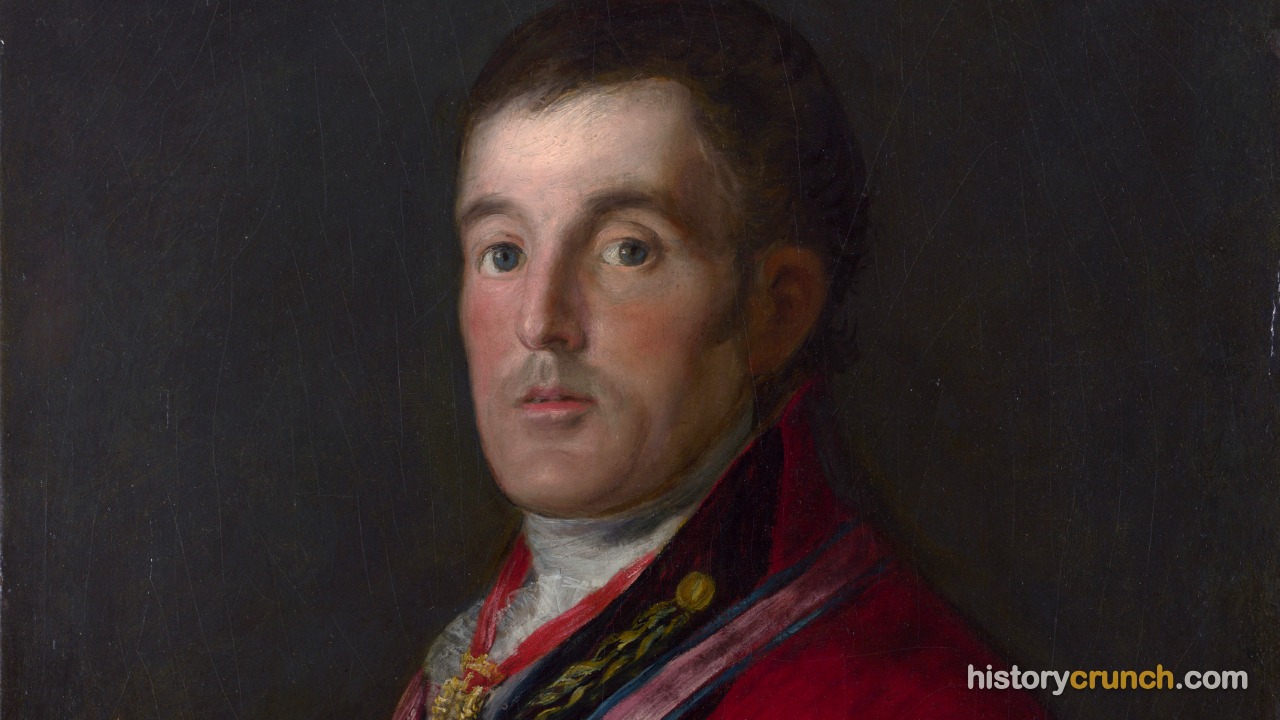
On July 22nd, 1812, after weeks of maneuvering along the Tormes River, Marshal Marmont stretched his army too far to the west in trying to cut Wellington off from Portugal. Wellington, watching from a hill with a chicken leg in his hand, is said to have thrown it down and called for his horse. His divisions struck the strung-out French columns one after another; Marmont was badly wounded in the first minutes. About 14,000 French were killed, wounded or captured.
LEARN MORESHOW LESSwhy it matters · key numbers · 1 key figureBATTLESalamanca ended the idea that Wellington could only fight on the defensive. A French officer said he had beaten 40,000 men in forty minutes.
On August 12th, 1812 Wellington's army marched into Madrid to a welcome of bells, flowers and crowds; Joseph Bonaparte had left for Valencia two days earlier with a train of wagons carrying the royal collections. The occupation lasted eleven weeks. A failed siege of Burgos in the autumn and the gathering of the French armies forced Wellington to retreat back to Portugal in November in weather as bad as Moore's retreat of 1809.
LEARN MORESHOW LESSwhy it matters · 1 key figureCAMPAIGNMadrid was won and lost in one campaign, but the French had to pull troops from every corner of Spain to do it, and the guerrillas took the corners.
On August 16th and 17th, 1812 Napoleon attacked the walled city of Smolensk, 250 miles inside Russia, hoping to pin the two Russian armies that had at last joined there. The Russians fought in the suburbs, set the city on fire and withdrew east across the Dnieper in the night. Napoleon entered a burning ruin. He had lost about 10,000 men in the assault and had already lost more than 150,000 to disease, straggling and desertion since June, with no decisive battle to show for it.
LEARN MORESHOW LESSwhy it matters · key numbersBATTLEAt Smolensk Napoleon's marshals urged him to stop for the winter. He decided that Moscow, another 250 miles on, was the only place a peace could be dictated.
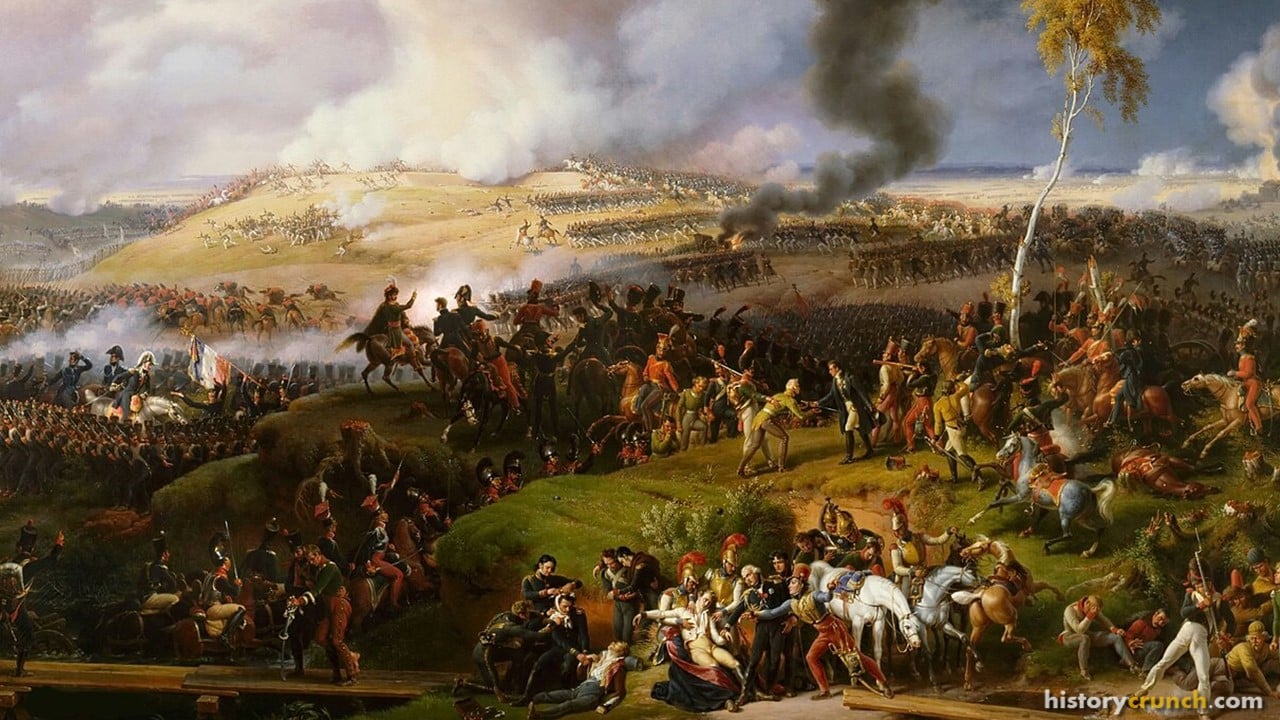
On September 7th, 1812 the new Russian commander, Mikhail Kutuzov, stood and fought seventy miles west of Moscow with about 120,000 men in earthworks along a line of low hills. Napoleon, with about 130,000, attacked head-on from dawn. The Russian redoubts changed hands several times under the heaviest artillery fire of the wars. By evening the Russians had been driven back about a mile and had lost some 45,000 men; the French had lost about 30,000, including 49 generals. Napoleon refused to send in the Guard to finish it.
LEARN MORESHOW LESSwhy it matters · key numbersBATTLEBoth sides claimed Borodino. Kutuzov retreated through Moscow and kept his army; Napoleon got the city and found it was worth nothing.
On September 14th, 1812 Napoleon rode into Moscow expecting a delegation with the city's keys and found it nearly empty: most of its 270,000 people had left with the Russian army. That night fires broke out, set on the orders of the governor Rostopchin, who had removed the fire pumps. They burned for four days and destroyed about three quarters of the city. Napoleon waited in the Kremlin for five weeks for the Tsar to answer his peace offers. Alexander never replied.
LEARN MORESHOW LESSwhy it matters · key numbers · 1 key figureCAMPAIGNNapoleon had counted on Moscow being the end. Alexander's silence made it the beginning of the retreat, and the season was already turning.
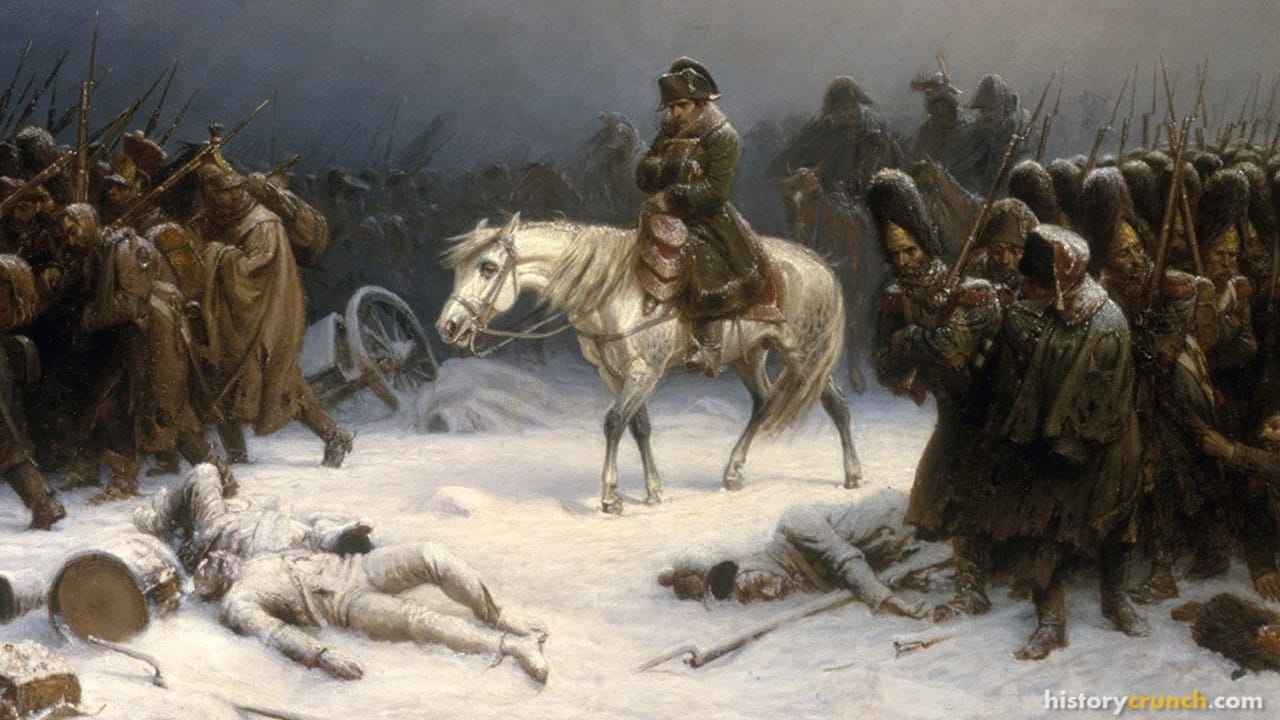
On October 19th, 1812 about 100,000 men and a train of wagons loaded with loot left Moscow. Kutuzov blocked the southern road at Maloyaroslavets on October 24th and forced the army back onto the route it had already stripped bare in August. The first snow fell on November 4th. Horses died by the thousand, the guns and wagons were abandoned, and Cossacks cut down anyone who fell out of the column. Through November the temperature dropped to around 20 degrees below zero Fahrenheit.
LEARN MORESHOW LESSwhy it matters · key numbersRETREATThe retreat from Moscow is the image of the whole era: the largest army ever raised, walking home in rags. Of the 600,000 who crossed the Niemen in June, fewer than 100,000 came back.
By late November of 1812 three Russian armies were closing on the retreating French at the Berezina River, where the only bridge had been burned. From November 26th to 29th Dutch and French engineers, working chest-deep in the freezing water, built two trestle bridges at Studenka while the army fought off attacks on both banks. Most of the engineers died. About 25,000 fighting men got across; perhaps 20,000 soldiers and 10,000 camp followers were killed, drowned or captured when the bridges were burned on the 29th.
LEARN MORESHOW LESSwhy it matters · key numbersBATTLEIn French the word berezina still means a total disaster. It was also the one moment on the retreat when Napoleon's generalship came back, and it saved the army from capture.
On December 5th, 1812 at Smorgoni Napoleon handed command to Murat and set off for Paris in a closed sleigh, traveling under a false name with a single companion. He covered 1,300 miles in thirteen days. A coup attempt in Paris in October by General Malet, who had announced the Emperor's death in Russia and been believed for a morning, had convinced him that his throne was in more danger than his army. The 29th Bulletin, published on December 16th, admitted the disaster and ended: the Emperor's health has never been better.
LEARN MORESHOW LESSwhy it matters · key numbers · 1 key figurePERSONNapoleon left an army in Egypt in 1799 and another in Russia in 1812. Both times the men were abandoned and both times the politics came first.
The last French troops recrossed the Niemen in mid December of 1812. On December 30th General Yorck, commanding the 20,000-man Prussian corps that had marched with Napoleon on the northern flank, signed an agreement with the Russians at Tauroggen to declare his corps neutral, acting entirely on his own authority. King Frederick William at first disowned him and then, over the next two months, followed him. The Prussian people had already made up their minds.
LEARN MORESHOW LESSwhy it matters · key numbersPOLITICSTauroggen is where the empire started to come apart from the inside. Prussia's defection turned a Russian victory into a European war.
Russia's victory became Europe's war in 1813. Prussia joined in March, Austria in August, and for the first time Napoleon faced all three eastern powers at once, with an army of teenage conscripts and no cavalry. He won at Lutzen, Bautzen and Dresden and lost the war anyway, because the allies had agreed never to fight him and always to fight his marshals. At Leipzig in October, the largest battle Europe would see before 1914, the Saxons changed sides in mid-battle and the Empire east of the Rhine was gone. Napoleon refused a peace that would have kept France its natural frontiers, fought a brilliant campaign of small victories in the snow of Champagne, and watched Tsar Alexander ride into Paris on March 31st, 1814. He abdicated at Fontainebleau, tried to poison himself, and went to Elba, while the powers gathered at Vienna to draw a new map.
On February 28th, 1813 Prussia and Russia signed a treaty of alliance at Kalisch in Poland. Russia promised to restore Prussia to the size it had been before Tilsit; Prussia promised 80,000 men. Since Tauroggen, East Prussia had been raising volunteers on its own, and the poet Theodor Korner and thousands of students were joining free corps to fight for a Germany that did not yet exist as a country.
LEARN MORESHOW LESSwhy it mattersALLIANCEFor the first time an ally of Napoleon's had switched sides while his army was still in the field. The Sixth Coalition began here.
On March 17th, 1813 King Frederick William III declared war on France and issued a proclamation, 'To My People', the first time a Prussian king had addressed his subjects as a nation rather than as property. It called on Prussians of every class to fight for freedom from foreign rule. The reformed army, with universal conscription and a militia called the Landwehr, grew to about 280,000 men by the autumn, from a country of five million people.
LEARN MORESHOW LESSwhy it matters · key numbersWARThe Prussia that fought in 1813 was the one Scharnhorst and Gneisenau had rebuilt after Jena. The nationalism that filled its ranks would outlast Napoleon by a century.
In four months Napoleon raised a new army of about 200,000, mostly conscripts of eighteen and nineteen, with almost no cavalry because the horses had died in Russia. He beat the Russians and Prussians at Lutzen on May 2nd, 1813 and again at Bautzen on May 20th and 21st, but without cavalry he could not pursue, and each victory cost him as much as it cost the enemy. Marshal Bessieres, commander of the Guard cavalry, was killed at Lutzen by a cannonball.
LEARN MORESHOW LESSwhy it matters · key numbersBATTLETwo victories that decided nothing. Napoleon asked for an armistice on June 4th, and he later called it the worst decision of his life.
On June 4th, 1813 Napoleon and the allies agreed to an armistice that was extended to August 10th. Napoleon used it to bring up reinforcements and cavalry; the allies used it to bring up the Russians, arm the Prussian Landwehr, collect British subsidies and, above all, court Austria. Metternich offered to mediate at a congress in Prague. On June 26th he and Napoleon argued for nine hours at Dresden; Napoleon threw his hat on the floor and told Metternich that a man like him did not care about the lives of a million soldiers.
LEARN MORESHOW LESSwhy it matters · a source · 1 key figureDIPLOMACYThe armistice let Austria choose its moment. When it ended, Napoleon faced three armies instead of two.
IN THEIR OWN WORDS“You are lost, Sire. I had the presentiment of it when I came; now, in coming here, I have the certainty.”
Klemens von Metternich to Napoleon, Dresden, June 26th, 1813WHAT TO NOTICEas Metternich recorded it in his memoirs
On June 21st, 1813 Wellington's army of about 80,000 British, Portuguese and Spanish troops attacked King Joseph's army at Vitoria in the Basque country and broke it. The French abandoned their guns and a baggage train miles long, full of the plunder of five years in Spain; British soldiers stopped to loot it, which was the only reason the French army escaped. Joseph fled to France and never reigned again. Beethoven wrote a piece called Wellington's Victory to celebrate.
LEARN MORESHOW LESSwhy it matters · 1 key figureBATTLEVitoria ended French rule in Spain and told the allies at Plaswitz that Napoleon could be beaten in the field. Wellington was made a field marshal for it.
The Congress of Prague ended without an agreement on August 10th, 1813, and on August 12th Austria declared war on France, the country its own archduchess had married into three years earlier. Austria put about 300,000 men into the field. The allies agreed on the Trachenberg Plan, devised with Metternich's backing: avoid Napoleon himself, attack his marshals wherever they were found on their own and close in on his main army from three sides.
LEARN MORESHOW LESSwhy it matters · 1 key figureWARNapoleon now faced Russia, Prussia, Austria, Sweden and Britain at once, with about 400,000 men against more than 500,000, and he could be in only one place.
On August 26th and 27th, 1813 the main allied army under the Austrian commander Schwarzenberg attacked Dresden, where Napoleon arrived by forced march to defend it. He beat the allies in two days of rain and mud, taking about 13,000 prisoners. In the same fortnight, though, his marshals lost three separate battles, at Grossbeeren, on the Katzbach and at Kulm, where a French corps of 30,000 pursuing from Dresden was surrounded and destroyed.
LEARN MORESHOW LESSwhy it matters · key numbersBATTLEThe Trachenberg Plan was working. Napoleon won where he stood and lost everywhere he was not.
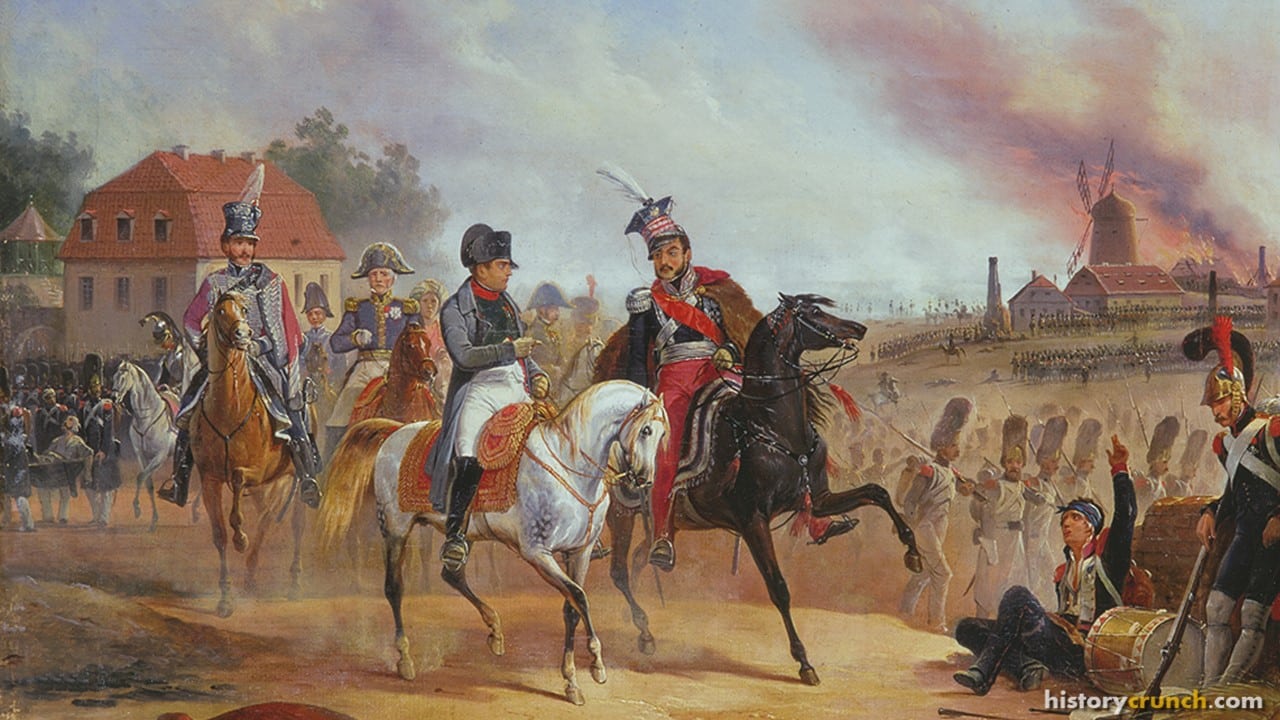
From October 16th to 19th, 1813 about 190,000 French and allied troops fought some 360,000 Russians, Prussians, Austrians and Swedes around the city of Leipzig in Saxony, the largest battle fought in Europe before 1914. On the third day the Saxon troops in Napoleon's army changed sides in the middle of the fighting. On October 19th the French retreated west through the city over a single bridge, which a corporal blew up too early, stranding about 30,000 men; Marshal Poniatowski drowned trying to swim the river. Total losses were about 90,000 killed and wounded.
LEARN MORESHOW LESSwhy it matters · key numbersBATTLELeipzig ended French rule east of the Rhine. The Confederation of the Rhine dissolved within weeks, and the war moved into France.
On November 9th, 1813 Metternich sent Napoleon the Frankfurt proposals: France could keep its 'natural frontiers' of the Rhine, the Alps and the Pyrenees, including Belgium, if it gave up everything else. It was more than France had held under Louis XIV. Napoleon hesitated for a month, and by the time he accepted in principle on December 2nd the allies had withdrawn the offer and were preparing to invade.
LEARN MORESHOW LESSwhy it matters · 1 key figureDIPLOMACYEvery peace Napoleon was offered after 1812 was better than the one he ended with. He refused each in turn because accepting would have meant admitting he had lost.
On the night of December 31st, 1813 and January 1st, 1814 Field Marshal Blucher's Prussian army crossed the Rhine at Kaub, while Schwarzenberg's main army came through Switzerland and Wellington pressed north from the Pyrenees. For the first time since 1793 foreign armies were on French soil. Napoleon had perhaps 70,000 men to meet 300,000, and the conscription of 1814 was calling up boys of sixteen and seventeen, whom the French called Marie-Louises after the Empress.
LEARN MORESHOW LESSwhy it matters · key numbersINVASIONThe war that had begun with the Revolution defending France now ended with France invaded. The population, exhausted by conscription and taxes, mostly did not rise.
Between February 10th and 14th, 1814 Napoleon, with about 30,000 men, fell on Blucher's army as it marched strung out along the Marne toward Paris and beat its separate corps at Champaubert, Montmirail, Chateau-Thierry and Vauchamps, inflicting about 17,000 casualties for perhaps 3,500 of his own. Allied commanders called it the campaign of a genius. Then Blucher regrouped, Schwarzenberg advanced on the other flank, and the numbers went on telling.
LEARN MORESHOW LESSwhy it matters · key numbersBATTLEMilitary historians rank the 1814 campaign with Italy in 1796 as Napoleon's best. It bought him six weeks.
On March 9th, 1814 Britain, Russia, Austria and Prussia signed the Treaty of Chaumont, drafted by the British foreign secretary Castlereagh. Each promised to keep 150,000 men in the field, to make no separate peace and to stay allied for twenty years after the war to guard against France. Britain would pay five million pounds a year in subsidies. Napoleon had just rejected, at the Congress of Chatillon, an offer to keep the France of 1792.
LEARN MORESHOW LESSwhy it matters · key numbersALLIANCEChaumont is the founding document of the alliance that beat Napoleon and then, as the Quadruple Alliance, ran Europe after him.
While Napoleon marched east to cut the allied supply lines, Schwarzenberg and Blucher marched on Paris. Marshals Marmont and Mortier fought on the heights of Montmartre on March 30th, 1814 and signed a capitulation at two in the morning. On March 31st Tsar Alexander and King Frederick William rode down the Champs-Elysees at the head of their guards while crowds, some of them royalists waving white handkerchiefs, watched. Napoleon, racing back, learned of the surrender at a post house twelve miles from the city.
LEARN MORESHOW LESSwhy it matters · 1 key figureCAMPAIGNParis had not been entered by a foreign army since 1436. The same Tsar who had lost Moscow to Napoleon in 1812 took his capital eighteen months later.
At Fontainebleau on April 4th, 1814 Napoleon's marshals, led by Ney, told him the army would not march on Paris. He offered to abdicate in favor of his son; the allies, urged by Talleyrand, refused and recalled the Bourbons. On April 6th Napoleon signed an unconditional abdication. The Treaty of Fontainebleau of April 11th gave him the Mediterranean island of Elba as a sovereign principality, the title of Emperor and a pension of two million francs a year from France. On the night of April 12th he tried to poison himself and survived.
LEARN MORESHOW LESSwhy it matters · key numbers · 1 key figureABDICATIONThe men who beat Napoleon gave him an island, an army of a thousand men and a view of the French coast. Ten months later he used all three.
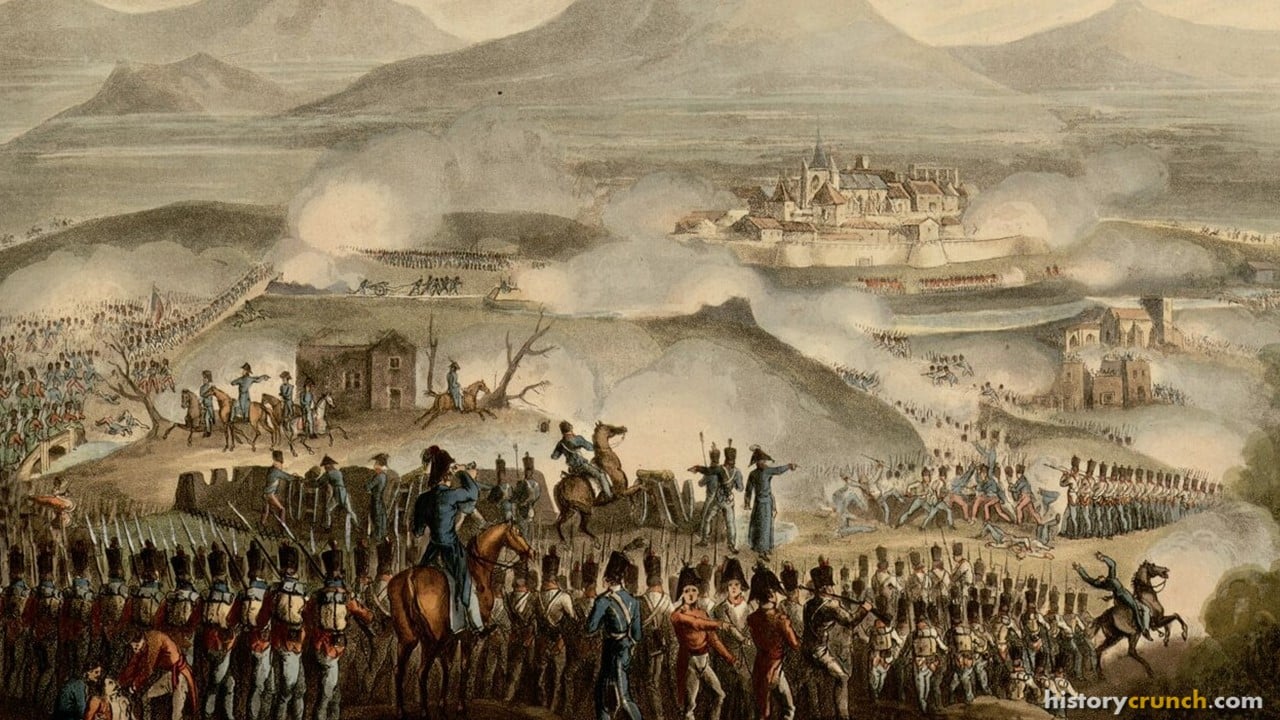
On April 10th, 1814 Wellington attacked Marshal Soult's army in the fortified city of Toulouse in southern France and took the heights above it at a cost of about 4,500 men, more than the French lost. Soult withdrew on the 11th. On the 12th a courier arrived from Paris with the news that Napoleon had abdicated six days earlier. The final action of the Peninsular War was fought two days later at Bayonne, where a French sortie killed several hundred more men before the news reached them.
LEARN MORESHOW LESSwhy it matters · 1 key figureBATTLEThe Peninsular War ended where it had always been fought, in the mud, over ground nobody needed. Wellington was made a duke the next month.
On May 3rd, 1814 Louis XVIII, the younger brother of the guillotined Louis XVI, entered Paris after twenty-three years of exile in Germany, Russia and England. Talleyrand and the Senate had recalled him on condition he grant a constitution; the Charter he issued on June 4th was the constitution the Senate had demanded as the price of the restoration, the Bourbons' return to the throne. It kept the Civil Code, the sale of church lands, the legion of honor and a parliament of two chambers, but dated itself from the nineteenth year of his reign, as though the Revolution had never happened.
LEARN MORESHOW LESSwhy it mattersRESTORATIONLouis was fat, gouty and fifty-eight, and the returning nobles around him wanted their lands back. Within a year much of the army and many of the peasants wanted the Emperor.
On May 4th, 1814 Napoleon landed at Portoferraio on Elba, an island eighteen miles long with about 12,000 people, ten miles off the coast of Tuscany. He brought a guard of about a thousand men and set about ruling his kingdom as if it were France: new roads, a hospital, iron mines reopened, a flag designed. His mother and sister Pauline joined him. Marie Louise and his son went to Vienna and never came. The pension France had promised was never paid.
LEARN MORESHOW LESSwhy it matters · key numbers · 1 key figureEXILEElba was the allies' compromise between killing Napoleon and trusting him. It was close enough to France for him to read the newspapers, and he read that France was unhappy.
On May 30th, 1814 the allies signed a peace with Louis XVIII's France. France kept its borders of 1792, slightly enlarged, paid no indemnity, suffered no occupation and was allowed to keep the artworks Napoleon had looted from across Europe. Talleyrand had argued that a harsh peace would only weaken the restored king, whose claim rested on legitimacy, the idea that a throne belonged to the family that had always held it. The larger questions, what to do with Poland, Saxony, Italy and the Rhineland, were left to a congress to meet at Vienna in the autumn.
LEARN MORESHOW LESSwhy it mattersTREATYThe generosity of 1814 is why the peace of 1815 was harsh. The allies believed they had been lenient once and been repaid with the Hundred Days.
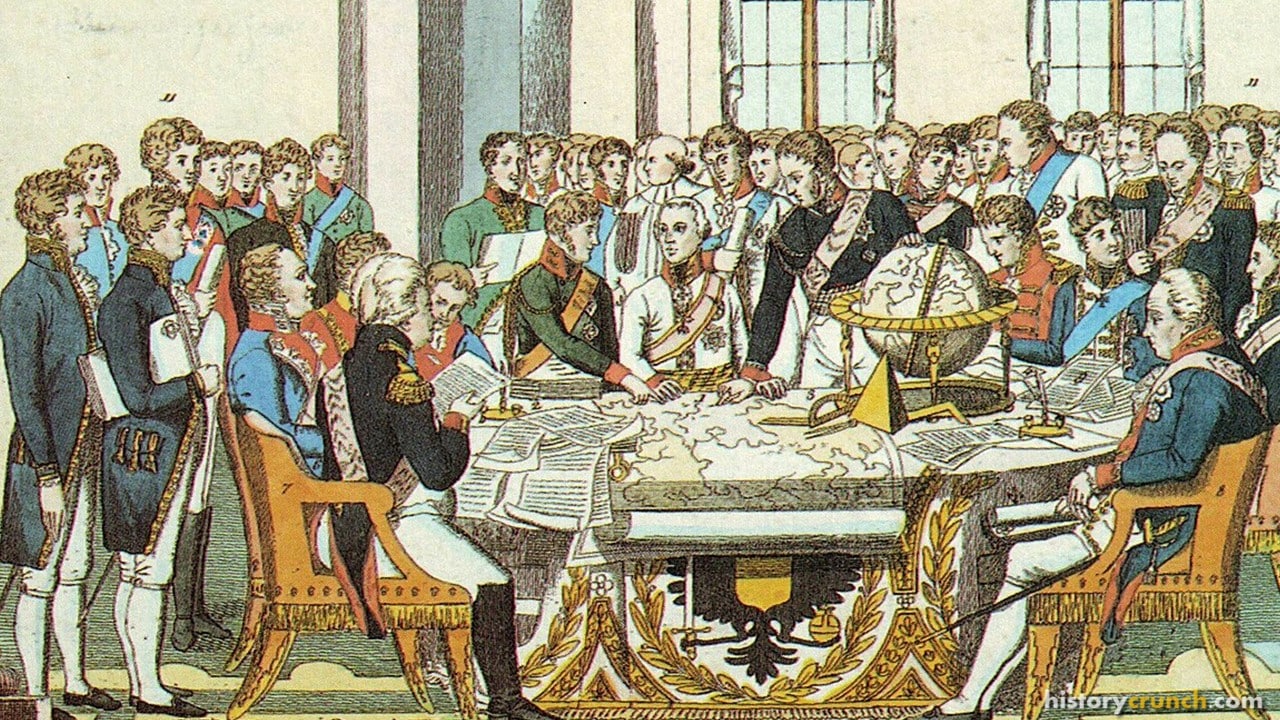
On September 25th, 1814 Tsar Alexander and King Frederick William III arrived in Vienna, where Metternich was host to two emperors, five kings, more than two hundred princes and their delegations for the congress that would redraw the map of Europe. It never met in full session; the decisions were taken by the four great powers, with Talleyrand working his way in for France. Between the meetings there were balls, hunts, concerts and a famous remark that the congress did not walk, it danced.
LEARN MORESHOW LESSwhy it matters · 2 key figuresCONGRESSVienna was the first time the powers of Europe met to design a peace rather than just sign one. The design held, more or less, until 1914.
Napoleon left Elba on February 26th, 1815 with a thousand men and was in Paris in twenty-three days without a shot fired. The Congress of Vienna outlawed him and finished its Final Act nine days before Waterloo. On June 18th Wellington's squares held the ridge until Blucher's Prussians arrived, and by dark the last army of the Empire had broken. Napoleon abdicated again, surrendered to a British ship and was carried to Saint Helena, a rock in the South Atlantic, where he dictated his memoirs and died in 1821. The victors, having learned from 1814, made the second peace harsh, bound themselves to meet in congresses and, under Metternich, spent the next generation putting down the revolutions and the nationalism that the wars had set loose. The order they built lasted until 1848 in its strict form and until 1914 in its looser one.
By the end of 1814 the Congress of Vienna had nearly broken up over Poland and Saxony: Alexander wanted all of Poland, and Prussia, as compensation, wanted all of Saxony. On January 3rd, 1815 Castlereagh, Metternich and Talleyrand signed a secret alliance to resist them by force if necessary. When the tsar learned of it he backed down, and a compromise gave Russia most of Poland and Prussia about two fifths of Saxony plus the Rhineland, the German lands along the river that France had held since 1795.
LEARN MORESHOW LESSwhy it matters · 1 key figureDIPLOMACYNine months after beating Napoleon together, the allies were ready to fight each other, with France as a partner. Talleyrand had brought France back to the table.
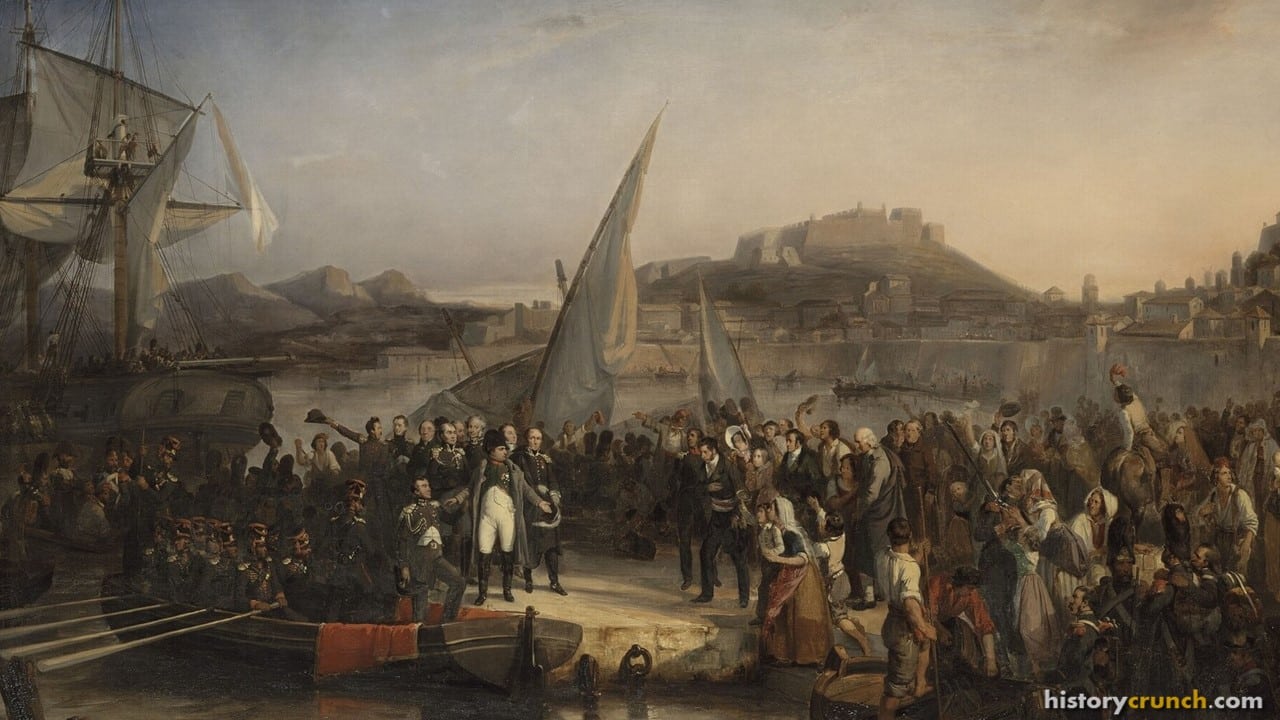
On the evening of February 26th, 1815, while the British commissioner watching him was away in Italy, Napoleon boarded the brig Inconstant with about a thousand soldiers of his guard and sailed for France. He landed at Golfe-Juan near Cannes on March 1st and marched north through the mountains to avoid royalist Provence. At Laffrey on March 7th a royal battalion sent to stop him was ordered to fire; Napoleon walked forward alone, opened his coat and asked if they would shoot their Emperor. They joined him.
LEARN MORESHOW LESSwhy it matters · 1 key figureESCAPEThe flight of the eagle, as it was called, covered 200 miles in twenty days and was not fired on once. Marshal Ney, sent to bring him back in an iron cage, joined him too.
On March 13th, 1815 the eight powers at Vienna issued a declaration that Napoleon, by breaking the Treaty of Fontainebleau, had placed himself outside the law and 'delivered himself up to public vengeance'. On March 25th Britain, Russia, Austria and Prussia renewed the Chaumont alliance, each promising 150,000 men. Wellington left Vienna to take command in Belgium. The congress went on with its work as if nothing had happened.
LEARN MORESHOW LESSwhy it mattersDIPLOMACYThe powers did not wait to see what Napoleon would do. They had made that mistake in 1814 and did not intend to make it twice.
On the night of March 19th, 1815 Louis XVIII left the Tuileries palace for Belgium. On March 20th Napoleon arrived and was carried up the stairs on the shoulders of a crowd of officers. The Hundred Days that followed, the name comes from the prefect of Paris welcoming the king back in July, saw Napoleon grant a liberal constitution he did not believe in, call up the army and try to persuade the powers that he wanted only peace. None of them answered.
LEARN MORESHOW LESSwhy it matters · 1 key figureRESTORATIONA Paris newspaper is supposed to have tracked him north in its headlines from 'the monster has escaped' to 'His Imperial Majesty arrives in Paris'. The story is too good to be true and too true to leave out.
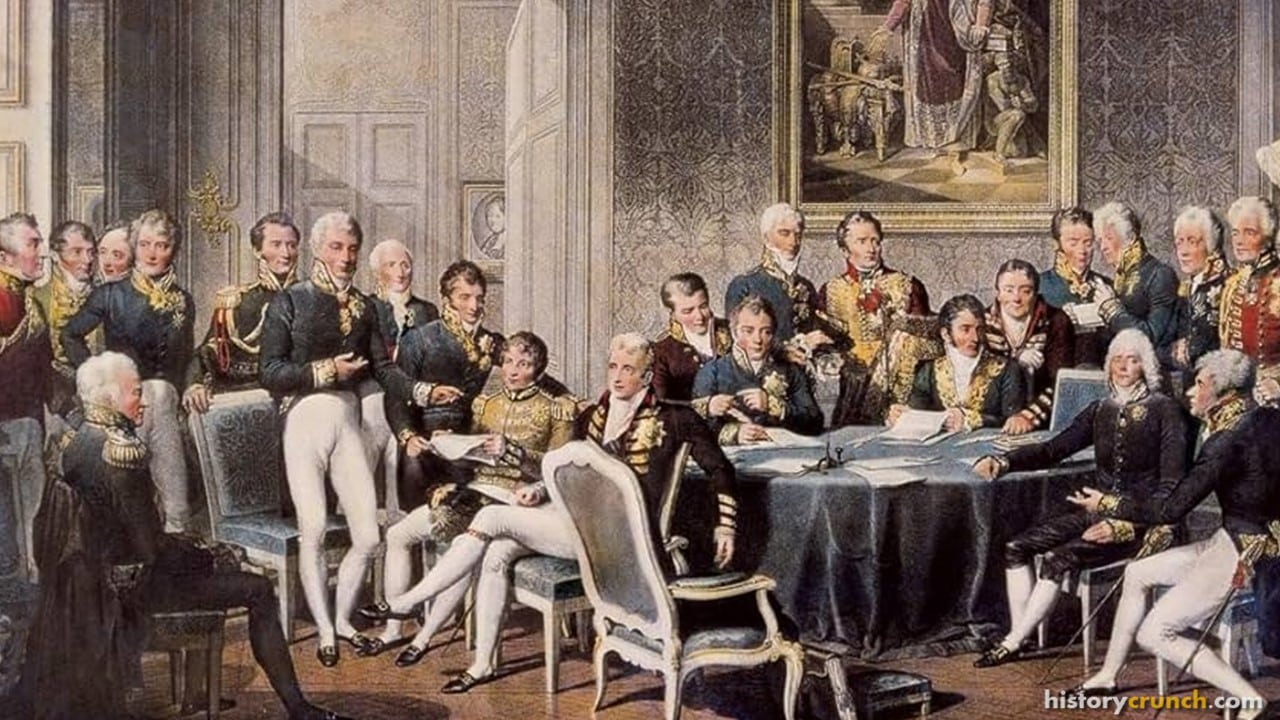
On June 9th, 1815, nine days before Waterloo, the powers signed the Final Act of the Congress of Vienna, 121 articles in a single treaty. Russia got most of Poland; Prussia got two fifths of Saxony and the Rhineland; Austria got Lombardy and Venice; Holland and Belgium were joined as a barrier against France; Sweden kept Norway; the German states were gathered into a loose Confederation of thirty-nine members under Austrian presidency; the Bourbons were confirmed in France, Spain and Naples. The slave trade was condemned in principle.
LEARN MORESHOW LESSwhy it matters · key numbers · 1 key figureTREATYThe Vienna settlement gave Europe forty years without a war between great powers and a century without a general one. It also ignored every nationalist and liberal hope the wars had raised.
Napoleon crossed into Belgium on June 15th, 1815 with about 124,000 men, aiming to get between Wellington's Anglo-Dutch army and Blucher's Prussians and beat each in turn. On June 16th he defeated Blucher at Ligny, where the seventy-two-year-old field marshal was ridden over by cavalry and lay for hours under his dead horse, while Ney fought Wellington to a standstill at the crossroads of Quatre Bras. Napoleon sent Marshal Grouchy with 33,000 men to follow the Prussians and keep them away.
LEARN MORESHOW LESSwhy it matters · 1 key figureBATTLEBlucher retreated north, toward Wellington, rather than east toward his supplies. That one decision, made from a stretcher, decided Waterloo.
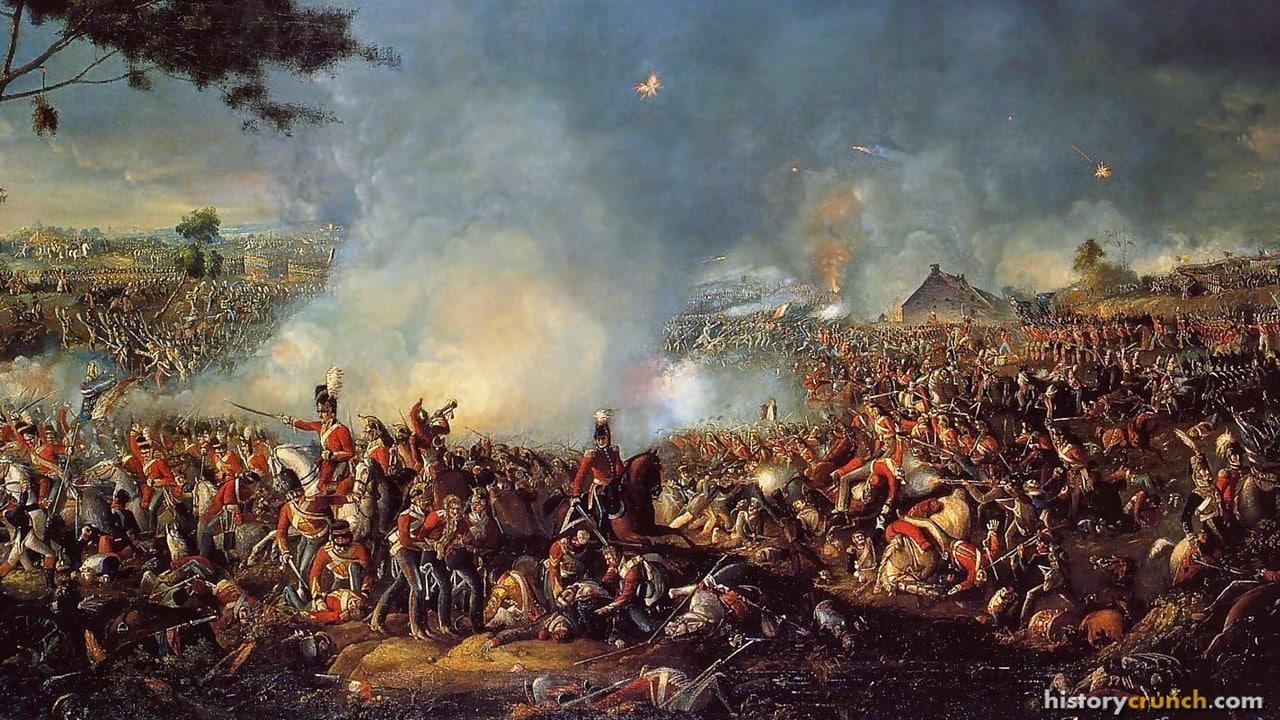
On June 18th, 1815 Napoleon, with about 72,000 men, attacked Wellington's 68,000 British, Dutch, Belgian and German troops on a ridge south of the village of Waterloo. Wellington's infantry held in squares against massed French cavalry charges through the afternoon while the farm of Hougoumont on his right never fell. About four o'clock the first Prussian corps came in on the French right flank; by evening Blucher had 50,000 men on the field. When the Imperial Guard's final attack was thrown back at about seven, the French army broke. Total losses were about 50,000 killed and wounded, with 25,000 of them French.
LEARN MORESHOW LESSwhy it matters · key numbers · a sourceBATTLEWellington called it the nearest run thing you ever saw in your life. It was the last battle Napoleon fought and the last time France was the master of Europe.
IN THEIR OWN WORDS“It has been a damned nice thing, the nearest run thing you ever saw in your life.”
the Duke of Wellington, June 1815WHAT TO NOTICE'nice' meant close-run
Napoleon reached Paris on June 21st, 1815 and found the Chamber of Deputies, led by Lafayette, declaring itself in permanent session and demanding that he go. On June 22nd he abdicated in favor of his four-year-old son, whom no one recognized as Napoleon II. A provisional government under Fouche opened talks with the allies, and Blucher's Prussians, who wanted to shoot Napoleon, were at the gates of Paris by June 29th. Napoleon left for the Atlantic coast, hoping for a ship to America.
LEARN MORESHOW LESSwhy it matters · 1 key figureABDICATIONThe Hundred Days had lasted from March 20th to June 22nd, ninety-four days by the calendar. Louis XVIII was back in the Tuileries on July 8th.
With the Royal Navy blockading the port of Rochefort and no American ship able to get out, Napoleon wrote to the Prince Regent asking to live as a private citizen in England, 'like Themistocles', and on July 15th, 1815 went aboard the British ship of the line Bellerophon. The ship carried him to Plymouth, where boats full of sightseers rowed out for a week to watch him walk the deck. Lord Liverpool's cabinet decided he would go to Saint Helena, and he was transferred at sea to HMS Northumberland on August 7th.
LEARN MORESHOW LESSwhy it matters · 1 key figureSURRENDERNapoleon never set foot in England. Liverpool's ministers feared that if he did, a court might have to hear his case.
On September 26th, 1815 Alexander, Emperor Francis of Austria and King Frederick William of Prussia signed the Holy Alliance in Paris, a declaration written by the Tsar that the three monarchs would rule as Christian brothers and treat their peoples as fathers treat families. Nearly every European ruler signed it eventually; Britain declined and Castlereagh called it a piece of sublime mysticism and nonsense. In practice it became a byword for the alliance of the eastern monarchies against revolution.
LEARN MORESHOW LESSwhy it matters · 1 key figureALLIANCEThe Alexander who signed this had been the liberal young tsar who talked of constitutions in 1801. Moscow burning in 1812 had made him religious, and Napoleon had made him afraid of change.
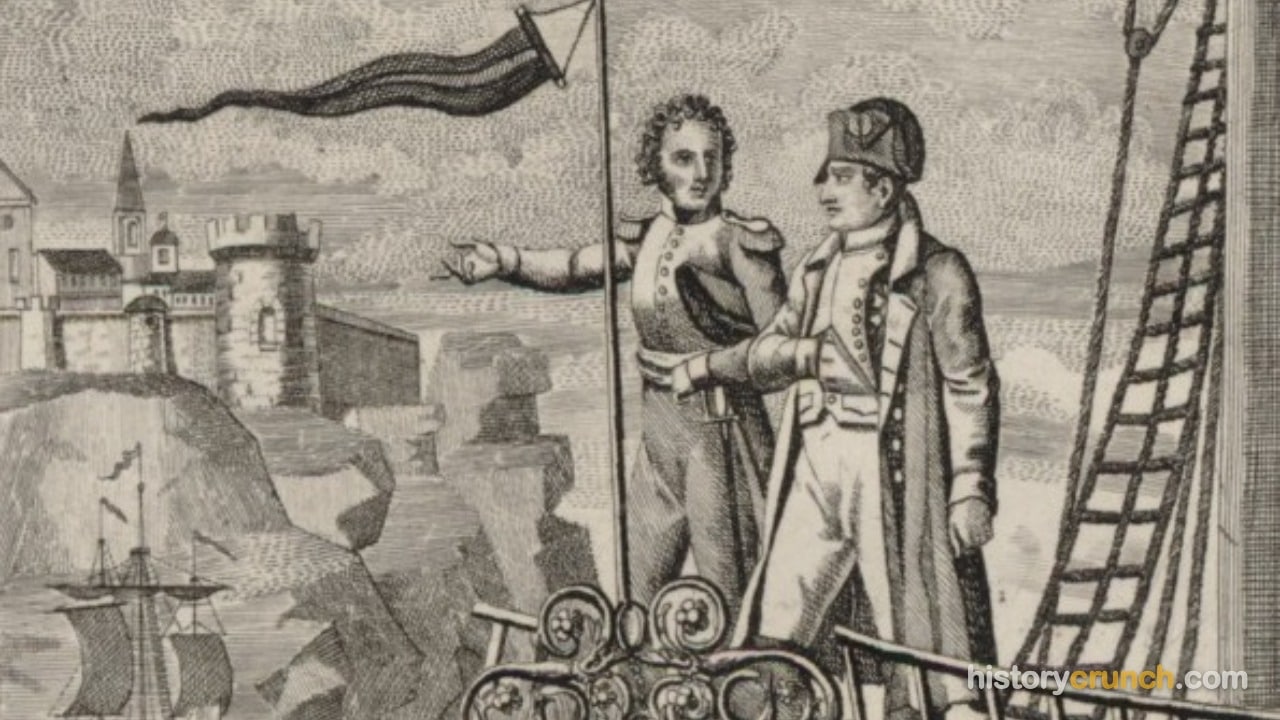
On October 15th, 1815, after ten weeks at sea, HMS Northumberland anchored off Saint Helena, a British island of forty-seven square miles in the South Atlantic, 1,200 miles from the coast of Africa and 4,000 from Europe. Napoleon was lodged at Longwood, a damp former farmhouse on a windy plateau, with a few followers who had chosen to come, a garrison of 2,000 soldiers and a governor, Sir Hudson Lowe, who counted him at least twice a day. He spent the years dictating his memoirs.
LEARN MORESHOW LESSwhy it matters · key numbers · 1 key figureEXILEElba had been a kingdom ten miles from Italy. Saint Helena was a rock in the ocean. The allies had learned the difference.
On November 20th, 1815 the allies signed a second peace with France, harsher than the first. France went back to its borders of 1790, losing the Saar and Savoy, paid an indemnity of 700 million francs, returned the looted art to its owners and accepted an allied army of occupation of 150,000 men for up to five years. The same day Britain, Russia, Austria and Prussia renewed their alliance for twenty years and agreed to meet in regular congresses to keep the peace.
LEARN MORESHOW LESSwhy it matters · key numbersTREATYThe Quadruple Alliance's promise to keep meeting became the Congress System, the first attempt to run Europe by conference. The art went home; the Louvre lost the Horses of Saint Mark to Venice.
In October and November of 1818 the four allied powers met at Aix-la-Chapelle, now Aachen in Germany, for the first congress under the Vienna system. They agreed to end the occupation of France two years early, France having paid its indemnity with loans from London and Amsterdam bankers, and invited France to join their alliance, making it a Quintuple Alliance. Alexander proposed a permanent European army to put down revolutions; Castlereagh refused.
LEARN MORESHOW LESSwhy it matters · 2 key figuresCONGRESSThree years after Waterloo France was a great power again. The system was working, and the crack between Britain and the eastern monarchies was already showing.
After a student named Karl Sand murdered the conservative writer August von Kotzebue in March of 1819, Metternich called the ministers of the main German states to Carlsbad in Bohemia. The decrees they adopted on September 20th, 1819 and pushed through the German Confederation put the universities under state inspectors, dissolved the nationalist student fraternities, censored every publication under 320 pages and set up a central commission to hunt what Metternich called demagogues.
LEARN MORESHOW LESSwhy it matters · 1 key figureLAWThe nationalism that had filled the Prussian ranks in 1813 was now the thing the governments feared most. The Carlsbad system held in Germany until the revolutions of 1848 drove Metternich from office.
Revolutions in Spain in January of 1820 and in Naples in July forced a king in each to accept a constitution. At the Congress of Troppau in Silesia, Russia, Austria and Prussia signed a protocol on November 19th, 1820 declaring that any state changed by revolution ceased to be a member of the European alliance and that the powers could intervene by force to restore it. Britain and France refused to sign. Austrian troops put down the Naples revolution in March of 1821 with the congress's blessing.
LEARN MORESHOW LESSwhy it mattersCONGRESSTroppau split the Concert of Europe into a liberal west and an absolutist east. That division would outlast Metternich.
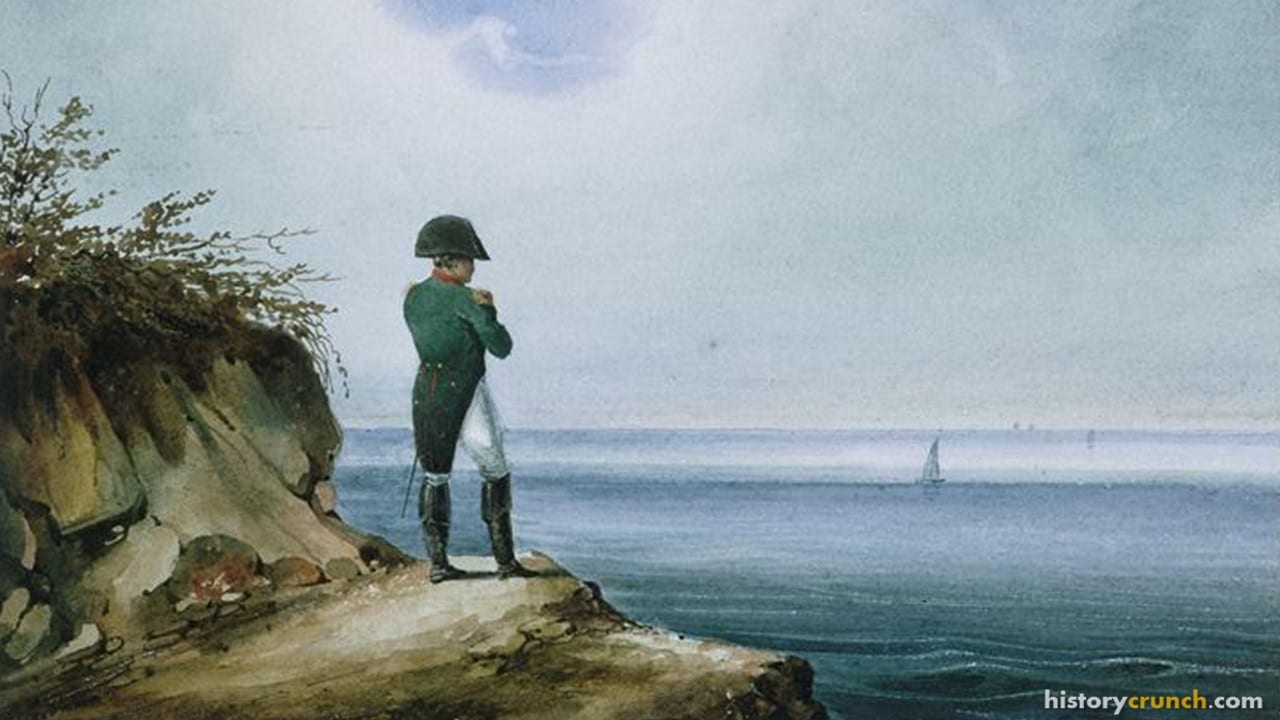
Napoleon died at Longwood at about ten to six in the evening of May 5th, 1821, aged fifty-one, after months of stomach pain; the autopsy found a cancer of the stomach, the disease that had killed his father. His last words were reported as 'France, the army, the head of the army, Josephine.' He was buried in a valley on the island under a stone with no name, because the governor would not allow 'Napoleon' without 'Bonaparte' and his followers would not allow 'Bonaparte' at all. In 1840 his body was brought home to Paris and laid under the dome of Les Invalides.
LEARN MORESHOW LESSwhy it matters · key numbers · 1 key figureDEATHIn his will he asked to be buried on the banks of the Seine among the French people he had loved so well. It took nineteen years, but France did it, and a million people lined the streets.

I'm the founder of History Crunch, which I first began in 2015 with a small team of like-minded professionals. I have an Education Degree with a focus in Social Studies education. I spent nearly 15 years teaching history, geography and economics in secondary classrooms to thousands of students. Now I use my time and passion researching, writing and thinking about history education for today's students and teachers.

K.L. is a content writer for History Crunch. She is a fantastic history and geography teacher that has been helping students learn about the past in new and meaningful ways since the mid-2000s. Her primary interest is Ancient History, but she is also driven by other topics, such as economics and political systems.

I'm a passionate history and geography teacher with over 15 years of experience working with students in the middle and high school years. I have an Education Degree with a focus in World History. I have been writing articles for History Crunch since 2015 and love the challenge of creating historical content for young learners!
To cite this timeline as a source, use one of the formats below.
MLA: Millar, B., et al. “Napoleonic Era Timeline.” HistoryCrunch, 21 September 2026, https://historycrunch.com/napoleonic-era-timeline/.
APA: Millar, B., Woida, K.L., & Beck, E. (2026). Napoleonic Era Timeline. HistoryCrunch. https://historycrunch.com/napoleonic-era-timeline/
Chicago: Millar, B., K.L Woida, and Elias Beck. “Napoleonic Era Timeline.” HistoryCrunch. September 21, 2026. https://historycrunch.com/napoleonic-era-timeline/
© History Crunch
By winning. Toulon, Italy and Egypt made his name; the crisis of 1799 gave him his chance.
Both. He kept its laws and land sales and threw away its elections.
To cut Britain's road to India. It cost a fleet and an army, and it still made him a hero.
By taking the sea away from Napoleon three times: the Nile, Copenhagen and Trafalgar.
A widow from Martinique who gave him a place in Paris society. It ended because there was no heir.
The Bank of France, the Concordat, the prefects, the lycees and above all the Civil Code.
Equality before the law, free sale of land, strong fathers. It went everywhere French armies went and stayed.
Very close in 1799. Zurich and Marengo turned it around.
Because neither Britain nor France kept the Peace of Amiens, and Britain would not give up Malta.
By marching. Ulm was won on the roads and Austerlitz on a hill he had given away.
Because it made invading Britain impossible, so he tried to starve it instead, and that led to Spain and Russia.
It had not changed since 1786 and it fought in two places at once against a faster enemy.
A ban on British trade with Europe. It failed because Europe needed British goods more than Napoleon needed obedience.
Two emperors divided Europe. It lasted three years.
It saw Napoleon tied down in Spain. It got its first victory over him, then a worse defeat and a marriage.
Because it bled 300,000 men for six years and never healed.
Defense first, then attack: the ridge at Vimeiro, the Lines of Torres Vedras, then Salamanca and Vitoria.
That it was fought by civilians and answered with firing squads. The Third of May is the war's most famous image.
Austria's foreign minister from 1809. He bent until Austria was strong, then chose the moment to fight.
Distance, disease and a Tsar who would not negotiate. The winter only finished what the summer began.
Napoleon held the field and lost the campaign. Kutuzov lost the field and kept his army.
It froze, starved and was hunted by Cossacks. The Berezina saved a remnant.
Austerlitz humbled him, Tilsit made him a partner, Moscow made him a crusader, and Paris made him the arbiter of Europe.
The allies agreed never to fight him and always to fight his marshals, and Austria's weight closed the ring.
Four days, half a million men, the Saxons changing sides and a bridge blown too soon.
Because 70,000 cannot beat 300,000 however well they are led, and his marshals would not fight for Paris.
It was a compromise between killing him and trusting him. He left because France was unhappy and his pension unpaid.
Wellington held the ridge; Blucher marched to the sound of the guns; Napoleon's Guard broke.
Six years on a rock in the South Atlantic, watched twice a day, dictating memoirs. He died of stomach cancer in 1821.
Who got Poland, Saxony, Italy and the German Rhineland, and that the Bourbons should reign. It held for a century.
The great powers meeting in congresses to keep the peace. No general war for a century; no freedom for anyone who wanted it.
By suppressing them: censors in the universities, troops in Naples, and a Holy Alliance of kings.
Occupation taught Spaniards, Germans and Italians that they were peoples. Prussia's army of 1813 was the first result.
No question matches that word.
Research question 1By winning. Toulon, Italy and Egypt made his name; the crisis of 1799 gave him his chance.
Research question 2Both. He kept its laws and land sales and threw away its elections.
Research question 3To cut Britain's road to India. It cost a fleet and an army, and it still made him a hero.
Research question 4By taking the sea away from Napoleon three times: the Nile, Copenhagen and Trafalgar.
Research question 5A widow from Martinique who gave him a place in Paris society. It ended because there was no heir.
Research question 6The Bank of France, the Concordat, the prefects, the lycees and above all the Civil Code.
Research question 7Equality before the law, free sale of land, strong fathers. It went everywhere French armies went and stayed.
Research question 8Very close in 1799. Zurich and Marengo turned it around.
Research question 9Because neither Britain nor France kept the Peace of Amiens, and Britain would not give up Malta.
Research question 10By marching. Ulm was won on the roads and Austerlitz on a hill he had given away.
Research question 11Because it made invading Britain impossible, so he tried to starve it instead, and that led to Spain and Russia.
Research question 12It had not changed since 1786 and it fought in two places at once against a faster enemy.
Research question 13A ban on British trade with Europe. It failed because Europe needed British goods more than Napoleon needed obedience.
Research question 14Two emperors divided Europe. It lasted three years.
Research question 15It saw Napoleon tied down in Spain. It got its first victory over him, then a worse defeat and a marriage.
Research question 16Because it bled 300,000 men for six years and never healed.
Research question 17Defense first, then attack: the ridge at Vimeiro, the Lines of Torres Vedras, then Salamanca and Vitoria.
Research question 18That it was fought by civilians and answered with firing squads. The Third of May is the war's most famous image.
Research question 19Austria's foreign minister from 1809. He bent until Austria was strong, then chose the moment to fight.
Research question 20Distance, disease and a Tsar who would not negotiate. The winter only finished what the summer began.
Research question 21Napoleon held the field and lost the campaign. Kutuzov lost the field and kept his army.
Research question 22It froze, starved and was hunted by Cossacks. The Berezina saved a remnant.
Research question 23Austerlitz humbled him, Tilsit made him a partner, Moscow made him a crusader, and Paris made him the arbiter of Europe.
Research question 24The allies agreed never to fight him and always to fight his marshals, and Austria's weight closed the ring.
Research question 25Four days, half a million men, the Saxons changing sides and a bridge blown too soon.
Research question 26Because 70,000 cannot beat 300,000 however well they are led, and his marshals would not fight for Paris.
Research question 27It was a compromise between killing him and trusting him. He left because France was unhappy and his pension unpaid.
Research question 28Wellington held the ridge; Blucher marched to the sound of the guns; Napoleon's Guard broke.
Research question 29Six years on a rock in the South Atlantic, watched twice a day, dictating memoirs. He died of stomach cancer in 1821.
Research question 30Who got Poland, Saxony, Italy and the German Rhineland, and that the Bourbons should reign. It held for a century.
Research question 31The great powers meeting in congresses to keep the peace. No general war for a century; no freedom for anyone who wanted it.
Research question 32By suppressing them: censors in the universities, troops in Naples, and a Holy Alliance of kings.
Research question 33Occupation taught Spaniards, Germans and Italians that they were peoples. Prussia's army of 1813 was the first result.