The War of the Second Coalition ranks as one of the most important conflicts of the French Revolutionary Wars, because it marked the moment when Napoleon Bonaparte rose from a successful general into the ruler of France. Fought from 1798 to 1802, it pitted the French Republic against a fresh alliance of European monarchies that hoped to crush the revolution and reverse the gains France had made in the earlier War of the First Coalition. The coalition included some of the most powerful states in Europe, yet in the end France defeated them one by one and forced a peace that left the Republic stronger than before.
A coalition, in this setting, was a temporary alliance of separate countries that agreed to fight a common enemy at the same time. The states in the Second Coalition did not share a single government or army. Instead, each kept its own ruler, its own soldiers, and its own goals, and they cooperated only as long as it suited them. This loose arrangement gave the coalition great numbers on paper, but it also created the divisions that France would later use to pull the alliance apart.
What Were the French Revolutionary Wars?
The French Revolutionary Wars were a series of major conflicts fought between 1792 and 1802 that pitted Revolutionary France against a shifting group of European powers. They began after the French Revolution of 1789 toppled the old monarchy and created a radical new republic. The kings and emperors of Europe feared that these revolutionary ideas, such as liberty and the end of absolute royal rule, would spread across their borders and threaten their own thrones.
To fight these threats, the European monarchies formed a series of alliances known as coalitions. In fact, there were seven coalition wars in all, beginning in 1792 and ending in 1815. The first two of these, the War of the First Coalition and the War of the Second Coalition, made up the core of the French Revolutionary Wars. The later coalition wars, fought after Napoleon crowned himself emperor, are usually called the Napoleonic Wars.
These conflicts changed Europe in lasting ways. They redrew the political map of the continent, spread the ideas of the French Revolution far beyond France, and gave rise to the military career of Napoleon Bonaparte. The War of the Second Coalition sat right at the turning point between the revolutionary era and the age of Napoleon.
What Caused the War of the Second Coalition?
The War of the Second Coalition grew directly out of the unfinished business of the First Coalition. That earlier war had ended in 1797 with the Treaty of Campo Formio, in which Austria left the fighting and recognized French control over large parts of Italy and the Rhineland. Great Britain, however, remained at war with France, and none of the deeper problems between the two sides had truly been solved.
French expansion was the main spark for the new war. After Campo Formio, France continued to spread its power across Europe, setting up friendly puppet states in places such as Switzerland and the Italian peninsula. More specifically, French forces invaded the Papal States in early 1798 and drove the pope from Rome, an act that shocked and angered the Catholic monarchies of Europe. These bold moves convinced many rulers that France would never stop unless it was defeated by force.
The final trigger came from Egypt. In 1798, Napoleon Bonaparte led a French army to invade Egypt, which was at that time part of the Ottoman Empire. The campaign threatened British trade routes to India and enraged the Ottoman sultan. As stated above, France was already unpopular, and this new invasion pushed Britain, Russia, Austria, the Ottoman Empire, Naples, and Portugal to join together in the Second Coalition against the Republic.
Who Fought in the War of the Second Coalition?
On one side stood the French Republic and the friendly states that depended on it. These included Spain, which supported France, and a group of French puppet republics in the Netherlands, Switzerland, and Italy. France also had a powerful advantage in leadership, since its armies included skilled generals and, after 1799, the command of Napoleon Bonaparte himself.
On the other side stood the Second Coalition, made up of several of the strongest monarchies in Europe. The leading members were Great Britain, Austria, and Russia, joined by the Ottoman Empire, the Kingdom of Naples, and Portugal. Notably, the Kingdom of Prussia stayed out of the war, which weakened the coalition by keeping one of Europe’s major military powers on the sidelines.
The war was fought across several theaters, or regions of fighting, at the same time. The most important of these were the Middle East, the Netherlands, Germany, and northern Italy. Because the coalition had to spread its armies across so many fronts, France was often able to concentrate its own forces and strike each enemy in turn.
How Did the War Begin?
The war opened badly for France in one crucial area, the sea. In August of 1798, a British fleet under Admiral Horatio Nelson destroyed the French fleet anchored at Aboukir Bay in the Battle of the Nile. This victory trapped Napoleon’s army in Egypt by cutting it off from France, and it gave the coalition confidence that the Republic could be beaten.
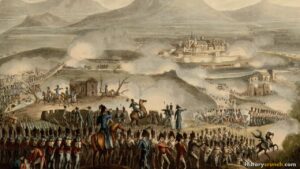
With Napoleon and his best troops stuck in the Middle East, the coalition seized its chance in Europe. In 1799, allied armies pushed into Italy and Switzerland to take back the lands France had gained during the First Coalition. A talented Russian commander, Field Marshal Alexander Suvorov, took charge of the allied forces in Italy and won a string of victories that drove the French out of much of the peninsula.
For a time, the coalition seemed to be winning. In reality, however, its success did not last. Disagreements soon broke out between Austria and Russia, and their cooperation began to fall apart just as they were gaining ground.
How Did France Turn the Tide?
The turning point came in the second half of 1799. In September of that year, French forces won the Second Battle of Zurich in Switzerland, defeating an Austro-Russian army. This defeat, along with the failure of an Anglo-Russian invasion of the Netherlands, angered Russia so much that it dropped out of the war entirely, badly weakening the coalition.
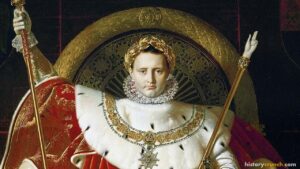
At the same moment, France gained new leadership. Napoleon Bonaparte abandoned his stranded army in Egypt and returned to France, where in November of 1799 he seized power in a coup and became First Consul, the effective ruler of the Republic. He was determined to win the war quickly in order to secure his shaky new position at home.
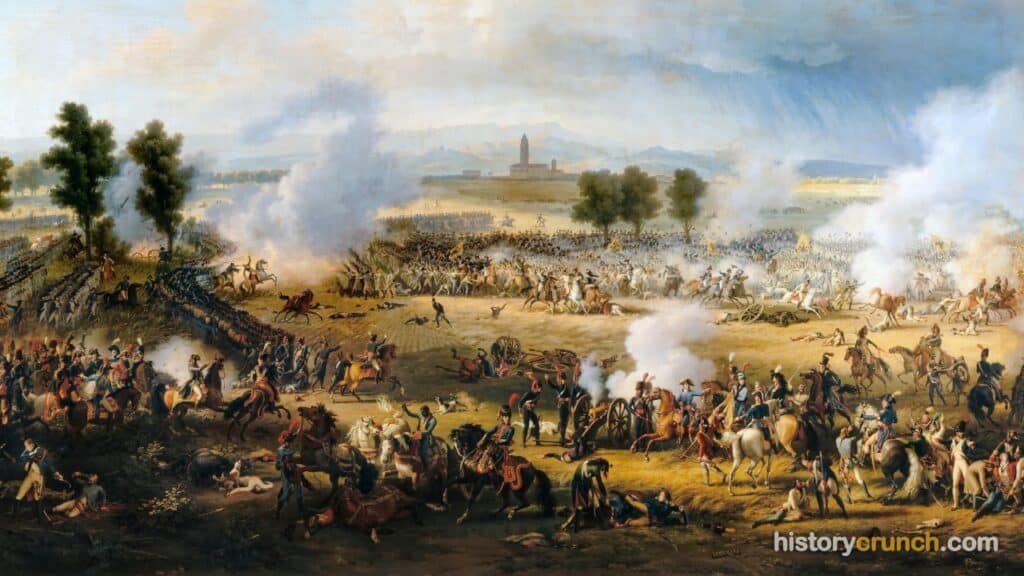
In 1800, Napoleon led an army on a daring crossing of the Alps into northern Italy. On June 14th, 1800, he narrowly defeated an Austrian army at the Battle of Marengo, a hard-fought victory that was nearly a disaster before French reinforcements arrived late in the day. Marengo restored French control over northern Italy and greatly strengthened Napoleon’s grip on power in France.
How Did the War of the Second Coalition End?
Marengo did not end the war on its own. The final blow to Austria came in December of 1800, when the French general Jean-Victor Moreau crushed an Austrian army at the Battle of Hohenlinden in Germany. This defeat opened the road toward Vienna and left Austria unable to continue fighting.
Facing disaster, Austria agreed to make peace. In early 1801, it signed the Treaty of Lunéville, which largely repeated the terms of the earlier Treaty of Campo Formio and confirmed French control over much of Italy and the Rhineland. With Austria and Russia both out of the war, Great Britain now stood alone against France, much as it had at the close of the First Coalition.
Meanwhile, the French army left behind in Egypt could not hold out. British and Ottoman forces invaded and forced the French to surrender after the fall of Cairo and Alexandria. Tired of war, Britain and France finally signed the Treaty of Amiens in 1802, which brought the fighting to a close and ended the War of the Second Coalition with a French victory. The peace, however, would prove short-lived.
Significance of War of the Second Coalition
The War of the Second Coalition was significant above all because it confirmed France as the dominant power in Europe. By defeating Austria and forcing Russia out of the war, the Republic held on to nearly all of the lands it had gained during the revolution. The network of French puppet states across Italy, Switzerland, and the Netherlands remained in place, giving France control over much of western Europe.
The war was also a personal triumph for Napoleon Bonaparte. His victory at Marengo helped secure his new role as First Consul and boosted his popularity among the French people. In effect, the war marked the change from the revolutionary period to the age of Napoleon, when a single ambitious leader came to dominate France and, before long, much of the continent.
Finally, the peace that ended the war did not solve the deeper conflicts between France and its rivals. The Treaty of Amiens brought only a brief pause, and within a few years fighting resumed with the War of the Third Coalition. In this way, the Second Coalition served as a bridge between the French Revolutionary Wars and the long and destructive Napoleonic Wars that followed.
Frequently Asked Questions
When Was the War of the Second Coalition Fought?
The War of the Second Coalition was fought from 1798 to 1802. The alliance began forming in 1798, major fighting broke out in 1799, and the conflict finally ended with the Treaty of Amiens in 1802. It lasted about four years and was fought across several regions of Europe and the Middle East.
Who Won the War of the Second Coalition?
France won the War of the Second Coalition. Despite early defeats and the loss of its army in Egypt, France defeated Austria and Russia and forced the coalition to fall apart. The final peace treaties left France stronger and more powerful in Europe than it had been at the start of the war.
What Countries Were in the Second Coalition?
The Second Coalition was led by Great Britain, Austria, and Russia. It also included the Ottoman Empire, the Kingdom of Naples, and Portugal, along with several smaller German states. Prussia, one of the great powers of the day, chose to remain neutral and did not join the alliance.
How Did the War of the Second Coalition Help Napoleon Rise to Power?
The war gave Napoleon the victories he needed to secure control of France. He returned from Egypt during the war and seized power as First Consul in 1799, then won the Battle of Marengo in 1800. That victory made him a national hero and strengthened his rule, setting him on the path to becoming emperor a few years later.
What Treaties Ended the War of the Second Coalition?
Two main treaties ended the war. The Treaty of Lunéville in 1801 ended the fighting between France and Austria, and the Treaty of Amiens in 1802 ended the war between France and Great Britain. Together these agreements confirmed France’s gains, though the peace lasted only a short time before war returned.
Cite This Article
To cite this article as a source, use one of the formats below.
MLA: Millar, B. “War of the Second Coalition: A Detailed Summary.” HistoryCrunch, 11 August 2026, https://historycrunch.com/war-of-the-second-coalition/.
APA: Millar, B. (2026). War of the Second Coalition: A Detailed Summary. HistoryCrunch. https://historycrunch.com/war-of-the-second-coalition/
Chicago: Millar, B. “War of the Second Coalition: A Detailed Summary.” HistoryCrunch. August 11, 2026. https://historycrunch.com/war-of-the-second-coalition/
Sources
- Jerry Bentley & Herbert Ziegler, Traditions & Encounters: A Global Perspective on the Past.
- J.M. Roberts & Odd Arne Westad, The Penguin History of the World.