Cambodia in the Vietnam War is one of the most tragic examples of how a conflict can spread beyond the country where it begins. Although Cambodia tried to stay out of the fighting between North Vietnam, South Vietnam, and the United States, its location on the western border of Vietnam pulled it directly into the war. Communist forces used Cambodian territory as a hidden pathway and safe base, and in response the United States carried out years of bombing and a ground invasion. These events pushed Cambodia into its own civil war and helped a brutal group called the Khmer Rouge rise to power.
Cambodia is a small nation in Southeast Asia that shares a long border with Vietnam and Laos. During the Vietnam War it was officially neutral, which meant it declared that it was not taking sides in the conflict. In reality, its jungles and border regions became a battleground because both the communists and the Americans wanted to control what happened there. Understanding Cambodia’s role helps explain why the Vietnam War is often called an “Indochina War,” since it eventually involved several countries and not just Vietnam alone.
What Was the Vietnam War?
The Vietnam War was a major military conflict that took place primarily between 1955 and 1975. It was fought between the communist government of North Vietnam and the government of South Vietnam, which was supported mainly by the United States. The war grew out of decades of tension connected to colonialism, nationalism, and the ideological struggle of the Cold War between the United States and the Soviet Union.
In fact, historians often describe the Vietnam War as a “proxy war,” which is a conflict where larger powers support opposing sides without fighting each other directly. North Vietnam received aid from communist allies such as the Soviet Union and China, while South Vietnam was backed by the United States and other Western democracies. The main reason the United States became involved was to stop the spread of communism, a policy known as containment. American leaders also feared the Domino Theory, the Cold War belief that if one country in a region fell to communism, its neighbors would soon fall as well.
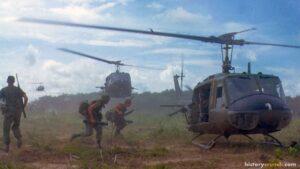
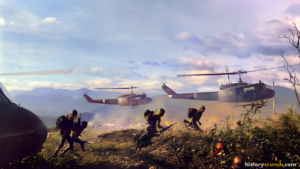
As the war escalated during the 1960s, the United States sent hundreds of thousands of soldiers to fight in Vietnam. By the early 1970s, however, the conflict had spilled over into the neighboring countries of Cambodia and Laos. This spread of the war beyond Vietnam’s borders is exactly what makes Cambodia’s story so important.
Why Was Cambodia Neutral During the War?
At the start of the Vietnam War, Cambodia was led by Prince Norodom Sihanouk, who tried to keep his country out of the fighting. He declared Cambodia neutral, hoping to protect his people from the destruction that was already spreading through Vietnam. Neutrality was a difficult path, since powerful forces on both sides wanted to use Cambodian land for their own purposes.
More specifically, the eastern part of Cambodia sat right next to South Vietnam, where much of the war was being fought. North Vietnamese and Viet Cong fighters found that the thick jungle along this border was an ideal place to hide. To keep the peace, Sihanouk quietly allowed communist forces to move through and store supplies in these areas. He believed that resisting them might drag Cambodia into open war, so he chose to look the other way for a time.
How Did North Vietnam Use Cambodian Territory?
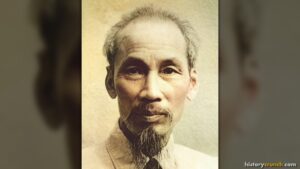
North Vietnam relied heavily on a supply network known as the Ho Chi Minh Trail. This was a system of jungle paths and roads that carried soldiers, weapons, food, and equipment from North Vietnam down to communist fighters in the south. Because a direct route through South Vietnam was dangerous, much of the trail passed through neighboring Laos and Cambodia, where American and South Vietnamese forces were not supposed to attack.
Along the Cambodian border, communist troops built hidden bases, sometimes called sanctuaries. From these safe areas they could rest, gather supplies, and then launch raids into South Vietnam before slipping back across the border. As stated above, Cambodia’s neutrality was supposed to protect it, but in practice these sanctuaries turned Cambodian land into an important part of the North Vietnamese war effort. American commanders grew increasingly frustrated that the enemy could strike and then retreat to a place they were forbidden to follow.
What Was the American Bombing of Cambodia?
To attack the hidden communist bases, the United States began a secret bombing campaign inside Cambodia. Under President Richard Nixon, American B-52 bombers started striking targets in eastern Cambodia in March of 1969, in an operation given the codename “Menu.” The goal was to destroy the sanctuaries and disrupt the flow of supplies along the Ho Chi Minh Trail.
What made this campaign so controversial was that it was kept secret from the American public and from most of Congress. Because Cambodia was officially neutral, openly bombing it could be seen as a violation of international law. To hide the truth, military records were falsified so that the raids appeared to have taken place inside South Vietnam instead. The full scale of the bombing did not become widely known until 1973, when the revelation caused outrage and deepened distrust of the government.
The bombing continued in various forms until August of 1973, when the United States Congress finally ordered it to stop. Over these years, an enormous amount of explosives fell on the Cambodian countryside. In reality, the campaign failed to destroy the communist command it was hunting, and it caused terrible harm to Cambodian villages and farmland.
What Was the Cambodian Incursion of 1970?
In March of 1970, Prince Sihanouk was overthrown in a coup while he was traveling abroad. Power was taken by General Lon Nol, who was friendly toward the United States and openly opposed the communist presence in his country. This change of government made Cambodia a much more direct part of the war.
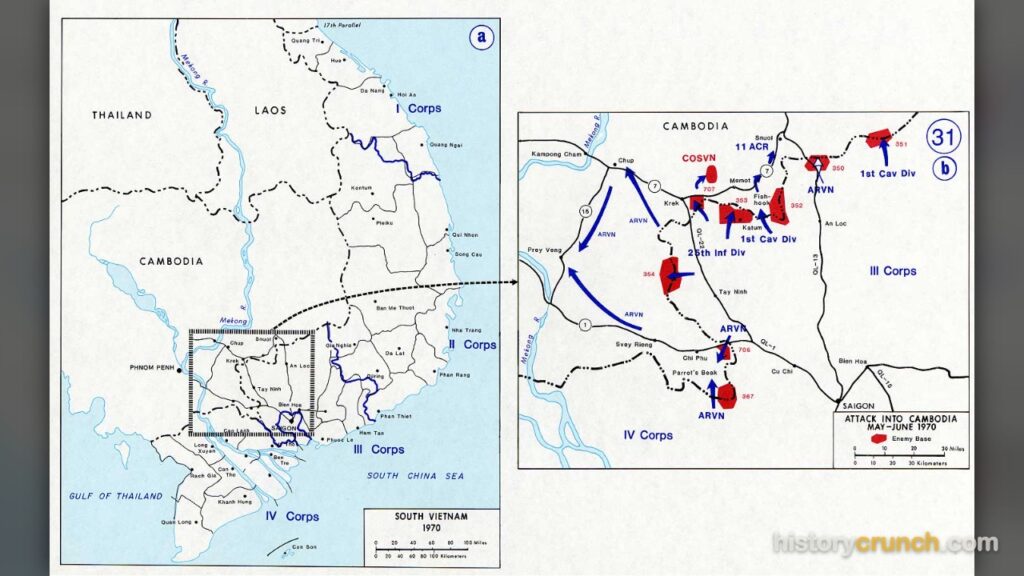
Shortly afterward, in late April of 1970, President Nixon ordered American and South Vietnamese ground troops to cross into Cambodia. This operation was known as the Cambodian Incursion. Its purpose was to find and destroy the communist bases and to capture supplies before they could be used against South Vietnam. Nixon announced the invasion on national television only after it had already begun.
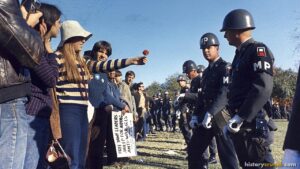
The incursion sparked a wave of anger in the United States. Many Americans felt that the president had widened the war rather than ending it, and huge protests broke out across the country. During one of these demonstrations, National Guard soldiers shot and killed four students at Kent State University, an event that shocked the nation. Partly in response to the controversy, Congress later passed the War Powers Act in November of 1973, which limited a president’s ability to send troops into combat without congressional approval.
How Did the War Lead to the Rise of the Khmer Rouge?
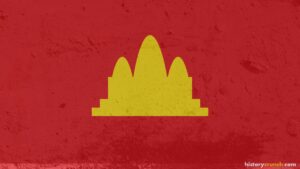
The spread of the Vietnam War into Cambodia had disastrous long-term effects. The bombing and the fighting drove many peasants from their homes and destroyed their farms. A communist group called the Khmer Rouge, led by a man known as Pol Pot, used this suffering to gain new followers. The group told villagers that the destruction was the fault of foreigners and the government, and this message helped it grow from a small band into a large fighting force.
At the same time, Cambodia was torn apart by its own civil war between the American-backed government of Lon Nol and the communist Khmer Rouge. As the years passed, the Khmer Rouge steadily gained ground. In April of 1975, just before the fall of South Vietnam, the Khmer Rouge captured the Cambodian capital of Phnom Penh and took control of the country.
Once in power, the Khmer Rouge carried out one of the worst genocides of the 20th century. They forced people out of the cities, abolished money and private property, and worked or starved huge numbers of people to death. More than a million Cambodians, and by some estimates far more, died between 1975 and 1979. This period of horror is often called the Cambodian Genocide.
Significance of Cambodia in the Vietnam War
The significance of Cambodia in the Vietnam War lies in how it shows the terrible consequences of a war spilling across borders. A country that tried to remain neutral was pulled into the conflict against its will, first through the secret movement of communist supplies and then through years of American bombing and invasion. In this way, Cambodia’s experience reveals that modern wars rarely stay within the lines drawn on a map.
Cambodia’s story is also significant because of the connection between the war and the rise of the Khmer Rouge. While historians debate exactly how much the bombing and invasion contributed, there is wide agreement that the chaos created ideal conditions for an extreme group to seize power. The genocide that followed remains one of the darkest chapters in Southeast Asian history.
Finally, the events in Cambodia had a lasting impact on the United States itself. News of the secret bombing and the 1970 invasion fueled the anti-war movement and increased public distrust of government leaders. The controversy contributed to new limits on presidential war powers, changes that continue to shape American government today. For all of these reasons, Cambodia’s role stands as an important and painful part of the overall history of the Vietnam War.
Frequently Asked Questions
Was Cambodia part of the Vietnam War?
Cambodia was drawn into the Vietnam War even though it was officially neutral. It shared a long border with Vietnam, and communist forces used its eastern jungles as supply routes and hidden bases. Because Cambodia sat at the edge of the fighting, the war eventually reached deep inside its territory and reshaped its future.
Why did the United States bomb Cambodia?
The United States bombed Cambodia to destroy communist bases and cut the supply lines that ran through the country. American leaders believed North Vietnamese and Viet Cong troops were using Cambodian territory to launch attacks into South Vietnam. Rather than announce the campaign, the government carried it out in secret, which later caused enormous controversy when the truth came out.
Who was the leader of Cambodia during the Vietnam War?
Prince Norodom Sihanouk led Cambodia during the early years of the war and tried to keep the country neutral. In 1970 he was overthrown in a coup by General Lon Nol, who supported the United States. Sihanouk then went into exile and, surprisingly, gave his support to the Khmer Rouge, which helped that group gain followers.
How did the Vietnam War affect Cambodia?
The Vietnam War devastated Cambodia by pulling it into years of bombing, invasion, and civil war. Farms and villages were destroyed, and huge numbers of people were forced to flee their homes. This destruction weakened the government and created conditions that allowed the extreme Khmer Rouge to seize control in 1975.
Did the bombing of Cambodia cause the Khmer Rouge to rise?
Many historians believe the bombing and invasion helped the Khmer Rouge grow, though they debate how large that role was. The destruction pushed frightened and angry peasants toward the group, which promised to fight back against foreigners and the government. Combined with the collapse of Cambodia’s government, this helped the Khmer Rouge expand from a small movement into a powerful army.
Cite This Article
To cite this article as a source, use one of the formats below.
MLA: Millar, B. “Cambodia in the Vietnam War: A Detailed Summary.” HistoryCrunch, 16 August 2026, https://historycrunch.com/cambodia-in-the-vietnam-war/.
APA: Millar, B. (2026). Cambodia in the Vietnam War: A Detailed Summary. HistoryCrunch. https://historycrunch.com/cambodia-in-the-vietnam-war/
Chicago: Millar, B. “Cambodia in the Vietnam War: A Detailed Summary.” HistoryCrunch. August 16, 2026. https://historycrunch.com/cambodia-in-the-vietnam-war/
Sources
- National Archives
- Wilson Center Digital Archive
- George C. Herring, America's Longest War.
- Max Hastings, Vietnam: An Epic Tragedy.