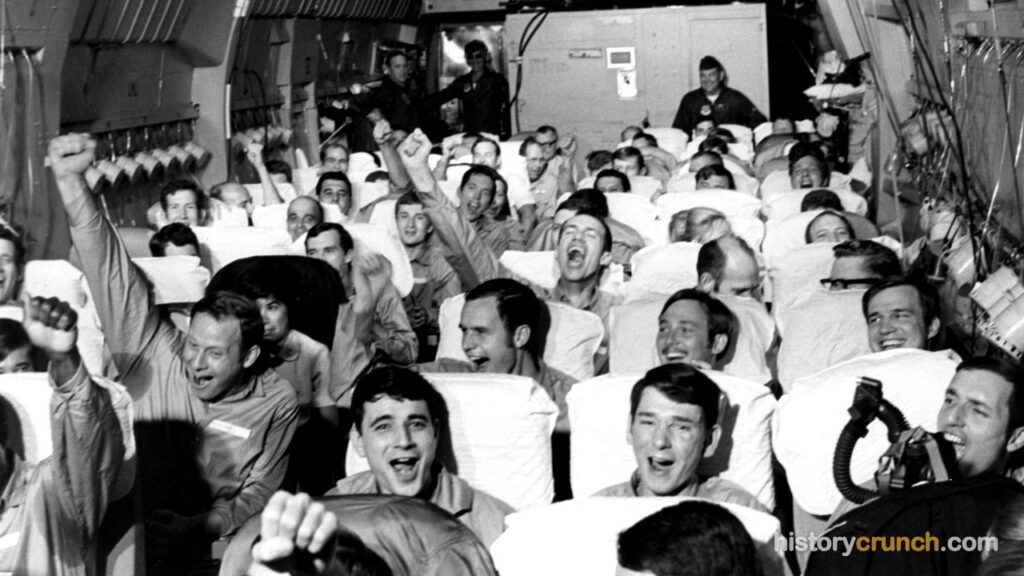
The prisoners of war held during the Vietnam War became one of the most powerful and emotional parts of the entire conflict, and their story still shapes how Americans remember the war today. A prisoner of war, often shortened to POW, is a member of the armed forces who is captured by the enemy during wartime and held in captivity. During the Vietnam War, hundreds of American servicemen were captured, most of them pilots shot down over North Vietnam, and many endured years of harsh imprisonment before they were finally released in 1973.
The experience of these prisoners was marked by torture, isolation, and terrible living conditions, but also by remarkable courage and unity. Their captivity, and the long effort to bring them home, turned the POW issue into a national cause in the United States. Understanding who these prisoners were, how they were treated, and how they returned home helps explain why the war left such a deep mark on American memory.
What Was the Vietnam War?
The Vietnam War was a major military conflict that took place mainly between 1955 and 1975. It pitted the communist government of North Vietnam against South Vietnam and its principal ally, the United States. The war grew out of decades of tension connected to colonialism, nationalism, and the Cold War, which was the long rivalry between the United States and the Soviet Union.
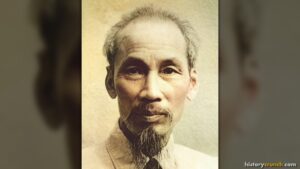
Earlier in the 20th century, Vietnam had been part of a French colony. A French attempt to regain control led to the rise of Ho Chi Minh, a communist revolutionary, and the Viet Minh independence movement, and France was defeated at the battle of Dien Bien Phu in 1954, after which North Vietnam came under the control of Ho Chi Minh and his communist forces. The country was then divided, with communists ruling the north and a government supported by the United States ruling the south.
The United States entered the war to try to stop the spread of communism in Southeast Asia. It was one of the longest and most controversial wars in American history, deeply dividing the country at home, and it ended with a North Vietnamese victory and the reunification of Vietnam under communist rule. It is within this long and painful conflict that the story of American prisoners of war unfolded.
Who Were the Prisoners of War in the Vietnam War?
The American prisoners of war in Vietnam were mostly aviators, meaning pilots and air crew members whose planes were shot down. American prisoners of war were made up of ground troops captured in South Vietnam and taken to Hanoi, and pilots shot down over North Vietnam. This made the Vietnam War different from earlier conflicts, where most captured servicemen were regular enlisted soldiers.
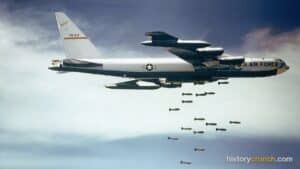
In fact, the overwhelming majority of Vietnam-era prisoners were officers, most of them Navy, Air Force, and Marine Corps airmen, with a relatively small number of Army enlisted personnel also captured. The first American prisoner was taken in 1964, but the number grew quickly once the air war expanded. Most airmen were captured as part of Operation Rolling Thunder from 1965 to 1968, with around 800 airmen being captured at this time.
Most of these men were held far to the north. Most prisoners were captured and held in North Vietnam by the People’s Army of Vietnam, while a much smaller number were captured in the south and held by the Viet Cong, and a handful of American civilians were also held captive during the war. One of the most famous prisoners was John McCain, a Navy pilot who was shot down and captured and who would later become a well-known United States senator.
Where Were Prisoners of War Held?
American prisoners were kept in a network of prisons in and around Hanoi, the capital of North Vietnam. Thirteen prisons and prison camps were used to house American prisoners in North Vietnam, the most widely known of which was Hoa Lo Prison, nicknamed the “Hanoi Hilton.” The nickname was a bitter joke, comparing the grim prison to a chain of luxury hotels.
The Hoa Lo Prison had a long and dark history before the Americans arrived. French colonists built the prison in the 19th century, calling it the Maison Centrale and using it to imprison and behead Vietnamese dissidents. The French term Maison Centrale simply means “central house.” After the French left, the North Vietnamese reopened the prison and used it to hold captured Americans.
Inside the prison, new arrivals faced immediate questioning and abuse. English speaking interrogators quickly moved beyond basic information such as name, rank, serial number and date of birth, pressuring prisoners to disclose military details and personal family information for possible extortion later. The prisons were designed to break the will of the men held there, and conditions were deliberately harsh.
How Were the Prisoners Treated?
The treatment of American prisoners in Vietnam was brutal and often deadly. American prisoners experienced torture, harsh interrogation, insufficient food, and poor or non-existent medical care while in captivity, and while some prisoners died, all suffered horrific treatment in prisons such as the infamous “Hanoi Hilton.” Many men were kept alone in small cells for months at a time.
The captors used interrogation and torture to try to force prisoners to confess to crimes or to make statements against the war. The Vietnamese goal was to break the prisoners’ resistance to the Code of Conduct. The Code of Conduct was a set of official rules that guided how American servicemen were supposed to behave if captured, including limiting what information they gave to the enemy.
Sometimes prisoners found clever ways to resist even while being used for propaganda. In one famous case, a captured Navy officer named Jeremiah Denton was filmed for North Vietnamese cameras. Taken before television cameras in order to film antiwar propaganda for the North Vietnamese, Denton blinked the word “torture” in Morse code, giving the first evidence that life at the Hanoi Hilton was not what the enemy forces made it seem, and he was later awarded the Navy Cross for his bravery.
How Did Prisoners Communicate and Survive?
Because talking was forbidden, prisoners developed secret ways to reach one another. Forbidden to speak, prisoners communicated by knocking, tapping a tin cup, or even coughing a set number of times for each letter of the alphabet, and they communicated secretly at great risk to coordinate resistance, overcome isolation, maintain the chain of command, and strengthen morale. This kind of hidden messaging became a lifeline.
The most famous of these methods was the tap code. The tap code system was first introduced to prisoners in June of 1965 by Captain Carlyle Harris, Lieutenant Phillip Butler, Lieutenant Robert Peel, and Lieutenant Commander Robert Shumaker. The system was simple but powerful. It was based on a five-by-five alphabet grid, and each letter was communicated by tapping two numbers, the first for the row and the second for the column.
Using this code, prisoners could support one another even through solid walls. By tapping on the prison walls, the prisoners would warn each other about the worst guards, explain what to expect in interrogations, and encourage each other not to break, and they even used this code to tell jokes, where a kick on the wall meant a laugh. These small connections helped the men keep their spirits alive during years of captivity.
How Were the Prisoners Finally Freed?
The release of the prisoners came at the very end of American involvement in the war. When the Paris Peace Accords were signed on January 27th, 1973, the United States and North Vietnam agreed to a mass release of all prisoners, and the secretary of defense renamed the repatriation program Operation Homecoming. The word repatriation means returning someone to their home country.
Operation Homecoming brought the men out of Vietnam in a carefully organized series of flights. The mission included 54 C-141 flights between February 12th and April 4th, 1973, returning 591 prisoners to American soil. The releases were arranged in a specific order. Prisoners were to be returned to United States control during February and March of 1973, with the longest-held generally returning first.
The return of the prisoners was an emotional national event, broadcast on television for all to see. In a steady flow of flights through late March of 1973 under terms set through the Paris Peace Accords, 591 prisoners returned to American soil, and Americans were spellbound as they watched news clips of the prisoners being carried in stretchers or walking tentatively toward freedom. Even so, the joy of the homecoming was mixed with sorrow over the many men who never came back.
Significance of Prisoners of War in the Vietnam War
The prisoners of war held a special place in how Americans experienced and remembered the Vietnam War. Nearly fifty years later, the prisoner of war issue remains a principal part of the American collective memory of the Vietnam War, which may seem strange, given that there are prisoners in every war. Part of the reason was the way the war was reported.
The Vietnam War was covered by the media far more closely than earlier conflicts had been. Part of the reason the prisoner issue endured has to do with the media, because Vietnam was a heavily publicized conflict, much more so than Korea, and newspapers, magazines, and television crews reported from Vietnam so that images of imprisoned American servicemen were widely shown to the public for the first time. These images made the prisoners feel personal and real to ordinary Americans.
Even after the last prisoners came home, the issue did not fade. The POW/MIA movement, headed by the National League of Families, which created the famous POW/MIA flag, pushed for the return of the remains of all missing American servicemen from the war. The letters MIA stand for “missing in action,” meaning servicemen whose fate was unknown.
For years, some Americans believed that live prisoners might still be held in Southeast Asia. From 1991 to 1993, the United States Senate investigated these claims before ultimately ruling that there was no strong evidence to prove that any American military personnel remained imprisoned. The prisoners of the Vietnam War, and the long struggle to account for the missing, remain one of the most lasting and emotional legacies of the entire conflict.
Frequently Asked Questions
How Many American Prisoners of War Were There in the Vietnam War?
Hundreds of Americans were captured during the Vietnam War, and 591 prisoners were returned home during Operation Homecoming in 1973. Operation Homecoming returned 591 prisoners, made up of 325 Air Force personnel, 77 Army, 138 Navy, 26 Marines and 25 civilians. Not every captured serviceman survived captivity, which is why the final number of returning prisoners was smaller than the total number captured over the years.
What Was the Hanoi Hilton?
The Hanoi Hilton was the American nickname for Hoa Lo Prison, the most famous prison used to hold American prisoners in North Vietnam. The Vietnamese called the prison Hoa Lo, which translates to “fiery furnace,” and it was sarcastically dubbed the Hanoi Hilton by the American prisoners in reference to the famous Hilton group of hotels. Today the site is partly preserved as a museum in the city of Hanoi.
Why Were So Many Vietnam Prisoners of War Pilots?
So many prisoners were pilots because the United States relied heavily on bombing campaigns over North Vietnam, and aircraft shot down deep in enemy territory left crews easy to capture. Since the air war reached far into North Vietnam, downed airmen usually landed in areas fully controlled by the enemy, with little chance of rescue. This is why officers and aviators, rather than ground soldiers, made up most of the prisoner population.
What Does POW/MIA Mean?
POW/MIA stands for “prisoner of war” and “missing in action,” two categories used to describe servicemen who did not simply return home safely. A prisoner of war is a captured serviceman, while a serviceman who is missing in action has an unknown fate and has not been confirmed as either alive, captured, or dead. The black and white POW/MIA flag was created to keep attention on these men and to press for a full accounting of everyone who did not come home.
What Happened to the Prisoners After They Came Home?
Most returning prisoners went through medical care and then tried to rebuild their lives, and many chose to stay in the military. About eighty percent of the military prisoners who survived the war continued their military careers, and most of the roughly 500 returning airmen retrained and resumed their aviation careers. Years of captivity, however, often left lasting effects on their physical and mental health, and the United States government later studied and provided special support for former prisoners.
Cite This Article
To cite this article as a source, use one of the formats below.
MLA: Millar, B. “Prisoners of War in the Vietnam War: A Detailed Summary.” HistoryCrunch, 16 August 2026, https://historycrunch.com/prisoners-of-war-in-the-vietnam-war/.
APA: Millar, B. (2026). Prisoners of War in the Vietnam War: A Detailed Summary. HistoryCrunch. https://historycrunch.com/prisoners-of-war-in-the-vietnam-war/
Chicago: Millar, B. “Prisoners of War in the Vietnam War: A Detailed Summary.” HistoryCrunch. August 16, 2026. https://historycrunch.com/prisoners-of-war-in-the-vietnam-war/
Sources
- National Archives
- Wilson Center Digital Archive