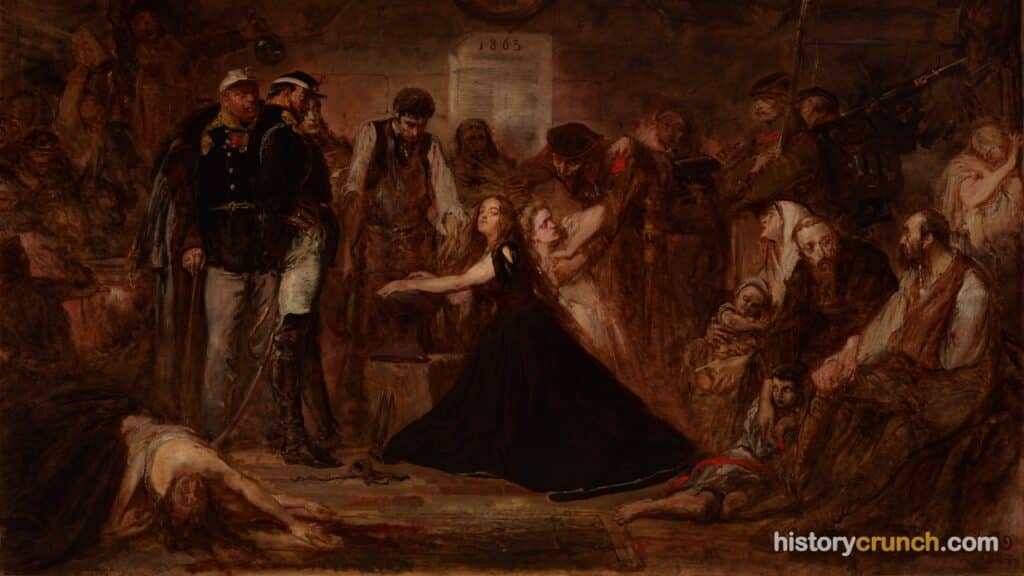
Nationalism in Eastern Europe was one of the most powerful forces shaping the modern history of the region, and it helped turn a patchwork of empires into the many independent countries that exist there today. Eastern Europe is the band of lands that stretches from the Baltic Sea in the north down to the Adriatic and Black Seas in the south, sitting between the historically large empires of Russia and the Ottoman Turks in the east and the German-speaking powers of Prussia and Austria in the west. For centuries, the peoples of this region, including Poles, Czechs, Slovaks, Hungarians, Serbs, Croats, Bulgarians, and Romanians, lived not as independent nations but as subjects of much larger empires. Beginning in the late 18th century, the spread of nationalism gave these peoples the ideas and the motivation to demand states of their own, which is a story that runs through the wider Age of Nationalism in Europe.
Nationalism is the belief that people who share a common language, culture, history, and identity form a natural community called a nation, and that each nation has the right to govern itself as an independent state. In Eastern Europe this idea was especially explosive, because the region was home to dozens of different ethnic groups living side by side, often mixed together in the same towns and provinces. As these groups began to see themselves as nations, they came into conflict both with the empires that ruled them and with one another.
What Was the Age of Nationalism?
The Age of Nationalism refers to the period during the 19th century when the idea of the nation became one of the most important political forces in Europe. Before the late 18th century, most people identified themselves by their religion, their village, or their loyalty to a king rather than by a sense of national identity. This began to change following the American Revolution of 1776 and especially the French Revolution of 1789, which spread the powerful new idea that political power should belong to “the nation,” meaning the people as a whole, rather than to a king or a dynasty.
This new way of thinking was carried across Europe partly by the wars of Napoleon Bonaparte in the early 1800s. As French armies conquered and reorganized much of the continent, they spread revolutionary ideas even as they provoked resistance. At the same time, the Romantic movement in art, music, and literature celebrated the distinctive traditions of different peoples, encouraging scholars and writers to collect folk tales, songs, and legends. As a result, the 19th century became the great age of nationalism, a period that reshaped the map of Europe and led to the unification of Germany and Italy as well as the eventual breakup of the Ottoman and Austro-Hungarian empires.
Why Was Eastern Europe So Diverse?
To understand nationalism in Eastern Europe, it helps to picture how the region was governed before the 20th century. Rather than being divided into neat national countries, Eastern Europe was ruled by several large multiethnic empires. The most important of these were the Austrian Empire, which later became Austria-Hungary, the Ottoman Empire based in Turkey, and the Russian Empire. Each of these states ruled over many different peoples who spoke different languages and practiced different religions and customs.
The Austrian Empire, ruled from Vienna, was an especially striking example. Its lands included Germans, Hungarians, Poles, Czechs, Slovaks, Slovenes, Croats, Serbs, Romanians, Italians, and Ukrainians, among others. For a long time, most of these people accepted the rule of the Habsburg emperors without thinking of themselves as separate nations. As nationalism spread, however, many began to feel that their language and culture were being suppressed by the empire, and they started to demand recognition, self-government, and in some cases full independence.
How Did Nationalism First Grow in the Region?
In Eastern Europe, nationalism often began as a cultural movement before it became a political one. Small groups of educated people, including writers, teachers, priests, and scholars, took the lead in the early stages. Inspired by the Romantic movement, they studied local customs, folk poetry, and traditional songs, and then worked to standardize and promote their peoples’ languages. This process of writing dictionaries, publishing newspapers, and printing books in a national language helped ordinary people begin to think of themselves as members of a nation.
This cultural work mattered a great deal because, for most of the region’s history, the majority of the population were peasants who could not read and had little sense of belonging to a wider nation. By reviving and celebrating a shared language and heritage, nationalist intellectuals slowly created a feeling of common identity that could unite scattered villages into a single people. Only after this cultural foundation was laid did movements begin to make political demands for autonomy or independence. This pattern, moving from cultural revival to political action, appeared again and again among Czechs, Slovaks, Poles, Serbs, Croats, Bulgarians, and Romanians.
What Role Did the Revolutions of 1848 Play?
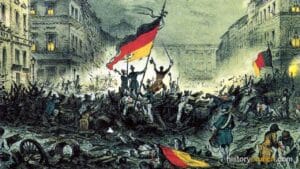
The Revolutions of 1848, sometimes called the Spring of Nations, were the most dramatic early expression of nationalist feeling in the middle of the century. Beginning in France, revolutions quickly spread across Europe, reaching the German states, the Italian peninsula, and the many lands of the Austrian Empire. In these uprisings, people demanded both liberal political reforms, such as constitutions and freedom of the press, and national self-determination, meaning the right of each people to govern itself.
In Eastern Europe, the 1848 revolutions took on a strongly national character. Hungarians rose up seeking independence from Austrian rule, while Czechs and other Slavic peoples demanded greater self-government within the empire. In many cases, these different national movements clashed with one another as well as with the empire, since gaining freedom for one group could mean ruling over another. As a result, the Habsburg government was able to divide its opponents, and by 1849 the major revolutions had been crushed. Even so, the events of 1848 showed how strong the desire for national self-rule had become, and they inspired later generations to keep pushing for change.
How Did Nationalism Shape the Balkans?
Nowhere in Eastern Europe was nationalism more explosive than in the Balkan Peninsula in the southeast. For centuries, much of this area had been ruled by the Ottoman Empire. As Ottoman power weakened during the 19th century, one people after another used nationalist arguments to break away and form independent states. The Greeks won their independence following a war in the 1820s, and over the following decades Serbs, Bulgarians, and Romanians also gained states of their own.
This process was encouraged in part by the idea of Pan-Slavism, the belief that all Slavic peoples should stand together, often under the protection of Russia. As new nations emerged, they frequently disagreed over borders and over which people should control which territory, because the region’s ethnic groups were mixed together across the land. These rivalries turned the Balkans into one of the most unstable parts of Europe. In fact, the tensions there helped spark World War I in 1914, after a Serbian nationalist assassinated the Austrian Archduke Franz Ferdinand in the city of Sarajevo.
What Happened After World War I?
World War I proved to be a turning point for nationalism in Eastern Europe. The war led to the collapse of the great empires that had ruled the region, including the Austro-Hungarian, Russian, and Ottoman empires. In the peace settlement that followed, leaders tried to redraw the map of Europe along national lines, applying the principle of self-determination. This effort created or restored a series of new nation-states, including Poland, Czechoslovakia, and Yugoslavia.
Drawing these borders proved extremely difficult, because the different ethnic groups of Eastern Europe were so thoroughly mixed together that no set of lines could satisfy everyone. Almost every new country contained large minorities of other peoples who did not feel they belonged, which created fresh tensions and resentments. More specifically, disputes over borders and minorities in this region contributed to the instability that helped lead to World War II. Later, during the Cold War, many of these same states fell under Soviet control, yet national feeling never disappeared, and it resurfaced strongly when communism collapsed at the end of the 20th century.
Significance of Nationalism in Eastern Europe
The significance of nationalism in Eastern Europe is enormous, because it transformed a region of sprawling multiethnic empires into a collection of independent nation-states. It gave peoples who had long been ruled by foreign powers the arguments and the motivation to preserve their languages, revive their cultures, and fight for the right to govern themselves. In this way, nationalism was a positive and creative force that gave rise to many of the countries on the map of Eastern Europe today.
At the same time, nationalism in Eastern Europe was also a source of great conflict and suffering. Because the region’s peoples were so closely mixed, the drive for national states repeatedly led to disputes over borders, the mistreatment of minorities, and outright war. As stated above, the nationalist tensions of the Balkans helped ignite World War I, and unresolved national quarrels contributed to World War II as well. For this reason, nationalism in Eastern Europe stands as a powerful example of how the same idea can both liberate peoples and set them against one another.
Frequently Asked Questions
What is nationalism in simple terms?
Nationalism is the belief that people who share the same language, culture, and history should form their own nation and govern themselves. It focuses on loyalty to a national group rather than to a king or an empire. In Eastern Europe this idea encouraged many peoples to seek independence from the empires that ruled them.
Which empires ruled Eastern Europe before nationalism?
Before the rise of independent nations, Eastern Europe was ruled mainly by three large empires: the Austrian Empire, which became Austria-Hungary, the Ottoman Empire, and the Russian Empire. Each controlled many different peoples with their own languages and religions. Over time, these empires grew weaker and were unable to hold their many nationalities together.
Why was the Balkans called the powder keg of Europe?
The Balkans earned the nickname “powder keg of Europe” because competing nationalist movements and outside powers created constant tension that could explode into war at any moment. As the Ottoman Empire declined, new nations competed over the same territories. This instability finally helped trigger World War I in 1914.
How did nationalism lead to new countries in Eastern Europe?
Nationalism led to new countries by inspiring peoples to break away from empires and form states based on their shared identity. This happened gradually in the Balkans during the 19th century and then on a large scale after World War I, when the collapse of the empires allowed new states like Poland, Czechoslovakia, and Yugoslavia to appear. The principle of self-determination guided how these new borders were drawn.
What is the difference between cultural and political nationalism?
Cultural nationalism focuses on reviving and celebrating a people’s language, folk traditions, and history, while political nationalism aims to create an actual independent state with its own government. In Eastern Europe, cultural nationalism usually came first, led by writers and scholars, and it laid the foundation for later political movements. Once people felt united as a nation, they began to demand self-government.
Cite This Article
To cite this article as a source, use one of the formats below.
MLA: Millar, B. “Nationalism in Eastern Europe: A Detailed Summary.” HistoryCrunch, 12 August 2026, https://historycrunch.com/nationalism-in-eastern-europe/.
APA: Millar, B. (2026). Nationalism in Eastern Europe: A Detailed Summary. HistoryCrunch. https://historycrunch.com/nationalism-in-eastern-europe/
Chicago: Millar, B. “Nationalism in Eastern Europe: A Detailed Summary.” HistoryCrunch. August 12, 2026. https://historycrunch.com/nationalism-in-eastern-europe/
Sources
- Jonathan Steinberg, Bismarck: A Life.
- Fordham Modern History Sourcebook
- German History in Documents and Images (GHDI)
- David Blackbourn, The Long Nineteenth Century / History of Germany 1780-1918.