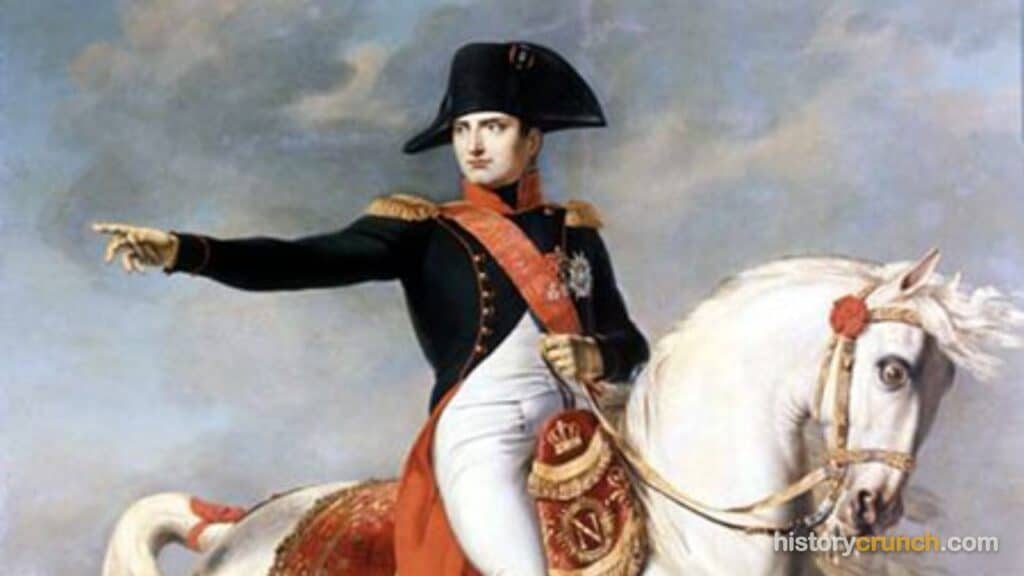
The legacy of Napoleon is one of the most important and debated subjects in modern history, because few individuals have shaped the political, legal, and military development of Europe as deeply as he did. Napoleon Bonaparte rose from a young officer on the island of Corsica to become Emperor of France, and during his years in power he reorganized government, rewrote the law, and led French armies across the continent. His influence did not end with his final defeat in 1815. In fact, the changes he set in motion continued to shape France, Europe, and the wider world for the next two centuries.
The term legacy of Napoleon refers to the lasting effects that Napoleon Bonaparte and his rule left behind after his death. This includes the legal codes he created, the reforms he introduced into government, the spread of nationalism across Europe, the redrawing of European borders, and the memory of his career as one of history’s greatest military commanders. His legacy is often described as contradictory, because the same man who spread the ideals of the French Revolution also crowned himself emperor and waged wars that cost hundreds of thousands of lives.
What Was the Napoleonic Era?
The Napoleonic Era refers to the period of European history dominated by Napoleon Bonaparte, lasting roughly from his seizure of power in France in 1799 to his final defeat and exile to the island of Saint Helena in 1815. During these years, Napoleon transformed France from a republic that had emerged out of the French Revolution into a powerful empire that controlled much of the European continent.
The era grew directly out of the French Revolution, which had ended the absolute monarchy of King Louis XVI and spread the ideals of liberty and equality. Napoleon presented himself as the man who could bring order and stability to France after the chaos and violence of the revolutionary years. More specifically, he ended the rule of the Directory in 1799, made himself First Consul, and then crowned himself Emperor of France in 1804.
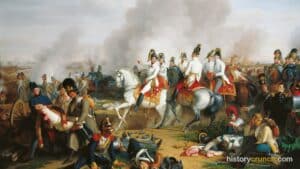
For more than a decade, Napoleon fought a series of major conflicts known today as the Napoleonic Wars. These wars pitted France against shifting coalitions of European powers, including Great Britain, Austria, Prussia, and Russia. Although Napoleon won many stunning victories, his disastrous invasion of Russia in 1812 and his final defeat at the Battle of Waterloo in 1815 brought the era to an end. Even so, the changes he introduced outlasted his reign by generations.
How Did the Napoleonic Code Shape the Modern World?
One of Napoleon’s most lasting achievements was the Napoleonic Code, a comprehensive body of civil law established in France in 1804. Before the French Revolution, France had no single legal system. Instead, the country was governed by a confusing patchwork of hundreds of different regional laws, many of them based on feudal traditions and local customs. The Napoleonic Code replaced this tangle with one clear and unified set of laws that applied equally to all citizens.
The Code was grounded in the principles of the Enlightenment, the intellectual movement that stressed reason, equality, and individual rights. For instance, it established equality before the law, protected the right to own private property, and separated church affairs from the running of the state. It also abolished the special legal privileges that nobles and clergy had once enjoyed under the old system.
As Napoleon’s armies conquered new territories, he imposed the Napoleonic Code on many of the lands he controlled, including parts of Italy, the Netherlands, Belgium, Spain, and the German states. Because of this, the Code became the foundation for legal systems across much of continental Europe and later influenced laws in Latin America, the Middle East, and beyond. In reality, the Napoleonic Code has proven to be one of the most enduring parts of Napoleon’s legacy, outlasting his empire by more than two hundred years.
How Did Napoleon Spread Nationalism Across Europe?
Another major part of Napoleon’s legacy was the spread of nationalism, the belief that people who share a common language, culture, and history should govern themselves as a united nation. Nationalism grew across Europe in two different ways during and after the Napoleonic Era, and both were tied to Napoleon’s conquests.
In the first place, Napoleon’s armies carried the ideals of the French Revolution, such as liberty, equality, and popular sovereignty, into the territories they occupied. These ideas inspired many people to imagine a future in which ordinary citizens, rather than kings, held power. As stated above, Napoleon also reorganized scattered territories in Germany and Italy into larger units, which planted the seeds for the later unification of both nations.
At the same time, resentment against French rule produced a second, reactionary form of nationalism. Many peoples who lived under French occupation came to resent foreign control and began to develop a stronger sense of their own national identity in opposition to Napoleon. For example, resistance movements arose in Spain, Germany, and Russia. In this way, Napoleon unintentionally strengthened the very national feelings that would reshape European politics throughout the 19th century, leading eventually to the unification of Germany and Italy.
How Did Napoleon Change Warfare and Government?
Napoleon is widely regarded as one of the greatest military commanders in history, and his approach to war left a deep mark on later generations. He mastered the art of moving large armies quickly, concentrating his forces at the decisive point, and destroying enemy armies rather than simply capturing territory. His victories at battles such as Austerlitz in 1805 became models that military academies studied for more than a century afterward.
Napoleon also relied on mass conscription, the practice of drafting large numbers of ordinary citizens into national armies. This idea had begun during the French Revolution, but Napoleon used it on a scale never seen before. In doing so, he helped create the huge citizen armies that would define modern warfare in the wars of the 19th and 20th centuries.
Beyond the battlefield, Napoleon reorganized the French government in ways that endured long after his fall. He created a centralized administration in which officials were appointed based on talent and merit rather than noble birth. In addition, he founded the Bank of France, reformed the tax system, established a public school system, and reached an agreement with the Catholic Church known as the Concordat of 1801. Many of these institutions still form part of the French state today.
How Did the Congress of Vienna Respond to Napoleon?
After Napoleon’s final defeat, the leading powers of Europe met at the Congress of Vienna in 1814 and 1815 to rebuild the continent. The representatives of Austria, Russia, Prussia, and Great Britain gathered with the goal of restoring stability and preventing any single country from ever dominating Europe again. In this sense, the very existence of the Congress was itself part of Napoleon’s legacy, because the powers were reacting directly to the upheaval his career had caused.
The Congress redrew the map of Europe, containing France within its former borders and creating a balance of power among the major states. It also restored many of the old ruling families, including the Bourbon dynasty in France. The leaders hoped to roll back the revolutionary changes of the previous twenty-five years and to defend traditional monarchy against the forces of nationalism and liberalism.
However, the settlement could not erase the ideas that the French Revolution and Napoleon had spread. Nationalism and liberalism had taken firm root, and they would fuel waves of revolution across Europe in the decades that followed. The system of cooperation established at Vienna, sometimes called the Concert of Europe, nonetheless helped prevent a general European war for nearly a century.
Significance of Legacy of Napoleon
The significance of the legacy of Napoleon lies in how deeply it shaped the modern world. Through the Napoleonic Code, he gave much of Europe and beyond a system of law based on equality and reason that still influences legal systems today. Through his reforms of government, he built institutions of centralized, merit-based administration that many nations later copied.
His legacy is also significant because of the powerful forces his career unleashed. The spread of nationalism, both through the ideals his armies carried and through the resistance those armies provoked, reshaped the political map of Europe and eventually led to the unification of Germany and Italy. At the same time, his defeat cleared the way for Great Britain to emerge as the world’s dominant naval, commercial, and industrial power for the rest of the 19th century.
Finally, Napoleon’s legacy remains significant because of the debate it continues to inspire. To some, he was a brilliant reformer who carried the ideals of the Revolution across Europe. To others, he was an ambitious conqueror whose wars caused enormous suffering. This lasting disagreement is itself a measure of just how large a shadow Napoleon still casts over history.
Frequently Asked Questions
What is Napoleon best remembered for?
Napoleon is best remembered for his military genius and for the Napoleonic Code, the legal system he created in 1804. Alongside these, he is remembered for rising from humble beginnings on Corsica to become Emperor of France and for building an empire that controlled most of Europe before his final defeat in 1815.
Why is the legacy of Napoleon so controversial?
The legacy of Napoleon is controversial because he can be seen as both a hero and a villain. Supporters point to his reforms, his laws, and his spreading of revolutionary ideals, while critics point to his crowning of himself as emperor and to the wars that killed hundreds of thousands of people across Europe.
Is the Napoleonic Code still used today?
Yes, the Napoleonic Code is still in use today, though it has been revised over the years. It remains the foundation of French civil law and has influenced the legal systems of many countries in Europe, Latin America, and other parts of the world, including the American state of Louisiana.
How did Napoleon influence the rise of nationalism?
Napoleon influenced nationalism both by spreading revolutionary ideals and by provoking resistance to French rule. His reorganization of Germany and Italy created larger units that later became modern nations, while the anger felt by peoples under French occupation strengthened their own sense of national identity.
What happened to Napoleon after his defeat?
After his final defeat at the Battle of Waterloo in 1815, Napoleon was exiled to the remote island of Saint Helena in the South Atlantic Ocean. He remained there under British guard until his death in 1821, and his career came to symbolize both the promise and the danger of the age he had helped create.
Cite This Article
To cite this article as a source, use one of the formats below.
MLA: Millar, B. “Legacy of Napoleon: A Detailed Summary.” HistoryCrunch, 11 August 2026, https://historycrunch.com/legacy-of-napoleon/.
APA: Millar, B. (2026). Legacy of Napoleon: A Detailed Summary. HistoryCrunch. https://historycrunch.com/legacy-of-napoleon/
Chicago: Millar, B. “Legacy of Napoleon: A Detailed Summary.” HistoryCrunch. August 11, 2026. https://historycrunch.com/legacy-of-napoleon/
Sources
- The Met (Heilbrunn Timeline)
- David A. Bell, Napoleon: A Concise Biography.