Entertainment in the Middle Ages played an important role in the daily lives of people across Europe, offering rest, laughter, and a sense of community during a period often remembered for hardship and struggle. Although life for most medieval people involved constant work, especially for peasants tied to the land, they still found many ways to enjoy themselves. From games and music to grand tournaments and holiday feasts, medieval entertainment reflected the social structure of the time and helped bring people together across the different levels of society.
Entertainment in the Middle Ages refers to the wide range of activities, games, performances, and celebrations that medieval Europeans used to relax and enjoy themselves. It included quiet indoor pastimes such as board games, lively public events such as fairs and festivals, and thrilling spectacles such as jousting. The type of entertainment a person enjoyed usually depended on their place in society, since the wealthy nobility and the poor peasants often amused themselves in very different ways.
What Were the Middle Ages?
The Middle Ages, also known as the Medieval Period, was a period of European history that lasted for approximately 1000 years, from the 5th century to the 15th century. Historians generally place its beginning around 476 CE, with the fall of the Western Roman Empire, and its end around 1500 CE, with the start of the Renaissance. Because it covers such a long stretch of time, historians divide the Middle Ages into three smaller periods known as the Early Middle Ages, the High Middle Ages, and the Late Middle Ages.
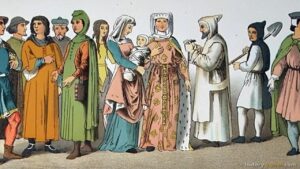
Life during the medieval period was shaped by two powerful forces: the Catholic Church and the social system known as feudalism. Feudalism was a form of government in which society was organized in a rigid and hierarchical way, with a king at the top, nobles and lords below him, and peasants at the bottom. Most people were peasants who worked long, hard days farming the land of local lords, while a small number of wealthy nobles lived in castles and manor houses. This deep division between rich and poor helped shape the kinds of entertainment that different people could enjoy.
What Games Did Medieval People Play?
Games were among the most common forms of entertainment during the Middle Ages, and many were enjoyed by rich and poor alike. Board games in particular were extremely popular, and several are still played today in similar forms. For instance, chess became a favorite pastime among the nobility after it spread into Europe from Persia around the 9th century, and it was seen as a game of skill and strategy fit for kings and knights.
Other board games were played across all levels of society. Backgammon, checkers, and strategy games such as Nine Men’s Morris and Fox and Geese were common in homes, taverns, and castles alike. Games of chance were also widespread, and many people gambled using dice or small pieces made from animal bones. In reality, gambling was so common that it worried some religious leaders, who feared it encouraged sinful behavior.
How Did Music and Performers Entertain People?
Music and live performance were a central part of medieval entertainment, and traveling performers were welcomed nearly everywhere. Among the most important were minstrels and troubadours, who were musicians and poets that traveled from town to town. They sang songs and told stories about love, famous battles, and heroic knights, often performing at both noble courts and village gatherings.
These performers did more than simply entertain. Because most people in the Middle Ages could not read, minstrels and troubadours carried news and stories by word of mouth, spreading tales across large distances. Some of the most beloved stories were legends about King Arthur and the Knights of the Round Table. A troubadour might play a lute, a harp, or a small pipe, and famous performers were sometimes invited to sing before kings and queens.
Other entertainers added color and excitement to gatherings. Jesters, who were much like clowns, told jokes and performed silly acts to make audiences laugh. Acrobats, jugglers, fire-eaters, and conjurers, who performed magic tricks, were also popular, especially at feasts and fairs. A traveling performer sometimes worked with an assistant called a jongleur, who added juggling and acrobatics to the show. Within the Church, monks sang a form of religious music known as plainsong, chanting in a single key without any musical instruments.
What Sports and Tournaments Were Popular?
Sports and physical contests were a favorite form of entertainment throughout the Middle Ages, especially at festivals and other special events. Common outdoor activities included archery, wrestling, fencing, and hammer-throwing, as well as early versions of bowling and ball games that resembled modern football and other sports. These activities gave ordinary people a chance to compete, show off their skills, and cheer on their neighbors.
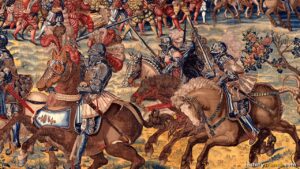
For the nobility, the greatest spectacle of all was the tournament. Tournaments were grand events where knights competed to display their skill, courage, and horsemanship. The most famous tournament event was the joust, in which two armored knights on horseback charged at each other while holding long lances called lances, each trying to knock the other off his horse. Crowds of both nobles and commoners gathered to watch these thrilling contests.
Some tournaments also included a melee, which was a mock battle where large groups of knights fought together in a chaotic and exciting display. These events were closely tied to the medieval idea of chivalry, which was a code of honorable behavior expected of knights. In fact, tournaments were not only entertainment but also a way for knights to train for real warfare and to gain fame and wealth.
How Did Feasts and Festivals Bring People Together?
Feasts and festivals were among the most joyful forms of entertainment in the Middle Ages, and they gave people a rare break from their daily work. Most people did not have vacations or regular days off, but they did celebrate many holidays throughout the year. The majority of these were special days on the Christian calendar, such as Easter, Christmas, and the feast days of various saints.
On these occasions, villagers would often stop work and gather together for a large celebration. Fairs and carnivals brought entertainers, merchants, and traders into town, and there would be plenty of eating, drinking, music, games, and dancing. For many peasants, a yearly fair or festival was the highlight of the entire year, since it combined trade, food, religion, and fun all in one place.
The wealthy nobility held their own grand feasts, often called banquets. These lavish events could last late into the night and were designed to show off the host’s wealth and generosity. After the meal, guests were often entertained by minstrels, jesters, and acrobats, and a jousting tournament might follow the following day. Dancing was also an important part of noble entertainment, and knights were expected not only to fight bravely but also to dance gracefully as part of courtly life.
What Were Medieval Plays Like?
Theater and plays were another popular form of medieval entertainment, especially in towns. Many plays were performed in public spaces such as town squares, often during religious festivals. These performances were frequently put on by local craft guilds, which were organized groups of skilled workers who took pride in staging the shows.
Some of the most common performances were known as mystery plays, which acted out stories from the Bible for audiences who could not read. These plays taught religious lessons while also entertaining large crowds. Over time, plays became more elaborate, and skilled playwrights, writers, and poets were held in high regard for their ability to craft engaging stories.
Significance of Entertainment in the Middle Ages
Entertainment in the Middle Ages was significant because it revealed a great deal about medieval society, its values, and its divisions. The types of amusement people enjoyed reflected the strict social structure of feudalism, since nobles hosted grand banquets and tournaments while peasants gathered at village fairs and festivals. At the same time, some activities, such as board games, music, and holiday celebrations, were shared across every level of society and brought people together.
Medieval entertainment also helped preserve and spread culture. Traveling minstrels and troubadours carried stories, news, and legends from place to place, keeping tales alive in a world where most people could not read. Mystery plays and religious festivals passed on the beliefs of the Catholic Church, which shaped nearly every part of medieval life.
Finally, many forms of medieval entertainment have survived into the modern world. Games such as chess and checkers are still played today, festivals and fairs remain popular, and the stories told by medieval performers continue to inspire books, movies, and games. In reality, the ways people entertained themselves during the Middle Ages remind readers that medieval life was not only about hardship and survival, but also about laughter, celebration, and community.
Frequently Asked Questions
What was the most popular form of entertainment in the Middle Ages?
There was no single most popular form of entertainment, since it depended on a person’s place in society. Peasants most often enjoyed village fairs, festivals, and simple games, while nobles favored feasts, tournaments, and hunting. However, music and board games were enjoyed by people at nearly every level of medieval society.
Did peasants have any free time for entertainment?
Yes, peasants did have some free time, even though they worked long and difficult days. Their breaks usually came on religious holidays and feast days, when work stopped and villages held celebrations. Hunting, however, was often restricted, since the forests and the animals in them frequently belonged to the local lord.
What instruments did medieval musicians play?
Medieval musicians played a variety of instruments, including the lute, the harp, and small pipes or flutes. Drums, fiddles, and bagpipes were also common, especially at dances and festivals. These instruments were usually simple and portable, which made them easy for traveling performers to carry from town to town.
Why were tournaments and jousting so important to knights?
Tournaments and jousting were important because they allowed knights to train for real battle while also gaining fame and honor. Success in these events could bring a knight wealth, prizes, and the admiration of nobles and crowds. They were also closely linked to chivalry, the code of honorable conduct that knights were expected to follow.
What were mystery plays in the Middle Ages?
Mystery plays were public performances that acted out stories from the Bible for medieval audiences. They were often staged in town squares by local craft guilds during religious festivals. Because most people could not read, these plays served as both entertainment and a way to teach religious lessons to large crowds.
Cite This Article
To cite this article as a source, use one of the formats below.
MLA: Millar, B. “Entertainment in the Middle Ages: A Detailed Summary.” HistoryCrunch, 26 July 2026, https://historycrunch.com/entertainment-in-the-middle-ages/.
APA: Millar, B. (2026). Entertainment in the Middle Ages: A Detailed Summary. HistoryCrunch. https://historycrunch.com/entertainment-in-the-middle-ages/
Chicago: Millar, B. “Entertainment in the Middle Ages: A Detailed Summary.” HistoryCrunch. July 26, 2026. https://historycrunch.com/entertainment-in-the-middle-ages/
Sources
- Fordham Medieval Sourcebook
- The Met (Heilbrunn Timeline) — medieval art