The Vietnam War Memorial is one of the most powerful and most visited monuments in the United States, and it stands as a national symbol of remembrance for those who served and died in the Vietnam War. Located on the National Mall in Washington, D.C., the memorial honors the American service members who lost their lives or went missing during the long and controversial conflict. Its simple design, a wall of polished black granite covered with names, changed the way Americans thought about war memorials and gave a divided nation a place to grieve and heal.
The Vietnam War Memorial, officially called the Vietnam Veterans Memorial, is a war memorial. A war memorial is a structure built to honor and remember the soldiers who fought in a particular conflict, especially those who died. Unlike many earlier memorials that celebrated victory with statues of heroic figures, the Vietnam War Memorial focuses instead on the individual people who were lost, listing each of their names in stone.
What Was the Vietnam War?
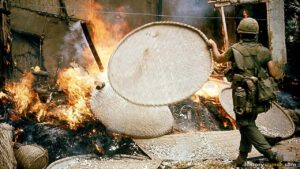
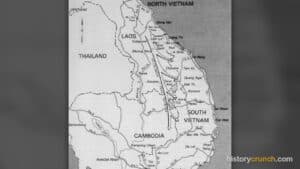
The Vietnam War was a major military conflict that took place primarily between 1955 and 1975. It was fought between the communist government of North Vietnam and the government of South Vietnam, which was supported mainly by the United States. The war grew out of decades of tension linked to colonialism, nationalism, and the ideological struggle of the Cold War between the United States and the Soviet Union.
The main reason the United States became involved in Vietnam was to keep communism from spreading. Since the beginning of the Cold War, American leaders had followed a policy of containment, which aimed to stop the growth of communism around the world. This idea was closely tied to the Domino Theory, a Cold War belief that if one country in a region fell to communism, neighboring countries would soon follow.
For much of the 1960s and early 1970s, the United States military played a direct combat role in the fighting. In reality, the war became long, costly, and deeply unpopular at home. As stated above, public support in the United States weakened dramatically over time, and the war finally ended in 1975 when Saigon fell to communist forces and Vietnam was reunified under communist rule. More than 58,000 American service members died during the conflict, and it is this staggering loss of life that the memorial was later built to honor.
Why Was the Memorial Built?
When American soldiers returned home from Vietnam, many of them did not receive the welcome that veterans of earlier wars had enjoyed. Because the war was so divisive, some returning veterans felt ignored or even blamed for a conflict that had turned the country against itself. Over time, a movement grew to create a memorial that would honor the service and sacrifice of these veterans without taking sides on whether the war itself had been right or wrong.
The effort was led by Vietnam veterans themselves, who formed a nonprofit organization to raise money and gather support for the project. In fact, the memorial was funded entirely through private donations rather than government money. The idea was to build a place of recognition and healing at a time when the war and its aftermath were still painful for millions of Americans.
Congress authorized the memorial in 1980 and set aside a site on the National Mall, near the Lincoln Memorial and the Washington Monument. More specifically, the memorial was placed within Constitution Gardens, a peaceful, park-like corner of the Mall. This location connected the new monument to some of the most important symbols of American history and national identity.
Who Designed the Vietnam War Memorial?
To choose a design, the organizers held a nationwide competition that was open to anyone. The competition attracted more than 1,400 entries, and each design was judged without the judges knowing who had created it. The winning design came from Maya Lin, a 21-year-old architecture student at Yale University who had created her plan as part of a college class.
Lin’s design was strikingly simple. It called for two long walls of polished black granite that met at an angle to form a wide V-shape. She imagined the walls beginning low at each end and rising higher as they came together, cutting into the earth like a wound that was closed and healing.
The two arms of the wall were designed to point directly toward the Lincoln Memorial and the Washington Monument, tying the memorial to the nation’s past. Lin’s plan was very different from the traditional format for a memorial, which usually included statues of heroic soldiers and inspiring words. Instead, she focused entirely on the names of the dead, letting the sheer number of names speak for itself.
Design and Features of the Wall
The finished memorial is often simply called “The Wall.” It is made up of dozens of panels of polished black granite, and each of the two walls stretches about 200 feet (61 m) long. The walls rise from ground level at their ends to a height of more than 10 feet (3 m) at the point where they meet, so that visitors gradually descend below ground level as they walk toward the center.
Carved into the granite are the names of more than 58,000 American men and women who died or remain missing from the war. The names are not listed alphabetically or by rank. Instead, they are inscribed in chronological order, based on the date each person died or was declared missing. This arrangement emphasizes the human cost of the war as it unfolded over time and allows visitors to find names connected to a specific moment in the conflict.
The reflective surface of the black granite is central to the memorial’s meaning. As visitors read the names, they can see their own reflections in the stone alongside the carved letters. This effect visually links the living with the dead and reminds visitors that the memory of the war continues to shape those who come to remember.
Why Was the Memorial Controversial?
When Lin’s design was first revealed, it caused a great deal of controversy. Some veterans and critics felt that the simple black wall was too plain and even gloomy, and they missed the heroic statues and patriotic messages found in older memorials. To some people, the design seemed more like a somber grave marker than a celebration of service.
The disagreement reflected the deeper divisions the war had created in American society. Because the country had never fully agreed about whether the war was just, it was also hard to agree on how it should be remembered. In addition, some critics unfairly targeted Lin herself because of her youth and her Chinese American background.
To settle the dispute, a compromise was reached. A traditional bronze statue of three servicemen, along with an American flag, was added near the entrance to the memorial in 1984. Later, in 1993, the Vietnam Women’s Memorial was added to honor the women who served during the war, many of them as nurses. These additions gave the site more familiar, figurative elements while keeping Lin’s wall as the emotional heart of the memorial.
Dedication and Public Response
The Vietnam War Memorial was dedicated on November 13th, 1982, near the end of a weeklong national salute to Americans who had served in the war. Thousands of veterans marched to the site as part of the ceremony, and for many of them the event was a long-overdue moment of recognition.
Although the design had been controversial before it was built, public opinion shifted dramatically once people were able to visit. Many found the experience of walking along the wall and reading the names deeply moving. Visitors began leaving flowers, photographs, letters, and other personal mementos at the base of the panels, a tradition that continues to this day.
Care of the memorial was later placed under the National Park Service, which manages the National Mall. Over time, the memorial became one of the most visited sites in the entire capital. What began as a divisive project had turned into a beloved place of national remembrance.
Significance of Vietnam War Memorial
The Vietnam War Memorial is significant because it changed the way Americans remember war and those who die in it. By focusing on the names of individual people rather than on victory or heroism, the memorial placed the human cost of war at the center of national memory. This approach influenced the design of many later memorials across the United States and around the world.
The memorial is also significant as a symbol of healing for a nation that had been badly divided by the war. For years, many Vietnam veterans had felt unappreciated by the country they served. The wall gave them, along with the families of the fallen, a public place to mourn, to reflect, and to feel honored at last.
Finally, the memorial serves as a lasting reminder of the true cost of the Vietnam War. Each of the more than 58,000 names represents a real person with a family and a future that was cut short. In this way, the memorial connects the enormous scale of the conflict to the individual lives it touched, ensuring that those who were lost are not forgotten.
Frequently Asked Questions
Where is the Vietnam War Memorial located?
The Vietnam War Memorial is located on the National Mall in Washington, D.C. It sits within Constitution Gardens, a park-like area near the Lincoln Memorial and the Washington Monument. The site covers about two acres and is managed today by the National Park Service.
How many names are on the Vietnam War Memorial?
The memorial holds the names of more than 58,000 American service members who died or remain missing from the Vietnam War. The number has grown slightly over the years as additional names have been confirmed and added to the wall. Each name is carved into the polished granite in letters only about half an inch tall.
Who designed the Vietnam War Memorial?
The memorial was designed by Maya Lin, who was a 21-year-old architecture student at Yale University at the time. She entered a nationwide design competition and beat more than 1,400 other entries. Lin created her design as a project for a college class, and she later became a famous artist and architect.
Why are the names on the wall in order of death instead of alphabetical?
The names are listed in the order that people died or went missing so that the wall tells the story of the war as it happened over time. This arrangement lets visitors connect a name to a specific moment in the conflict rather than simply looking it up in a list. Guides and directories are available on-site to help visitors find a particular name.
Why do people leave items at the Vietnam War Memorial?
Visitors leave items such as flowers, photographs, letters, and military medals as a personal way to remember and honor the people named on the wall. This tradition began soon after the memorial opened and has continued ever since. Many of these objects are collected and preserved, creating a growing record of how Americans remember those who were lost.
Cite This Article
To cite this article as a source, use one of the formats below.
MLA: Millar, B. “Vietnam War Memorial: A Detailed Summary.” HistoryCrunch, 16 August 2026, https://historycrunch.com/vietnam-war-memorial/.
APA: Millar, B. (2026). Vietnam War Memorial: A Detailed Summary. HistoryCrunch. https://historycrunch.com/vietnam-war-memorial/
Chicago: Millar, B. “Vietnam War Memorial: A Detailed Summary.” HistoryCrunch. August 16, 2026. https://historycrunch.com/vietnam-war-memorial/
Sources
- Max Hastings, Vietnam: An Epic Tragedy.
- Fredrik Logevall, Embers of War.