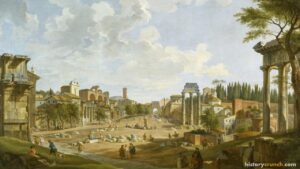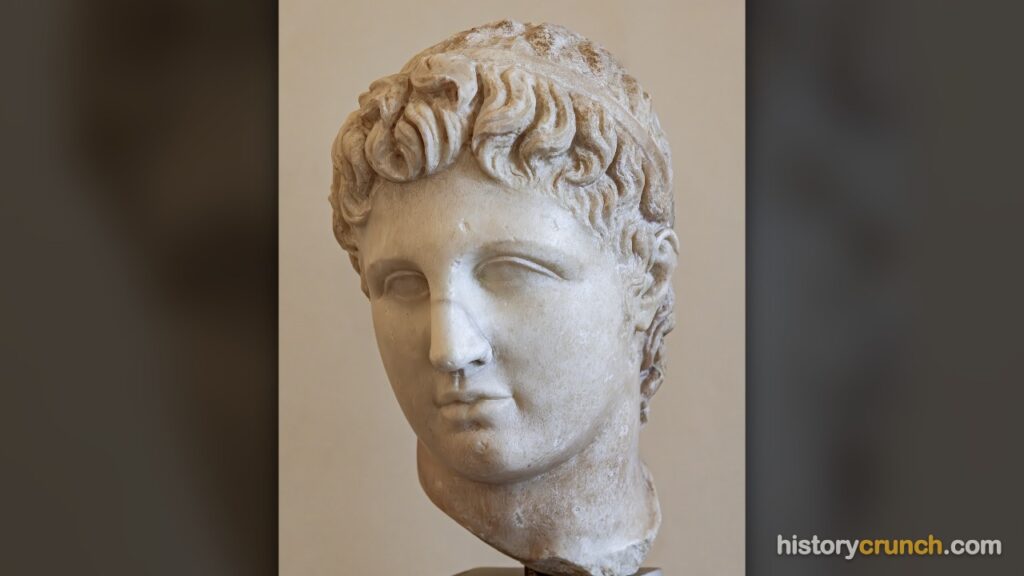
Roman Egypt was one of the most important provinces in the entire Roman Empire, serving as the source of much of the grain that fed the city of Rome and its people. It refers to the long period of Egyptian history that began in 30 BCE, when the Roman general Octavian defeated Mark Antony and Cleopatra VII and turned Egypt into a Roman province. From that point until the middle of the 7th century CE, Egypt was governed as part of the Roman world, first under the Roman Empire and later under its eastern successor. During these centuries, Egypt kept much of its ancient culture and religion, but it was reshaped by Roman law, Roman taxation, and eventually the spread of Christianity.
A Roman province was a region outside of Italy that was conquered and then governed as part of the Roman state. Each province was placed under the control of a Roman official, called a governor, who was responsible for keeping order, collecting taxes, and commanding any soldiers stationed there. Egypt was a special kind of province because it was treated almost like the personal property of the emperor rather than an ordinary territory.
What Was the Roman Empire?
Ancient Rome was one of the most powerful civilizations in world history. It began as a small city-state on the Italian peninsula and grew over many centuries into a vast empire that stretched from Britain in the northwest to Egypt in the southeast. Roman civilization is remembered for its lasting contributions to law, government, architecture, language, and culture.
The Roman Empire was the final great period of Roman history, and it began in 27 BCE when Octavian took the title of Augustus and became the first Roman emperor. Before this, Rome had been a republic governed by elected officials, but the empire was ruled by a single powerful leader. The Roman Republic had already conquered most of the Mediterranean world, and the empire that followed continued to expand and rule over millions of people across three continents. Egypt became part of this empire at the very moment the republic was ending and the age of emperors was beginning.
How Did Rome Conquer Egypt?
Before it became a Roman province, Egypt was ruled by the Ptolemaic dynasty, a family of Greek rulers descended from one of the generals of Alexander the Great. The Ptolemies had governed Egypt since about 305 BCE, and they styled themselves as pharaohs, following the ancient customs of Egyptian kingship. Over time, however, this dynasty grew weaker through family infighting, a struggling economy, and the rising power of Rome.
The last ruler of this dynasty was the famous Cleopatra VII, who reigned from 51 to 30 BCE. She is best known for her alliances with the Roman leaders Julius Caesar and Mark Antony, but she was also a highly capable ruler who fought hard to keep Egypt independent from Rome. After Caesar was assassinated in 44 BCE, Cleopatra tied her fortunes to Mark Antony, one of the most powerful Roman generals of the time.
The partnership between Antony and Cleopatra brought them into direct conflict with Octavian, the adopted heir of Julius Caesar. This rivalry led to a civil war that ended at the Battle of Actium in 31 BCE, where the forces of Antony and Cleopatra were defeated. The following year, Octavian arrived in Egypt, and Antony and Cleopatra took their own lives. With their deaths, the Ptolemaic dynasty came to an end and Egypt was annexed as a Roman province in 30 BCE.
How Was Roman Egypt Governed?
One of the most striking differences between Roman Egypt and the Egypt that came before it was the end of the pharaoh as a true ruler. All of the Ptolemaic rulers had presented themselves as pharaohs and largely followed the native customs of the role. In contrast, the Romans did not continue the tradition of having a pharaoh actually govern Egypt, and so Cleopatra is often described as the last true pharaoh.
Instead, Roman Egypt was ruled by a governor, much like the other provinces of the empire. However, the governor of Egypt was different from most others in an important way. Rather than being of senatorial rank, he was of equestrian rank, a class that stood just below the senators. The word equestrian literally means “cavalryman,” and it is sometimes translated as “knight.”
This governor was officially known as a prefect, and the emperor chose him personally. In fact, the emperors viewed Egypt almost as their own private possession rather than a normal province. For this reason, Roman senators were not even allowed to enter Egypt without the special permission of the emperor. This unusual arrangement existed because Egypt was so wealthy and so important that no emperor wanted a powerful rival to use it as a base to challenge his rule.
Below the prefect, Egypt was organized into smaller districts, and each district was further divided into regions called nomes, each with its own local officials. The Romans introduced their own system of law and taxation, and local administration was reorganized so that owning property brought an obligation to serve in public office. Most native Egyptians were treated as subjects who had to pay a special poll tax, while people from the Greek cities enjoyed greater privileges.
Why Was Egypt Called the Breadbasket of the Empire?
Egypt was one of the richest lands in the ancient Mediterranean world, and its wealth came mostly from farming. The Nile River flooded each year and left behind rich soil that made the land amazingly fertile. As a result, Egypt could produce enormous amounts of grain, far more than its own people needed.
When Egypt was an independent kingdom, it used this grain mainly to support itself. Once it became a Roman province, however, the Romans were eager to use Egyptian grain to feed other parts of the empire, especially the huge population of the city of Rome. Because of this, Egypt came to be known as the breadbasket of the Roman Empire. Merchant ships carried Egyptian grain across the Mediterranean Sea alongside goods such as spices from the East and olive oil from Spain.
The importance of this grain supply was so great that it gave Egypt real political power within the empire. For instance, its rich harvests helped the general Vespasian assert his claim to rule the whole empire after he was proclaimed emperor in Egypt in 69 CE, during a year of great internal conflict. The revenues collected from Egypt were also enormous, nearly equal to those of the entire region of Gaul. Beyond grain, Egypt also produced papyrus, glass, and finely crafted goods that were exported across the Roman world.
What Was Alexandria Like Under Roman Rule?
The city of Alexandria was the capital of Egypt during both the Ptolemaic and Roman periods. It was founded by Alexander the Great around 331 BCE, and the Ptolemaic pharaohs made it their capital. When the Romans conquered Egypt, Alexandria continued on as the capital, and both its population and its importance grew.
In fact, Alexandria became the second largest city in the entire Roman Empire, behind only the city of Rome itself. It was also the largest port in the empire, which suited its role as the center of the grain trade. The city was a busy meeting place of Greek, Egyptian, Roman, and Jewish peoples, which made it lively and prosperous but also, at times, a place of conflict.
Because of its importance and its mixed population, Alexandria was the site of a number of serious conflicts. As stated above, tensions between different communities sometimes erupted into violence, and the city saw riots and rebellions during the Roman period. Even so, Alexandria remained a great center of trade, learning, and culture throughout most of these centuries.
How Did Religion Change in Roman Egypt?
For much of the Roman period, religion in Egypt continued along the lines it had followed for centuries. The Egyptians generally kept worshipping their ancient gods, and the priesthoods of the old temples held on to many of their privileges. In turn, these priests also served the imperial cult, which involved honoring the deified Roman emperors and their families.
The Roman conquest also created new interest in Egyptian culture across the empire. Obelisks and Egyptian-style artwork were installed in Roman cities, and the worship of the Egyptian mother goddess Isis spread far beyond Egypt itself. At the same time, Egyptian art began to change, blending traditional Egyptian styles with Greek and Roman fashions, as seen in the lifelike painted portraits placed on mummies.
Over time, however, a major religious change swept through Egypt with the rise of Christianity. By around 200 CE, Alexandria had become an important Christian center, and the ancient Egyptian religion gradually lost its hold. The Coptic language, which developed from earlier forms of Egyptian, emerged among the Christians of Egypt. By the late 4th century, Christianity had become the official religion of the Roman Empire, and Egypt was firmly a Christian land.
How Did Roman Rule in Egypt End?
Roman rule in Egypt lasted for a very long time, but it did not remain unchanged. During the troubled 3rd century CE, Egypt was briefly lost to the breakaway Palmyrene Empire, before being recovered by the Roman emperor Aurelian. Later, the emperor Diocletian reorganized the province and introduced new administrative and economic reforms.
In 395 CE, the Roman Empire was permanently divided into two halves, and Egypt became part of the Eastern Roman Empire, which is often called the Byzantine Empire. The Western Roman Empire fell in 476 CE, but the Eastern Empire continued on for centuries, and Egypt remained one of its most valuable provinces. During this time, Egypt was still an important source of grain and trade goods.
In the early 7th century CE, Egypt was briefly conquered by the Persian Empire before being won back by the Eastern Romans. Not long afterward, however, Arab Muslim armies invaded, capturing Alexandria in 642 CE. This conquest brought the long period of Roman and Byzantine rule in Egypt to an end and began an entirely new chapter in Egyptian history.
Significance of Roman Egypt
Roman Egypt was significant because it was one of the wealthiest and most important provinces of the entire Roman Empire. Its grain fed the city of Rome and helped keep its huge population content, which made the province essential to the stability of the empire. For this reason, the emperors guarded Egypt closely and treated it almost as their own personal property.
The period also marked a turning point in the long history of Egypt itself. The tradition of the pharaohs came to an end, ancient Egyptian religion slowly gave way to Christianity, and the region became part of the overall Mediterranean world more fully than ever before. In this way, Roman Egypt served as a bridge between the ancient world of the pharaohs and the later Christian and Islamic history of the region.
Finally, Roman Egypt left behind a rich record of daily life, art, and religion that helps people understand the ancient world. The painted mummy portraits, the papyrus documents, and the great city of Alexandria all show how Egyptian, Greek, and Roman cultures blended together. More specifically, this mixing of traditions created a unique culture that shaped the Mediterranean for centuries.
Frequently Asked Questions
When did Egypt become a Roman province?
Egypt became a Roman province in 30 BCE. This happened right after Octavian defeated Mark Antony and Cleopatra and arrived in Egypt, ending the Ptolemaic dynasty. The takeover came just a few years before Octavian became the first Roman emperor under the name Augustus, so Egypt was one of the earliest provinces of the new Roman Empire.
Who ruled Egypt for the Romans?
Egypt was ruled for the Romans by an official called a prefect, chosen personally by the emperor. Unlike the governors of most other provinces, who were senators, the prefect of Egypt came from the equestrian class, one rank below the senators. This arrangement was meant to prevent any powerful senator from using wealthy Egypt to build up support and challenge the emperor.
Why was Egypt so important to the Roman Empire?
Egypt was important to the Roman Empire mainly because of its enormous grain production. The yearly flooding of the Nile made the land extremely fertile, allowing Egypt to grow more grain than any other province. This grain was shipped to Rome to feed its huge population, and the taxes and trade goods from Egypt brought in vast amounts of wealth for the empire.
Did the Romans keep the pharaohs in Egypt?
No, the Romans did not keep pharaohs actually ruling Egypt. While Egyptians sometimes portrayed the emperor as a pharaoh in temple carvings, this was mostly a formality, and few emperors ever even visited Egypt. Real power belonged to the Roman prefect and to the emperor in Rome, which was a major change from the earlier Ptolemaic rulers who had governed as pharaohs.
How long did Roman rule in Egypt last?
Roman rule in Egypt lasted more than six centuries, from 30 BCE until 642 CE. During this time, Egypt was governed first as part of the Roman Empire and later as part of the Eastern Roman, or Byzantine, Empire after the empire split in 395 CE. This long era finally ended when Arab Muslim armies captured Alexandria in 642 CE.
Cite This Article
To cite this article as a source, use one of the formats below.
MLA: Millar, B. “Roman Egypt: A Detailed Summary.” HistoryCrunch, 7 July 2026, https://historycrunch.com/roman-egypt/.
APA: Millar, B. (2026). Roman Egypt: A Detailed Summary. HistoryCrunch. https://historycrunch.com/roman-egypt/
Chicago: Millar, B. “Roman Egypt: A Detailed Summary.” HistoryCrunch. July 7, 2026. https://historycrunch.com/roman-egypt/
Sources
- H.H. Scullard, From the Gracchi to Nero.
- The Met (Heilbrunn Timeline) — Roman art