Operation Fortitude was the Allied deception planA military strategy that uses lies and tricks to make the enemy believe something false about your real intentions. designed to mislead Nazi Germany before D-Day during the events of World War II in Europe. Carried out as part of the larger Operation BodyguardThe larger Allied strategy of misleading Germany about the invasion, within which Operation Fortitude was the main plan. in the months before June 6th, 1944, Operation Fortitude tried to convince German leaders that the main Allied invasion of western Europe would strike Norway or the Pas-de-CalaisThe shortest crossing point from England to France, which the Allies made Germany believe would be the main invasion target., France, rather than Normandy, France.
 FactsthatCrunch
Operation Bodyguard was the overall Allied deception strategy used before the D-Day invasion of June 6th, 1944, to mislead Nazi Germany about where and when the Allies planned to attack western Europe. It used fake armies, false radio signals, and double agents to make German commanders defend the wrong places. Operation Fortitude, which targeted Norway and the Pas-de-Calais coast of France, was the main plan within it.
Operation Bodyguard worked because it fed Germany the same false story from several directions at once, making the lies hard to question.
Operation Fortitude – Background
Operation Fortitude grew out of a basic problem facing the Allies in 1944. The most logical place for an invasion of German-occupied France was the English Channel coast, and German commanders knew that. If the Germans correctly identified Normandy, France, as the real target before the landings began, they could strengthen their defenses there and make the invasion much harder to succeed. Therefore, the Allies decided that the invasion needed a major deception plan to draw German attention away from Normandy.
This larger deception strategy was called Operation Bodyguard. Within it, Operation Fortitude became the main plan for misleading the German high command about where the invasion would come. Planning took shape in late 1943 and early 1944 under Allied deception staffs in Britain, and the goal was not only to fool Germany before D-Day but also to keep German forces tied down after the landings had begun.
FactsthatCrunchGerman commanders already suspected that the Pas-de-Calais, France, was the most likely Allied invasion point because it was the shortest crossing from England, so the Allies had to protect Normandy, France, as the true target or risk facing fully reinforced German defenses on the beaches.
The Allies built Operation Fortitude around a strategic reality: Germany already feared the Pas-de-Calais as a target, so Allied planners strengthened that fear rather than inventing a new one. Keeping German attention on the wrong location gave the Normandy landings time to establish a secure beachhead.
Operation Fortitude – Fortitude North and Fortitude South
Operation Fortitude had two main parts. Fortitude North was designed to make Germany think the Allies were preparing to invade Norway. This mattered because Norway was strategically important for control of northern seas, shipping routes, and access to Swedish iron ore. If the Germans believed Norway was in danger, they would keep troops there instead of sending them to France.
To support Fortitude North, the Allies created the illusion of a British Fourth Army based around Edinburgh, Scotland. Fake radio traffic, misleading reports, and supporting activities were used to suggest that forces in northern Britain were getting ready for a move against Norway. The deception worked well enough that Hitler continued to keep a large number of divisions in Norway during 1944.
Fortitude South was even more important. It aimed to convince the Germans that the main Allied invasion would come at the Pas-de-Calais, France, which was the shortest crossing point from England and the most obvious invasion route. Since Pas-de-Calais was closer to Britain than Normandy, France, many German leaders already believed it was the most likely target. Operation Fortitude therefore did not try to invent an impossible story. Instead, it strengthened a fear the Germans already had.
For Fortitude South, the Allies created the image of a huge force in southeastern England called the First United States Army GroupA completely fake army the Allies invented in southeastern England to threaten the Pas-de-Calais and mislead Germany.. This force was presented as the main striking army for an invasion of Pas-de-Calais, France. George S. Patton was linked to it because the Germans respected him as an aggressive commander and expected him to lead a major assault. As such, Patton’s presence made the deception more believable.
FactsthatCrunchBoth parts of Operation Fortitude used fake armies and false radio signals to pull German attention away from Normandy. Fortitude South was the more important of the two because it targeted Pas-de-Calais, the site German leaders already considered the most likely Allied invasion point.
Operation Fortitude – How the Deception Worked
Operation Fortitude used several different methods at the same time. One of the most important was false radio traffic. German intelligence often tried to estimate enemy strength by listening to military signals, so the Allies created fake communications to suggest the movement and presence of units that did not really exist. This helped build the illusion of large invasion forces in places where no real attack was planned.
Another important part of Operation Fortitude involved double agentsSpies captured or controlled by one side who are then used to feed false information to the enemy.. British intelligence had captured or controlled German spy networks in Britain and then fed false information back to Nazi Germany through them. One of the most famous agents was Juan Pujol García, whose codenameA secret name used to hide the real identity of a person or operation during wartime. was Garbo. He sent reports that helped convince the Germans that the Normandy landings would be only a diversion and that the main blow was still coming later at Pas-de-Calais, France.
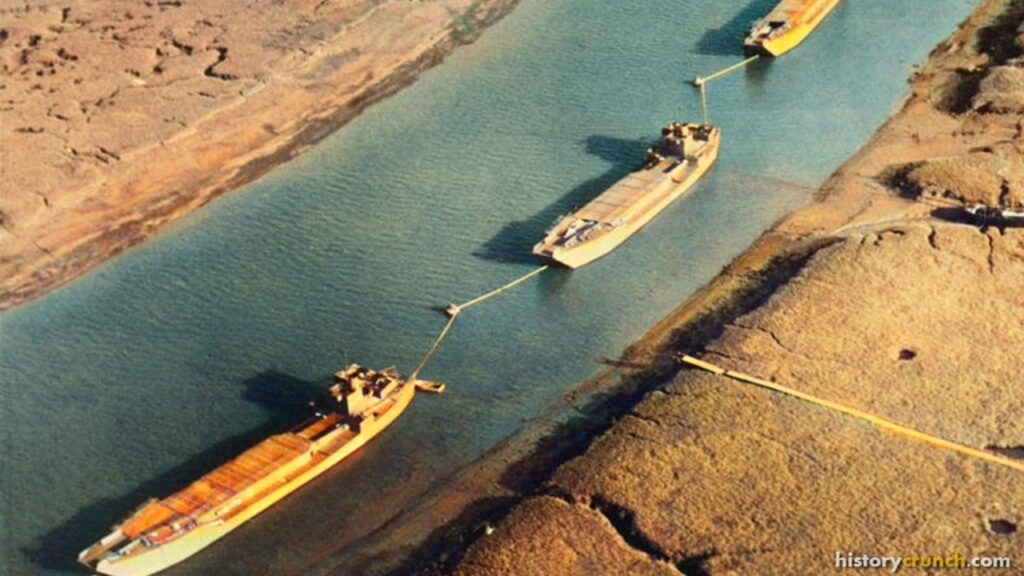
The Allies also used visual deception. Dummy landing craft, fake camps, inflatable equipment, and carefully staged movements helped create the appearance of invasion preparation in the wrong places. However, physical tricks alone were not enough. Operation Fortitude worked best because the fake visual evidence was supported by radio deception, controlled intelligence leaks, and the reports of double agents. Therefore, the Germans received the same false story from multiple directions.
In Operation Fortitude during World War II, was each of these a method the Allies used to deceive Germany, or a real element of the actual Normandy invasion plan?
Operation Fortitude – Impact on D-Day
Operation Fortitude played a major role in protecting the Normandy Invasion on June 6th, 1944. German leaders did not fully trust that Normandy, France, was the main invasion site, even after Allied troops had landed there. Because of the deception, they continued to believe that a larger attack might still come at Pas-de-Calais, France. This delayed the movement of some key German forces that might otherwise have been sent quickly against the Allied beachheadA position on an enemy shore that invading troops must capture and hold so more forces can land safely. in Normandy.
One of the most important results was the continued holding back of the German Fifteenth Army near Pas-de-Calais, France. That army remained in place during a critical period when German reinforcements could have made the Allied position in Normandy much more dangerous. Regardless, Operation Fortitude did not win D-Day by itself. The success of the landings also depended on air power, naval power, logistics, planning, and the fighting of Allied soldiers on the beaches and inland. Still, the deception gave the invasion a much better chance to survive and expand.
FactsthatCrunchEven after Allied troops landed in Normandy on June 6th, 1944, German leaders still believed a larger attack was coming at Pas-de-Calais. Reports from double agent Juan Pujol García, codenamed Garbo, helped convince them that the Normandy landings were only a diversion. As a result, German commanders kept the Fifteenth Army in place near Pas-de-Calais instead of sending it to push the Allies back into the sea.
German Fifteenth Army positioned near Pas-de-Calais, ready to reinforce wherever the real invasion landed
Fifteenth Army stayed out of Normandy during a critical window, giving Allied forces time to strengthen their beachhead
Operation Fortitude – Significance
Operation Fortitude was important because it showed how deception could shape a major military campaign. It did not destroy German armies in direct combat, but it influenced German decisions at a crucial moment in World War II. By making the Germans defend the wrong places and hesitate at the right time, Operation Fortitude helped the Allies gain a foothold in France.
Operation Fortitude was also important because it reflected the wider nature of modern war. Intelligence, radio traffic, fake armies, double agents, and controlled misinformation all became weapons. In that sense, Operation Fortitude stands as one of the clearest examples of strategic deception in World War II and one of the most important support operations behind the success of D-Day.
Explore World War II · 1939 – 1945
Keep exploring World War II with these History Crunch resources.
Key Vocabulary
Deception plan
Operation Bodyguard
Pas-de-Calais
Double agents
First United States Army Group
Codename
Beachhead
Frequently Asked Questions
What was Operation Fortitude?
Operation Fortitude was the Allied plan to trick Nazi Germany about where the D-Day invasion would land. It was part of a larger deception called Operation Bodyguard. The goal was to pull German attention away from Normandy, France, before June 6th, 1944.
What were Fortitude North and Fortitude South?
Fortitude North tried to make Germany believe the Allies would invade Norway. Fortitude South tried to convince them the main attack would hit the Pas-de-Calais in France. Both plans used fake armies to keep German troops away from Normandy.
How did the Allies fool German intelligence?
The Allies used fake radio traffic, double agents, and dummy equipment to build the illusion of armies that did not exist. Inflatable tanks, fake camps, and false signals all pointed to the wrong invasion sites. The same false story reached the Germans from several directions, which made it believable.
Who was Garbo in Operation Fortitude?
Garbo was the codename for Juan Pujol García, a double agent controlled by British intelligence. He fed false reports to Germany, claiming the Normandy landings were only a diversion. This helped convince German leaders that a bigger attack was still coming at the Pas-de-Calais.
Why did Operation Fortitude use George S. Patton?
Patton was linked to a fake force called the First United States Army Group in southeastern England. The Germans respected him as an aggressive commander and expected him to lead a major assault. His name made the threat against the Pas-de-Calais seem real.
How did Operation Fortitude affect D-Day?
The deception kept German leaders believing a larger attack might still strike the Pas-de-Calais even after the Normandy landings began. This delayed key reinforcements, including the German Fifteenth Army, during a crucial time. The invasion still needed air power, naval power, and hard fighting to succeed.
Cite This Article
To cite this article as a source, use one of the formats below.
MLA: Millar, B. “Operation Fortitude: A Detailed Summary.” HistoryCrunch, 2 October 2026, https://historycrunch.com/operation-fortitude/.
APA: Millar, B. (2026). Operation Fortitude: A Detailed Summary. HistoryCrunch. https://historycrunch.com/operation-fortitude/
Chicago: Millar, B. “Operation Fortitude: A Detailed Summary.” HistoryCrunch. October 2, 2026. https://historycrunch.com/operation-fortitude/
Sources
- Gerhard L. Weinberg, A World at Arms.
- Antony Beevor, The Second World War.
- Max Hastings, Inferno / All Hell Let Loose.