Monks and monasteries were among the most important features of life during the Middle Ages, shaping religion, education, and community across Europe for roughly a thousand years. Monks were religious men who gave up ordinary life to live together in prayer, work, and study, while monasteries were the communities and buildings in which they lived. From the fall of the Roman Empire onward, these communities helped keep learning alive, cared for the poor and the sick, and gave medieval society a powerful spiritual center at a time when the Catholic Church stood at the heart of daily life.
MonasticismA way of life in which people withdrew from the everyday world to devote themselves fully to God. was a way of life in which people withdrew from the everyday world to devote themselves fully to God. Monks lived apart from society in organized communities, following a strict set of rules that governed nearly every hour of the day. Because most people in the Middle Ages could not read or write, these religious communities became some of the only places where books were made, copied, and preserved, which gave them enormous influence over medieval culture.
 FactsthatCrunch
How did monasteries shape prayer, learning, and care for others in medieval life?
What Was the Middle Ages?
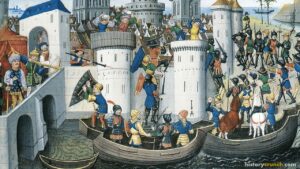
The Middle Ages, also known as the Medieval Period, lasted for approximately 1000 years from the 5th century to the 15th century. Due to its timeframe, historians divide the Middle Ages in Europe into three smaller periods called the Early, High, and Late Middle Ages. The Early Middle Ages began in the 5th century during the decline of the Roman Empire and lasted until roughly the end of the 10th century, while the High Middle Ages ran from the 11th century to the end of the 13th century, and the Late Middle Ages covered the 14th and 15th centuries.
The Middle Ages began with the fall of the Western Roman Empire in 476 CE, which caused major changes in the political, social, and religious life of people across Europe. As Roman rule collapsed, two institutions became especially important in bringing order to society. The first was feudalism, a system of land ownership and loyalty that organized medieval government. The second was the Catholic Church, which grew into the most powerful force in Europe and touched the lives of nearly everyone, from kings and nobles down to the poorest peasants.
Because religion was so central to medieval life, monasteries fit naturally into this world. In fact, they became trusted places where people came for prayer, healing, learning, and shelter. To understand the Middle Ages, it helps to understand the monks and monasteries that quietly held so much of medieval society together.
Where Did Monasticism Come From?
The roots of Christian monasticism stretch back before the Middle Ages to the deserts of Egypt and Syria. Around the 3rd century CE, as Christianity spread across the Roman Empire, some deeply devoted believers chose to live as hermits. These early Christians, known as asceticsEarly Christian believers who retreated to lonely places to pray, fast, and meditate, giving up worldly comforts., retreated to lonely places to pray, fast, and meditate, trying to live as close to God as possible by giving up worldly comforts.
Over time, living completely alone proved dangerous and difficult, so groups of these devoted men began to gather into organized communities instead. By the 5th century, this idea had spread from the eastern Mediterranean into Western Europe. What had started as scattered hermits slowly grew into the shared community life that would define medieval monasticism.
The single most important figure in this shift was Saint Benedict of Nursia, who lived in Italy in the 6th century. Around 540 CE, Benedict wrote a guide known as the Rule of Saint Benedict, which laid out how a monastic community should be organized and how each monk should spend the day. His Rule would go on to shape monastic life across Western Europe for centuries.
FactsthatCrunchFollow the chain from top to bottom. Tap any step to read what happened.
What Was the Rule of Saint Benedict?
The Rule of Saint Benedict was a set of instructions that balanced prayer, work, and study, all lived out in a shared community under the authority of an abbot. The abbot was the leader of the monastery, elected for life, and the monks owed him their obedience. This balance is often summed up by the Latin phrase ora et labora, meaning “pray and work,” which captured the heart of the Benedictine way of life.
Before becoming a full monk, a newcomer spent about a year in training as a noviceA newcomer to a monastery who spent about a year in training before taking lifelong vows., learning the Rule and testing whether he was truly suited to the life. At the end of this period, he took lifelong vows, most famously promising poverty, chastity, and obedience. Once a monk took these vows, he was expected to remain in the community for the rest of his life.
The Rule was so practical and well balanced that it spread widely across Europe. By the 9th century, encouraged by the Frankish king Charlemagne and his successors, the Benedictine Rule had become the main standard for monasteries in Western Europe. Later orders would also build directly upon Benedict’s ideas.
FactsthatCrunch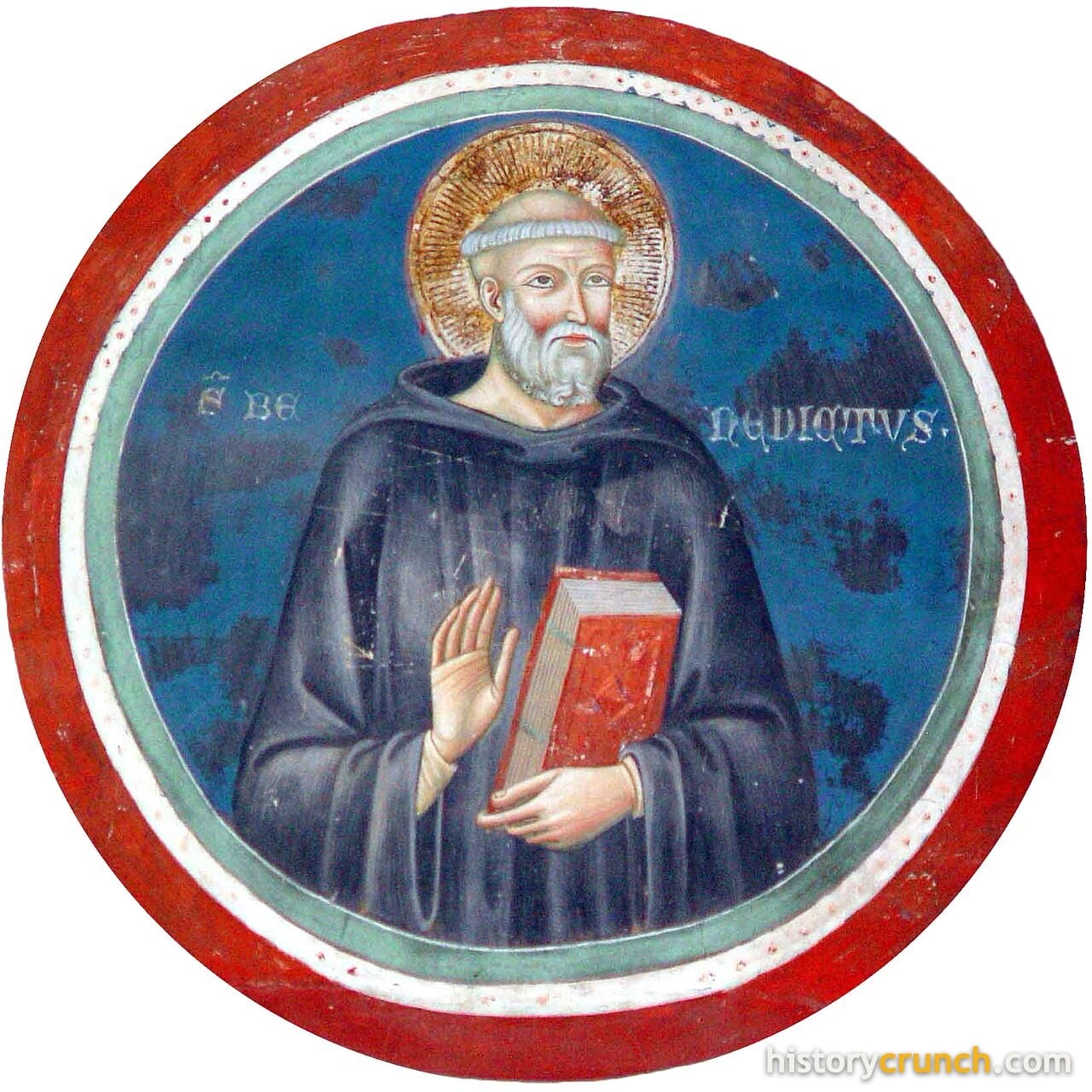
What Was Daily Life Like in a Monastery?
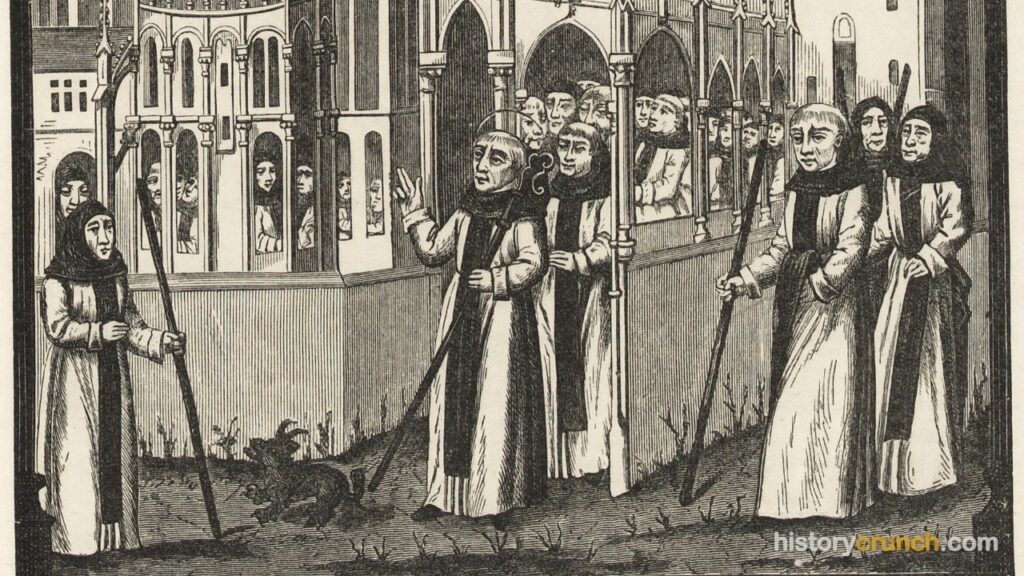
Daily life inside a monastery was highly structured and disciplined, organized around a fixed cycle of prayer that repeated every single day. Under the Benedictine Rule, monks gathered for services many times a day and even once during the night, beginning long before dawn and continuing until after dark. Between these services, the hours were carefully divided among worship, reading of scripture, and manual labor.
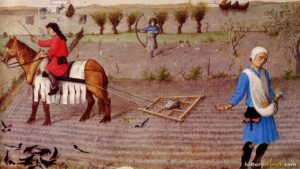
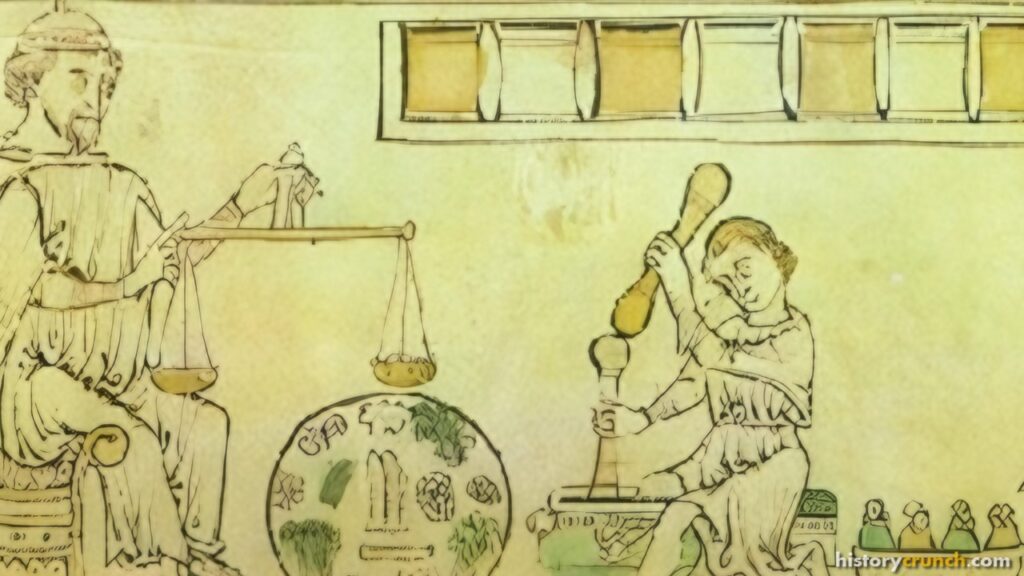
A monastery was meant to be self-sufficient, meaning the monks produced nearly everything they needed themselves. For instance, they grew their own food, made their own clothing, kept livestock, and practiced trades such as carpentry, brewing, and blacksmithing. This work was not seen as a distraction from religion but as a form of prayer in itself, part of the discipline that led a monk toward salvation.
The buildings of a monastery were designed to support this rhythm of life. At the center stood the church, and around it were arranged the cloisters, the dining hall, sleeping quarters, workshops, and a library. As monasteries grew wealthier during the High Middle Ages, some communities relied on lay brothersNon-ordained members of a monastery who handled much of the heavy physical work so monks could focus on prayer and scholarship. and hired laborers to handle much of the heavy physical work, which freed the monks to spend more time on prayer and scholarship.
FactsthatCrunchUnder the Benedictine Rule, monastic life ran on a fixed daily cycle called the Divine Office, which divided every waking hour between communal prayer, scripture reading, and physical work.
How Did Monks Preserve Learning?
One of the most important contributions of medieval monasteries was the preservation of knowledge. In a period when very few people could read or write, monks were among the only Europeans who were educated, and they used this skill to copy and protect books. Monasteries often housed schools that trained future monks and sometimes educated the children of nobles as well.
Much of this work took place in a special room called the scriptoriumA special room in a monastery where monks copied texts by hand onto parchment., where monks copied texts by hand. Before the printing press was invented in the 15th century, every book had to be produced this way, letter by letter, on parchment made from animal skins. This slow and careful labor allowed monasteries to preserve not only the Bible and religious writings but also many classic works of ancient Greek and Roman literature that might otherwise have been lost.
Some monks turned this copying into a beautiful art form by creating illuminated manuscriptsHandwritten books decorated with colorful illustrations, detailed borders, and gold leaf, made by monks.. These were books decorated with colorful illustrations, detailed borders, and even gold leaf, making each one a treasured work of art. Many of these manuscripts have survived to the present day and stand among the finest examples of medieval art.
In a medieval monastery, the scriptorium was a special room where monks copied texts by hand onto parchment made from animal skins.
What Were the Main Monastic Orders?
Over the centuries, different monastic orders developed, each with its own priorities and rules. The Benedictines were the earliest and most widespread, and they played a leading role in preserving learning and producing manuscripts. As monasteries grew rich from donations of land and property, however, some monks worried that wealth was pulling them away from their original spiritual ideals.
These concerns led to a series of reform movements that sought a return to simplicity, poverty, and stricter discipline. In the year 910, the Cluniac reforms attempted to restore Benedictine monasteries to their spiritual roots. Later, in 1098, the Cistercian order was founded in France, promoting hard manual labor, self-sufficiency, and a plain lifestyle. Cistercian monks wore undyed white habits, which earned them the nickname the White Monks.
By the 13th century, a new kind of religious group appeared in the form of the mendicant ordersReligious groups whose members, called friars, traveled among the people preaching and serving rather than staying inside monasteries.. Unlike traditional monks who stayed inside their monasteries, the friars of these orders traveled among the people, preaching and serving in towns and cities. The most famous of these groups were the Franciscans, founded in 1209, and the Dominicans, founded in 1216.
FactsthatCrunchMany people believe that all medieval monks and friars lived shut away inside monastery walls.
The mendicant orders were different. Franciscan friars (founded 1209) and Dominican friars (founded 1216) traveled among the people, preaching and serving in towns and cities instead of staying inside a monastery.
How Did Monasteries Help Their Communities?
Although monks lived apart from the world, their monasteries provided many services to the people around them. Because there were very few inns during the Middle Ages, monasteries offered travelers a safe place to rest and eat. In this way, they acted almost like the hotels of the medieval world.
Monasteries also gave charity to the poor and cared for the sick, often running some of the only hospitals available at the time. In addition, they provided education to boys in the local community and dispensed advice to rulers, since abbots were respected and influential figures. More specifically, monks used their knowledge of farming, medicine, and craftsmanship to help improve life in the surrounding countryside.
Women could also take part in the monastic life as nuns, living in communities called convents or nunneries under the leadership of an abbess. For many women, a convent was one of the few places where they could receive an education, hold a position of responsibility, or avoid an unwanted marriage. In reality, these communities offered women opportunities that were rare in the wider medieval world.
FactsthatCrunchHildegard held that the convent gave women something marriage rarely could: the freedom to study, lead, and pursue a calling. As abbess of Rupertsberg, which she founded in 1150, she wrote works on theology, medicine, and music, and sent letters of advice to popes, kings, and emperors. Her actions showed that she saw life inside a convent not as a withdrawal from the world but as a path to real authority and learning that married life in the Middle Ages did not offer women.
Significance of Monks and Monasteries in the Middle Ages
Monks and monasteries were among the most influential institutions of the entire Middle Ages. During the difficult centuries that followed the fall of Rome, when trade shrank and learning nearly vanished across much of Europe, monasteries became islands of stability. They preserved knowledge, produced books, and educated the few who could read, keeping alive the writings of both the Christian faith and the ancient world.
Beyond learning, monasteries served practical needs that no other institution could fully provide. They fed the hungry, sheltered travelers, nursed the sick, and offered guidance to kings and common people alike. As stated above, they also became centers of farming and craftsmanship, spreading useful skills throughout the countryside.
The influence of these communities can still be felt today. The illuminated manuscripts they created survive as priceless works of art, the ancient texts they copied helped preserve the foundations of Western thought, and the balance of prayer, work, and study that Saint Benedict described continues to guide religious communities around the world. In this way, the quiet labor of medieval monks left a lasting mark on European civilization.
Explore Middle Ages · 476 – 1500 CE
Keep exploring Middle Ages with these History Crunch resources.
Key Vocabulary
Monasticism
Ascetics
Novice
Scriptorium
Illuminated manuscripts
Mendicant orders
Lay brothers
Frequently Asked Questions
What did monks do all day in the Middle Ages?
Monks spent their days following a strict routine of prayer, worship, work, and study that repeated from before dawn until after dark. They gathered for religious services many times a day, then filled the hours in between with tasks such as farming, copying books, and other chores. This schedule was designed to keep the mind and body focused on God at all times.
What is the difference between a monk and a friar?
The main difference is that monks stayed within their monasteries while friars traveled out among the people. Monks lived a settled life of prayer and work behind monastery walls, but friars belonged to the mendicant orders, such as the Franciscans and Dominicans, and moved through towns preaching and helping others. Friars often depended on donations from the public rather than on land owned by a monastery.
Why were monasteries so wealthy?
Monasteries grew wealthy mainly because people donated money, gifts, and land to them in hopes of having prayers said for their souls. Over time, these gifts, along with tax relief and the income from farming, made many monasteries rich and powerful even though individual monks took vows of poverty. This wealth sometimes worried reformers who felt it distracted monks from their spiritual mission.
What is an illuminated manuscript?
An illuminated manuscript is a handwritten book decorated with colorful pictures, detailed borders, and sometimes gold or silver. Monks created these books slowly and carefully in the scriptorium, treating each page as a work of art as well as a way to preserve knowledge. Many surviving illuminated manuscripts are considered masterpieces of medieval art today.
Could women become monks in the Middle Ages?
Women could not become monks, but they could live a similar religious life as nuns in communities called convents or nunneries. These communities were led by an abbess and followed rules much like those of the monks. For many medieval women, joining a convent was a rare chance to gain an education and a position of leadership.
Cite This Article
To cite this article as a source, use one of the formats below.
MLA: Millar, B. “Monks and Monasteries in the Middle Ages: A Detailed Summary.” HistoryCrunch, 26 July 2026, https://historycrunch.com/monks-and-monasteries-in-the-middle-ages/.
APA: Millar, B. (2026). Monks and Monasteries in the Middle Ages: A Detailed Summary. HistoryCrunch. https://historycrunch.com/monks-and-monasteries-in-the-middle-ages/
Chicago: Millar, B. “Monks and Monasteries in the Middle Ages: A Detailed Summary.” HistoryCrunch. July 26, 2026. https://historycrunch.com/monks-and-monasteries-in-the-middle-ages/
Sources
- Fordham Medieval Sourcebook
- Barbara Rosenwein, A Short History of the Middle Ages.
- Jacques Le Goff, Medieval Civilization 400-1500.
- Chris Wickham, Medieval Europe.