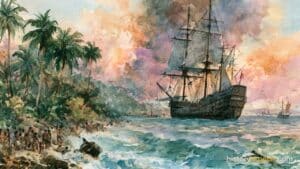
Christopher Columbus’s third voyage to the New World began in 1498, with the goal of finding a passage to Asia and to grow the Spanish colonies. During this journey, he became the first European to reach the South American mainland, near present-day Venezuela.
CHRISTOPHER COLUMBUS – FOUR VOYAGES TO THE NEW WORLD
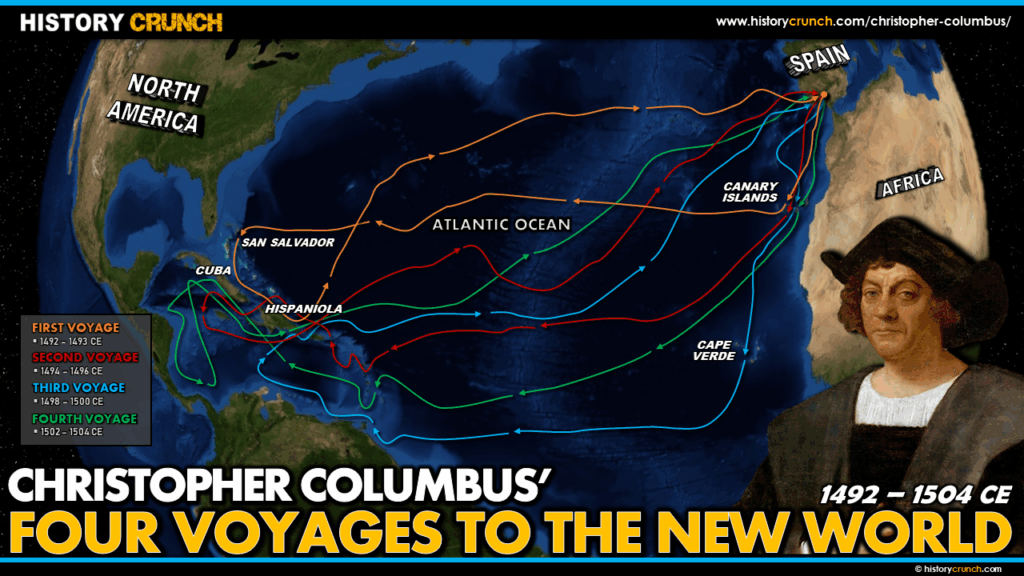
Christopher Columbus carried out four voyages to the New World between 1492 and 1503. These four voyages are incredibly significant in the history of the world, as they mark the beginning of European exploration in the New World and led to other major events, such as: the Columbian Exchange, and the mass migration of European settlers to the Americas. All four voyages were financed by the Spanish monarchs and caused other powerful European nations such as England, France and Portugal to carry out their own explorations of the New World.
COLUMBUS’ THIRD VOYAGE – LEAVING SPAIN
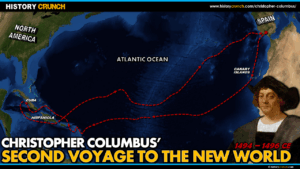
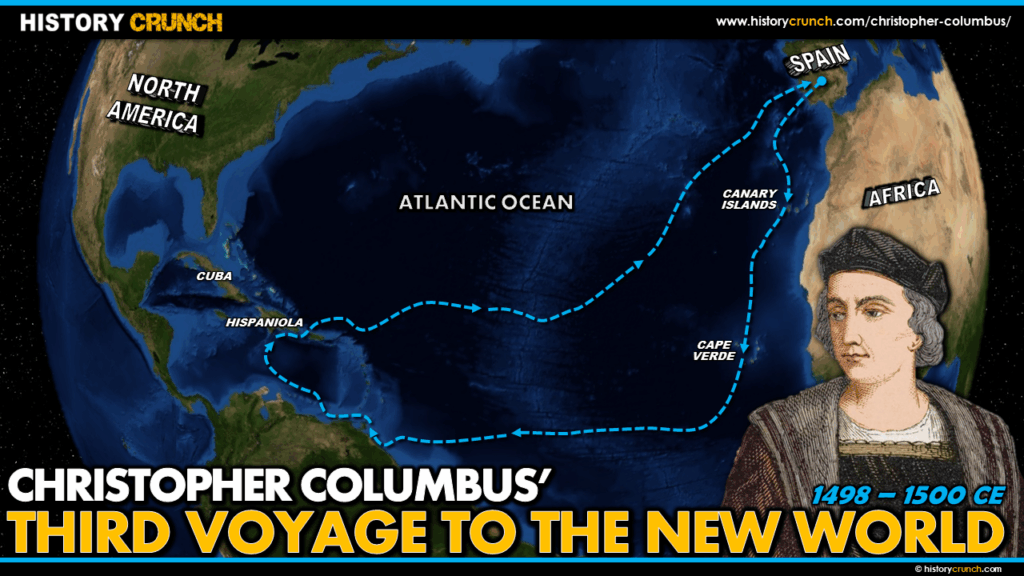
Columbus began his third voyage to the New World on May 30th, 1498 when he left Spain with six ships. Three of the six ships immediately sailed to Hispaniola with supplies for the settlers who remained on the island. However, Columbus took the other three ships with him in order to explore a more southerly route than he had ever previously taken. He did this in hopes of finding different islands and the location of mainland Asia which he believed was close in location. This was due to the fact that he believed that he had found the Indian Ocean and was in close proximity to China.
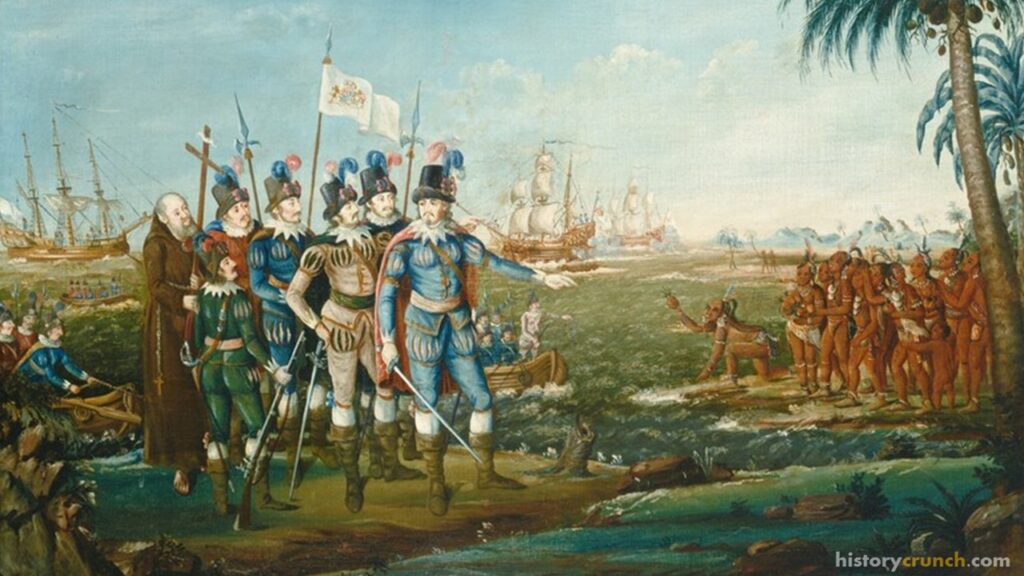
Columbus’ sailing across the Atlantic Ocean on the third voyage was noted for a period of several days in which his ships were caught in the doldrums (windless timeframe) and unable to progress forward to the New World. The winds returned and On July 31st, 1498, Columbus and his three ships arrived in the New World in a location that was further south than he had ever been before. In fact, Columbus arrived at the modern island of Trinidad, which Columbus named due to the presence of three hills he noticed on the island. Furthermore, Columbus made landfall on Trinidad on August 2nd and have his supplies and water replenished. In the days that followed, Columbus explored the southern coast of Trinidad and made his way east and north towards mainland South America.
COLUMBUS’ THIRD VOYAGE – ARRIVAL IN THE NEW WORLD
Columbus first made contact with the South American continent at Paria Peninsula, which is located in northern Venezuela and is positioned just south of the Caribbean Sea. While there he noticed a freshwater river that delivered a great deal of water into the ocean. As such, he reasoned that the landmass from which the river originated must be quite large. In fact, he questioned whether or not it was the original location of the Garden of Eden that was discussed in the Holy Bible.
Soon after, he left the area and sailed in a relatively direct route for Hispaniola, the island in the Caribbean that he had established settlements on in his two earlier voyages. Some historians suggested that he did this due to poor health that he was suffering from at the time. Regardless, upon arriving in Hispaniola on August 19th, he discovered that the settlers at the La Isabela settlement were actively working to rebel against him.
Columbus’ goal in establishing the new settlement was to find resources in the region such as precious metals. However, the settlement of La Isabela did not last long due to its poor placement. For instance, it was hit hard by hurricanes in both 1494 and 1495. As well, the Spanish settlers struggled to survive at the encampment and became upset with the lack of previous metals such as gold in the area. As a result, Columbus had to contend with growing anger and distrust among the settlers. While he was gone, several of the settlers had begun to organize a revolt against his leadership.
COLUMBUS’ THIRD VOYAGE – COLUMBUS DISGRACED
As a result of the conflict, the Spanish Crown sent Francisco de Bobadilla, who arrived on the island of Hispaniola in 1500. Bobadilla effectively replaced Columbus as Governor of the Spanish lands in the New World, and Columbus was disgraced amid accusations of his tyrannical and unjust rule. For instance, when Bobadilla arrived at Hispaniola, he heard complaints against Columbus’ rule, including the methods used by Christopher himself and his two brothers (Bartholomew and Diego) which had ruled over Hispaniola in Christopher Columbus’ absence. As part of his report to the Spanish Crown, Bobadilla stated that he heard claims of the use of torture and mutilation to govern. Much of this brutal treatment was directed at the indigenous peoples of the island.
The report included firsthand accounts from both supporters and enemies to Columbus and discussed some of the many different brutal acts that he used. For example, he supposedly ordered to nose and ears to be cut off of a man found guilty of stealing. As well, according to the report, Columbus’s brother Bartholomew ordered a woman to have her tongue cut out when she spoke badly about Columbus. Finally, the document highlighted the brutal killing and mutilation of the indigenous peoples on the island, which he did in order to gain control. This is likely one of the reasons for the massive depopulation of the island at the time. For example, some historians have reported that the Taino indigenous population on the island of Hispaniola was depopulated by as much as two-thirds by 1496, just 4 years after the arrival of Columbus to the island on his first voyage.
COLUMBUS’ THIRD VOYAGE – RETURN TO SPAIN
All of these actions, led to the arrest of the three Columbus brothers and they were returned to Spain in October of 1500. Upon arriving they were put in chains and imprisoned. With that said, he was soon released, however he lost his title as Governor. He would return one more time to the New World on his fourth voyage.