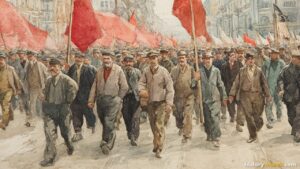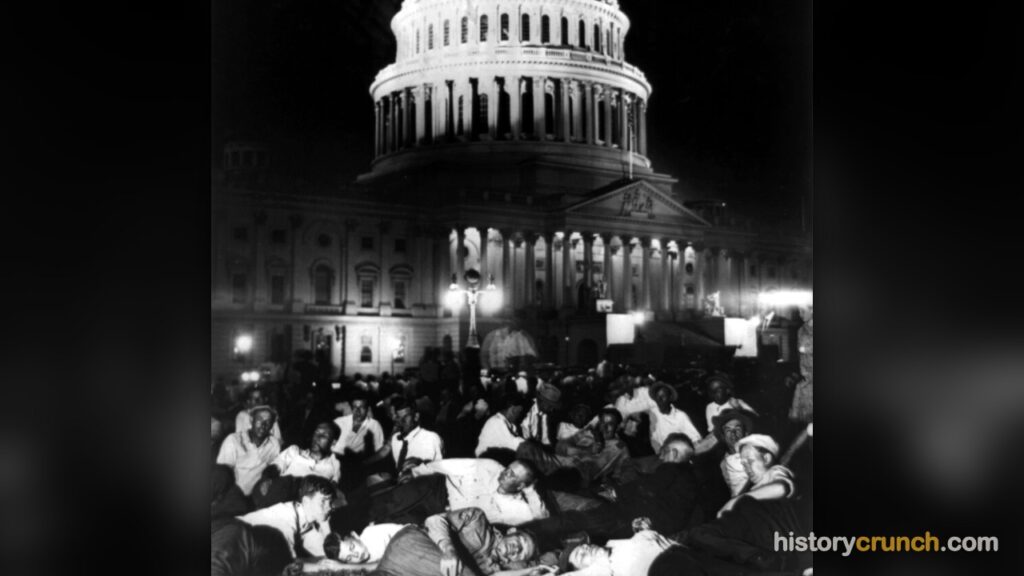
The Bonus Army March of 1932 was one of the most important protest movements of the Great Depression, and it dramatically exposed the desperation felt by millions of Americans during those years. In the spring and summer of 1932, thousands of World War I veterans and their families traveled to Washington, D.C., to demand early payment of a cash bonus the government had promised them for their wartime service. Their peaceful protest ended in a violent clash with the United States Army, and the shocking images that resulted damaged public trust in President Herbert Hoover.
The term “Bonus Army” refers to the large group of former soldiers who gathered in the nation’s capital to lobby Congress for immediate payment of their promised benefits. These veterans called themselves the “Bonus Expeditionary Force,” a nickname that echoed the American Expeditionary Force in which many of them had served during World War I. They were not a formal military unit but rather a movement of unemployed and impoverished citizens who believed the government owed them money they urgently needed.
What Was the Great Depression?
The Great Depression was a severe worldwide economic downturn that occurred primarily during the 1930s. The Great Depression was a significant event in world history and was of particular importance to American history. It was a worldwide economic recession that occurred primarily during the 1930s. A recession is a term that refers to a general economic downturn resulting in high levels of unemployment and a loss in consumer spending.
Historians have identified several causes of the Great Depression, including the stock market crash of 1929, the buying of stocks on margin, a wide income gap between the wealthy and the poor, a drop in consumer spending, and the failure of banks to survive the crisis. When the stock market collapsed in October of 1929, it wiped out savings, closed businesses, and threw millions of people out of work. For more detail on how this economic disaster began, readers can visit the article on the Causes of the Great Depression.
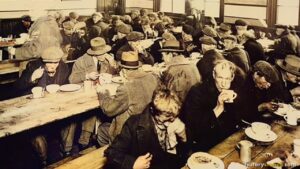
By 1932, the Depression had reached its lowest point, and unemployment continued to climb toward twenty percent of American workers. Families across the country lost their homes and were forced to build makeshift shacks in shantytowns. These communities were nicknamed “Hoovervilles” after President Herbert Hoover, who was widely blamed for failing to end the crisis. It was in this atmosphere of hardship and anger that the Bonus Army movement took shape.
What Was the Bonus and Why Did Veterans Want It?
The story of the bonus began years before the march itself. In 1924, Congress rewarded veterans of World War I with certificates redeemable in 1945 for $1,000 each. This program was known as Adjusted Compensation, and the payment was meant to make up for the low wages soldiers had earned while serving in the war compared to workers who stayed home.
The catch was that the bonus could not be collected right away. Adjusted Compensation certificates, or bonuses, had been approved by Congress in 1924 but were not scheduled for full payment until 1945. In other words, veterans had to wait twenty years to receive the full value of their certificates.
Some veterans bitterly called the payment the “Tombstone Bonus,” because they feared many of them would die before 1945 ever arrived. When the Great Depression struck, waiting more than a decade for the money felt impossible. In reality, many veterans had lost their jobs and homes and needed the cash immediately to feed their families.
In early 1932, Texas Congressman Wright Patman introduced a bill in Congress that would allow veterans to receive the full value of their bonus right away instead of waiting until 1945. Patman was himself a war veteran, and his proposal gave the struggling former soldiers a clear goal. More specifically, they hoped that if enough of them came to Washington in person, Congress would be pressured into passing the bill.
Who Led the Bonus Army and How Did the March Begin?
The movement began far from Washington, in the Pacific Northwest. In the spring of 1932, a group of 300 unemployed veterans set out for Washington from Portland, Oregon, under the command of Walter A. Waters, a former Army sergeant. Waters was an out-of-work cannery worker who convinced his fellow veterans to travel across the country and demand their money in person.
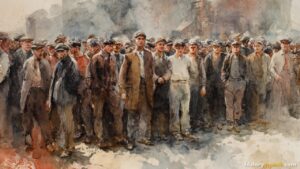
The journey was long and difficult, and the men had little money. Led by Walter Waters of Oregon, the so-called Bonus Expeditionary Force set out for the nation’s capital. Hitching rides, hopping trains, and hiking finally brought the Bonus Army, now 15,000 strong, into the capital in June 1932. As word of the march spread, veterans from all over the country decided to join, and the movement grew far larger than anyone expected.
Waters organized the veterans in a military style to keep order and to earn public sympathy. Waters, organizing the various encampments along military lines, announced that there would be “no panhandling, no drinking, no radicalism,” and that the marchers were simply “going to stay until the veterans’ bill is passed.” Estimates of the crowd size vary widely, but by the end of June the movement had swelled to more than twenty thousand people, including many wives and children.
Where Did the Bonus Army Camp in Washington?
Because the veterans had almost no money, they built temporary shelters wherever they could find space. Some were housed in a group of abandoned government buildings, and others created an encampment consisting of more than two thousand tents and lean-tos across the Anacostia River at Anacostia Flats, in the southeast of Washington, D.C.. The camp at Anacostia Flats became the largest and most famous of these settlements.
The Anacostia camp was more than just a collection of shacks. The Bonus Army reached Washington on June 15th, 1932 and set up a shantytown on the Anacostia Flats, across the Anacostia River from the Capitol District. They built shelters out of scavenged materials and established what is generally described as a vibrant, well ordered community. The veterans set up streets, held meetings, and tried to keep the camp clean and organized despite having almost nothing.
For a time, the situation remained peaceful, in part because of the sympathy of the local police chief. The government also did its part, as Washington Police Superintendent Pelham D. Glassford treated his fellow veterans with considerable respect and care. Glassford was himself a war veteran and did his best to keep the peace between the marchers and the government.
Why Did Congress Reject the Bonus Bill?
The entire purpose of the march was to convince Congress to pass Wright Patman’s bill for immediate payment. For a while, the presence of thousands of veterans camped in the capital did put real pressure on lawmakers. The House of Representatives eventually passed a version of the bonus bill, which gave the marchers hope.
However, the decisive vote came in the Senate, and it did not go the veterans’ way. When the Senate rejected their demands on June 17, most of the veterans dejectedly returned home. Many lawmakers argued that the government could not afford such a large expense during the Depression, when the federal budget was already strained.
President Hoover strongly opposed the bill as well, believing that paying the bonus early would harm the economy and unbalance the budget. In fact, the government offered to loan veterans money for train tickets home, charged against their bonus certificates, so that they could leave the city. Even so, thousands of veterans stayed behind, since many of them had no jobs and no homes to return to.
What Happened on July 28th, 1932?
By late July, the government grew impatient with the veterans who remained. Roughly ten thousand people were still in the city, and officials worried about health hazards and the abandoned buildings that were scheduled for demolition. On the morning of July 28th, 1932, officials attempted to evict veterans from buildings near Pennsylvania Avenue, and the situation quickly turned violent.
When veterans clashed with the local police, two of the former soldiers were shot. Hoover ordered the eviction of the protesters on July 28, 1932, precipitating a violent clash between the marchers and the police, during which two veterans were wounded and later died. After this bloodshed, President Hoover ordered the United States Army to clear the marchers from the city.
The operation was led by Army Chief of Staff General Douglas MacArthur, who was convinced that the movement was influenced by communists who wanted to threaten the government. MacArthur led federal troops from the nearby military bases at Fort Myer and Fort Washington against the Bonus Army. One unit was commanded by Major George S. Patton, who like MacArthur would go on to be one of the leading military figures of World War II. Backed by cavalry and even some tanks, the troops marched with fixed bayonets and cleared downtown Washington, D.C., of the protesting veterans. Another young officer present that day was Major Dwight D. Eisenhower, who would later become a famous general and president.
The soldiers used tear gas to drive the veterans and their families out of their shelters. Then, they proceeded to the settlement at Anacostia Flats, forcing the veterans and their families to evacuate and leveling the encampment. The camp was set on fire, and by the next morning the shantytown at Anacostia Flats had been destroyed. Although no one died in the military action itself, many people were injured, and the sight of soldiers attacking unarmed veterans shocked the nation.
Significance of Bonus Army March of 1932
The Bonus Army March failed to win the immediate payment the veterans had demanded, but it had a powerful effect on American politics. The Bonus Army movement ended in failure, but in crushing the veterans President Hoover further diminished his already low standing in the public eye. Photographs and newsreels of the burning camp and the retreating veterans spread across the country and turned many Americans against the president.
As stated above, the timing of the event was especially important, since it happened only months before the presidential election of 1932. The Bonus March was a turning point in the public’s perception of Hoover’s handling of the Great Depression and contributed to his defeat in the 1932 presidential election. That November, Franklin D. Roosevelt defeated Hoover in a landslide and went on to launch the New Deal.
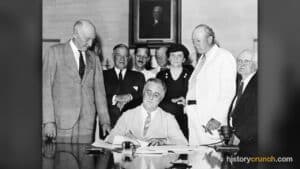
The march also left a lasting mark on how the country treated its veterans and its citizens. In 1936, Congress finally passed a law over Roosevelt’s veto that paid the bonus years ahead of schedule. Later, the memory of the Bonus Army helped inspire the G.I. Bill during World War II, which gave returning soldiers education and housing benefits. In this way, a protest that ended in failure helped shape better treatment for future generations of veterans.
Frequently Asked Questions
What Was the Bonus Army March of 1932?
The Bonus Army March of 1932 was a protest in which thousands of World War I veterans gathered in Washington, D.C., to demand early payment of a promised cash bonus. Calling themselves the Bonus Expeditionary Force, the veterans were struggling during the Great Depression and needed the money to survive. Their protest was broken up by force when the United States Army cleared their camps in late July.
Why Did the Veterans Want Their Bonus Early?
The veterans wanted their bonus early because the Great Depression had left many of them jobless, homeless, and unable to feed their families. The bonus was originally scheduled to be paid in 1945, which felt impossibly far away to men who needed help immediately. Some bitterly called it the “Tombstone Bonus,” fearing they would die before ever collecting it.
Who Was the Leader of the Bonus Army?
The leader of the Bonus Army was Walter W. Waters, a former Army sergeant from Oregon who had lost his job as a cannery worker. He first organized a small group of about three hundred veterans to travel from Portland to Washington. Waters insisted that the marchers stay peaceful and orderly in order to win public support for their cause.
Who Ordered the Army to Remove the Bonus Army?
President Herbert Hoover ordered the United States Army to remove the remaining veterans after violence broke out with local police. The operation was carried out by General Douglas MacArthur, who used cavalry, tanks, and tear gas to clear the camps. MacArthur went further than his orders required and destroyed the main camp at Anacostia Flats.
Did the Bonus Army Ever Get Their Money?
Yes, the veterans eventually received their bonus, but not in 1932. In 1936, Congress passed a law that paid the bonus years ahead of the original 1945 date, even though President Roosevelt opposed it. The struggle also helped lead to the G.I. Bill of 1944, which provided far greater benefits to veterans of World War II.
Cite This Article
To cite this article as a source, use one of the formats below.
MLA: Millar, B. “Bonus Army March of 1932: A Detailed Summary.” HistoryCrunch, 14 August 2026, https://historycrunch.com/bonus-army-march-of-1932/.
APA: Millar, B. (2026). Bonus Army March of 1932: A Detailed Summary. HistoryCrunch. https://historycrunch.com/bonus-army-march-of-1932/
Chicago: Millar, B. “Bonus Army March of 1932: A Detailed Summary.” HistoryCrunch. August 14, 2026. https://historycrunch.com/bonus-army-march-of-1932/
Sources
- Eric Foner, Give Me Liberty!: An American History.