Ancient Roman provinces were the administrative regions that allowed Rome to govern the enormous territory it conquered outside of Italy, and they were one of the most important reasons the Roman world held together for so many centuries. As Rome grew from a single city into a power that controlled lands around the entire Mediterranean Sea, it needed a way to organize, defend, and tax these distant regions. The province, ruled by a Roman-appointed governor, became the answer. From Sicily in the west to Syria in the east, the provinces formed the framework that turned a collection of conquests into a lasting empire and a key part of the history of Ancient Rome.
A Roman province was a defined territory outside of Italy that was placed under the direct control of the Roman state and governed by an official sent from Rome. Each province had set borders, a fixed set of rules, and a required amount of tribute, which was a payment in money or goods owed to Rome. The word province comes from the Latin word provincia, which originally meant a job or task assigned to a Roman official rather than a piece of land. Over time the word came to mean the conquered regions themselves.
What Was Ancient Rome?
Ancient Rome was one of the most powerful civilizations in world history. It began as a small city-state on the Italian peninsula and grew over many centuries into a vast empire that stretched from Britain in the northwest to Egypt in the southeast. At its height, Roman rule covered much of Europe, North Africa, and parts of the Middle East.
Historians usually divide Roman history into three periods. The first was the Roman Kingdom, which lasted from the traditional founding of the city in 753 BCE until 509 BCE. Next came the Roman Republic, when the city was governed by elected officials rather than a king, lasting from 509 BCE to 27 BCE. The final period was the Roman Empire, which began when Augustus became the first emperor in 27 BCE and lasted in the west until 476 CE.
The provinces belong mainly to the Republic and the Empire. In fact, Rome began creating provinces during the Republic as its armies pushed beyond Italy, and it continued to reshape them throughout the imperial period. Understanding the provinces is therefore a way of understanding how Rome managed to hold power over so many different peoples for so long.
How Did the First Roman Provinces Begin?
The first Roman provinces grew directly out of war. During the early and middle Republic, Rome was mostly focused on controlling the Italian peninsula, and the word provincia simply meant a task handed to a magistrate, such as leading an army or managing the treasury. This changed as Rome expanded across the Mediterranean and gained interests in far-off lands.
The turning point came during the conflict with the North African city of Carthage. When Rome won control of the island of Sicily at the end of the First Punic War in 241 BCE, it moved from attacking to defending. Rome needed to keep watch over its new interests there, so an official was sent to look after them, and Sicily became the first Roman province.
More territory soon followed. The islands of Sardinia and Corsica became a province in 238 BCE, and after the Second Punic War, Rome created two provinces in Hispania, the region that is modern Spain and Portugal, in 197 BCE. In 146 BCE, after the total destruction of Carthage, its former lands in North Africa were organized into the province of Africa. Each new conquest created the recurring task of defending and governing the land that had been won.
How Were the Provinces Governed?
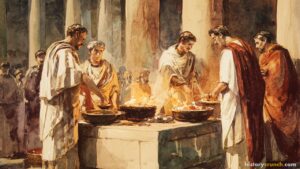
During the Republic, each province was ruled by a governor appointed from Rome, usually a former consul or former praetor, which were the highest offices in the Roman government. When a province was created, the Senate drew up a special charter, sometimes called the lex provinciae, or provincial law. This charter set out the borders of the province, the towns it contained, and the amount of tribute the people owed.
A governor had enormous power. He commanded the soldiers stationed in his province, acted as the chief judge, and oversaw the collection of taxes. He was usually helped by a small staff, including a quaestor who managed finances and a few lieutenants called legati. Because governors ruled far from Rome and served only a year or two, they often had little supervision.
This lack of oversight created serious problems. Many governors used their position to enrich themselves through extortion and abuse, squeezing the people they were supposed to protect. In reality, the temptation to grow rich quickly in a distant province was one of the weaknesses of the Republican system, and complaints about greedy governors were common.
How Did Augustus Change the Provinces?
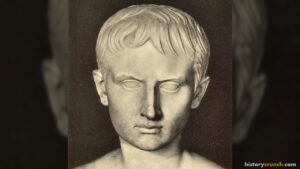
When Augustus became the first Roman emperor in 27 BCE, he reorganized the provincial system to bring it under firmer control. He divided the provinces into two main types. Senatorial provinces, which were generally peaceful and closer to Rome, continued to be governed by officials chosen by the Senate. Imperial provinces, which were often newly conquered, near the frontiers, or in need of soldiers, were placed under the direct control of the emperor.
This division was clever. The imperial provinces were exactly the ones that held most of the army, so by keeping them under his own command, Augustus made sure the emperor controlled the legions. He also appointed financial officials called procurators to look after provincial money, which helped reduce the abuse that had been common under the Republic.
Egypt was treated as a special case. Because it was so wealthy and produced huge amounts of grain, Augustus made it his personal possession and placed it under a governor of only equestrian rank, a step below the senatorial class. More specifically, no senator was even allowed to enter Egypt without the emperor’s permission, a rule meant to stop any rival from using the province’s riches to challenge imperial power.
What Was Life Like in the Provinces?
Life in the provinces gradually became more Roman over time, a slow process often called Romanization. Roman roads, aqueducts, public baths, forums, and amphitheaters were built across the empire, giving cities from Britain to Syria a recognizably Roman appearance. As stated above, local peoples kept many of their own customs, but they increasingly adopted Roman law, Latin or Greek language, and Roman styles of building and city planning.
Religion often blended together rather than being replaced. Roman gods were frequently matched with local deities, which allowed diverse populations to take part in Roman public worship while keeping their own traditions. Many great cities of the ancient world, such as Antioch in Syria and Alexandria in Egypt, thrived as busy centers of trade, learning, and administration under Roman rule.
The provinces were also the economic engine of the empire. Egypt and North Africa shipped enormous amounts of grain to feed the population of Rome, while the mines of Hispania produced gold and silver that funded armies and buildings. For instance, provinces like Gaul, in modern France, supplied farm goods and trade revenue, and frontier provinces like Britannia provided metals such as tin and lead.
How Did the Provincial System Change in the Later Empire?
By the time of the emperor Trajan in 117 CE, the Roman Empire had reached its greatest size, and there were roughly forty provinces outside of Italy. The empire now spanned three continents, encircling the Mediterranean Sea and reaching into Europe, North Africa, and the Middle East. Managing such a huge area put steady pressure on the provincial system.
Major changes came under the emperor Diocletian, who ruled from 284 to 305 CE. He broke the provinces into smaller units to make them easier to manage and control, roughly doubling their number. He then grouped these smaller provinces into larger divisions called dioceses, which were in turn grouped into even larger regions called prefectures. In this way, the province went from being the largest unit of Roman territory to a lower level in a tall administrative ladder.
These reforms helped hold the empire together during difficult years, but they could not prevent its eventual decline in the west. As Roman power weakened in the 400s CE, Germanic peoples moved into former provincial lands and set up their own kingdoms. When the last western emperor was removed in 476 CE, many of these new kingdoms still kept pieces of the Roman provincial system they had inherited.
Significance of Ancient Roman Provinces
The provinces were the framework that made the Roman Empire possible. Without a system for governing, defending, and taxing conquered lands, Rome could never have controlled territory stretching across three continents for so many centuries. In reality, the provinces turned scattered military victories into a single connected empire.
The provinces also spread Roman culture far and wide. Through Romanization, Latin, Roman law, Roman architecture, and Roman ideas about city life took root from Britain to the Middle East. Many great modern cities began as Roman provincial towns, including London, Paris, and Vienna, and their street plans sometimes still follow the old Roman grid.
Finally, the way Rome organized its provinces left a lasting mark on later history. The idea of dividing a large state into governed regions, each with a governor, laws, and taxes, influenced the empires and kingdoms that came after Rome. In this way, the Roman provinces shaped not only the ancient world but also the political geography of Europe and the Mediterranean for centuries to come.
Frequently Asked Questions
What was the first Roman province?
Sicily was the first Roman province, created after Rome won the island at the end of the First Punic War in 241 BCE. The island sat in a key position for controlling trade and shipping in the western Mediterranean, which made it valuable enough for Rome to guard permanently. Its capital was based at the important city of Syracuse.
How many provinces did the Roman Empire have?
The number changed constantly as Rome grew and reorganized its territory, but around the year 117 CE there were roughly forty provinces outside of Italy. The total later grew much larger when Diocletian split provinces into smaller pieces near the end of the 200s CE. Provinces were regularly added, divided, renamed, or combined depending on who was in power.
What is the difference between a senatorial and an imperial province?
Senatorial provinces were governed by officials chosen by the Roman Senate, while imperial provinces were controlled directly by the emperor. Senatorial provinces were usually peaceful and close to Rome and needed few soldiers, whereas imperial provinces were often near the frontiers and held most of the army. This system let the emperor keep command of the legions while leaving calmer regions to the Senate.
Why was Egypt a special Roman province?
Egypt was treated as the personal property of the emperor rather than a normal province because of its enormous wealth and grain supply. Augustus feared that a powerful senator ruling Egypt could use its resources to challenge him, so he placed it under a lower-ranking governor and barred senators from entering without permission. Egyptian grain was essential for feeding the huge population of the city of Rome.
What did Roman governors actually do?
A Roman governor was the top official in a province and held military, legal, and financial authority all at once. He commanded the troops stationed there, served as the highest judge in local disputes, and oversaw the collection of taxes and tribute. Because governors ruled far from Rome with little supervision during the Republic, some abused their power to enrich themselves, a problem that later emperors tried to fix.
Cite This Article
To cite this article as a source, use one of the formats below.
MLA: Millar, B. “Ancient Roman Provinces: A Detailed Summary.” HistoryCrunch, 7 July 2026, https://historycrunch.com/ancient-roman-provinces/.
APA: Millar, B. (2026). Ancient Roman Provinces: A Detailed Summary. HistoryCrunch. https://historycrunch.com/ancient-roman-provinces/
Chicago: Millar, B. “Ancient Roman Provinces: A Detailed Summary.” HistoryCrunch. July 7, 2026. https://historycrunch.com/ancient-roman-provinces/
Sources
- The Met (Heilbrunn Timeline) — Roman art
- Fordham Ancient History Sourcebook