The Zimmerman Telegram was a significant event in the history of the United States, especially in relation to World War I. In short, the Zimmerman Telegram was a communication from Germany to Mexico in January of 1917 that proposed a military alliance between Germany and Mexico. Essentially, Germany was contacting Mexico in hopes that it would attack the United States. This was an important event, because alongside German submarine warfare in the Atlantic Ocean, it was a major reason for the United States’ eventual entry into the fighting of World War I.
 FactsthatCrunch
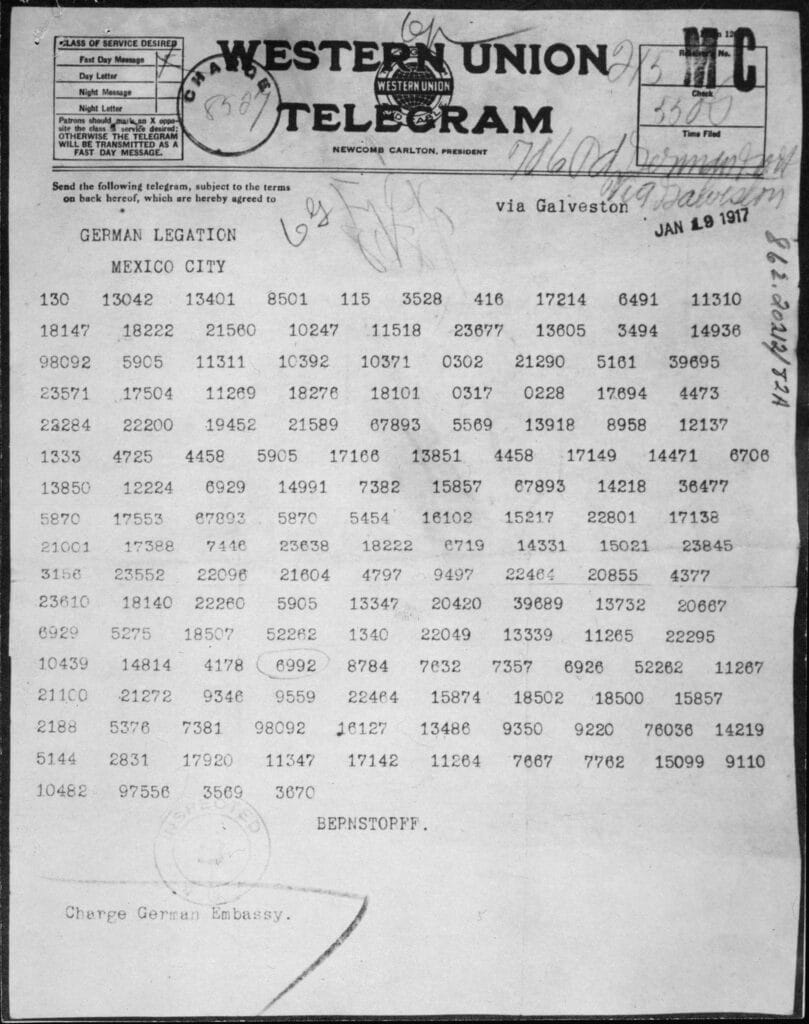
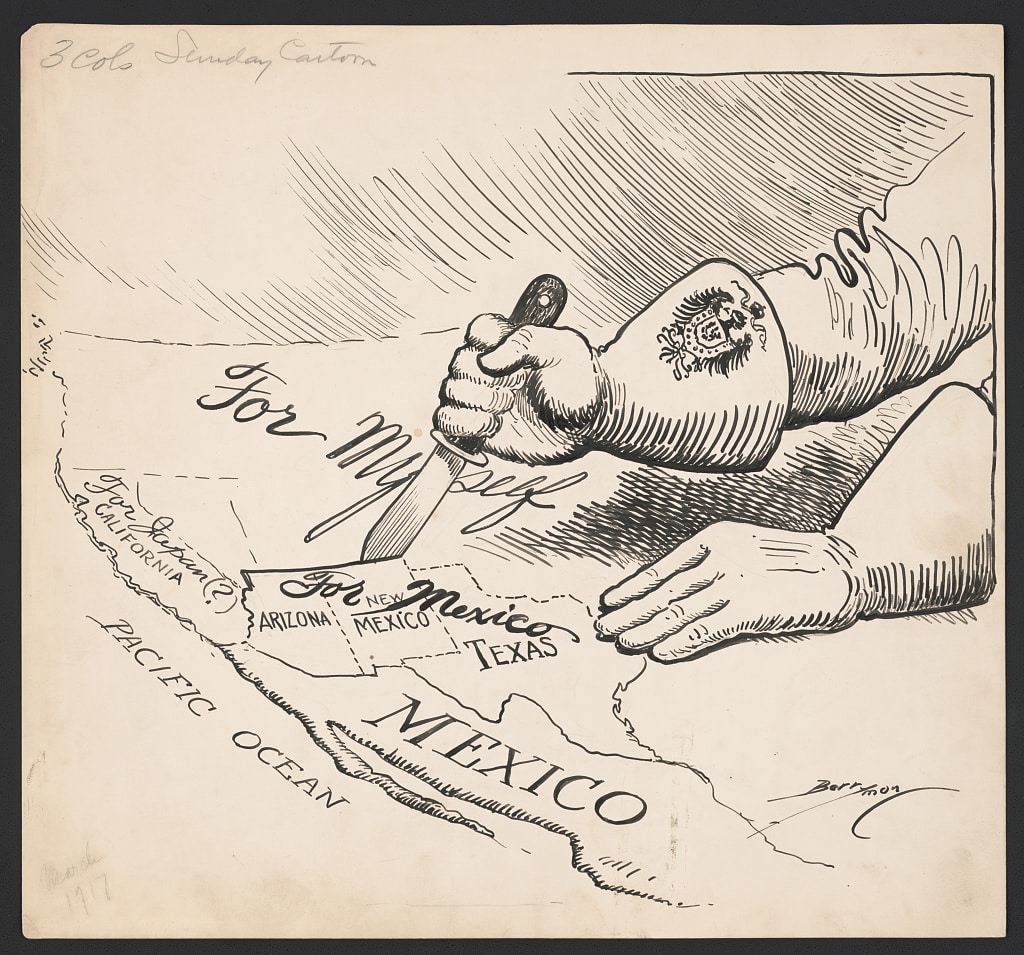
In January 1917, German foreign secretary Arthur Zimmermann sent a secret coded telegram to the German ambassador in Mexico, proposing that Mexico attack the United States in exchange for German financial and military support and the return of Texas, New Mexico, and Arizona.
The Zimmermann Telegram, combined with Germany's unrestricted submarine warfare in the Atlantic, pushed the United States to abandon its neutral position and join the Allied Powers in World War I. The Allied nations were struggling on the Western Front and badly needed American support.
What Led to the Zimmerman Telegram?
World War I was a major historical event in the first part of the 20th century. It was a notorious conflict because of the system of alliances that turned a relatively small crisis into a devastating war. For instance, the war began in 1914 following the assassination of Austrian Archduke Franz Ferdinand, which resulted in the July Crisis. Then a series of long-term causes combined that led to the outbreak of World War I. With that said, for the early portion of the war, the United States remained largely uninvolved in the mostly European conflict. For instance, from 1914 until 1917 the United States did not participate in any active fighting of World War I. Instead, the major battles of the war were waged by the European powers and their colonies in both the Western Front and Eastern Front. It should be noted that while the United States did not participate in any active fighting during the early years of World War I, they did actively trade with the Allied Powers.

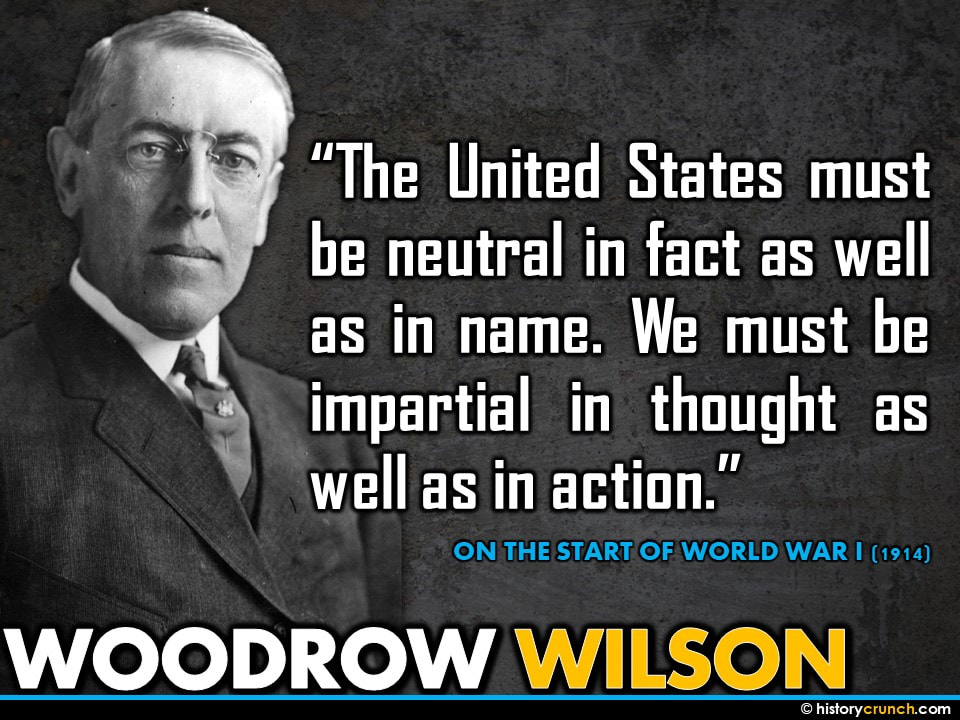
When World War I began in 1914, Woodrow Wilson was the President of the United States. The neutralityA country’s choice to stay out of a war and not take sides. of the United States in World War I was a major factor of Wilson’s first term as president. In fact, when he ran for re-election in 1916, he campaigned on the idea that he kept the country out of the fighting of World War I. In the election, Wilson narrowly defeated the Republican candidate Charles Evans Hughes with 49 percent of the popular vote.
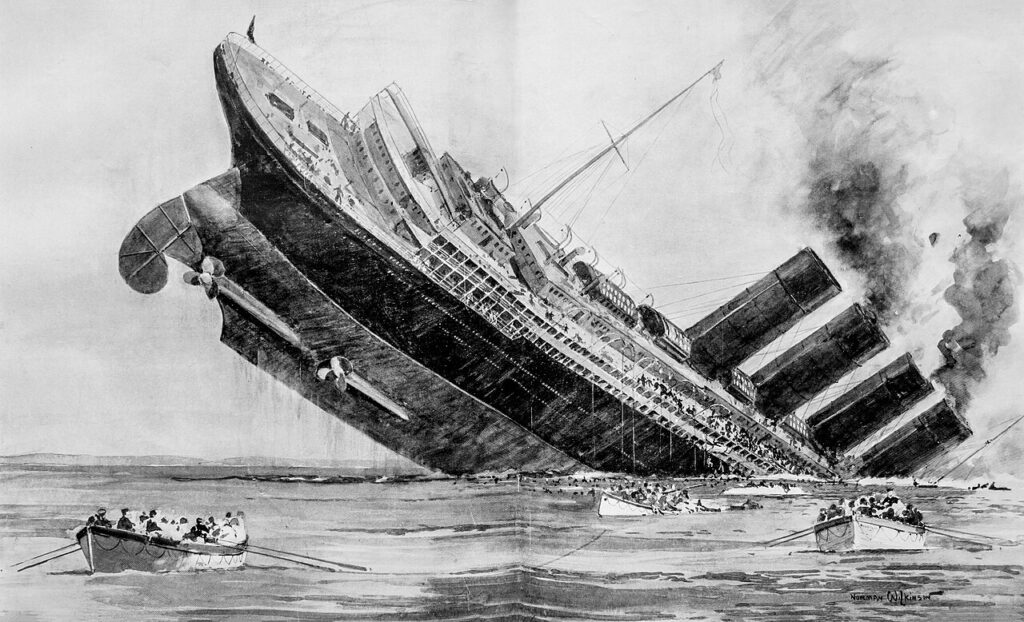
American neutrality in World War I was eventually tested at the start of Wilson’s second term as president. For instance, in response to the British naval blockadeUsing ships or forces to prevent supplies from reaching an enemy country. of Germany, the German Empire began carrying out submarine warfare against ships in the north Atlantic Ocean. For the Germans this was important as they hoped to stop supplies from reaching Britain. Unfortunately, German submarines were responsible for the sinking of several ships which had American citizens on them. The most famous example of this was the sinking of the British ocean liner RMS Lusitania in May of 1915. In total, the German attack on the Lusitania killed 1,198 people including 128 American citizens. Obviously, this created anger in the United States and forced Wilson to deal with the growing crisis. In 1917, the German Empire again began carrying out unrestricted submarine warfareGermany’s policy of attacking any ship, including American ones, without warning in the Atlantic. and was one of the main reasons that the United States eventually joined the war effort on the side of the Allied Powers.
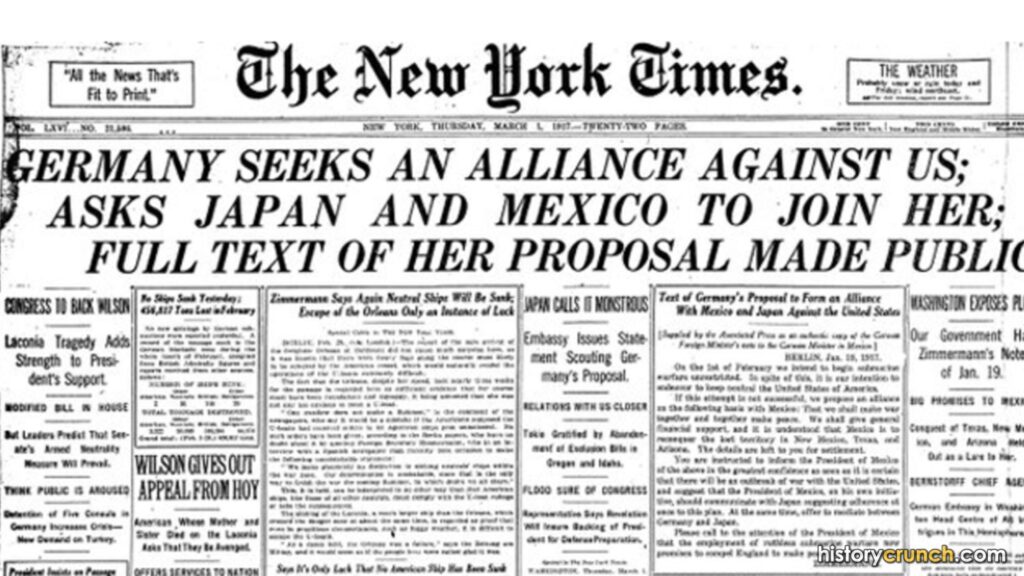
In fact, in February of 1917, it was discovered that Germany had been in contact with Mexico in hopes of igniting a conflict between Mexico and the United States. This was known as the Zimmerman Telegram, and when combined with Germany’s submarine warfare, it pushed Wilson to eventually declare war against Germany. As such, historians consider the Zimmerman Telegram a significant cause of the United States’ entry into World War I.
FactsthatCrunchMany students believe the United States was fully neutral before World War I, staying out of the conflict in every way from 1914 until it declared war in 1917.
While the United States did not send troops into combat before 1917, it was not truly neutral in practice. Throughout the war, the United States actively traded with the Allied Powers, supplying them with goods and materials while Germany faced a British naval blockade. This economic relationship meant American interests were already tied to an Allied victory before any formal declaration of war.
What Was the Zimmerman Telegram?
As stated above, the Zimmerman Telegram was a significant event as it was an important factor in the United States’ eventual entry into World War I. This now famous letter was written by German foreign secretary Arthur Zimmermann and was intended for the German ambassador to Mexico. It was transmitted in a coded form to Mexico in January of 1917, during the First World War. The reason it became famous is because the telegram was interceptedSecretly captured a message meant for someone else before it reached them. by the British and their code breakers were able to decryptTo break a secret code and figure out the hidden meaning of a message. the message and understand its contents. Initially, the British withheld this information from the United States in order to keep it a secret that they could accurately read the German encryption. Eventually, the British made the decision that it was worth it to inform the Americans as they believed the contents of the message would lead the United States to enter the war and provide the British with needed aid. In fact, at the time of the Zimmerman Telegram, the Allied Nations of Europe were struggling with the stalemate conditions of the trenches on the Western Front. As such, the entry of the United States into the fighting of the war would be a huge form of help to the Allied cause.
The contents of the Zimmerman Telegram are important because the German administration was trying to make a deal with Mexico in the event that the United States were to enter World War I. Essentially the German leadership suggested an offer that if the United States entered, the Germans would both financially and militarily support the Mexicans if they mounted an attack on America in order to force them into a two front warFighting enemies attacking from two different directions at the same time, splitting your forces. and dissuade them from concentrating on the Germans. In return, Mexico would be free to annexTo take over and add another country’s land to your own territory. the territory that was ‘lost’ from earlier conflicts. These territories included: Texas, New Mexico, and Arizona. Another major benefit for Mexico entering the war was that it could be used to convince the Japanese to join the German cause and have another American opponent in the Pacific.
What Were the Impacts of the Zimmerman Telegram?
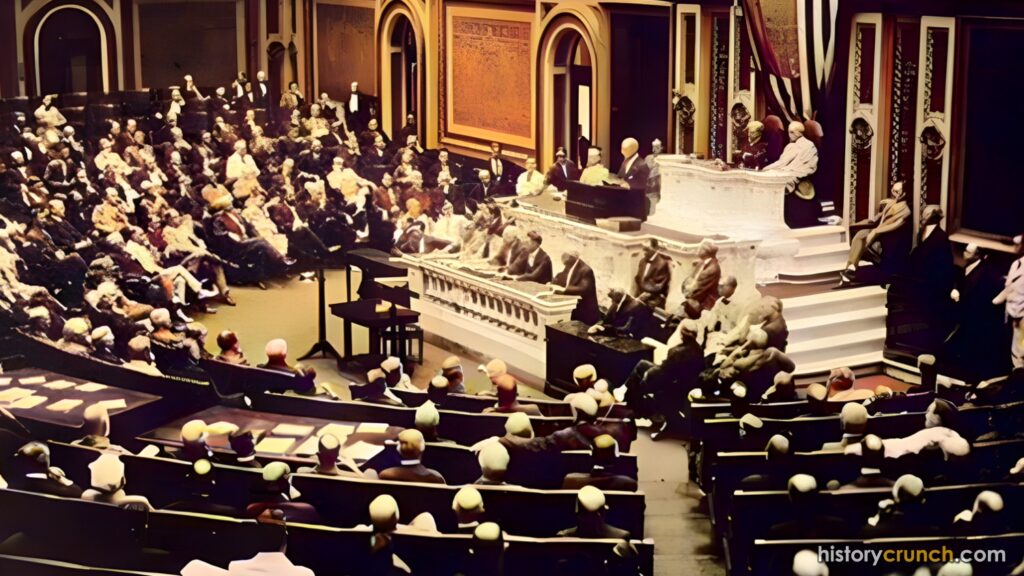
Obviously, the discovery of the Zimmerman Telegram caused hostility between the United States and the Germans, which was a relationship that was already tense. Earlier in World War I, Germany had continued with their unrestricted submarine warfare, which they used to attack British, other Allied and American ships in the Atlantic Ocean. Even though President Woodrow Wilson had recently won re-election with the slogan of ‘He kept us out of the war’, the combination of these two events made it clear that there was no choice but for the United States to enter the war. On April 2nd, 1917, President Wilson went before Congress to request a declaration of war against Germany. According to the President, the actions by the Germans gave them no choice. Two days later, the United States Senate voted in support of the President’s request and the House agreed two days after that. The United States was at war and joined the Allied Powers against the Central Powers.
Explore World War I · 1914 – 1918
Keep exploring World War I with these History Crunch resources.
Key Vocabulary
Neutrality
Blockade
Unrestricted submarine warfare
Intercepted
Decrypt
Annex
Two front war
Frequently Asked Questions
What was the Zimmerman Telegram?
The Zimmerman Telegram was a secret German message sent to Mexico in January of 1917. In it, Germany asked Mexico to attack the United States if America joined World War I. Germany offered money and military help in return, and promised Mexico could regain lost territory.
Who wrote the Zimmerman Telegram?
German foreign secretary Arthur Zimmermann wrote the telegram, which explains its name. He meant it for the German ambassador to Mexico, and it was sent in a coded form. British code breakers intercepted the message and decrypted it before the United States ever saw it.
What territory did Germany promise to Mexico?
Germany promised Mexico could take back Texas, New Mexico, and Arizona. These lands had been lost to the United States in earlier conflicts. The offer was meant to tempt Mexico into attacking America and forcing it into a two front war.
Why did the British share the telegram with the United States?
The British shared it hoping the message would push the United States to join the war. At first they kept it secret to hide that they could read German codes. The Allies were struggling in the trenches of the Western Front and badly needed American help.
How did the Zimmerman Telegram affect the United States?
The telegram, combined with German submarine warfare, pushed the United States into World War I. On April 2nd, 1917, President Woodrow Wilson asked Congress to declare war on Germany. Congress agreed within days, and the country joined the Allied Powers.
Cite This Article
To cite this article as a source, use one of the formats below.
MLA: Beck, Elias. “Zimmerman Telegram: A Detailed Summary.” HistoryCrunch, 30 September 2026, https://historycrunch.com/zimmerman-telegram/.
APA: Beck, E. (2026). Zimmerman Telegram: A Detailed Summary. HistoryCrunch. https://historycrunch.com/zimmerman-telegram/
Chicago: Beck, Elias. “Zimmerman Telegram: A Detailed Summary.” HistoryCrunch. September 30, 2026. https://historycrunch.com/zimmerman-telegram/
Sources
- Hew Strachan, The First World War.
- Fordham Modern History Sourcebook