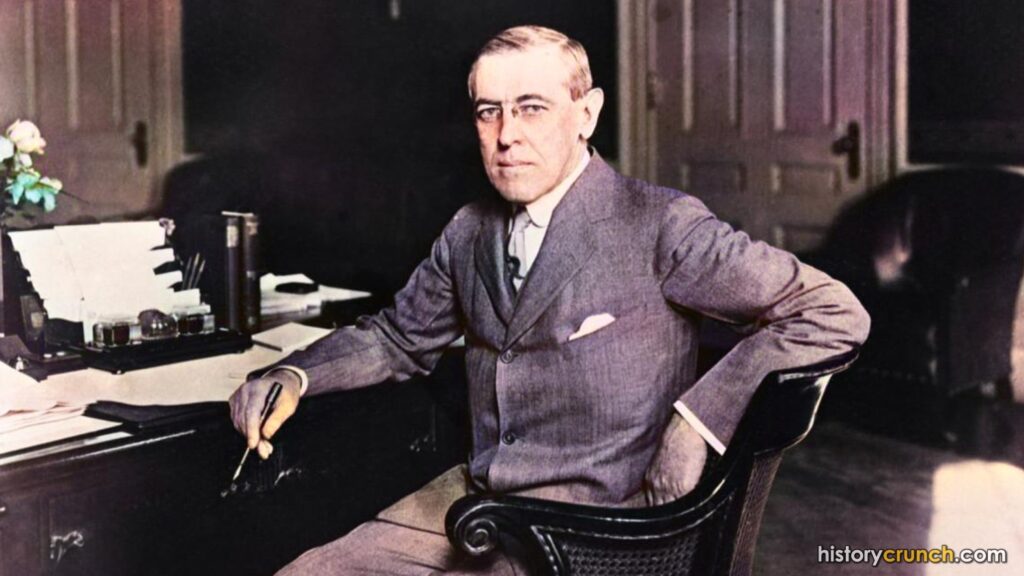
Woodrow Wilson’s Fourteen Points for the reconstruction of Europe after World War I, is one of the most significant moments in the 20th century. Woodrow Wilson laid out a framework for European reconstruction following the devastation of World War I, which many historians have argued would have been favorable compared to the Treaty of Versailles. Understanding Wilson’s Fourteen Points is important in understanding the history of World War I and the eventual events of World War II.
 FactsthatCrunch
Wilson presented his Fourteen Points to Congress on January 8th, 1918, as a framework for lasting peace after World War I, calling for open diplomacy, free trade, reduced weapons, and a League of Nations to settle future disputes without war. Many European leaders viewed him as an idealist, and the United States Senate refused to join the League of Nations Wilson himself had proposed, leaving his most ambitious idea without American support.
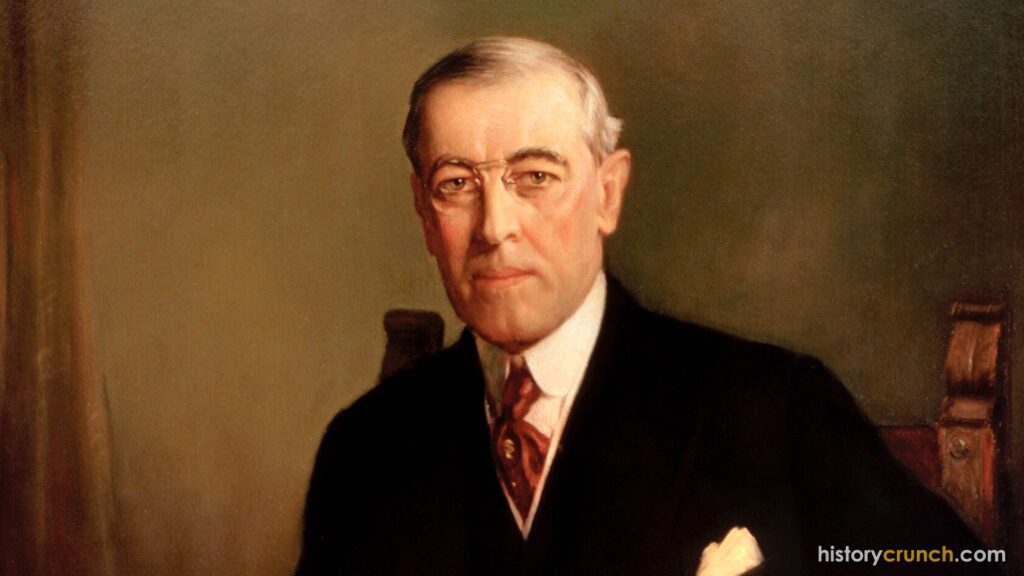
Woodrow Wilson’s Fourteen Points versus the Treaty of Versailles
At the end of World War I there were many different opinions on how or if Germany should be punished and how the world should go about trying to avoid another worldwide conflict such as World War I. Some in Europe favored the eventual terms of the Treaty of Versailles which saw Germany severely punished for its role in World War I. Others did not think Germany should be punished to the extent that it was under the Treaty of Versailles and preferred a different way forward.
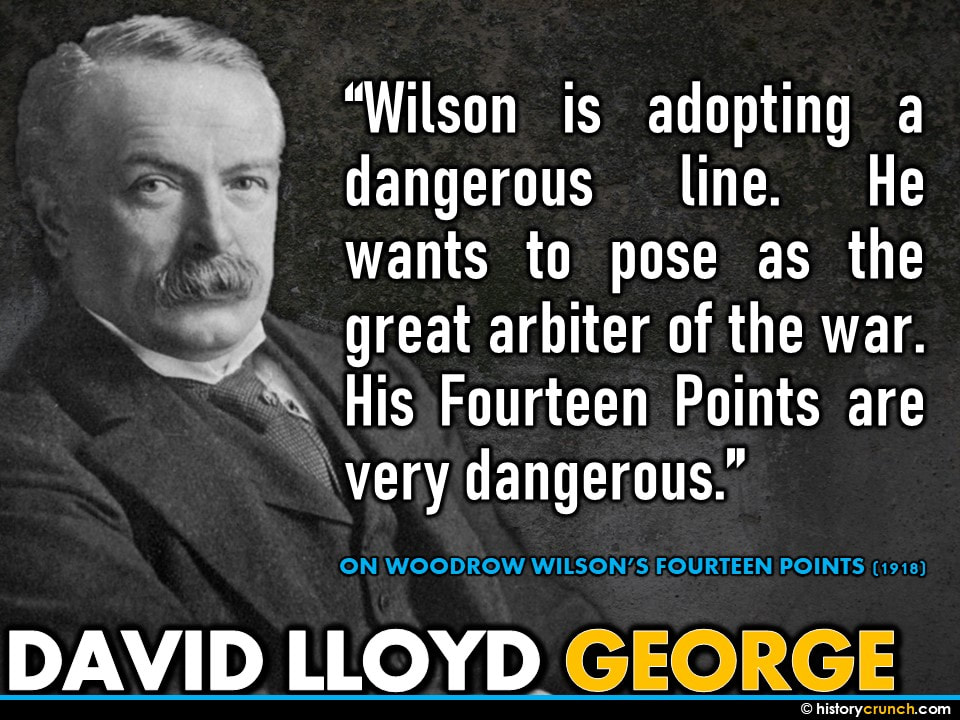
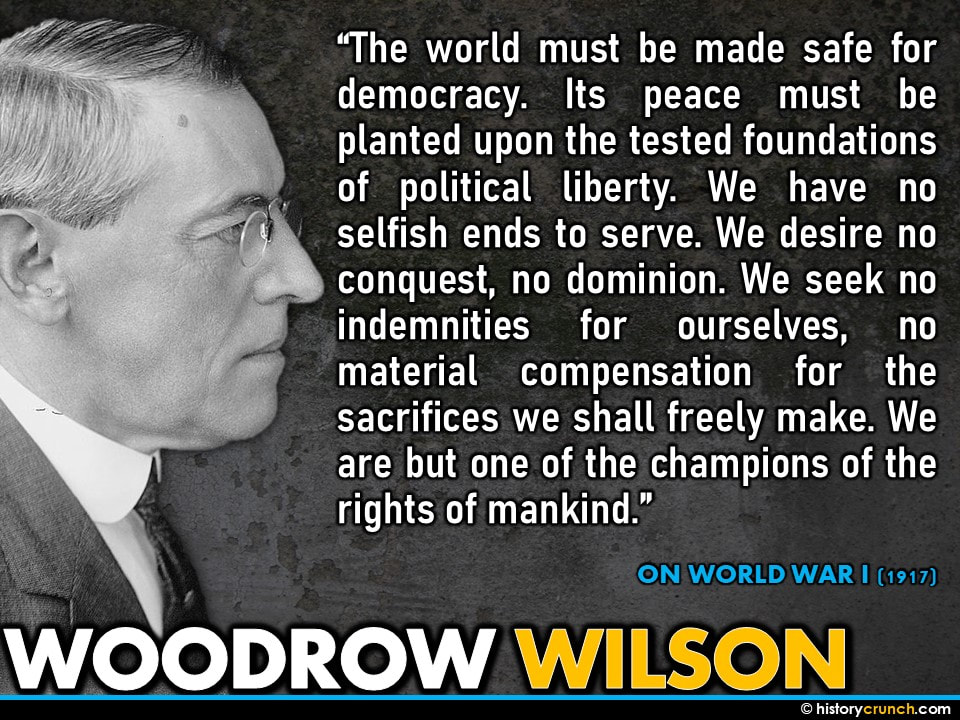
For example, the United States President Woodrow Wilson released his own recommendations for securing world peace and for the most part they did not punish Germany. Wilson’s set of recommendations has come to be known as ‘Wilson’s Fourteen Points’, and are often viewed as an alternative to the Treaty of Versailles. Wilson hoped that his recommendations would help in securing world peace and avoiding a future conflict similar to World War I. In general, some of Wilson’s recommendations were used in the crafting of the Treaty of Versailles, but many in Europe considered Wilson to be an idealistSomeone whose goals are based on high principles that others see as unrealistic or impractical. and not all of his recommendations became used.
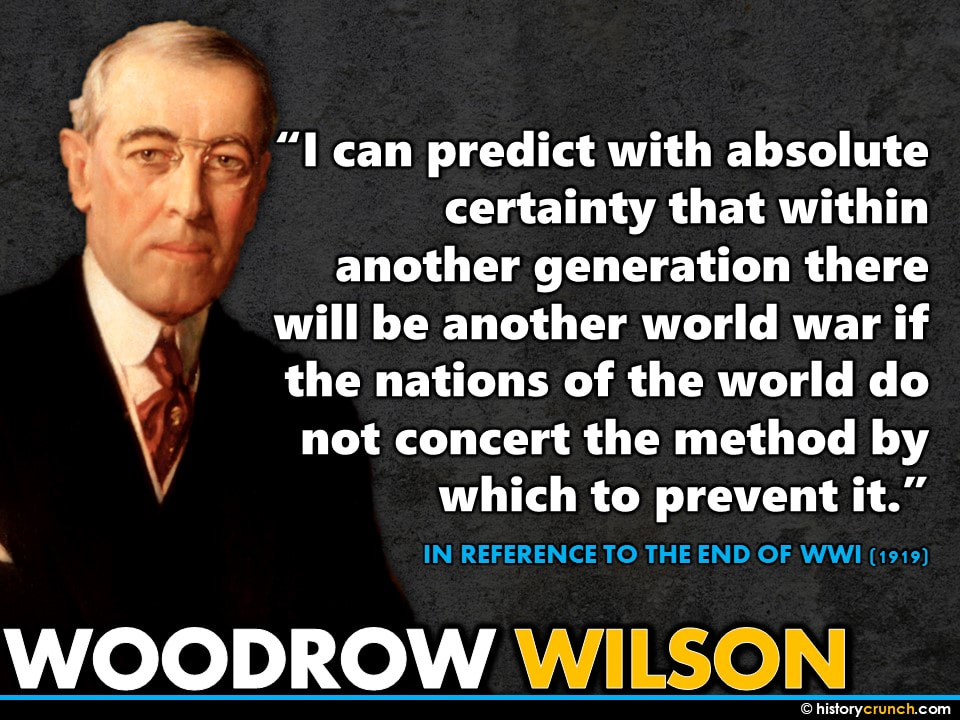
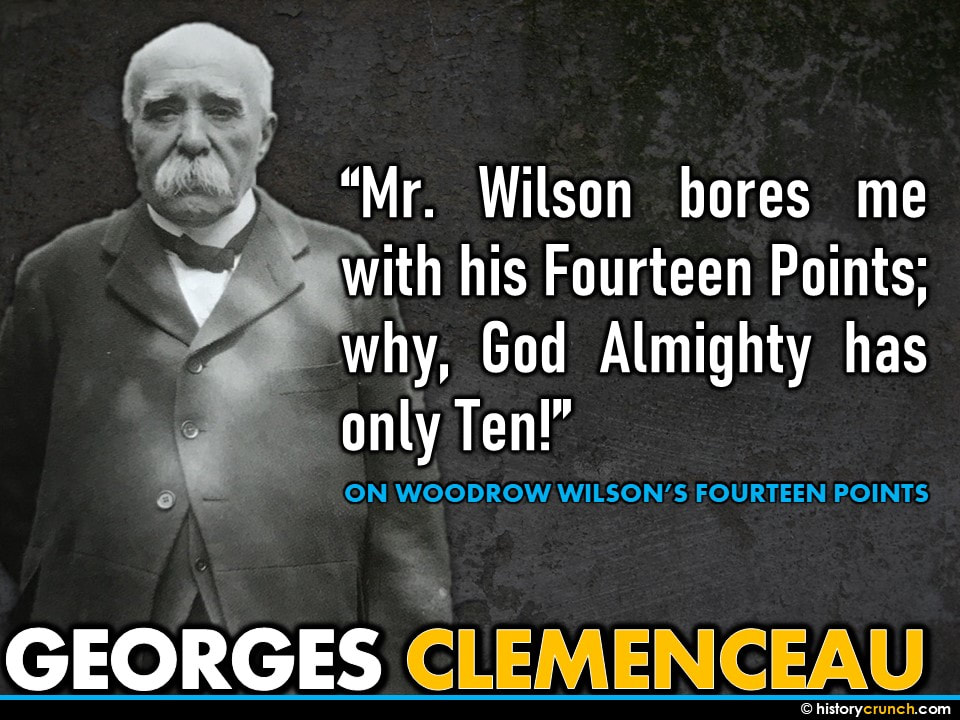
Woodrow Wilson’s Fourteen Points
#1 (No Secret Treaties/Agreements)
Open covenantsFormal, binding agreements or promises between nations or groups. of peace, openly arrived at, after which there shall be no private international understandings of any kind but diplomacy shall proceed always frankly and in the public view.
FactsthatCrunch#2 (Free Navigation of all Seas)
Absolute freedom of navigation upon the seas, outside territorial waters, alike in peace and in war, except as the seas may be closed in whole or in part by international action for the enforcement of international covenants.
#3 (An End to All Economic Barriers)
The removal, so far as possible, of all economic barriers and the establishment of an equality of trade conditions among all the nations consenting to the peace and associating themselves for its maintenance.
FactsthatCrunchA tariff is a tax placed on goods brought in from another country. Governments use tariffs to make imported goods more expensive so that buyers will choose products made at home instead. Before World War I, disputes over tariffs added to the economic tensions between European powers.
Woodrow Wilson's third point called for the removal of economic barriers such as tariffs so that all nations could trade on equal terms after World War I.
#4 (Countries to Reduce Weapons)
Adequate guarantees given and taken that national armaments will be reduced to the lowest point consistent with domestic safety.
FactsthatCrunchWhat did Wilson's Fourteen Points say about disarmament after World War I?
#5 (Free and Impartial Adjustment of Decisions Regarding Colonies)
A free, open-minded, and absolutely impartialTreating all sides equally, without favoring one over another. adjustment of all colonial claims, based upon a strict observance of the principle that in determining all such questions of sovereigntyA nation’s full right and power to govern itself without outside control. the interests of the populations concerned must have equal weight with the equitable claims of the government whose title is to be determined.
#6 (Freedom for Russia, Removal of Germany from Russia)
The evacuationThe removal of military forces or people from an occupied territory. of all Russian territory and such a settlement of all questions affecting Russia as will secure the best and freest cooperation of the other nations of the world in obtaining for her an unhampered and unembarrassed opportunity for the independent determination of her own political development and national policy and assure her of a sincere welcome into the society of free nations under institutions of her own choosing; and, more than a welcome, assistance also of every kind that she may need and may herself desire. The treatment accorded Russia by her sister nations in the months to come will be the acid test of their good will, of their comprehension of her needs as distinguished from their own interests, and of their intelligent and unselfish sympathy.
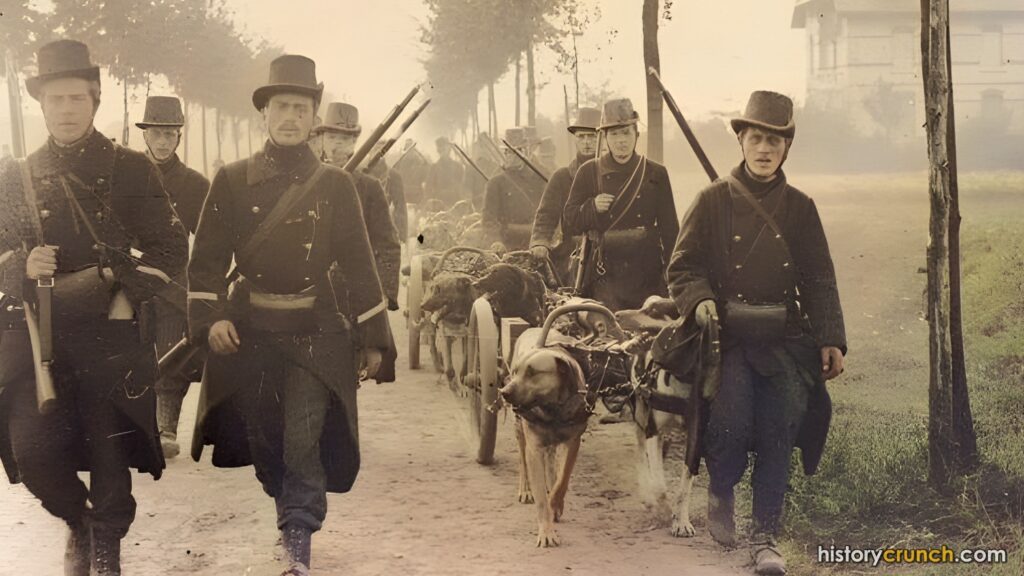
#7 (Belgian Independence)
Belgium, the whole world will agree, must be evacuated and restored, without any attempt to limit the sovereignty which she enjoys in common with all other free nations. No other single act will serve as this will serve to restore confidence among the nations in the laws which they have themselves set and determined for the government of their relations with one another. Without this healing act the whole structure and validity of international law is forever impaired.
#8 (France Liberated and Recover Alsace-Lorraine)
All French territory should be freed and the invaded portions restored, and the wrong done to France by Prussia in 1871 in the matter of Alsace-Lorraine, which has unsettled the peace of the world for nearly fifty years, should be righted, in order that peace may once more be made secure in the interest of all.
FactsthatCrunchPrussia defeated France in the Franco-Prussian War and annexed the region of Alsace-Lorraine in 1871, removing it from French control by force.
Wilson's eighth point stated that the wrong done to France by Prussia in 1871 in the matter of Alsace-Lorraine had unsettled the peace of the world for nearly fifty years. Returning the region to France was included in the eventual Treaty of Versailles in 1919.
#9 (Italy’s Borders Based on Nationality)
A re-adjustment of the frontiers of Italy should be effected along clearly recognizable lines of nationality.
#10 (Austrian-Hungarian Independence and Self-Determination)
The people of Austria-Hungary, whose place among the nations we wish to see safeguarded and assured, should be accorded the freest opportunity to autonomousHaving the freedom to self-govern and make independent decisions. development.
#11 (Balkan States Independence and Self-Determination)
Romania, Serbia, and Montenegro should be evacuated; occupied territories restored; Serbia accorded free and secure access to the sea; and the relations of the several Balkan states to one another determined by friendly counsel along historically established lines of allegiance and nationality; and international guarantees of the political and economic independence and territorial integrityThe right of a country to keep its borders protected from takeover by others. of the several Balkan states should be entered into.
FactsthatCrunchWilson's Eleventh Point on the Balkans: which country should be given free and secure access to the sea?
#12 (Independent Turkey)
The Turkish portion of the present Ottoman Empire should be assured a secure sovereignty, but the other nationalities which are now under Turkish rule should be assured an undoubted security of life and an absolutely unmolested opportunity of autonomous development, and the Dardanelles should be permanently opened as a free passage to the ships and commerce of all nations under international guarantees.
FactsthatCrunchWhat did Wilson's Fourteen Points say about the Dardanelles in World War I?
Point 12 of Wilson's Fourteen Points called for the Dardanelles to be permanently opened as a free passage to the ships and commerce of all nations, guaranteed by international agreement. The Dardanelles is a narrow strait in what is now Turkey that connects the Aegean Sea to the Sea of Marmara, and control of it had been a major military objective during World War I. Wilson wanted the waterway kept open to all countries rather than controlled by any single power.
#13 (Independent Poland with Access to the Sea)
An independent Polish state should be erected which should include the territories inhabited by indisputably Polish populations, which should be assured a free and secure access to the sea, and whose political and economic independence and territorial integrity should be guaranteed by international covenant.
Point 13 of Wilson's Fourteen Points called for an independent Polish state with free and secure access to the sea.
#14 (Creation of the League of Nations)
A general association of nations must be formed under specific covenants for the purpose of affording mutual guarantees of political independence and territorial integrity to great and small states alike.
FactsthatCrunchWoodrow Wilson proposed the League of Nations, but the U.S. Senate refused to let the United States join it, leaving his own country out of the organization he championed to prevent another world war.
The U.S. Senate rejected the Treaty of Versailles, which meant the United States never became a member of the League of Nations. Many senators worried that membership would pull the country into foreign wars it had no business fighting. The League went forward without the nation that had proposed it, and historians argue this weakened the organization from the start.
Woodrow Wilson’s Fourteen Points – Impacts
In the end, many did not agree with Wilson’s framework and believed that it would not work in the ‘real world’. Opponents of his system included the major leaders of Europe (Britain and France) and other politicians within the United States. The United States ultimately opposed the ideas as the United States Senate refused to ratify the Treaty of Versailles or join the League of Nations. The Treaty of Versailles ended up representing some, but not all, of Wilson’s Fourteen points, and ultimately set a course for the start of World War II.
 FactsthatCrunch
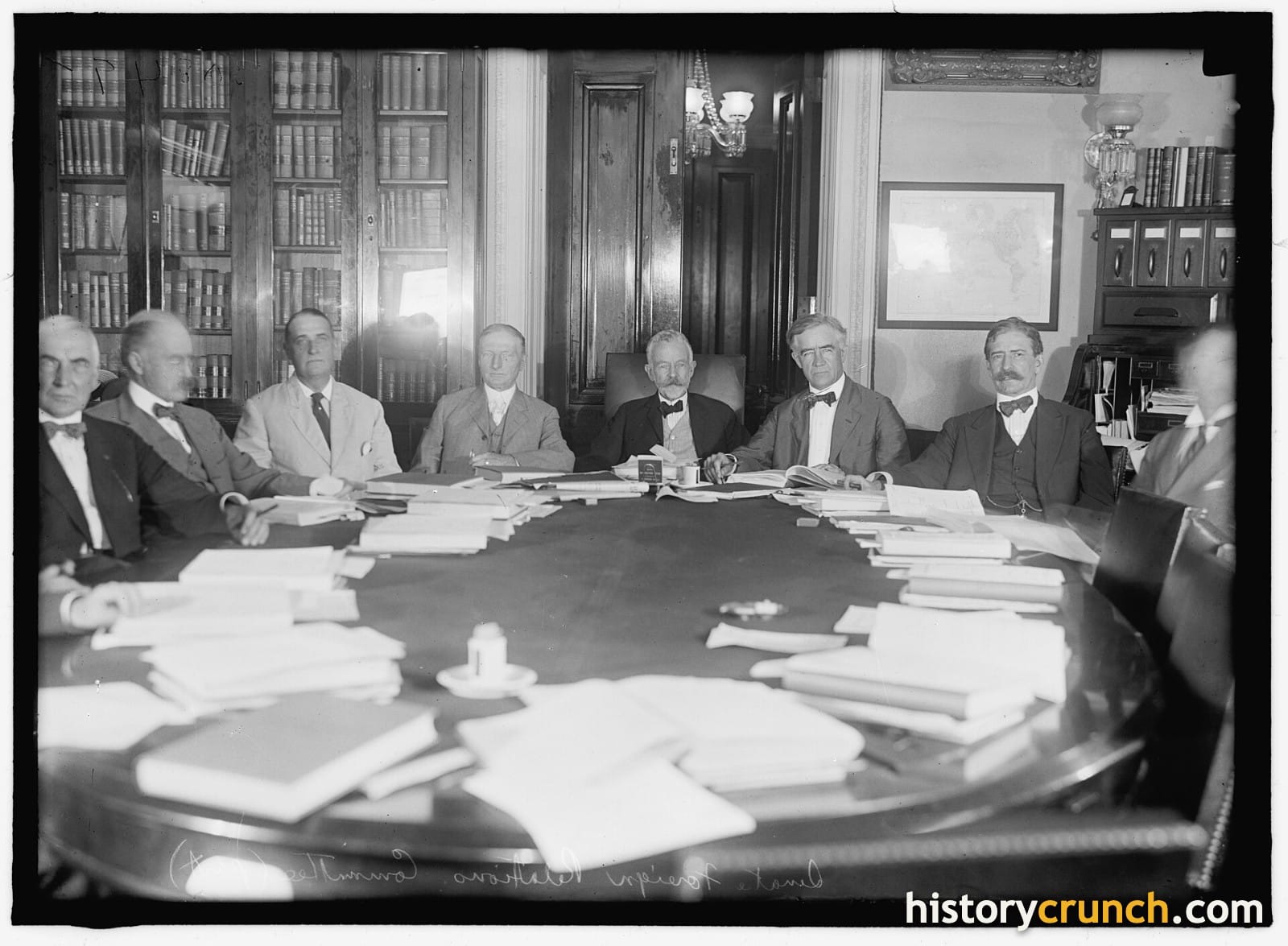
The Senate Rejects the Treaty of Versailles a Final Time
The Senate voted 49 to 35 for the treaty, seven votes short of the two-thirds majority it needed. Senators led by Henry Cabot Lodge feared the League of Nations would pull the United States into future wars, so the country never joined the League built on Wilson's fourteenth point.
Explore World War I · 1914 – 1918
Keep exploring World War I with these History Crunch resources.
Key Vocabulary
Covenants
Impartial
Sovereignty
Autonomous
Territorial integrity
Idealist
Evacuation
Frequently Asked Questions
What were Woodrow Wilson’s Fourteen Points?
The Fourteen Points were a set of goals for building peace after World War I. President Woodrow Wilson laid them out in a speech in January 1918. They called for open diplomacy, free trade, fewer weapons, and self-rule for many peoples. The final point proposed a League of Nations to help prevent future wars.
How did the Fourteen Points differ from the Treaty of Versailles?
The Fourteen Points did not aim to punish Germany harshly, while the Treaty of Versailles did. Wilson hoped his plan would secure a lasting peace instead of blame. The treaty used some of his ideas but left out many others. Leaders in Britain and France wanted Germany to pay for the war.
What was the fourteenth point about?
The fourteenth point called for a general association of nations, which became the League of Nations. This group was meant to protect the political independence and borders of countries large and small. Wilson believed such a body could settle disputes before they led to war. The League was created, but the United States never joined.
Why did the United States not join the League of Nations?
The United States Senate refused to approve the Treaty of Versailles, so the country did not join the League of Nations. Many senators feared the League would drag the United States into future foreign wars. This left Wilson’s own creation without the support of his nation. The League was weaker as a result.
Why did many leaders reject Wilson’s plan?
Many leaders viewed Wilson as an idealist whose plan would not work in the real world. European leaders like Georges Clemenceau and David Lloyd George wanted Germany punished for the war’s damage. They also wanted to protect their own colonies and interests. As a result, only some of Wilson’s ideas made it into the final treaty.
How did the Fourteen Points connect to World War II?
The Treaty of Versailles used only part of Wilson’s plan and punished Germany heavily. Many historians argue this harsh peace helped set the stage for World War II. Wilson had hoped a fairer settlement would prevent another huge conflict. His warnings about a lasting peace are often remembered because of what followed.
Cite This Article
To cite this article as a source, use one of the formats below.
MLA: Beck, Elias. “Woodrow Wilson’s Fourteen Points: A Detailed Summary.” HistoryCrunch, 30 September 2026, https://historycrunch.com/woodrow-wilsons-fourteen-points/.
APA: Beck, E. (2026). Woodrow Wilson’s Fourteen Points: A Detailed Summary. HistoryCrunch. https://historycrunch.com/woodrow-wilsons-fourteen-points/
Chicago: Beck, Elias. “Woodrow Wilson’s Fourteen Points: A Detailed Summary.” HistoryCrunch. September 30, 2026. https://historycrunch.com/woodrow-wilsons-fourteen-points/
Sources
- Fordham Modern History Sourcebook
- Hew Strachan, The First World War.
- John Keegan, The First World War.