The American home front of World War I is a significant topic and important to understanding how the events of World War I impacted the country on a domestic level. While World War I was a devastating conflict that had many military battles that took place on the European battlefields, it also had a profound impact on life for many people living in the United States. This included economic, social, and political impacts that altered life for millions of people.
As stated above, World War I had a profound impact on the United States in terms of its military response, but also the impact that it had on the home front. In general, World War I was a clear example of a ‘total warA conflict where all of society, not just the military, is organized and mobilized to support the fighting effort.’, which means that all of society was mobilized towards fighting the war effort. As such, large sections of American society were affected by the outbreak of the war and the American entry into the war effort. The main impacts centered on economic, political, and social factors.
 FactsthatCrunch
About 75,000 volunteers called the Four Minute Men gave short speeches supporting the war in movie theaters and meeting halls across the United States.
The Committee on Public Information chose four minutes because it was about the time it took to change the film reel in a theater. The speakers urged Americans to buy Liberty Bonds, save food and support the troops.
American Home Front of World War I – Economic Impacts
Economically, the United States’ home front was altered in several ways during World War I. First, the outbreak of World War I in 1914 caused the major European powers of the time to descend into fighting, which required massive supplies of resources. Throughout these early years of the war, the United States benefitted greatly from being a major producer of ammunition for the Allied Powers. For instance, as the war raged on into 1917, Britain struggled to maintain its production of munitions and turned to American companies to help. In fact, Britain borrowed approximately $4 billion from the United States Treasury throughout 1917 and 1918 and used much of it to purchase ammunition and weapons from American manufacturers.
More specifically, the United States Cartridge Company was contacted by the British (along with other nations) to produce ammunition for use in World War I. In total, the American company increased its workforce by 10 times and produced over 2.2 billion ammunition cartridges throughout the years of World War I. Beyond this, American companies also supplied the Allied Nations with artillery shells, rifles, and other military weapons. As well, the United States supplied the necessary raw materials and food supplies to nations such as Britain and France to carry on their own war effort against the Central Powers. Military production ramped up even more when the United States joined the Allied Powers in the war effort in 1917. All this production created a great deal of economic activity in the United States during the years of World War I. As a result, the United States experienced increased employment and many companies increased their profits by selling products for the war effort.
Another important aspect of the economic impact on the United States home front in World War I was the role of rationingGovernment limits on how much of a resource, like food or fuel, ordinary people are allowed to use.. This was especially important to food and fuel production and consumption. Both food and fuel were important resources necessary to the overall war effort. The soldiers on the front lines in the battlefields of Europe required both in order to carry out victory against the Central Powers. As such, the United States government sought to ration their consumption by American civilians on the home front during World War I. This is best evidenced by the passage of the Food and Fuel Control Act, which was enacted on August 10th, 1917. In short, the Food and Fuel Control Act gave the federal government sweeping powers in terms of controlling the consumption of food or fuels. President Woodrow Wilson argued in favor of the act, as he considered it important to maintaining the war effort at the time.
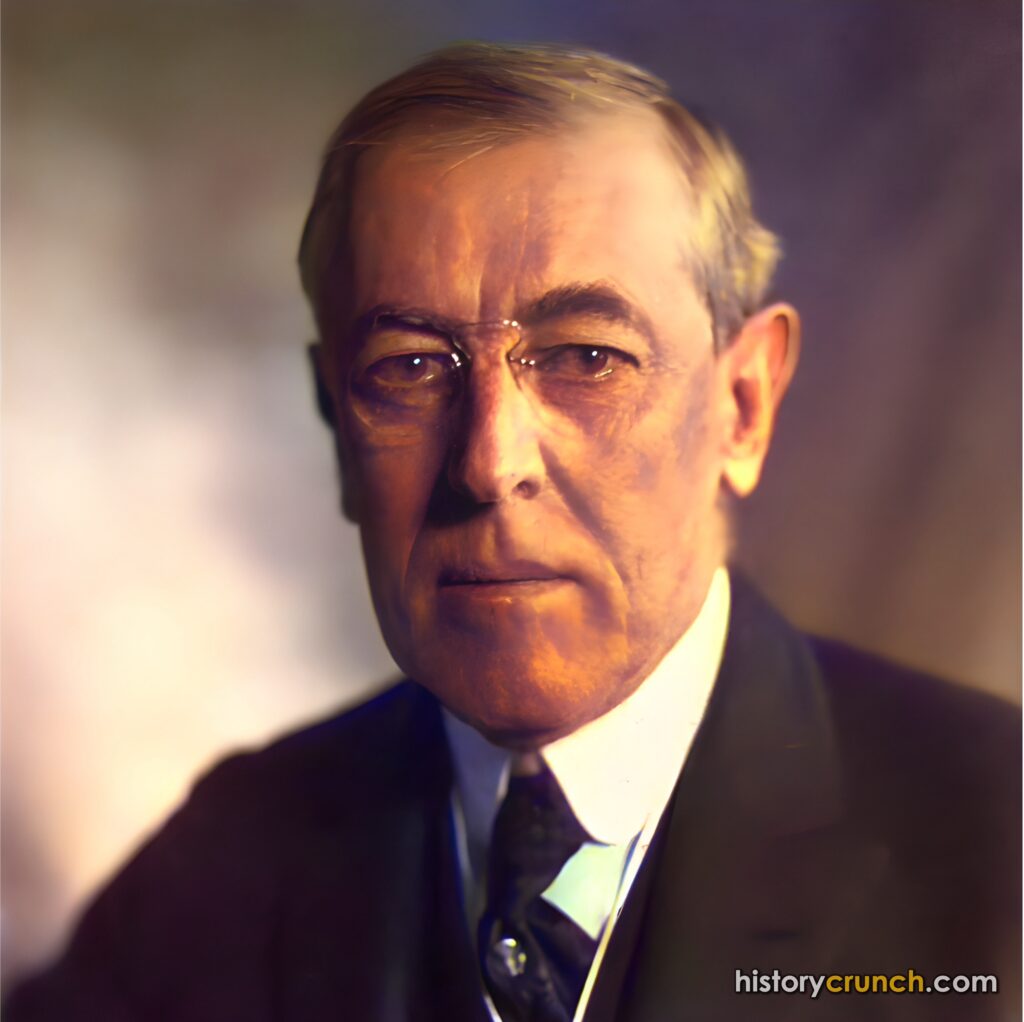
As such, the act led to the creation of both the United States Food Administration and the United States Fuel Administration. Both agencies sought to limit the use of their respective resource by introducing certain measures and carrying out different public campaigns. For example, the United States Food Administration (which was headed by future President of the United States Herbert Hoover) introduced days such as ‘meatless Tuesdays’ and ‘wheatless Wednesdays’. The United States Fuel Administration similarly introduced ‘heatless Mondays’. These campaigns obviously had an impact on the lives of Americans living on the home front during World War I and placed certain types of hardships on their everyday lives.
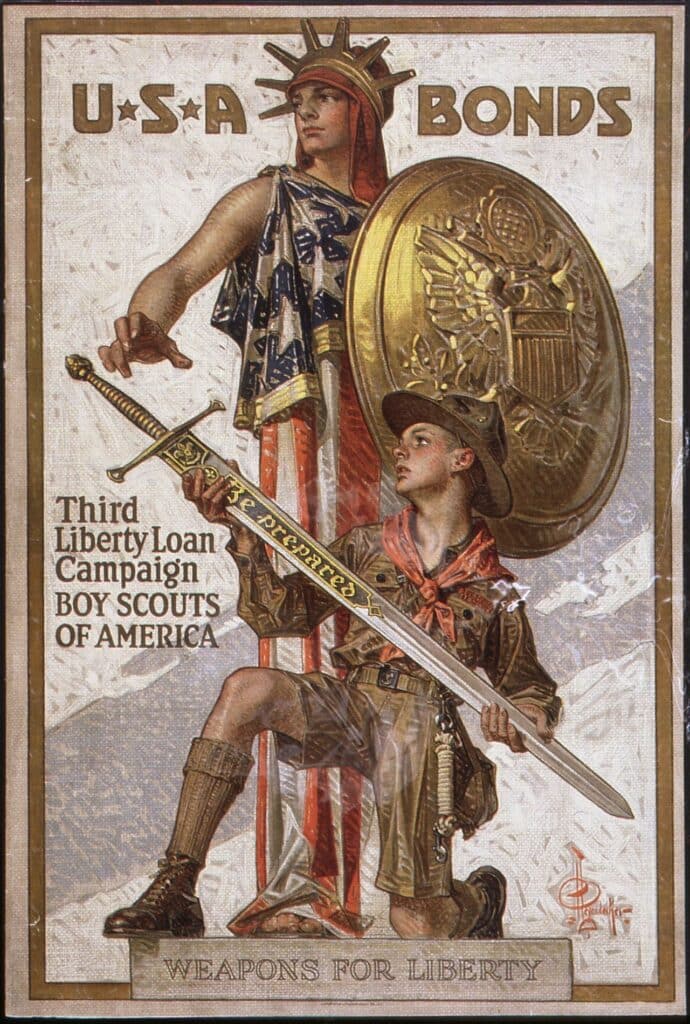
Finally, the home front of the United States was impacted on an economic level by the sale of Liberty BondsWar bonds sold to American citizens to raise money for the war effort, paying back 3.5 to 4.25 percent interest. during World War I. Liberty Bonds were war bonds that were sold in the United States as a way of supporting the war effort during World War I. In general, American citizens purchased the bonds and received a guaranteed return from the investment of 3.5% to 4.25%. In all, there were four different Liberty Bonds, with the First Liberty Bond being issued on April 24th, 1917. The fourth and final Liberty Bond was issued on September 28th, 1918. While citizens were not required to purchase the bonds, they did become a source of patriotism. For example, propagandaInformation, often posters or films, designed by a government to shape public opinion and build support for a cause. posters from the time used patriotism as a means of trying to convince people to buy them and support the war effort.
American Home Front of World War I – Political Impacts
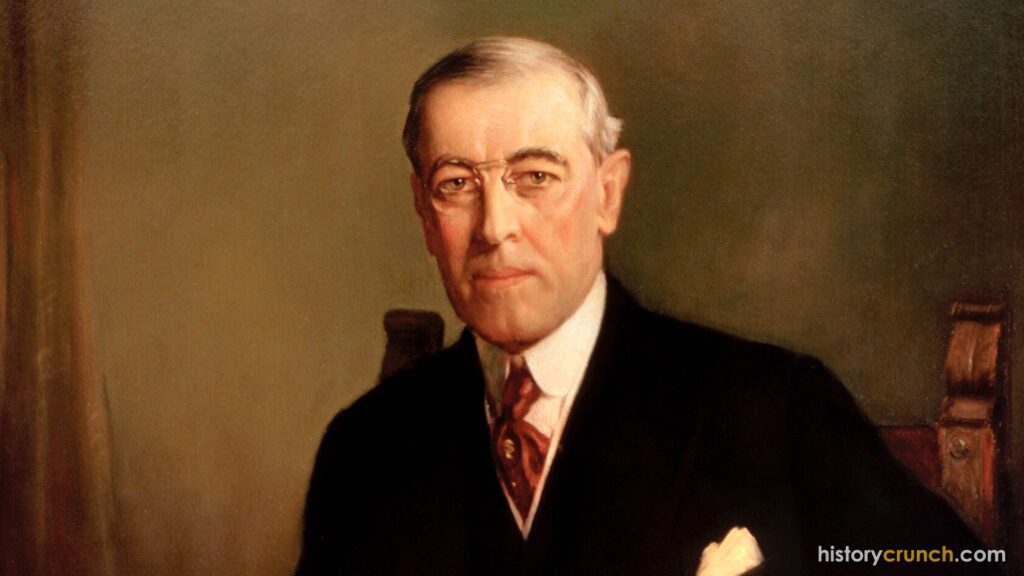
Politically, the home front of the United States during World War I was centered on the presidency of Woodrow Wilson. Wilson served as the President of the United States from 1913 until 1921. As such, he was the President of the United States during the entirety of World War I and oversaw the American response to the war.
World War I began in the summer of 1914 following the assassination of Austrian Archduke Franz Ferdinand and the events of the July Crisis of 1914. When the war began, Europe was divided between two camps – Allied Powers (Britain, France and Russia) and the Central Powers (Germany, Austria-Hungary and the Ottoman Empire). From the outset of the crisis in Europe, Woodrow Wilson sought to maintain the United States’ neutrality. In fact, from an American perspective, World War I was a European conflict and the American government did not necessarily see value in involving itself in the war.

The neutrality of the United States in World War I was a major factor of Wilson’s first term as President of the United States. In fact, when he ran for re-election in 1916, he campaigned on the idea that he kept the country out of the fighting of World War I. In the election, Wilson narrowly defeated the Republican candidate Charles Evans Hughes with 49 percent of the popular vote.
American neutrality in World War I was eventually tested at the start of Wilson’s second term as president. For instance, in response to the British blockade of Germany, the German Empire began carrying out submarine warfare against ships in the north Atlantic Ocean. For the Germans this was important as they hoped to stop supplies from reaching Britain. Unfortunately, German submarines were responsible for the sinking of several ships which had American citizens on them. The most famous example of this was the sinking of the British ocean liner RMS Lusitania in May of 1915. In total, the German attack on the Lusitania killed 1,198 people including 128 American citizens.
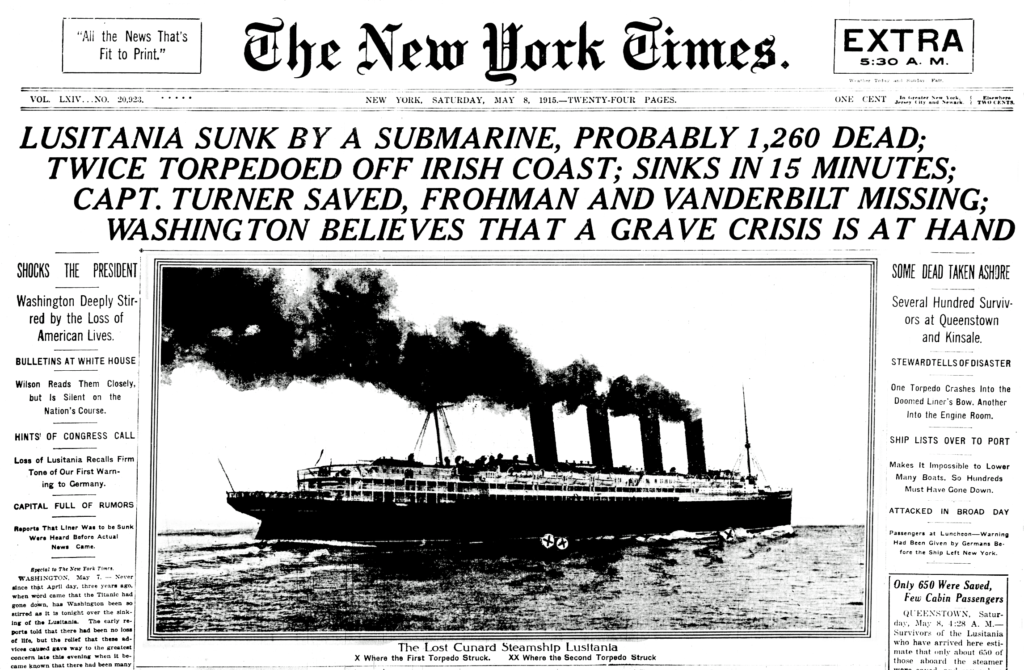
Obviously, this created anger in the United States and forced Wilson to deal with the growing crisis. In 1917, the German Empire again began carrying out unrestricted submarine warfareA military strategy where submarines attack any ship, including civilian ones, without warning. and was one of the main reasons that the United States eventually joined the war effort on the side of the Allied Powers. In fact, in February of 1917, it was discovered that Germany had been in contact with Mexico in hopes of igniting a conflict between Mexico and the United States. This was known as the Zimmermann Telegram, and when combined with Germany’s submarine warfare, it pushed Wilson to eventually declare war against Germany.
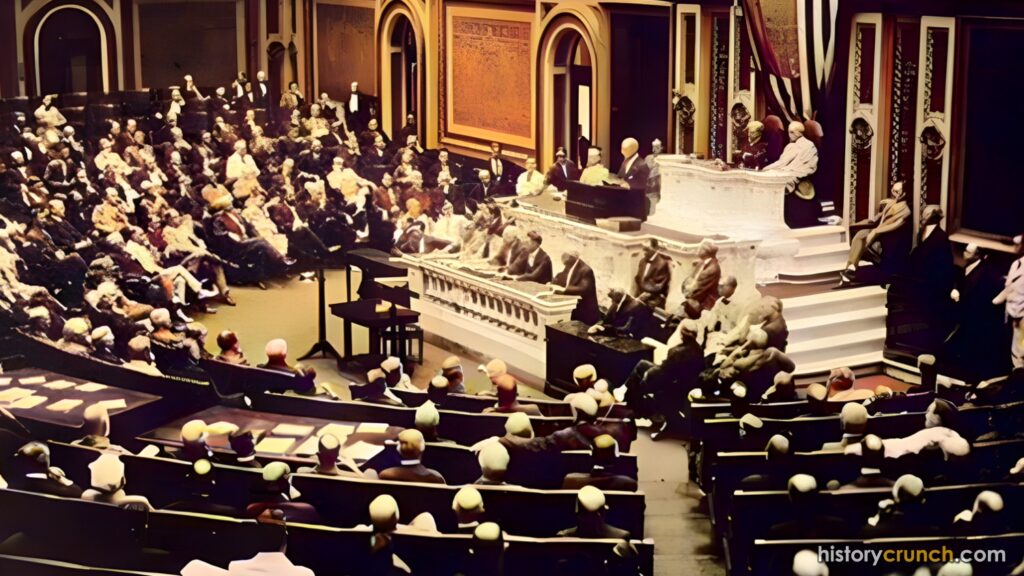
On April 2nd of 1917, Woodrow Wilson asked the United States Congress to declare war against Germany. Congress formally agreed with the request and the United States declared war on April 6th. This declaration of war caused Wilson to push for a military draft in order to build up the armed forces as quickly as possible. In fact, throughout the course of World War I the United States had conscriptedLegally required by the government to serve in the military, regardless of whether a person volunteers. approximately 3 million men for service. The war also had a profound impact on the home front for the United States and Wilson was tasked with raising funds for the war effort while also helping his European allies. American involvement in the war proved incredibly important and helped the Allied Powers eventually force the Central Powers into defeat. For example, an armistice was reached on November 11th, 1918.
Besides establishing the draft, another key aspect of Wilson’s presidency in World War I was the use of propaganda. For example, in 1917 the United States government created the Committee on Public Information (CPI), which was responsible for creating and issuing war-time propaganda in the United States during World War I. It was also known as the ‘Creel Committee’ after its chairman George Creel and was aimed at increasing support for the war effort among American citizens. They issued propaganda such as posters, short films and public speeches. The CPI existed until 1919, and was responsible for influencing American opinions on the home front in relation to the war, and especially on views towards Germany.
American Home Front of World War I – Social Impacts
Socially, World War I had a major impact on life for American citizens. First and foremost, World War I was a significant event for American women. When the United States joined the war effort in 1917, women were needed to enter the workforce. Furthermore, many of the women found employment in factories that produced weapons and ammunition for the war effort. This was an incredibly important change for the lives of many American women, because before the start of World War I most women did not work outside of the home. Not only were many women working for the first time, but they were also working in jobs that were generally held by men. This included jobs in heavy industry, manufacturing, police, firefighters, etc.
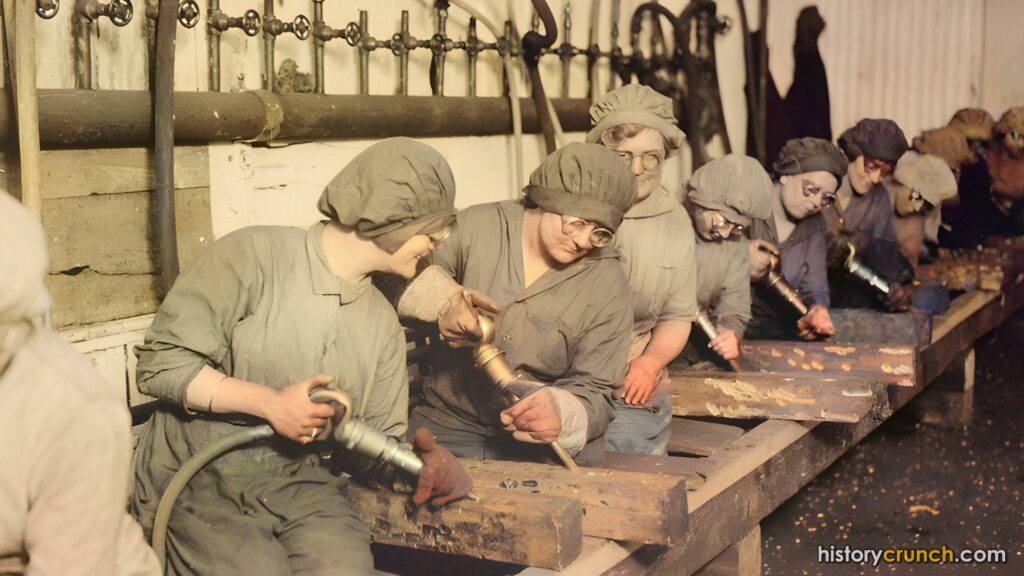
Life for families was also dramatically changed due to the United States’ involvement in World War I. For instance, many men participated in the war effort by enlisting in the armed forces, which caused a hardship on the family. This was especially true when husbands, fathers, and brothers were away from the family for an extended time. Furthermore, when many of these men were injured or killed in action it put an extraordinary amount of stress on the family. At the time, children were growing up without their fathers nearby. As well, with many women entering the workforce for the first time, it caused a further level of stress and hardship on the American family unit.
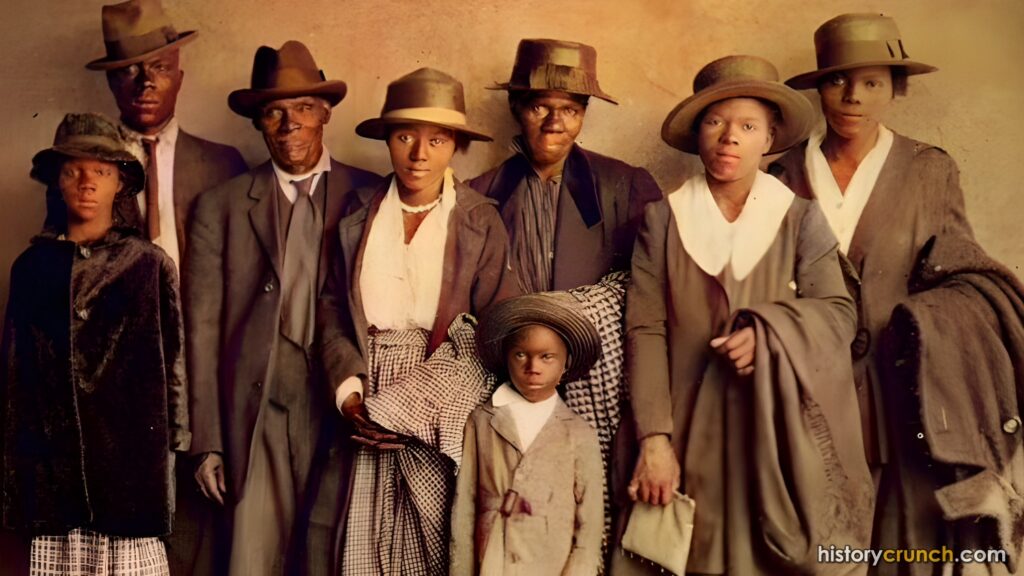
Finally, World War I had an impact on the lives of African Americans. This was especially true in relation to the events of the ‘Great Migration’, which was a historical event that took place from 1916 until 1970. In short, the Great MigrationThe movement of 6 million African Americans from the southern United States to northern states between 1916 and 1970. saw 6 million African American people migrate to the northern states from the southern states. There were many reasons for the events of the Great Migration, including Jim Crow Laws and racism, but the events of World War I also played a role. This was due to the need for laborers in the northern states. Not only were women employed in factories, but many African Americans found new employment (and lives) in the factories of the northern states.
 FactsthatCrunch
 Black & whiteColor
Explore World War I · 1914 – 1918
Keep exploring World War I with these History Crunch resources.
Key Vocabulary
Total war
Rationing
Liberty Bonds
Conscripted
Propaganda
Unrestricted submarine warfare
Great Migration
Frequently Asked Questions
What was the American home front during World War I?
The American home front was daily life in the United States away from the fighting in Europe. World War I was a total war, so all of society was pulled into the war effort. This changed the economy, politics, and social life for millions of people at home.
What were Liberty Bonds?
Liberty Bonds were war bonds sold in the United States to help pay for the war effort. Citizens who bought them earned a guaranteed return of 3.5 to 4.25 percent. There were four bonds in all, with the first issued on April 24th, 1917, and buying them became a sign of patriotism.
How did the government control food and fuel at home?
The Food and Fuel Control Act of August 10th, 1917, gave the federal government wide power over food and fuel use. It created the United States Food Administration and the United States Fuel Administration. These agencies ran campaigns like “meatless Tuesdays,” “wheatless Wednesdays,” and “heatless Mondays.”
Why did the United States enter World War I?
The United States entered the war mainly because of German submarine attacks and the Zimmermann Telegram. German submarines sank ships carrying Americans, including the Lusitania in May of 1915. When Germany renewed unrestricted submarine warfare in 1917, President Wilson asked Congress to declare war, which it did on April 6th, 1917.
How did World War I change life for American women?
World War I brought many American women into the workforce for the first time. With men away fighting, women filled jobs in factories that made weapons and ammunition. They also worked in heavy industry, manufacturing, and public safety roles that men usually held.
How did the war affect African Americans?
The war helped drive the Great Migration, when about 6 million African Americans moved from southern states to northern ones. Factories in the North needed workers, which opened new jobs and lives. Jim Crow laws and racism in the South also pushed many families to leave.
Cite This Article
To cite this article as a source, use one of the formats below.
MLA: Beck, Elias. “American Home Front of World War I: A Detailed Summary.” HistoryCrunch, 30 September 2026, https://historycrunch.com/american-home-front-of-world-war-i/.
APA: Beck, E. (2026). American Home Front of World War I: A Detailed Summary. HistoryCrunch. https://historycrunch.com/american-home-front-of-world-war-i/
Chicago: Beck, Elias. “American Home Front of World War I: A Detailed Summary.” HistoryCrunch. September 30, 2026. https://historycrunch.com/american-home-front-of-world-war-i/
Sources
- Margaret MacMillan, The War That Ended Peace.
- John Keegan, The First World War.
- Hew Strachan, The First World War.
- Fordham Modern History Sourcebook